Loading
by BlastRoom
Andean cultures, materials, and technologies from Chavín through the Inka.
#us_hs_art_history
25 questions
One question set, multiple game modes. Tap any game to see it in action. Not sure which to pick?
Answer to place stones and capture territory.
Outrun the snow together.
Earn blasts, then hunt the other team.
Answer to earn energy, then climb.

The class blasts through walls together.
Bid on mystery lots. Most money wins.
Sell tours. Nice, standard, or a total scam.

Answer, restock, and serve the rush.
More correct answers pulls the rope your way.
Answer, then shoot down the alien wave.
Answer, then tap to leap the frozen ridge.
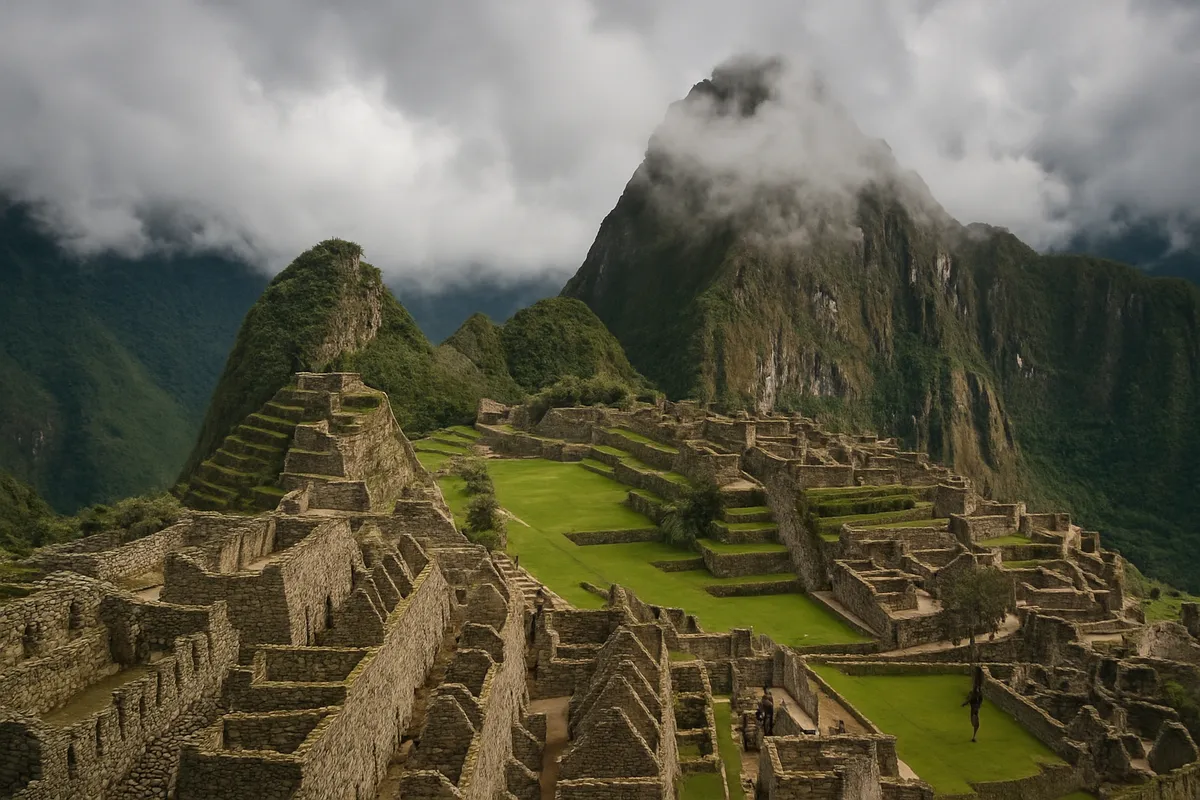
In the Machu Picchu wall, the doorway and niches narrow toward the top. What shape is this hallmark of Inka architecture?
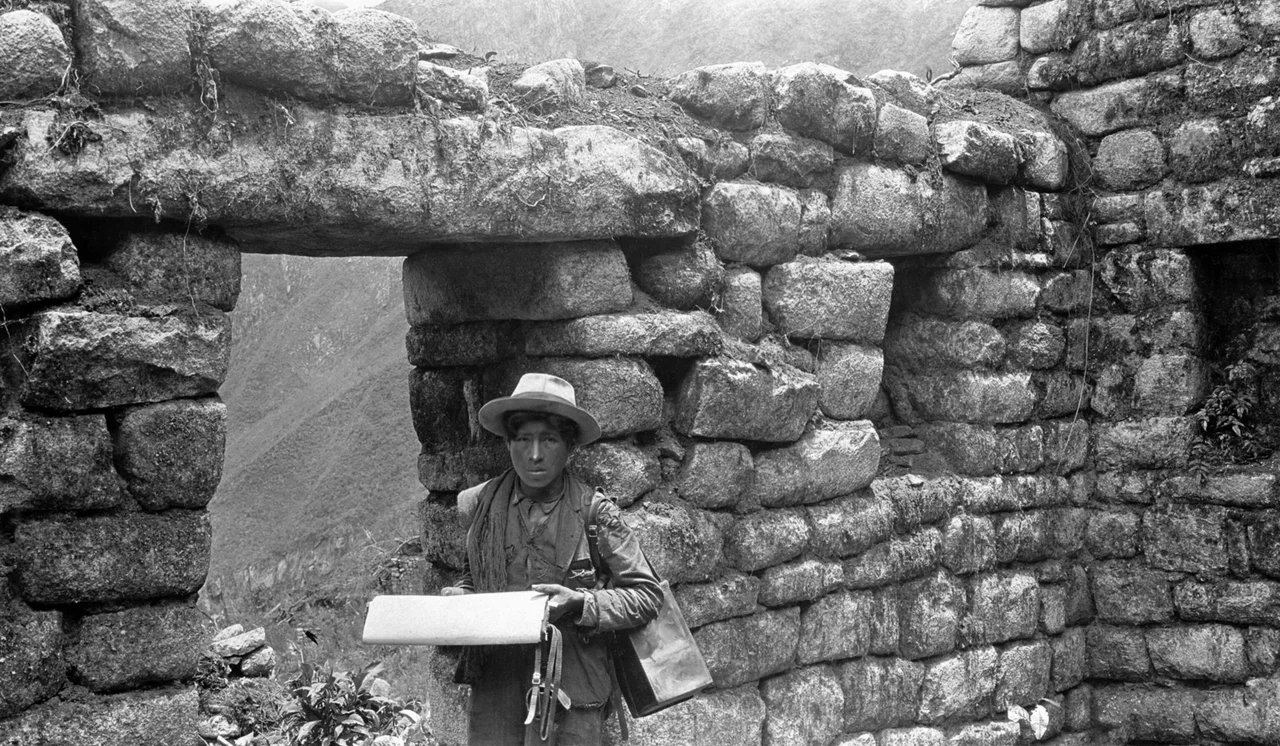
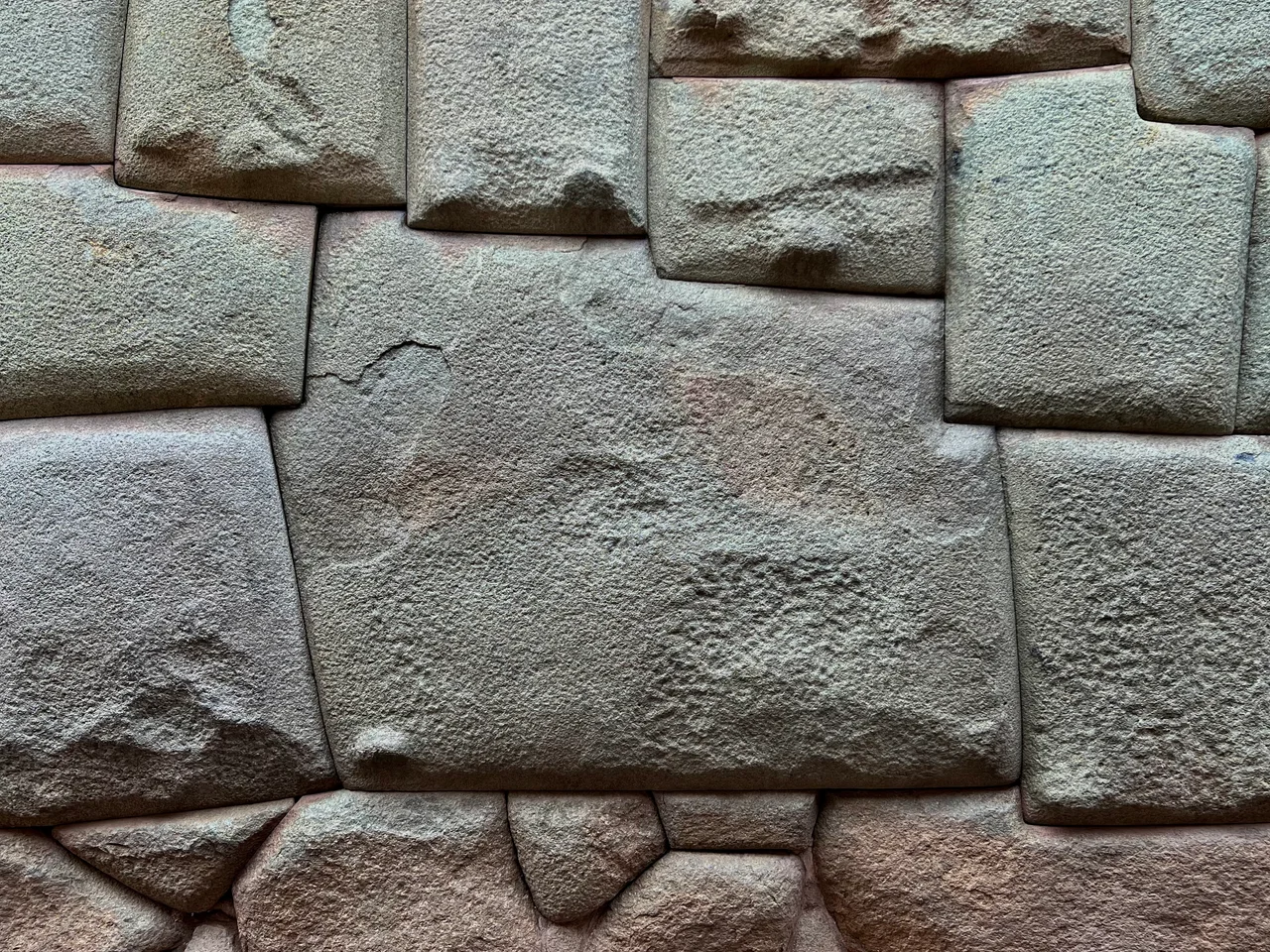
Closely fitted Inka blocks meet along irregular joints. What construction method is shown?
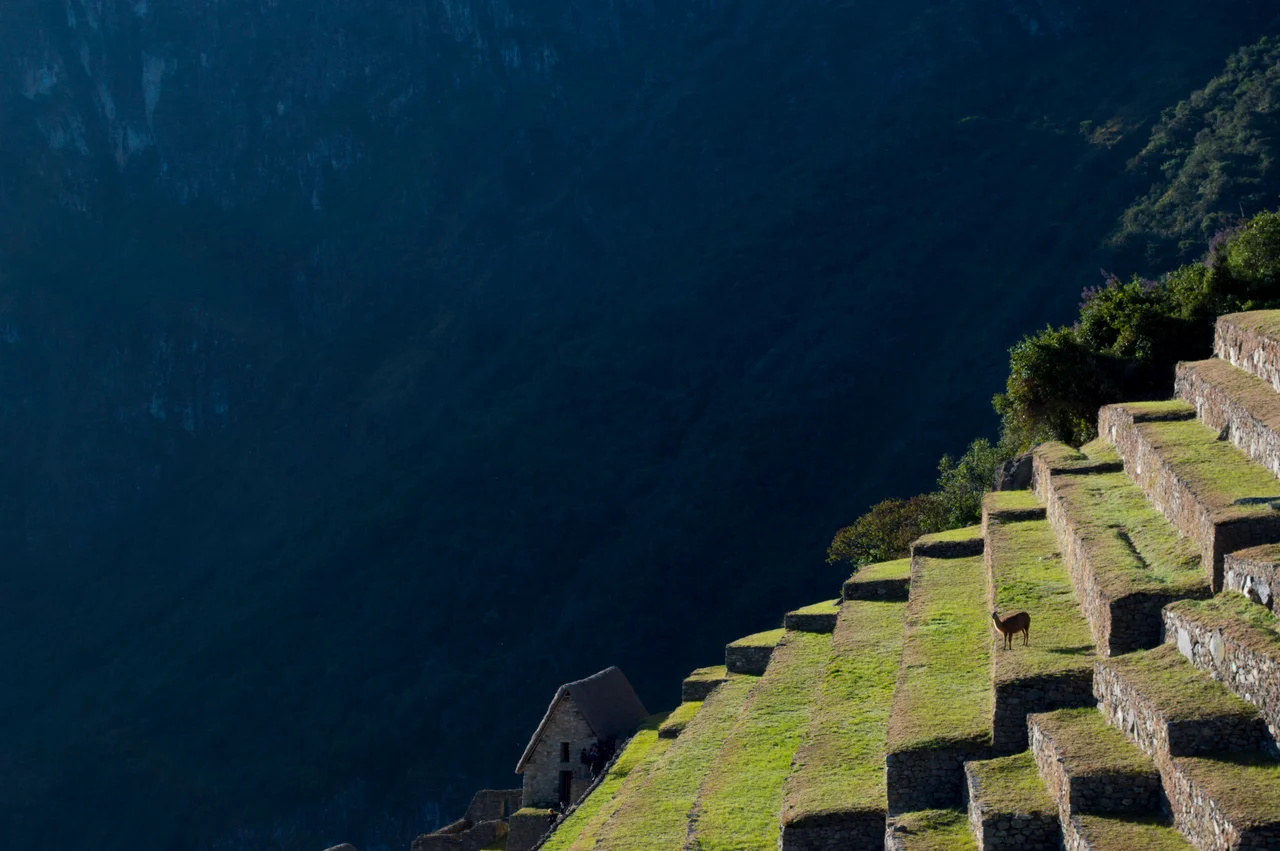
At Machu Picchu, a terraced farming sector is set apart from the urban sector, where a large plaza divides upper and lower districts. What does this layout show?
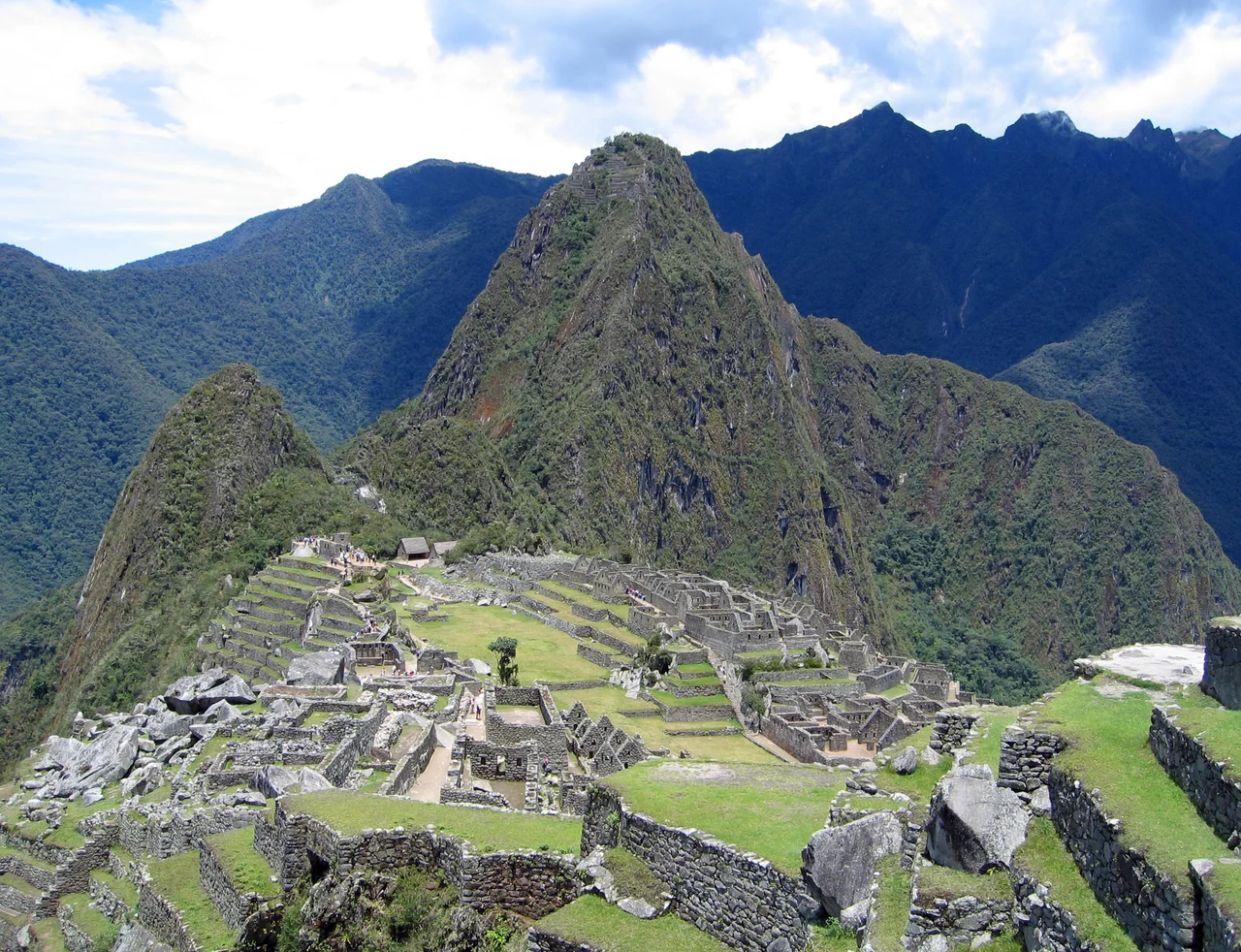
Terraces, canals, roads, and buildings at Machu Picchu follow a steep ridge rather than a flat grid. What design priority does this reveal?
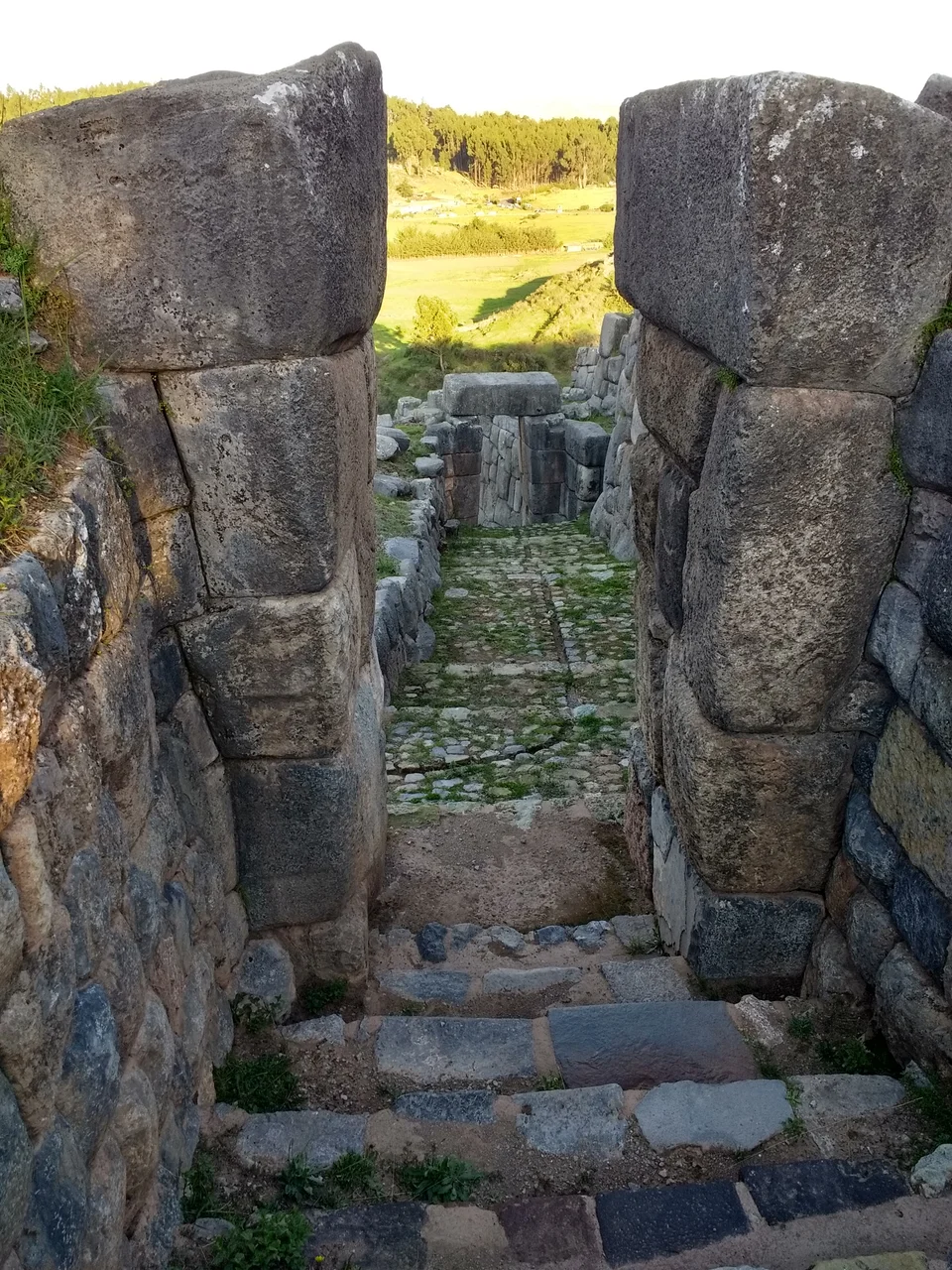
What term names precisely cut and dressed stone blocks used to make a fitted wall like this one?
An Inka tunic made from llama, alpaca, or vicuña hair reflects the importance of which material in highland textile production?
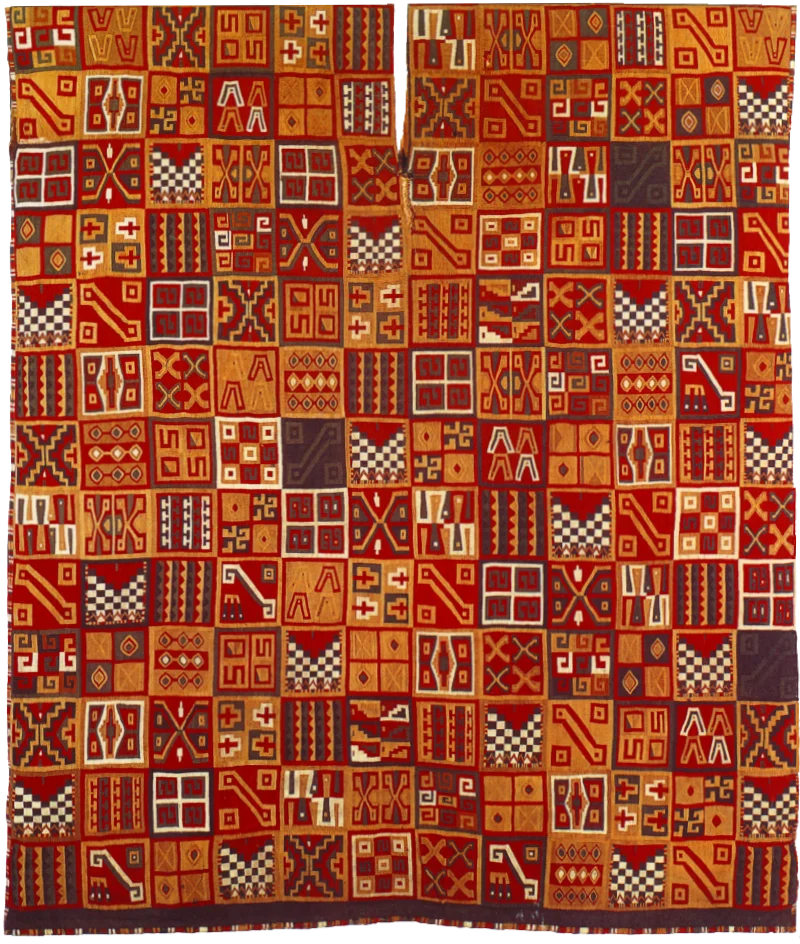
An elite Inka tunic is covered edge to edge with small geometric tocapu squares. What did such an elaborate garment most strongly communicate?
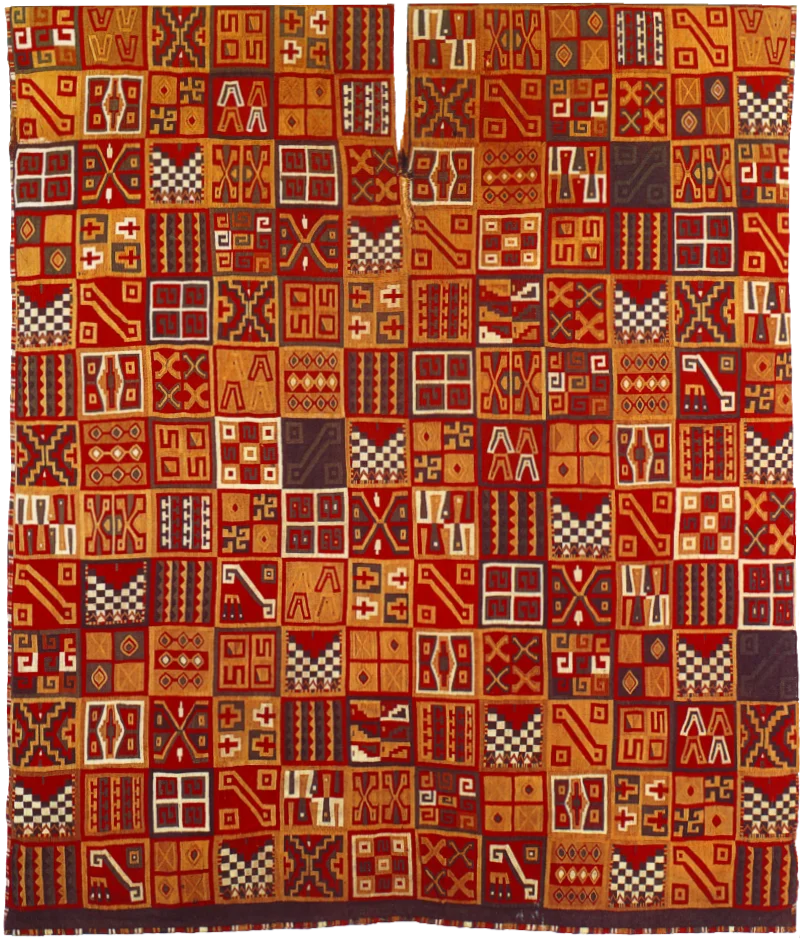
In tapestry weaving, colored threads pass over and under a fixed set of lengthwise threads. What are the lengthwise threads called?
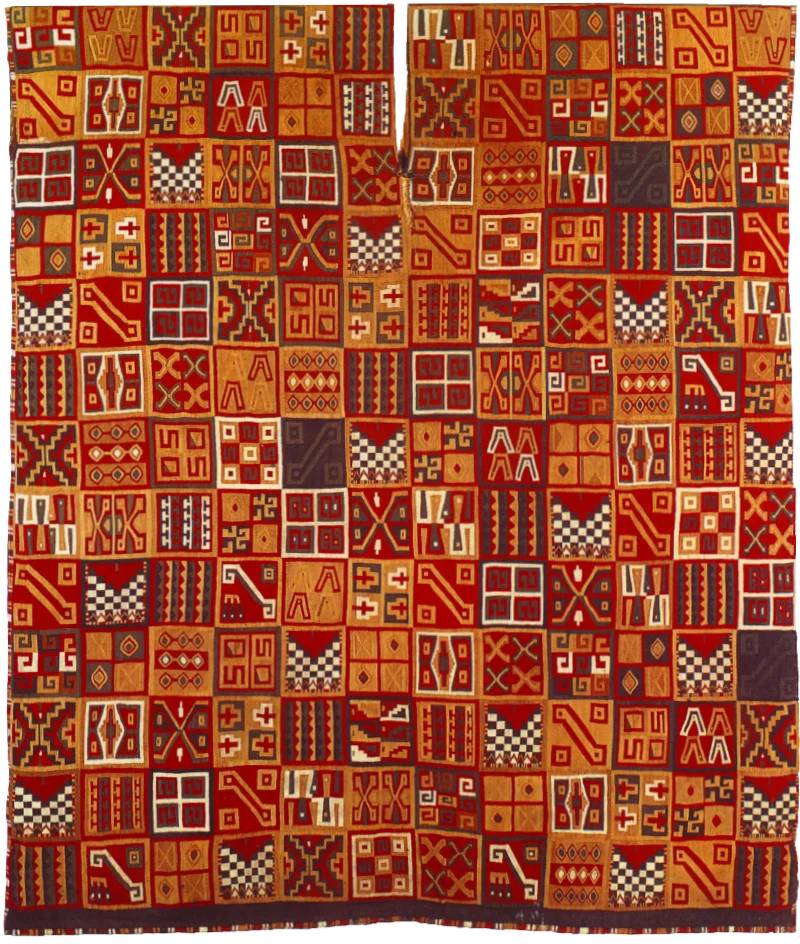
Besides clothing the wearer, what role did fine cloth play in the Inka state?
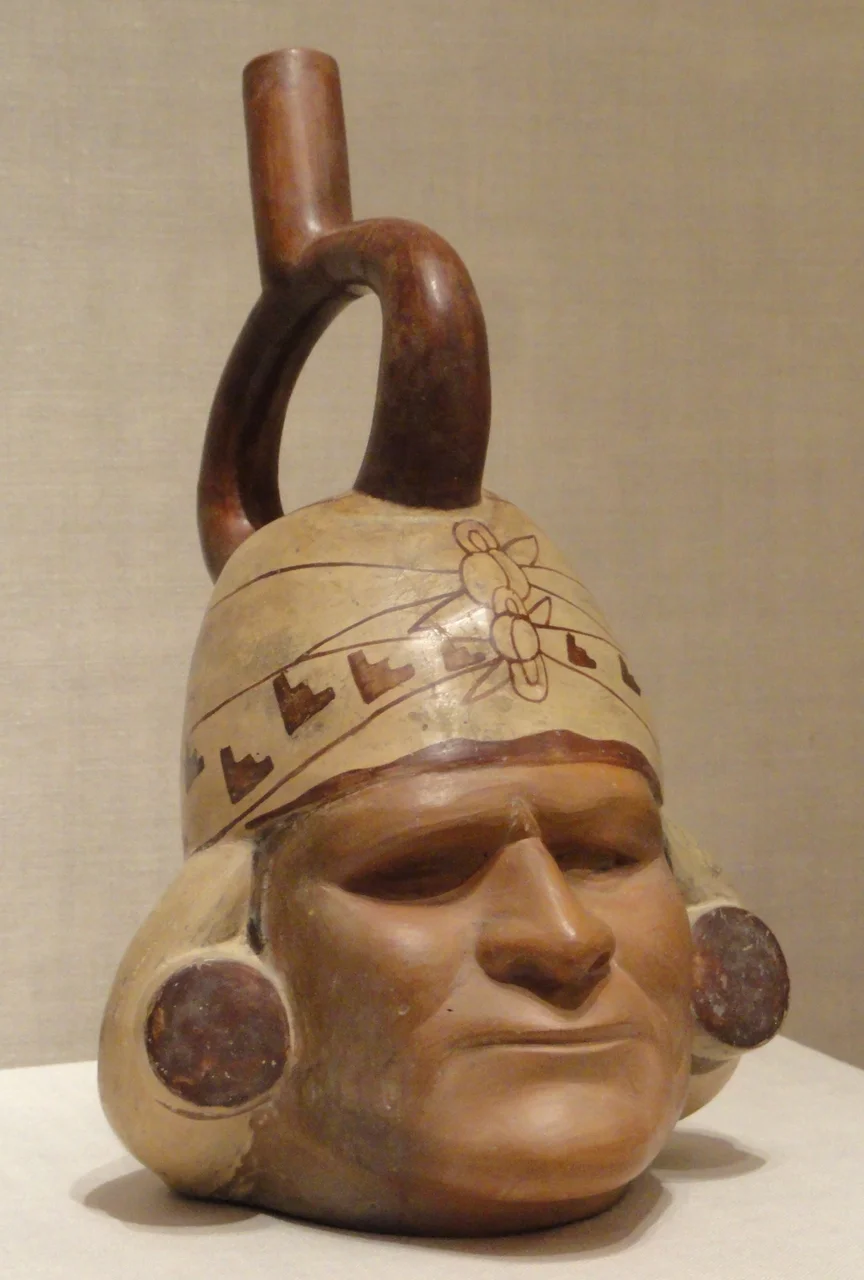
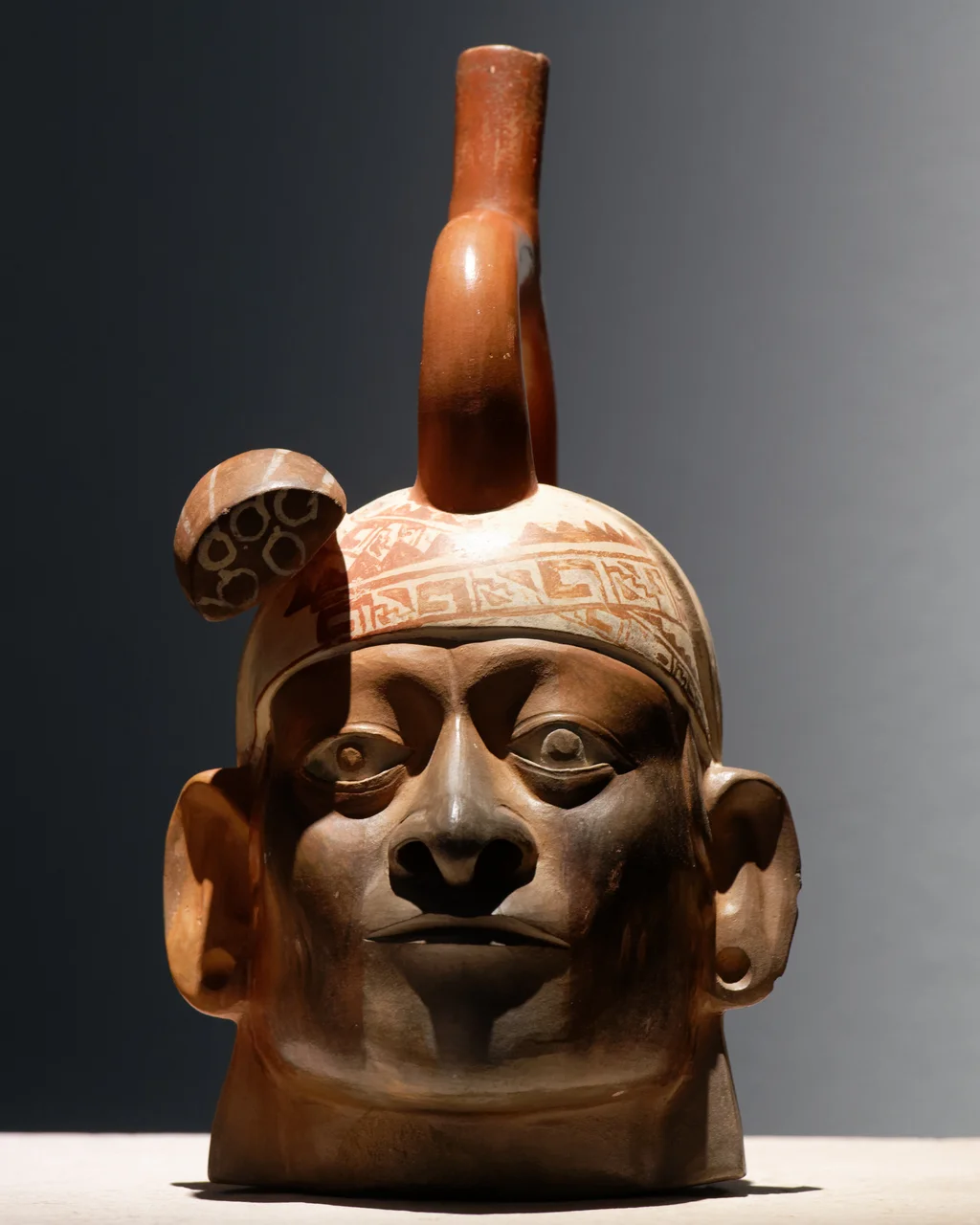
Several Moche portrait vessels show nearly the same face. What workshop technology explains this?
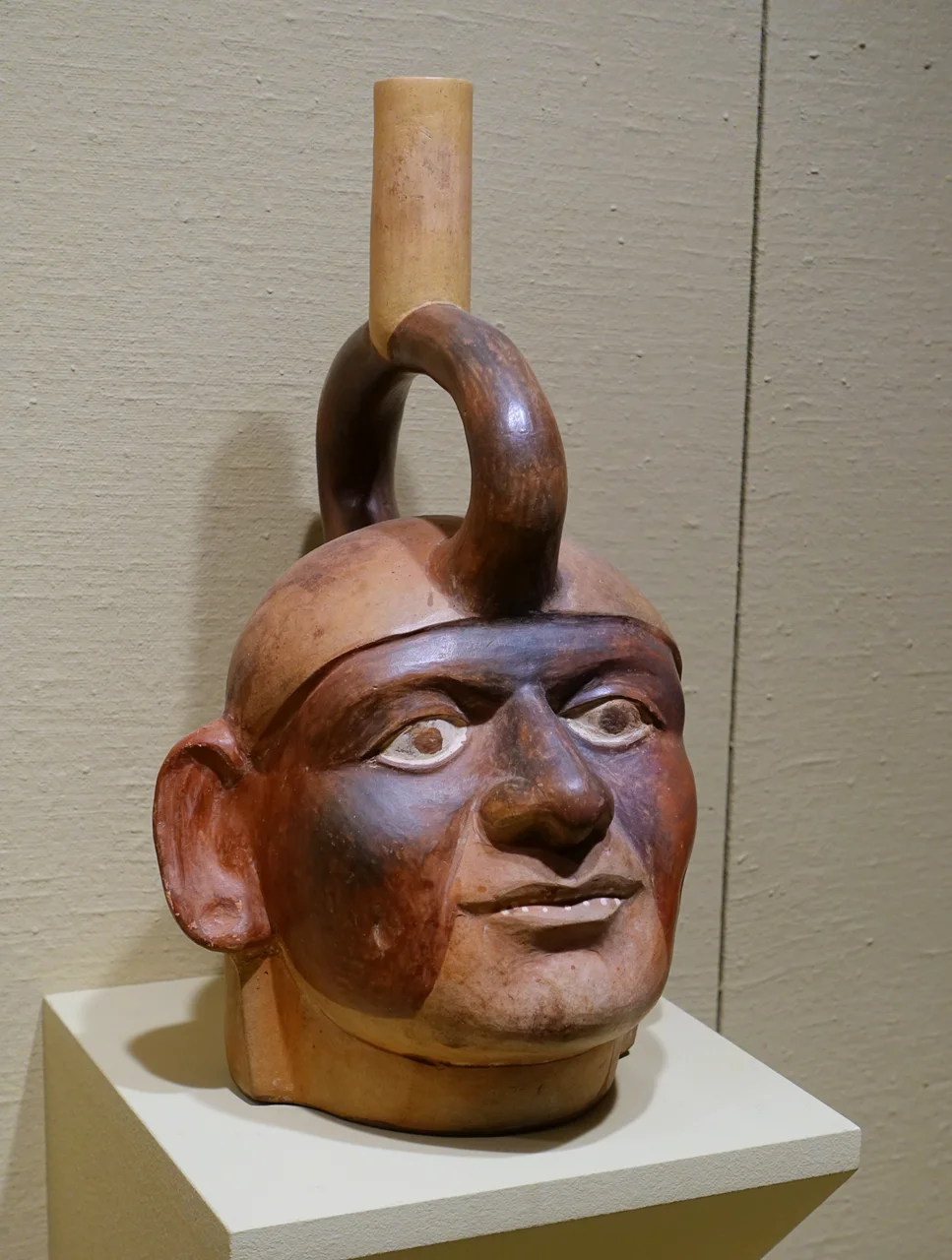
A Moche bottle has two branches that join in one spout. What practical advantage have scholars proposed for this stirrup-spout form?
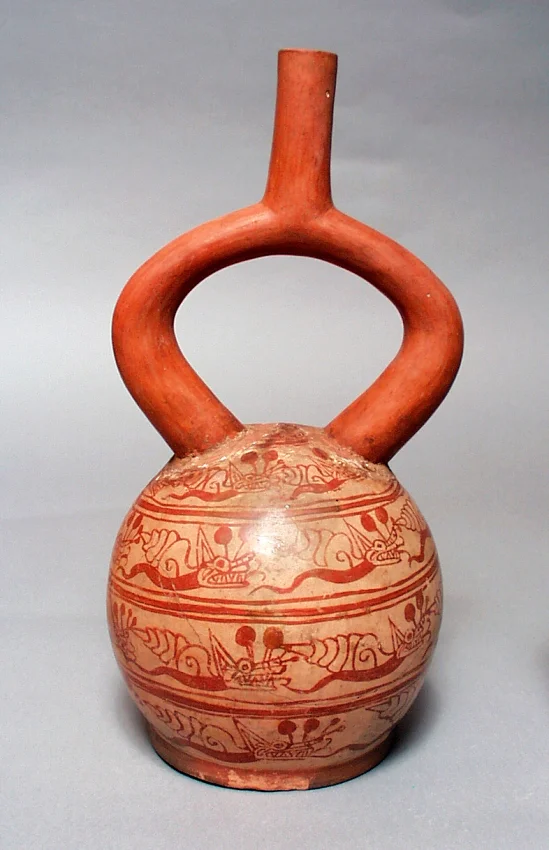
A Moche portrait vessel carefully models fleshy cheeks, furrowed brows, and scars. What visual goal does this naturalism suggest?
Moche metalworkers made copper-based objects appear gold or silver. Which technique produced that effect?
A sculptural ceramic bottle with a stirrup spout comes from Peru's north coast. Which culture is most closely associated with this form?
Nasca workers made long lines across the desert pampa that show up light against darker ground. What technique made the lines visible?
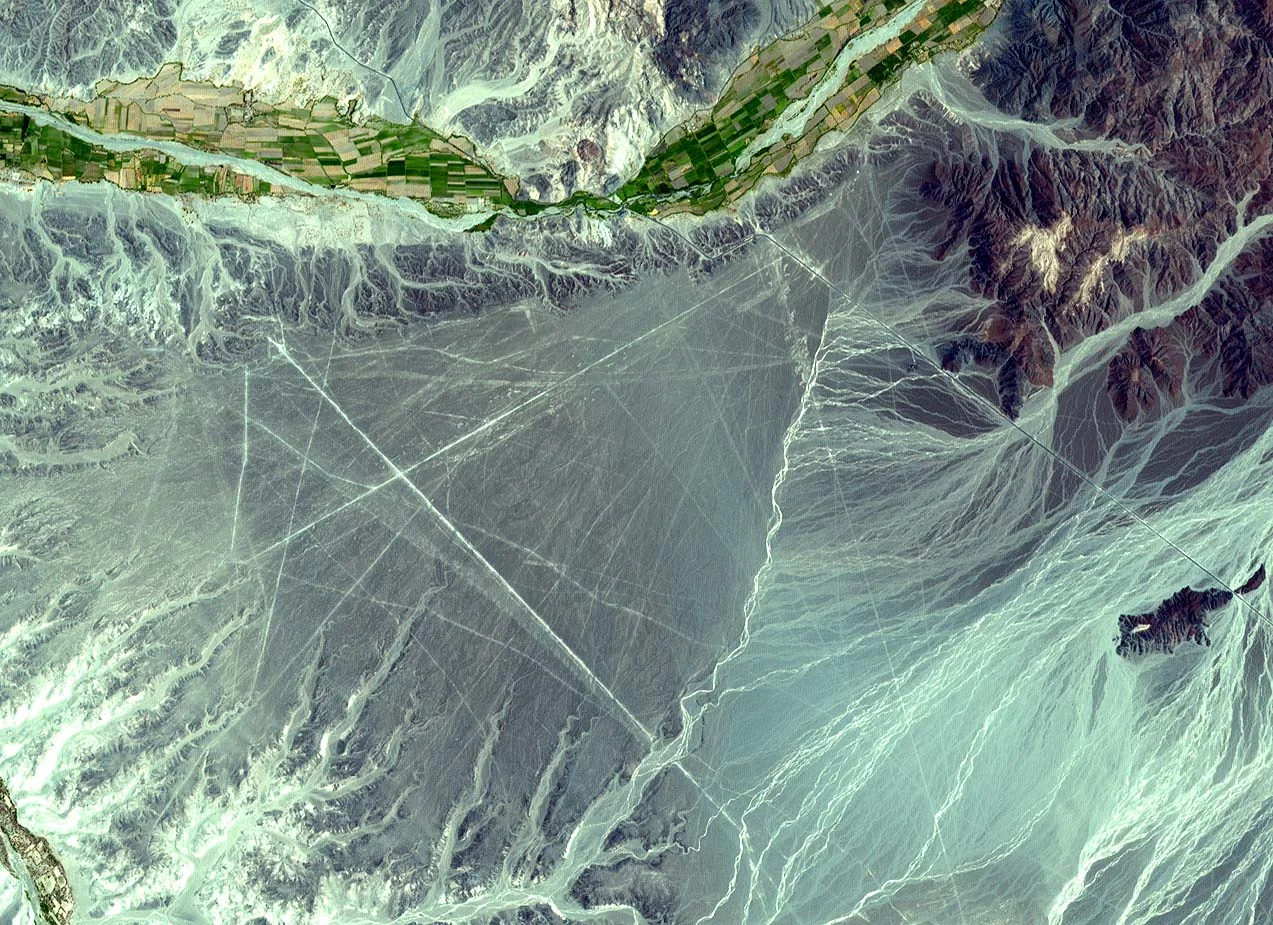
What is the most cautious interpretation of the Nasca geoglyphs' purpose?
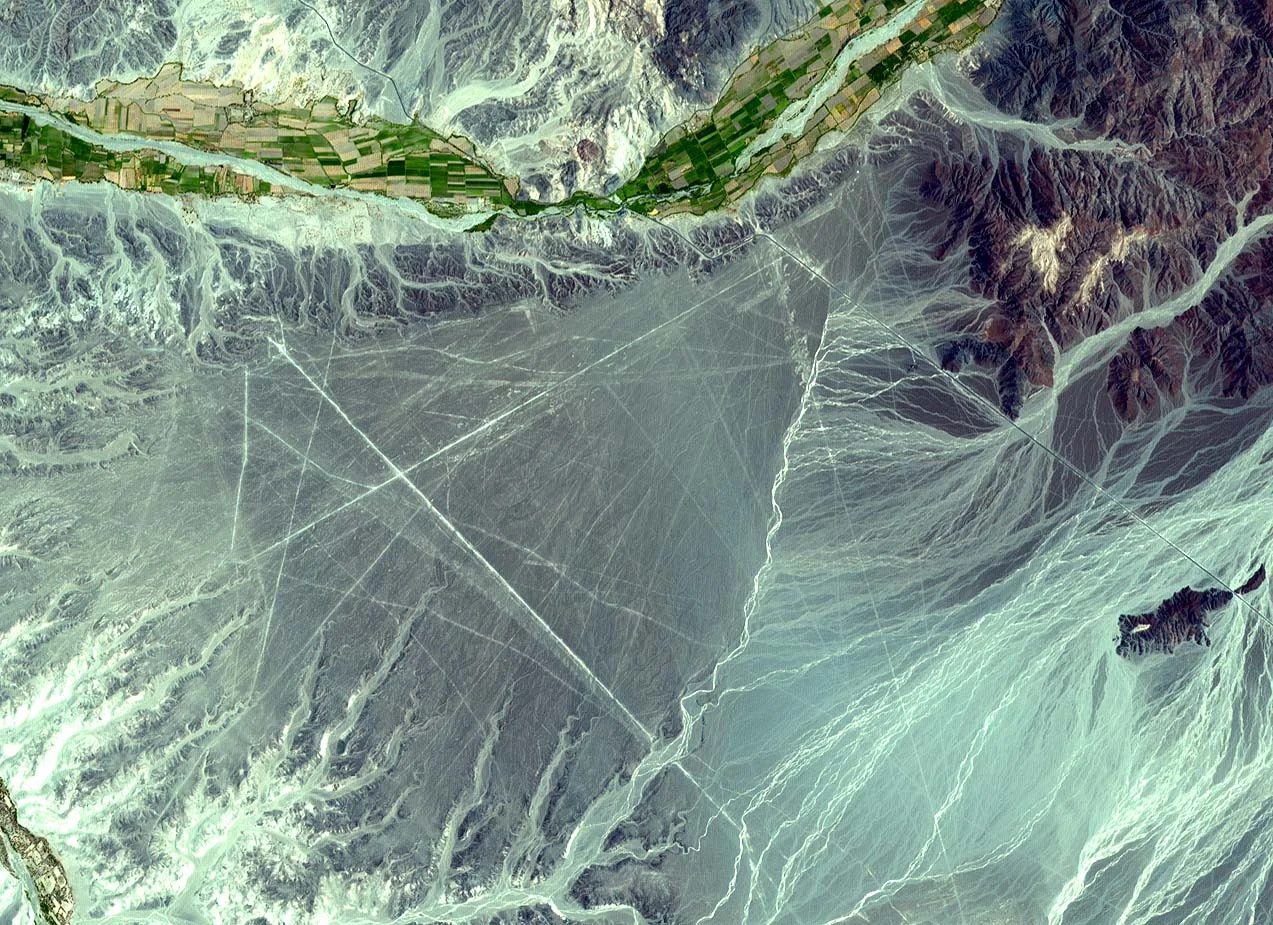
The huge hummingbird at Nasca is a design made on the desert floor, best seen from the air. What term names a large design made on the ground like this?
What is the Inka device made of knotted cords for keeping records?
On an Inka quipu, what combination could encode information for trained readers?
The Inka built a vast road network across mountains, coasts, and forests. What was its main purpose?
How is a quipu unlike a codex?
A tall carved stone with a fanged mouth and snake-like hair stands deep in dark temple galleries. Which culture made the Lanzón?
On the map, which letter marks the Nasca area on Peru's southern coast?
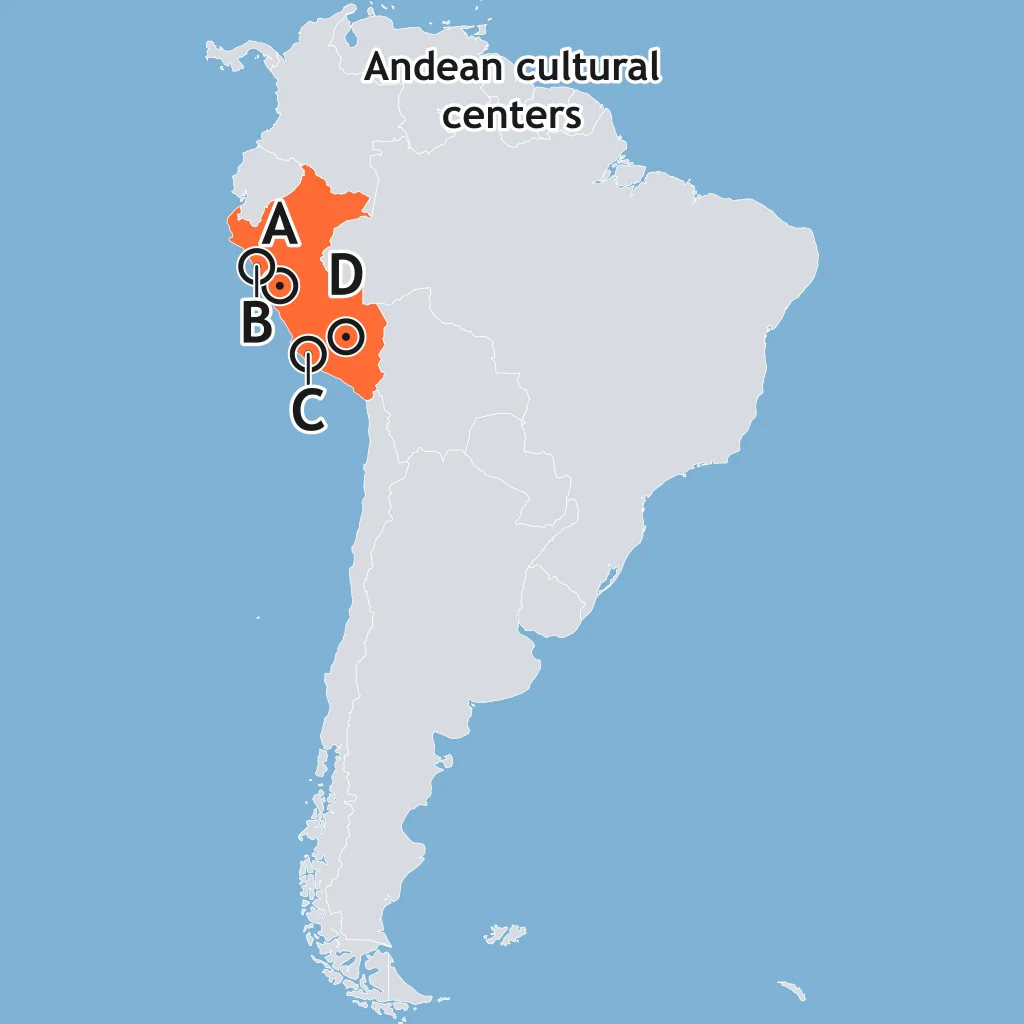
Match each signature to its culture: fanged stone deity in galleries; desert geoglyphs; mold-made portrait vessels; fitted stone city. Which sequence is correct?
Which of these Andean cultures is the latest?
Crack the passcode before the zombies get in.
Answer, then swat bugs for bonus points.
Race through questions at your own speed.
Same question on every screen. Fastest wins.

Pick a tile, answer, hit bonuses and steals.
African Sculpture and Masquerade
30 questions