Loading
by BlastRoom
Twenty questions on narration, tone, mood, irony and unity in Guy de Maupassant's short story 'The Necklace'.
#tone#matatag_english_10
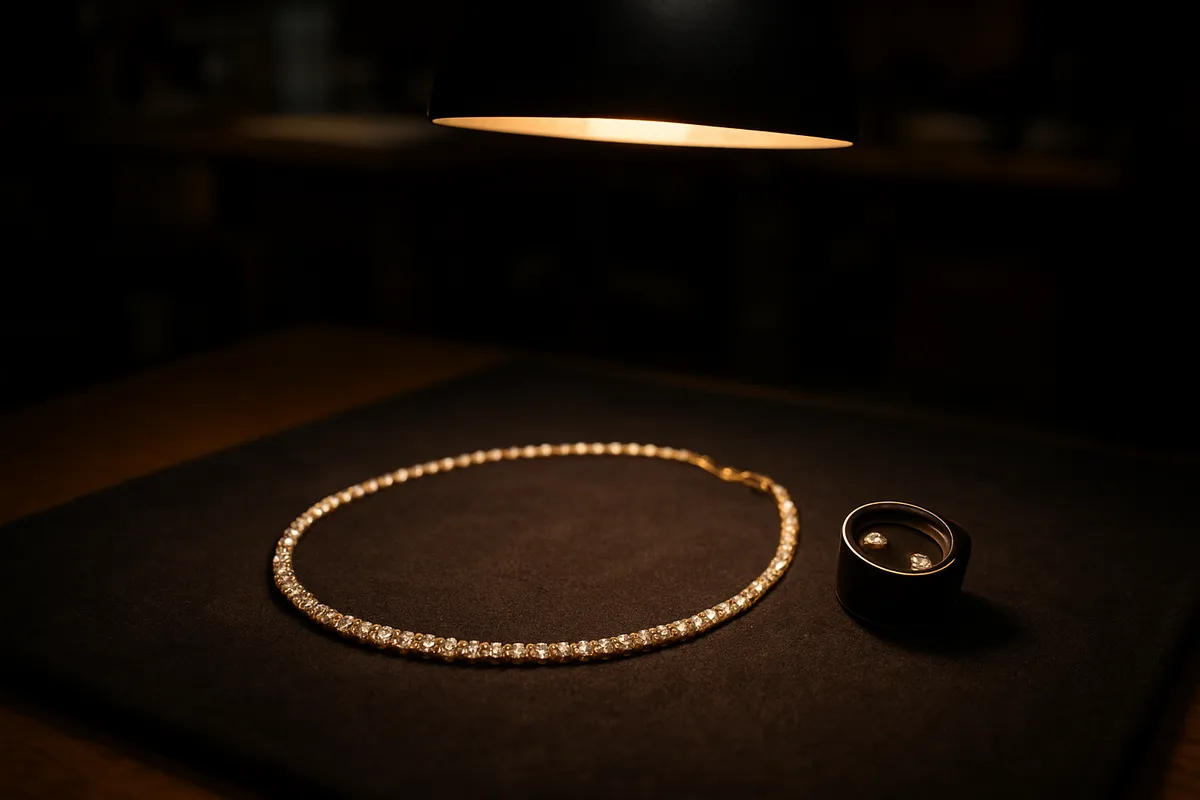
20 questions
One question set, multiple game modes. Tap any game to see it in action. Not sure which to pick?
In 'The Necklace' by Guy de Maupassant, who tells the story?
In Maupassant's 'The Necklace' the narrator never tells the reader that the borrowed necklace is paste until Madame Forestier says so. What does this withholding do?
In 'The Necklace' (Maupassant, tr. Jonathan Sturges) the narrator asks after the swap: 'If she had detected the substitution, what would she have thought, what would she have said?' What do these questions show?
In Maupassant's 'The Necklace': 'She suffered from the poverty of her dwelling, from the wretched look of the walls, from the worn-out chairs, from the ugliness of the curtains.' Whose judgment do 'wretched' and 'ugliness' report?
In Maupassant's 'The Necklace' Mathilde tells Madame Forestier: 'I have had days hard enough, since I have seen you, days wretched enough,' and lays the blame on her friend. What does this show about Mathilde?
In Maupassant's 'The Necklace': 'She washed the dishes, using her rosy nails on the greasy pots and pans. She washed the dirty linen, the shirts, and the dish-cloths, which she dried upon a line.' What mood do these lines create?
In Maupassant's 'The Necklace': 'He gave notes, took up ruinous obligations, dealt with usurers, and all the race of lenders. He compromised all the rest of his life.' What is the narrator's tone here?
In Maupassant's 'The Necklace': 'She danced with intoxication, with passion, made drunk by pleasure, forgetting all, in the triumph of her beauty, in the glory of her success.' What mood do these lines create?
In Maupassant's 'The Necklace': 'She was one of those pretty and charming girls who are sometimes, as if by a mistake of destiny, born in a family of clerks.' What does 'as if by a mistake of destiny' do to the tone?
In Maupassant's 'The Necklace' Monsieur Loisel says over the soup: 'Ah, the good pot-au-feu! I don't know anything better than that,' while Mathilde thinks of dainty dinners. What is the mood of this scene?
At the end of Maupassant's 'The Necklace' Madame Forestier says: 'Why, my necklace was paste. It was worth at most five hundred francs!' Why is this the story's central irony?
In Maupassant's 'The Necklace' Madame Forestier takes the case back without opening it, and only the reader knows a different necklace is inside. Which kind of irony is this?
In Maupassant's 'The Necklace' Madame Forestier says with a chilly manner: 'You should have returned it sooner, I might have needed it.' Why is this line ironic for the reader?
In Maupassant's 'The Necklace' the ball is Mathilde's one triumph and also the night that ruins her. What makes this ironic?
In Maupassant's 'The Necklace' Mathilde borrows the jewels so she will not look poor. Ten years later she is 'dressed like a woman of the people'. Where is the irony?
In Maupassant's 'The Necklace', how does the title serve the whole story?
In Maupassant's 'The Necklace' the four hundred francs for the dress are the exact sum Loisel had saved to buy a gun. What does this small detail add to the story as a whole?
In Maupassant's 'The Necklace' the jeweler says: 'It was not I, madame, who sold that necklace; I must simply have furnished the case.' Why does the story need this line?
In Maupassant's 'The Necklace' the story ends on Madame Forestier's words and stops there. What does ending at that moment give the whole story?
Which ending would break the unity of Maupassant's 'The Necklace'?
Crack the passcode before the zombies get in.

Pick a tile, answer, hit bonuses and steals.
A Doll’s House: Dialogue and Subtext
20 questions