Loading
by BlastRoom
Grade 4 questions on how water, ice, wind, and vegetation break down rock and change the rate that land wears away.
#weathering_and_erosion#us_grade_4_science
40 questions
One question set, multiple game modes. Tap any game to see it in action. Not sure which to pick?
Answer to place stones and capture territory.
Outrun the snow together.
Earn blasts, then hunt the other team.
Answer to earn energy, then climb.

The class blasts through walls together.
Bid on mystery lots. Most money wins.
Sell tours. Nice, standard, or a total scam.

Answer, restock, and serve the rush.
More correct answers pulls the rope your way.
Answer, then shoot down the alien wave.
Answer, then tap to leap the frozen ridge.
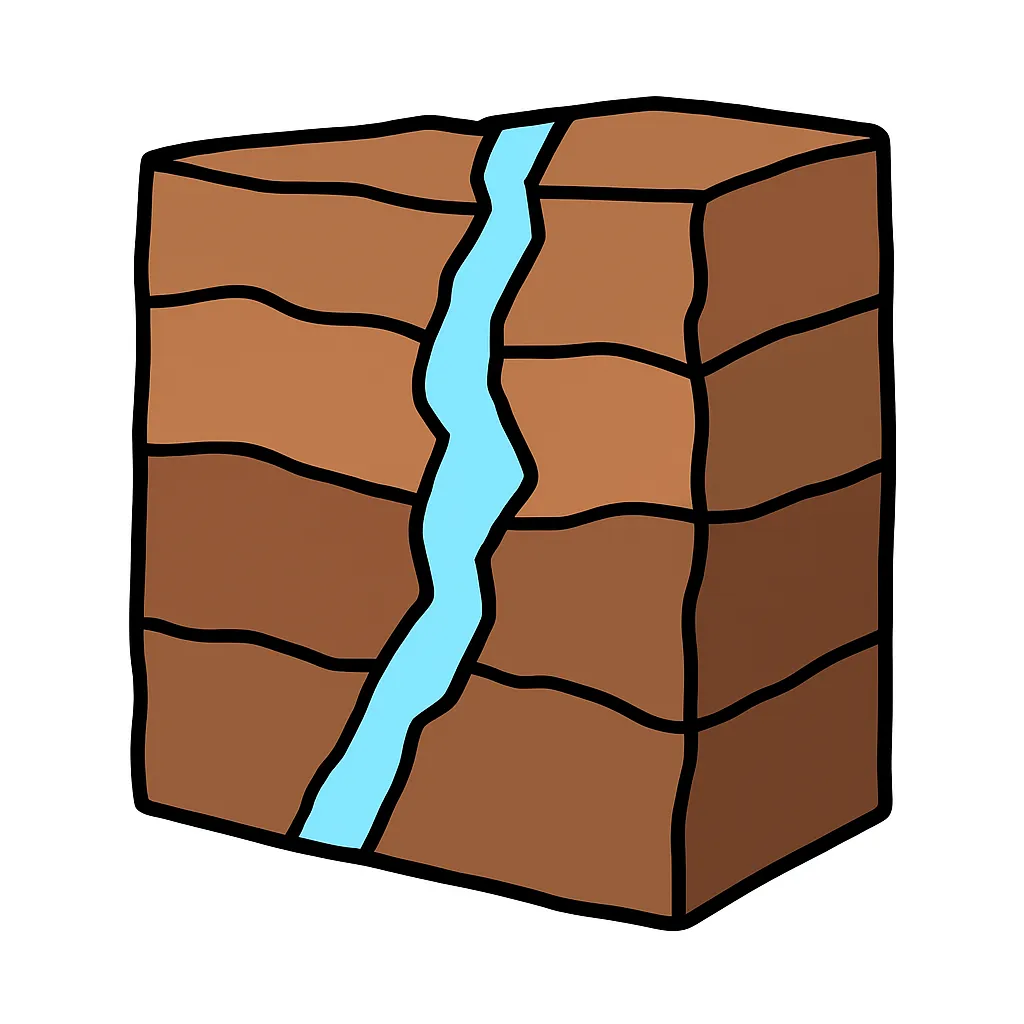
Rain water seeps into a crack in a rock. On a cold night the water freezes, and the ice pushes the crack wider until a chunk breaks off and stays right there. What process is this?
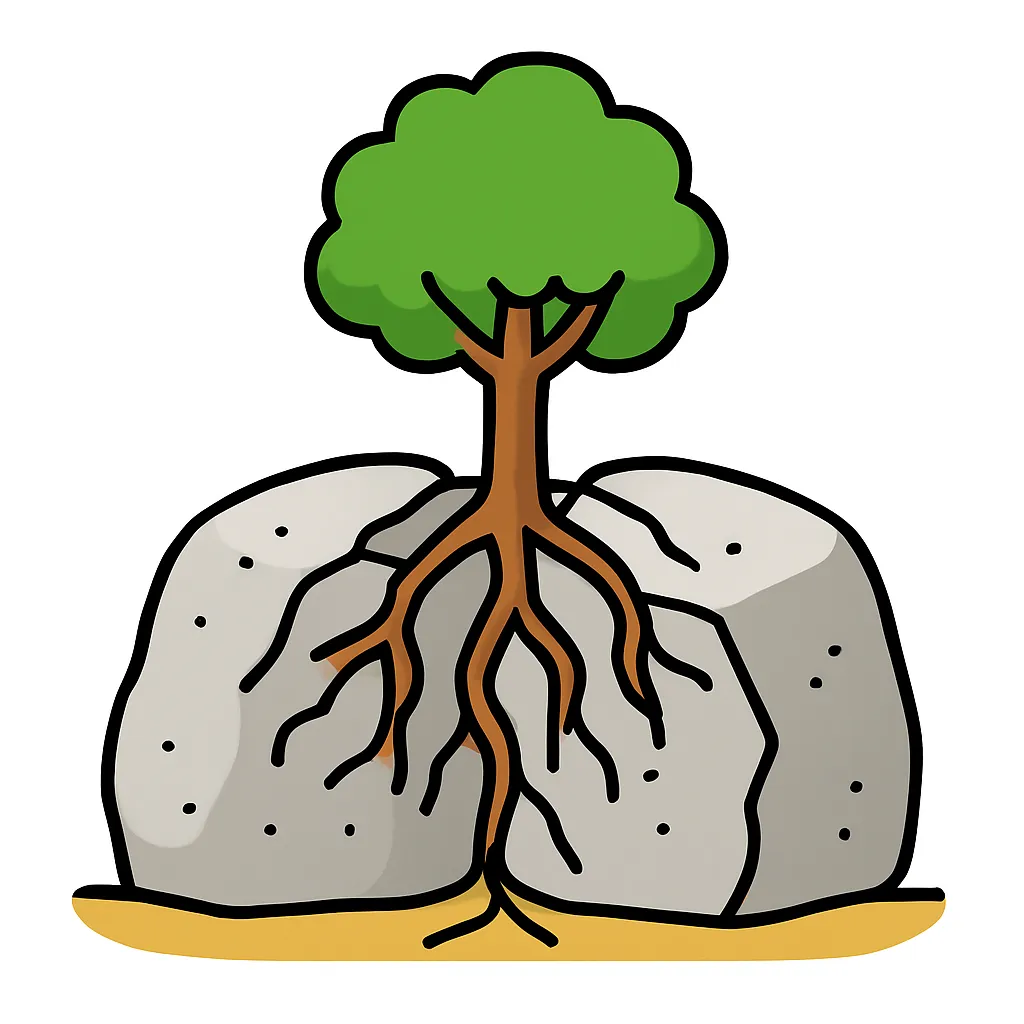
A young tree grows on a rocky hillside. Over time its roots push into a crack in a boulder and split the boulder apart. What does this show about vegetation?
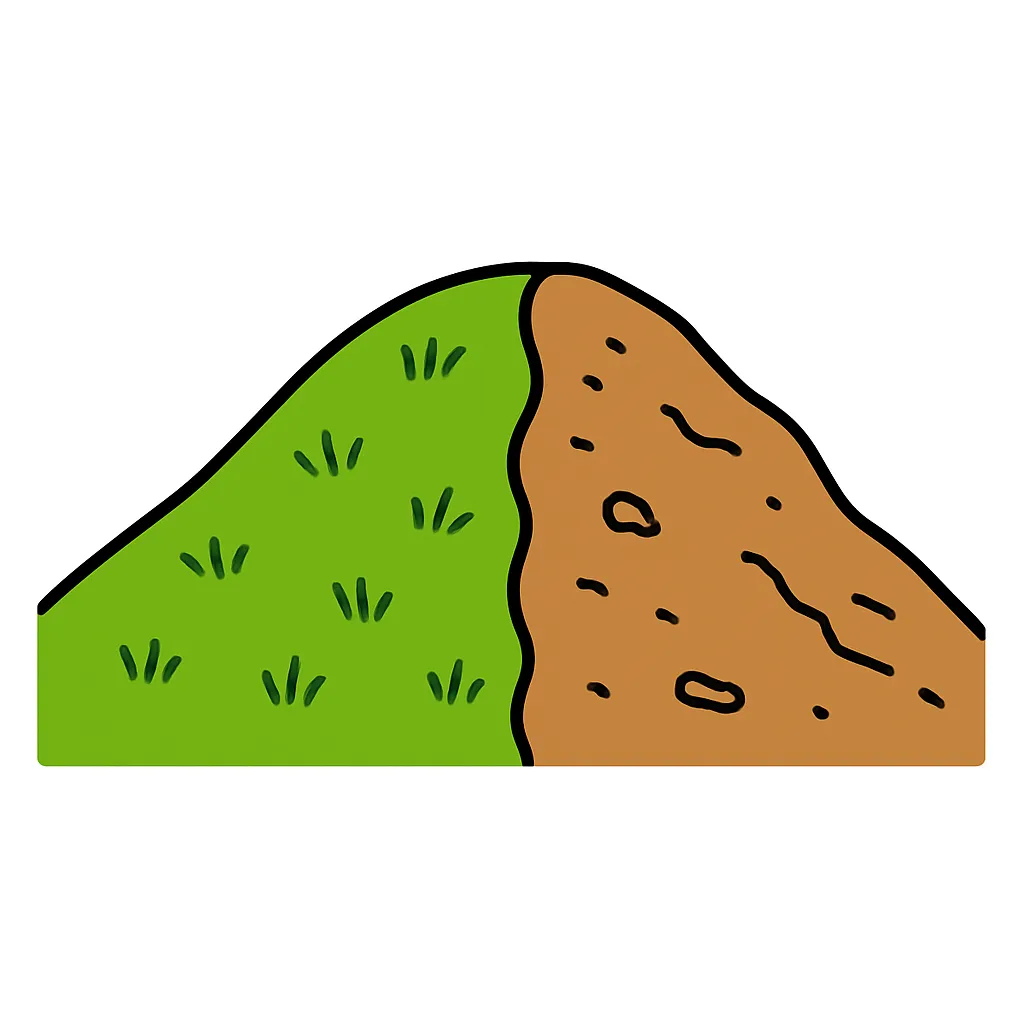
Two hillsides get the same heavy rain. One is covered with thick grass and the other is bare soil. Which hillside loses more soil, and why?
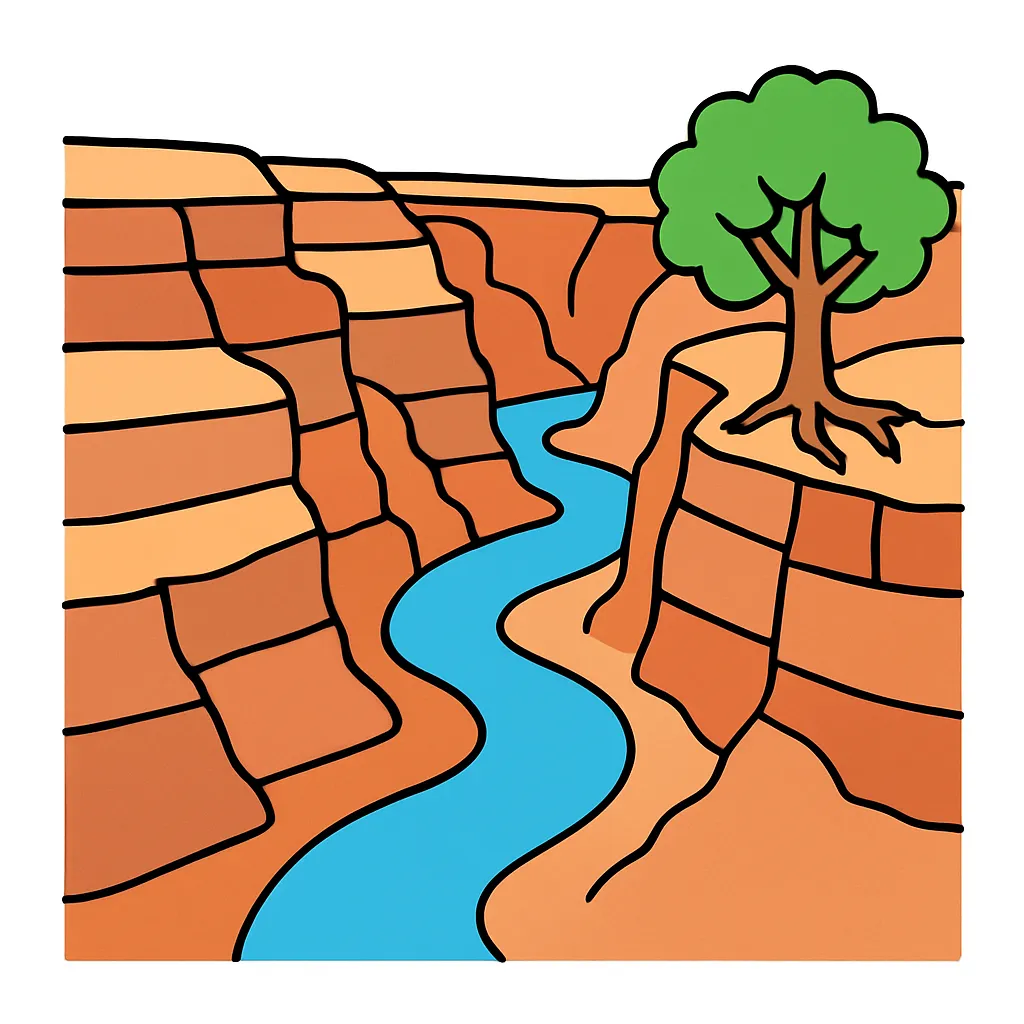
A wide, deep canyon has a river running along the bottom of it. Over a long time, what most likely made the canyon?
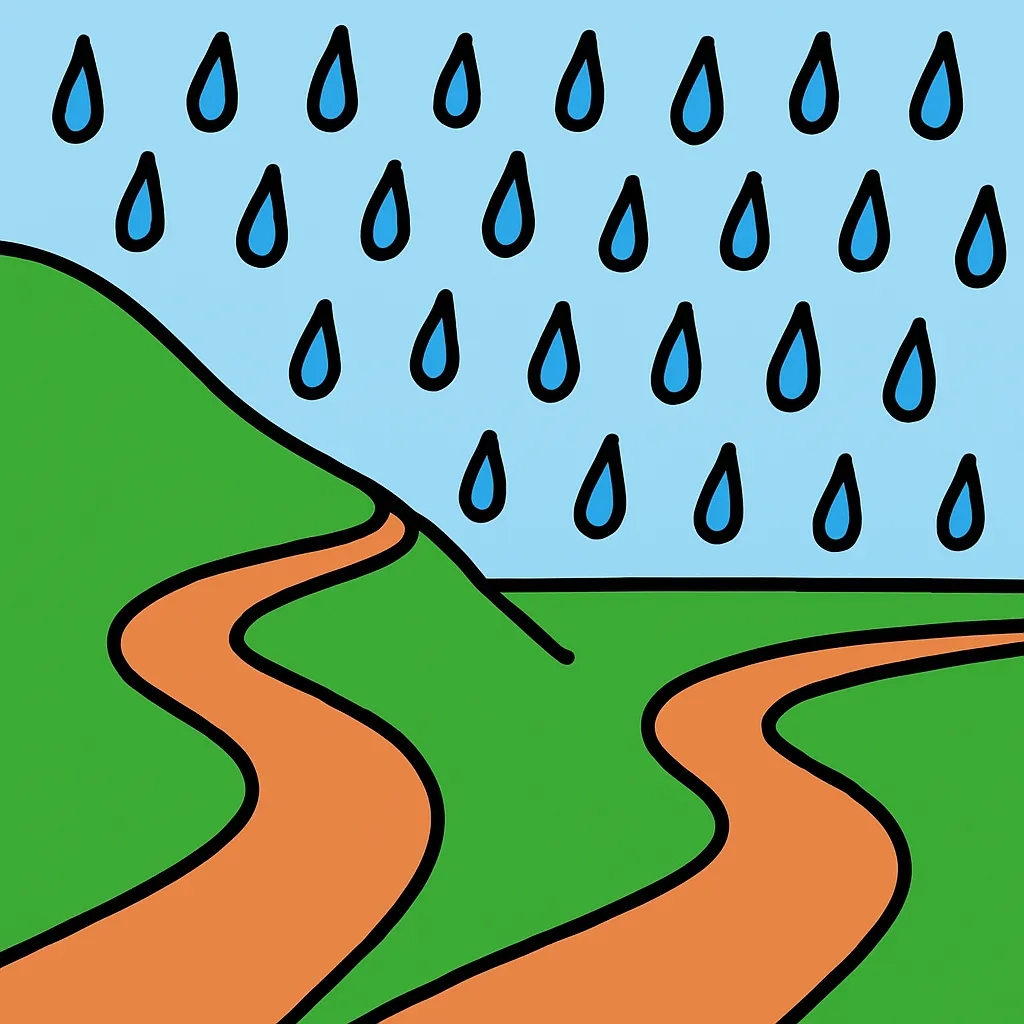
Rain falls on two dirt paths. One path runs down a steep slope and the other crosses nearly flat ground. Where does the water erode the soil faster?
A fast river slows down when it reaches a flat plain. The sand and pebbles it was carrying settle to the bottom and stay there. What is this process called?
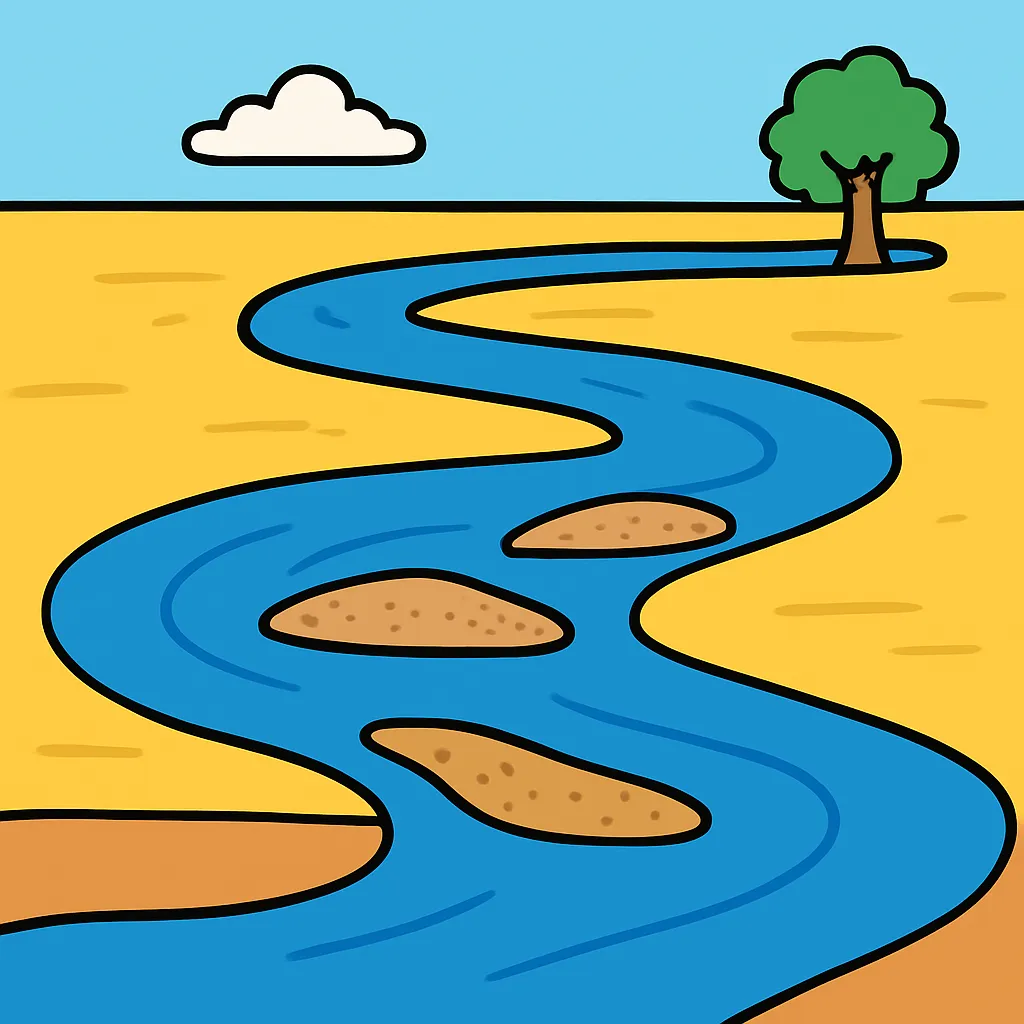
A dry desert has very few plants, and strong wind blows across the loose sand all year. What effect does the wind have on this land?
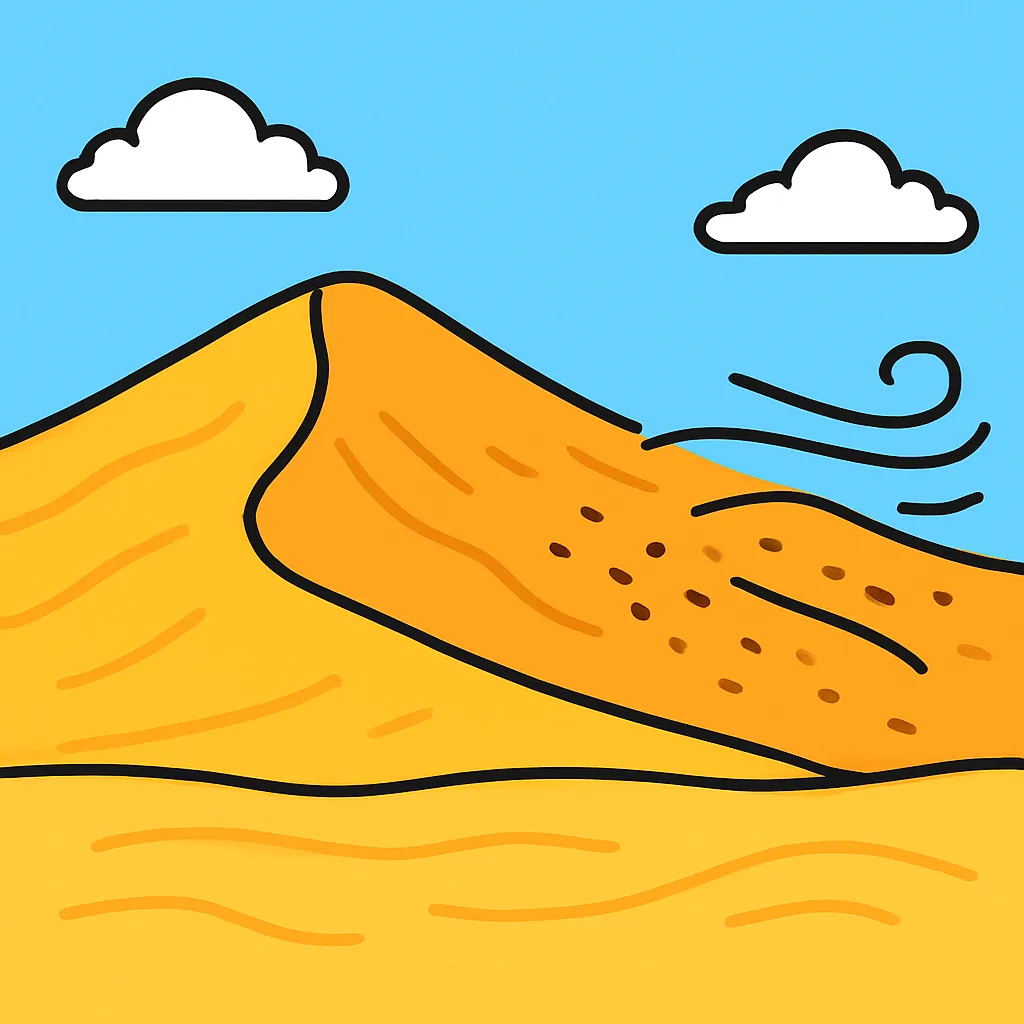
A glacier moves slowly down a mountain valley. Rocks frozen into the bottom of the ice scrape along the valley floor as the ice creeps forward. What is the ice doing to the valley?
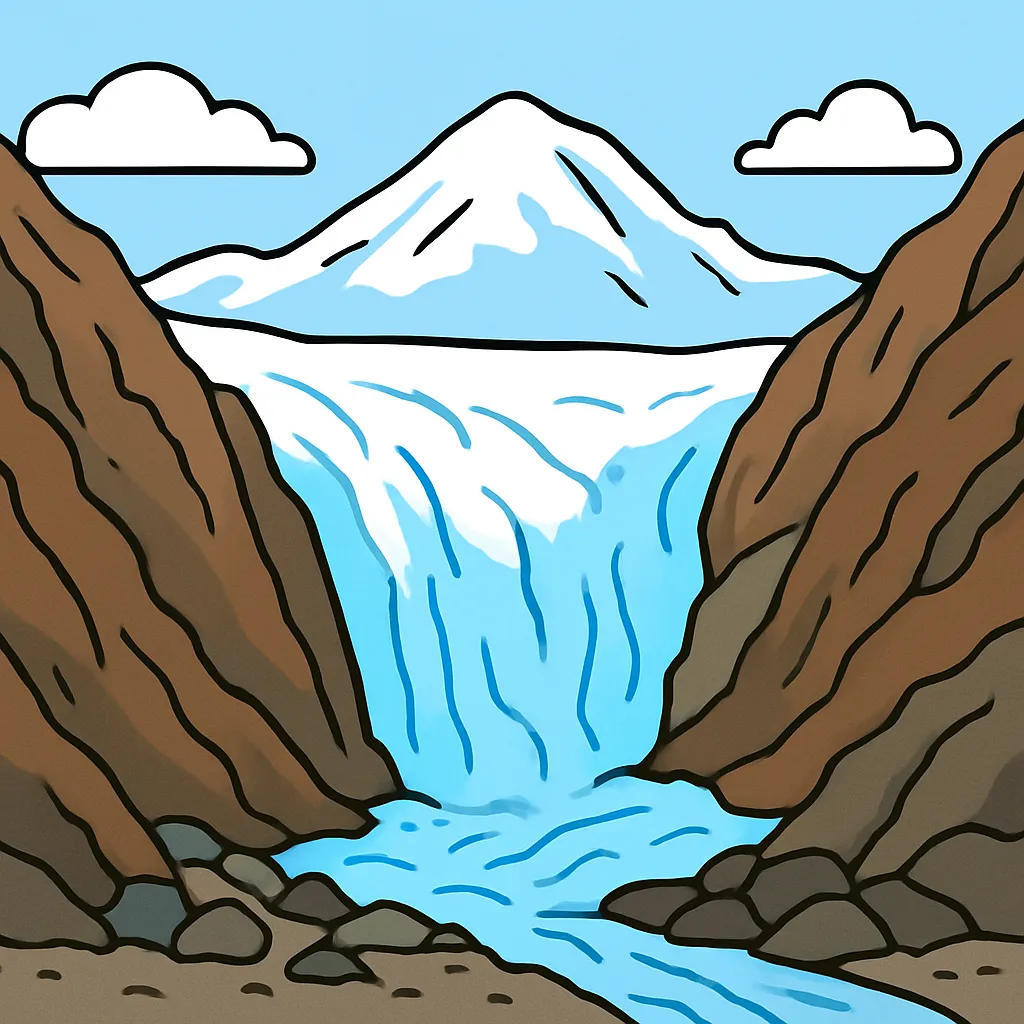
Two rock cliffs get the same amount of rain. In the cracks of one cliff the water freezes almost every night; on the other cliff it never freezes. Which cliff breaks apart faster?
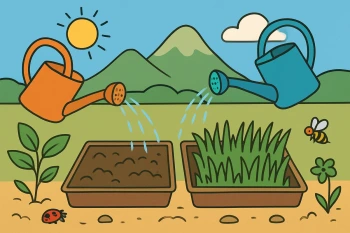
A gardener sprinkles water gently on one bare mound of soil and sprays a strong blast of water on a matching mound. Which mound loses more soil, and why?
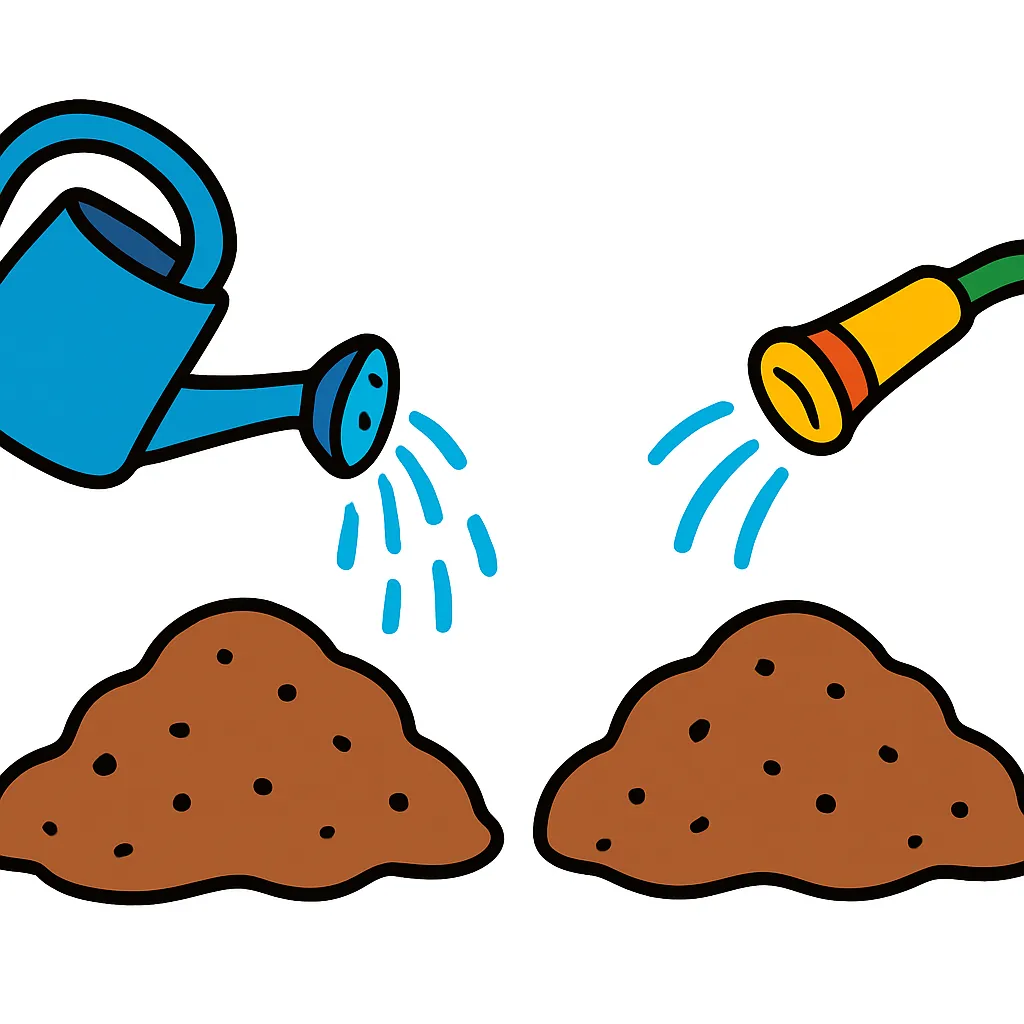
Weathering can break a solid rock into smaller pieces while those pieces stay in the same spot.
When a glacier melts, it can leave behind the rocks and sediment it was carrying in a new place.
A seaside cliff has a deep notch worn into its base, right at the height the sea water reaches at high tide. What agent of erosion most likely carved the notch?
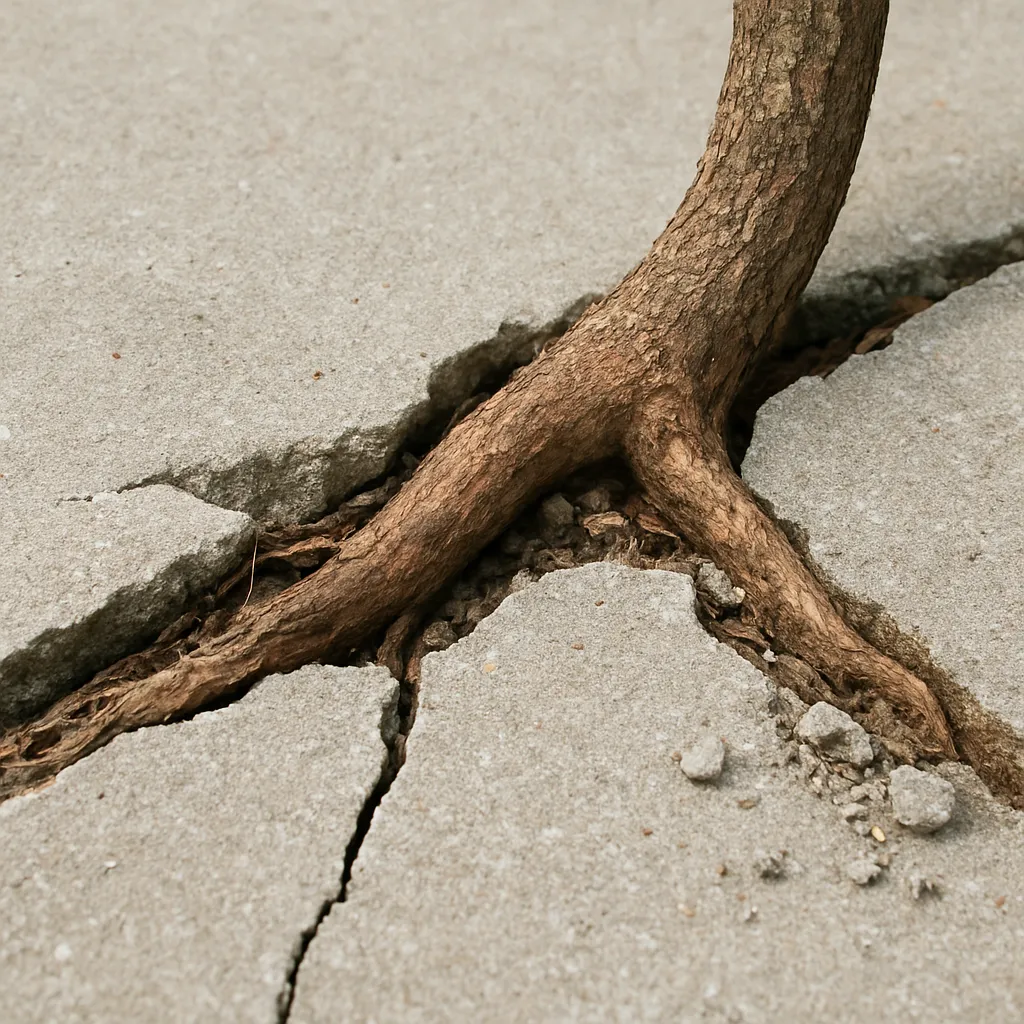
A tree root grows into a crack in a sidewalk slab and slowly pushes the concrete apart, but every broken piece of the sidewalk stays exactly where it broke. What process is taking place?
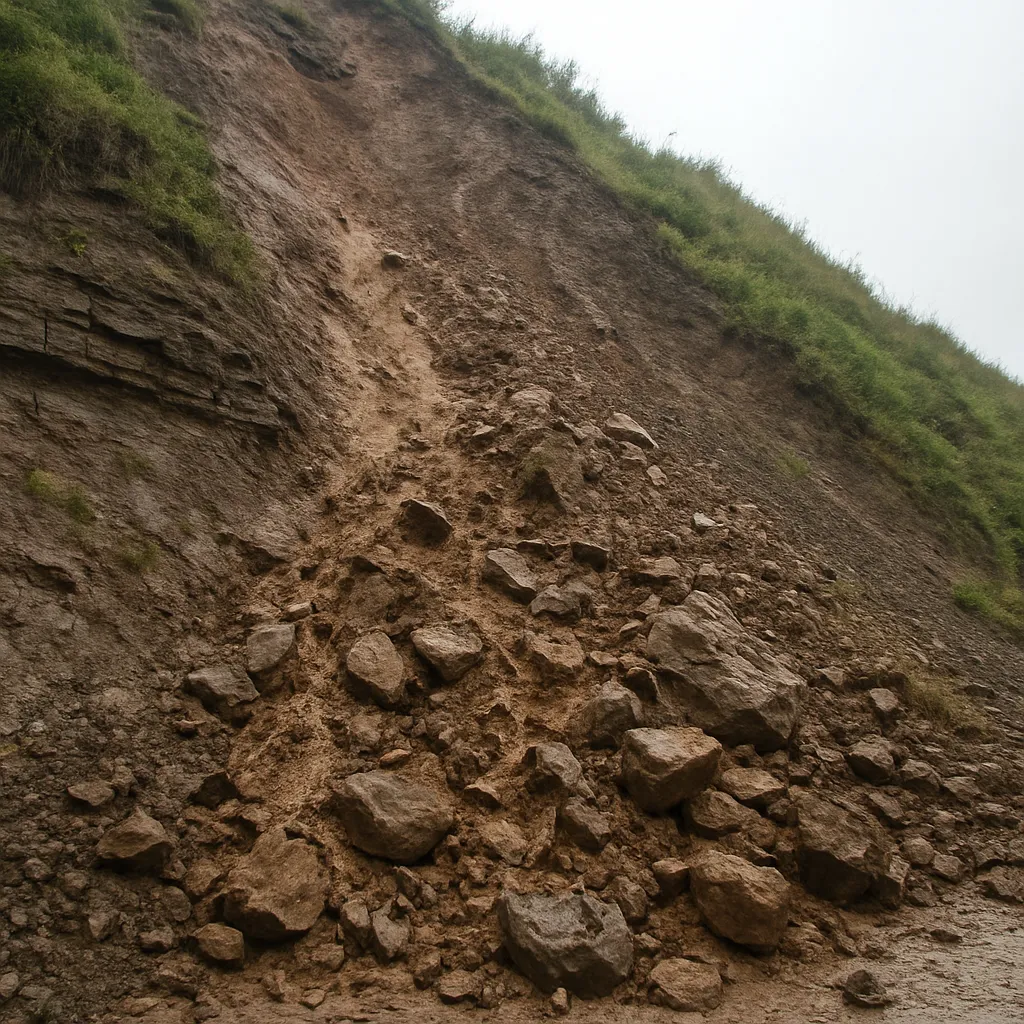
After days of heavy rain soak a steep hillside, a mass of loosened rock and soil suddenly slides downhill and piles up at the bottom. What force mainly pulled that material downhill?
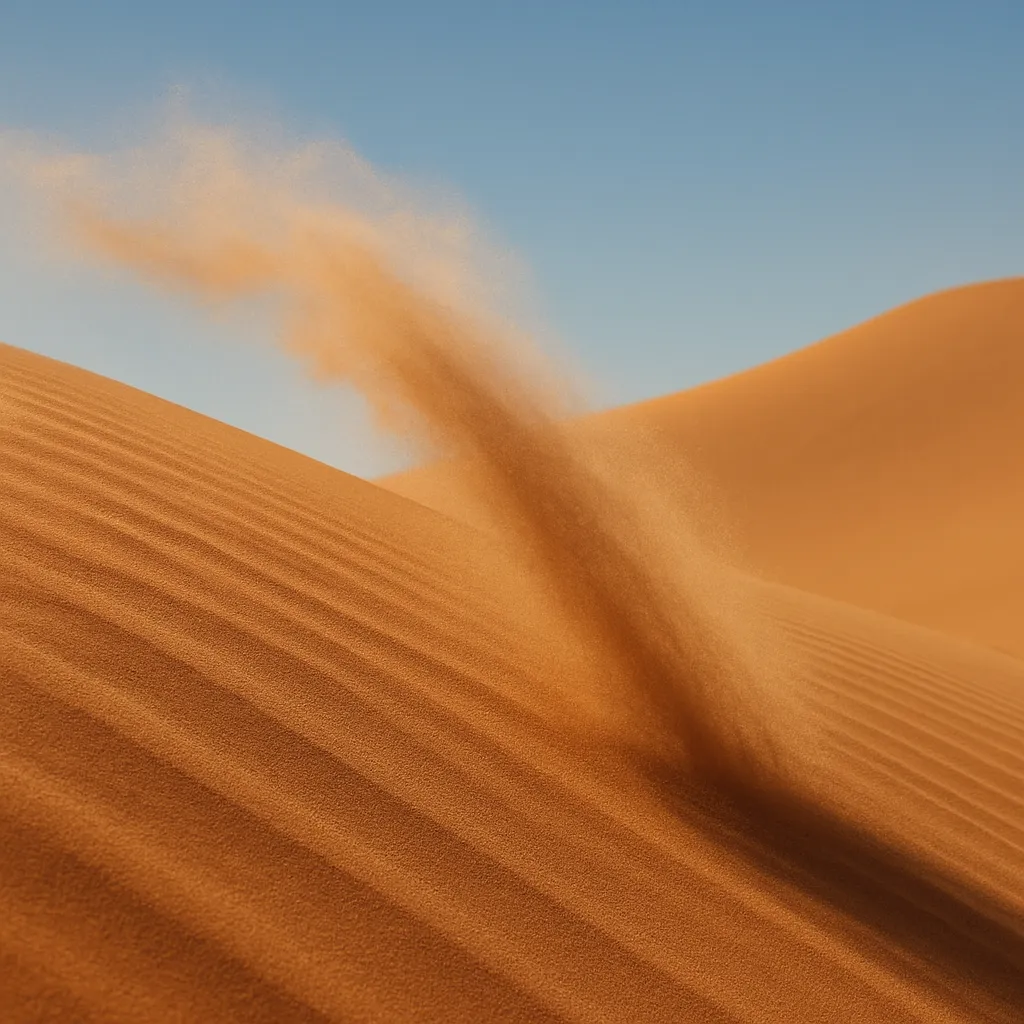
True or False: A smooth, curved rock surface found deep in a desert, far from any river, with fine grooves lined up in the same direction as the local prevailing winds, is most likely evidence that a river once flowed across that spot.
A strong wind lifts loose sand from one dune and carries it a mile away before dropping it onto another dune. What process carried the sand from the first dune to the second?
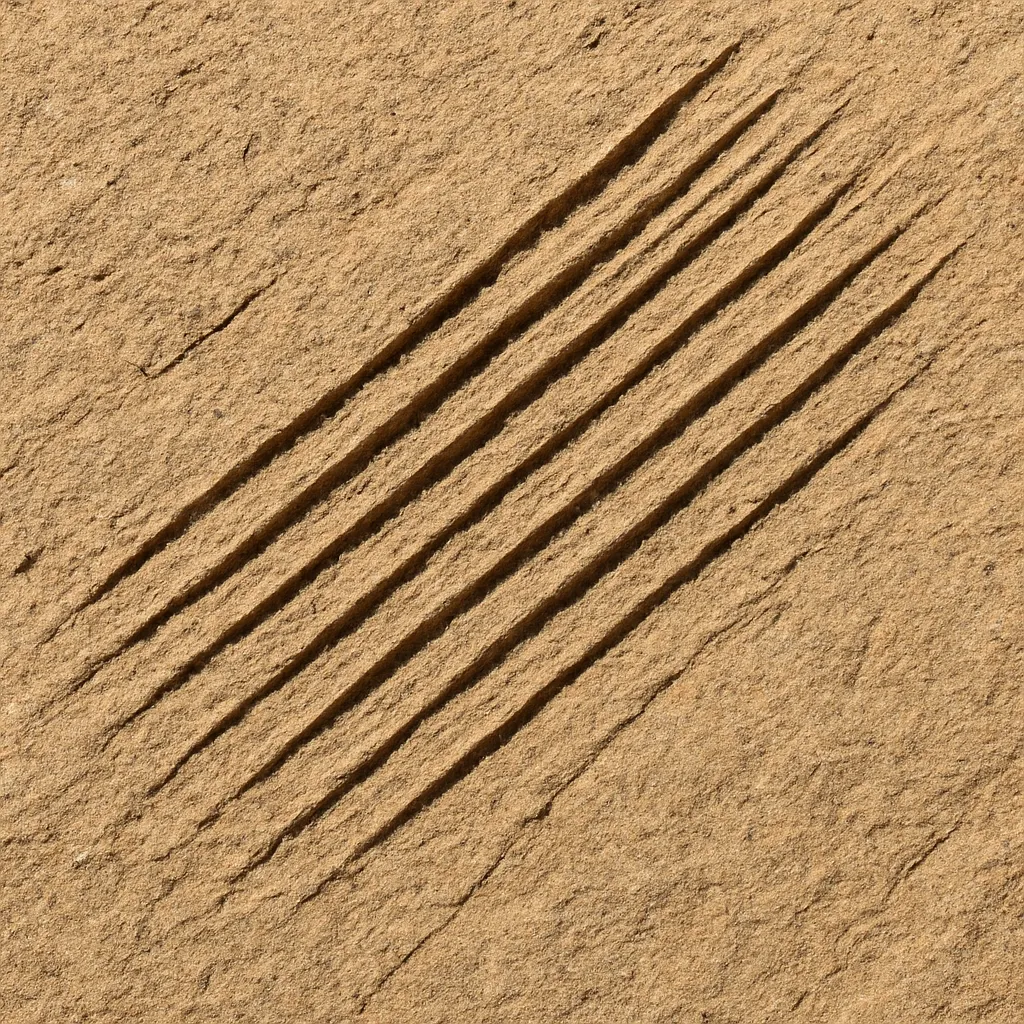
A geologist studies a valley floor and finds long, parallel scratches cut deep into solid bedrock, running the length of the valley. What most likely caused these scratches?
Rainwater that is slightly acidic drips onto a limestone rock for many years, and the rock's surface slowly dissolves and pits. What is dissolving the rock?
A farmer notices his riverbank losing soil every time the river floods. He plants a row of trees along the bank to help hold the soil in place. Why does this reduce erosion?
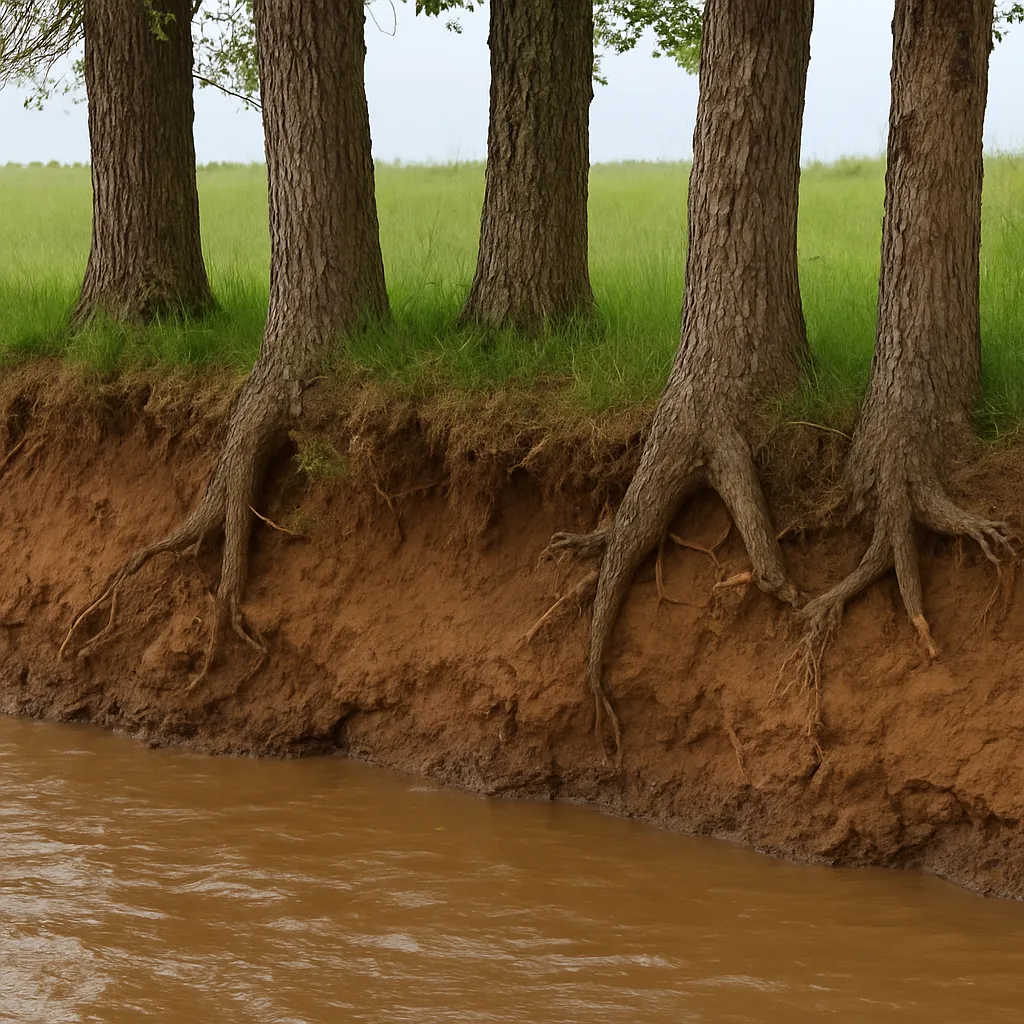
Sharp, angular rocks fall into a fast mountain stream. Miles downstream, those same kinds of rocks are found smooth and rounded, tumbling along the streambed. What best explains the change?
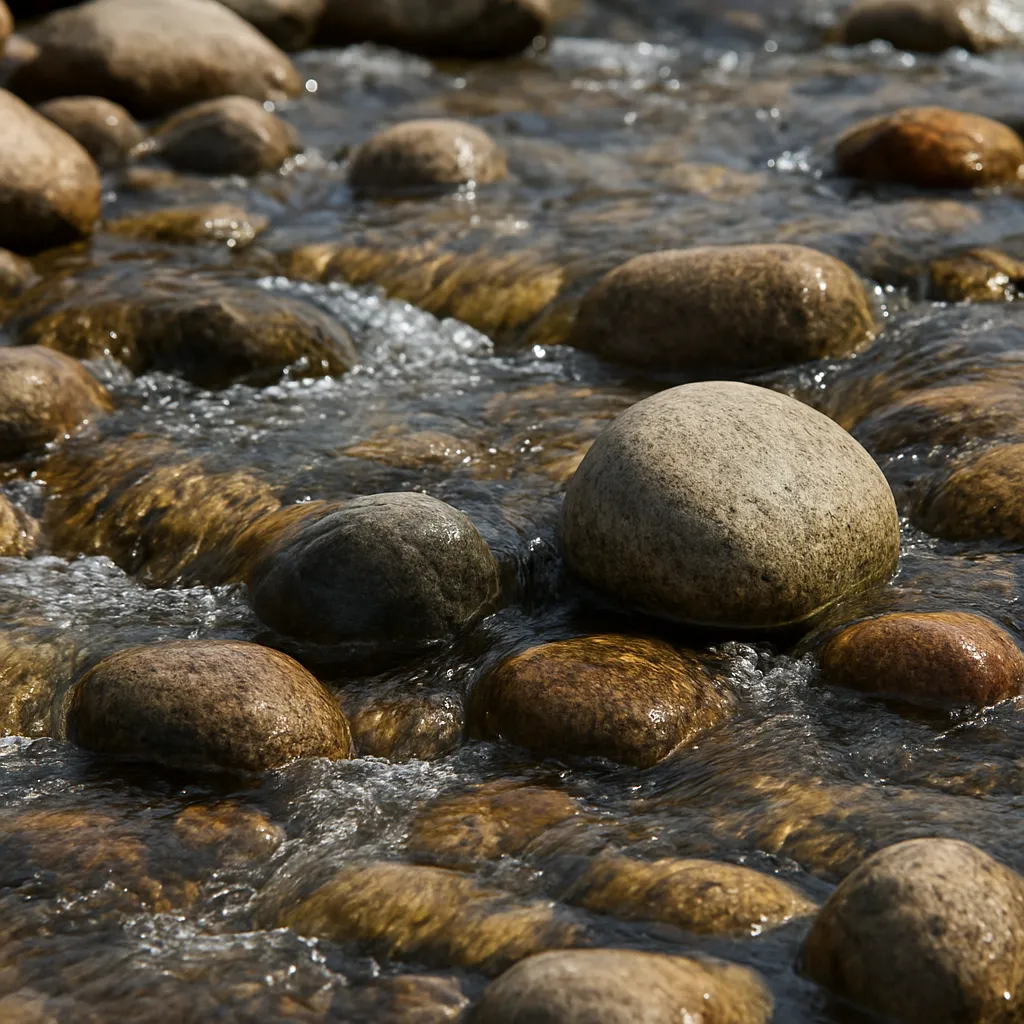
In a desert, a rock face heats up strongly every day and cools sharply every night. After many years, thin outer layers of the rock begin peeling away in place. What caused the rock to weather this way?
At the base of a steep rocky cliff, a hiker finds a large pile of broken, angular rock fragments of many sizes, with no stream or wind strong enough to have carried them far. What does this pile provide evidence of?
A farm sits on a steep hillside where heavy rains used to wash soil downhill every season. The farmer cuts the hillside into a series of flat, stair-step terraces. How does this help control erosion?
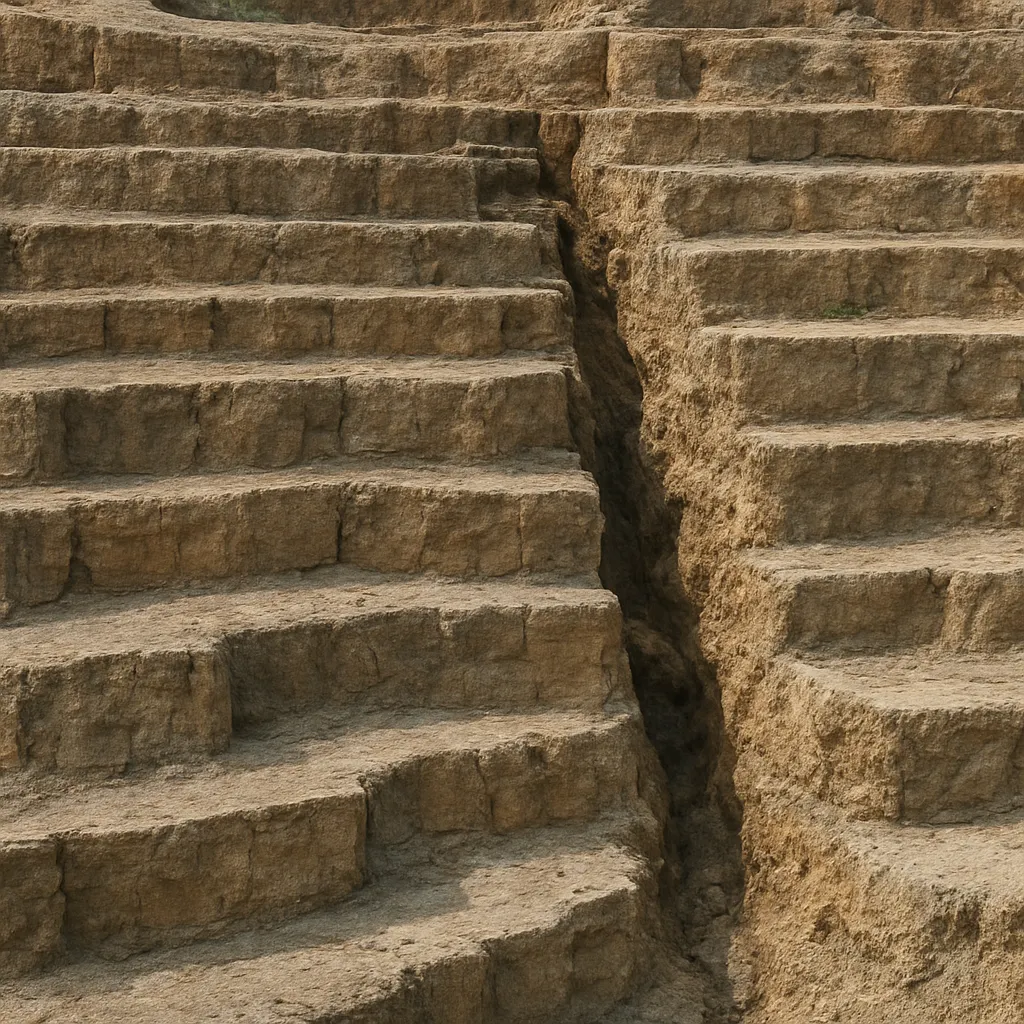
After a heavy storm, water rushes down a paved street carrying dirt, leaves, and small pebbles into a storm drain. What process is happening as the water carries this material away?
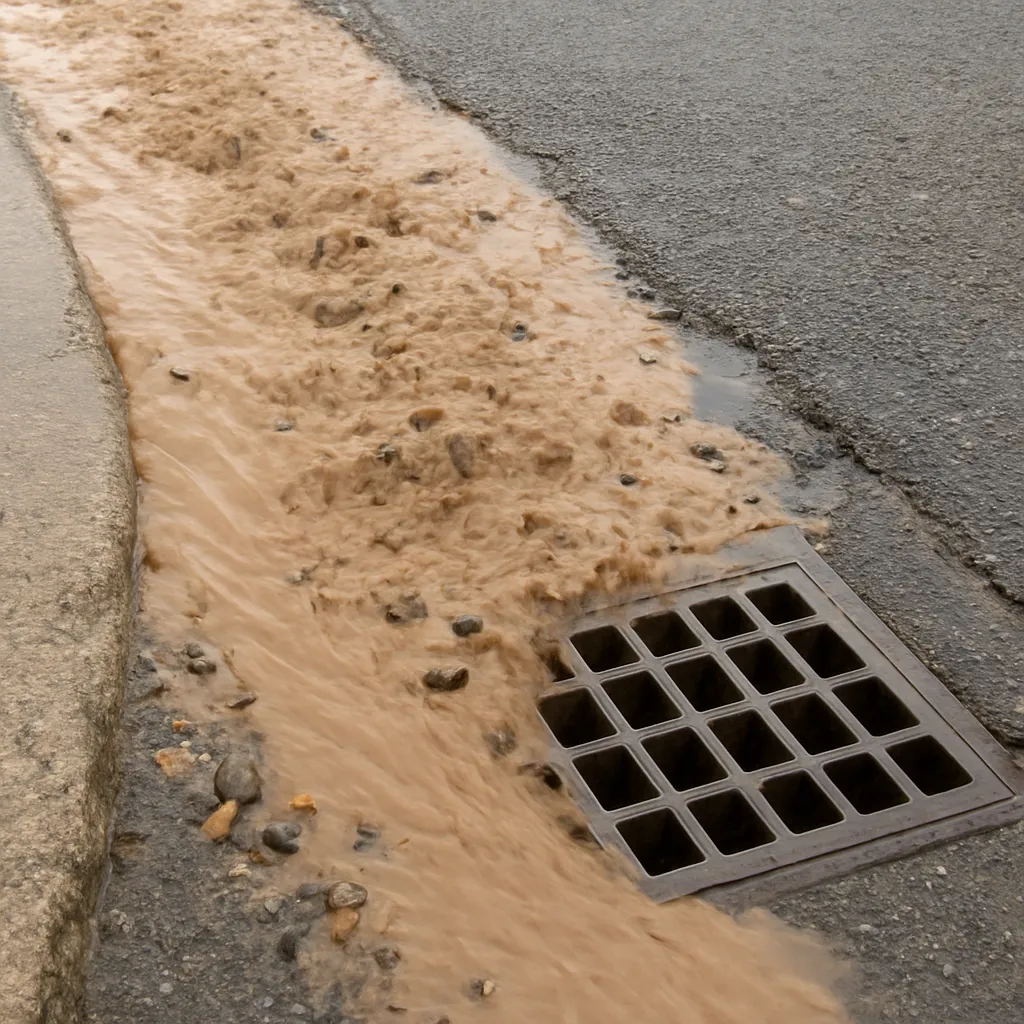
Wind, a slow stream, and a glacier each move across the land. Which one can carry boulders as big as a car for many miles?
Ocean waves repeatedly hurl sand and small pebbles against a rock formation along the shore, slowly grinding grooves into its surface. What is the grinding action of the sand and pebbles called?
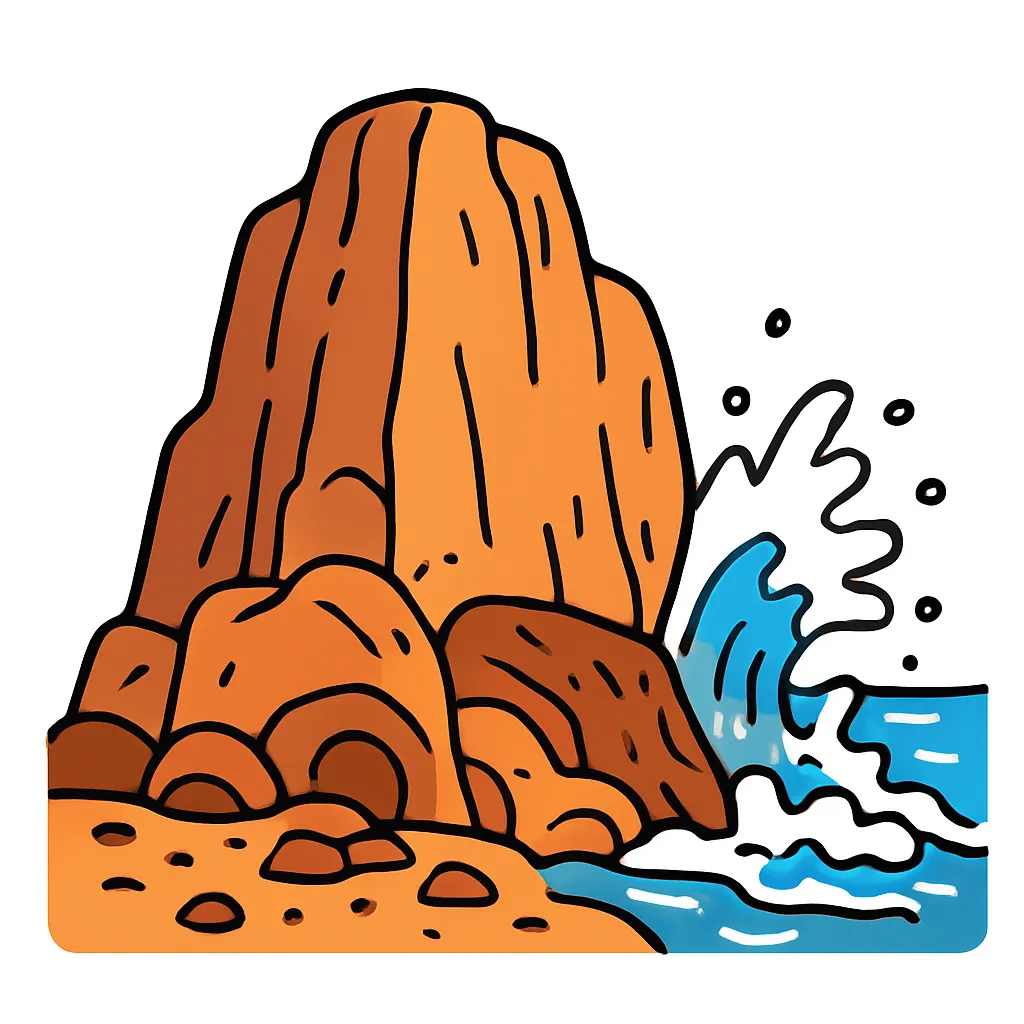
Ocean waves carry sand along the shore, and where the waves slow and lose energy near the beach, the sand settles out and piles up. What process is happening here?
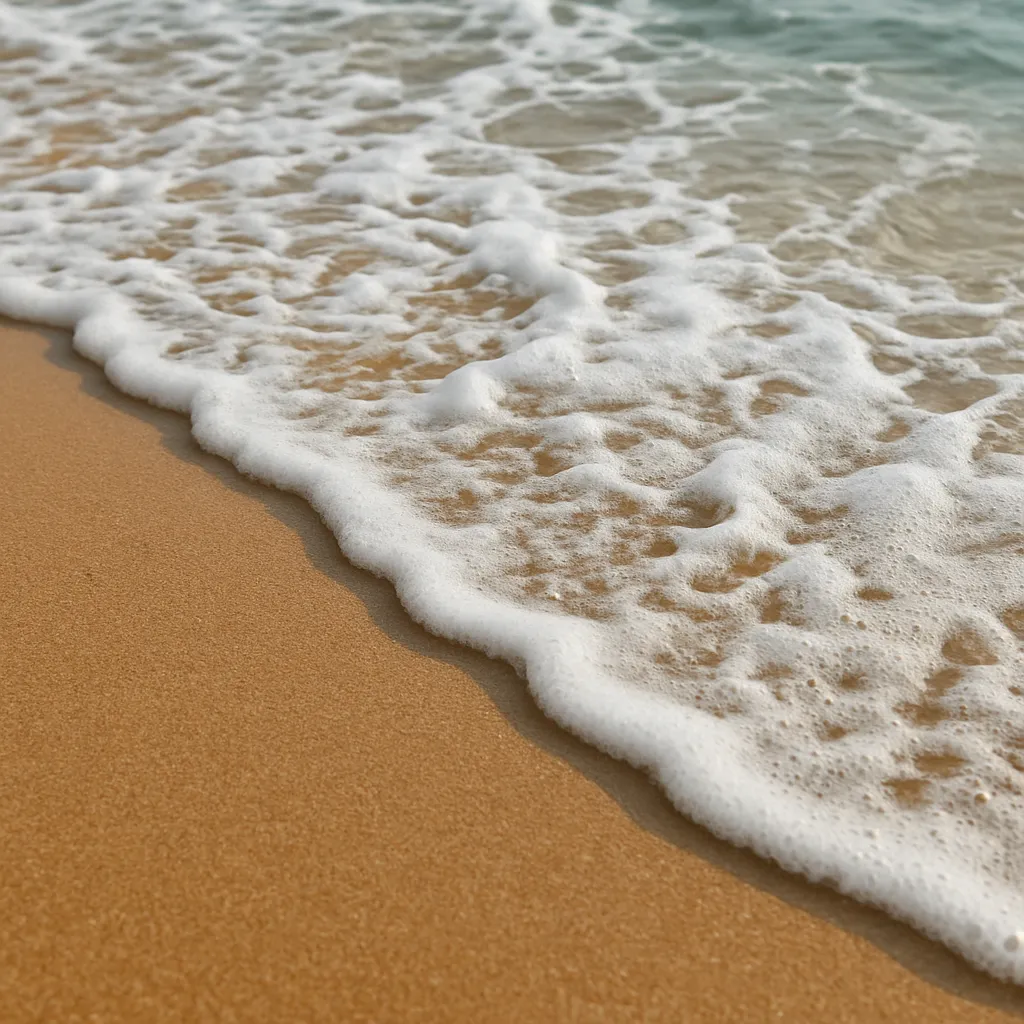
True or False: A boulder that first cracks apart from repeated freezing and thawing, and then has its broken pieces carried away by a rushing stream, shows both weathering and erosion working together.
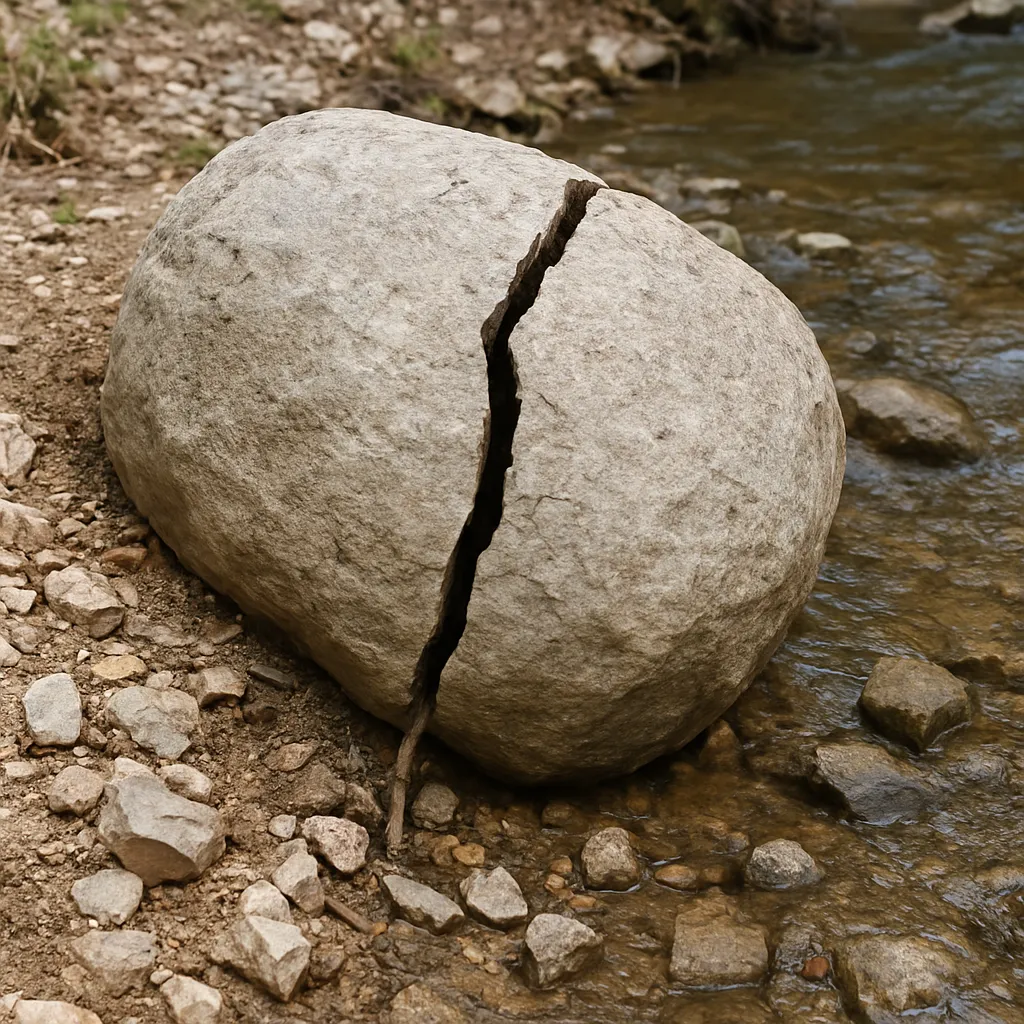
A cliffside rock first splits into smaller chunks where it stands, and later a flooding river carries those chunks far downstream. Which statement best describes what happened to the rock?
A construction crew strips all the plants off a steep hillside, and a big rainstorm is coming. What could the crew do so the bare hillside loses the least soil?
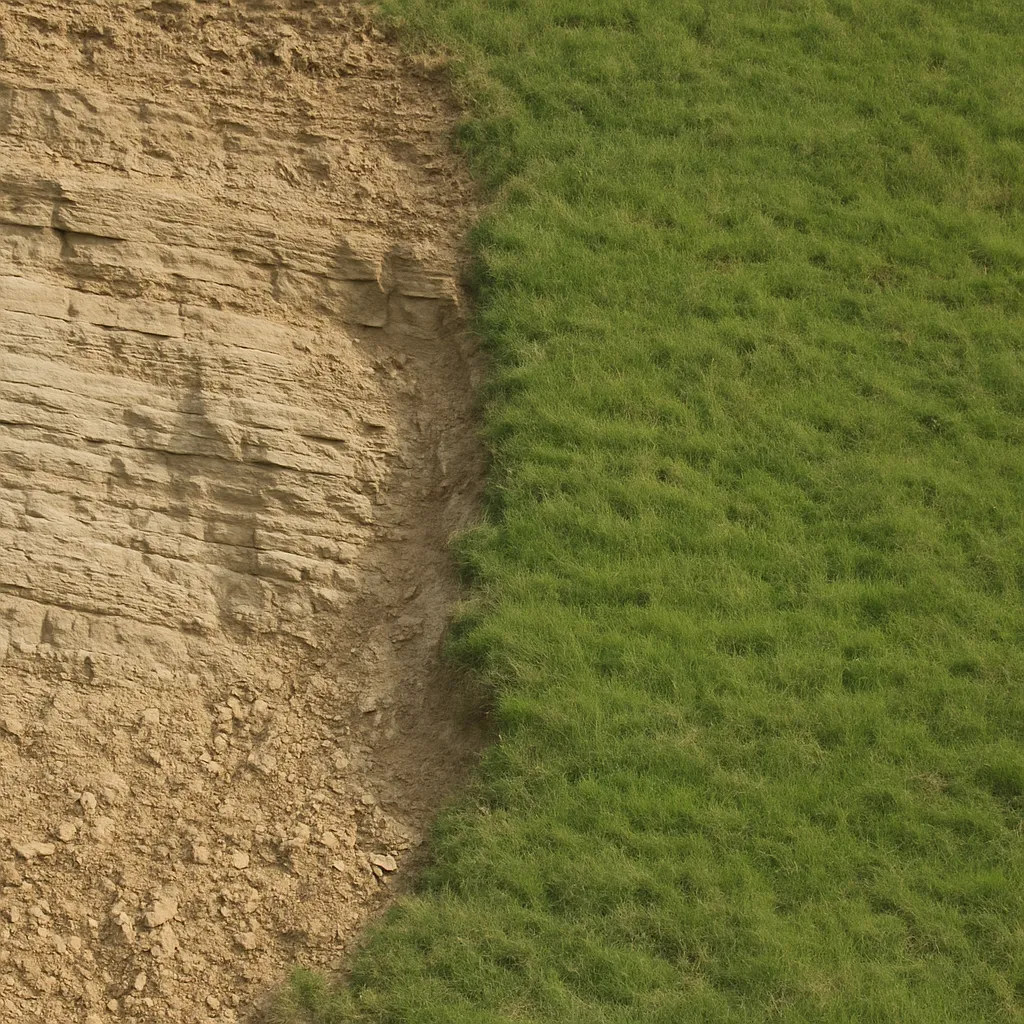
A tall rock arch stands in a dry, windy desert covered in loose sand. Over many years, the base of the arch has worn much thinner than its top. What is most likely wearing away the base?
A mountain valley that once had a narrow, V-shaped cross section now has a wide, U-shaped cross section with smoothed walls. What most likely reshaped this valley?
A geologist compares two mountain ranges made of similar rock. One has jagged, sharp peaks, and the other has smooth, rounded peaks. What does the rounded range provide evidence of?
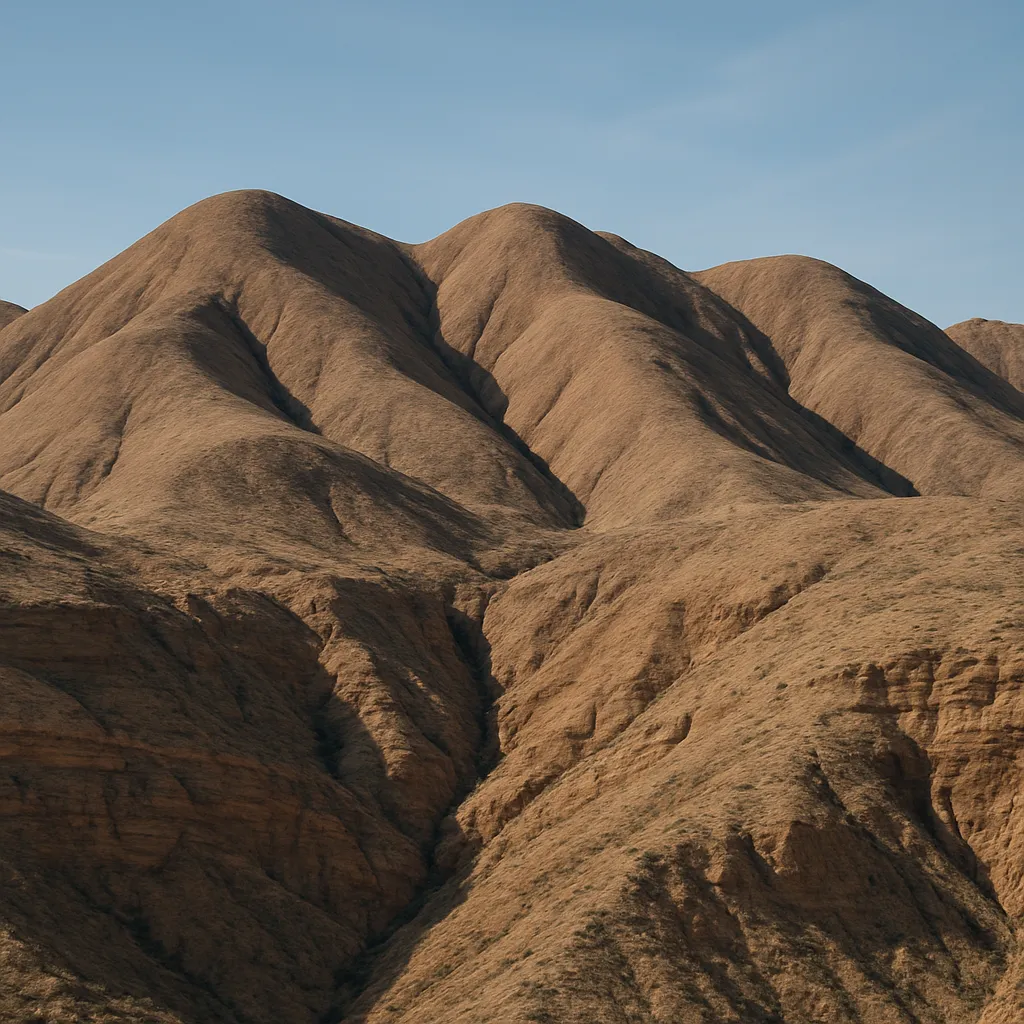
True or False: Over many years, a solid rock that weathers into smaller and smaller fragments can eventually become part of the soil in that area.
A steady wind blows across a landscape that has both a large solid boulder and a patch of dry, loose sand nearby. Which material is the wind able to move?
A river that has been carrying sand and mud reaches a calm lake and its current slows almost to a stop. What happens to the sediment the river was carrying?
A large rock face develops a network of deep cracks after years of temperature changes, but every broken piece is still sitting exactly where it cracked off. Has this rock experienced weathering, erosion, both, or neither?
Builders clear every tree and shrub from a large hillside, leaving bare soil. During a heavy rain, muddy water runs down the slope. What happens to the soil that the water carries away?
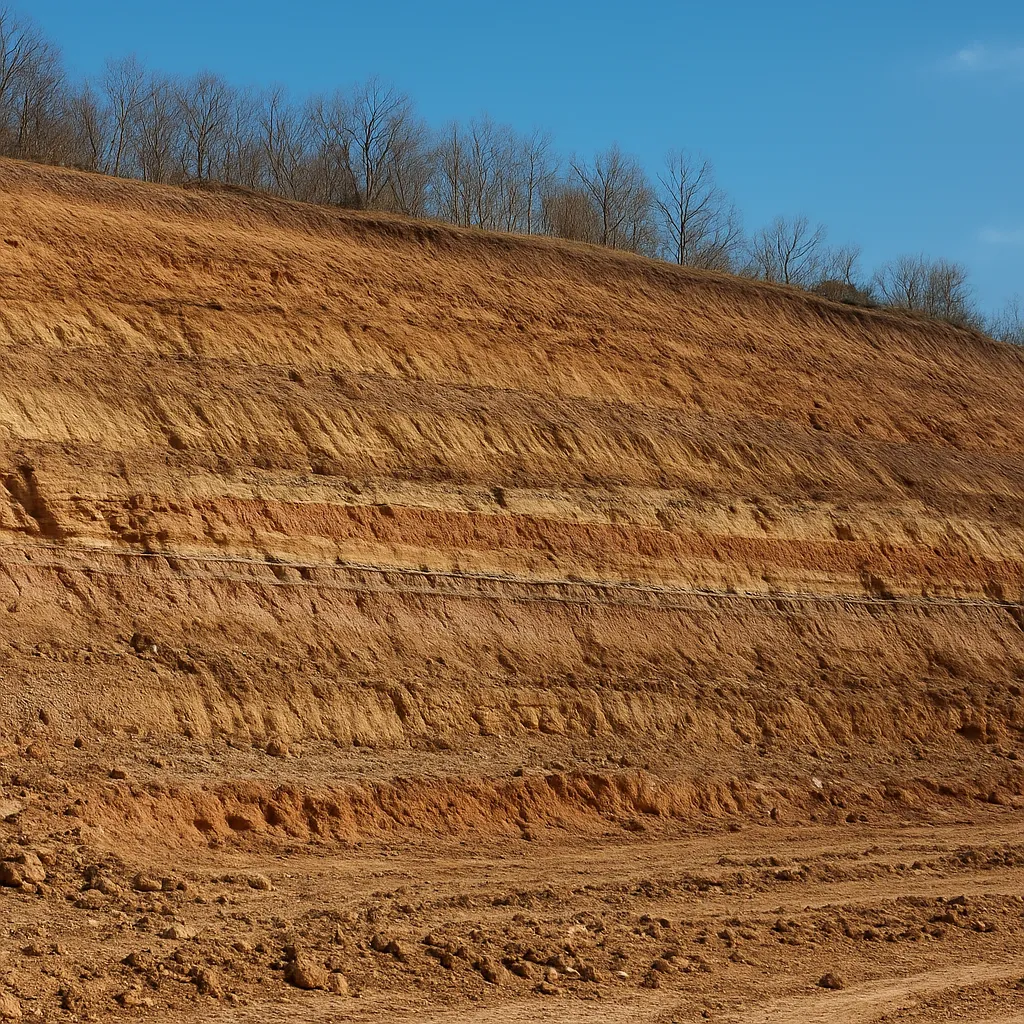
True or False: A canyon carved through solid rock by a river usually forms in just a few years, about as fast as a single rainstorm can wash away a little soil.
Crack the passcode before the zombies get in.
Answer, then swat bugs for bonus points.
Race through questions at your own speed.
Same question on every screen. Fastest wins.

Pick a tile, answer, hit bonuses and steals.
Patterns in Earth's Features
20 questions