Loading
by BlastRoom
Read Stevenson's doubling as a psychological reading the text itself supports.
#psychological_context#matatag_english_9
20 questions
One question set, multiple game modes. Tap any game to see it in action. Not sure which to pick?
In Stevenson's novel, Jekyll writes: "Hence it came about that I concealed my pleasures". He was also "fond of the respect of the wise and good among my fellowmen". What motive does the pairing show?
In his statement, Stevenson's Jekyll reaches what he calls a truth: "that man is not truly one, but truly two." Which psychological reading of the novel does this line most directly support?
Jekyll writes in Stevenson's novel: "I was in no sense a hypocrite; both sides of me were in dead earnest". Which reading of his character does this line rule out?
Jekyll says his pleasures were undignified while he was "not only well known and highly considered". He adds: "It was on this side that my new power tempted me until I fell in slavery." What tempted him?
Jekyll writes of Hyde's acts: "It was Hyde, after all, and Hyde alone, that was guilty." He then adds: "And thus his conscience slumbered." What does that belief let Jekyll do?
Jekyll gives up Hyde, yet writes: "I neither gave up the house in Soho, nor destroyed the clothes of Edward Hyde, which still lay ready in my cabinet." What does keeping them show?
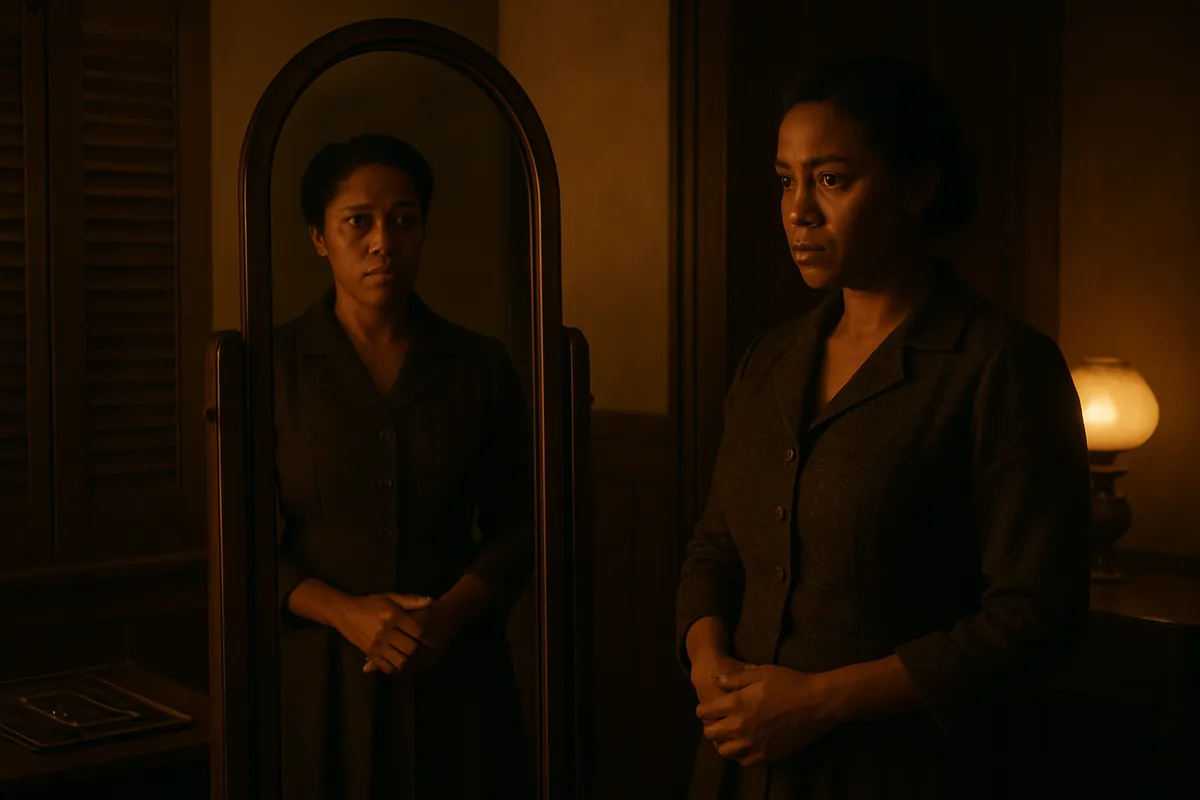
Waking as Hyde, Jekyll sees a hand that is "lean, corded, knuckly", and writes: "bounding from my bed I rushed to the mirror." Which internal conflict does that rush to the mirror express?
Stevenson tells the story first through Utterson's investigation, then through Lanyon's letter, and last through Jekyll's own statement. What does this order do for the reader?
Lanyon leaves Utterson a sealed enclosure marked "not to be opened till the death or disappearance of Dr. Henry Jekyll." What does this instruction do to what the reader knows?
After the night in his consulting room, Lanyon says: "I have had a shock", and he is dead within weeks. Which psychological reading of his death does Stevenson's novel support?
Jekyll tells Utterson: "You do not understand my position", and then, "the moment I choose, I can be rid of Mr. Hyde." Why does he add the second promise?
Utterson says of himself: "I incline to Cain's heresy", and, "I let my brother go to the devil in his own way." How does this habit shape his search for the truth about Jekyll?
Utterson can name no single defect in Hyde, yet says: "the man seems hardly human!" Which reading of the disgust that people feel near Hyde does the novel support?
Of his first change Jekyll writes: "I knew myself, at the first breath of this new life, to be more wicked, tenfold more wicked", and says the thought "braced and delighted me". What does the delight reveal?
Jekyll holds to his resolve for two months, then writes that "in an hour of moral weakness, I once again compounded and swallowed the transforming draught." His return to Hyde is his own choice.
Enfield's account of the man who tramples a child opens Stevenson's novel, long before the reader learns how Hyde came to exist. What does starting the book here do?
Of the murder of Sir Danvers, Jekyll writes: "no man morally sane could have been guilty of that crime upon so pitiful a provocation". On his own account, what explains the attack?
Late in his statement Jekyll writes: "It was no longer the fear of the gallows, it was the horror of being Hyde that racked me." What change in him does this line mark?
Sitting in the sun, Jekyll describes "the animal within me licking the chops of memory". Moments later he becomes Hyde, with no drug taken. What does that timing suggest?
The last chapter of Stevenson's novel is Jekyll's own written statement, not a report by an outside narrator. Which caution does that fact support for a reader?
Crack the passcode before the zombies get in.

Pick a tile, answer, hit bonuses and steals.
Pride and Prejudice: Literary Style
20 questions