Loading
by BlastRoom
How farming replaced foraging and made settled communities possible.
#world_history
25 questions
One question set, multiple game modes. Tap any game to see it in action. Not sure which to pick?
Answer to place stones and capture territory.
Outrun the snow together.
Earn blasts, then hunt the other team.
Answer to earn energy, then climb.

The class blasts through walls together.
Bid on mystery lots. Most money wins.
Sell tours. Nice, standard, or a total scam.

Answer, restock, and serve the rush.
More correct answers pulls the rope your way.
Answer, then shoot down the alien wave.
Answer, then tap to leap the frozen ridge.
At Abu Hureyra, cold, dry conditions reduced many wild staple plants. What response helped people keep getting food near the Euphrates?
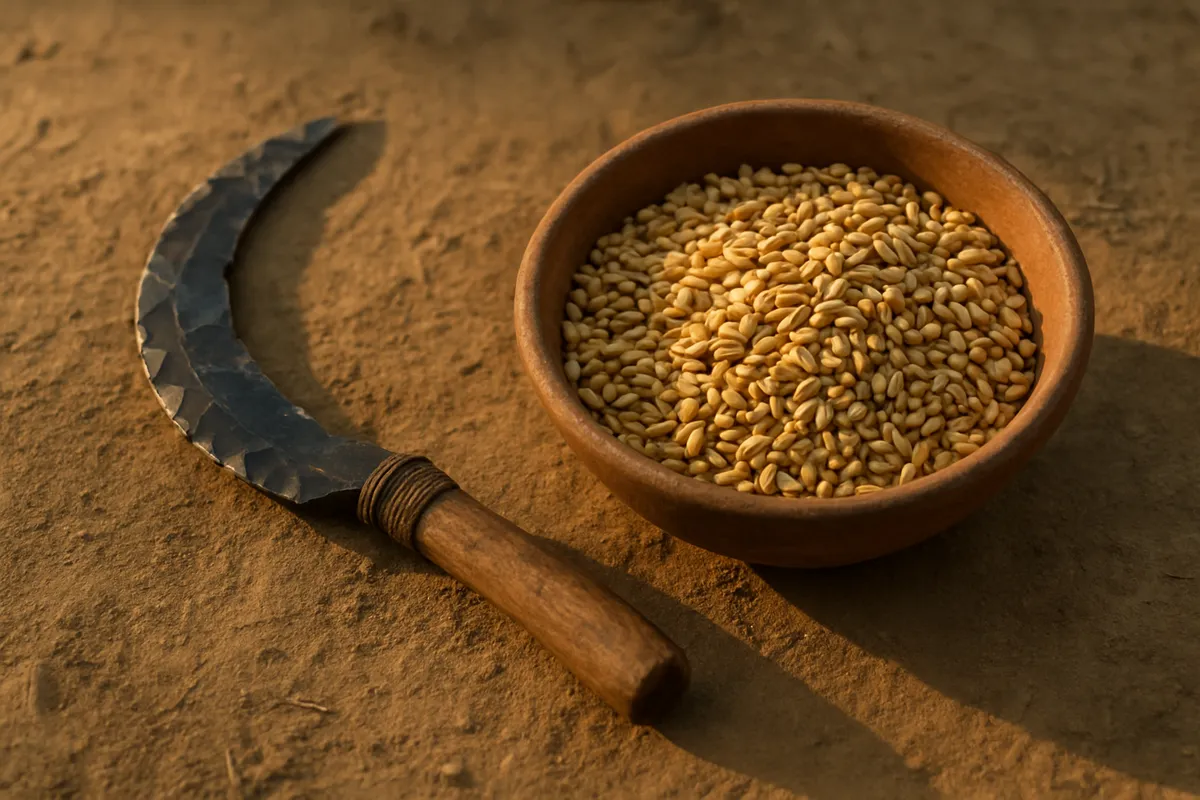
Wild wheat and barley grew in Southwest Asia before people cultivated them. What changed once people selected and planted grains year after year?
Some settled groups noticed that discarded seeds sprouted near camp. How could that observation push a shift away from foraging?
Why did the end of the last Ice Age matter for early farming in the Near East?
In resource-rich Natufian areas of the Levant, people could stay longer in one place before full farming. What did that settled life make easier?
A village harvests more barley than farm families need for their own meals. What new role could that surplus support?
Stored grain meant food could last beyond one harvest. Which change did that most directly encourage?
When some farmers accumulated extra land, animals, or stored crops, what social change could follow?
In an early farming village, some people became full-time potters, weavers, or toolmakers. How did these specialists usually get their food?
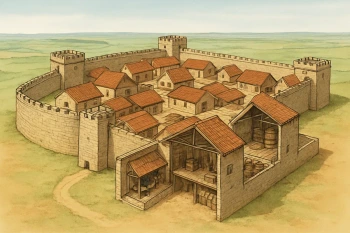
At Jericho, one of the earliest known farming settlements, a massive stone wall and tower were built around 8000 BCE. Why could food storage make this kind of organized public work more realistic?
In a farming community, why did pottery and woven containers become especially useful?
A settlement has farmers, herders, potters, traders, and leaders rather than only food gatherers. What made that complexity possible?
Which crops were first domesticated in the Fertile Crescent of Southwest Asia?
Which livestock group best fits early domestication in Southwest Asia?
For early farming in China, which river-valley crops are the best match?
Which crops best match early farming in Mesoamerica?
Which domesticate pair is most associated with early Andean societies in South America?
Excavators found a large Neolithic settlement in southern Anatolia with mud-brick houses packed together, no streets, and roof access. Which site was it?
Which early site in the Jordan River valley had a stone wall, a ditch, and a large tower by about 8000 BCE?
Which Euphrates River site preserves a long sequence from hunting and gathering into farming and herding?
Near modern Amman, archaeologists found a Neolithic village where people cultivated crops, herded sheep and goats, and buried plaster statues under house floors. Which site?
Compared with foragers, why were early farmers usually tied more closely to one place?
Which comparison best describes early farming diets in many Neolithic communities?
In a Neolithic farming village, some graves hold many rich goods while others hold almost nothing. What does that pattern most likely show?
At Çatalhöyük, evidence shows farming along with hunting and gathering. What does that reveal about the Neolithic transition?
Crack the passcode before the zombies get in.
Answer, then swat bugs for bonus points.
Race through questions at your own speed.
Same question on every screen. Fastest wins.

Pick a tile, answer, hit bonuses and steals.
Mesopotamia: Sumer, Akkad and Babylon
35 questions