Loading
by BlastRoom
Explore branch currents, voltage, equivalent resistance, and safe household wiring.
#parallel_circuits#matatag_science_9
20 questions
One question set, multiple game modes. Tap any game to see it in action. Not sure which to pick?
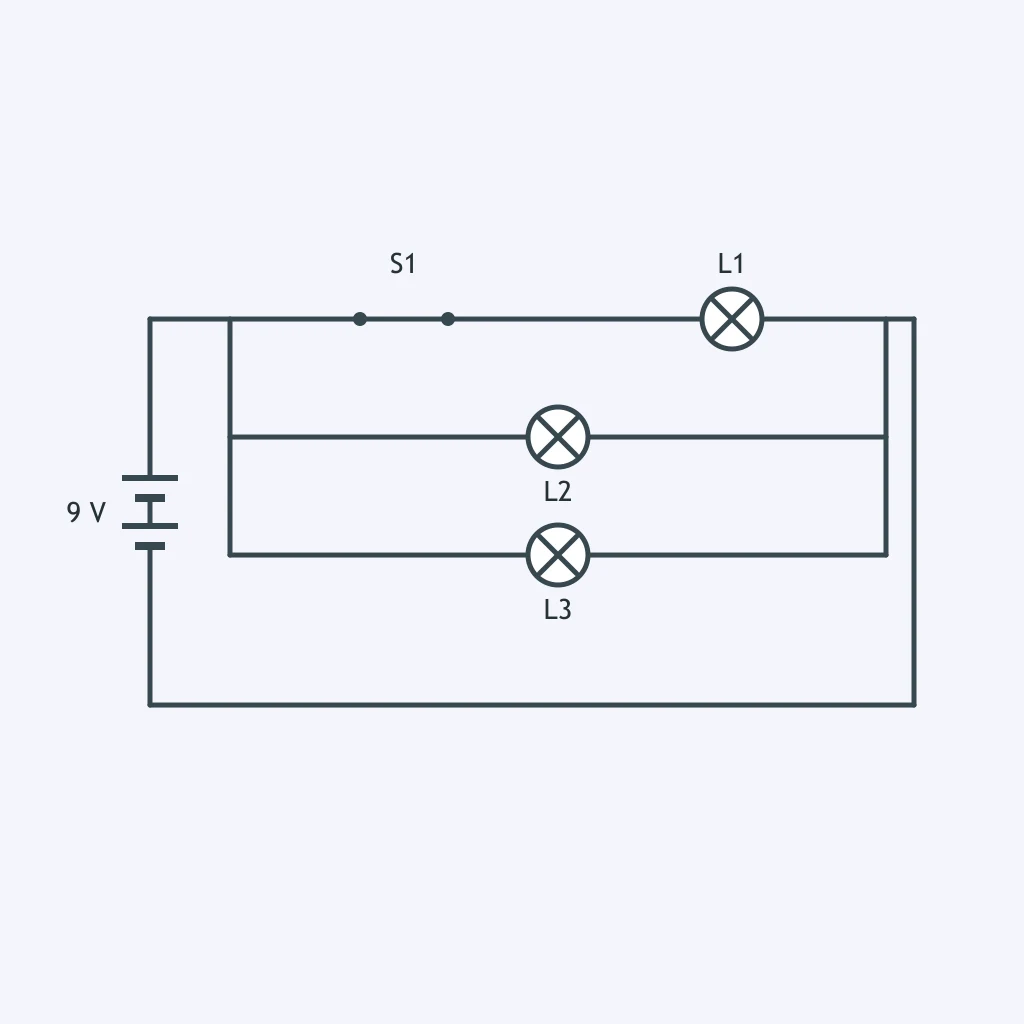
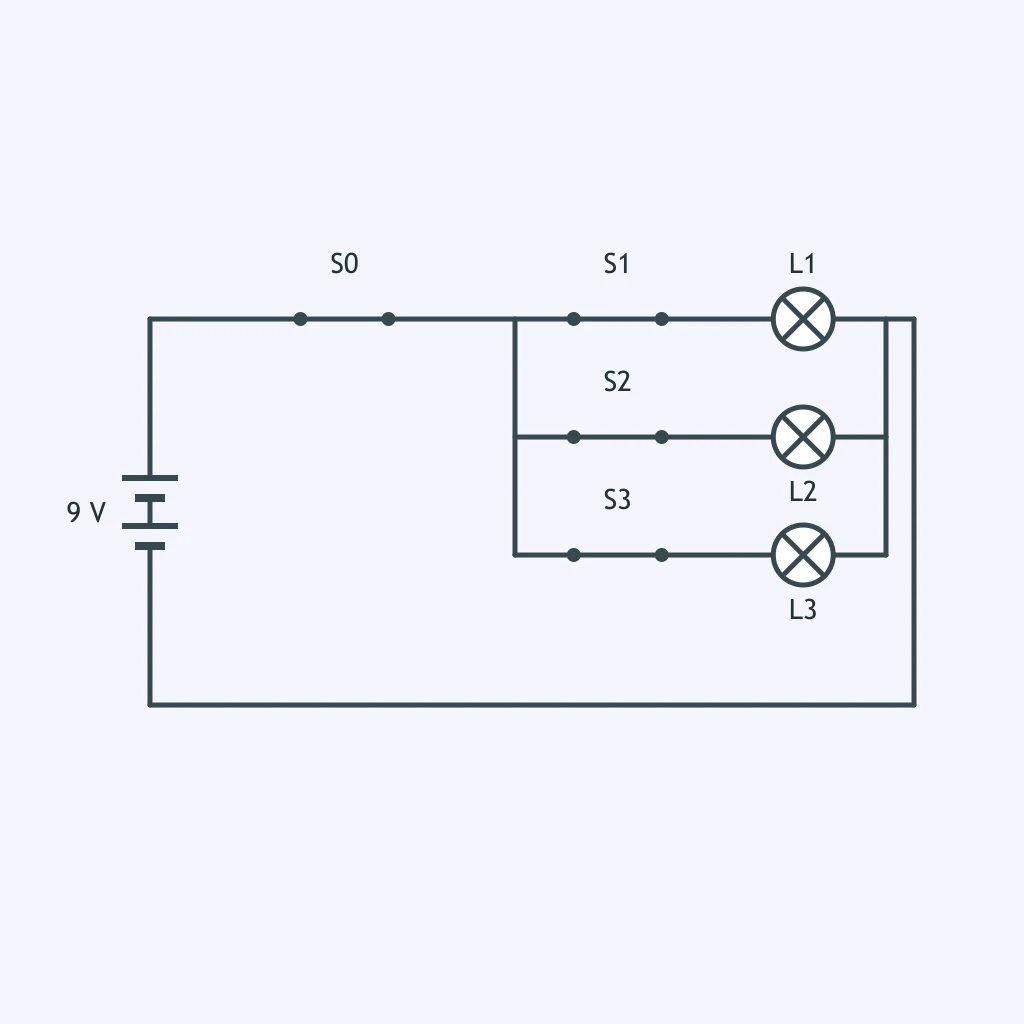
If S1 is opened, which lamps go out?
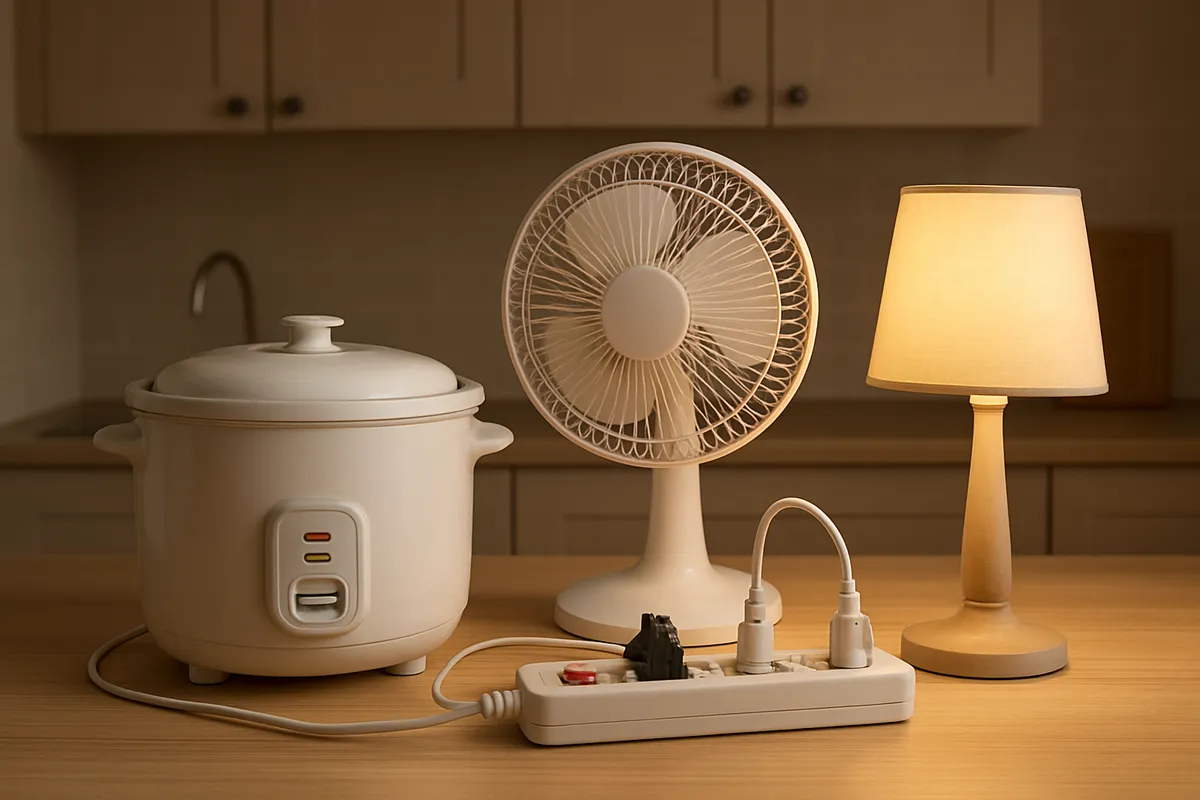
How should household appliances be wired so switching one off does not stop the others?
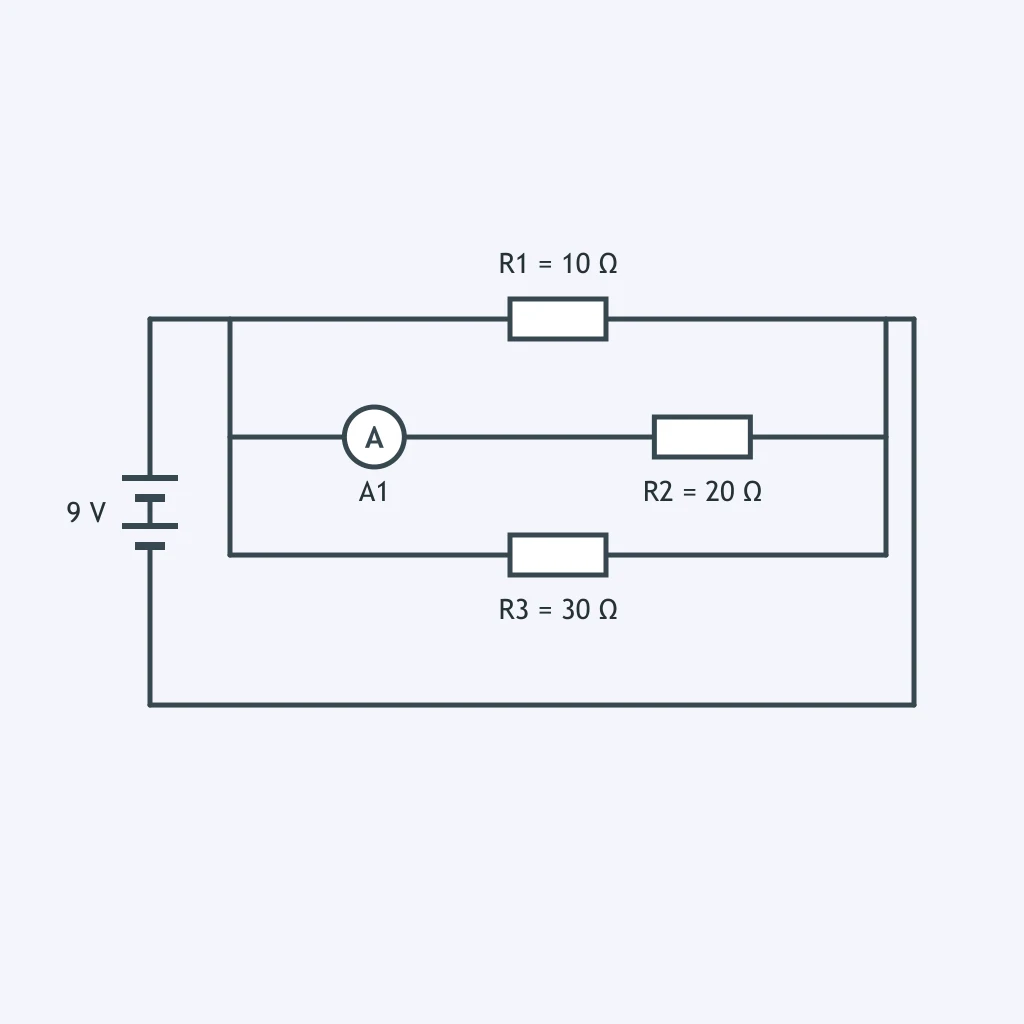
Which current does A1 measure?
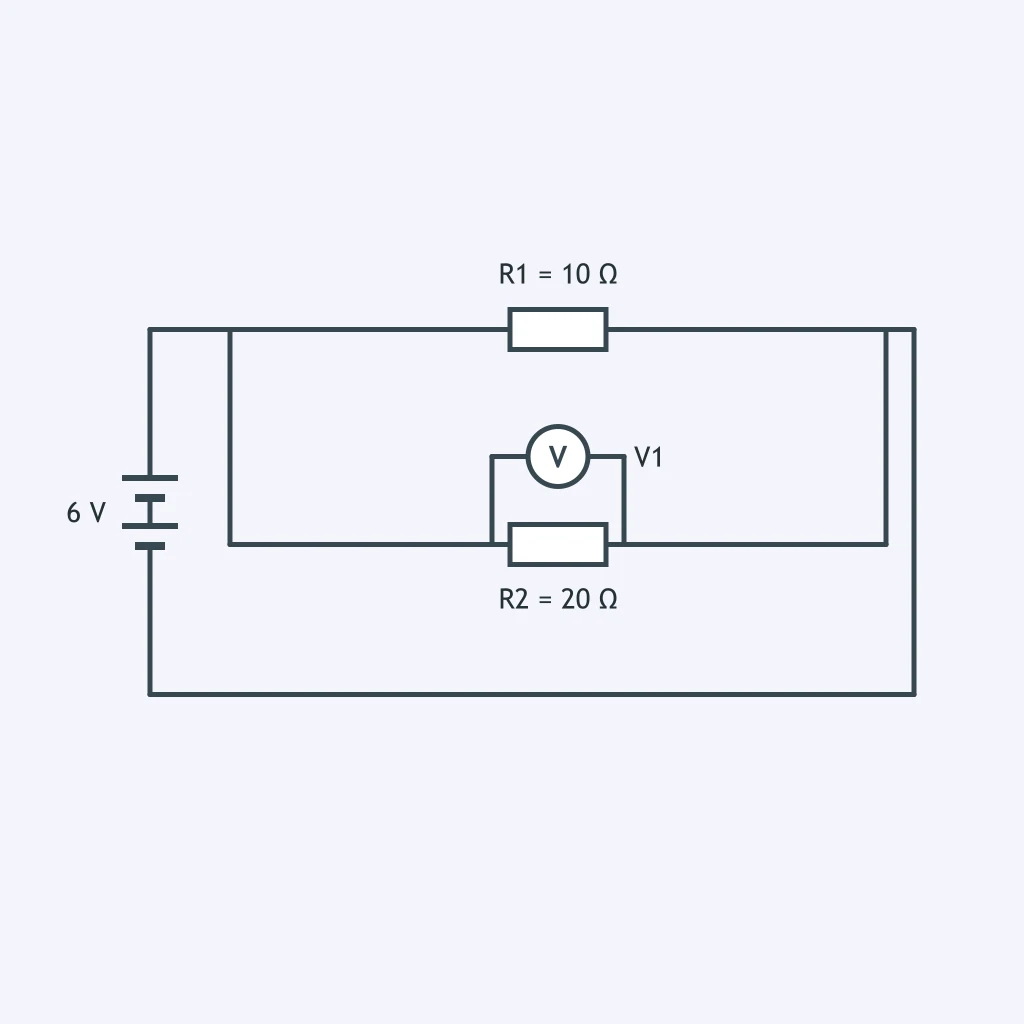
Which statement correctly describes V1's connection and measurement?
Which equation gives the equivalent resistance of three resistors connected in parallel?
Several resistors with positive resistance are connected in parallel. How does their equivalent resistance compare with the individual resistances?
How do the currents through R1, R2, and R3 compare?
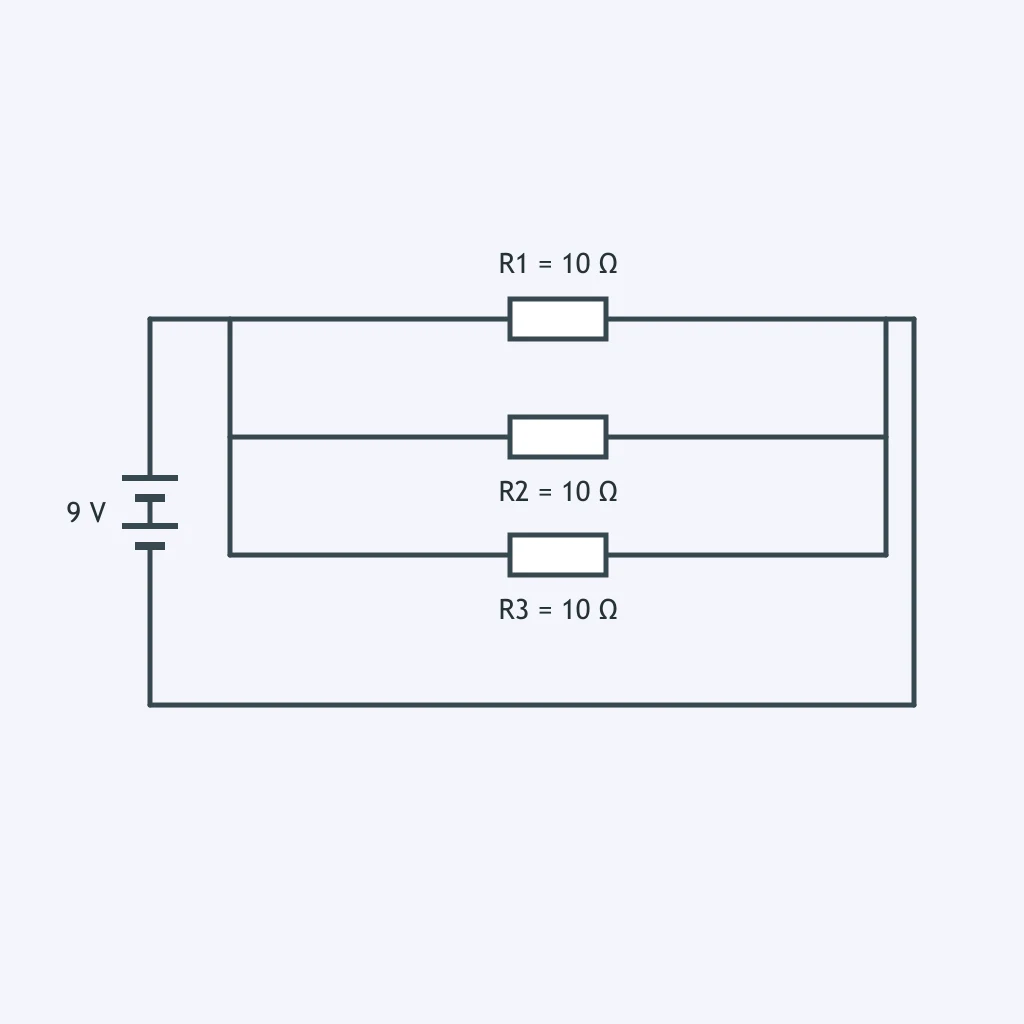
What is the total current supplied by the battery?
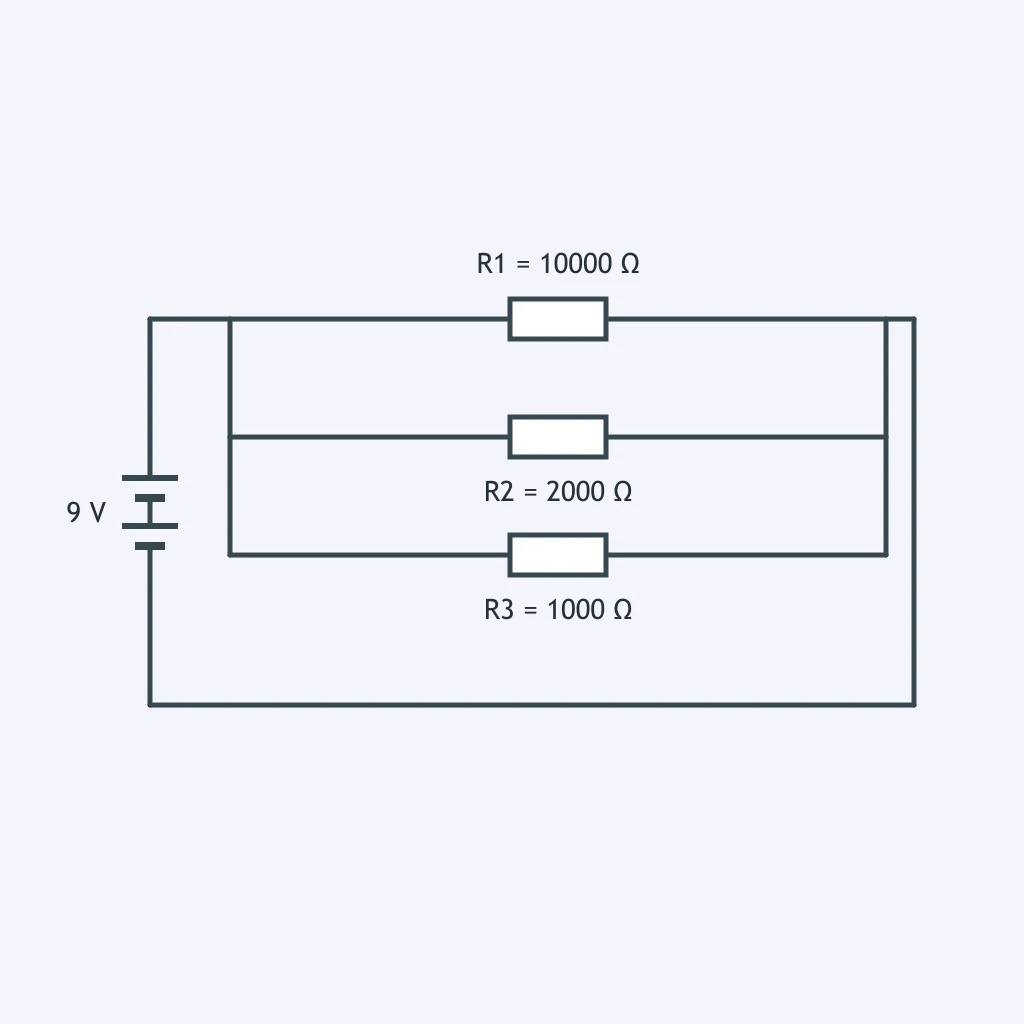
Three bulbs, each modeled as an 80 Ω resistor, are connected in parallel. What is their equivalent resistance, rounded to two decimal places?
What current flows through R1?
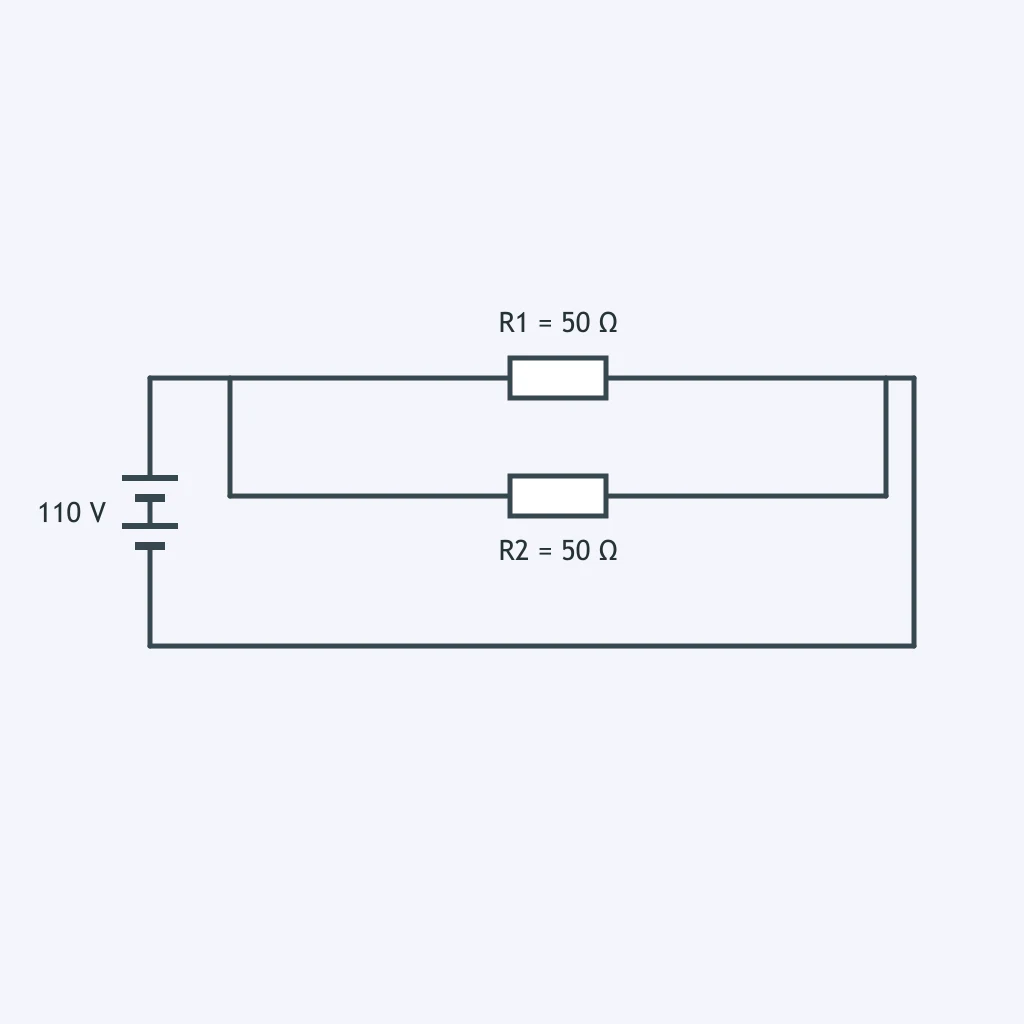
Find the total current from the source, rounded to two decimal places.
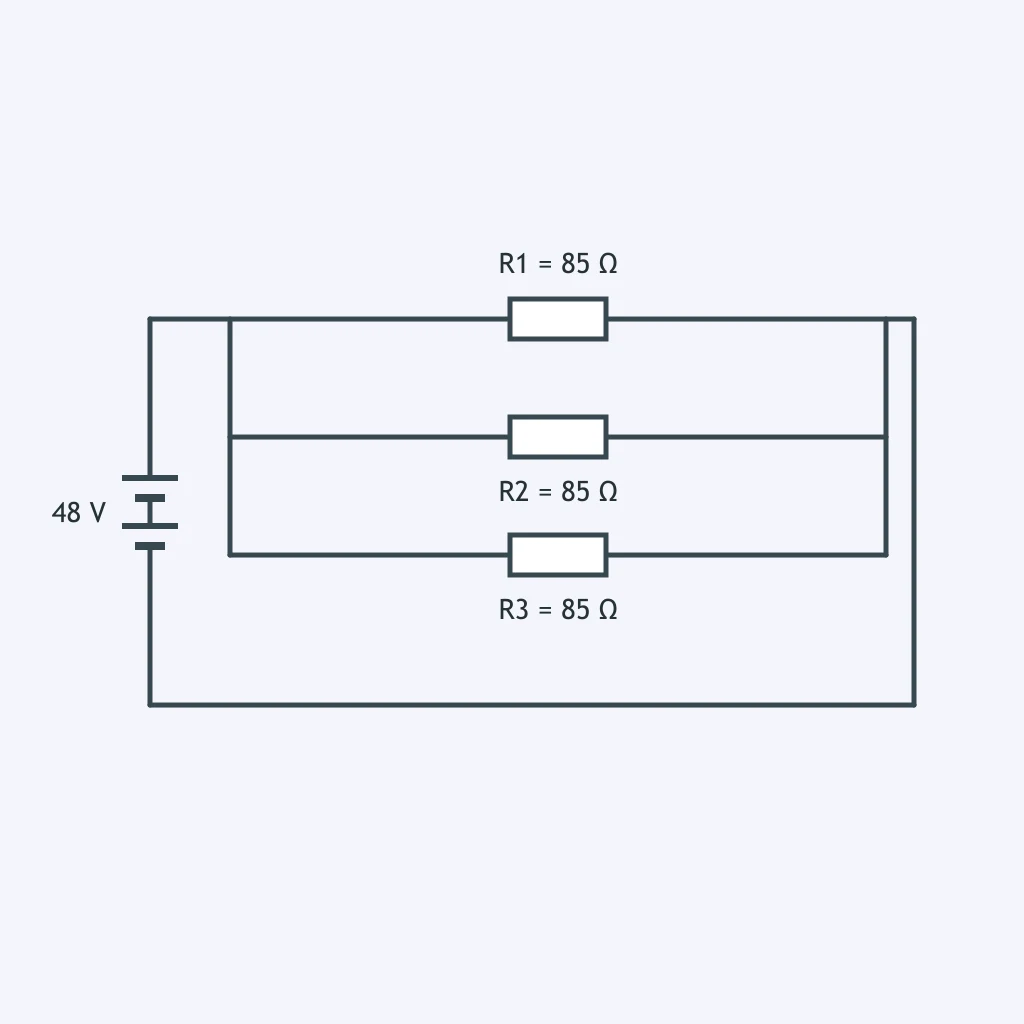
What voltage is across R3?
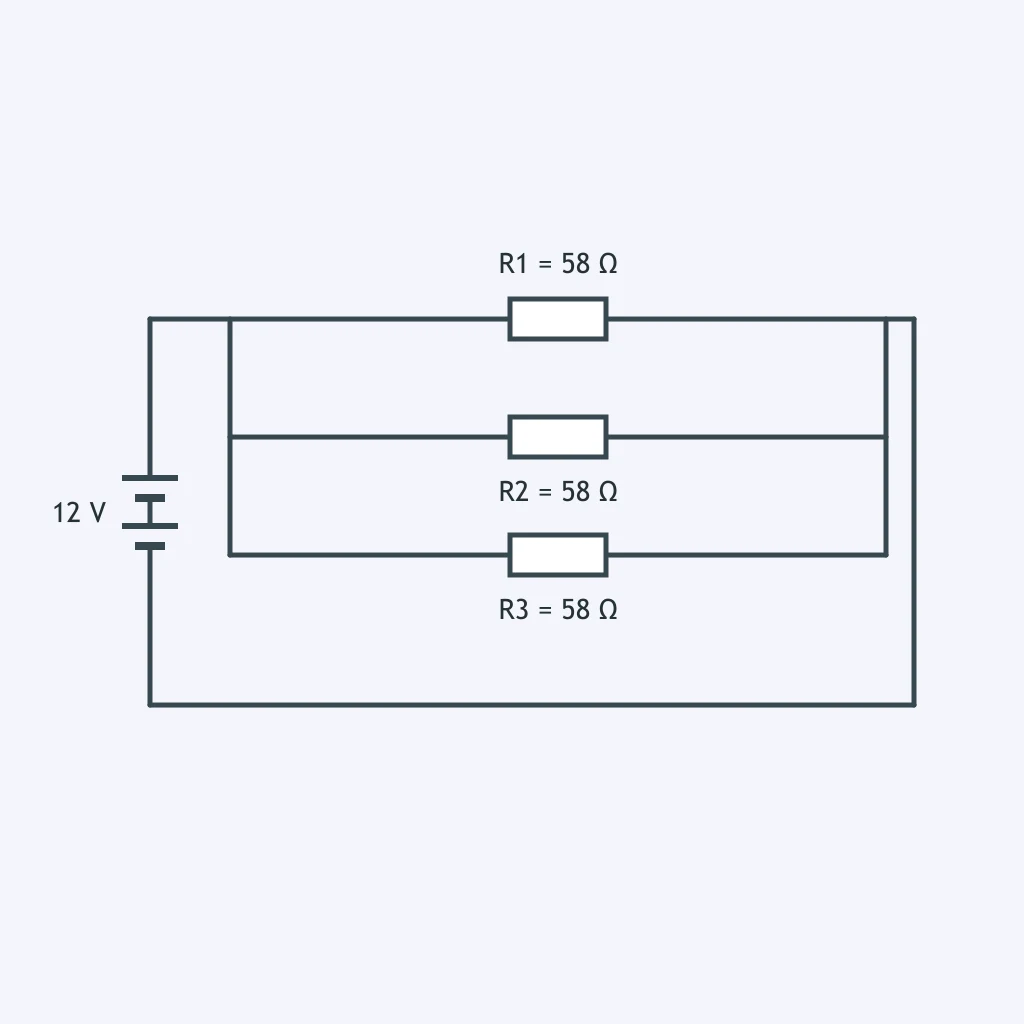
Which resistor carries the least current?
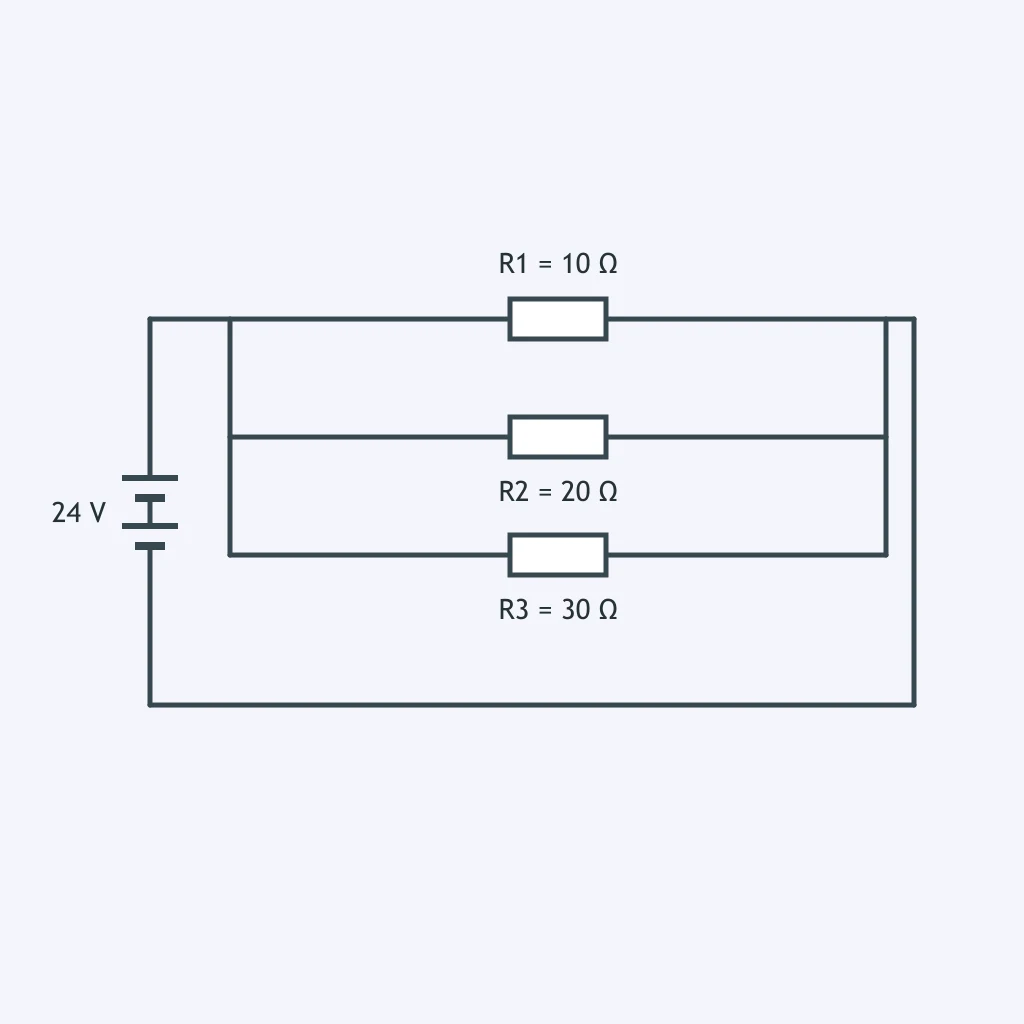
Resistors of 2000 Ω, 1000 Ω, and 2500 Ω are connected in parallel. What is the equivalent resistance, rounded to two decimal places?
One resistor branch is removed from a working parallel circuit, leaving the other branches connected. What happens to the equivalent resistance?
Another identical bulb is added on a separate branch while an ideal source maintains its voltage. What happens to the brightness of the original bulbs?
Where should a fuse be connected to interrupt the current supplying a protected appliance?
Why can plugging many appliances into one household circuit create an overheating risk?
Which pairing correctly compares ideal series and parallel circuits?
Which switch can turn off every lamp by itself?
Crack the passcode before the zombies get in.

Pick a tile, answer, hit bonuses and steals.
Uses and Hazards of Electromagnetic Radiation
20 questions