Loading
by BlastRoom
Run the numbers on both, then watch what an extra ten years does to the same deposit.
#us_hs_personal_finance
40 questions
One question set, multiple game modes. Tap any game to see it in action. Not sure which to pick?
Answer to place stones and capture territory.
Outrun the snow together.
Earn blasts, then hunt the other team.
Answer to earn energy, then climb.

The class blasts through walls together.
Bid on mystery lots. Most money wins.
Sell tours. Nice, standard, or a total scam.

Answer, restock, and serve the rush.
More correct answers pulls the rope your way.
Answer, then shoot down the alien wave.
Answer, then tap to leap the frozen ridge.
Ava deposits $800 at 5% simple interest for 3 years. How much interest does she earn?
Marcus puts $1,200 in an account paying 4% simple interest for 2 years. What interest will he earn?
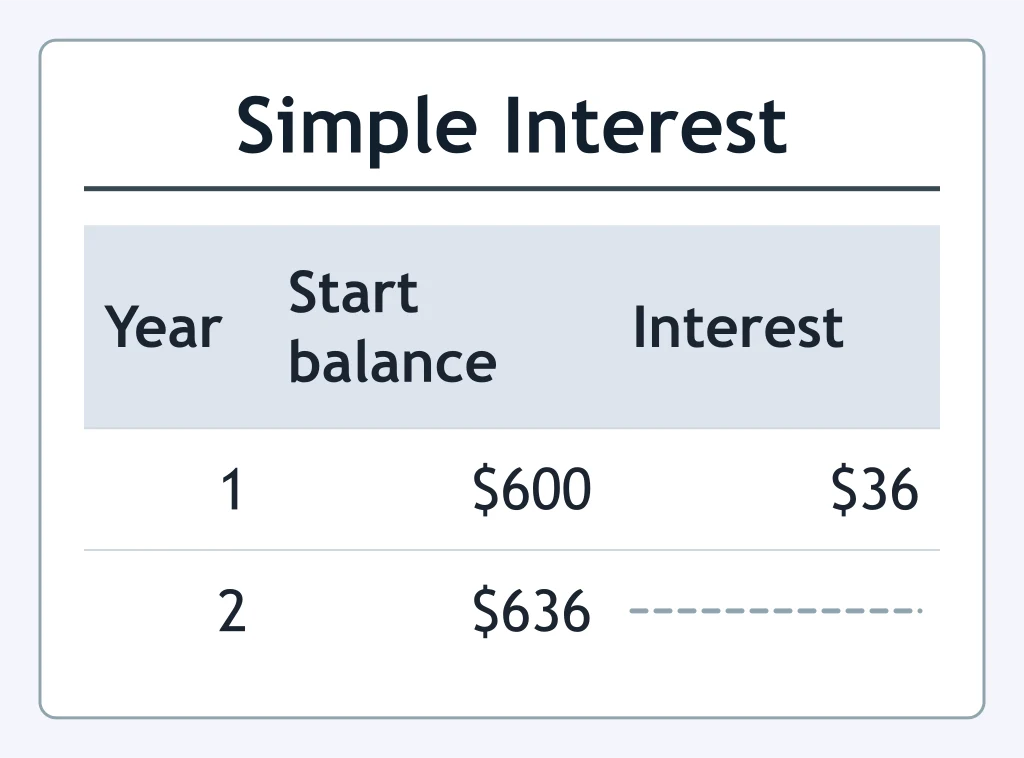
This table tracks a $600 deposit earning 6% simple interest. What interest belongs in the blank cell for Year 2?
A $1,500 deposit earns 3% simple interest for 4 years. How much interest does it earn?
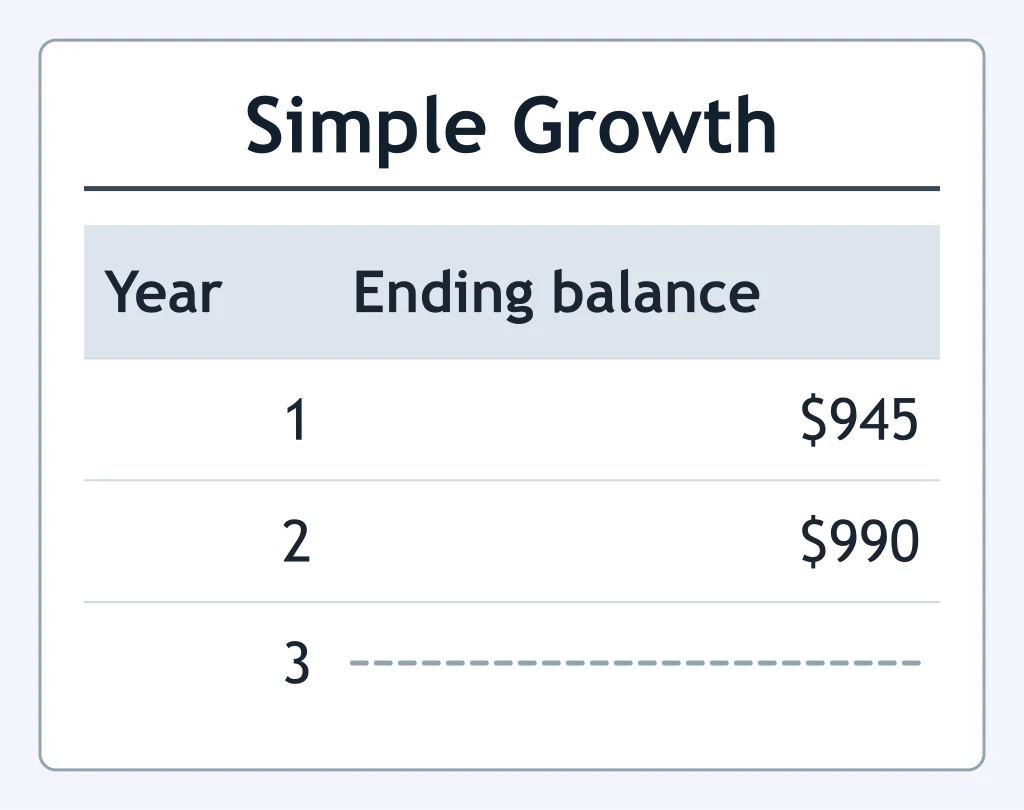
A $900 account earns 5% simple interest. Using the table, what is the ending balance after Year 3?
Talia deposits $2,000 at 2.5% simple interest for 6 years. How much interest does she earn?
A $500 deposit earns 8% simple interest for 9 years. What is the interest earned?
The table shows a simple-interest account over time. What ending balance belongs in the blank cell?
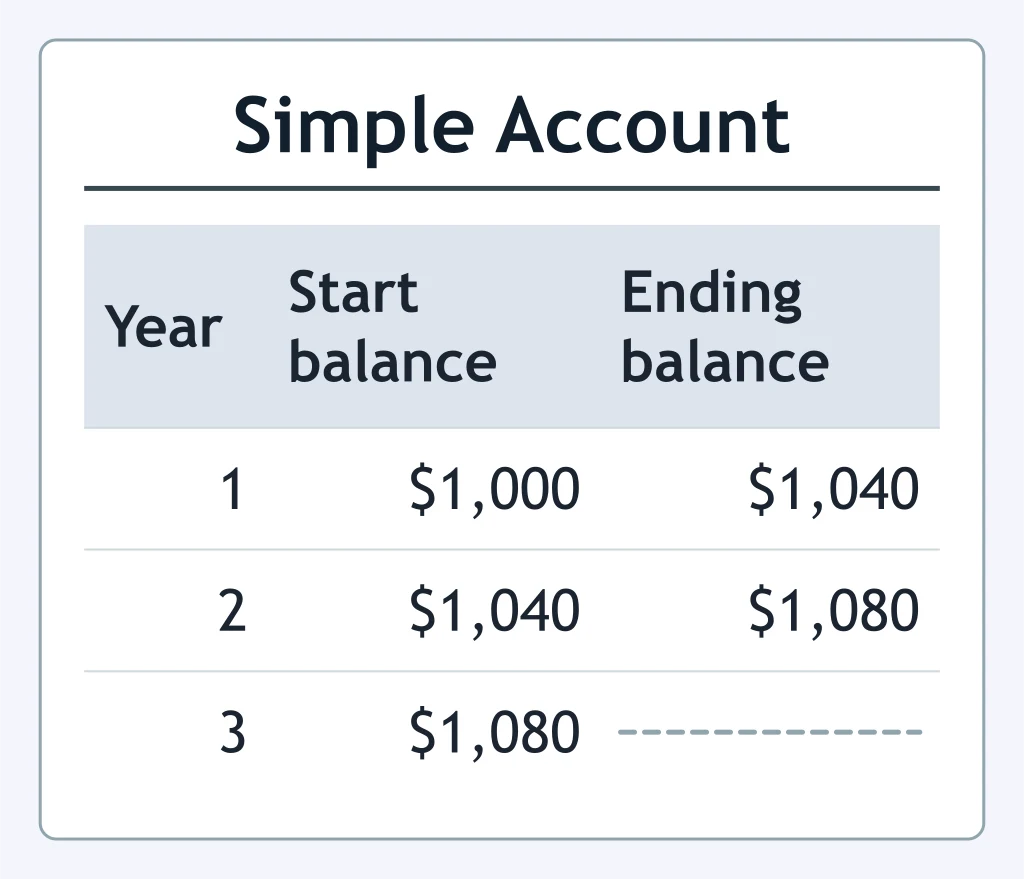
Luis deposits $750 at 6% simple interest for 2.5 years. How much interest does he earn?
A $400 deposit earns 10% simple interest. Based on the table, how much total interest has been earned after 3 years?
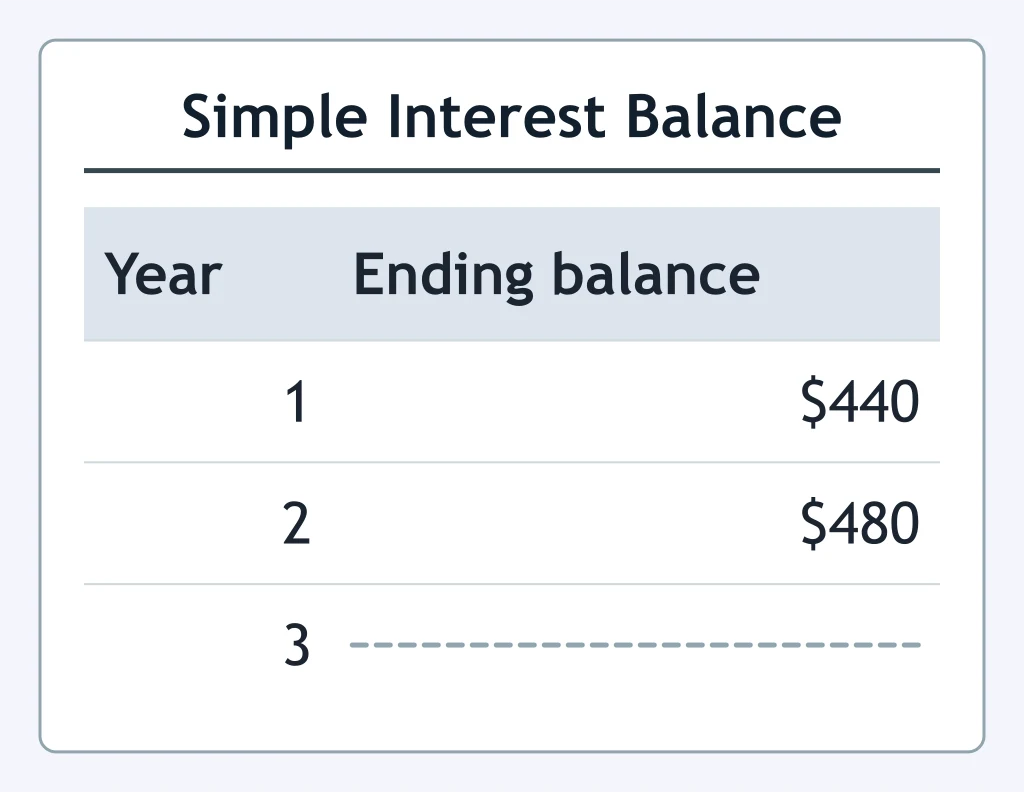
Noah deposits $1,000 at 10% compounded annually for 2 years. What is the ending balance?
A $500 deposit earns 20% compound interest annually. What balance belongs in the blank cell for Year 2?
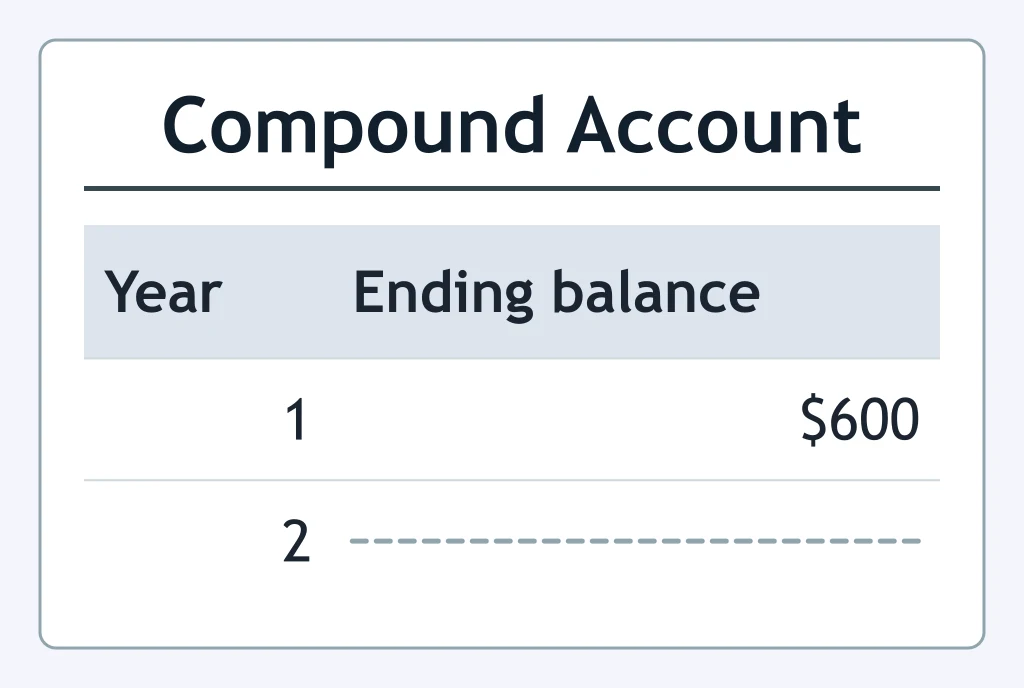
Priya deposits $800 at 5% compounded annually for 3 years. What is the ending balance?
A $2,000 deposit earns 10% compounded annually for 3 years. What is its ending balance?
A $400 deposit earns 25% compound interest annually for 2 years. What is the ending balance?
A $1,000 account earns 10% compounded annually. What balance belongs in the blank cell for Year 3?
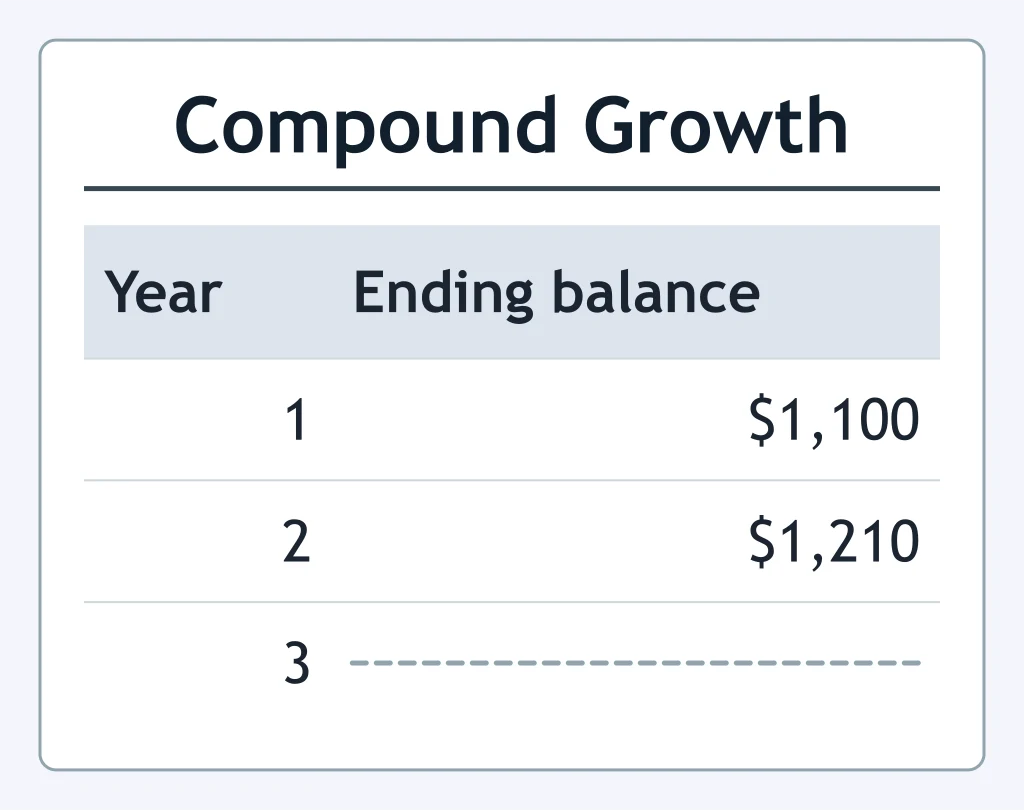
Cam deposits $1,500 at 4% compounded annually for 2 years. What is the ending balance?
A $600 deposit earns 10% compounded annually for 4 years. What is its ending balance?
A $200 deposit earns 50% compound interest annually. What balance belongs in the blank cell for Year 3?
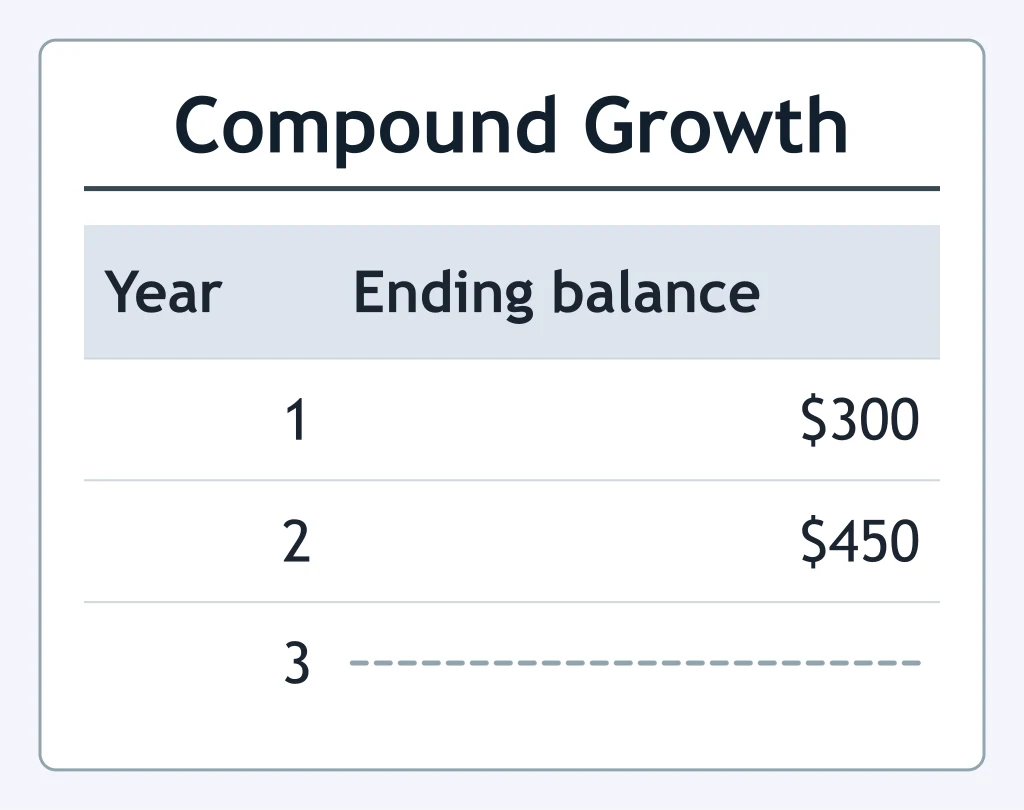
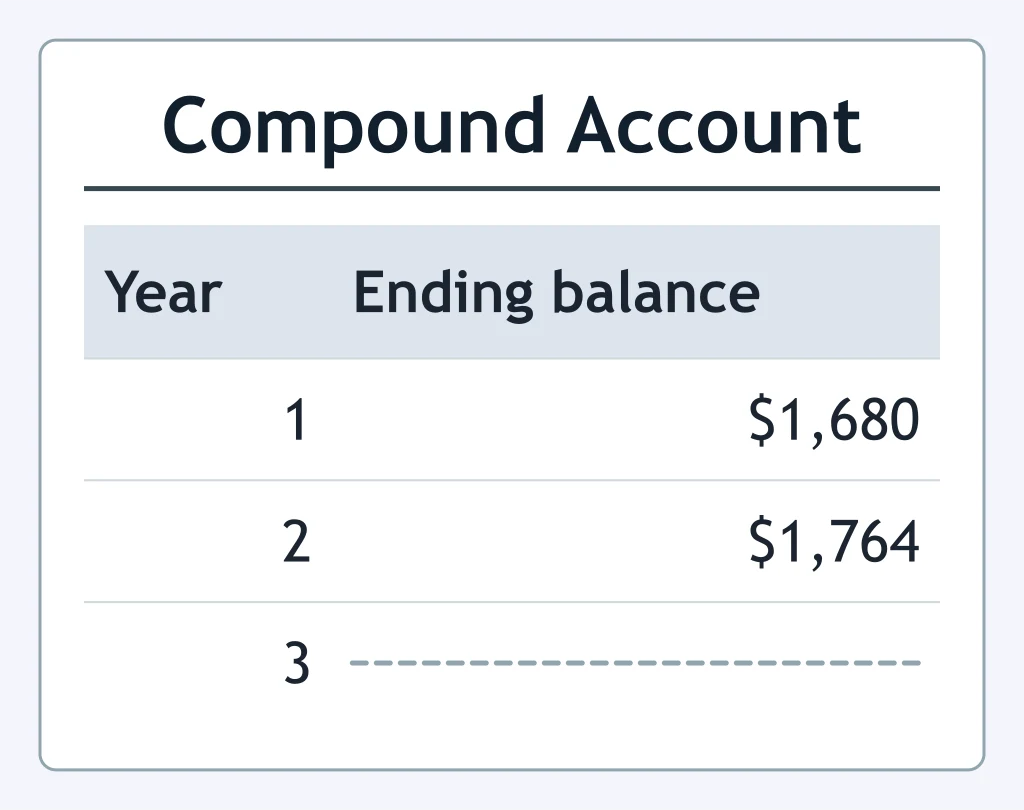
A $1,600 deposit earns 5% compounded annually. What balance belongs in the blank cell for Year 3?
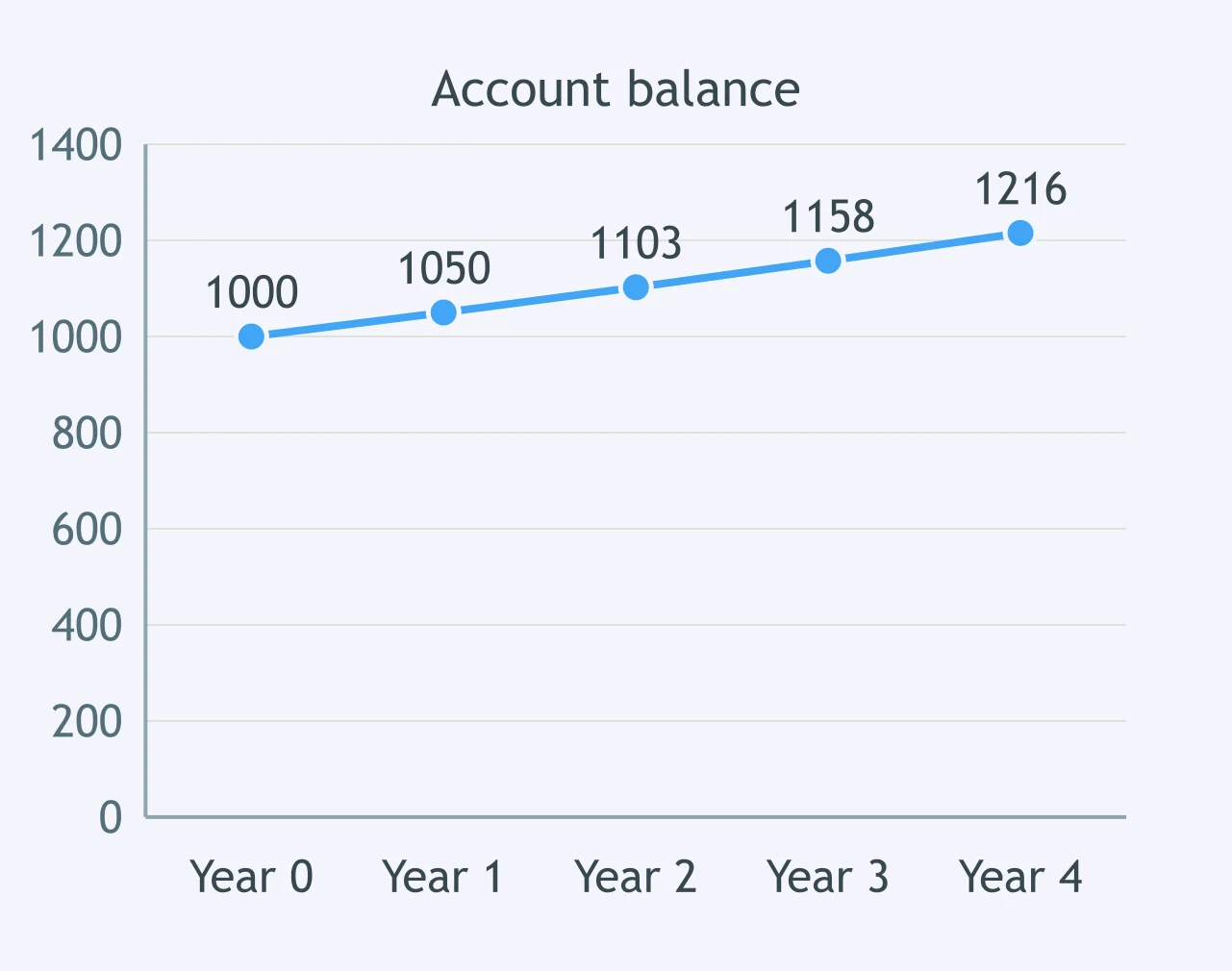
The graph shows a $1,000 account earning 5% compounded annually. What happens to the dollar amount of interest added each year?
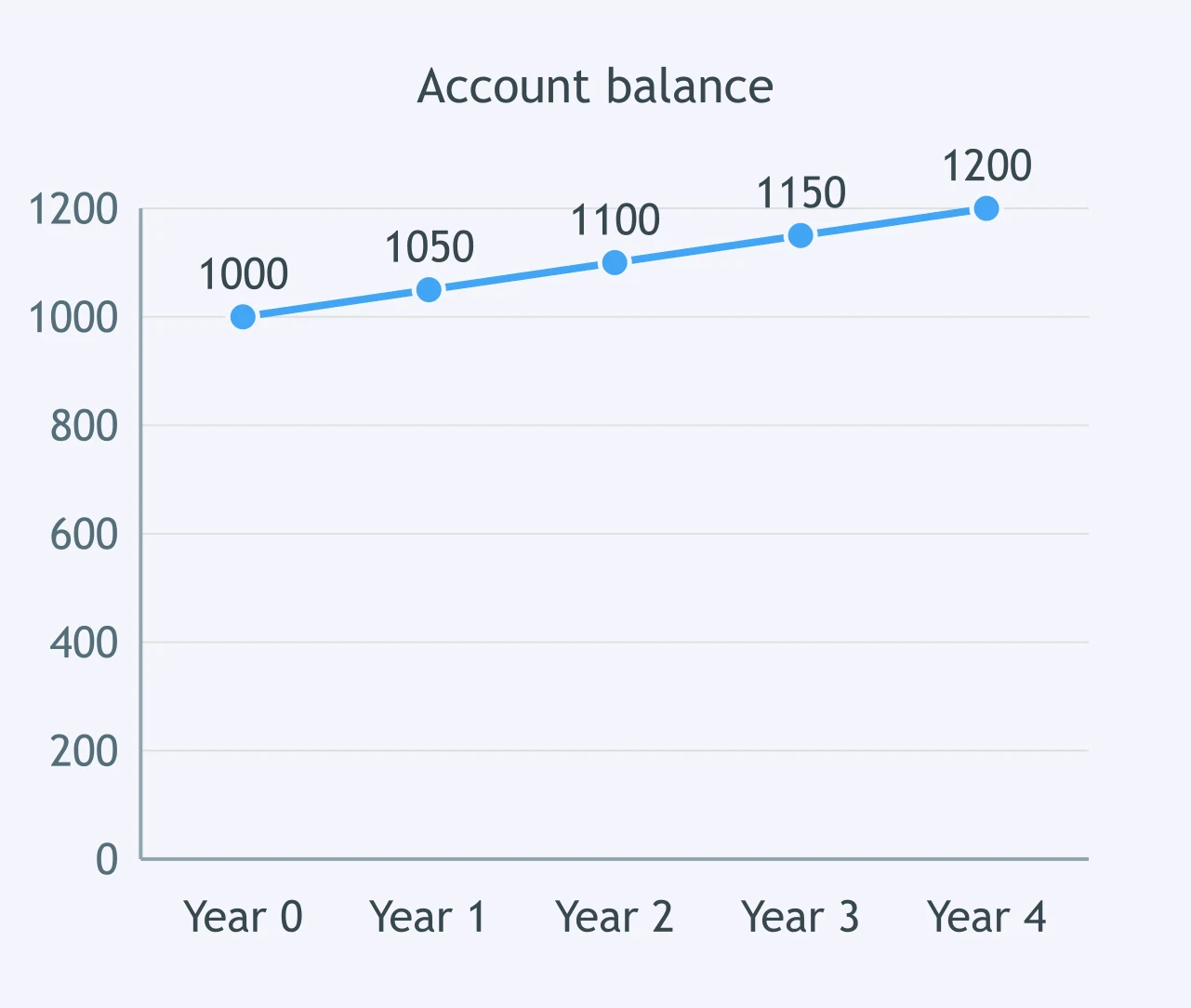
The graph shows a $1,000 account over time. Which interest model fits its equal $50 yearly increases?
Use the graph. Between which two years does this compound account have its largest dollar increase?
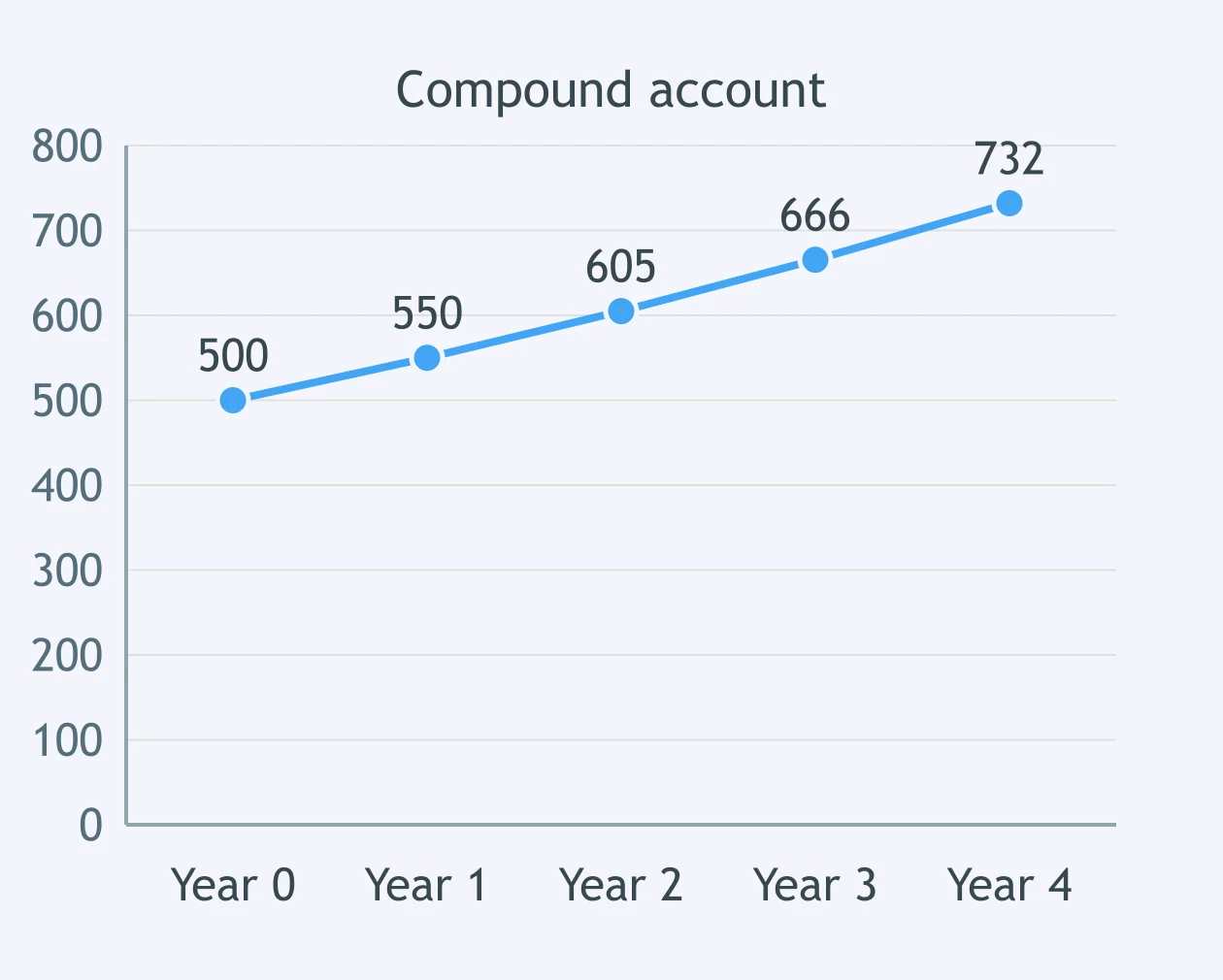
What graph pattern is evidence of simple interest on a fixed principal?
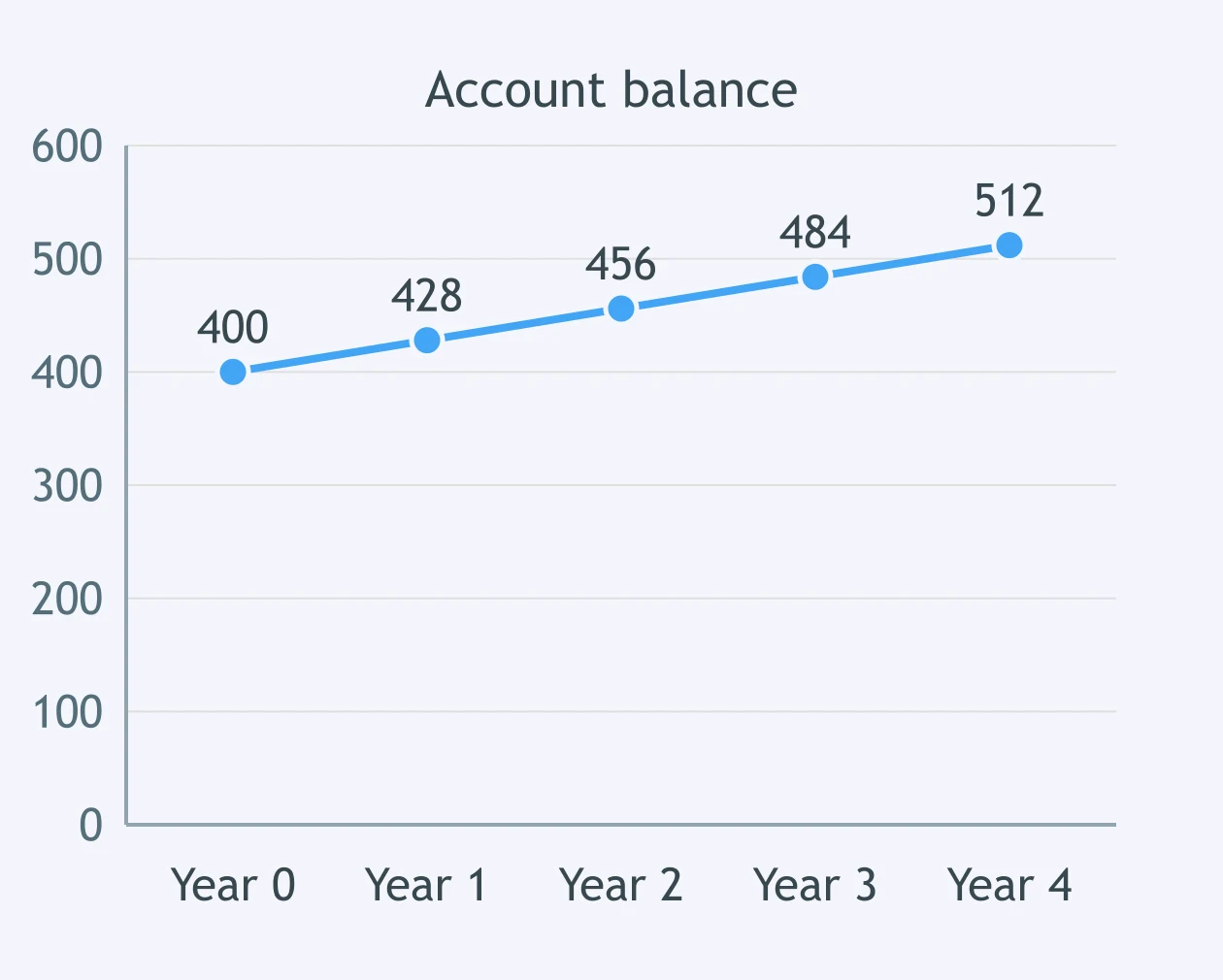
Use the graph to read the balance of a $1,000 account earning 20% compounded annually at the end of Year 3.
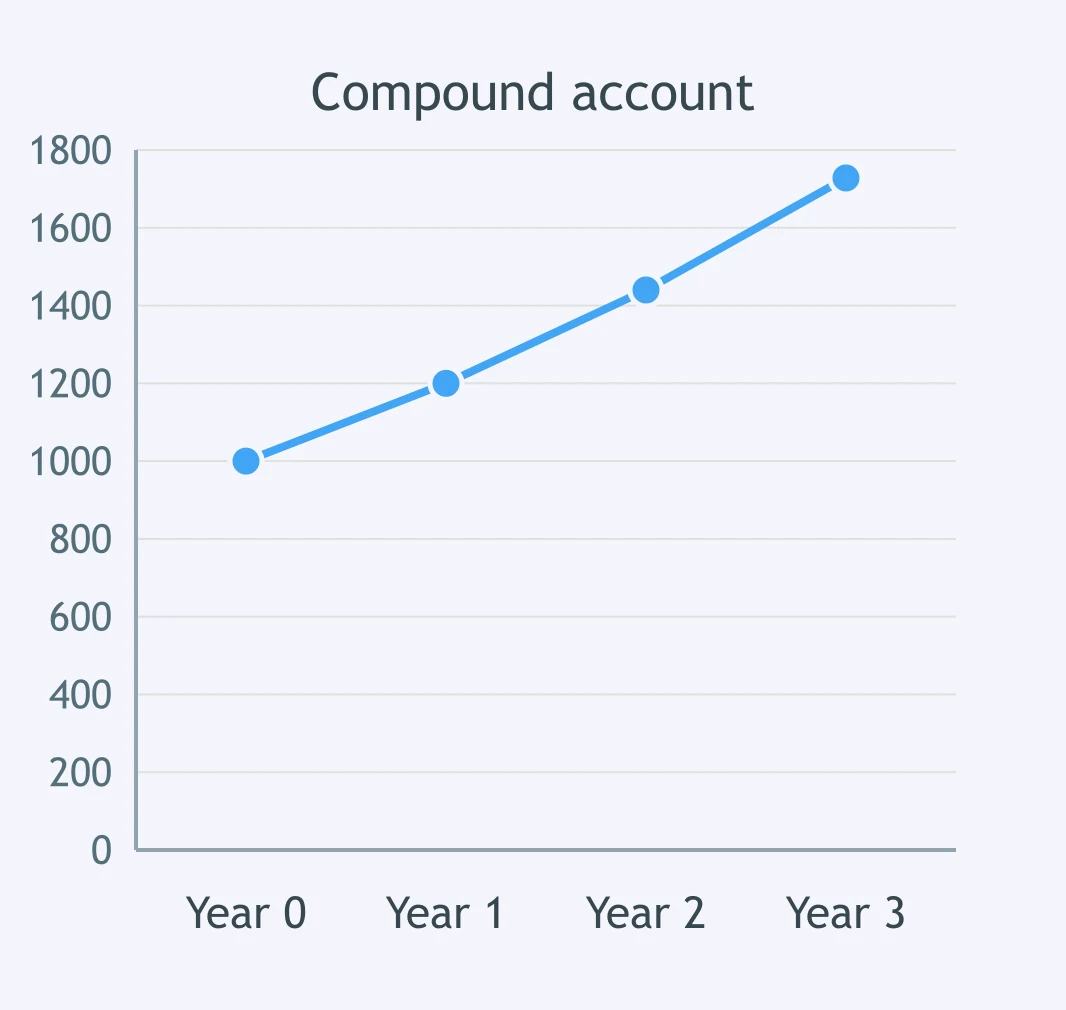
Use the graph. During which interval does the account gain the most money?
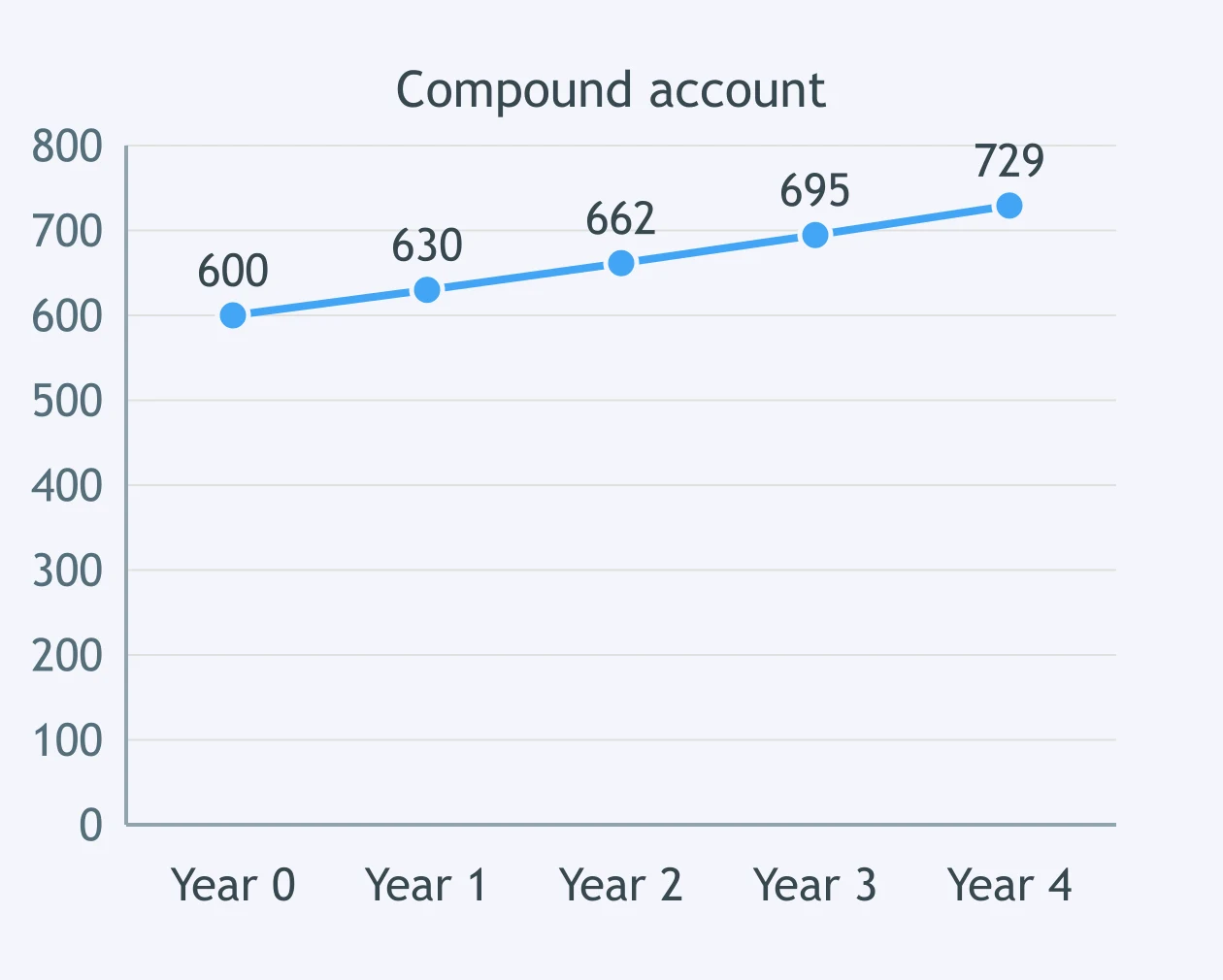
Use the graph. By how much does this simple-interest account increase each year?
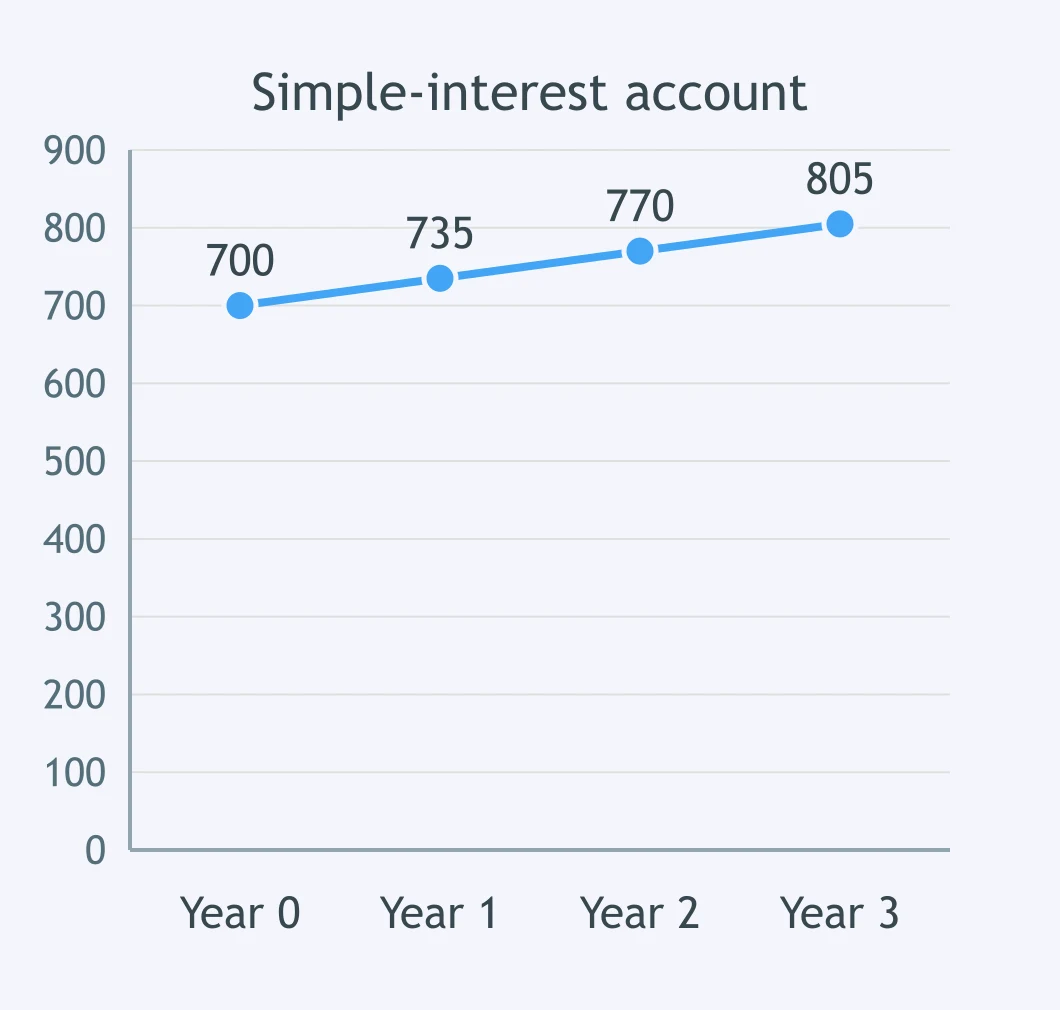
The graph shows an account growing at the same annual rate. Which statement correctly explains its curve?
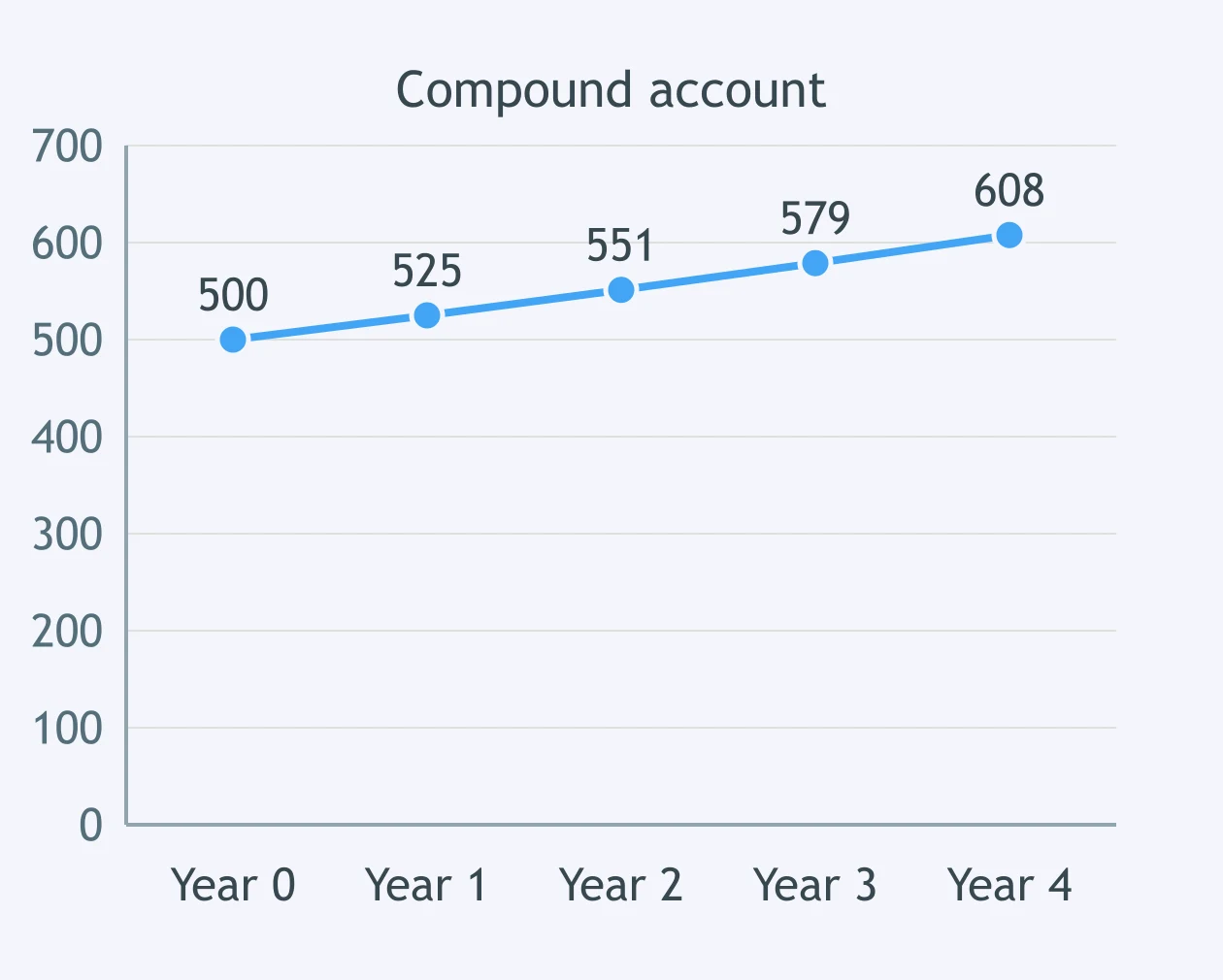
Which rule describes compound interest?
An account pays 4% each year only on its original $1,000 deposit. What interest model does it use?
What does a compounding period identify?
What does APY most directly show for a savings account?
An account pays a 12% annual rate compounded monthly. What rate is applied to the balance each month?
Eli and Ana each deposit $50 a month for 10 years and then stop. Eli starts at 25 and Ana at 35; both leave the money at the same rate until 65. Why does Eli end with more?
Jordan and Casey each deposit $2,000 once at 5% compounded annually. Jordan starts at 20 and Casey at 30, and both check their balances at 60. Who has more?
Maya saves $200 per month from age 22 through 31, while Ben saves the same amount from 32 through 41. Both stop and earn the same rate until 65. Why is Maya likely to have more?
One $1,000 deposit earns 6% compounded annually today; an identical deposit is made 10 years later. Both are measured 20 years from today. Which deposit has the larger balance?
Ira deposits $3,000 at age 20, and Nia deposits $4,000 at age 30. Both earn 5% compounded annually until age 60. Whose balance is larger at 60?
Dev saves $100 each year for five years ending at age 24. Rosa saves $100 each year for five years ending at age 39. Both earn the same compound rate until 65. Who benefits more from compounding time?
Rowan and Kim each deposit $1,000 at 10% compounded annually. Rowan leaves the money for 20 years and Kim leaves it for 10 years. Why is Rowan's ending balance greater?
Crack the passcode before the zombies get in.
Answer, then swat bugs for bonus points.
Race through questions at your own speed.
Same question on every screen. Fastest wins.

Pick a tile, answer, hit bonuses and steals.

The Emergency Fund
20 questions