Loading
by BlastRoom
Identify rain, snow, sleet, and hail from weather conditions and descriptions.
#us_grade_5_science
40 questions
One question set, multiple game modes. Tap any game to see it in action. Not sure which to pick?
Answer to place stones and capture territory.
Outrun the snow together.
Earn blasts, then hunt the other team.
Answer to earn energy, then climb.

The class blasts through walls together.
Bid on mystery lots. Most money wins.
Sell tours. Nice, standard, or a total scam.

Answer, restock, and serve the rush.
More correct answers pulls the rope your way.
Answer, then shoot down the alien wave.
Answer, then tap to leap the frozen ridge.
Cloud droplets fall through air that stays warmer than 0°C all the way to the ground. What form of precipitation results?
Ice crystals form in a cloud and fall through air that remains below 0°C until they land. What precipitation should reach the ground?
Falling flakes melt in a warm layer, then pass through a deep cold layer near the ground and freeze again. What forms?
A summer thunderstorm has strong rising winds that lift water drops into freezing parts of a tall cloud several times. What falls later?
A humid low-pressure storm moves in, and the lower air is 6°C from the cloud base to the ground. What precipitation is likely?
A winter cloud releases frozen crystals, and the air from the cloud to the surface is -4°C. What precipitation reaches the ground?
Drops inside a towering storm cloud freeze, get lifted again by fast winds, and collect more ice layers. What precipitation can fall?
Raindrops fall out of warm air into cold air near the ground and become small ice pellets before landing. What is produced?
A warm ocean wind pushes moist air over land, and temperatures stay above 0°C under the cloud. What precipitation should fall?
Moist air rises over a mountain, cools below freezing, and frozen flakes stay below 0°C as they descend. What reaches the ground?
A thunderstorm cloud grows very tall, and strong upward winds push drops into freezing air high in the cloud. What can this make?
A storm has warm air high above and cold dense air near the surface, so melted flakes refreeze before landing. What falls?
Steady precipitation falls from a gray cloud while the temperature is 9°C at the surface and above freezing higher up. What is it?
A polar storm has air colder than 0°C from the cloud top to the ground, with light winds carrying flakes sideways. What falls?
A shallow warm layer melts flakes, but a thicker freezing layer below turns the drops into pellets. What precipitation results?
During a severe storm, strong winds inside the cloud lift freezing drops repeatedly, adding icy layers before they fall. What forms?
A warm front brings moist air, and every layer under the cloud is above 0°C as drops fall. What reaches the ground?
A winter storm releases flakes, and no warm layer lies between the cloud and the cold ground. What precipitation is expected?
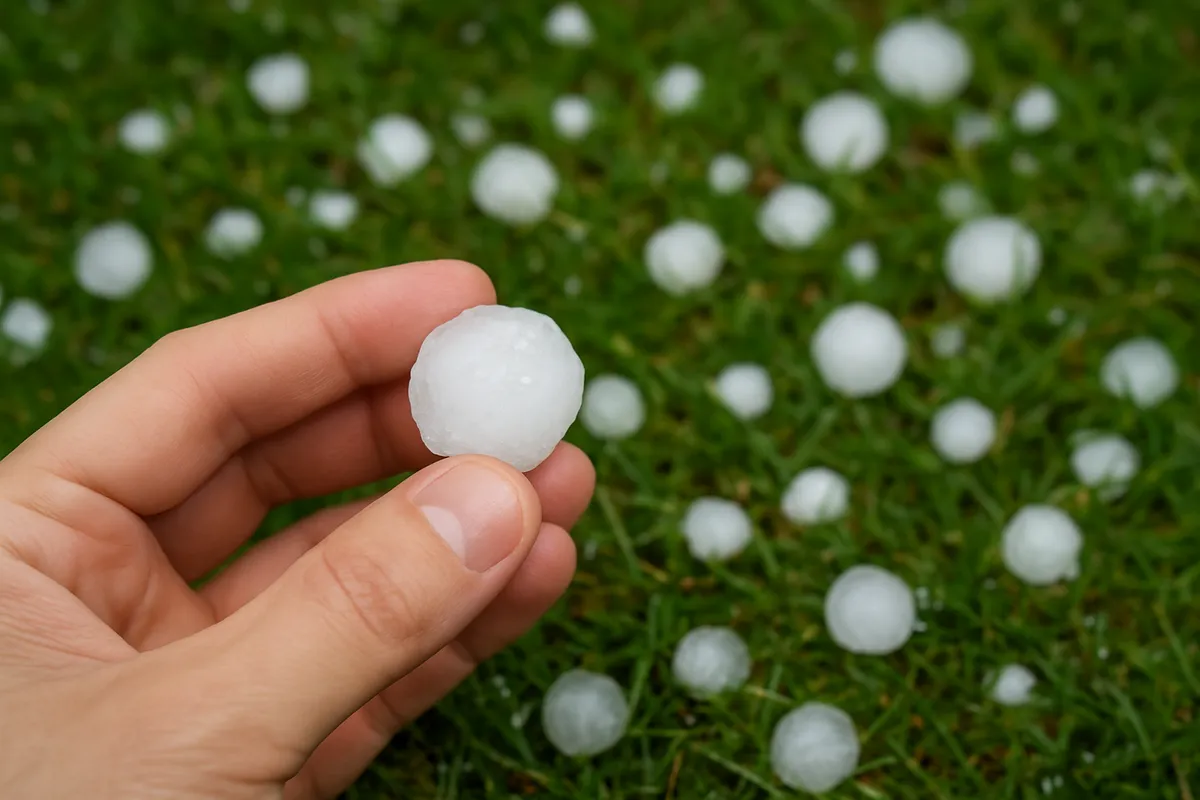
Hard balls of ice with layers inside fall during a loud summer thunderstorm. What is this precipitation called?
Clear liquid drops splash into puddles and run down windows during a warm storm. What form of precipitation is falling?
Small hard ice pellets rattle on a sidewalk and bounce when they hit. What form of precipitation is this?
Soft white flakes drift down and collect on mittens during a cold day. What precipitation is falling?
Large wet drops fall from a cloud and feel liquid on a student's hand. What form of precipitation is this?
Round ice stones dent leaves during thunder and lightning. What type of precipitation is falling?
Six-sided flakes drift through cold mountain air and pile up on a trail. What precipitation is this?
Tiny clear pellets tap on a window and make roads icy during a winter storm. What is falling?
Steady wet drops soak the soil in a warm rainforest, and no ice reaches the ground. What precipitation is falling?
White powdery flakes cover a playground during a below-freezing storm. What form of precipitation is on the ground?
Frozen pellets tap on a roof after melted flakes pass back into cold air. What form of precipitation is this?
Chunky ice balls bounce off grass during a severe thunderstorm. What precipitation is falling?
A tropical rainforest is warm and humid, with tall trees that need frequent water. A storm arrives with air above freezing. What precipitation is likely?
A polar tundra has mosses and lichens adapted to cold, dry conditions. During a freezing storm, what precipitation is most likely?
In late winter, a warm layer sits above cold air near the ground in a prairie town. What precipitation is likely?
A farm has a hot afternoon thunderstorm with towering clouds and strong upward winds. What frozen precipitation may fall with the storm?
In spring, a temperate city has 12°C air from the cloud to the street during a steady storm. What precipitation is expected?
A high mountain forest in January has below-freezing air from the cloud to the trail. What precipitation will most likely fall?
A winter morning storm has warm air overhead, cold surface air, and pellets bouncing in the parking lot. What is falling?
A warm, humid Gulf Coast thunderstorm grows high and dark. Fast upward winds carry drops into freezing air again and again, adding ice layers. What can fall from it?
A cold east wind keeps a deep layer of air near the ground below freezing, while storm air above 0°C moves over it. What precipitation is likely?
A dry steppe has grasses and grazing animals. A sudden severe thunderstorm sends ice balls to the ground. What precipitation is falling?
Crack the passcode before the zombies get in.
Answer, then swat bugs for bonus points.
Race through questions at your own speed.
Same question on every screen. Fastest wins.

Pick a tile, answer, hit bonuses and steals.
Objects of the Solar System
40 questions