Loading
by BlastRoom
Compare college funding sources by their immediate coverage and their cost after graduation.
#us_hs_economics
30 questions
One question set, multiple game modes. Tap any game to see it in action. Not sure which to pick?
Answer to place stones and capture territory.
Outrun the snow together.
Earn blasts, then hunt the other team.
Answer to earn energy, then climb.

The class blasts through walls together.
Bid on mystery lots. Most money wins.
Sell tours. Nice, standard, or a total scam.

Answer, restock, and serve the rush.
More correct answers pulls the rope your way.
Answer, then shoot down the alien wave.
Answer, then tap to leap the frozen ridge.
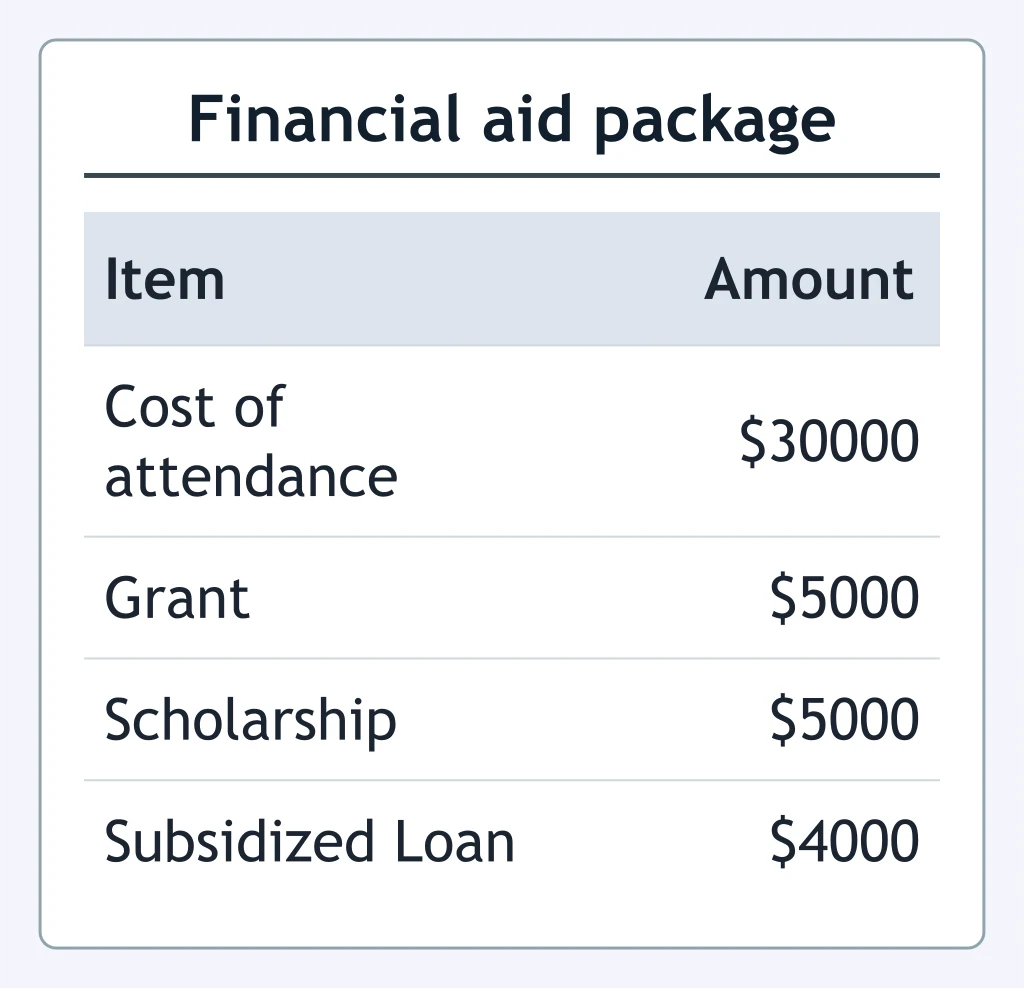
Use the cost-and-aid table. After all listed aid is applied, what remaining cost must be covered?
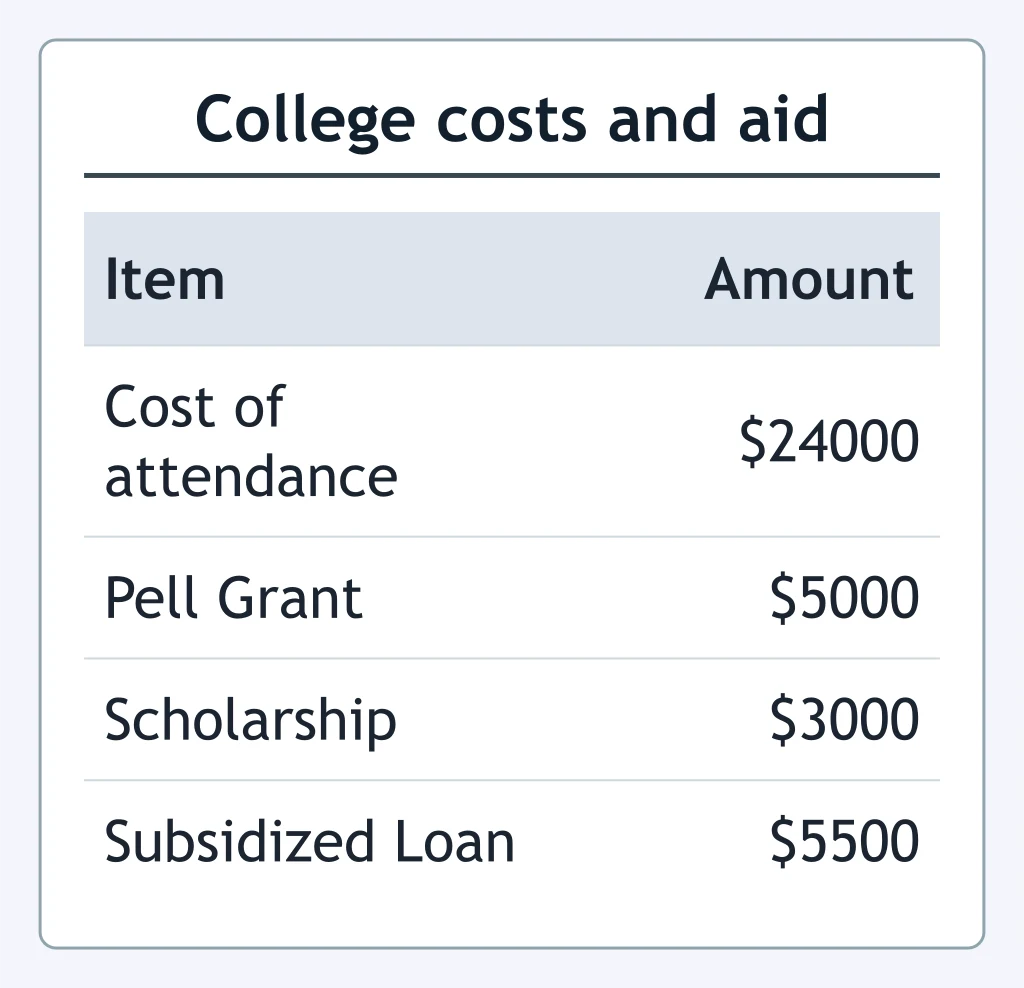
Read the aid table. What cost remains after the grant, scholarship, and loan are applied?
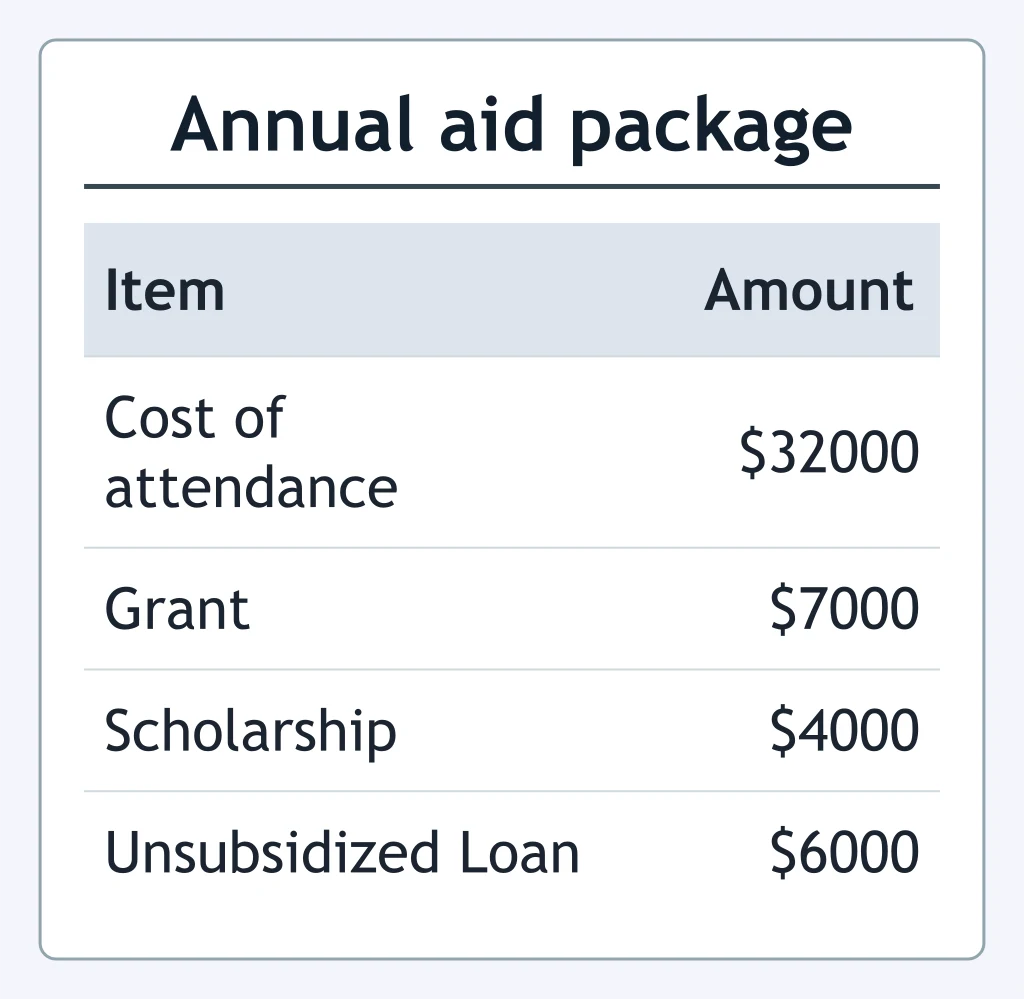
A student accepts every item shown in the table. How much of the annual cost remains?
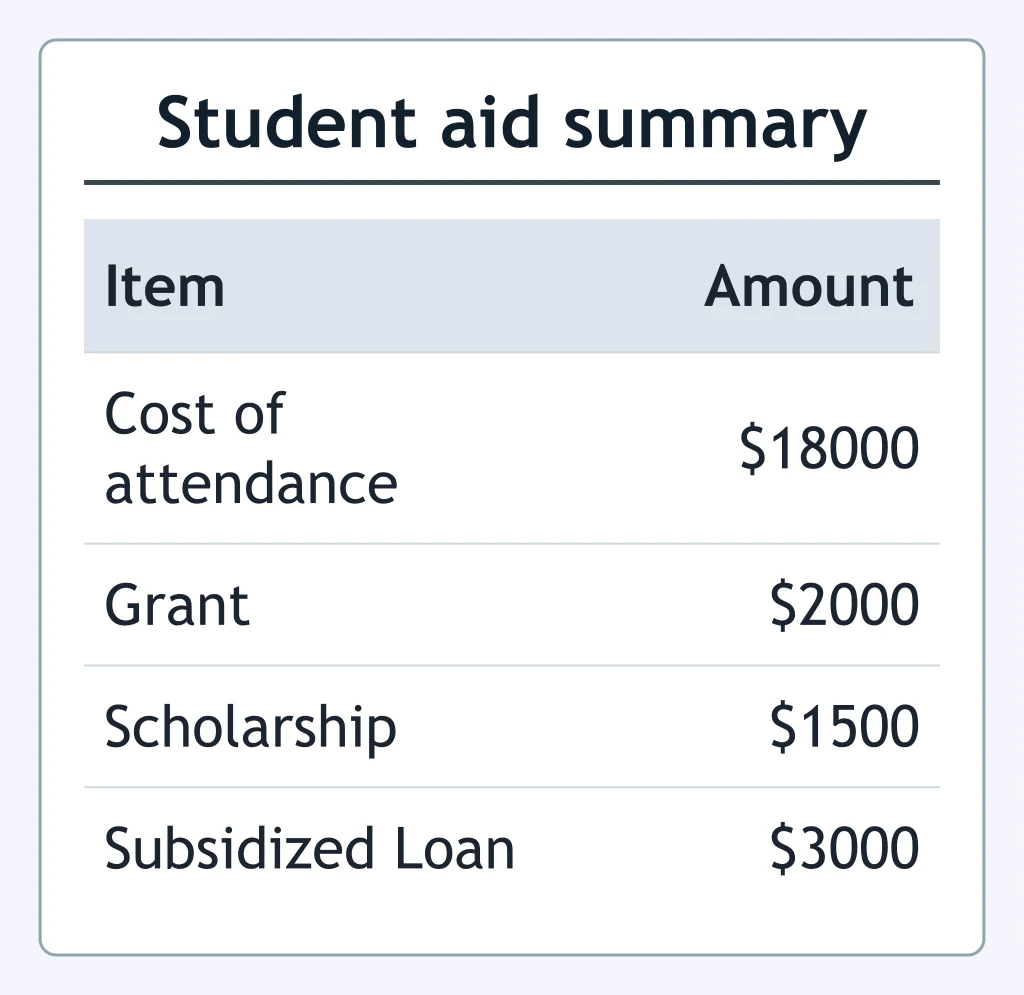
According to the table, what is the remaining cost after every listed funding source is used?
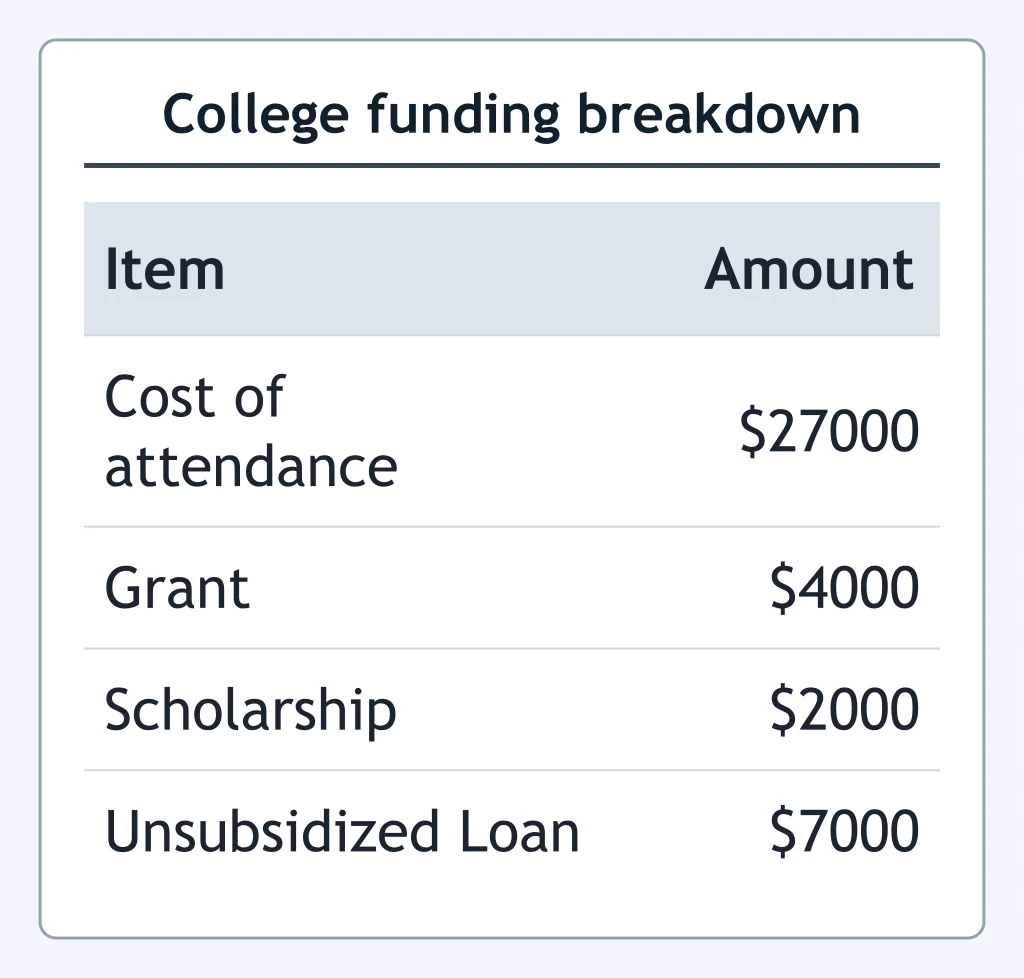
Use the table to find the cost still left after the student accepts the listed aid.
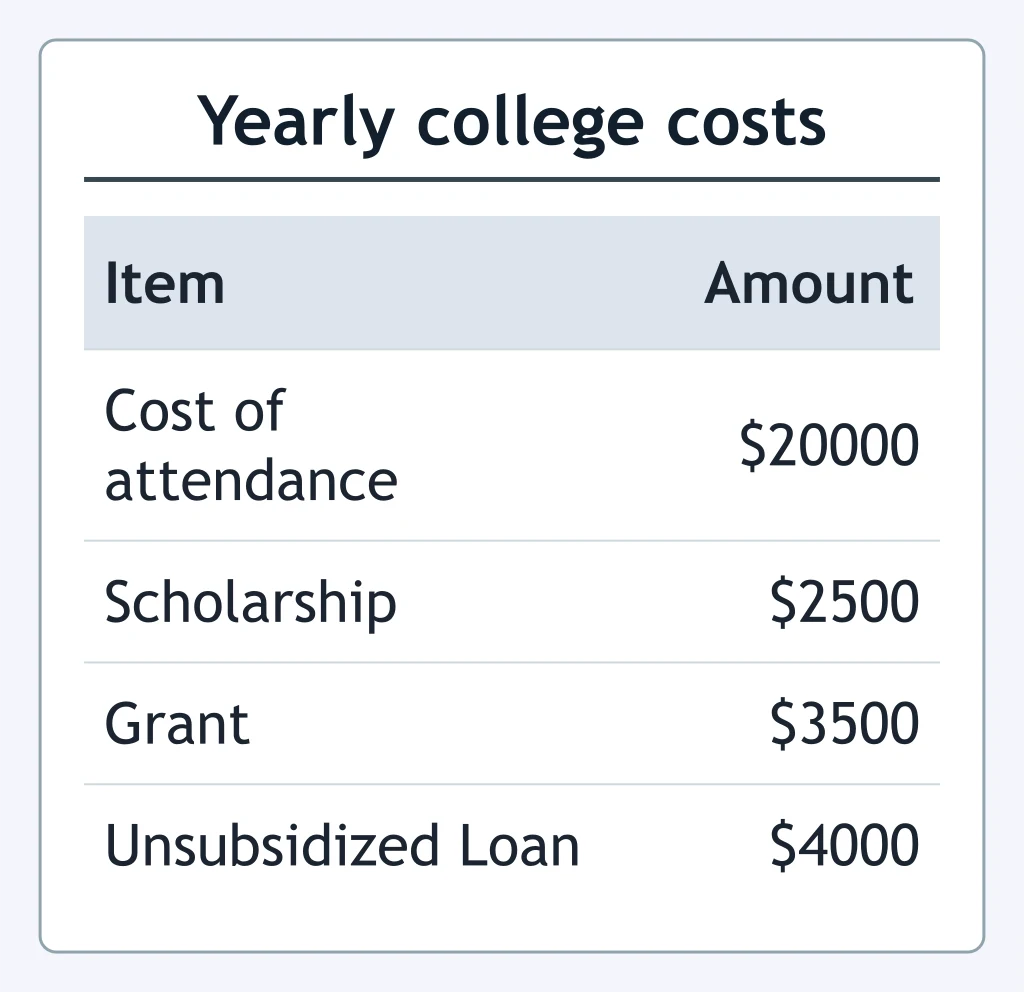
After all awards in the table are applied, what amount remains for the year?
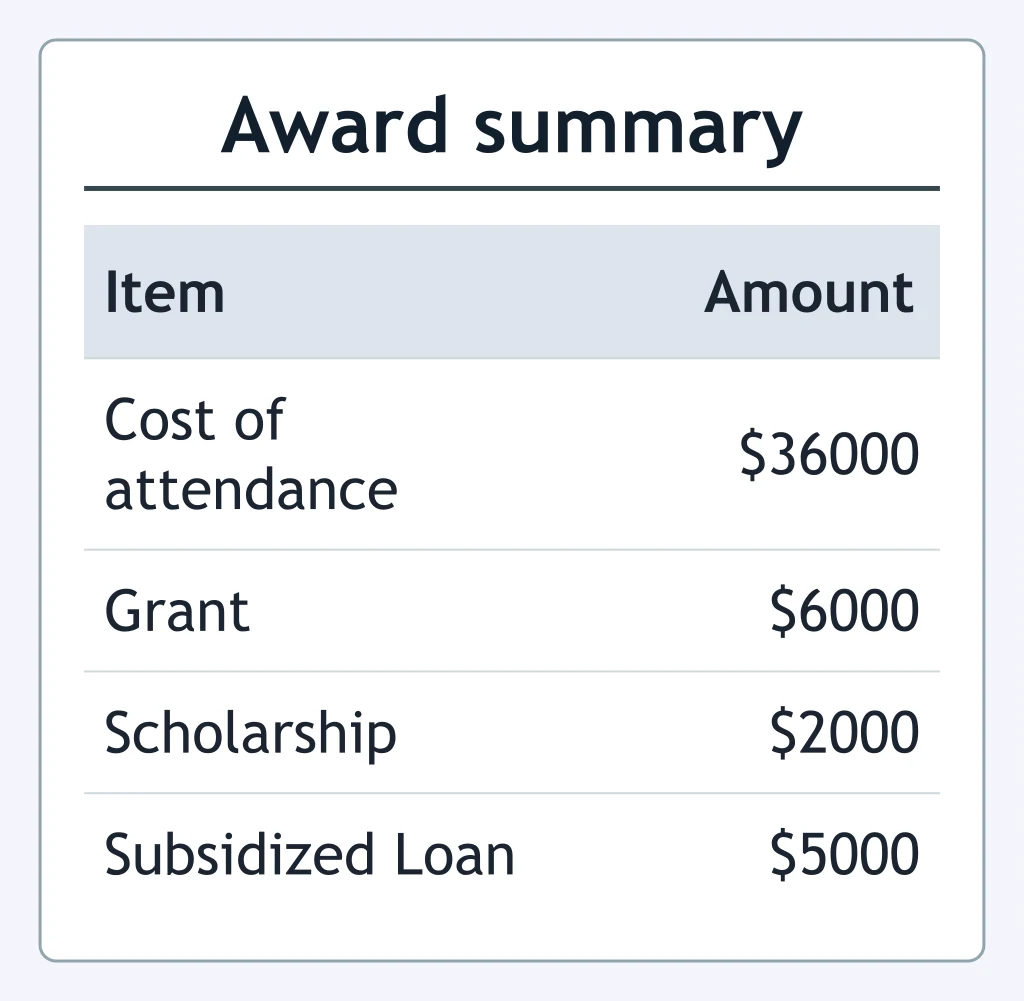
Find the remaining cost shown by the table after the grant, scholarship, and loan are counted.
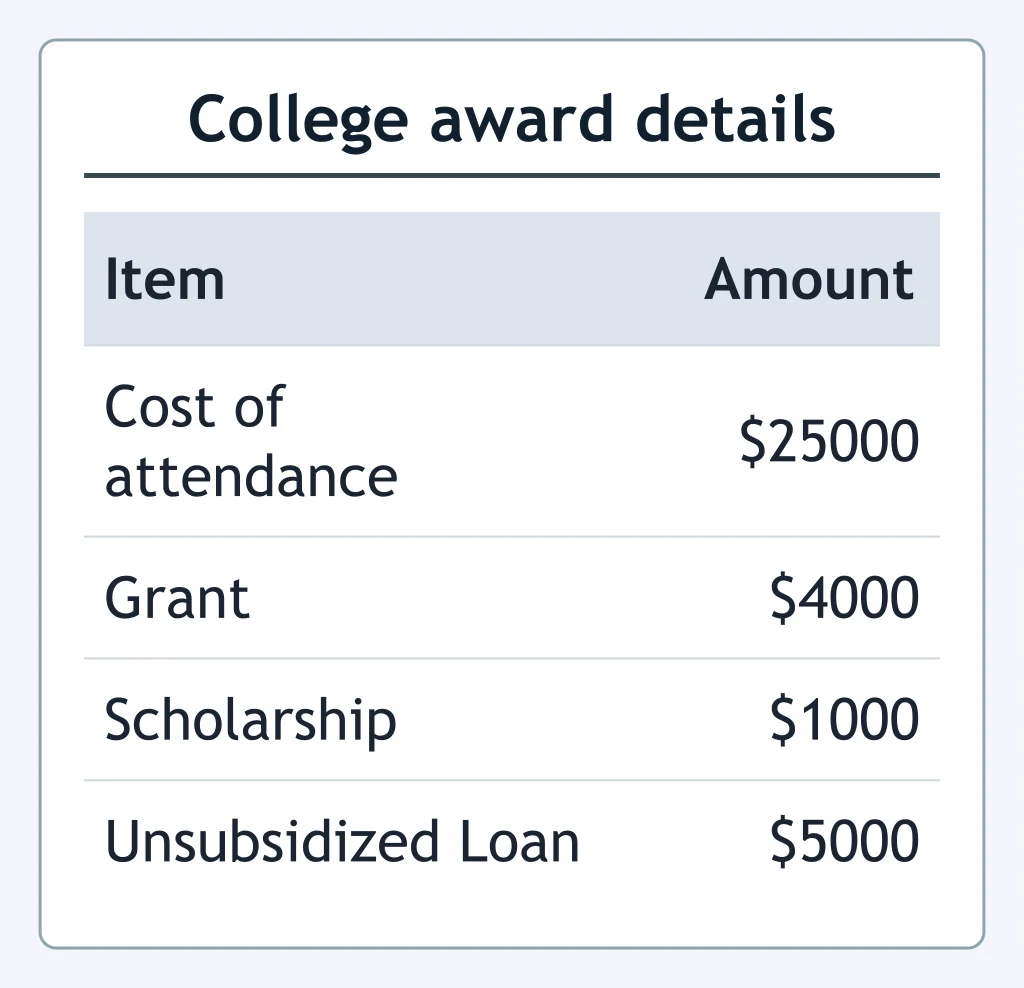
What remaining cost does the table show after the student uses all listed sources?
Use the table. Which source gives the largest amount without creating debt after graduation?
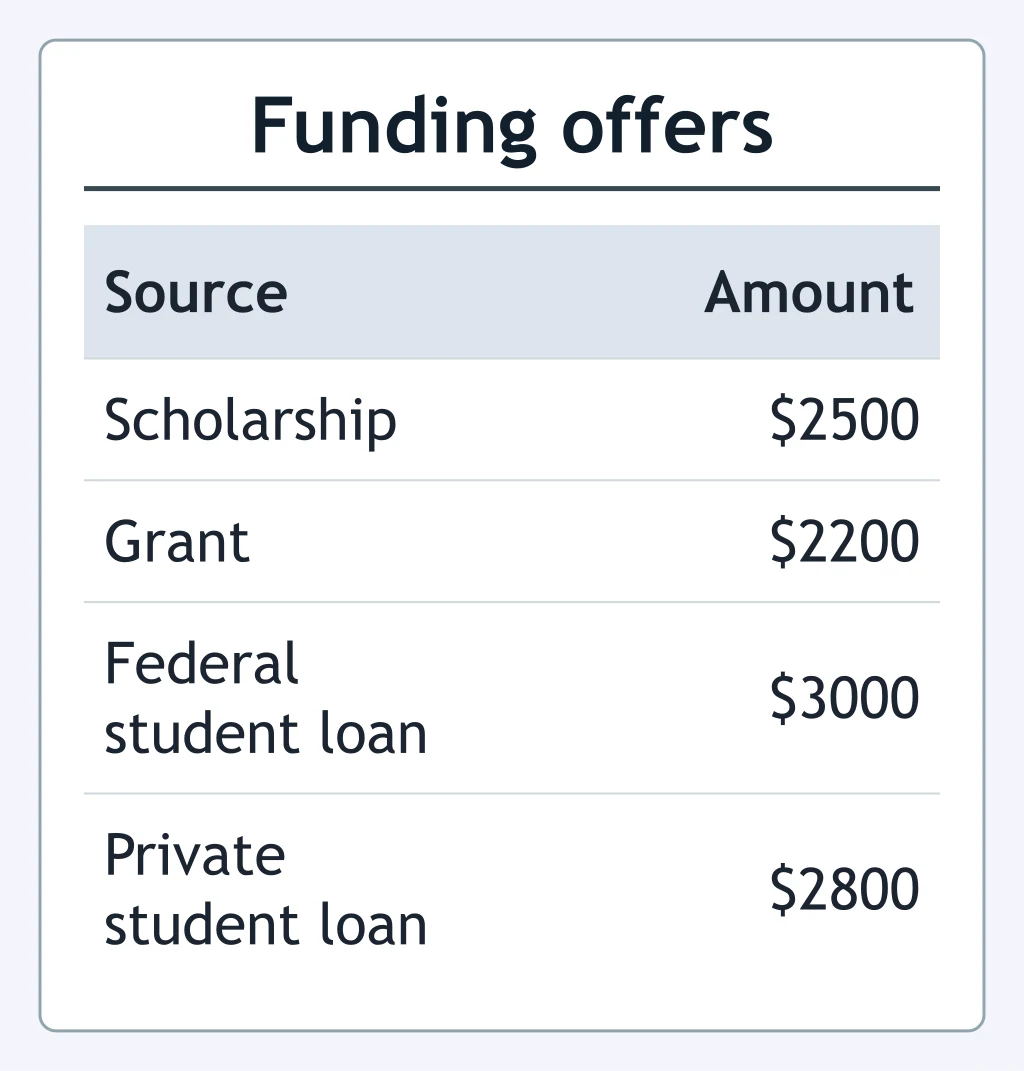
Mia needs $2,800 for one year. Based on the table, which single source covers that amount without requiring repayment?
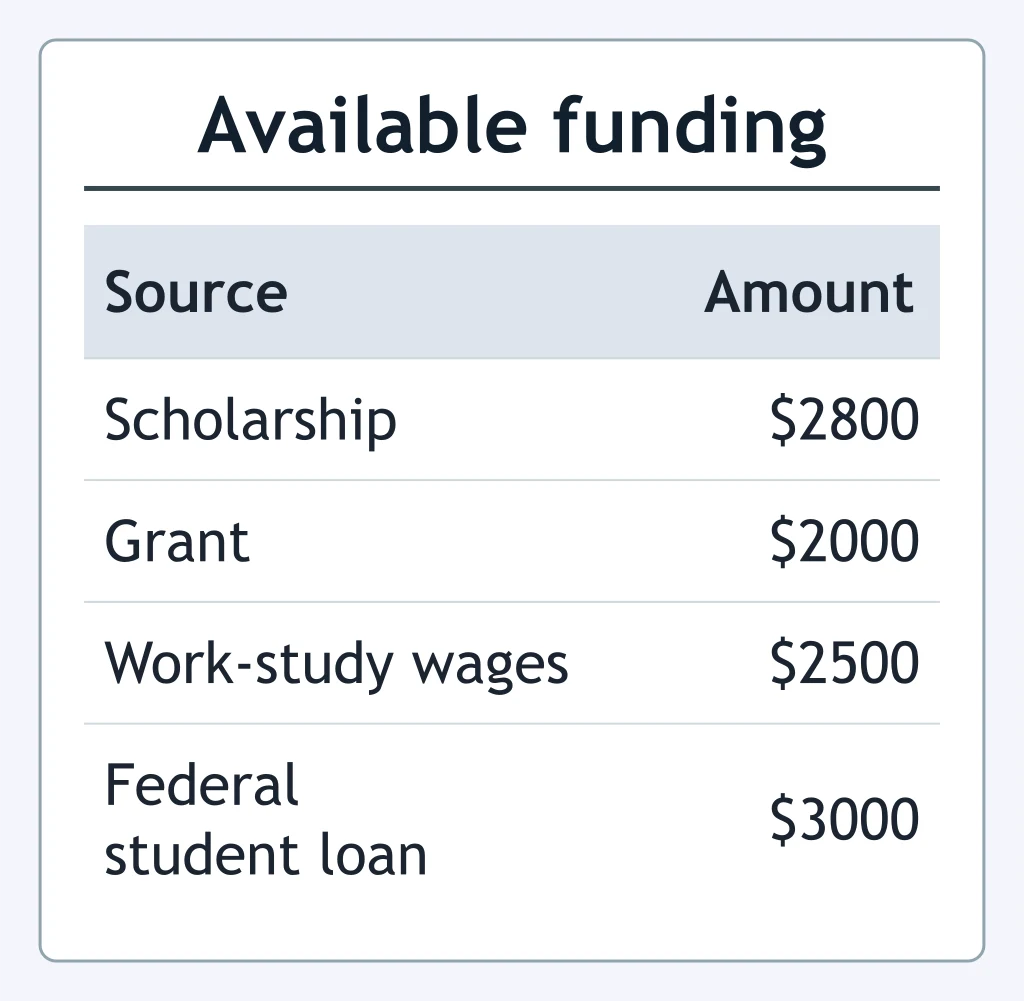
Alex is offered $3,000 from each source. Which source will generally cost the most after graduation?
After using grants and scholarships, Jordan still needs to borrow $2,000 and qualifies for both federal Direct loan types. Which choice usually avoids interest accruing while enrolled at least half time?
Why can work-study reduce a student's borrowing need?
Taylor can cover a $5,000 bill with one package. Which package leaves the smallest amount to repay later?
A student has enough savings to pay the remaining bill but is thinking about taking a private loan instead. What is the main extra cost of borrowing rather than using savings?
Which students can receive a federal Direct Subsidized Loan?
What is the key repayment feature shared by both subsidized and unsubsidized federal Direct Loans?
A student has one subsidized and one unsubsidized loan for the same amount and rate. At graduation, the unsubsidized balance is larger. What best explains this?
Who may use a federal Direct PLUS Loan to help pay for a dependent undergraduate student's education?
Which loan source is most likely to have terms such as a variable interest rate set by a lender?
What happens when unpaid student-loan interest is capitalized?
A loan offer says “unsubsidized.” During an eligible student's in-school period, who is responsible for the interest that accrues?
What does submitting the FAFSA primarily help determine?
A family wants to be considered for a federal Pell Grant. What should it complete?
How often should a student generally submit a FAFSA to be considered for federal aid for a new academic year?
What fee does a family pay to submit the official FAFSA?
Which number does the FAFSA calculate from a family's financial information to help decide how much federal aid a student can get?
A student lists two colleges on the FAFSA. What happens to the information she submits?
A student hopes to get grants from her state and her college, not loans. Why should she still submit the FAFSA?
A family completes the FAFSA before comparing aid offers. What should it still do after receiving offers from colleges?
Crack the passcode before the zombies get in.
Answer, then swat bugs for bonus points.
Race through questions at your own speed.
Same question on every screen. Fastest wins.

Pick a tile, answer, hit bonuses and steals.

Buying a Car and Renting or Buying a Home
25 questions