Loading
by BlastRoom
Explore ideal projectile motion, velocity components, and the effects of launch angle.
#projectile_motion#matatag_science_10

20 questions
One question set, multiple game modes. Tap any game to see it in action. Not sure which to pick?
Ignoring air resistance, which motion can be modeled as an ideal projectile?
A ball is launched obliquely near Earth's surface. With constant gravity and no air resistance, what shape does its trajectory have?
Ignoring air resistance, what happens to the horizontal velocity component of an obliquely launched ball during flight?
During ascent, a student records a ball's position at equal time intervals. Ignoring air resistance, how do the upward distances between successive positions change?
A volleyball has passed its highest point. Ignoring air resistance, how does the magnitude of its vertical velocity change as it falls?
At point B, which description of the ball's total velocity is correct?
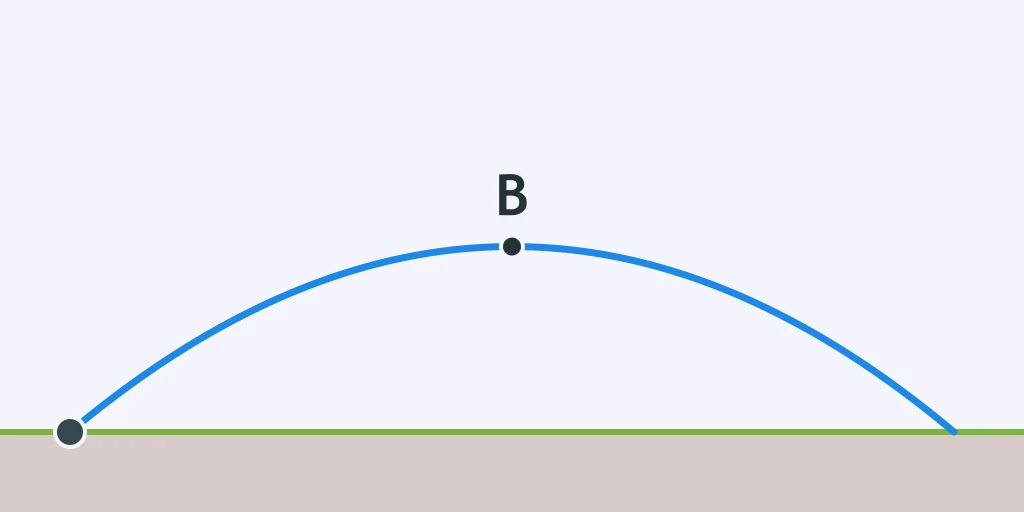
At the highest point, what happens to a ball's acceleration in ideal projectile motion?
Liza releases one ball from rest and launches another horizontally from the same height at the same instant. Ignoring air resistance, which reaches the level ground first?
An ideal projectile takes 2.5 seconds to reach its highest point. How long does it take to descend from there to its release height?
Two balls of different masses are dropped together in a vacuum near Earth's surface. How do their downward accelerations compare?
Three balls are launched at the same speed at 30, 45, and 60 degrees above horizontal. They return to release height without air resistance. Which angle gives the greatest horizontal range?
Three ideal projectiles are launched at the same speed at 20, 40, and 70 degrees above horizontal. Which angle gives the greatest maximum height above release?
A ball is launched at 25 degrees. Which other angle gives an equal range without changing speed, assuming level ground and no air resistance?
A launcher fires at 30 degrees, then at 60 degrees without changing speed. On level ground without air resistance, how do the flights compare?
A hose's release angle is increased from 50 degrees toward 80 degrees while its exit speed stays fixed. On level ground without air resistance, what happens to the range?
Which release angle keeps a ball airborne longest when launch speed is fixed, landing is at release height, and air resistance is ignored?
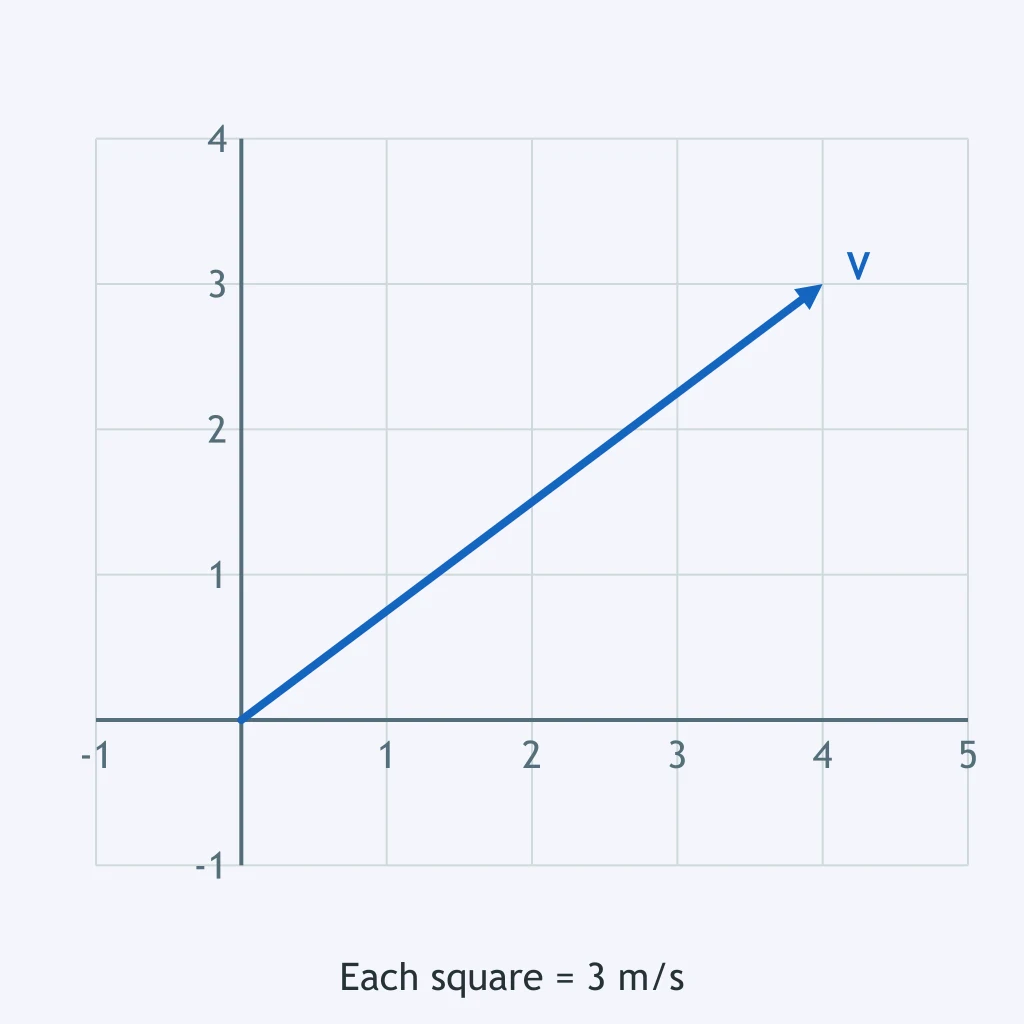
Use the grid and its scale. What is the magnitude of V's horizontal component?
A ball leaves a launcher at 12 m/s and 30 degrees above the horizontal. What is its initial upward velocity component?
A ball is launched at 12 m/s and 60 degrees. Ignore air resistance and use . Approximately how high above release does it rise?
To test how release angle affects landing distance, which quantity should a hose activity keep fixed?
Crack the passcode before the zombies get in.

Pick a tile, answer, hit bonuses and steals.

Momentum and Impulse
20 questions