Loading
by BlastRoom
Practice systematic engineering design comparisons using criteria, constraints, data, and trade-offs.
#us_grade_7_science
20 questions
One question set, multiple game modes. Tap any game to see it in action. Not sure which to pick?
Answer to place stones and capture territory.
Outrun the snow together.
Earn blasts, then hunt the other team.
Answer to earn energy, then climb.

The class blasts through walls together.
Bid on mystery lots. Most money wins.
Sell tours. Nice, standard, or a total scam.

Answer, restock, and serve the rush.
More correct answers pulls the rope your way.
Answer, then shoot down the alien wave.
Answer, then tap to leap the frozen ridge.
A cooler must keep water below 10 °C for 2 hours and use recycled material. Foam: 8 °C, new plastic; newspaper: 9 °C, recycled; cotton: 12 °C, recycled. Which design fits?
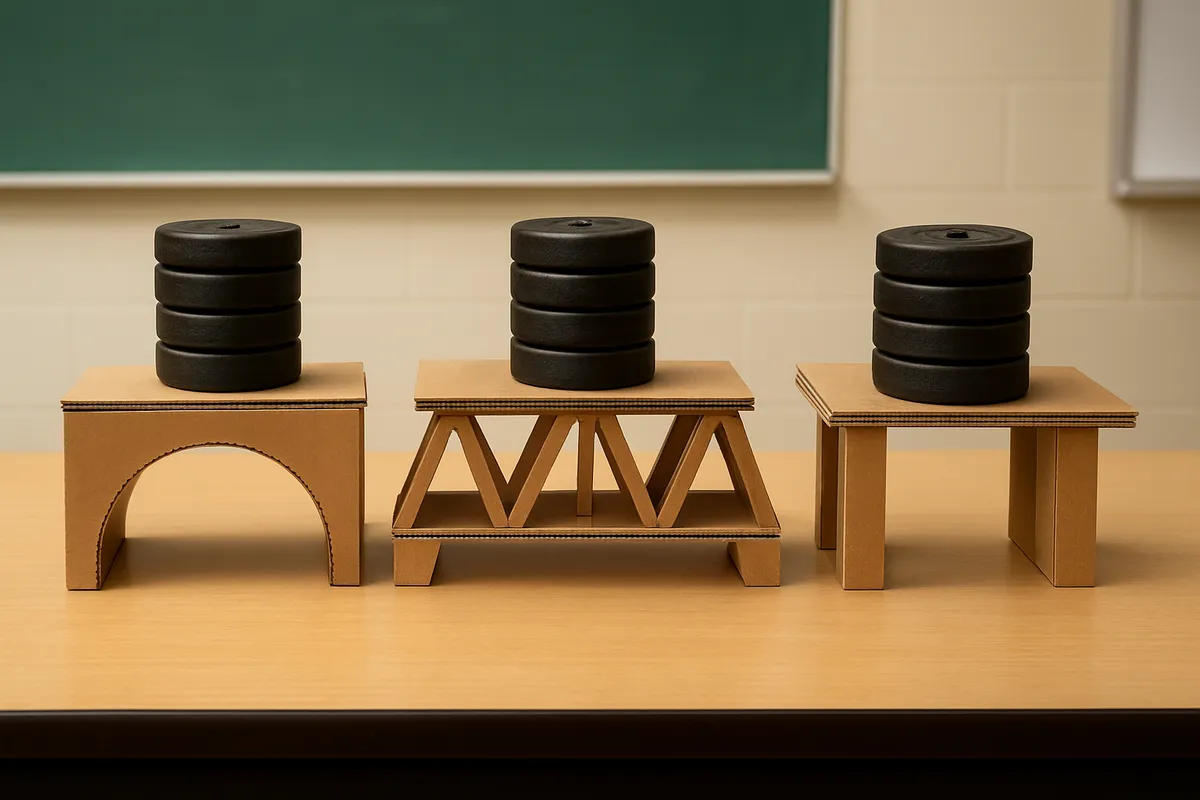
A bridge must hold at least 50 N using under 200 g of craft sticks. Arch: 60 N, 220 g; truss: 55 N, 180 g; beam: 45 N, 160 g. Which design qualifies?
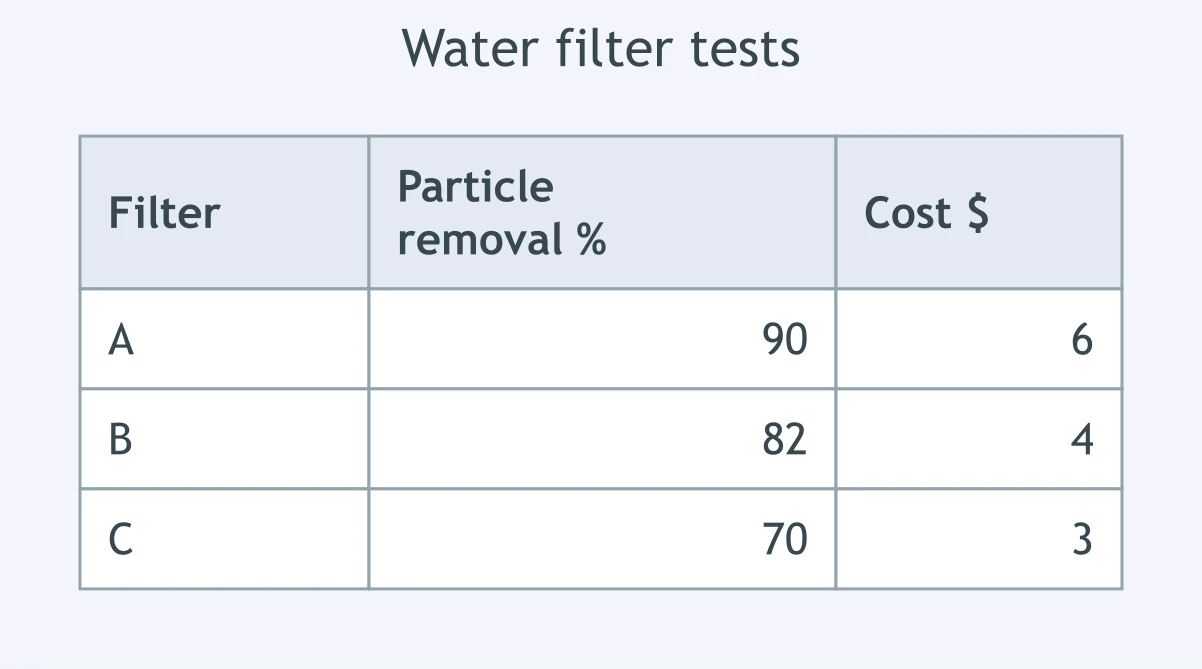
Use the table comparing Filters A, B, and C. A filter must remove at least 80% of particles and cost no more than $5. Which filter best meets both?
A garden device must use 3 V and water soil only below 25% moisture. Timer: 5 V, 20%; sensor: 3 V, 20%; sponge: 3 V, 35%. Which solution meets both limits?
A solar cooker must heat 500 mL of water to at least 70 °C and cost under $12. Box: 72 °C, $10; cone: 80 °C, $18; flat panel: 60 °C, $8. Which should be chosen?
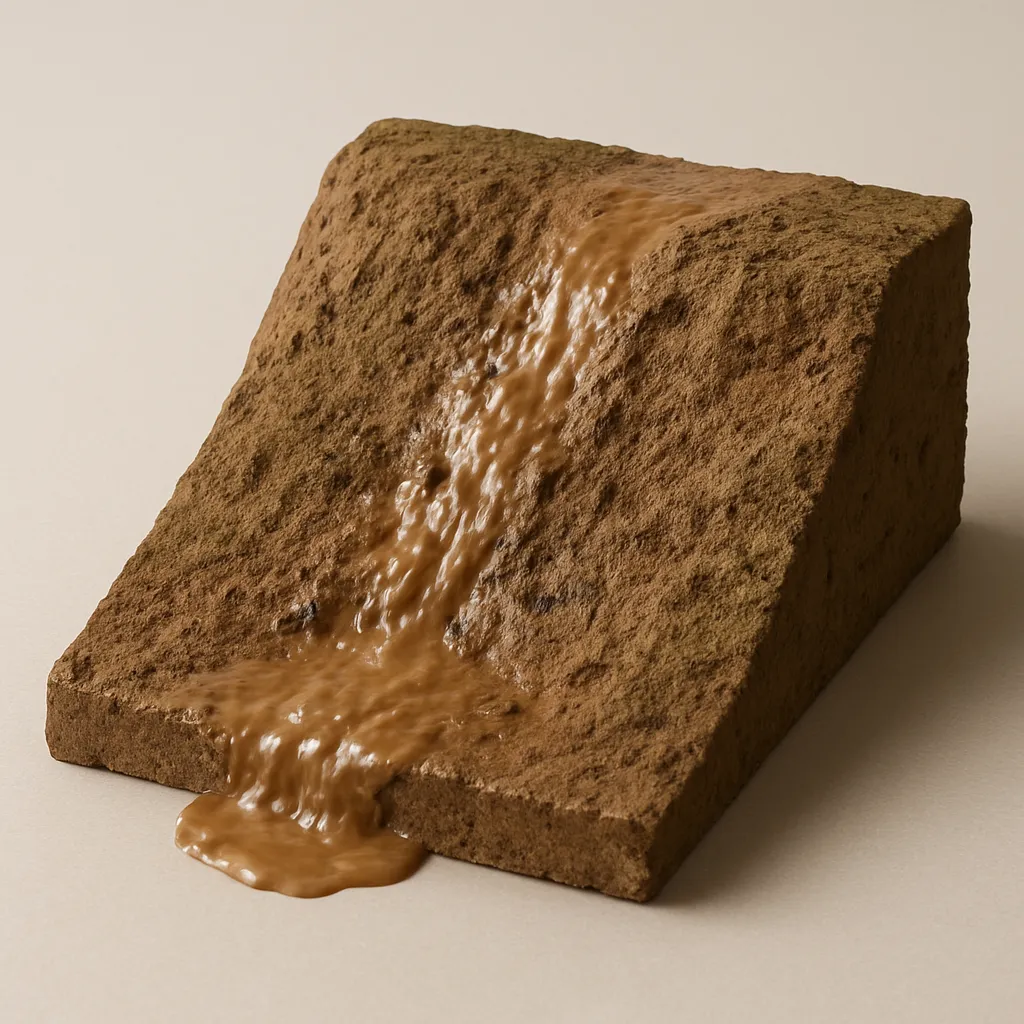
A slope barrier must reduce runoff at least 40% and install in under 30 minutes. Rock wall: 50%, 45 min; straw wattles: 42%, 25 min; grass seed: 35%, 20 min. Which solution fits?
A strap pad must keep pressure under 8 kPa and add under 60 g. Gel: 6 kPa, 90 g; foam: 7 kPa, 40 g; cloth: 9 kPa, 30 g. Which prototype meets both?
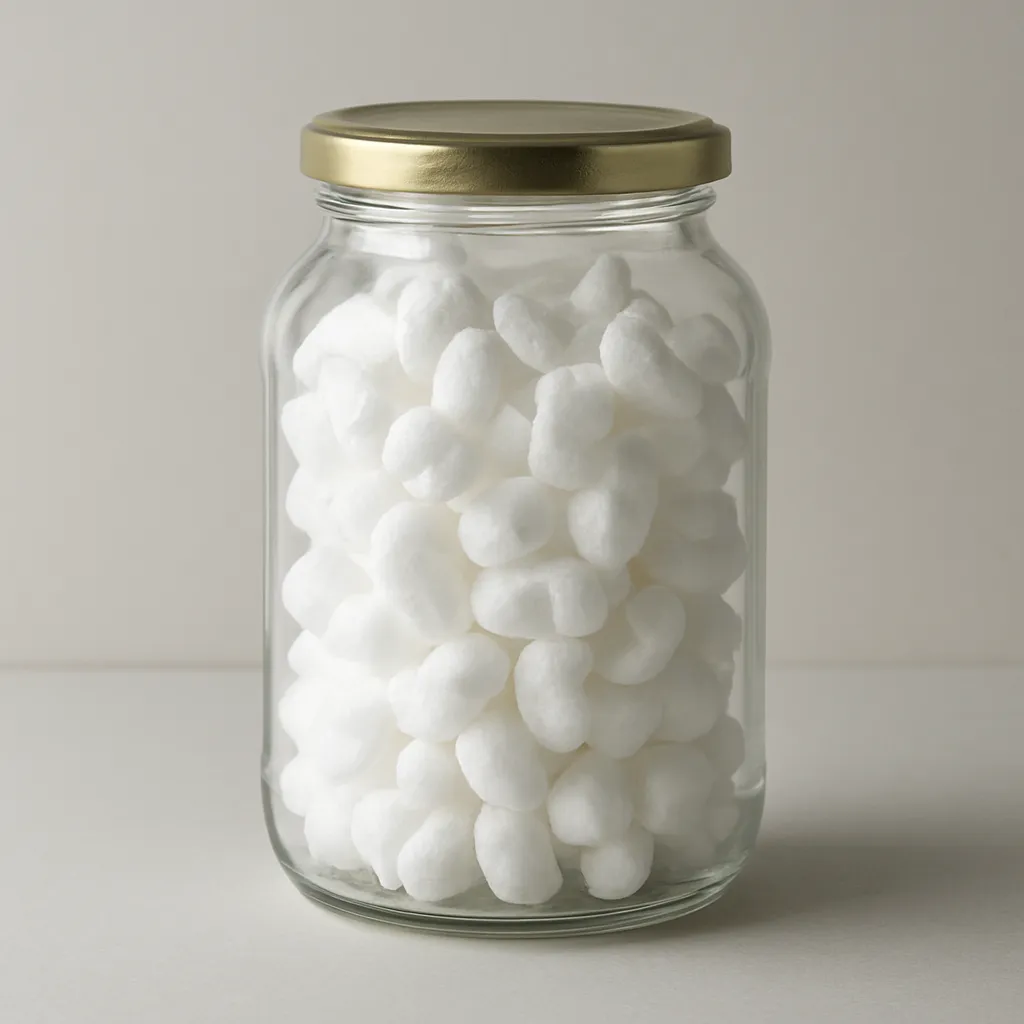
A package must keep a jar uncracked after a 1 m drop and use no plastic. Bubble wrap: works, plastic; shredded paper: works, paper; cloth: fails, plastic-free. Which meets both?
Water-filter goal: clearest water, under $40, flow at least 1 L/min. A: clarity 9, $55, 2 L/min. B: 8, $35, 1.5 L/min. C: 4, $30, 3 L/min. Which trade-off is best?
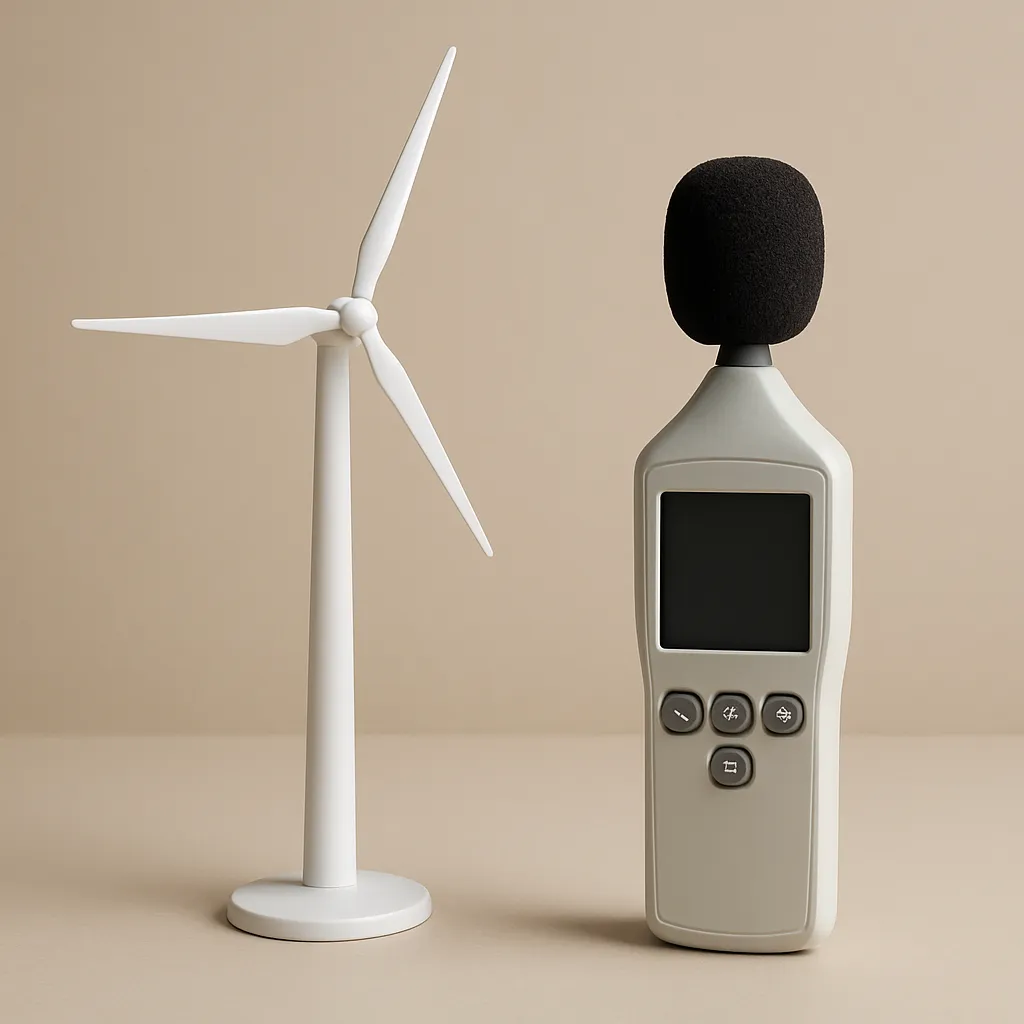
A turbine should maximize electricity while staying below 50 dB and $20. A: 7 W, 60 dB, $15. B: 6 W, 45 dB, $18. C: 4 W, 40 dB, $10. What trade-off is best?
A sanding mask should block the most dust with resistance under 30 Pa. X: 95%, 45 Pa. Y: 90%, 25 Pa. Z: 70%, 15 Pa. Which trade-off is best?
Rain barrel goal: store at least 100 L, pass 80 cm gate, minimize cost. A: 120 L, 90 cm, $35. B: 100 L, 75 cm, $50. C: 80 L, 60 cm, $25. Which trade-off works?
Phone case goal: survive 1 m drop, stay under 80 g, minimize thickness. A: survives, 12 mm, 70 g. B: survives, 8 mm, 90 g. C: cracks, 6 mm, 40 g. Which trade-off is best?
A greenhouse cover should maximize light and lose under 5 °C overnight. Clear: 90%, 8 °C. Bubble: 75%, 4 °C. Cloth: 50%, 3 °C. Which trade-off is best?
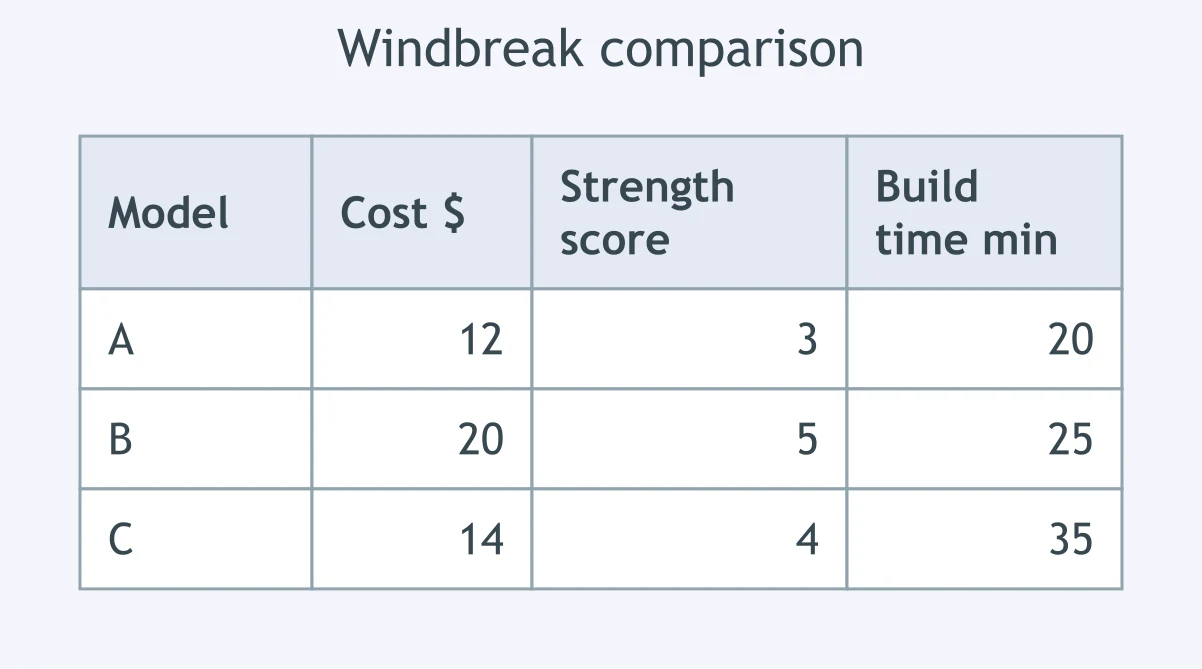
Use the table comparing windbreak models. The systematic process first eliminates designs over $15 or 30 minutes, then chooses highest strength. What conclusion follows?
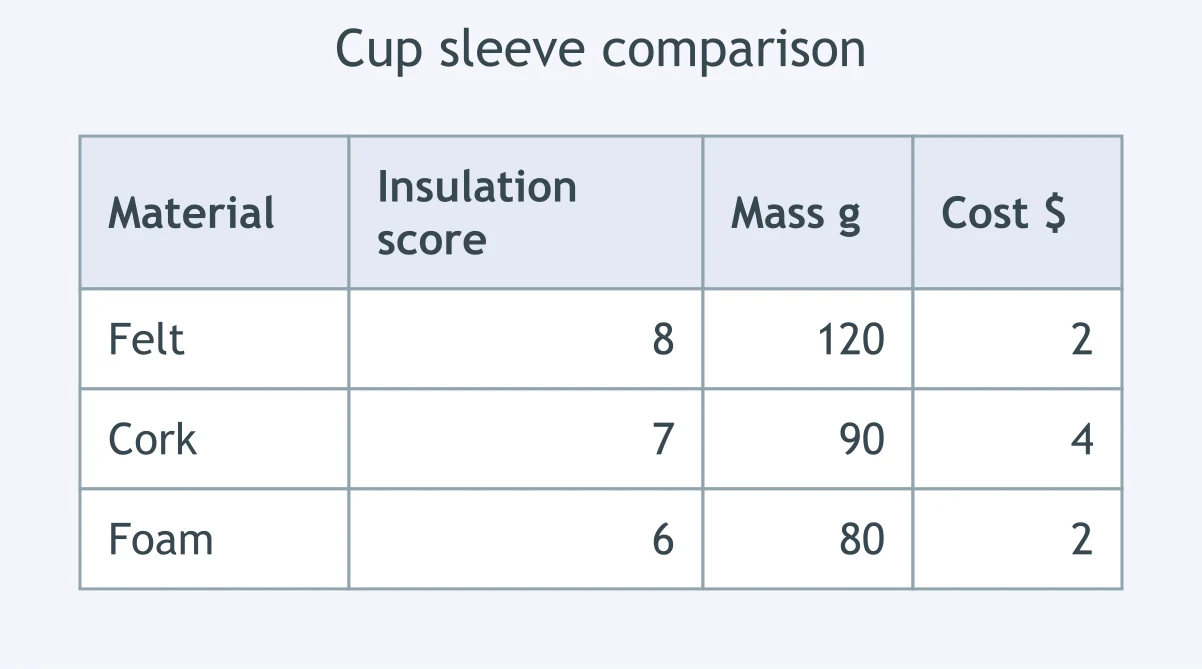
The comparison table rates cup-sleeve materials. A fair process rejects any material over 100 g or $3, then compares insulation score. What conclusion follows?
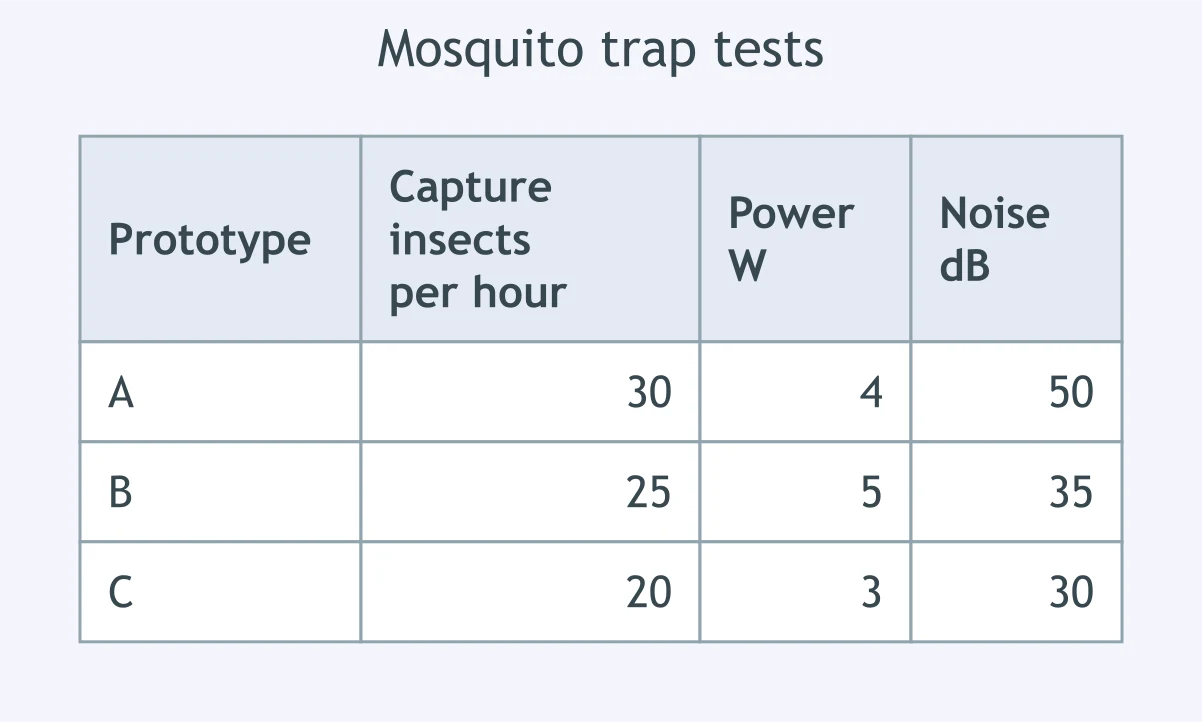
Use the mosquito-trap table. The process eliminates prototypes above 5 W or 40 dB, then selects the highest capture rate. What conclusion is supported?
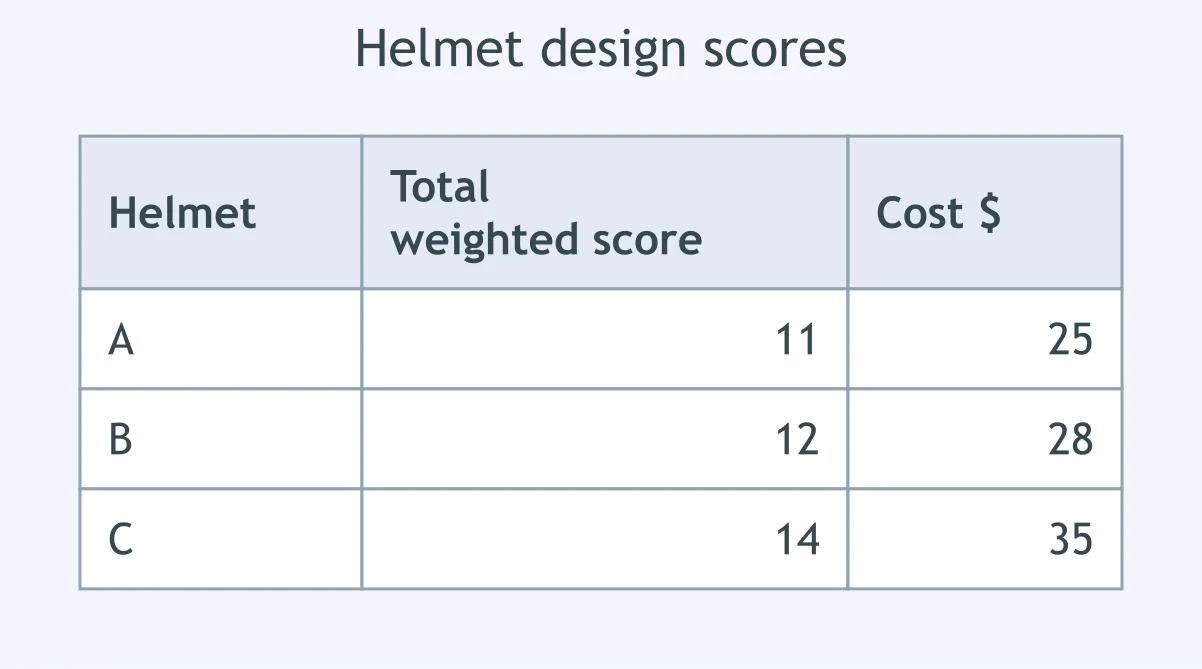
Use the helmet table. The class weights safety twice as much as comfort and sets a $30 cost limit. The table shows total weighted scores. What decision follows?
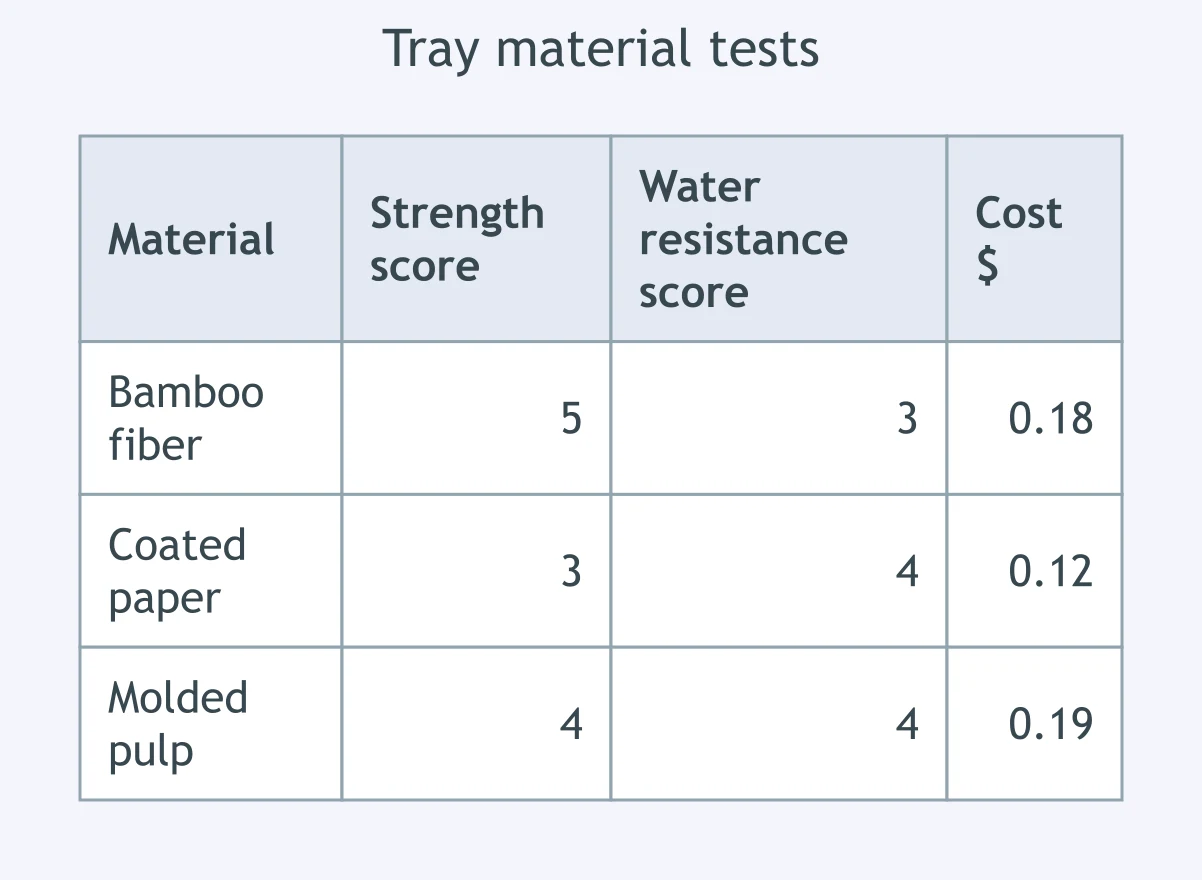
Use the tray-material table. A systematic process checks strength at least 4, water resistance at least 4, and cost no more than $0.20. What material passes all criteria?
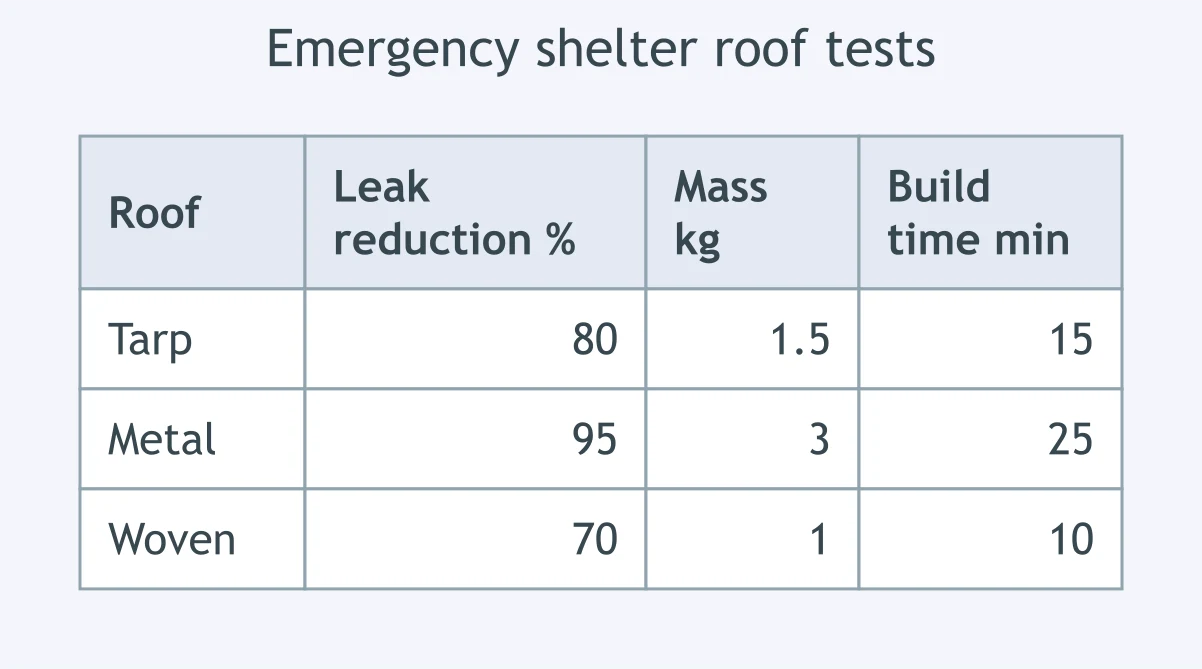
Use the roof-prototype table. The process rejects designs over 2 kg or 20 minutes, then chooses greatest leak reduction. What conclusion follows?
Crack the passcode before the zombies get in.
Answer, then swat bugs for bonus points.
Race through questions at your own speed.
Same question on every screen. Fastest wins.

Pick a tile, answer, hit bonuses and steals.
Using Test Data to Choose a Design
20 questions