Loading
by BlastRoom
Four stages, what a child can and cannot do in each, and the tasks that show it.
#psychology

30 questions
One question set, multiple game modes. Tap any game to see it in action. Not sure which to pick?
Answer to place stones and capture territory.
Outrun the snow together.
Earn blasts, then hunt the other team.
Answer to earn energy, then climb.

The class blasts through walls together.
Bid on mystery lots. Most money wins.
Sell tours. Nice, standard, or a total scam.

Answer, restock, and serve the rush.
More correct answers pulls the rope your way.
Answer, then shoot down the alien wave.
Answer, then tap to leap the frozen ridge.
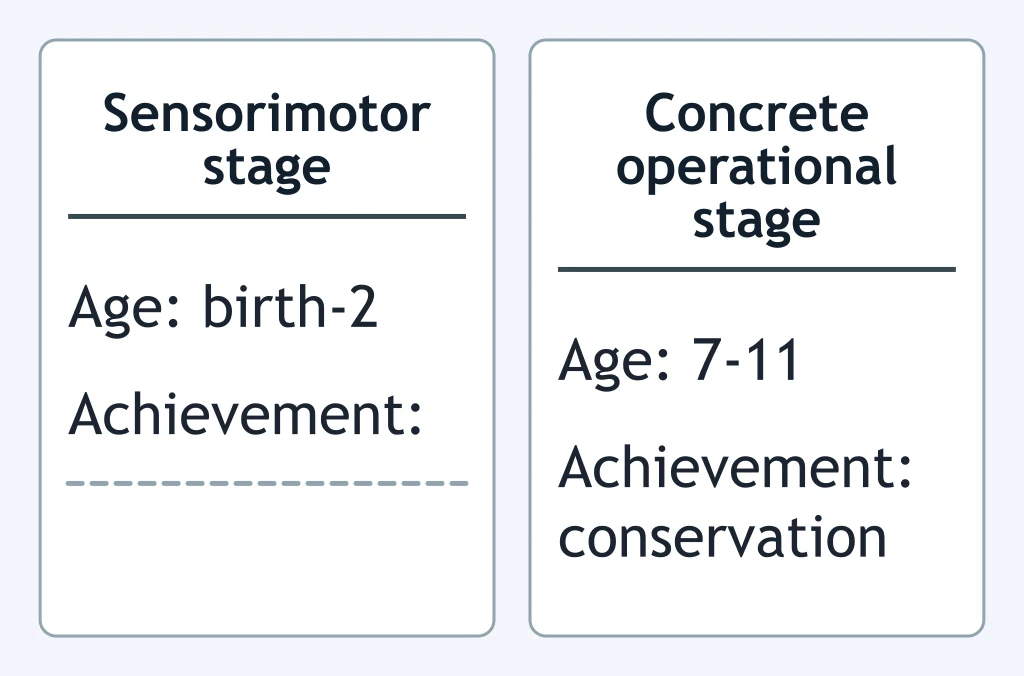
Use the figure comparing Piaget stages. What achievement belongs in the [blank] cell for the concrete operational stage?
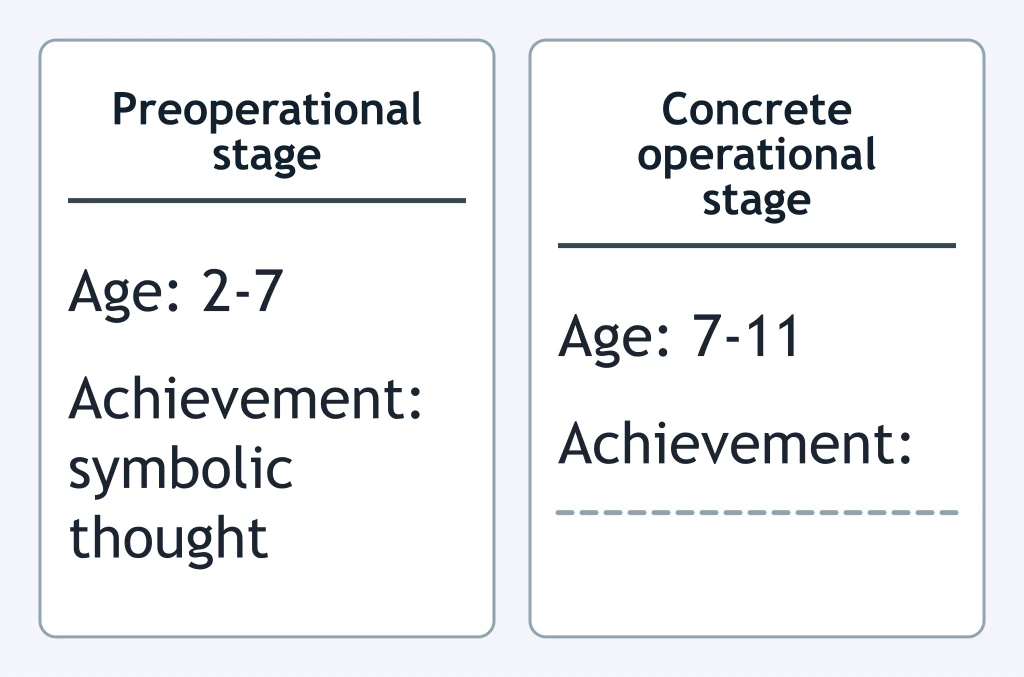
In the Piaget comparison figure, what stage label belongs in the [blank] cell for age 12 and older with abstract reasoning?
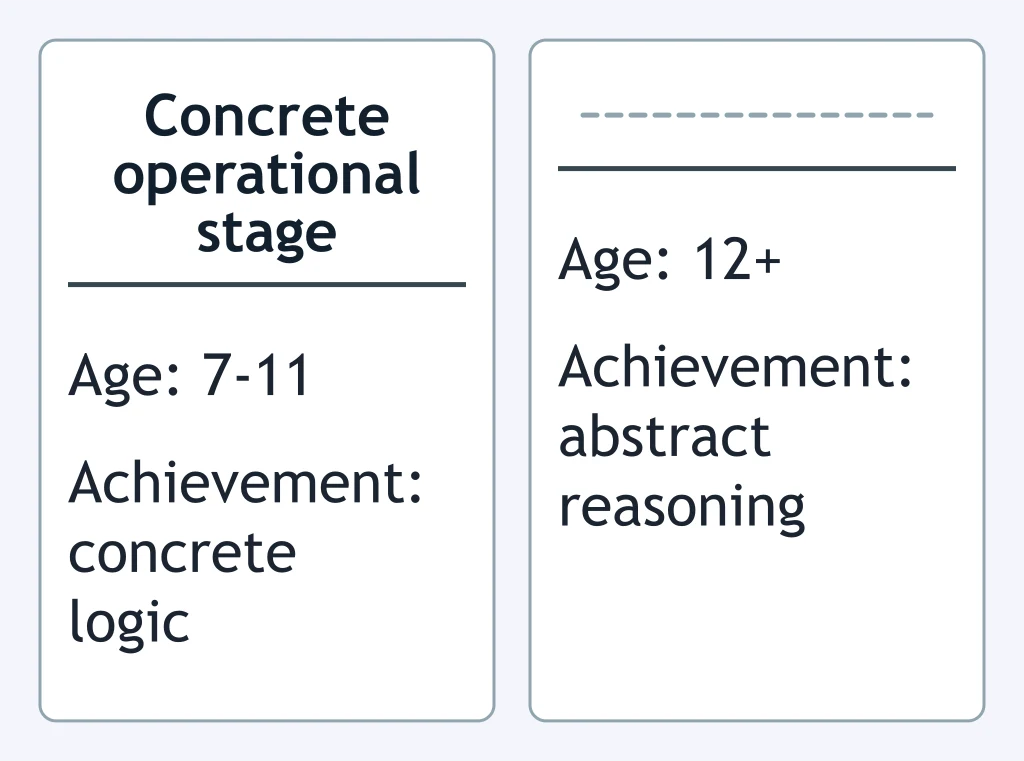
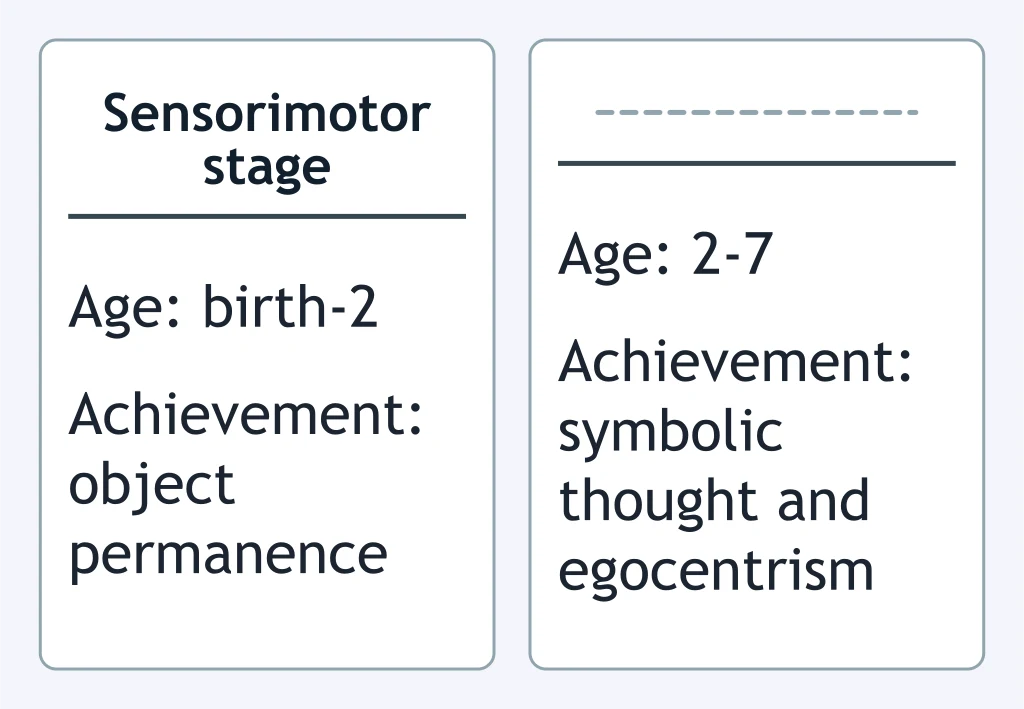
The figure shows the sensorimotor stage with object permanence. What age band belongs in its [blank] cell?
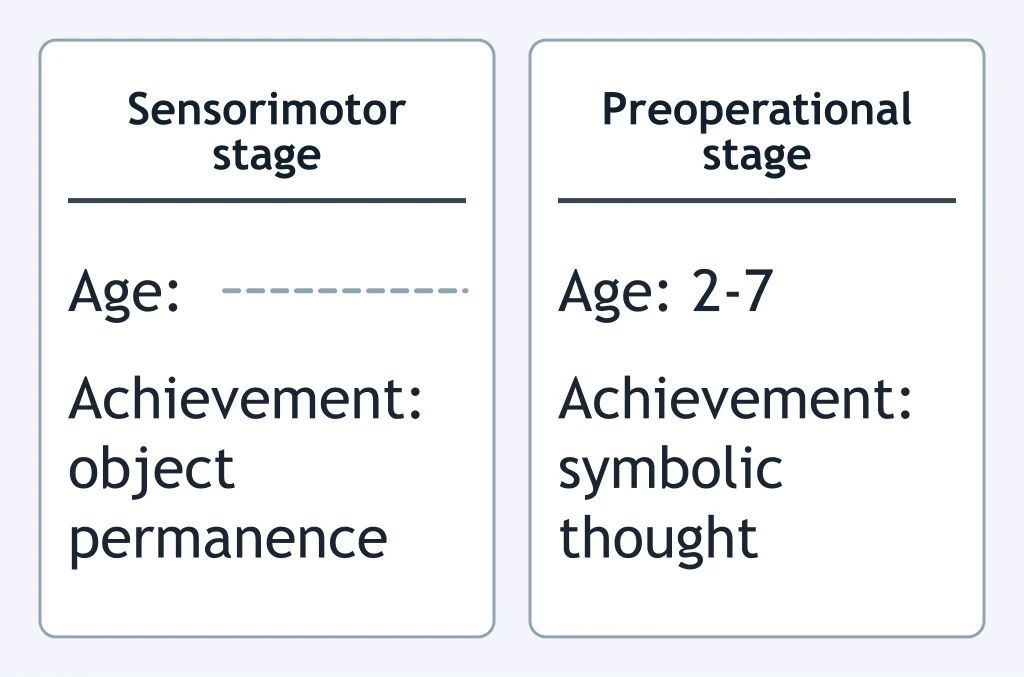
Use the Piaget comparison figure. What achievement belongs in the sensorimotor stage's [blank] cell?
In the figure, what Piaget stage belongs in the [blank] cell for ages 2 to 7 with symbolic thought and egocentrism?
A 10-month-old watches a toy go under a blanket and searches under the blanket for it. What Piagetian stage best fits this performance?
A 4-year-old uses a banana as a pretend phone but says a taller glass has more juice than a shorter glass with the same amount. What stage is she in?
An 8-year-old arranges sticks from shortest to longest and knows flattened clay has the same amount as a ball of clay. What Piagetian stage fits?
A 15-year-old tests which fertilizer helps plants grow by imagining possible causes and controlling water and light. What stage is shown?
In a three-mountains task, a 3-year-old says a doll across the table sees exactly what he sees. What stage best matches this answer?
A 12-year-old solves a logic puzzle about imaginary creatures using if-then rules, even though the creatures are not real. What Piagetian stage fits?
A 16-month-old learns by shaking, dropping, and mouthing objects, with thinking tied closely to senses and actions. What stage is this?
A 9-year-old can reverse 8 + 4 = 12 by subtracting 4, but explains best when using coins on a desk. What stage best fits?
A 5-year-old says a spread-out row of pennies has more pennies than the same row pushed close together. What stage is most likely?
An infant stops looking after a ball rolls behind a screen, as if the ball no longer exists. What concept is this task testing?
During hide-and-seek, a child covers his own eyes and thinks no one else can see him. What Piagetian concept does this show?
A child tells the moon to stop following her home because it must want to play. What Piagetian concept is shown?
A child says six crackers spread far apart are more than the same six crackers close together. What concept is the child failing?
Maya knows a puppet will look for candy in the old box because the puppet did not see it moved. What concept has Maya developed?
A child looking at a picture book insists a friend on the other side of the table sees the same page orientation she sees. What concept appears?
After a clay ball is flattened into a pancake shape, a child says the amount of clay is unchanged. What concept is shown?
A child uses a mental folder that says birds usually have feathers, wings, and beaks when recognizing a robin. What is this framework called?
A toddler who calls every four-legged animal a dog sees a zebra at the zoo and calls it a dog too. Has the child used assimilation or accommodation?
A child thought whales were fish, then learns whales nurse their young and changes her animal categories. Has she used assimilation or accommodation?
A child with a broad car schema sees a red pickup truck and says car without changing the category. Has the child used assimilation or accommodation?
A child believes all doctors are men, then meets a female doctor and revises the doctor schema. Has the child used assimilation or accommodation?
A teacher gives a child one hint to finish a puzzle, then gives fewer hints as the child improves. What Vygotskian concept is this?
A student solves one-step equations alone but can solve two-step equations only with a tutor's guidance. What is the two-step work?
While building a model, a child whispers, 'Put the long piece first, then tighten this,' to guide her own actions. What is this called?
A coach picks drills just beyond what a child can do alone, because the child can complete them with coaching. What Vygotskian idea names that target range?
Crack the passcode before the zombies get in.
Answer, then swat bugs for bonus points.
Race through questions at your own speed.
Same question on every screen. Fastest wins.

Pick a tile, answer, hit bonuses and steals.

Erikson's Psychosocial Stages
25 questions