Loading
by BlastRoom
Mixed practice on choosing work, energy, or power relationships.
#physics
30 questions
One question set, multiple game modes. Tap any game to see it in action. Not sure which to pick?
Answer to place stones and capture territory.
Outrun the snow together.
Earn blasts, then hunt the other team.
Answer to earn energy, then climb.

The class blasts through walls together.
Bid on mystery lots. Most money wins.
Sell tours. Nice, standard, or a total scam.

Answer, restock, and serve the rush.
More correct answers pulls the rope your way.
Answer, then shoot down the alien wave.
Answer, then tap to leap the frozen ridge.
A 65 kg student climbs a 3.0 m rope in 6.0 s at constant speed. Take g = 9.8 m/s². What is the student's average power output against gravity?
A motor lifts a 200 kg crate straight upward 8.0 m in 10 s at constant speed. Take g = 9.8 m/s². What average power does the motor deliver to the crate?
A worker pushes a crate with a constant 80 N force parallel to its motion for 12 m in 6.0 s. How much work does the worker do on the crate?
A rope pulls a sled with a constant 45 N force along the direction of motion for 20 m in 15 s. What is the average power delivered by the rope?
A 0.50 kg cart starts from rest on a frictionless track. A motor transfers 36 J of energy to it in 4.0 s. What speed does the cart reach?
A 12 kg backpack is lifted 1.5 m at constant speed in 3.0 s. Take g = 9.8 m/s². How much work is done against gravity?
A winch raises a 50 kg load 5.0 m in 8.0 s. If the winch is 80% efficient, what average input power is required? Take g = 9.8 m/s².
A 75 kg cyclist climbs a hill with a vertical rise of 40 m in 80 s at steady speed. Take g = 9.8 m/s². What average power goes into increasing gravitational potential energy?
A sled slides 18 m while friction exerts a constant 12 N force opposite the motion. The trip takes 9.0 s. How much mechanical energy is dissipated by friction?
A spring transfers 20 J of energy to a 0.25 kg cart in 0.50 s. What is the average power transferred during the launch?
A 0.40 kg ball is dropped from rest at 2.5 m above the floor and rebounds to 1.6 m. Take g = 9.8 m/s². How much energy is dissipated during the bounce?
A 0.80 kg toy car rolls from rest down a 1.2 m hill and then climbs only 0.75 m up the next hill. Take g = 9.8 m/s². How much mechanical energy was dissipated?
A 0.60 kg ball is thrown upward at 7.0 m/s and reaches a maximum height 2.0 m above its release point. Take g = 9.8 m/s². How much energy was dissipated by air resistance?
A spring stores 48 J of elastic potential energy. After launching a 1.0 kg cart across a rough patch, the cart moves at 8.0 m/s. How much energy was dissipated?
A 55 kg skier starts from rest and descends a vertical height of 12 m, reaching 12 m/s at the bottom. Take g = 9.8 m/s². How much mechanical energy is dissipated?
A 0.20 kg pendulum bob is released 0.50 m above its lowest point and later rises only 0.35 m on the other side. Take g = 9.8 m/s². How much energy was dissipated?
Use the energy chart. A sled's mechanical energy drops from the Start bar to the End bar while it travels 14 m. What average friction force acted on it?
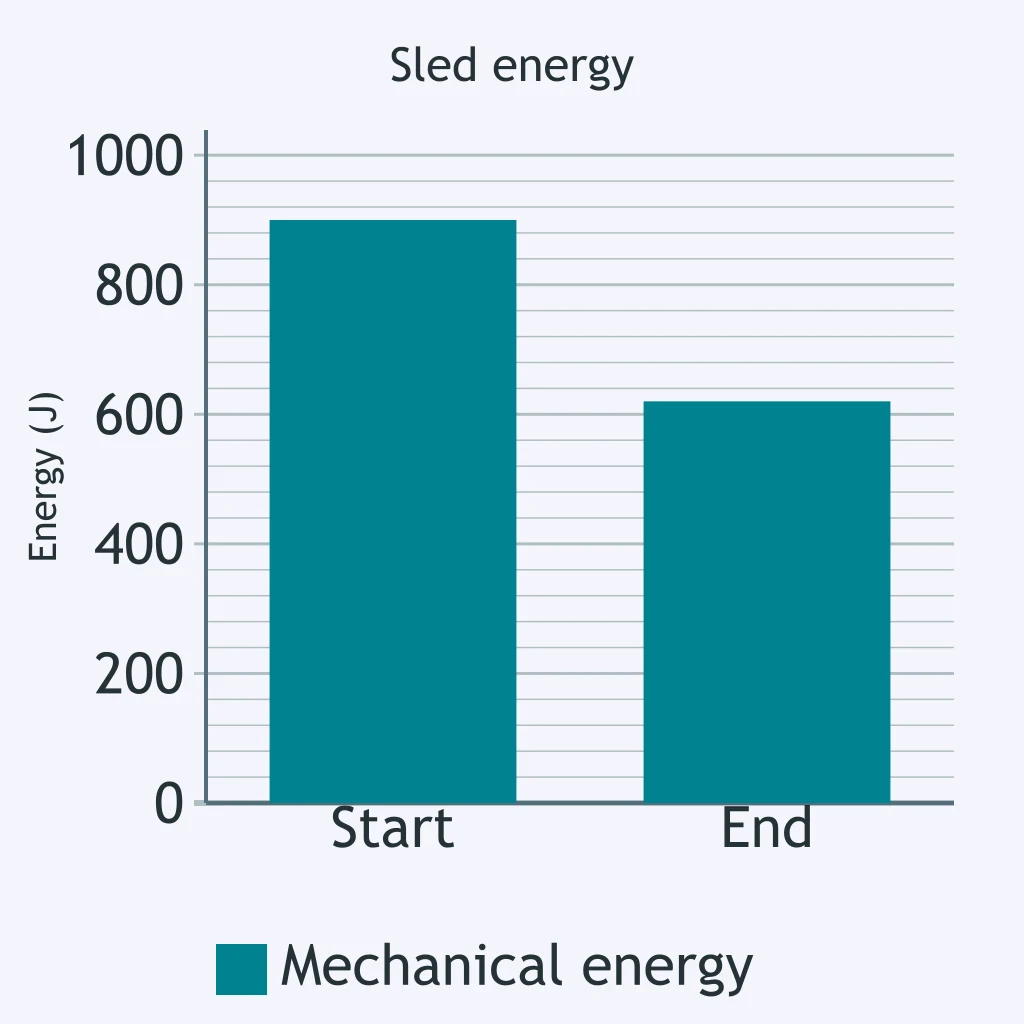
Use the energy chart. A cart's mechanical energy drops from the Start bar to the End bar while it rolls 12 m across a rough floor. What is the average friction force on the cart?
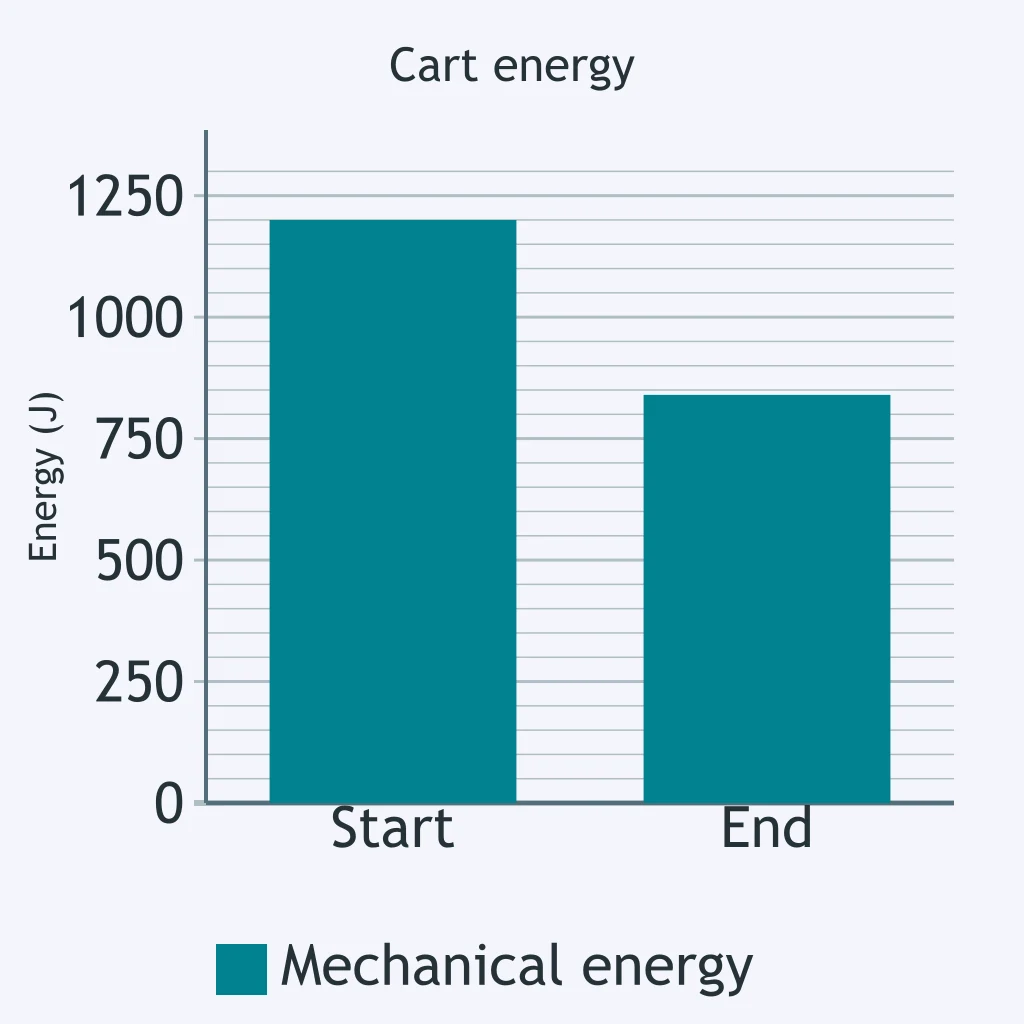
Use the energy chart. A block slides 16 m while its mechanical energy changes from the Start bar to the End bar. What average friction force dissipated the energy?
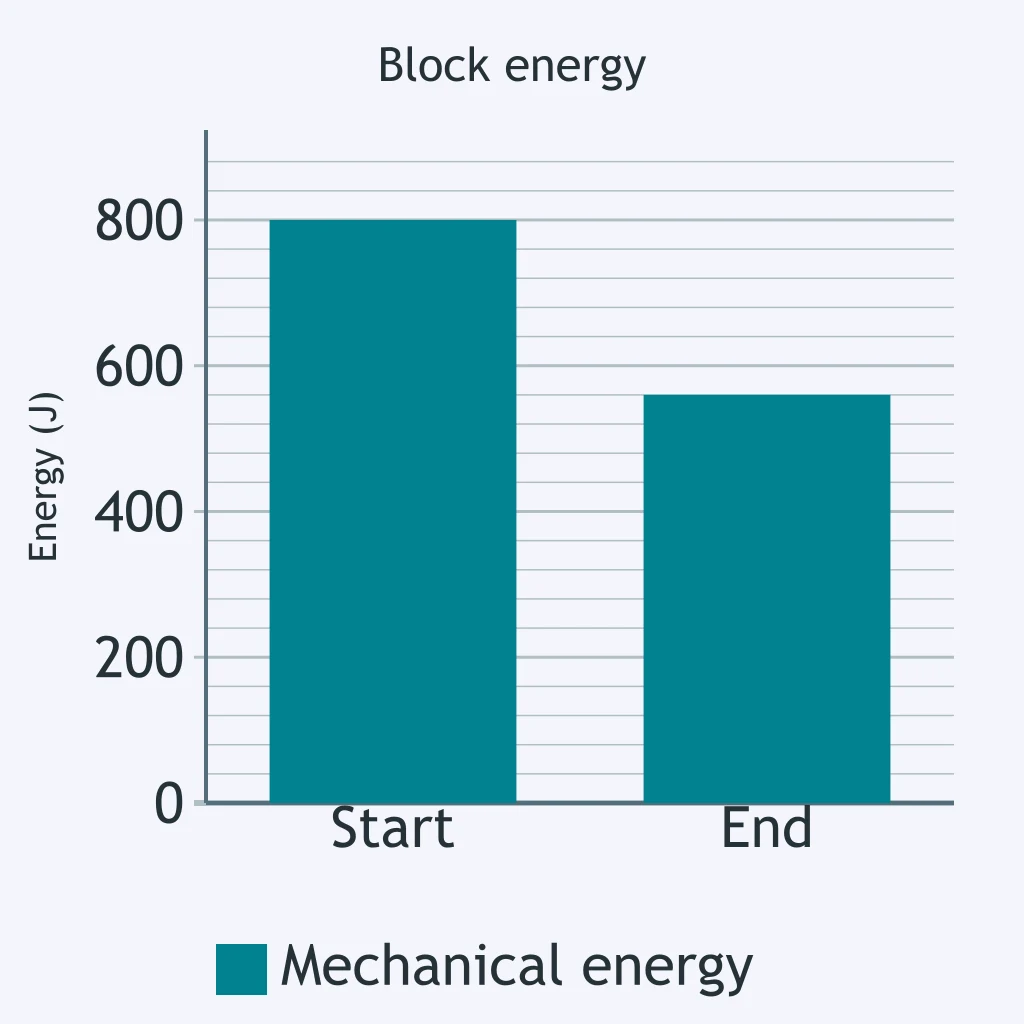
Use the energy chart. A skier travels 25 m along a rough slope as mechanical energy changes from the Start bar to the End bar. What average friction force acted?
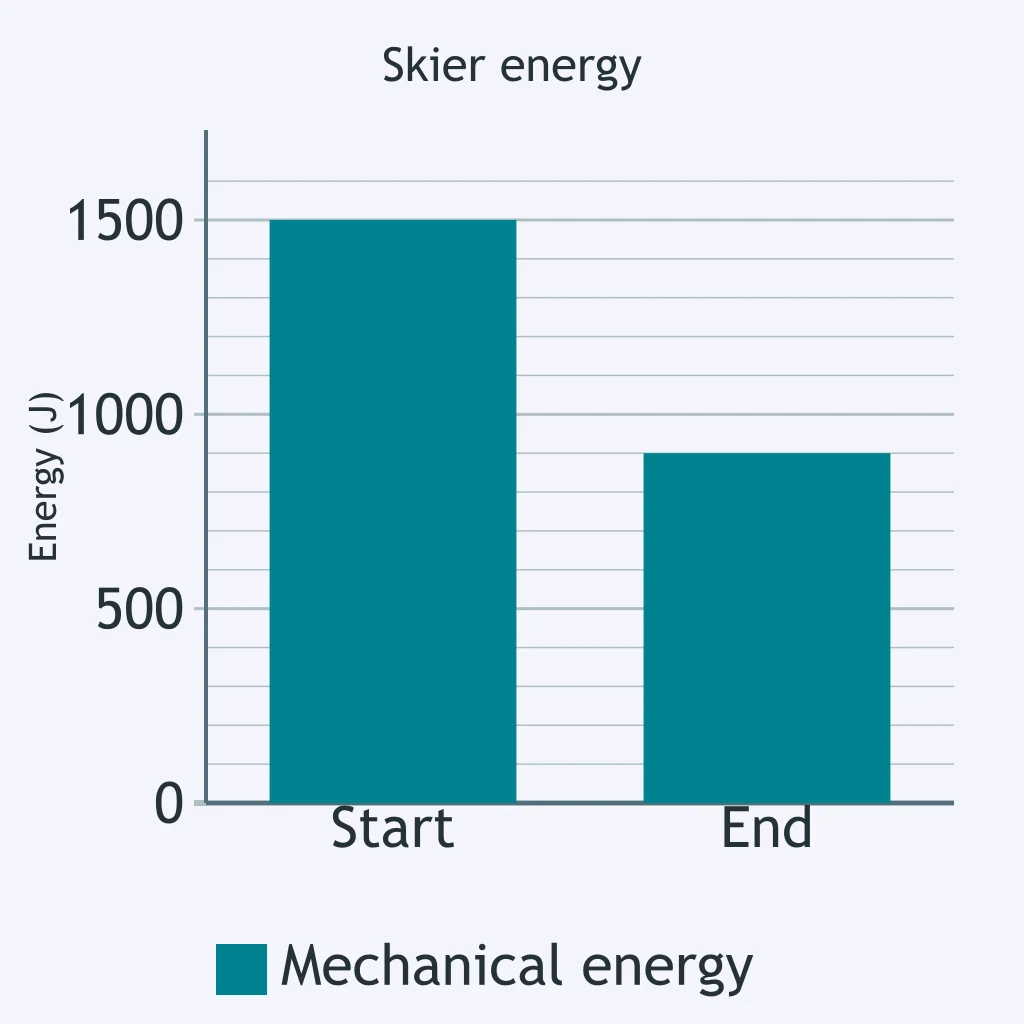
Use the energy chart. A crate slides 10 m, and its mechanical energy drops from the Start bar to the End bar. What average friction force dissipated the missing mechanical energy?
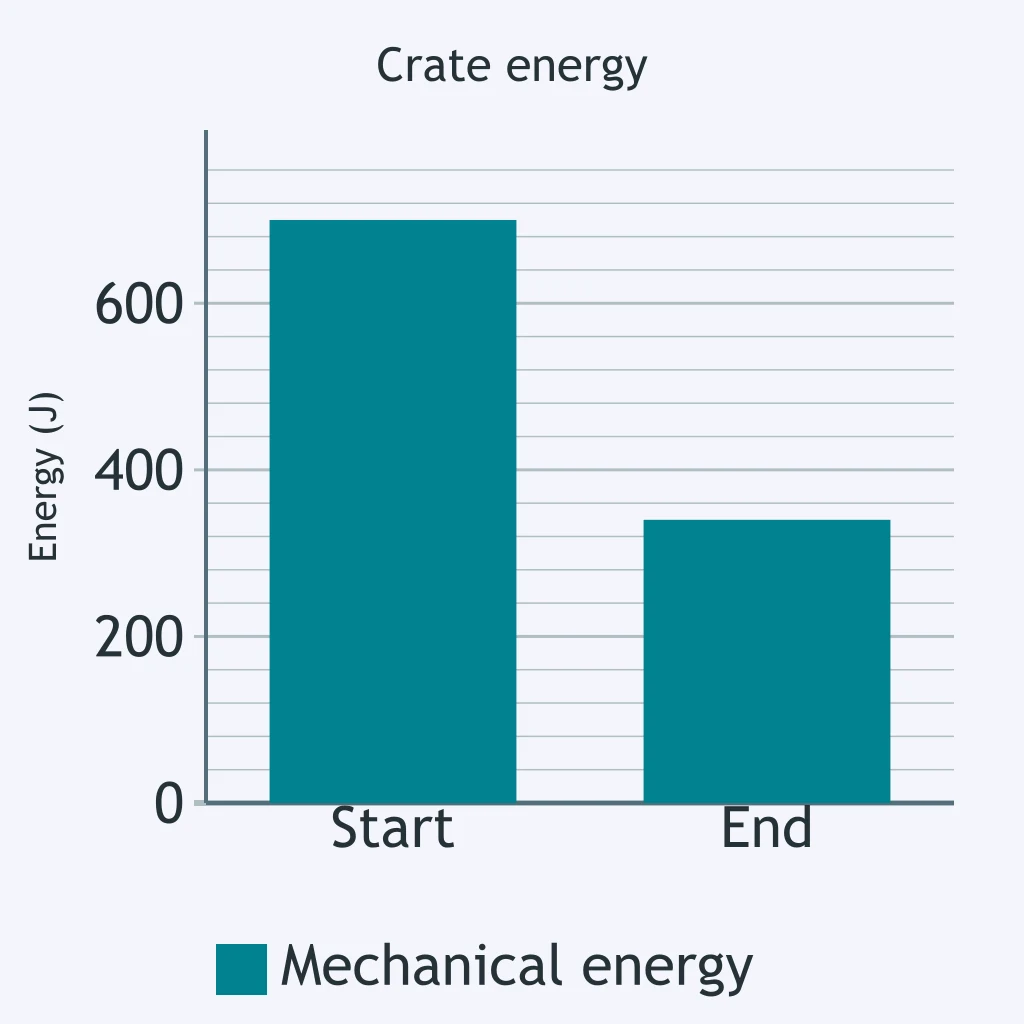
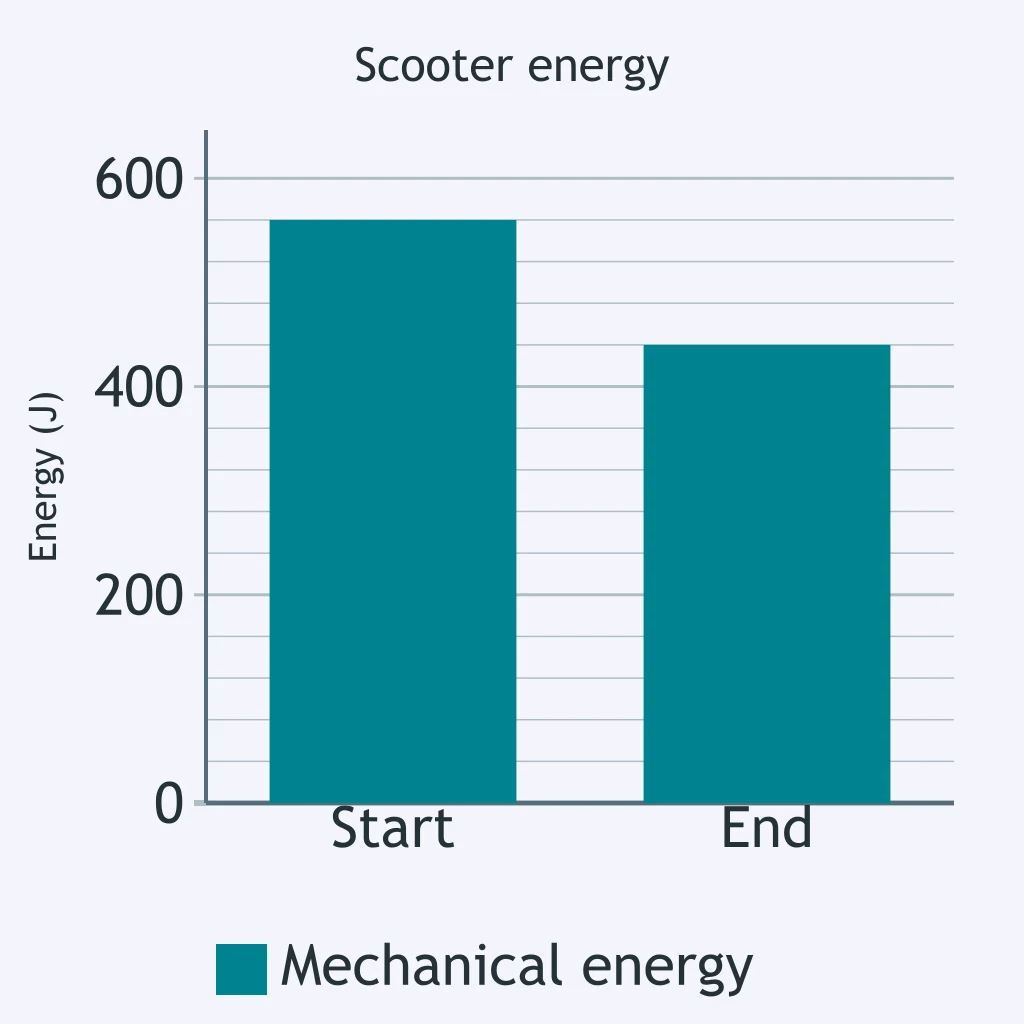
Use the energy chart. A scooter coasts 10 m while mechanical energy changes from the Start bar to the End bar. What average resistive force acted?
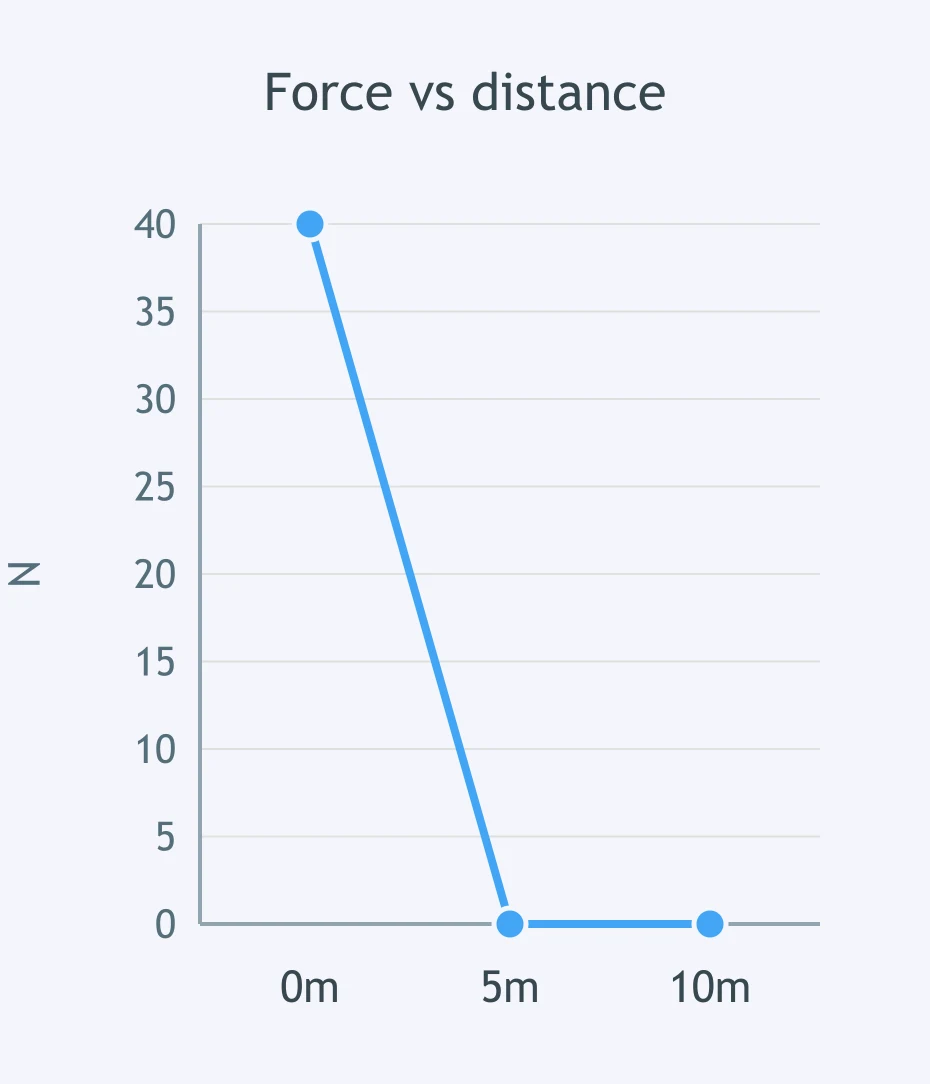
Use the force–distance graph. A 3.0 kg cart starts from rest on a frictionless track, and the force acts along the motion. What speed does it have at the end?
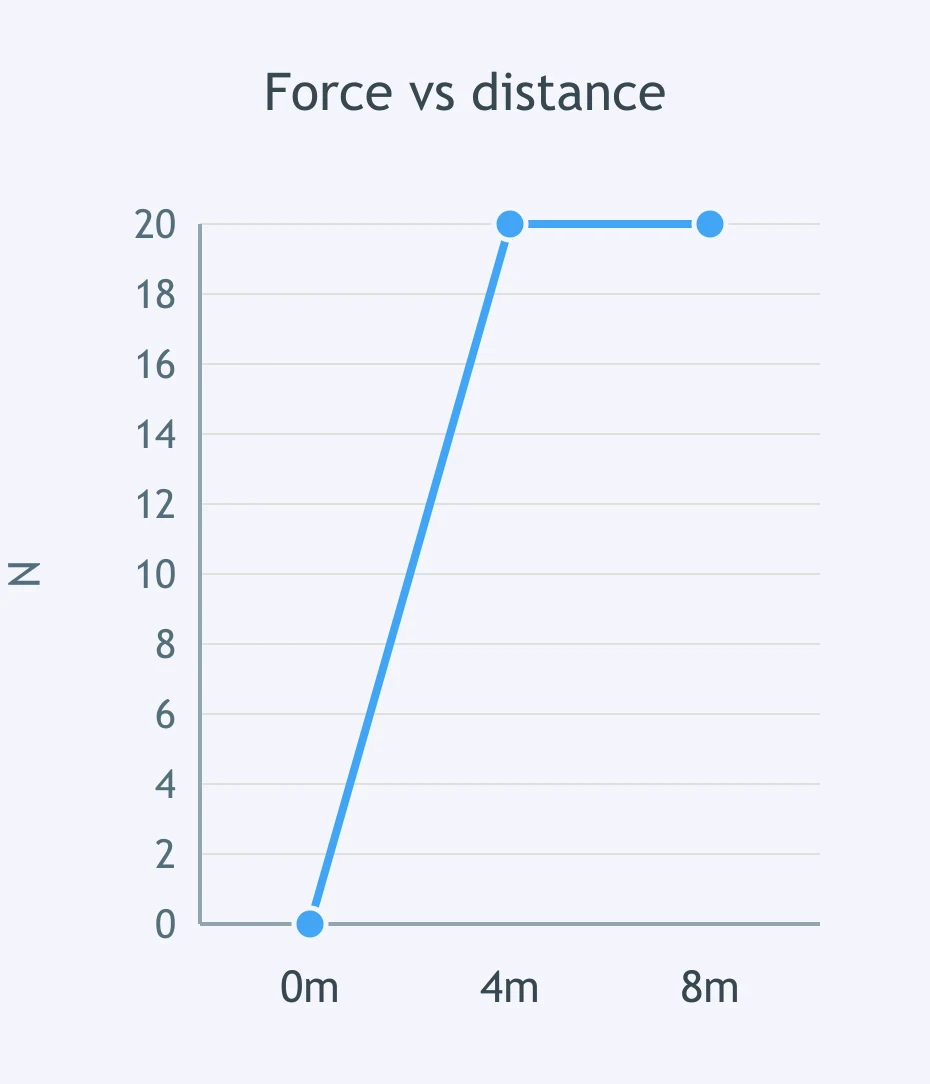
Use the force–distance graph. A 2.0 kg cart starts from rest on a frictionless level track. The force is along the motion. What is the cart's final speed?
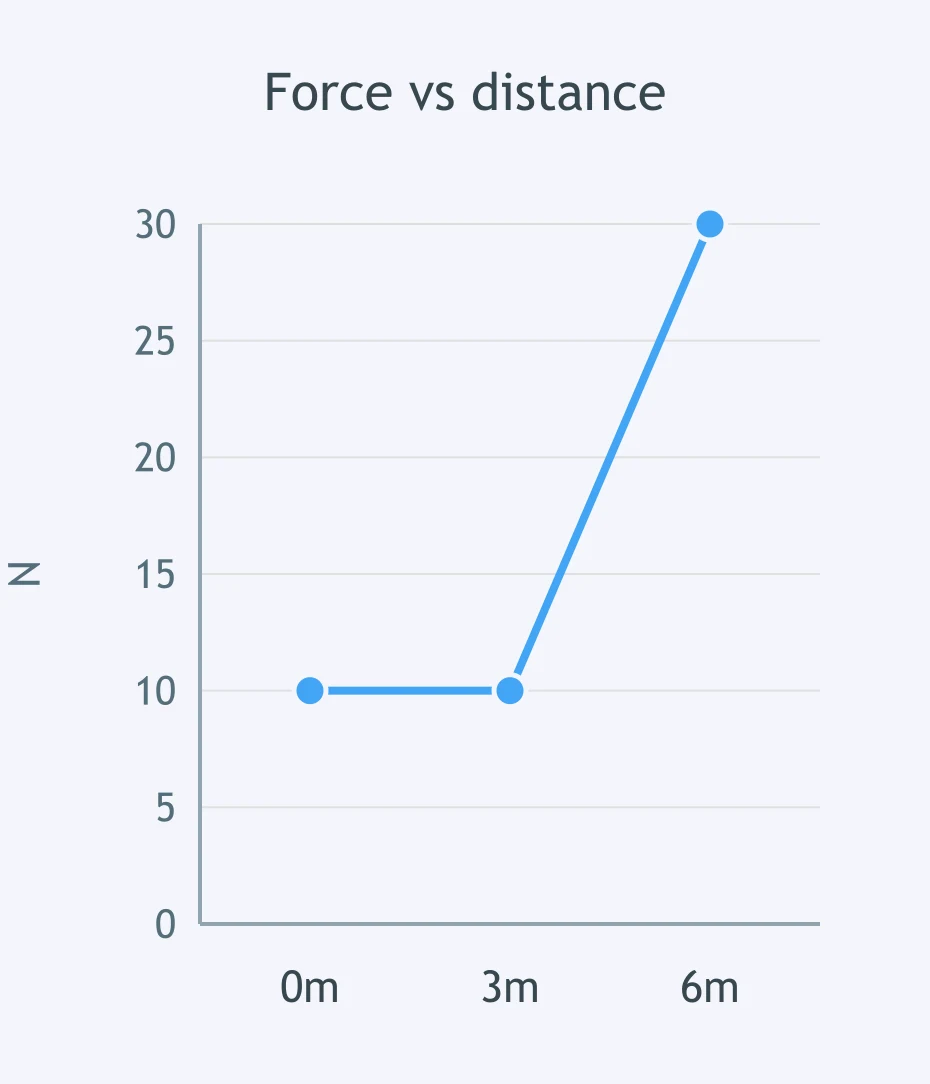
Use the force–distance graph. A 1.5 kg cart starts from rest, friction is negligible, and the force points along the motion. What speed does the cart reach?
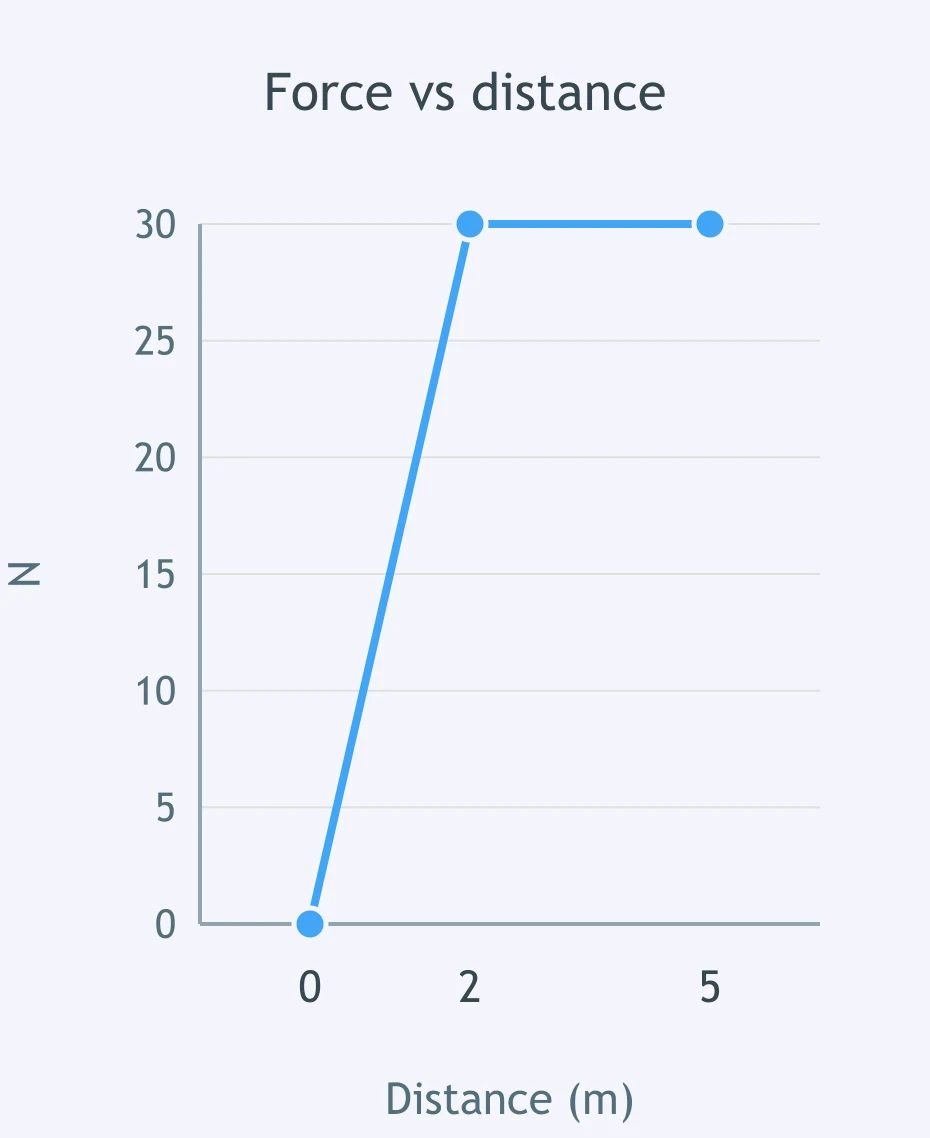
Use the force–distance graph. A 4.0 kg cart starts from rest on a frictionless track. The applied force is along the motion. What is the cart's speed at 10 m?
An elevator lifts a known mass through a known vertical height in a known time at constant speed. Which relationship gives the average power with the fewest extra quantities?
A varying horizontal force acts on a cart over a measured distance, and the cart starts from rest on a frictionless track. Which plan best finds the final speed?
A ball starts from rest at a known height and falls without air resistance. Which relationship finds its speed just before hitting the ground without needing the fall time?
A puck with known mass and initial speed slides to rest under a constant friction force. Which relationship directly gives the stopping distance?
Crack the passcode before the zombies get in.
Answer, then swat bugs for bonus points.
Race through questions at your own speed.
Same question on every screen. Fastest wins.

Pick a tile, answer, hit bonuses and steals.
30 questions