Loading
by BlastRoom
Identify artistic movements, periods, and traditions from visible evidence in unfamiliar works.
#us_hs_art_history
50 questions
One question set, multiple game modes. Tap any game to see it in action. Not sure which to pick?
Answer to place stones and capture territory.
Outrun the snow together.
Earn blasts, then hunt the other team.
Answer to earn energy, then climb.

The class blasts through walls together.
Bid on mystery lots. Most money wins.
Sell tours. Nice, standard, or a total scam.

Answer, restock, and serve the rush.
More correct answers pulls the rope your way.
Answer, then shoot down the alien wave.
Answer, then tap to leap the frozen ridge.
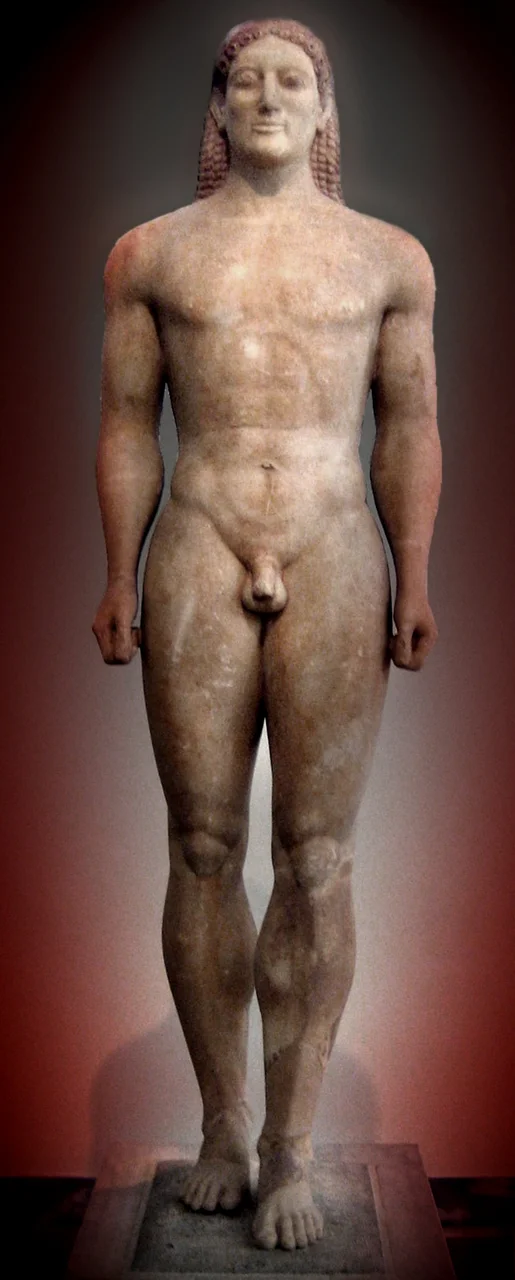
This marble youth stands frontally with one foot advanced, clenched fists at his sides, patterned hair, and a fixed smile. Which phase of Greek sculpture does it represent?
This marble athlete shifts weight onto one leg so the hips and shoulders counterbalance, while the face remains calm and restrained. Which phase of Greek sculpture is this?
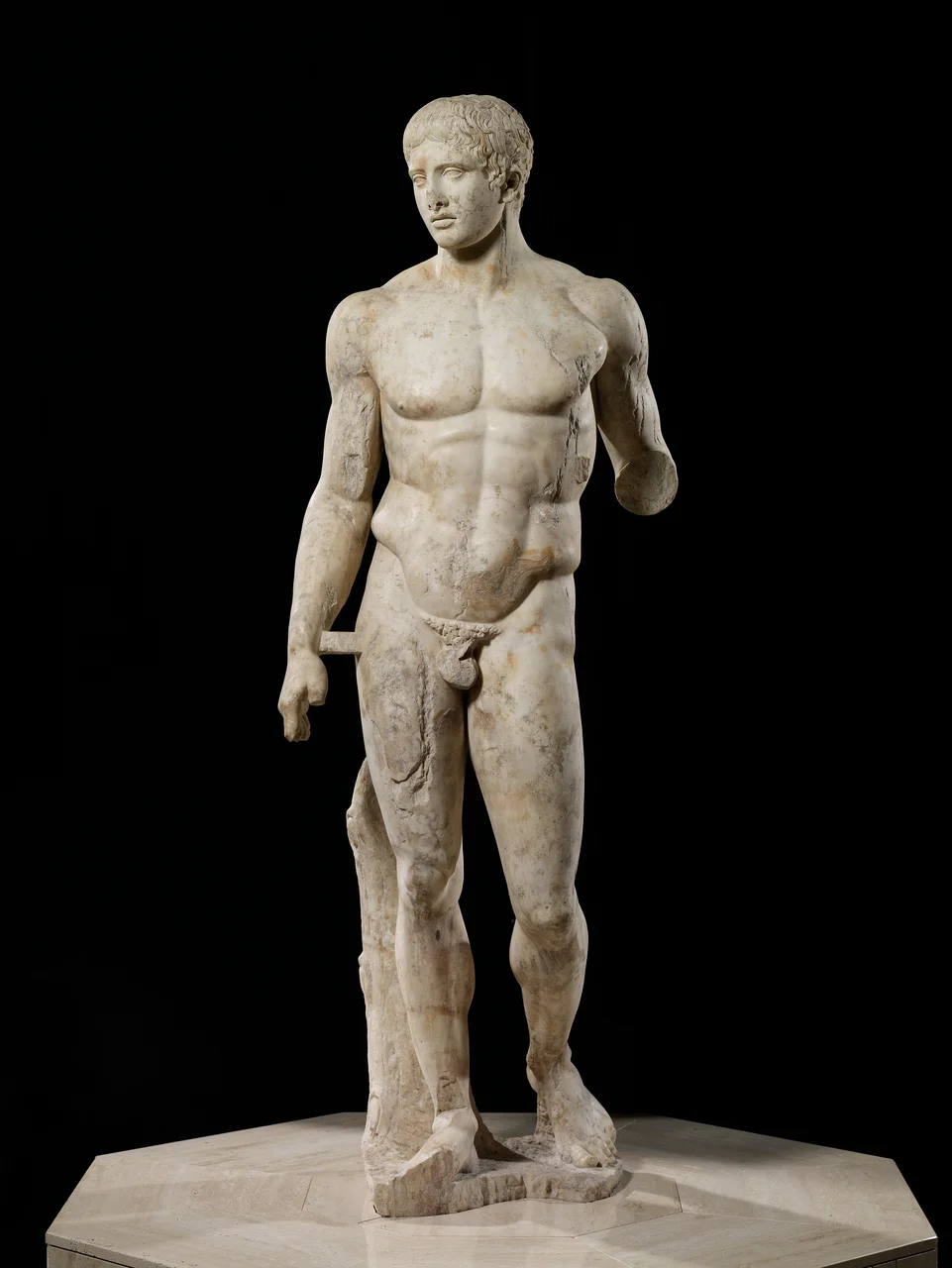
This statue of a spear bearer, a marble copy of a bronze original, has an idealized muscular body, balanced contrapposto, and carefully proportioned limbs. Which phase of Greek sculpture does it show?
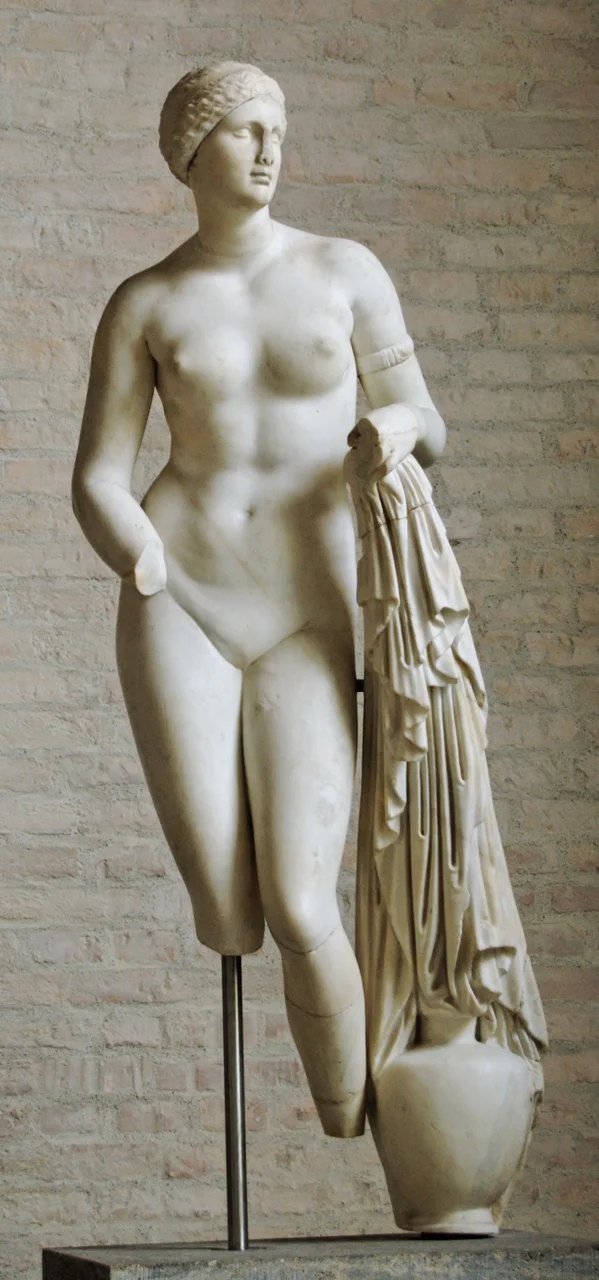
This marble goddess leans in an S-curve, with a small head and elongated body; one hand gathers drapery near a water jar. Which phase of Greek sculpture is most likely?
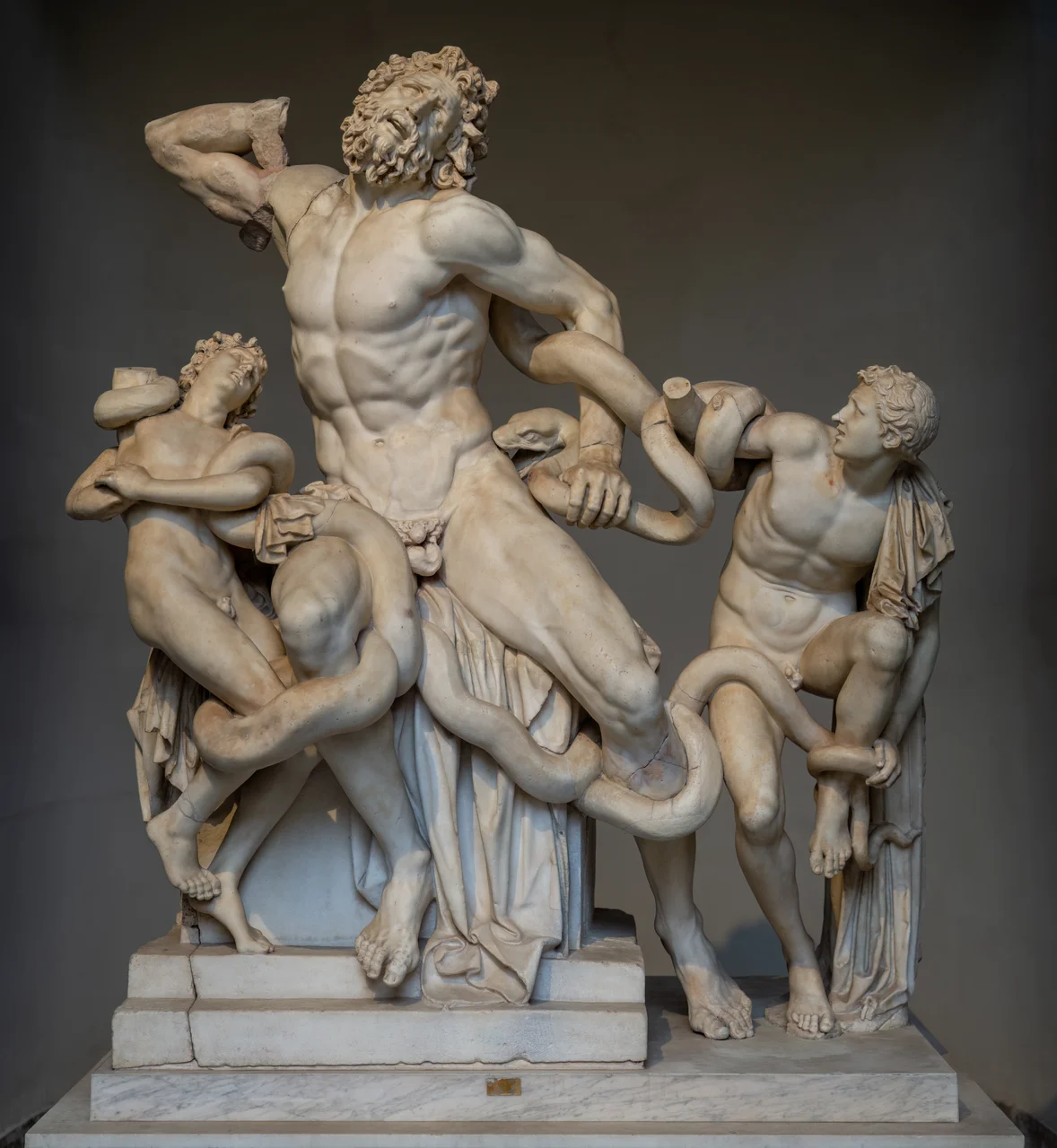
This marble group twists violently as a father and two sons struggle against coiling snakes, with deeply drilled shadows and anguished faces. Which Greek phase does it represent?
This marble portrait shows an older man with a bald head, sunken cheeks, wrinkles, and an unsmiling expression. Which Roman style is represented?
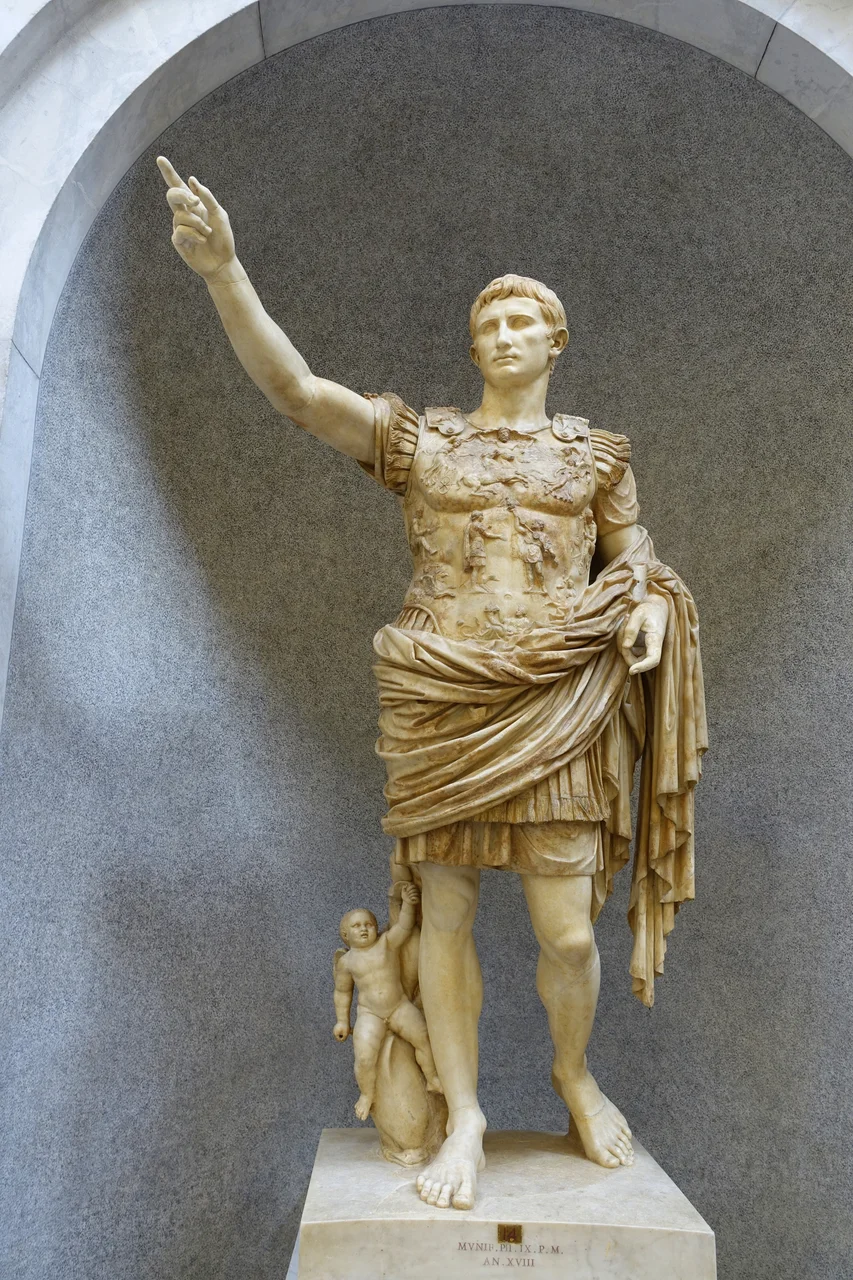
This marble ruler has a youthful, idealized face and stands in a controlled orator's pose, while a small Cupid at his leg links him to Venus. Which Roman style is it?
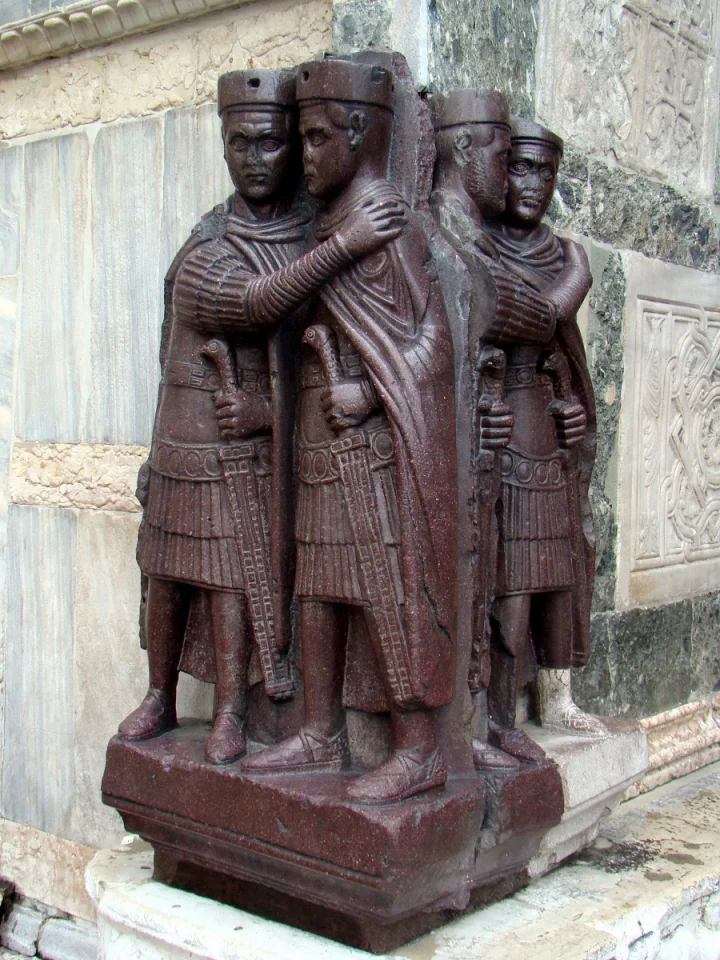
Four porphyry rulers embrace in a compact block, with nearly identical faces, short bodies, and simplified angular drapery. Which Roman style does this show?
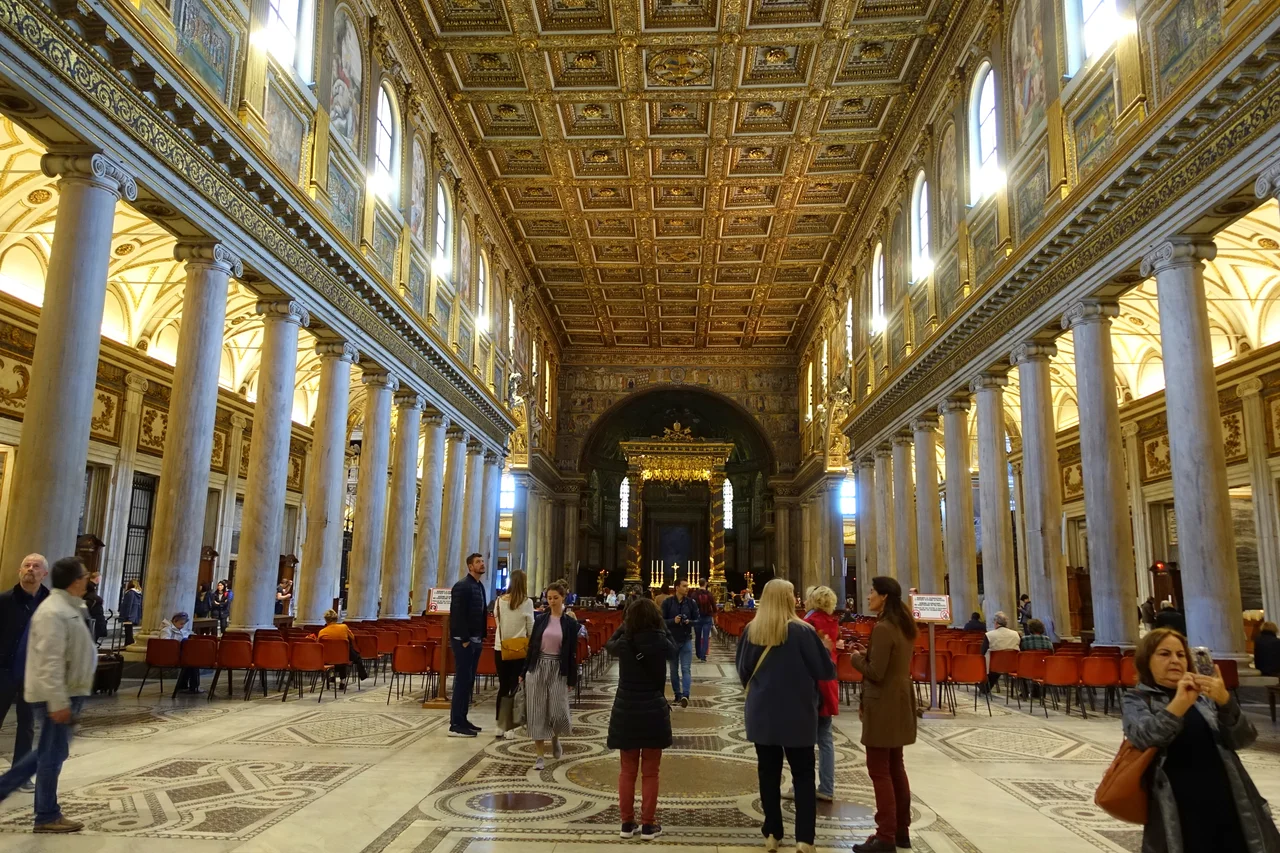
This basilica interior has a long nave, timber roof, rows of columns, clerestory windows, and an apse at one end. Which early medieval style is it?
A church interior centers on a vast dome carried by pendentives; glittering gold mosaics cover curved surfaces. Which medieval style does it represent?
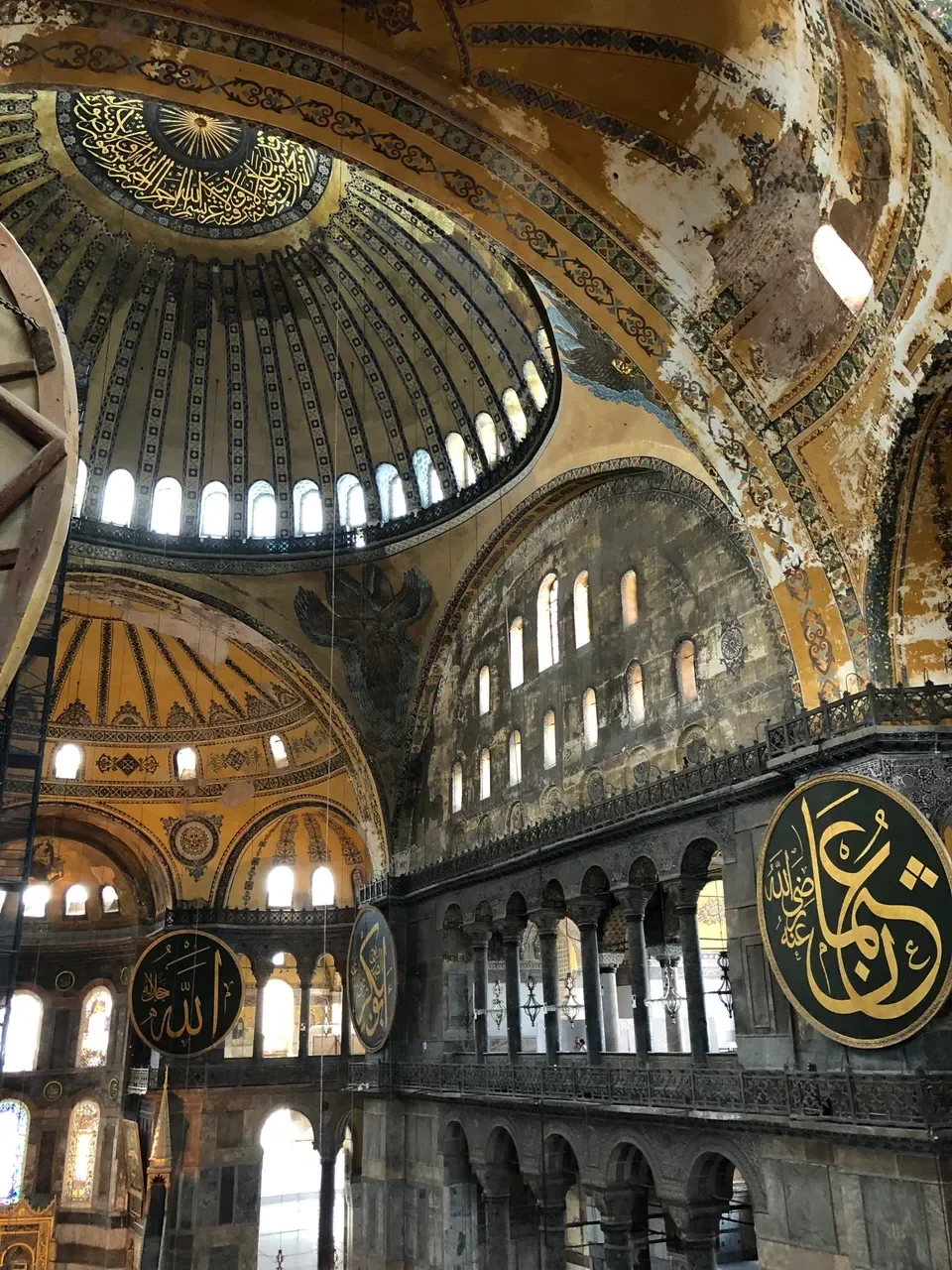
This church portal has a semicircular tympanum packed with elongated relief figures, and the building uses thick walls and round arches. Which style is it?
This cathedral elevation rises through pointed arches, rib vaults, flying buttresses, and large stained-glass windows. Which style is represented?
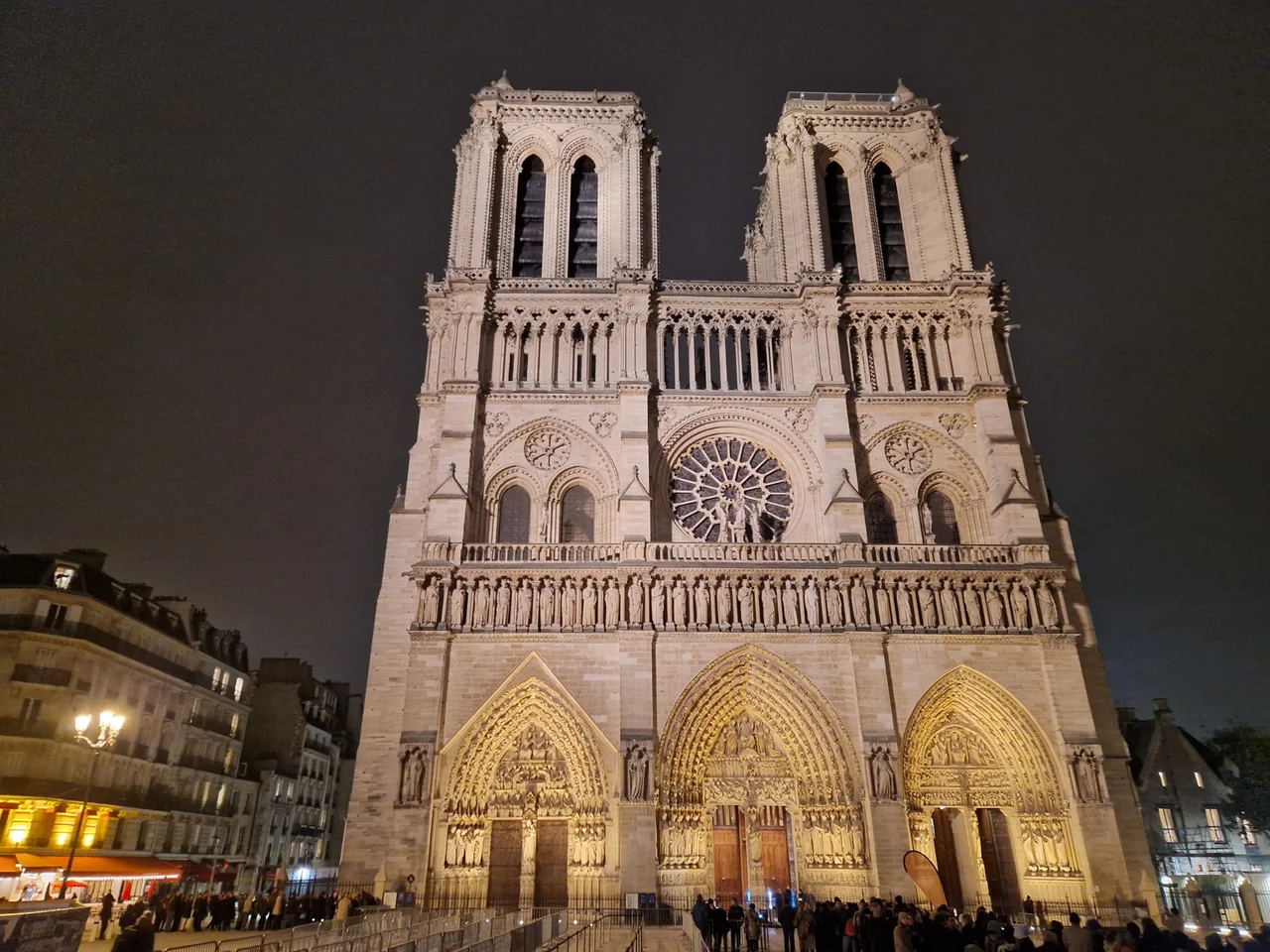
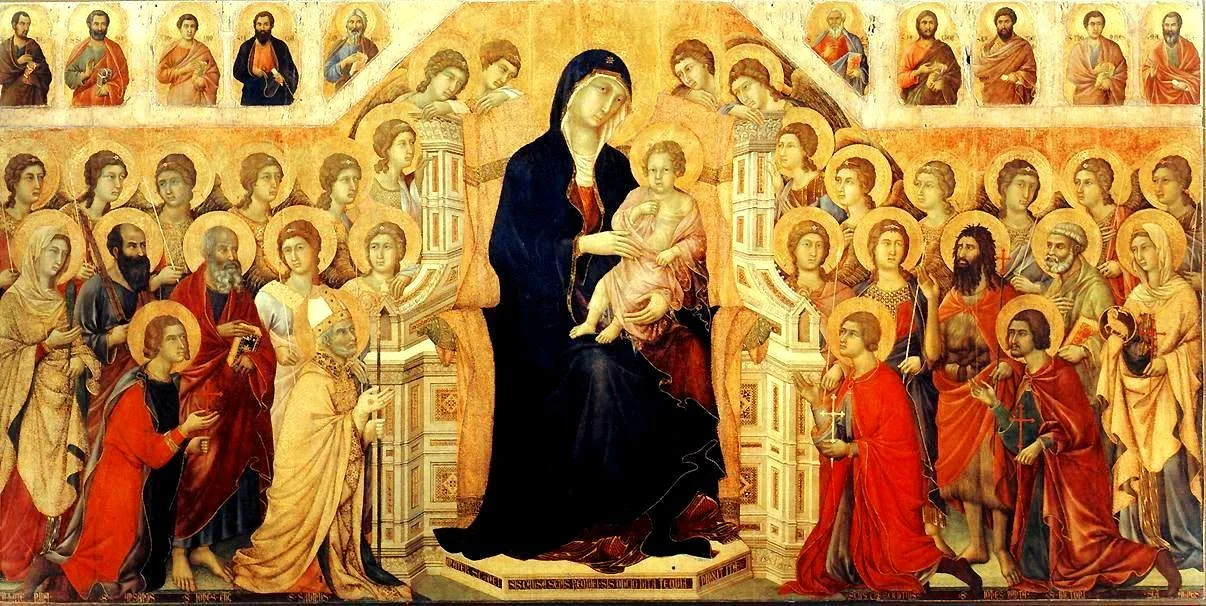
This painted altarpiece uses a gold ground and hieratic scale, but its figures overlap in a shallow architectural setting and show more weight than earlier icons. Which style is it?
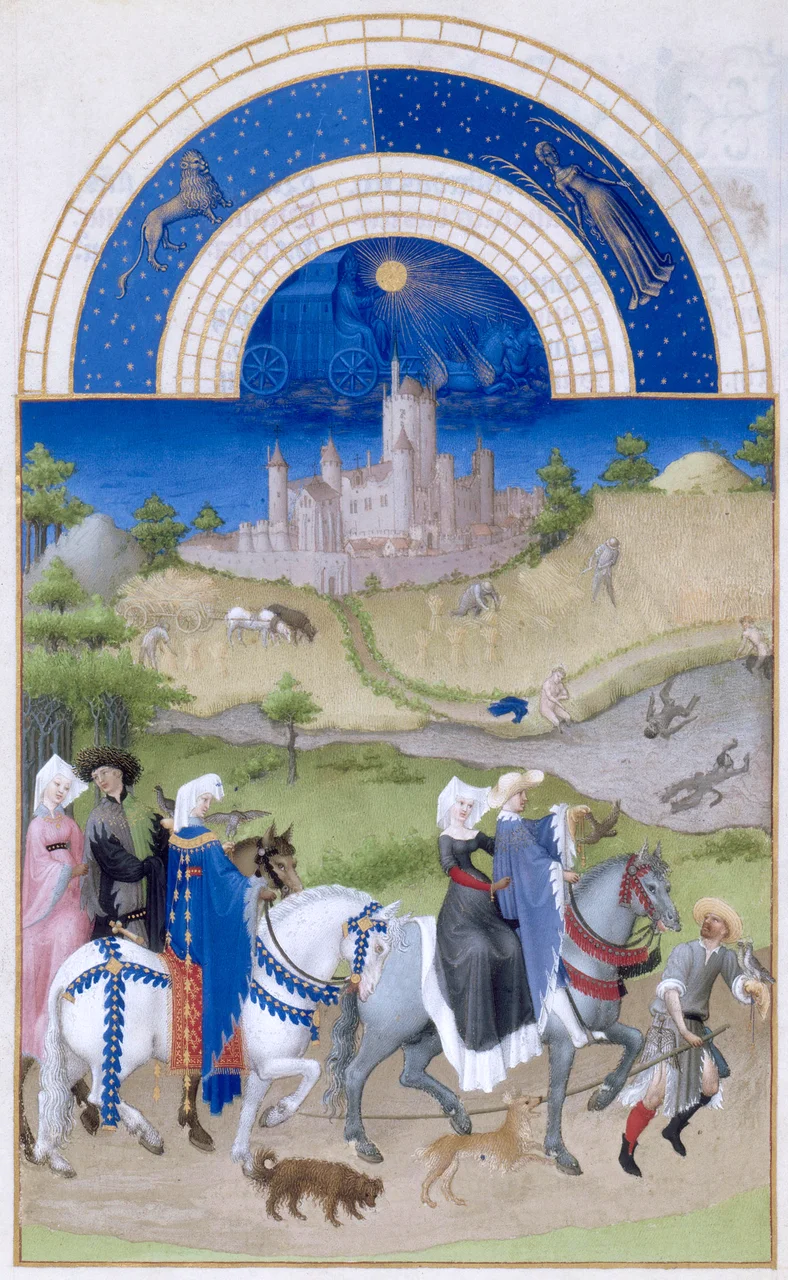
This illuminated calendar page shows aristocrats in elegant clothing at a castle, with detailed seasonal labor and a high blue sky. Which late medieval style is it?
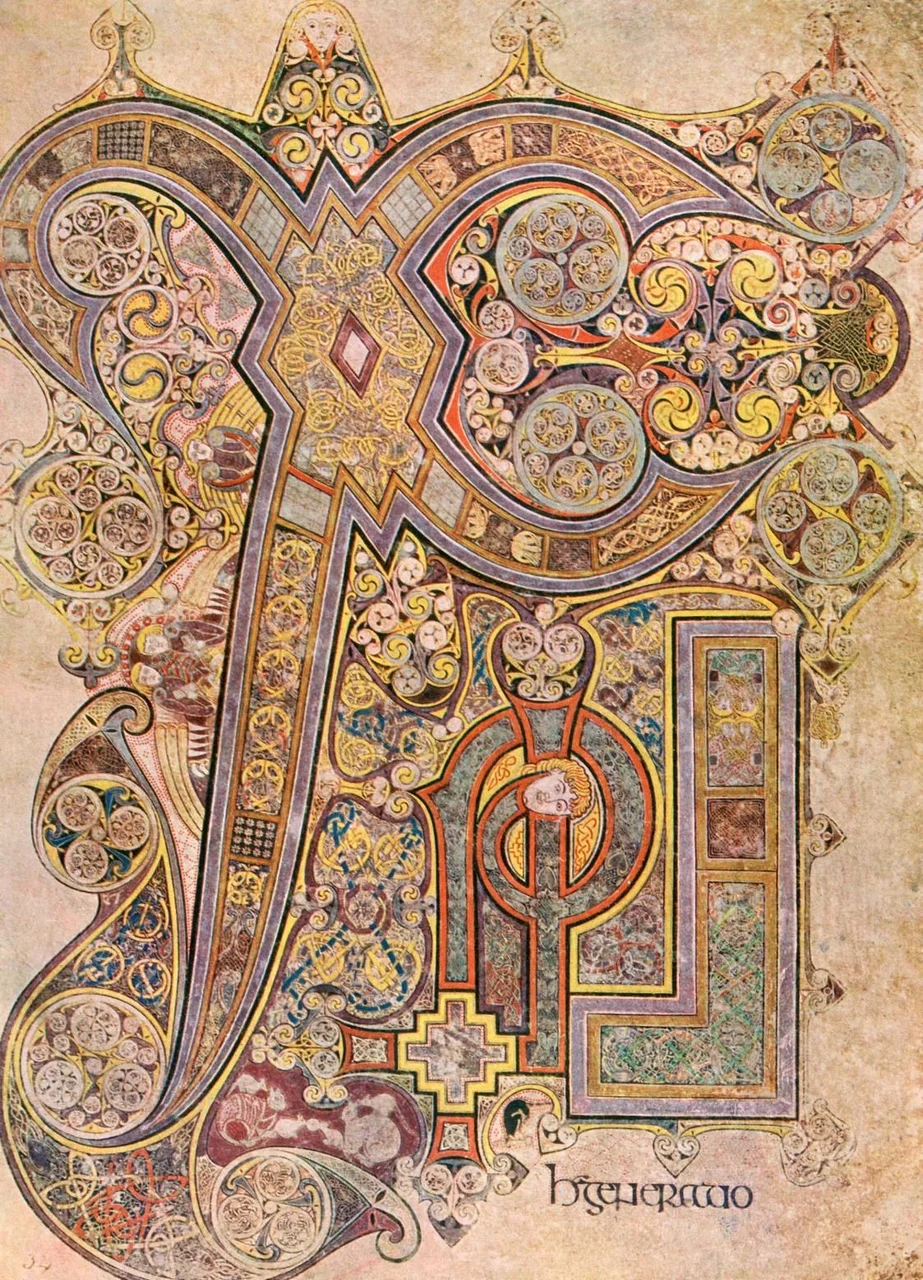
This manuscript page has restless interlace, spirals, bright color, and figures whose bodies merge into a dense ornamental pattern. Which medieval tradition is it?
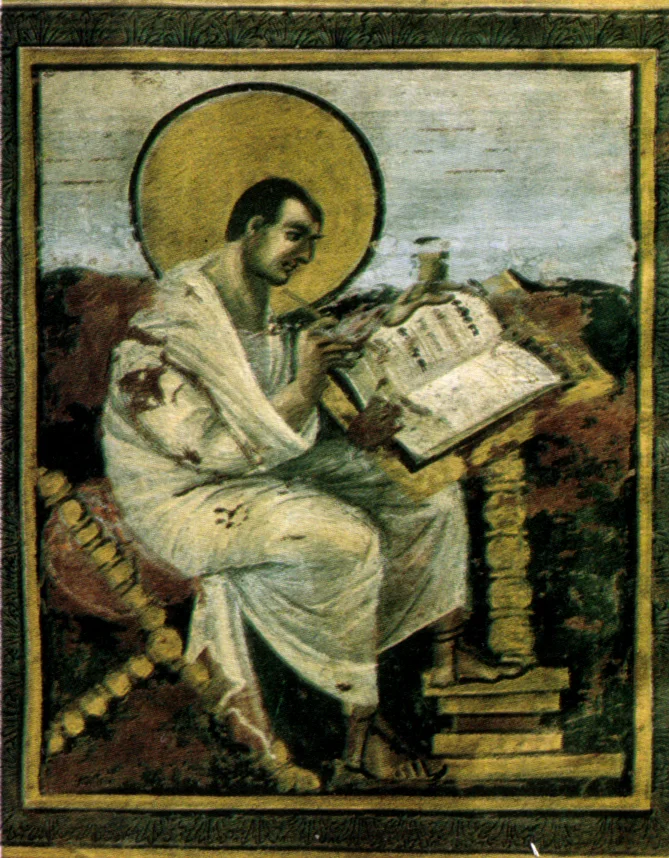
This gospel-book portrait shows an evangelist in a classical-looking chair, modeled by light and shade, with a frame inspired by ancient Mediterranean art. Which revival is represented?
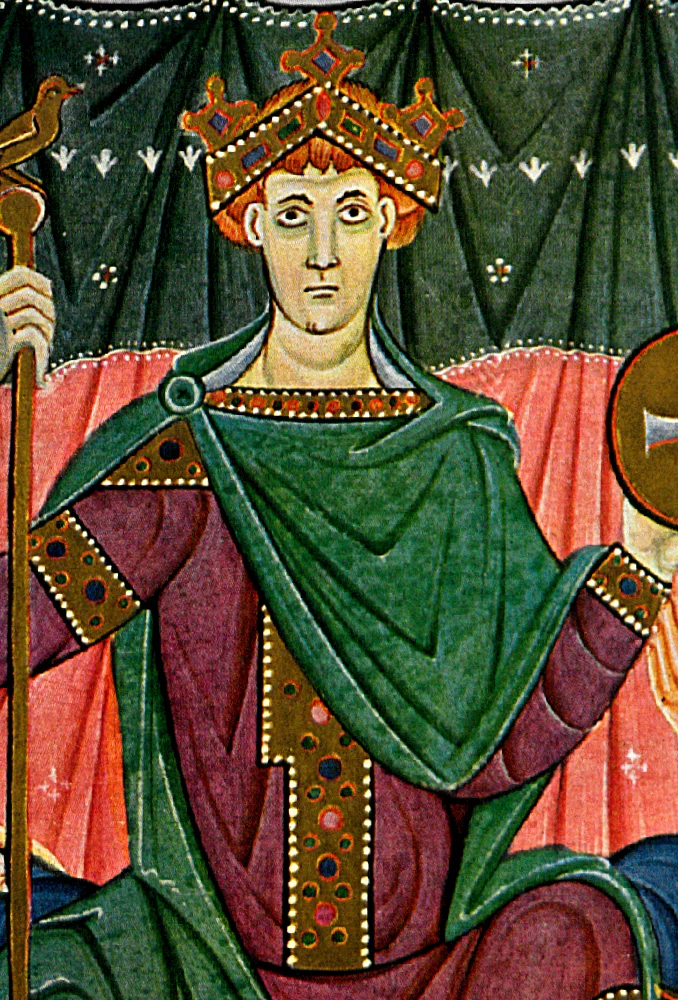
This illuminated ruler portrait uses emphatic outlines, flattened drapery, large staring eyes, and an imposing frontal pose. Which medieval style is it?
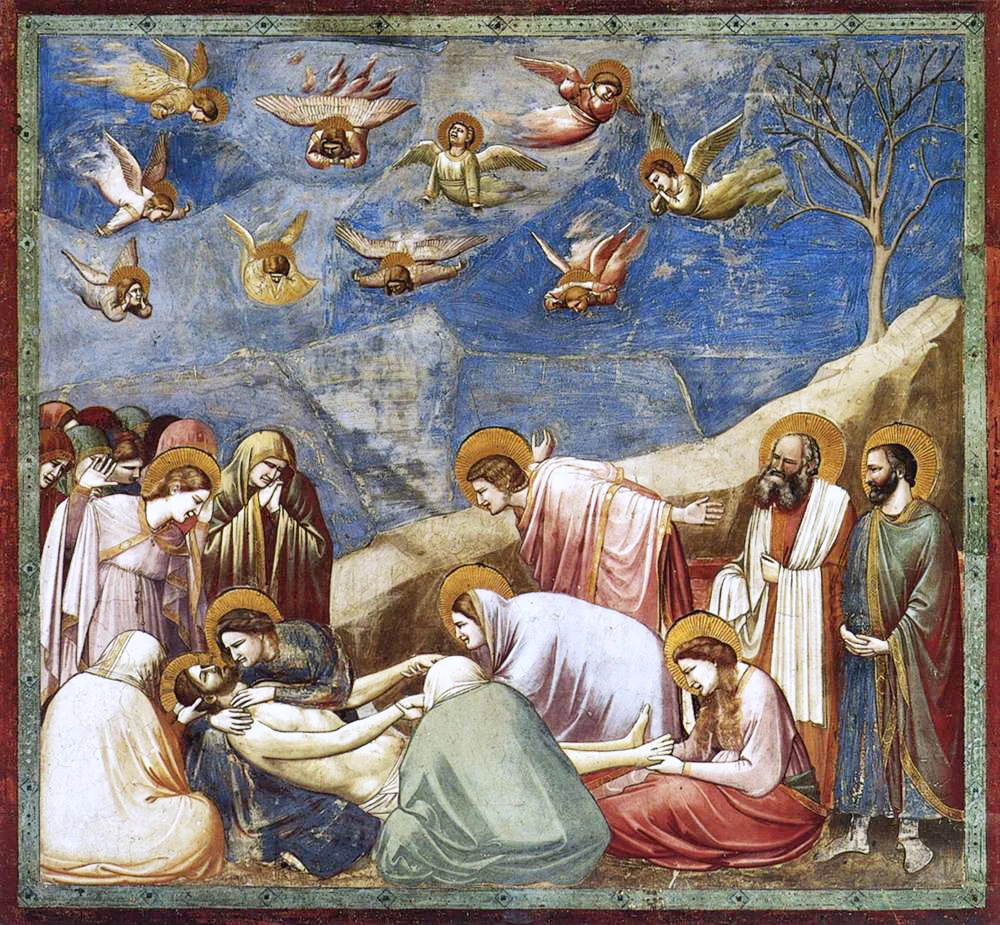
This painted chapel scene places solid, weighty figures in a believable space, and the mourners' grief is expressed through individualized gestures. Which movement is it?
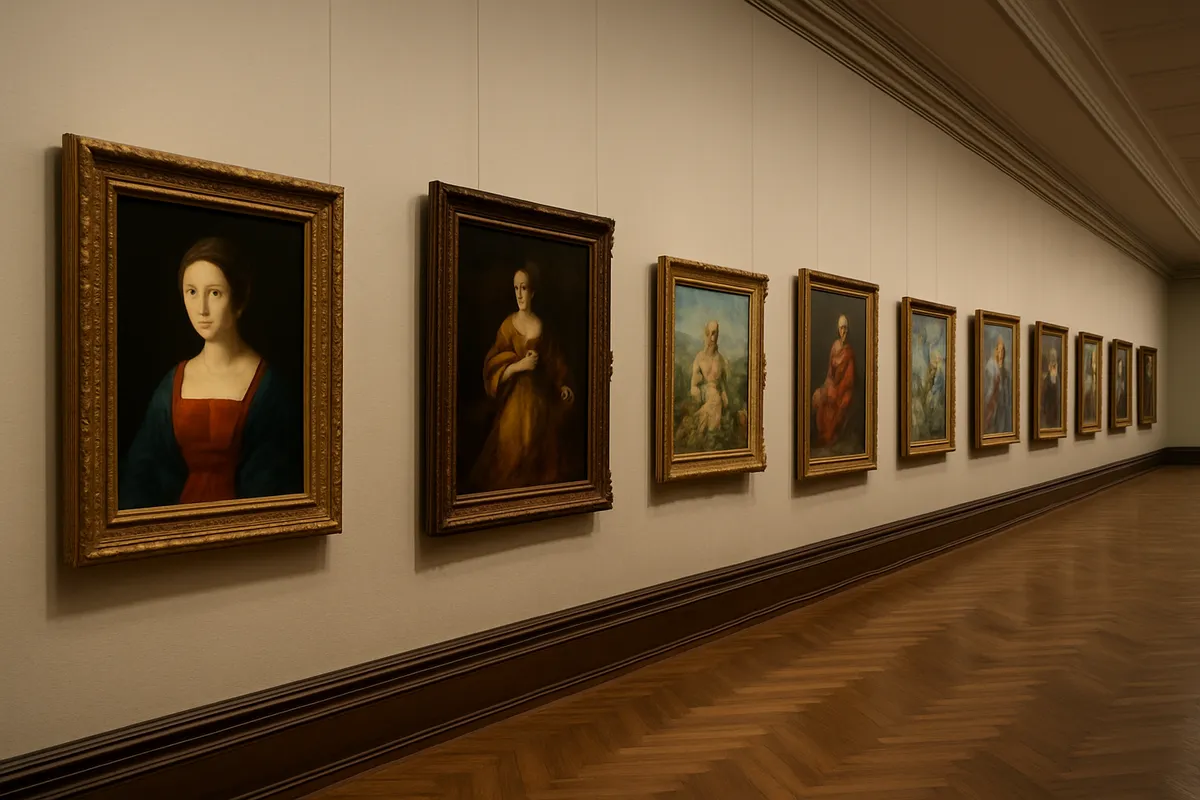
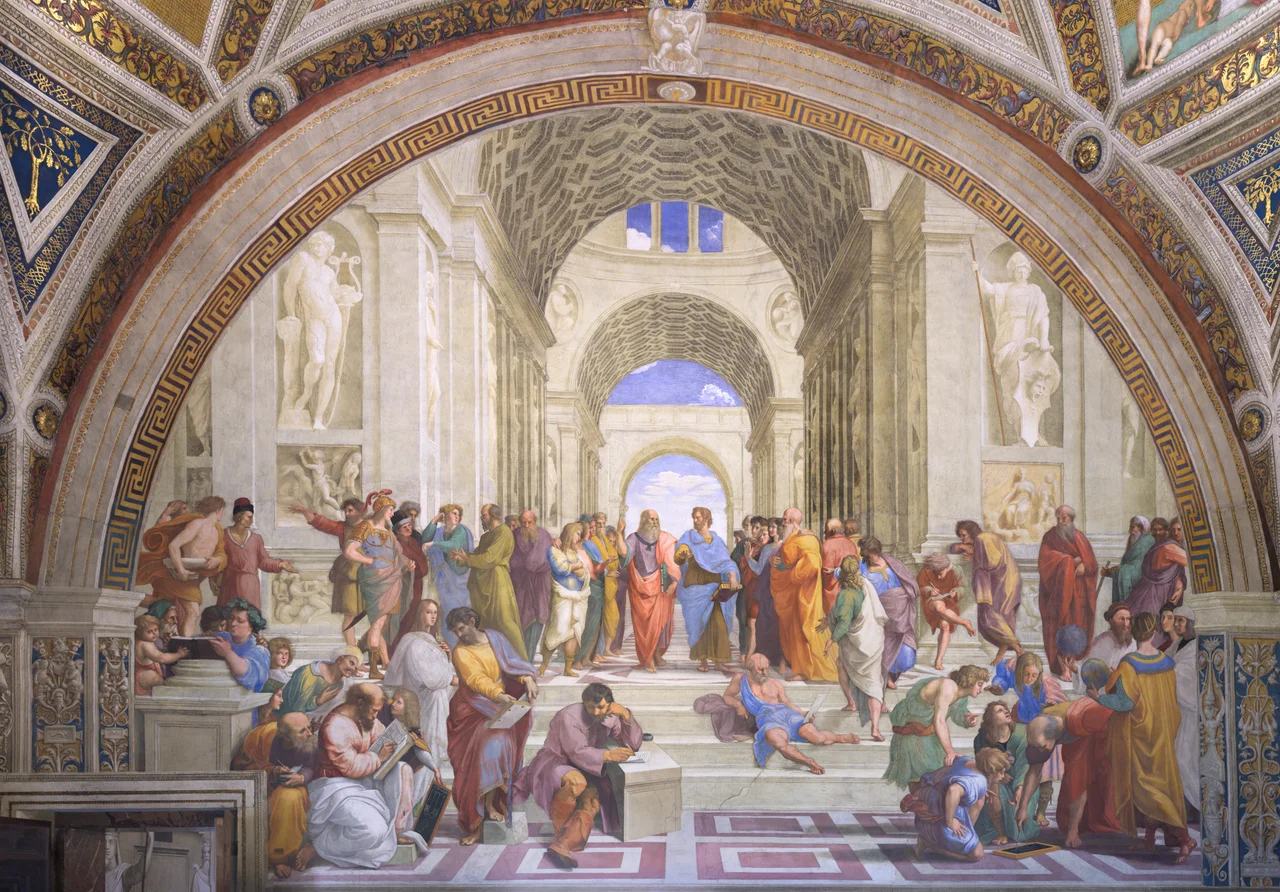
This fresco arranges idealized figures in a balanced architectural setting that converges toward a central doorway, creating calm harmony. Which movement is it?
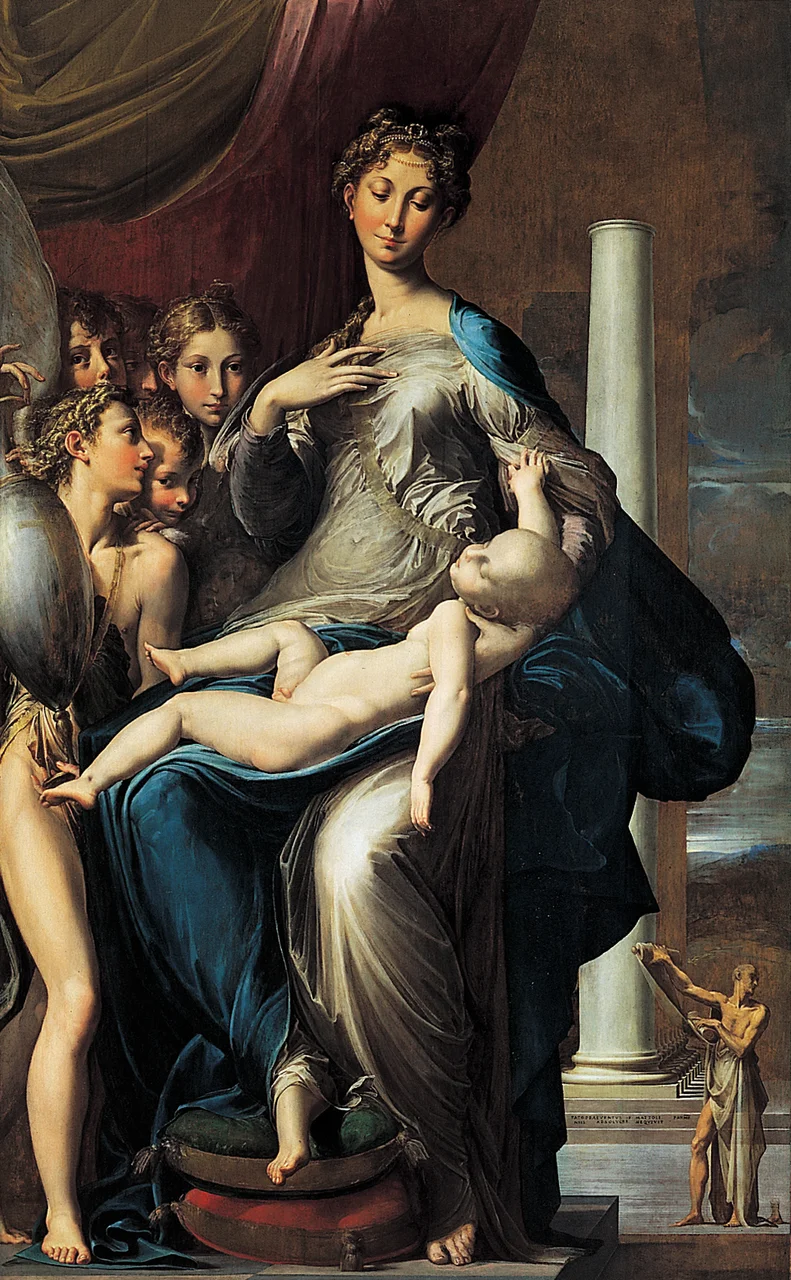
This elegant painting stretches its figures into elongated proportions, crowds them into an unstable space, and uses an oddly cool palette. Which movement does it represent?
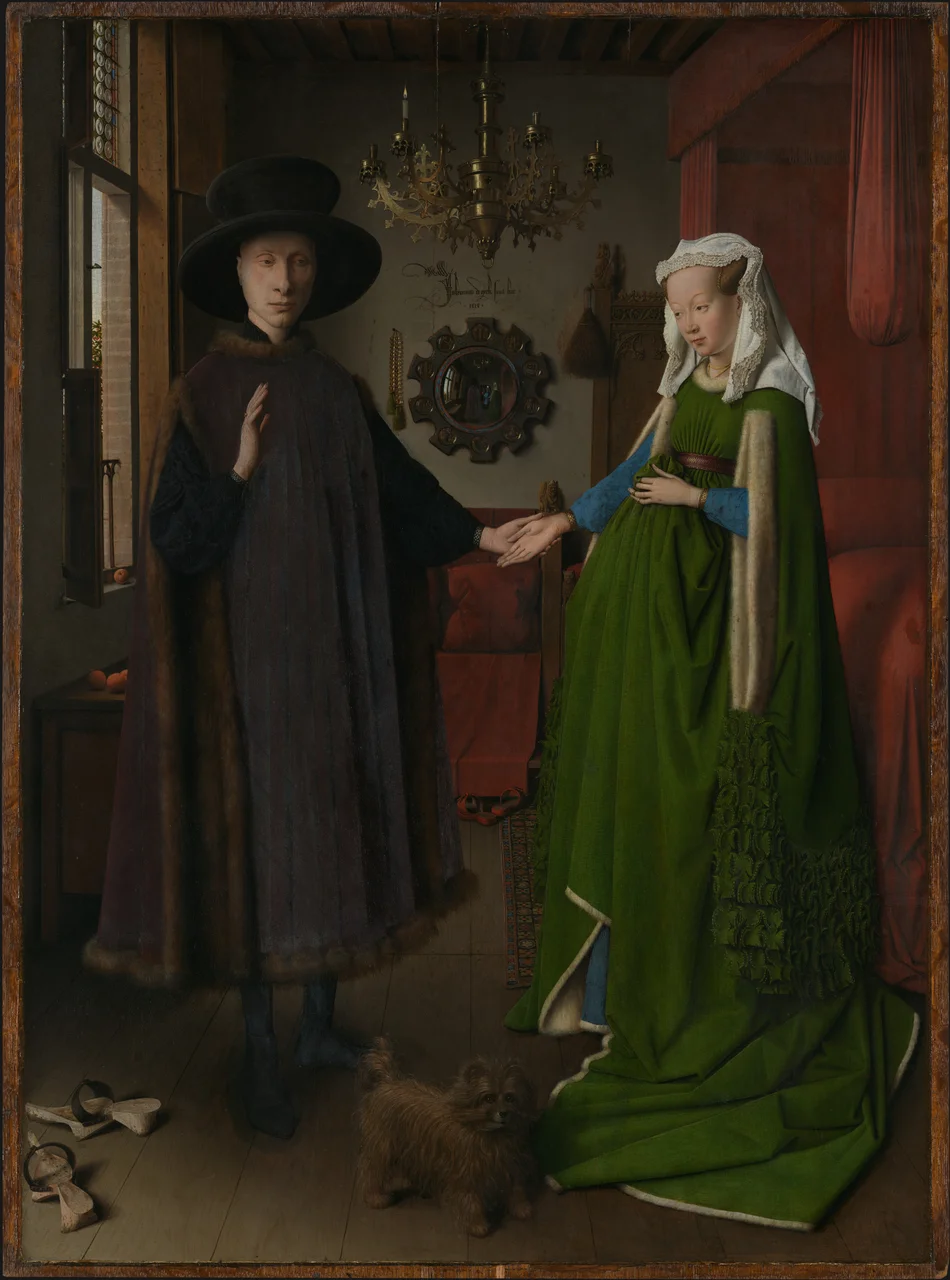
This oil portrait renders fur, metal, glass, and skin with minute surface detail; a mirror reflects the room behind the couple. Which movement is it?
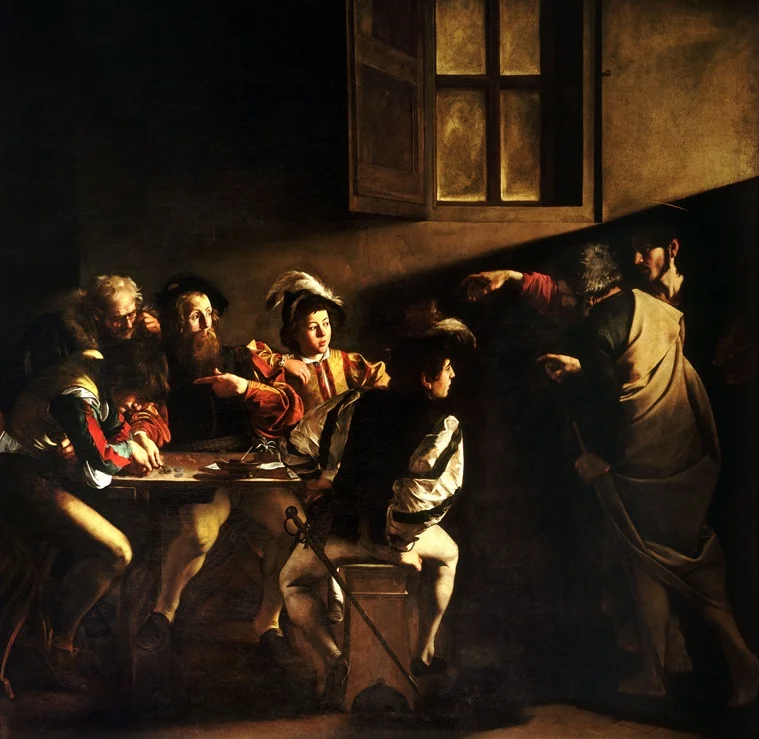
This painting uses one harsh beam of light to isolate a calling figure and a few observers against a nearly black room. Which movement is it?
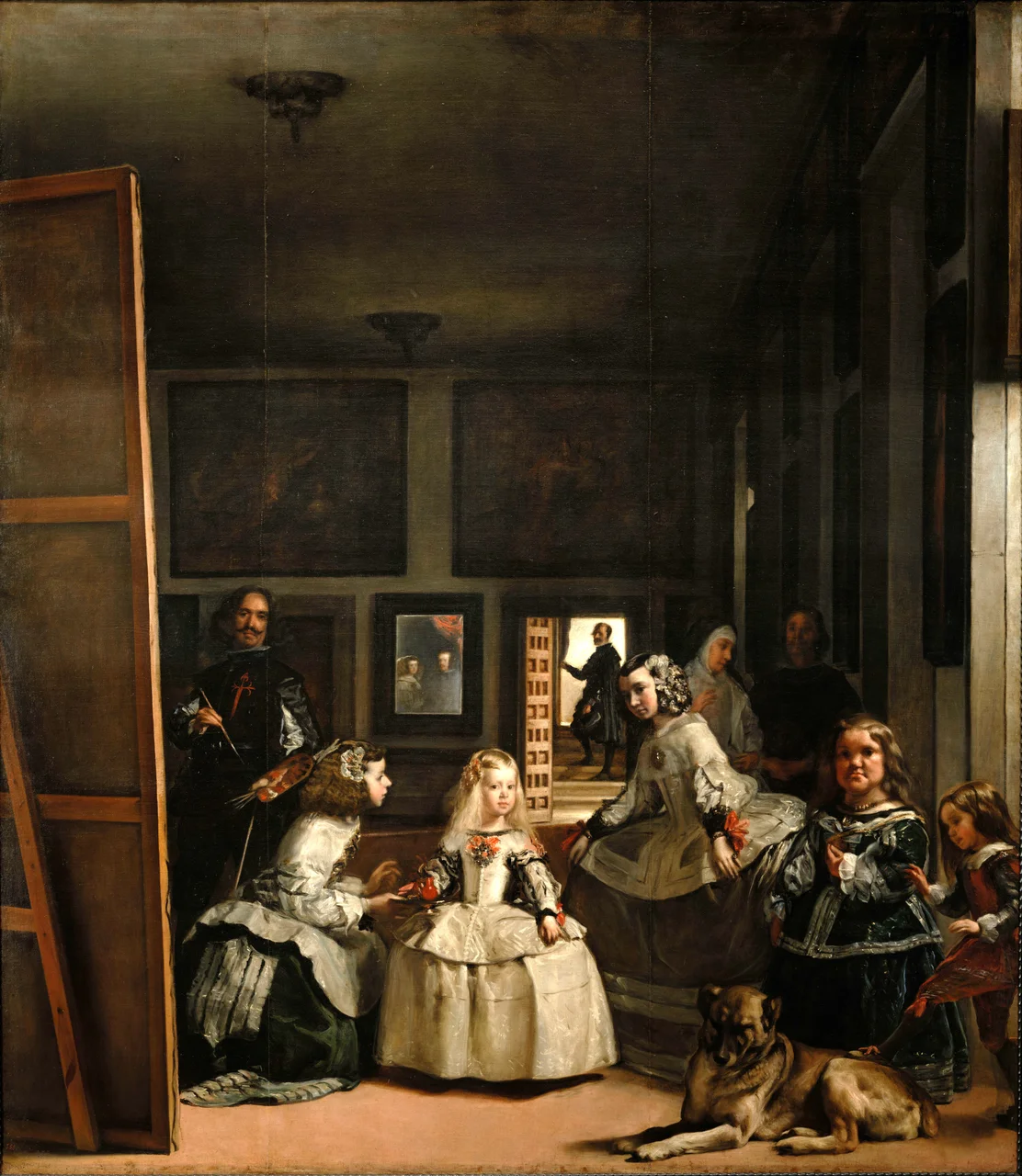
This large court painting shows a young princess with attendants and a painter at an easel; a mirror reveals the royal couple beyond the picture space. Which movement is it?
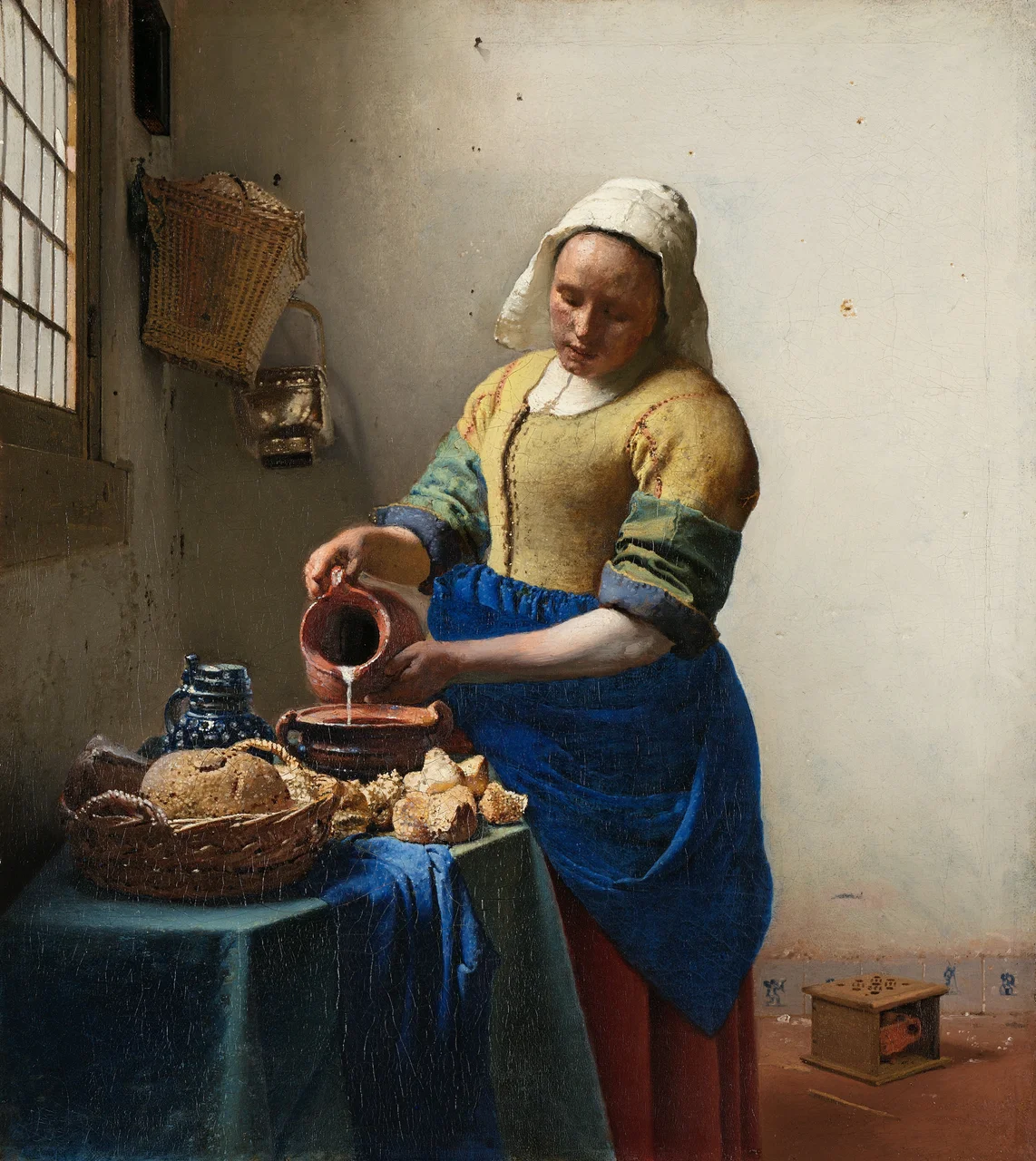
This domestic interior shows a woman quietly pouring milk beside a window; daylight picks out textured bread, pottery, and a plain wall. Which movement is it?
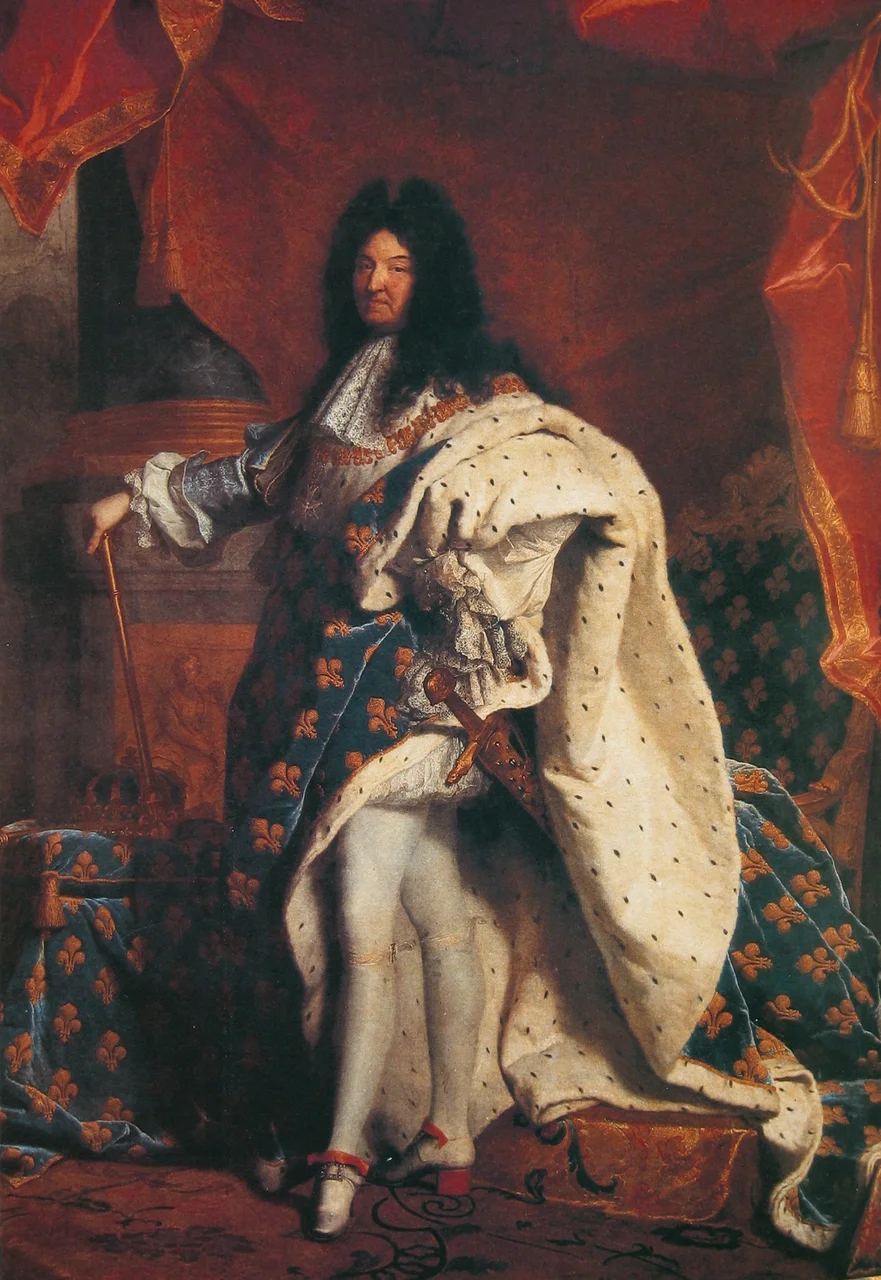
This royal portrait depicts a monarch in embroidered robes, standing before monumental columns and a curtain in a formal, symmetrical setting. Which movement is it?
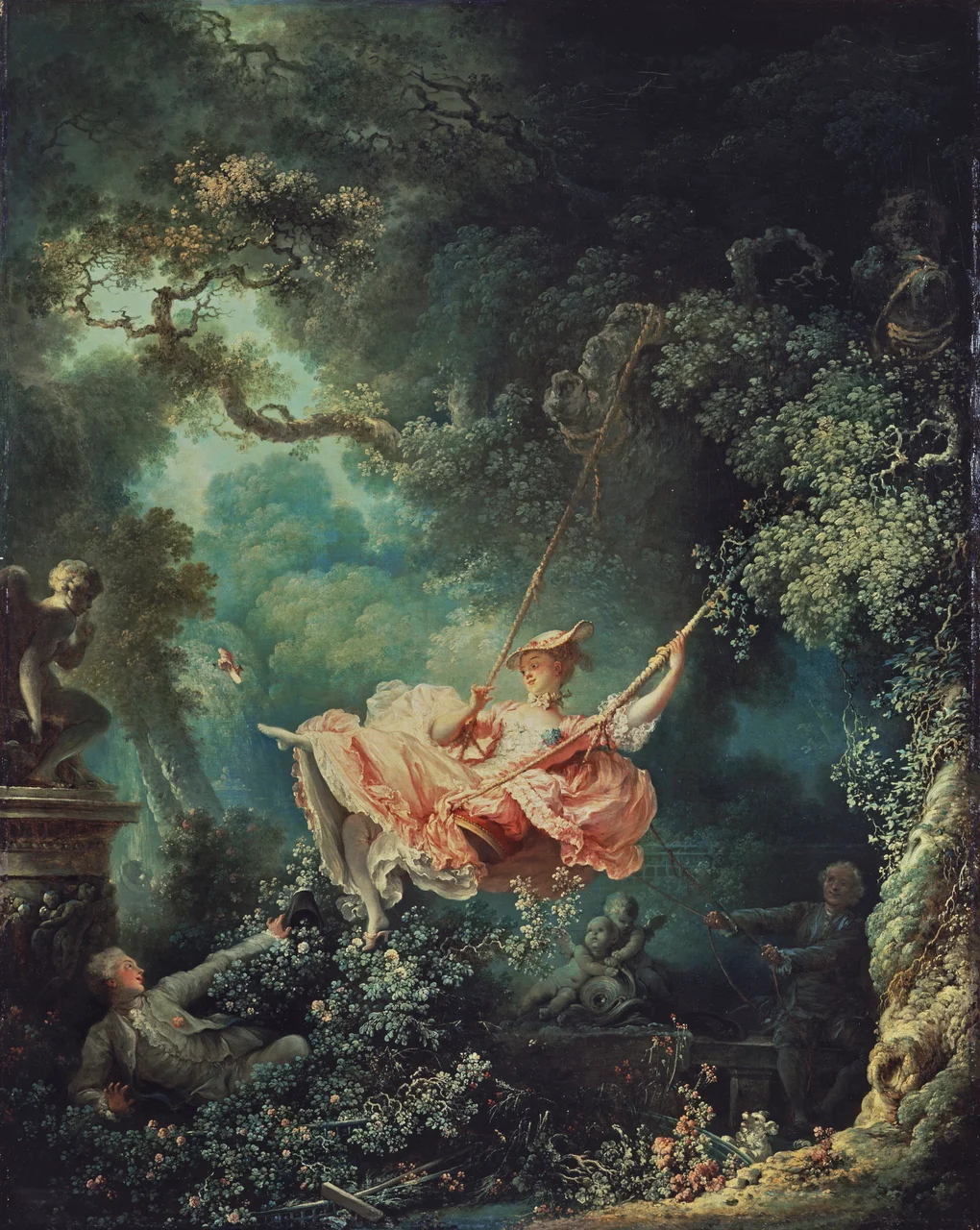
This small painting shows fashionable lovers on a garden swing amid pink clouds, feathery foliage, and playful flying putti. Which movement is it?
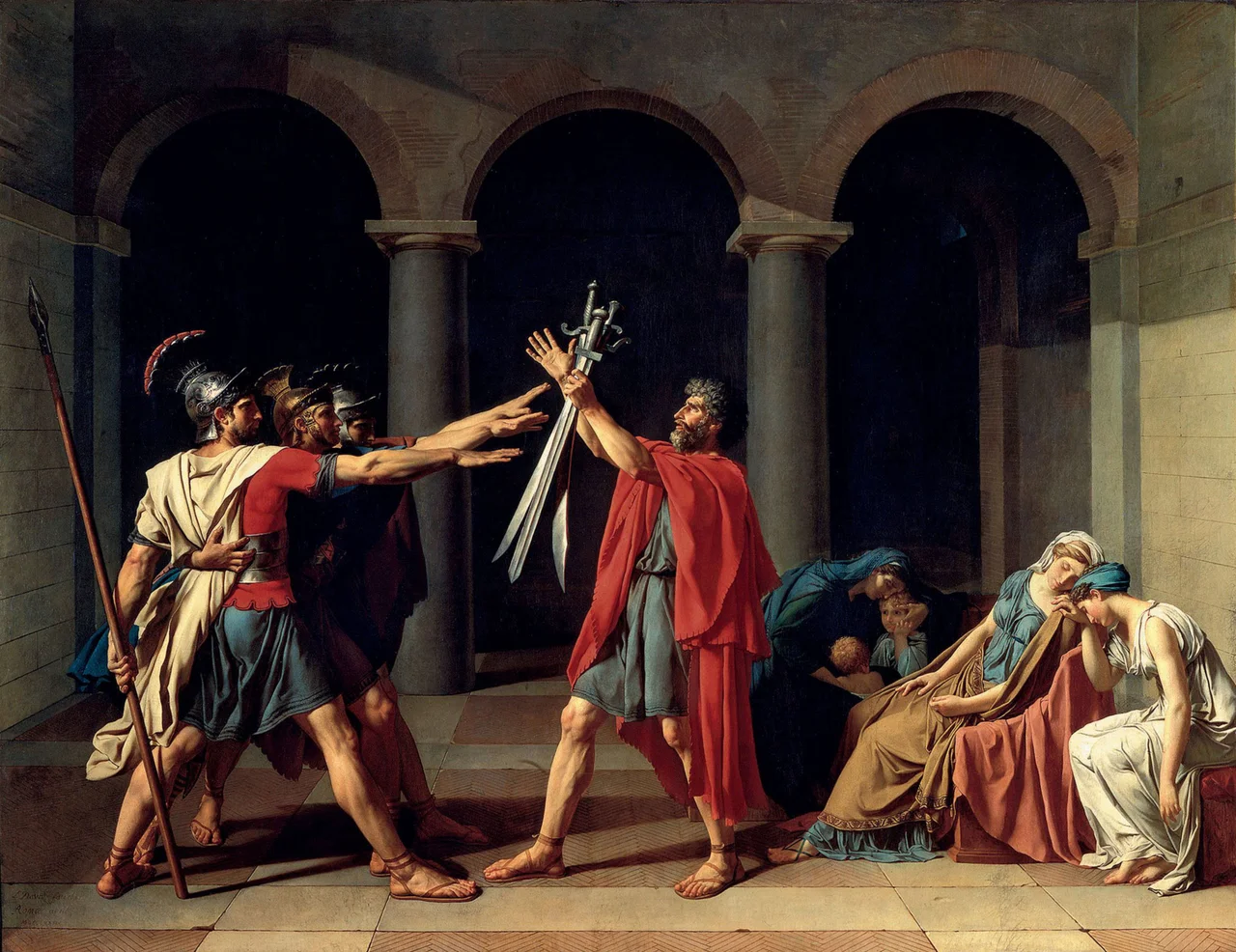
This history painting uses a shallow stage-like space, sharp outlines, Roman clothing, and a severe oath-taking gesture to praise civic duty. Which movement is it?
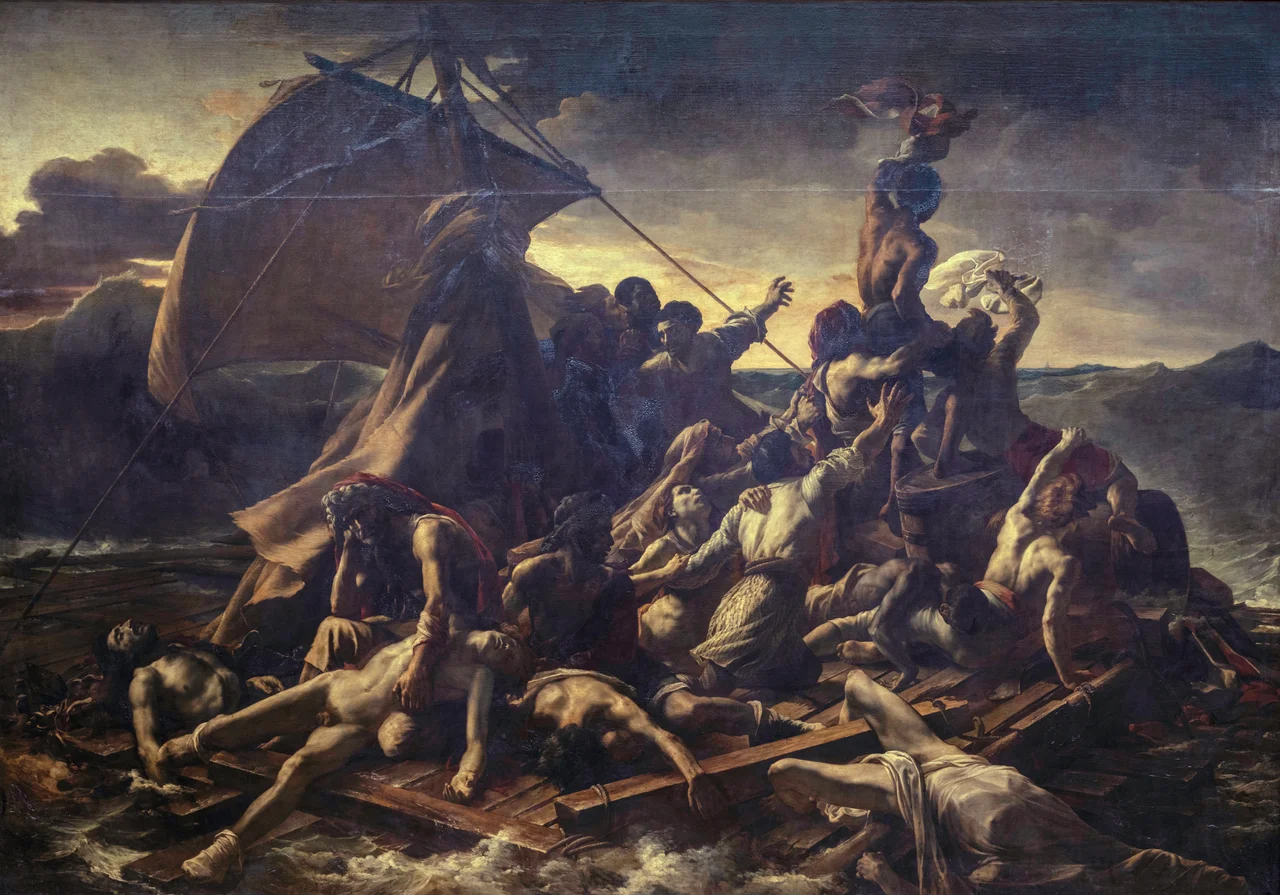
This canvas shows a shipwrecked raft tossed by enormous waves beneath a dark, stormy sky; desperate survivors signal toward a distant ship. Which movement is it?
This large canvas gives monumental scale to laborers breaking stones beside a road, with rough clothing and no idealizing heroism. Which movement is it?
This outdoor scene captures people boating in flickering sunlight with loose, broken brushstrokes and colors that dissolve forms at a distance. Which movement is it?
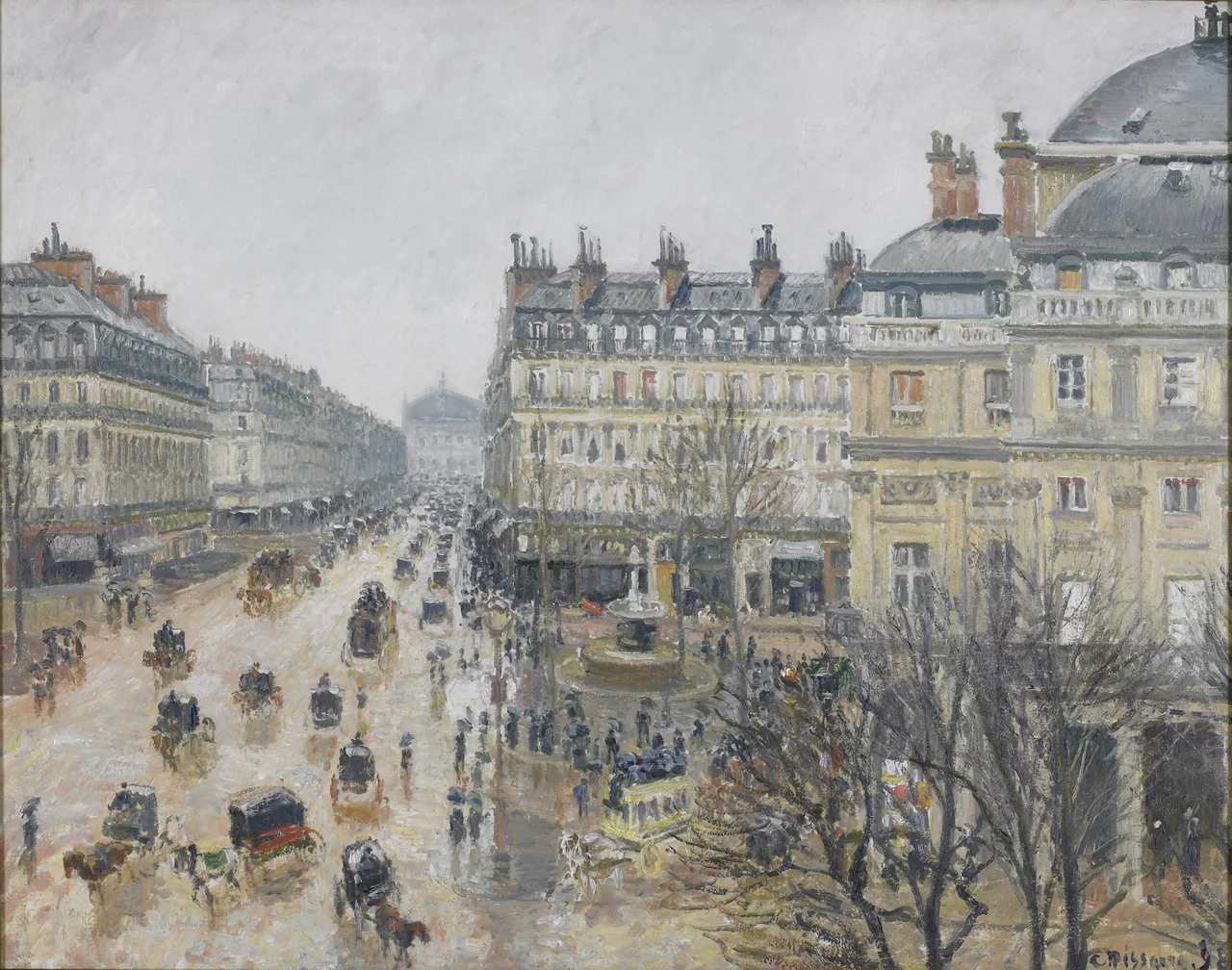
This city boulevard scene crops figures at the edges and uses quick strokes to suggest wet pavement, umbrellas, and modern crowds. Which movement is it?
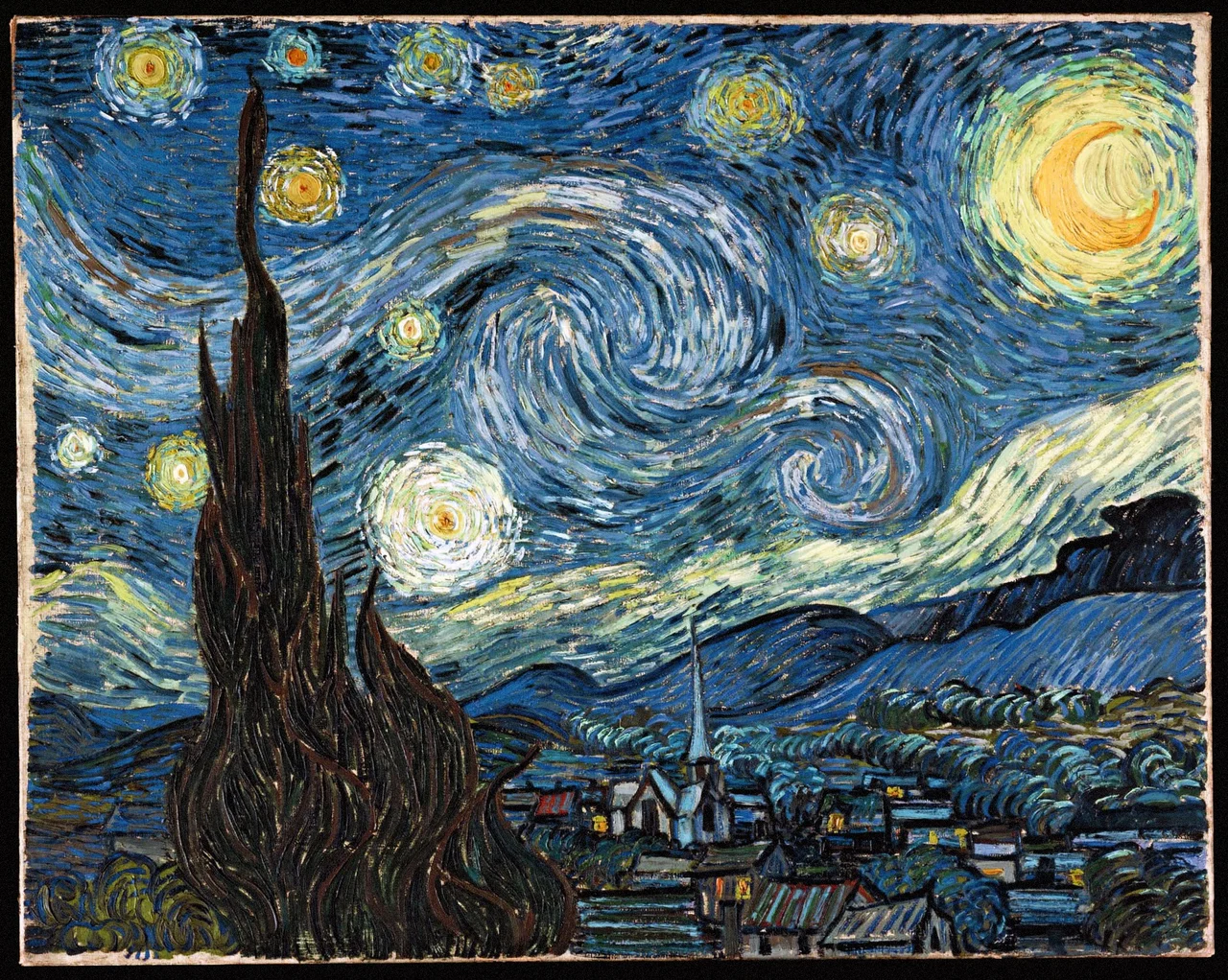
This landscape is constructed from repeated short strokes of intense color, with a cypress twisting upward against a whirling night sky. Which movement is it?
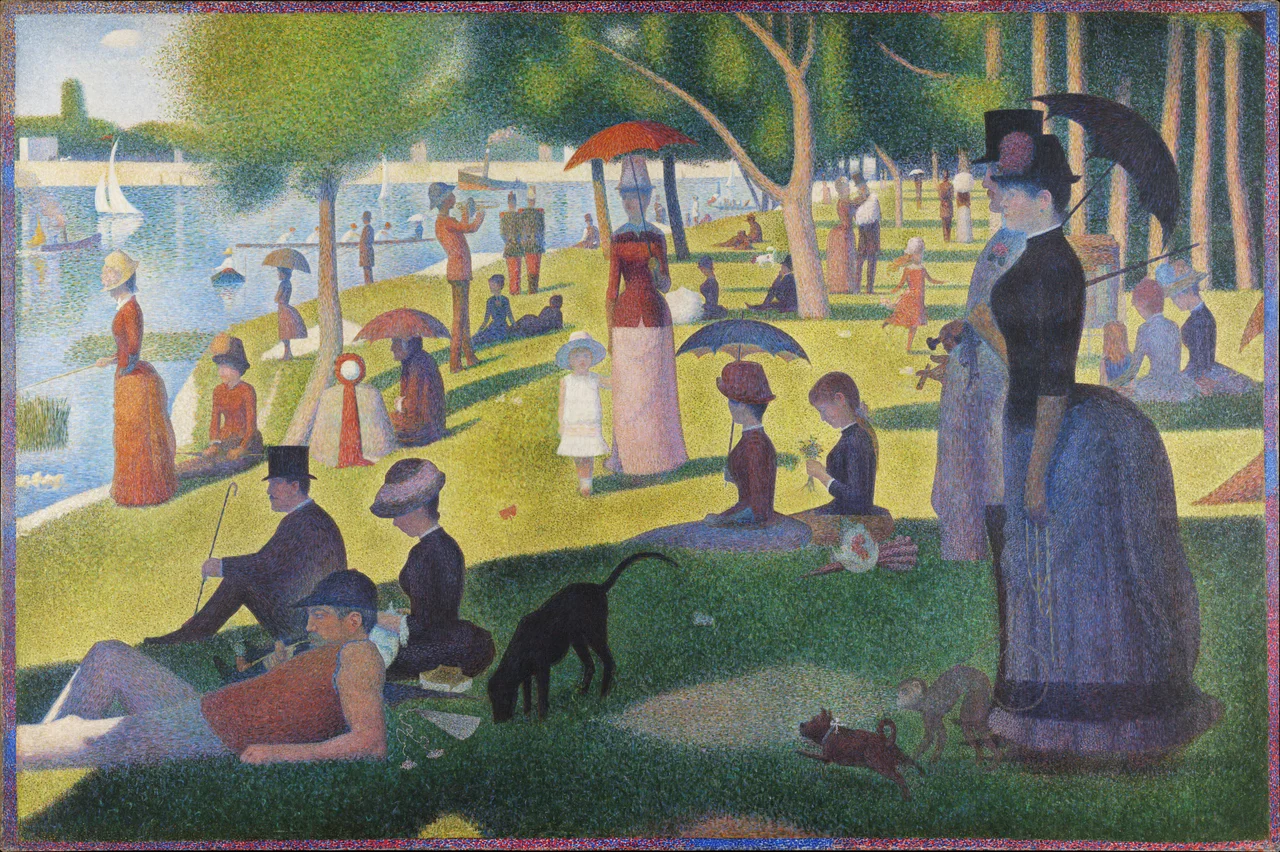
This canvas is made from separate dots of pure color that visually blend from a distance into figures standing along a riverbank. Which movement is it?
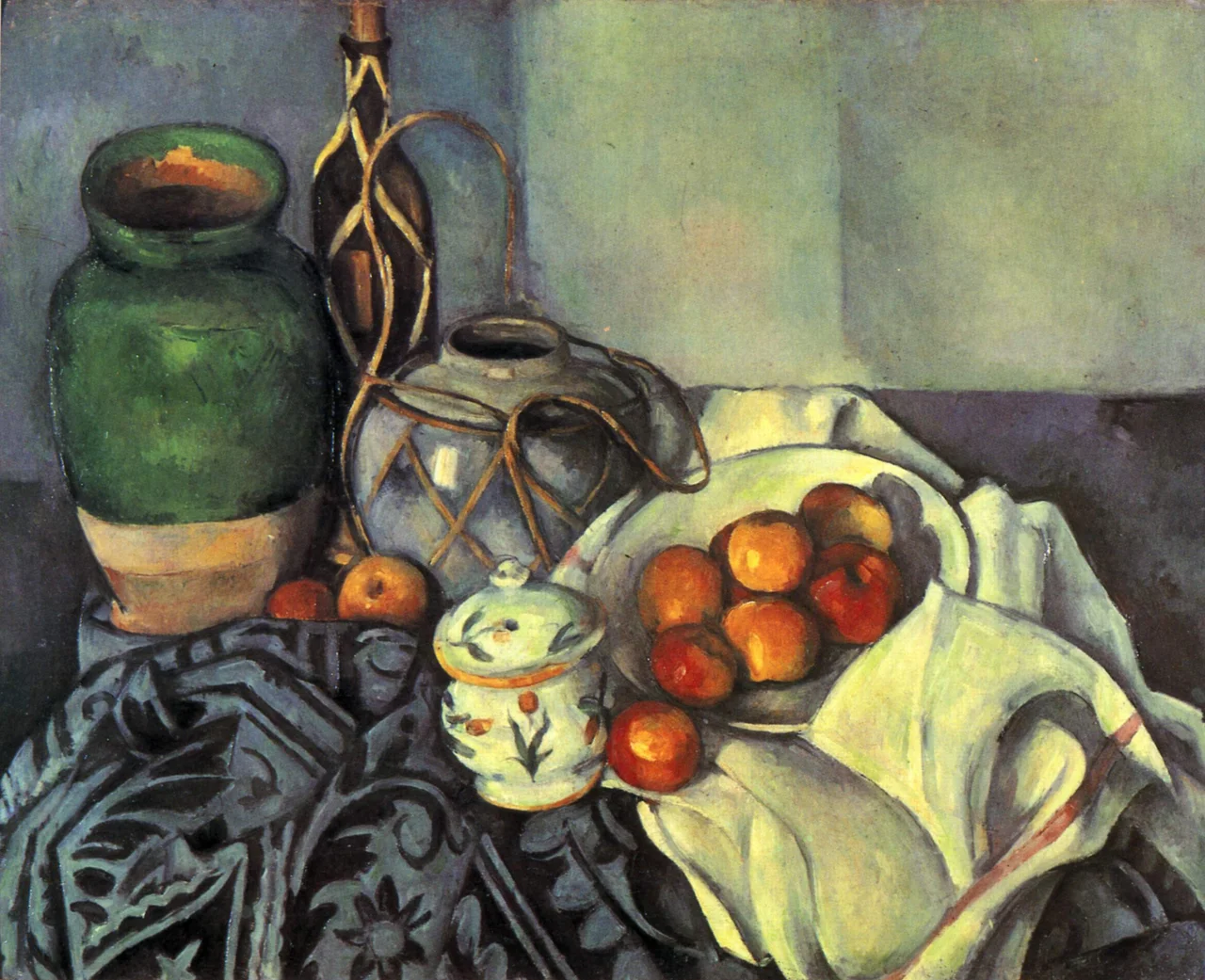
This still life reduces apples, a table, and a pitcher to firm planes of color, making objects seem built rather than momentarily seen. Which movement is it?
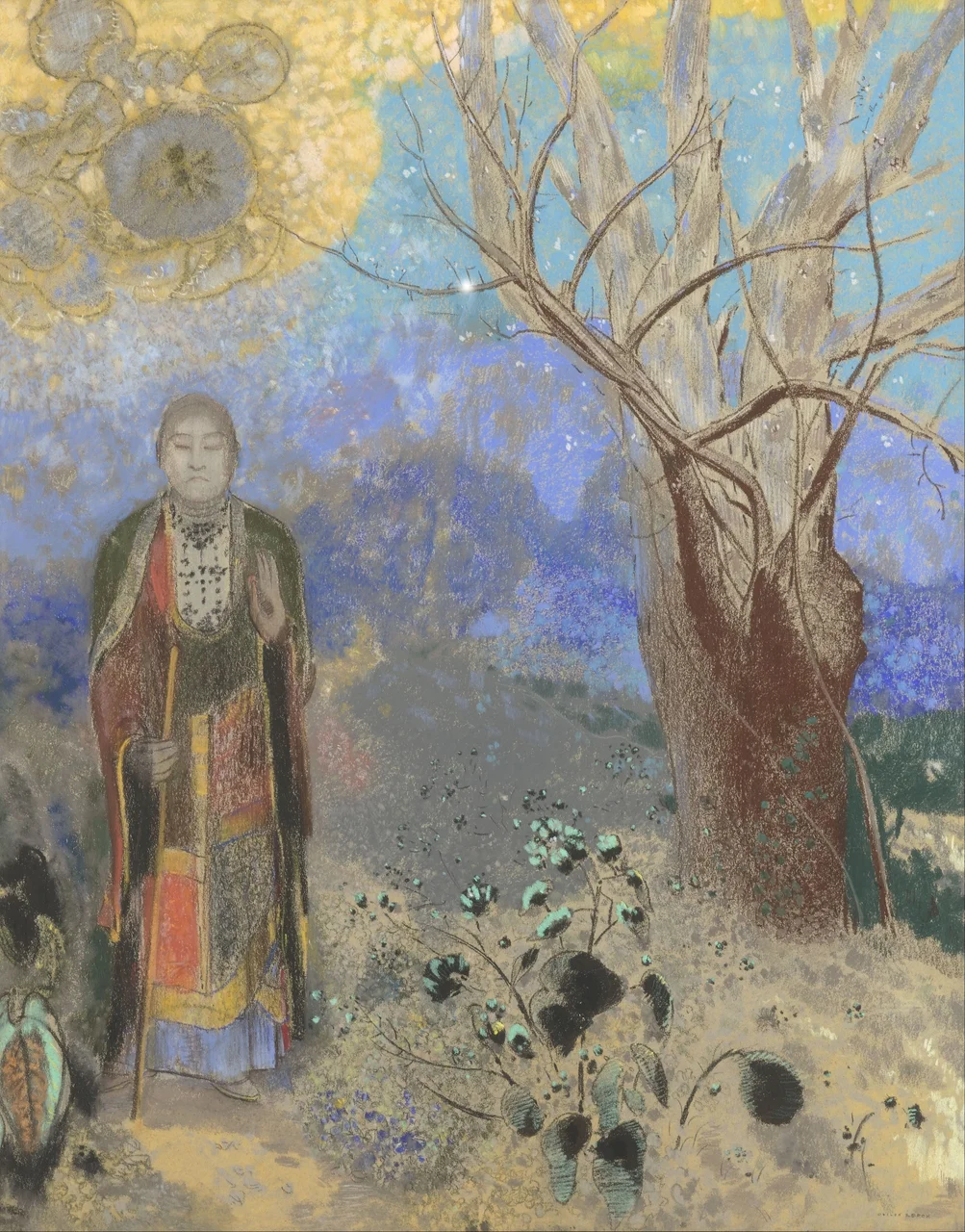
This dreamlike image shows a solitary figure in an enclosed landscape with an enigmatic symbol and unnatural, saturated color. Which movement is it?
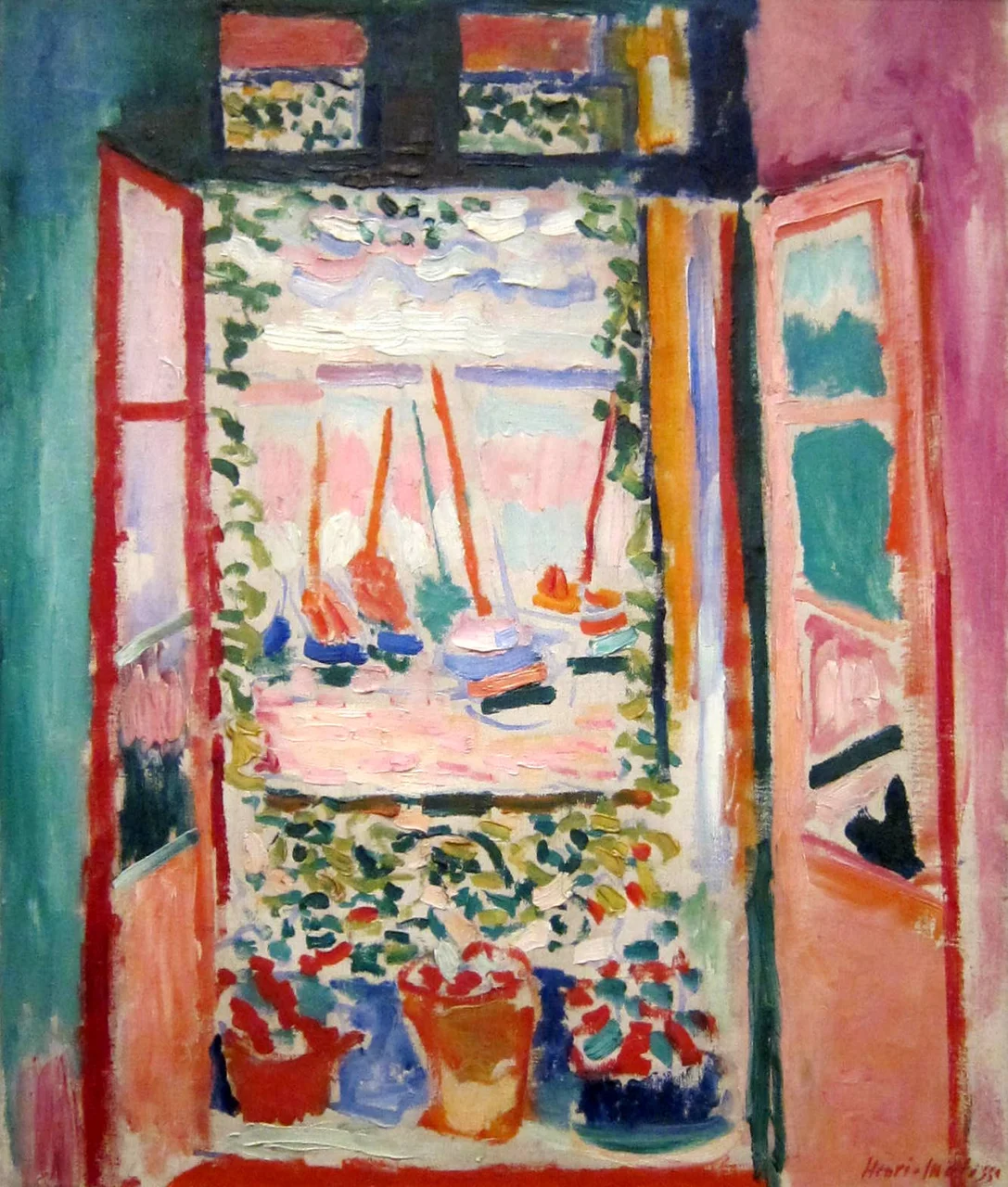
This landscape uses explosive, nonlocal reds, greens, and blues in broad flat strokes, with color chosen for emotional force rather than observation. Which movement is it?
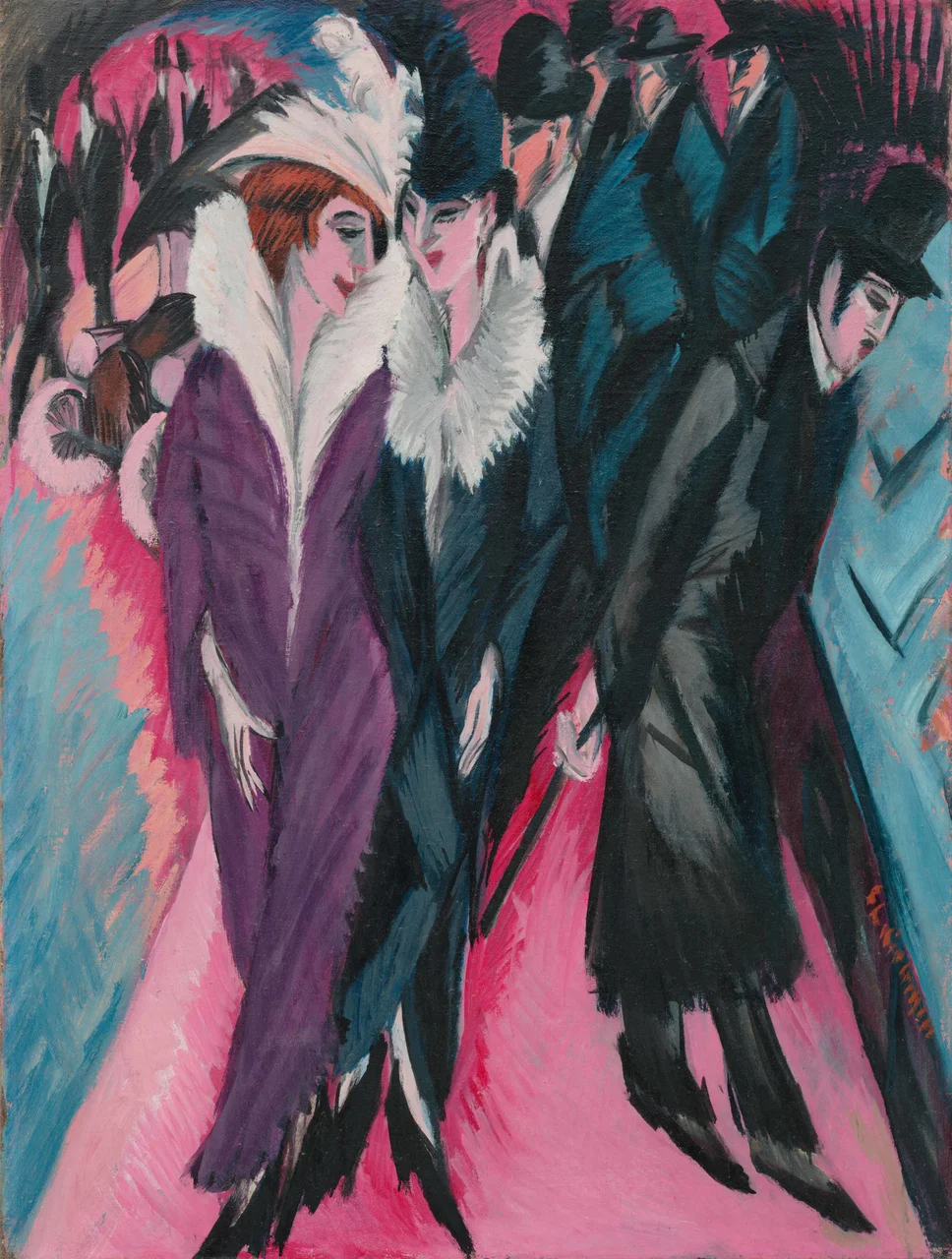
This street scene has jagged black outlines, acidic color, and anxiously distorted figures moving through a modern city. Which movement is it?
This still life fractures a violin, bottle, and table into faceted brown and gray planes, making several viewpoints visible at once. Which movement is it?
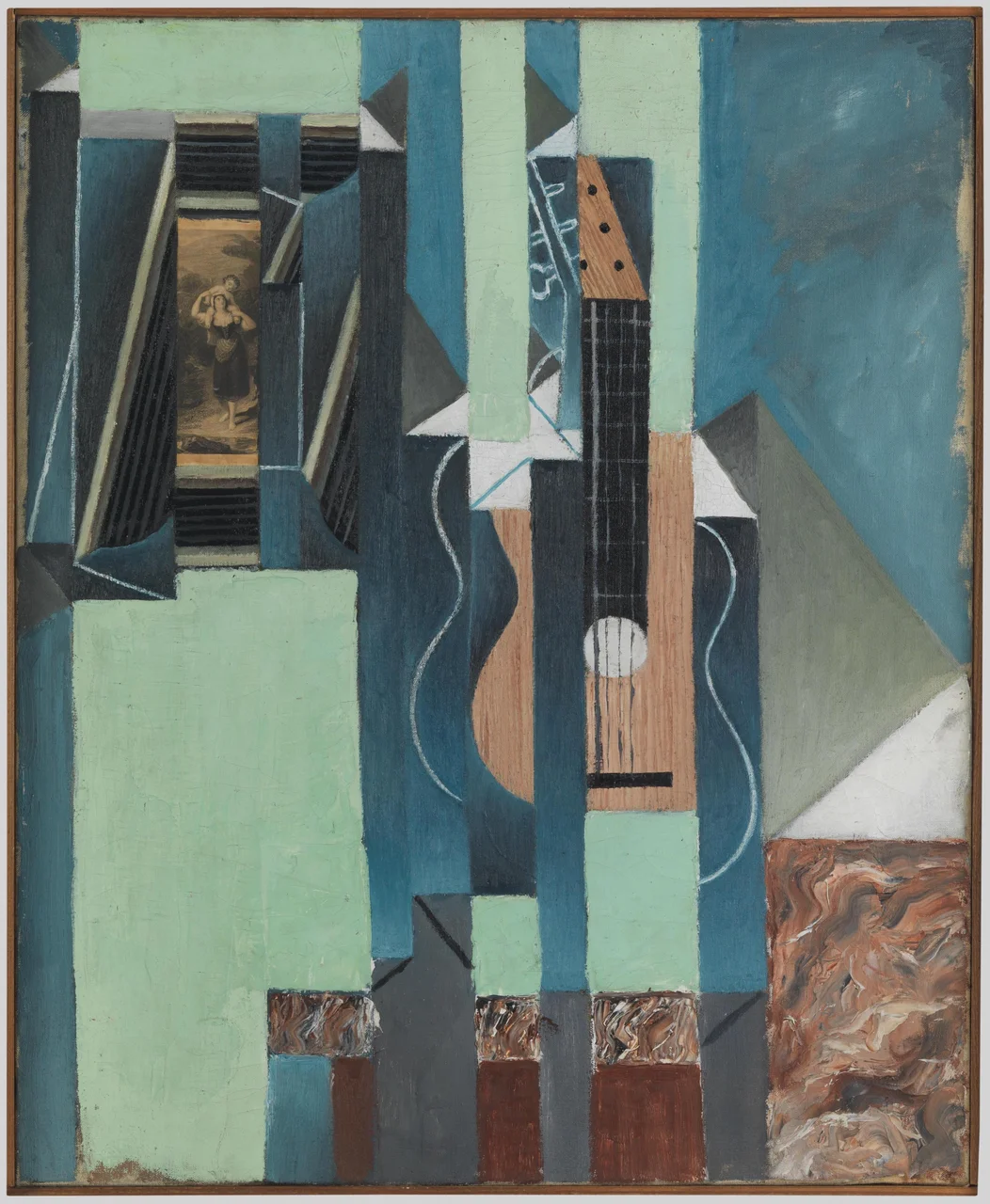
This collage combines a guitar shape with printed paper, faux wood grain, and broad simplified color areas. Which movement is it?
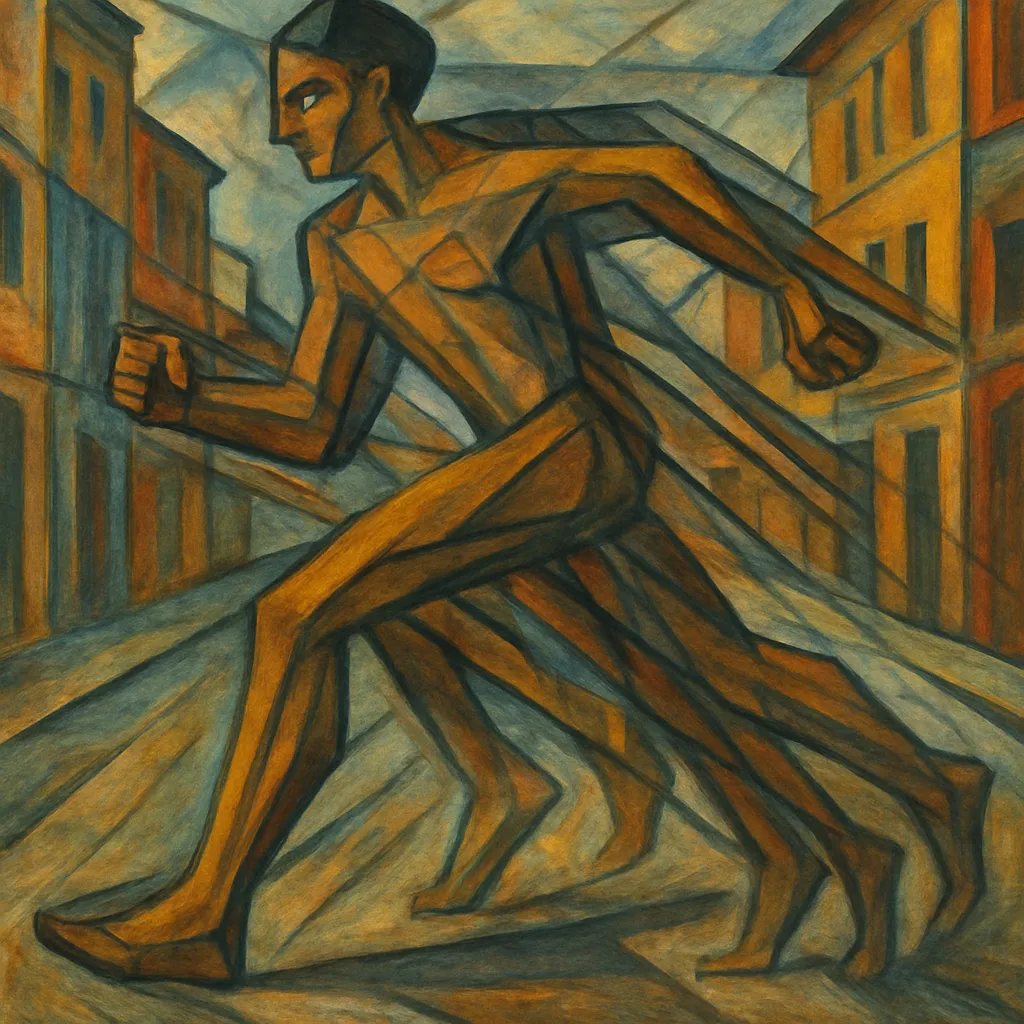
This painting repeats a running figure's limbs and angles across the picture, making motion seem to race forward through the city. Which movement is it?
An artist presented an ordinary porcelain urinal upside down on a pedestal, signed with a pseudonym. Which movement is it?
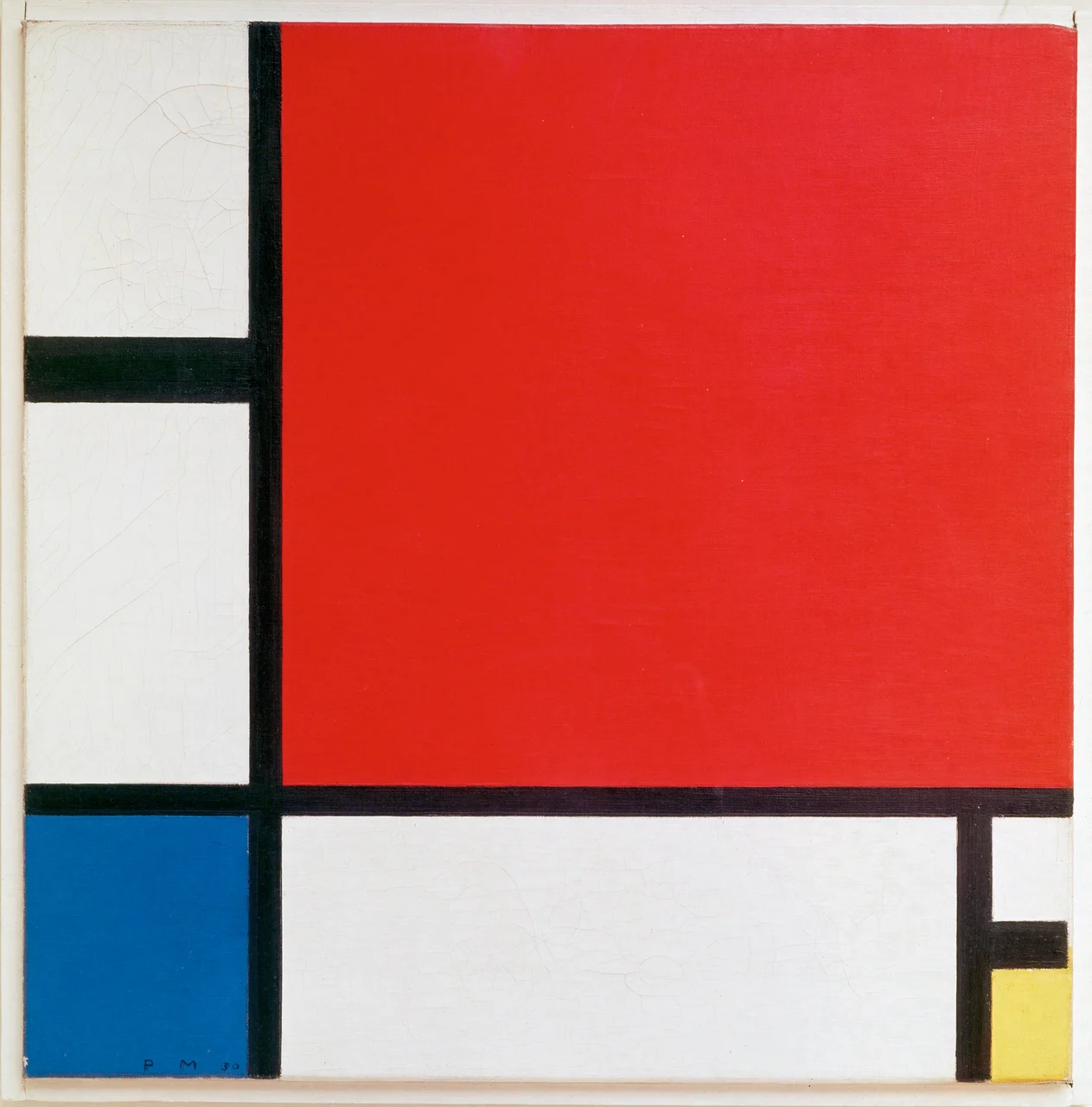
This abstract canvas limits itself to black horizontal and vertical lines framing rectangles of red, blue, yellow, and white. Which movement is it?
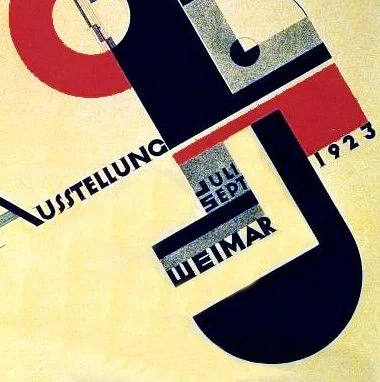
This poster combines a circle and squares with clean sans-serif type and an asymmetrical layout designed for mass production. Which movement is it?
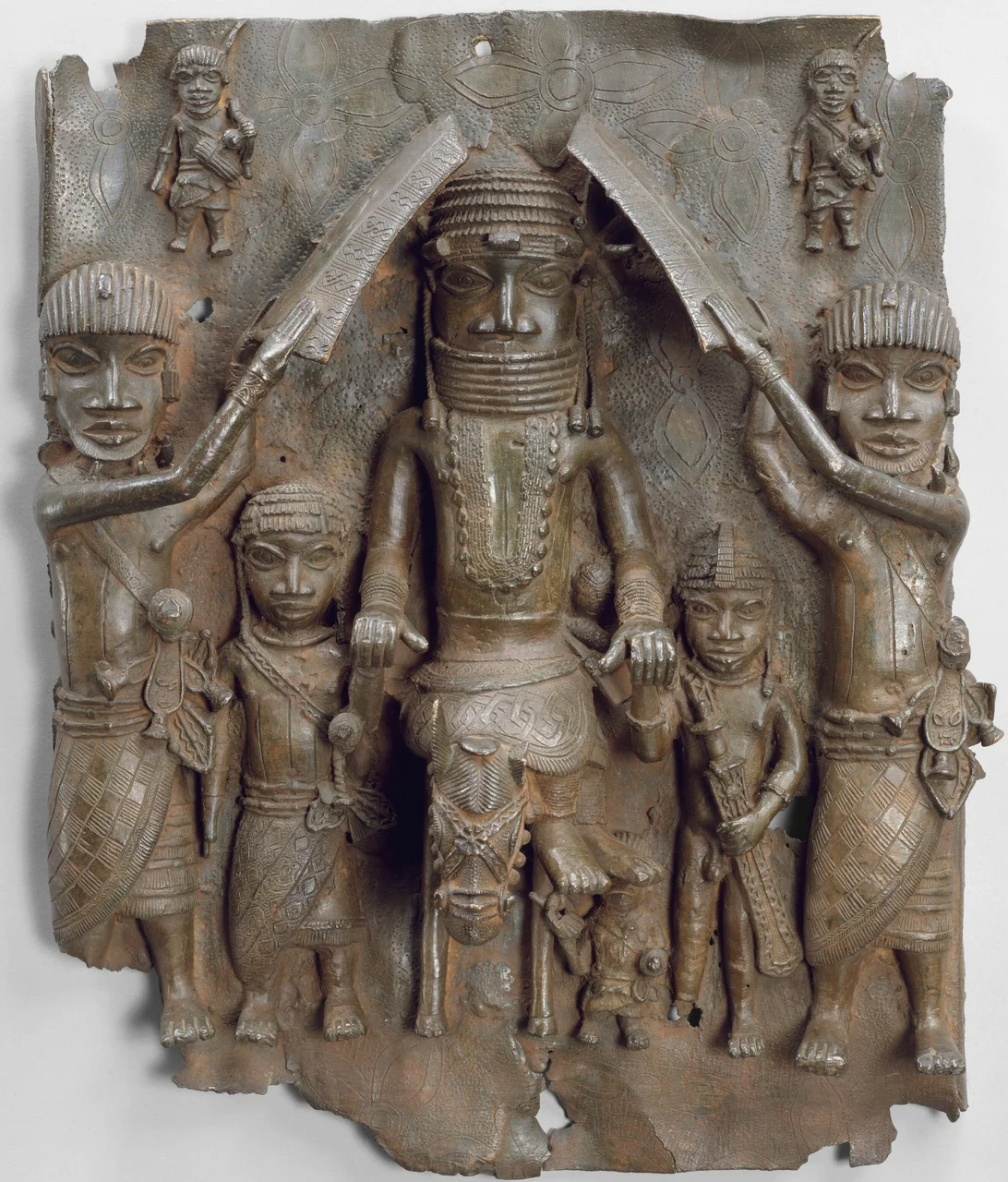
This cast brass plaque shows a frontal ruler flanked by smaller attendants against an incised river-leaf ground and was made for a palace pillar. Which court produced it?
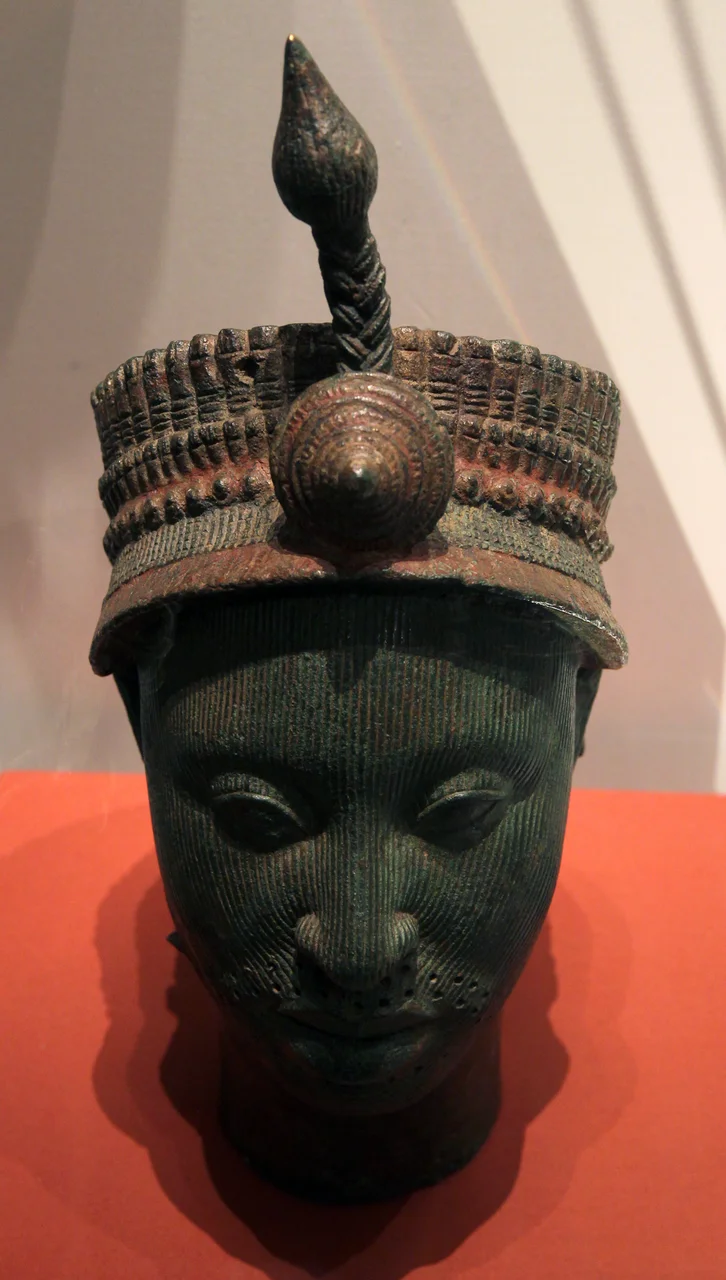
This life-sized brass head has remarkably natural facial modeling, individualized features, and vertical grooves on the face and crown. Which West African tradition produced it?
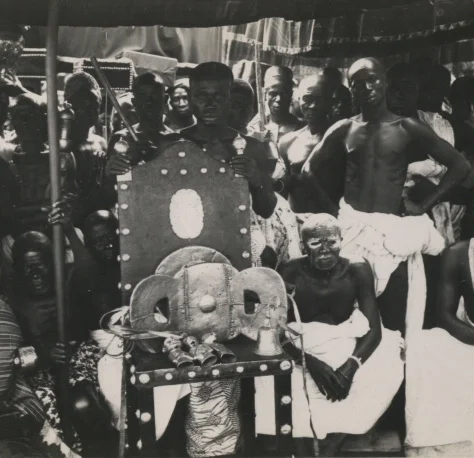
This shining royal stool is covered in gold sheet and carries small symbolic forms associated with authority; it was made for an Akan ruler. Which tradition is it?
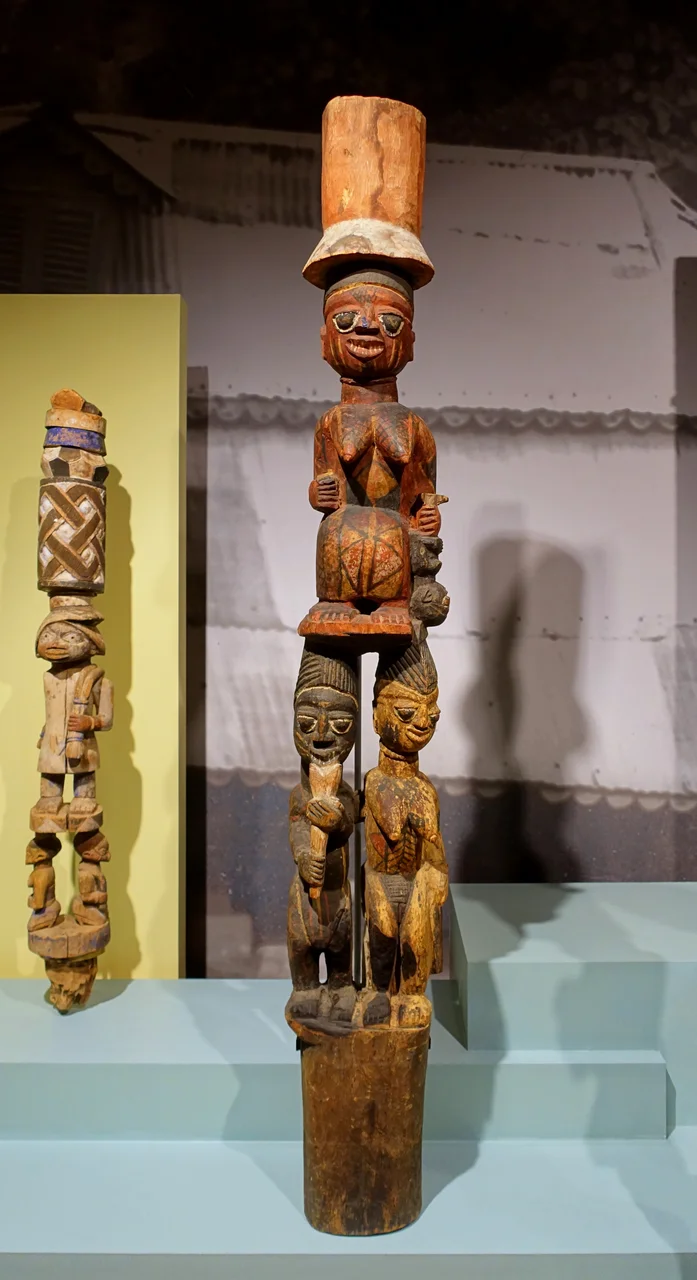
This carved veranda post shows a powerful seated woman wearing a high hairstyle and holding a smaller figure; its surface is deeply cut and painted. Which tradition is it?
This court painting shows an emperor in profile on a flowering carpet, surrounded by finely detailed birds and plants in a flat garden setting. Which dynasty is it most likely from?
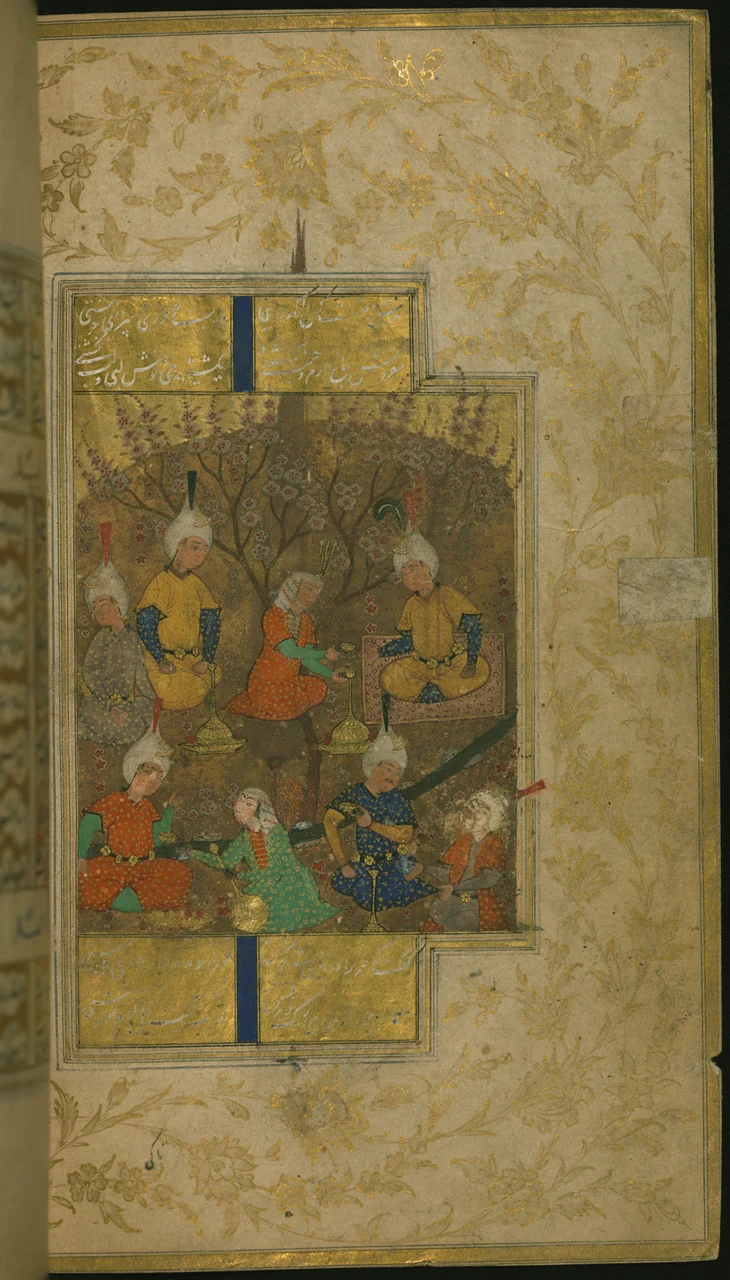
This manuscript page depicts a royal banquet in a richly patterned garden, with elegantly elongated figures, textiles, and architecture rather than strong illusionistic depth. Which court tradition is it?
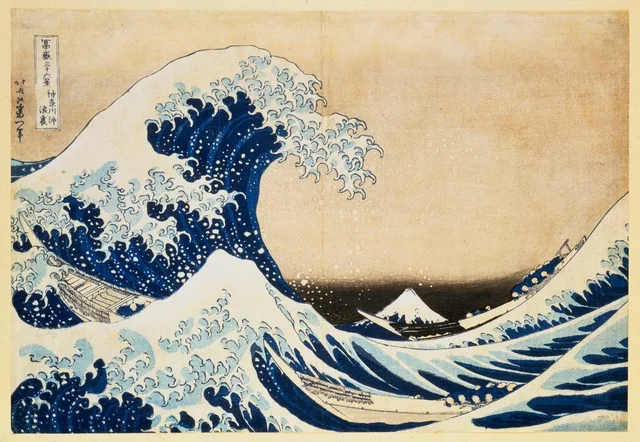
This color woodblock print frames a towering wave curling over small boats, while a distant mountain appears small and still beyond it. Which Japanese period is it?
Crack the passcode before the zombies get in.
Answer, then swat bugs for bonus points.
Race through questions at your own speed.
Same question on every screen. Fastest wins.

Pick a tile, answer, hit bonuses and steals.
Chronology: Ordering Periods and Works
30 questions