Loading
by BlastRoom
Light to the visual cortex, and the two theories that explain what you see.
#psychology
30 questions
One question set, multiple game modes. Tap any game to see it in action. Not sure which to pick?
Answer to place stones and capture territory.
Outrun the snow together.
Earn blasts, then hunt the other team.
Answer to earn energy, then climb.

The class blasts through walls together.
Bid on mystery lots. Most money wins.
Sell tours. Nice, standard, or a total scam.

Answer, restock, and serve the rush.
More correct answers pulls the rope your way.
Answer, then shoot down the alien wave.
Answer, then tap to leap the frozen ridge.
In the eye cross-section, the structure marked [blank] is where images focus most sharply and cones are packed most densely. It is the
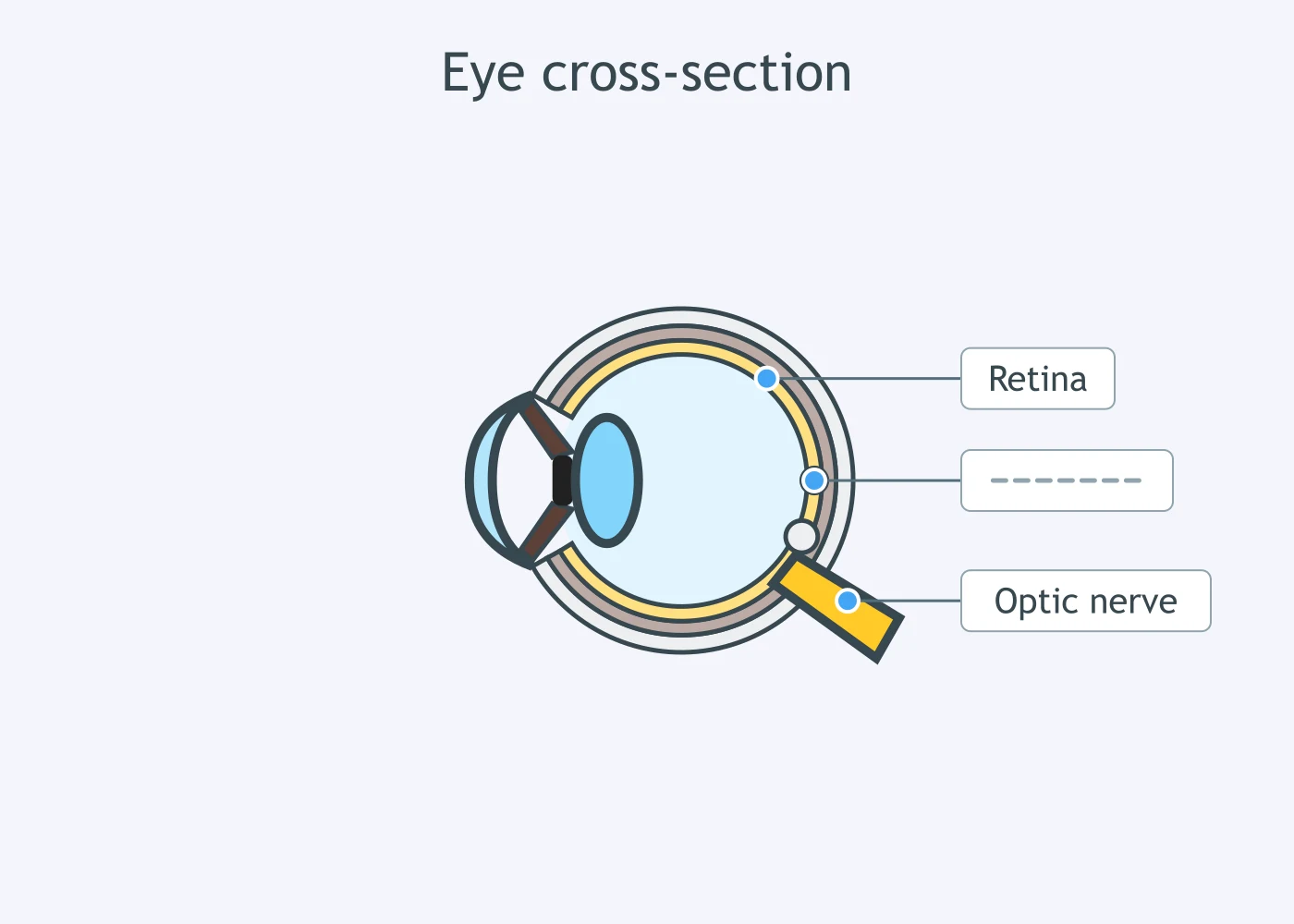
In the eye cross-section, light first passes through the clear outer structure marked [blank]. It is the
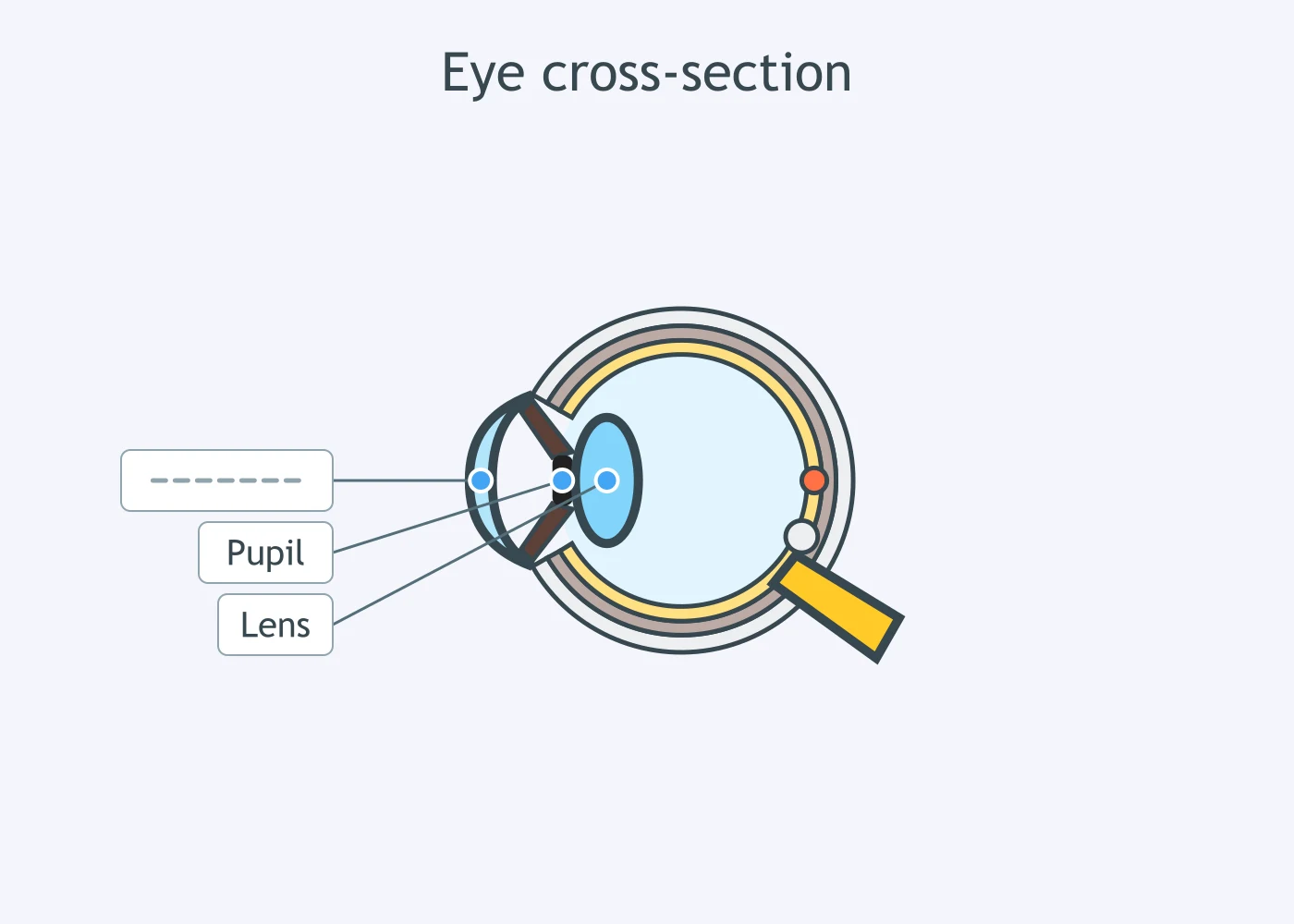
In the eye cross-section, the colored ring marked [blank] controls how large the pupil is. It is the
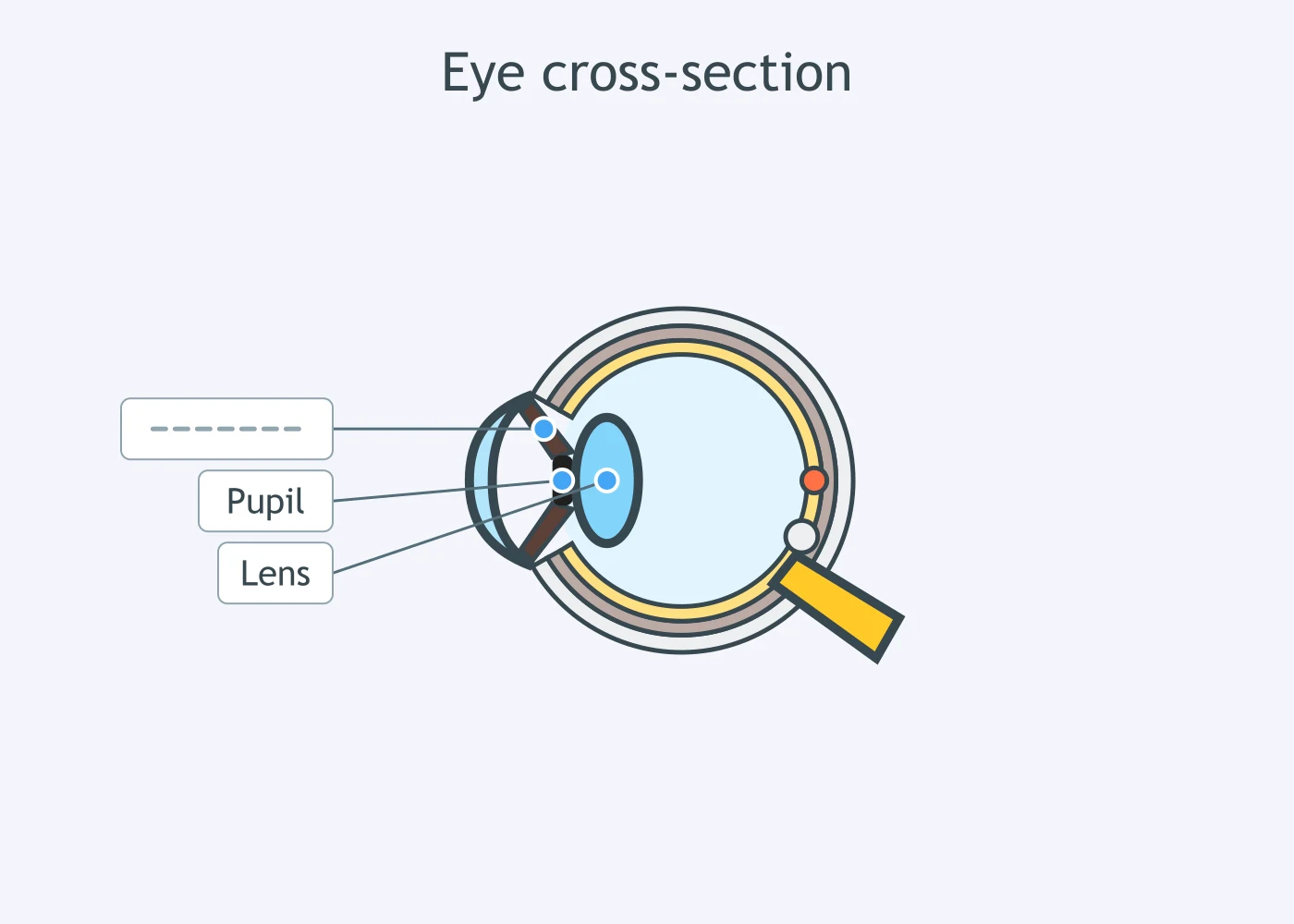
In the eye cross-section, the dark opening marked [blank] is the hole that light passes through. It is the
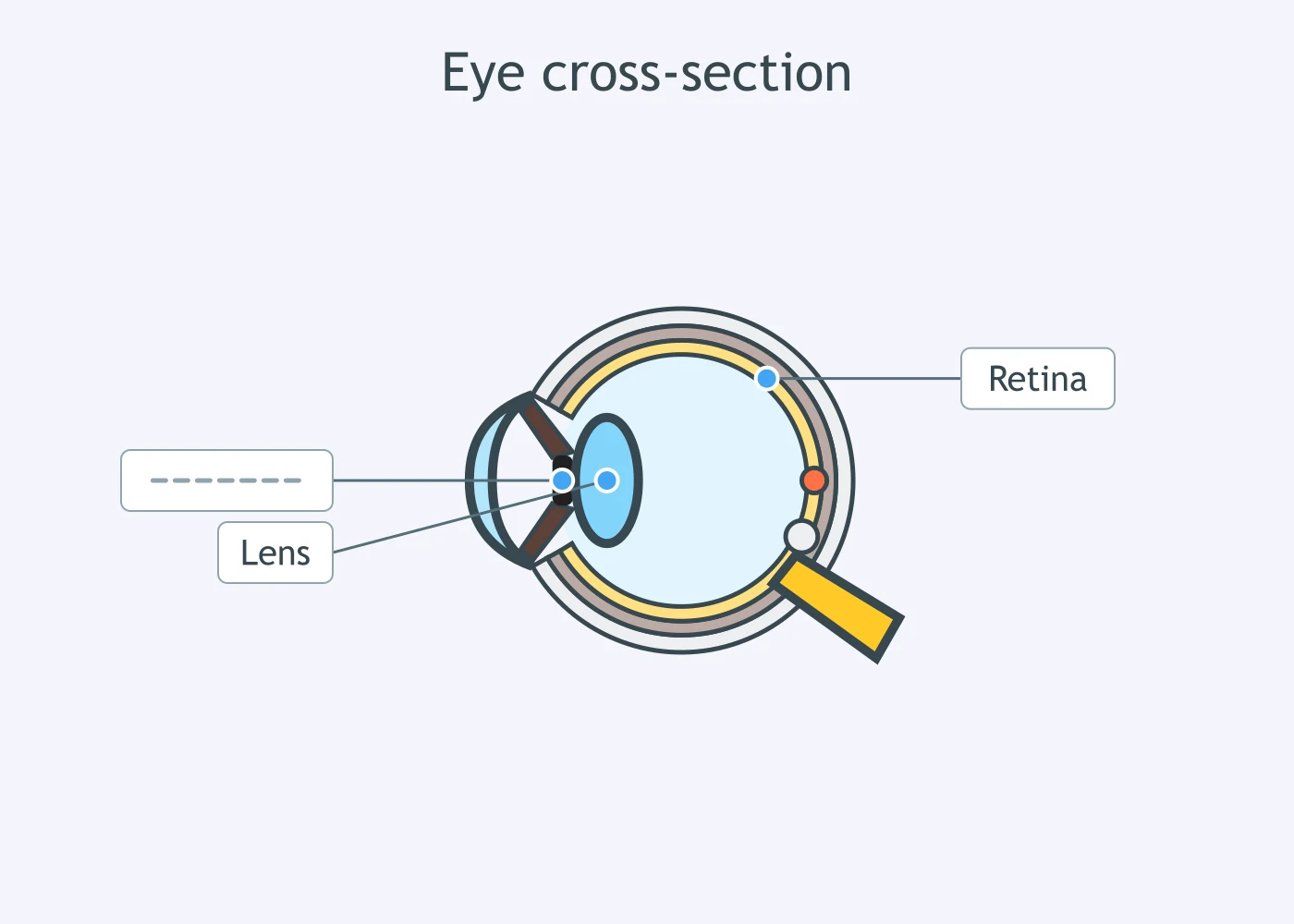
In the eye cross-section, the clear structure marked [blank] sits behind the pupil and changes shape to focus light. It is the
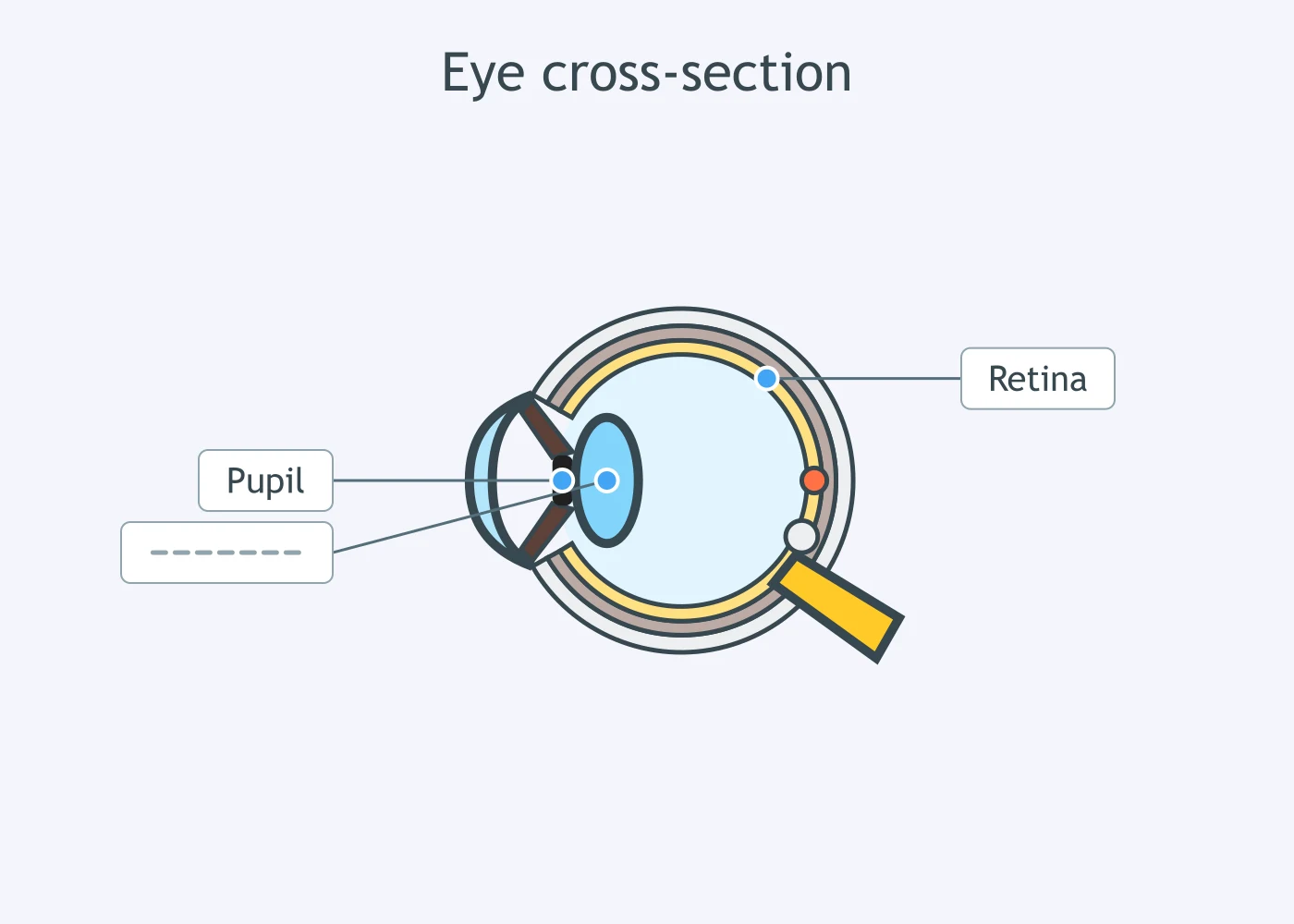
In the eye cross-section, the light-sensitive inner lining marked [blank] contains rods and cones. It is the
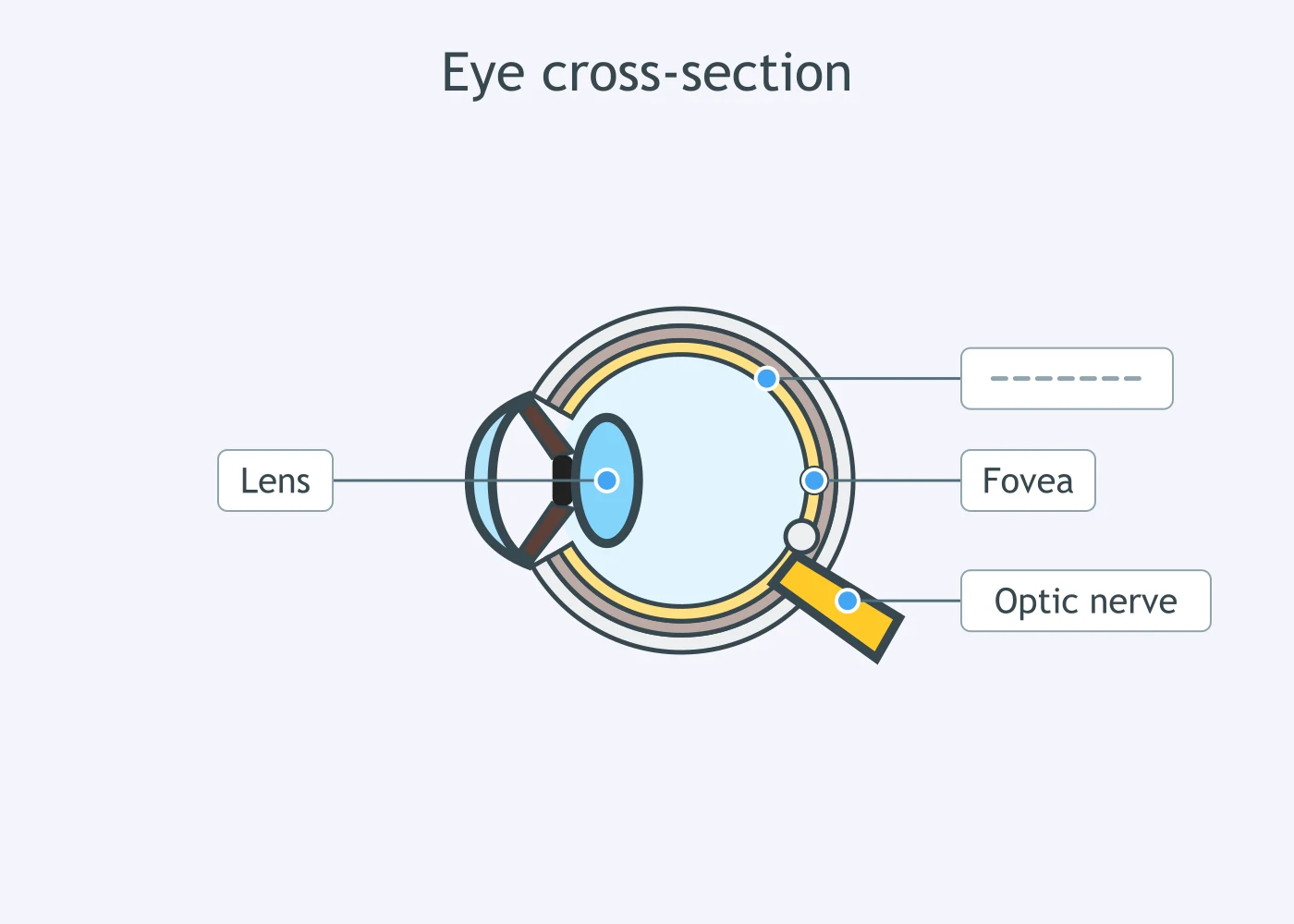
In the eye cross-section, the bundle marked [blank] carries visual signals from the retina toward the brain. It is the
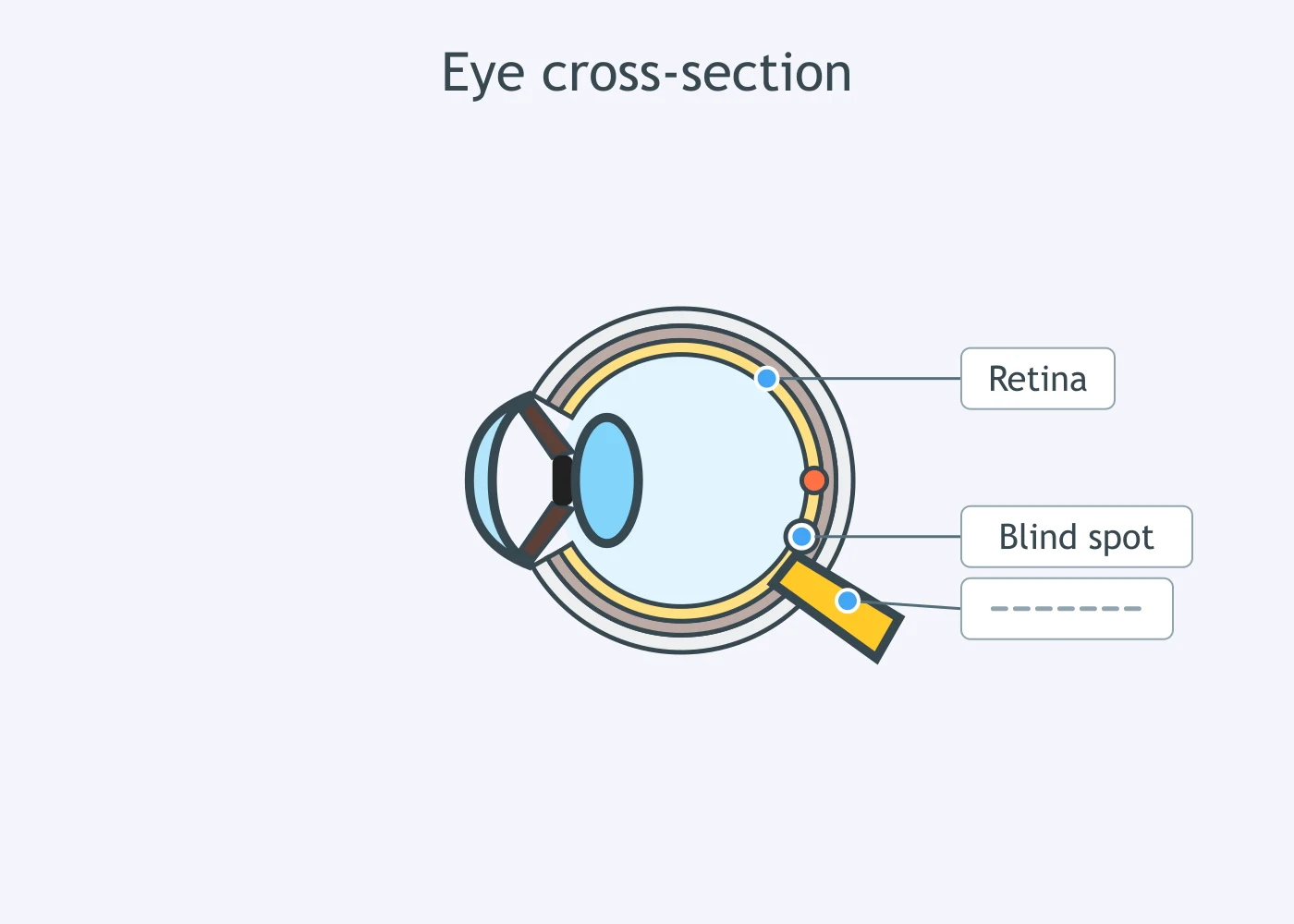
In the simplified light path shown, which structure belongs in the blank step right after the cornea?
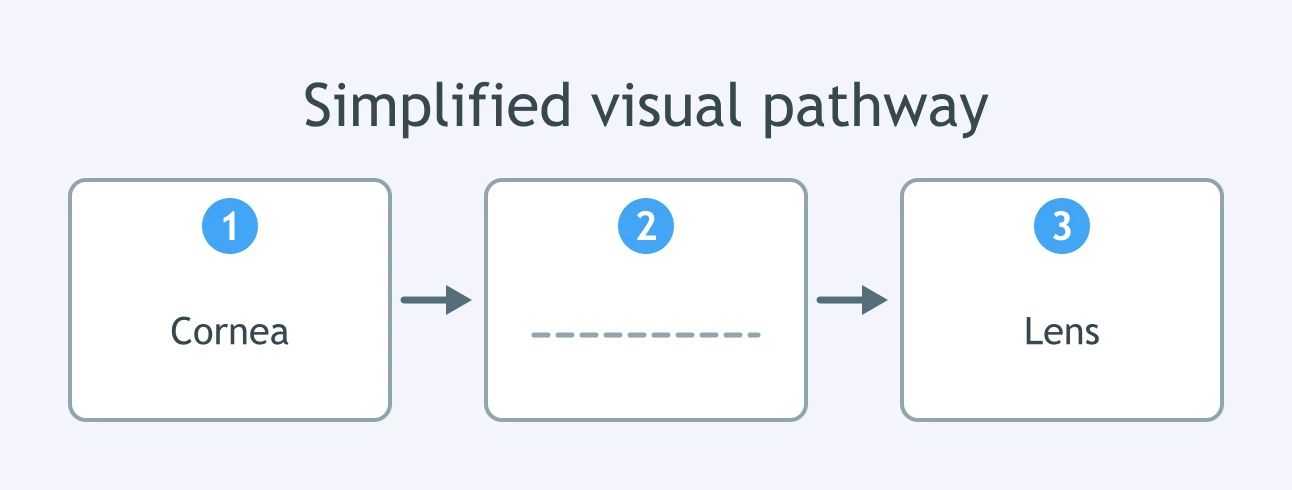
In the simplified light path shown, what does light strike after passing through the lens?
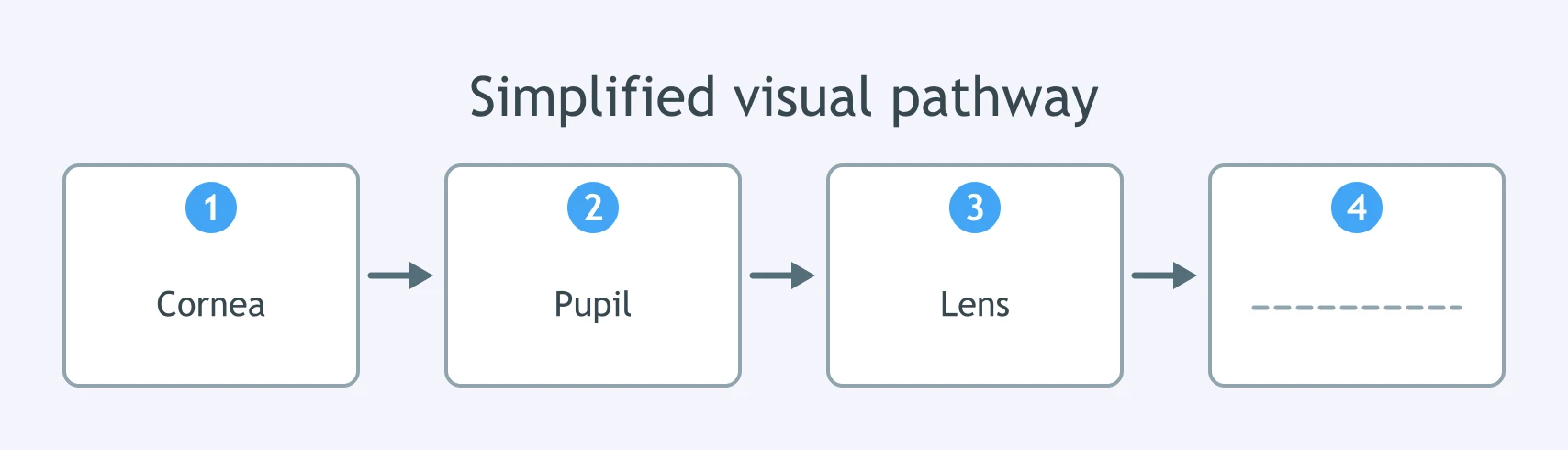
In the simplified visual pathway that begins at the cornea, which structure comes last?
Which eye structure changes shape so near and far objects can be focused on the retina?
Which photoreceptors are most useful for dim light and peripheral vision but do not detect color well?
Which photoreceptors support color vision and sharp detail in bright light?
Which area of the retina has no rods or cones because the optic nerve exits there?
Which eye part is the adjustable opening that lets light into the eye?
Which structure transduces light into neural signals by using rods and cones?
Staring at a bright green shape and then looking at white paper produces a red afterimage. Which theory best explains this?
A model says color vision begins with three cone types sensitive to short, medium, and long wavelengths. Which theory is this?
A screen makes yellow by combining red and green light, and the viewer's cone responses produce the color experience. Which theory fits best?
A student says people do not see reddish green because red and green signals work as opposing pairs. Which theory is the student using?
In a color-matching task, any visible hue can be matched by mixing three selected lights. Which theory does this result support?
A visual cell is excited by red light but inhibited by green light. Which theory best explains that pattern?
A man easily sorts blue and yellow beads but often confuses red and green beads. At the receptor level, what best explains this?
A driver sees road signs in color during the day but mostly gray shapes on a dark road at night. Which receptor change explains this?
A rare condition leaves a person with no working cones. Which visual result would be most likely?
After staring at a red square, a student sees a greenish afterimage on a white wall. At the receptor level, what has happened?
A student has trouble distinguishing blue from yellow but not red from green. Which receptor problem best fits?
A faint star disappears when you look straight at it but appears in side vision. Why does that happen?
You close your left eye, stare at a dot, and slowly move the page until an X to the dot's right vanishes. Where on the retina is the X's image landing?
A student reads tiny letters best when looking directly at them. Which retinal layout explains this sharp central vision?
Crack the passcode before the zombies get in.
Answer, then swat bugs for bonus points.
Race through questions at your own speed.
Same question on every screen. Fastest wins.

Pick a tile, answer, hit bonuses and steals.
Gestalt Principles and Depth Perception
30 questions