Loading
by BlastRoom
Introductory questions on spring and pendulum oscillations, period, frequency, and restoring motion.
#physics

30 questions
One question set, multiple game modes. Tap any game to see it in action. Not sure which to pick?
Answer to place stones and capture territory.
Outrun the snow together.
Earn blasts, then hunt the other team.
Answer to earn energy, then climb.

The class blasts through walls together.
Bid on mystery lots. Most money wins.
Sell tours. Nice, standard, or a total scam.

Answer, restock, and serve the rush.
More correct answers pulls the rope your way.
Answer, then shoot down the alien wave.
Answer, then tap to leap the frozen ridge.
Use the displacement-time graph. What is the period of the oscillation?
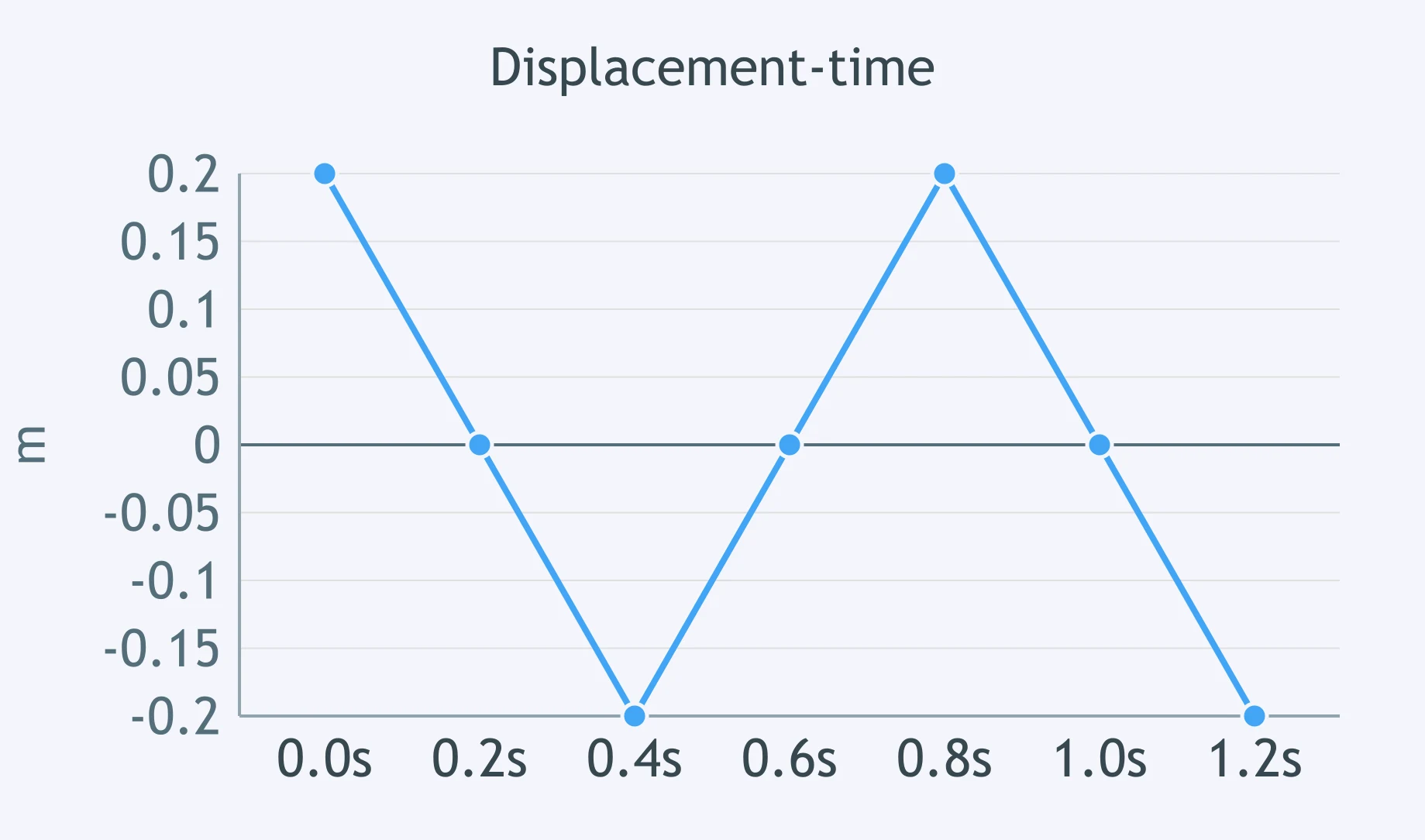
Use the displacement-time graph. What is the amplitude of the oscillation?
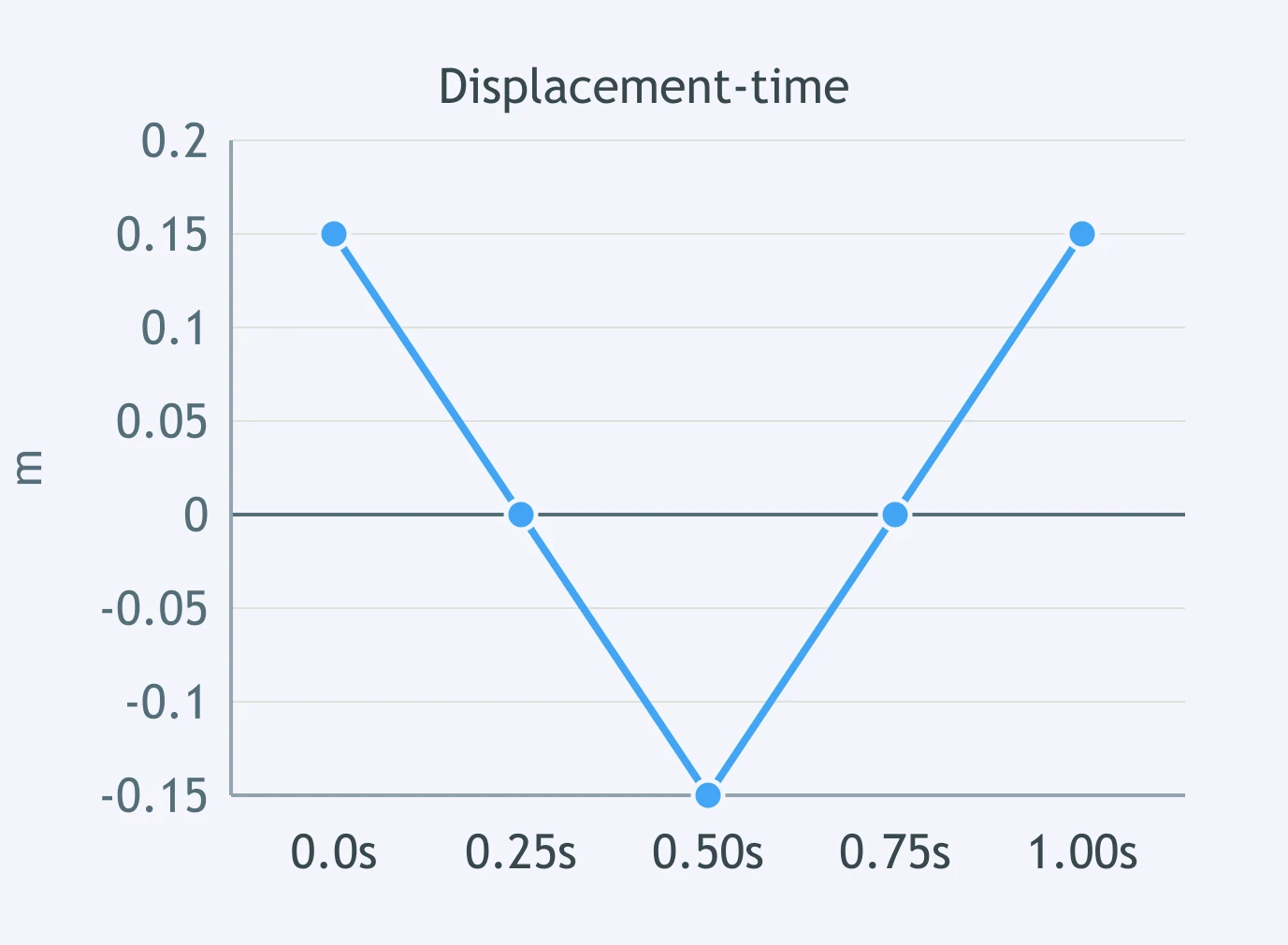
A mass on a spring is shown on the displacement-time graph. What is its period?
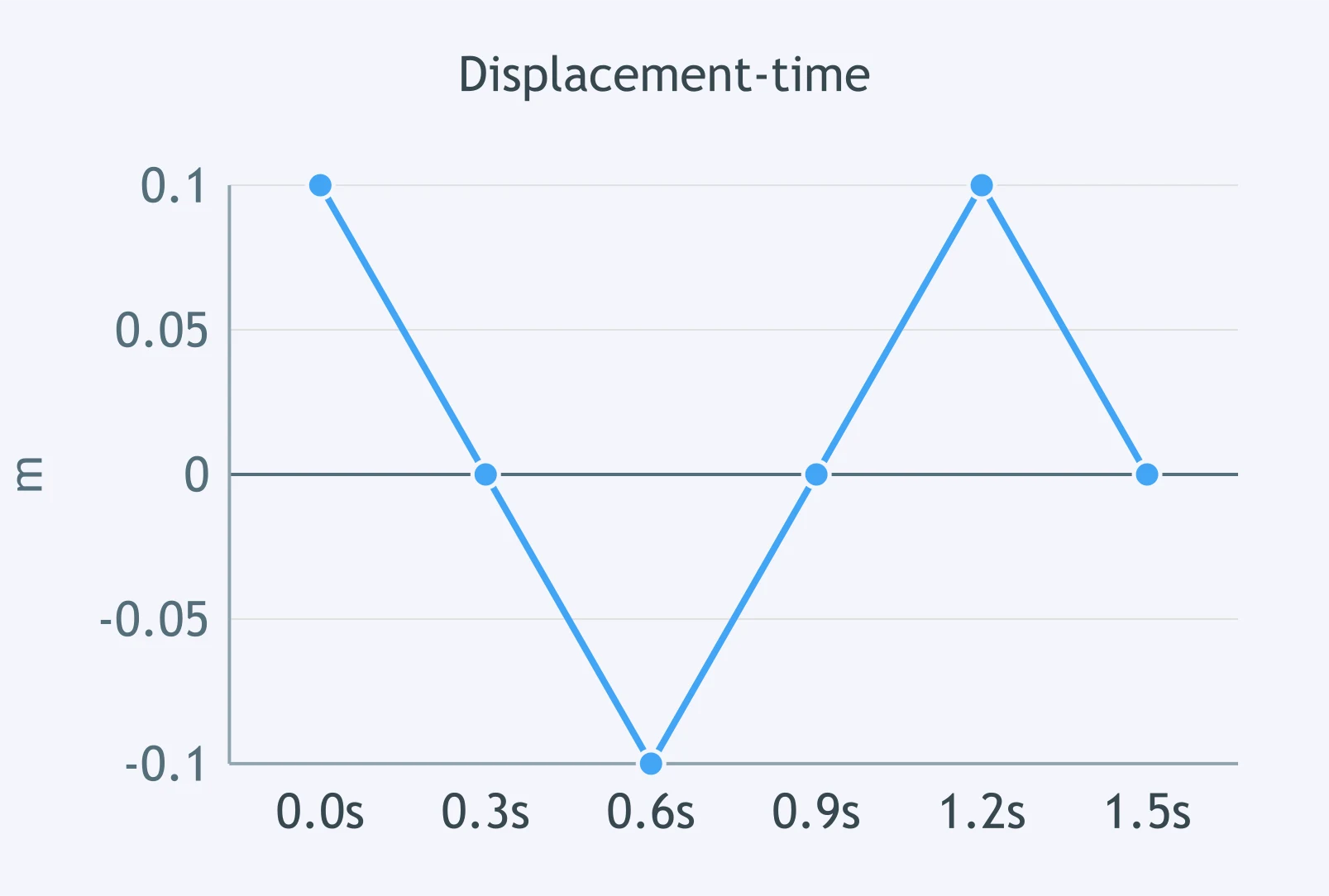
Read the displacement-time graph. What is the amplitude?
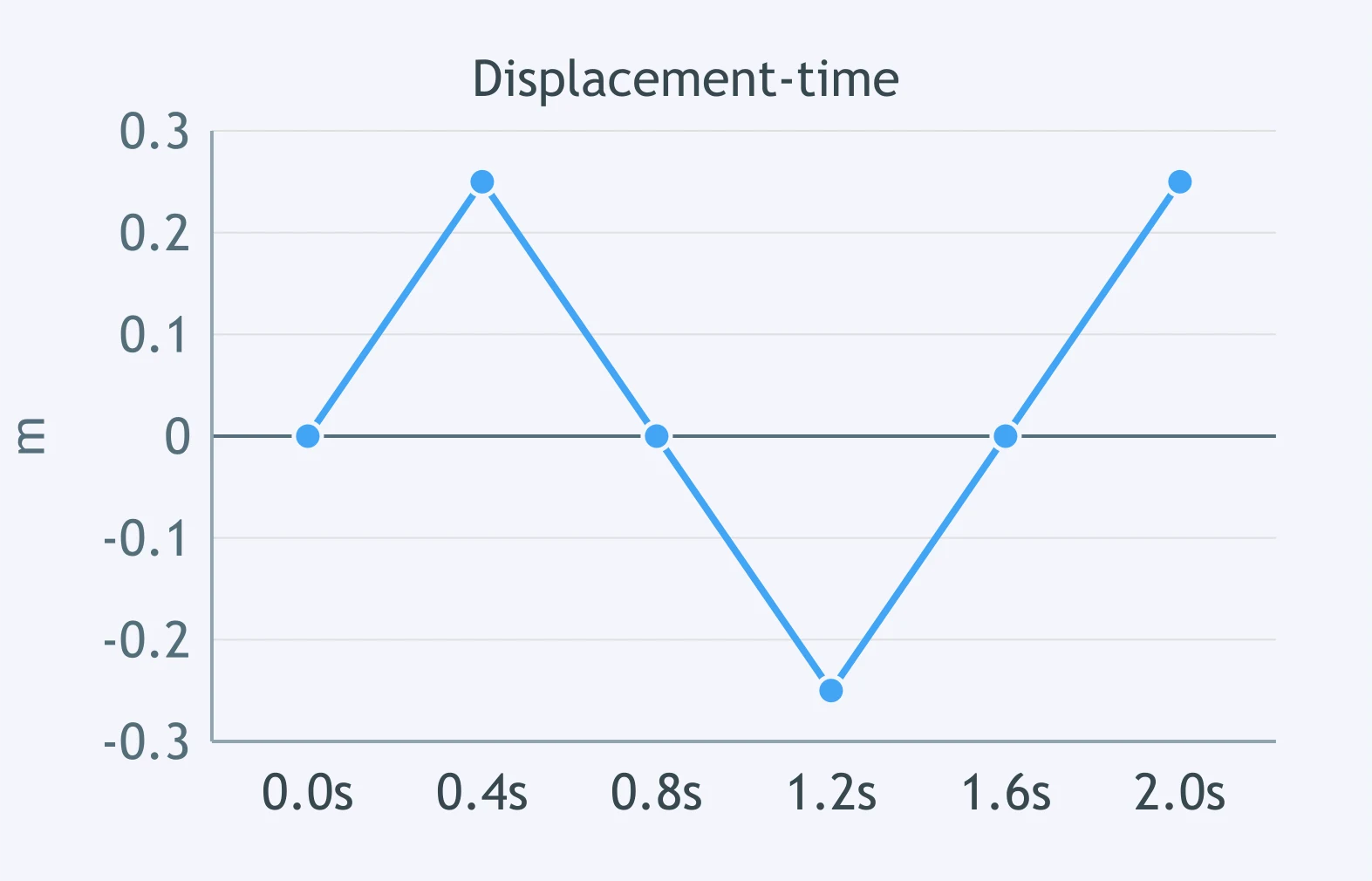
Use the graph of displacement versus time. What is the period of this oscillator?
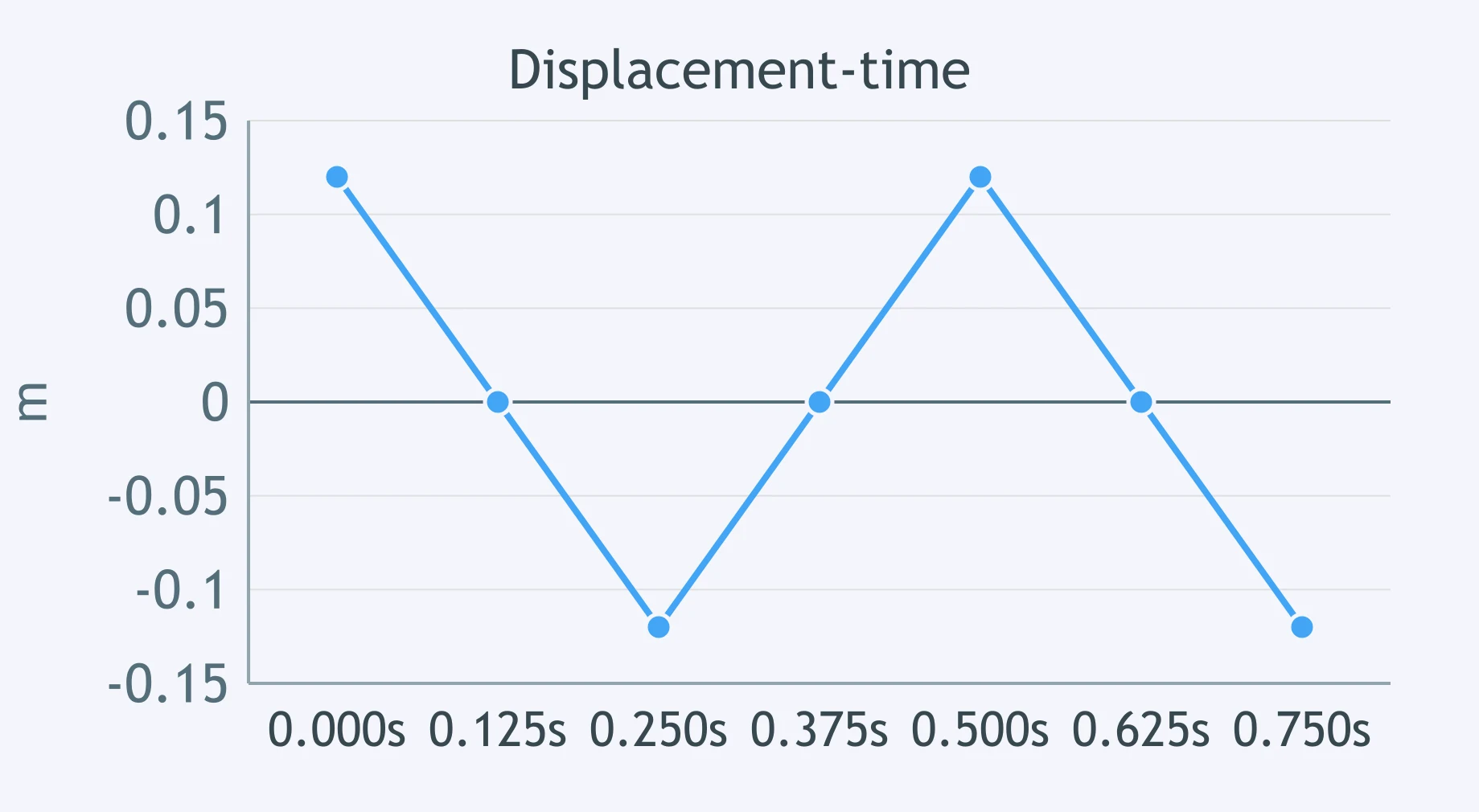
The graph shows the displacement of a pendulum bob. What is its amplitude?
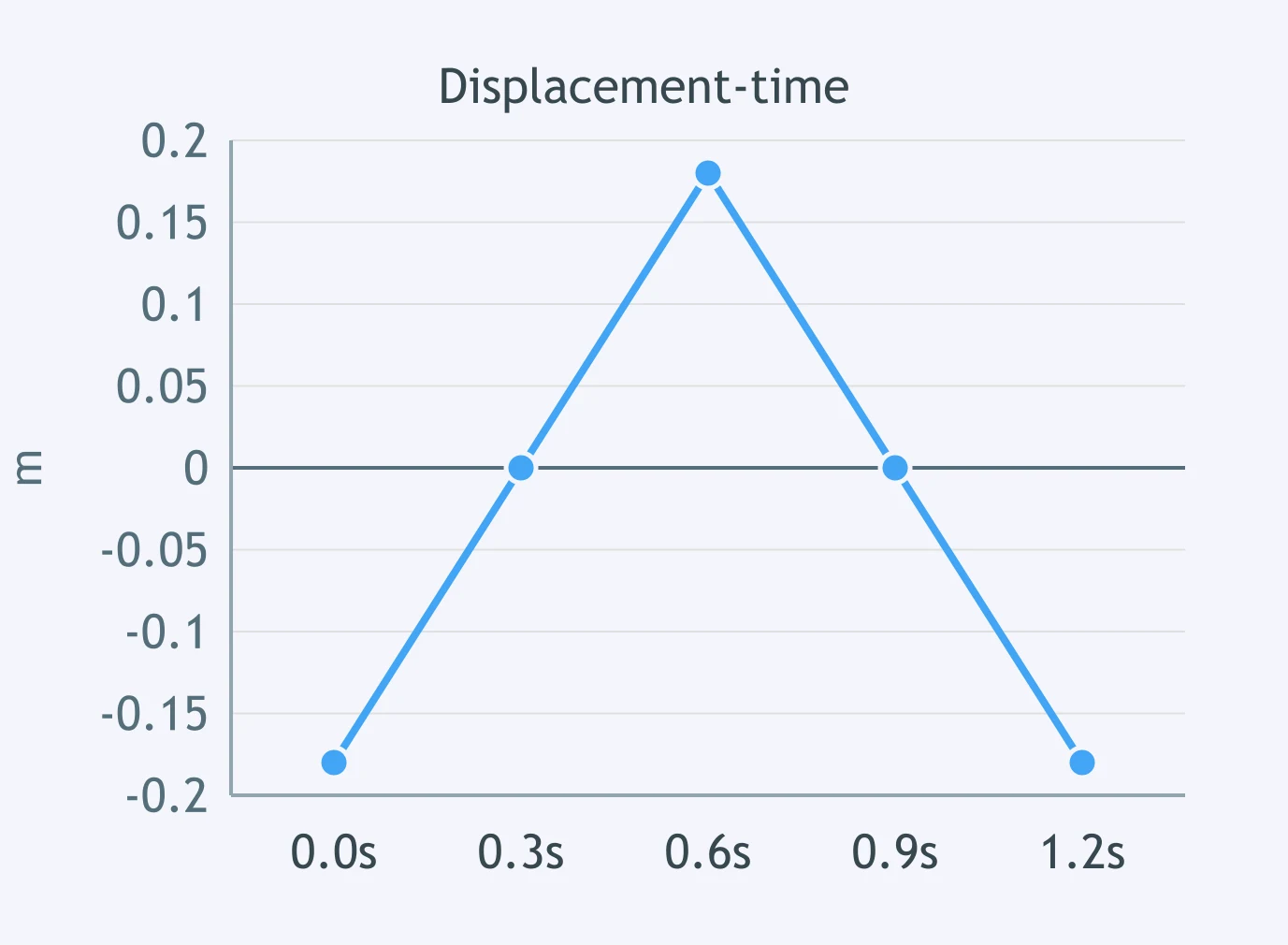
Use the displacement-time graph. What is the period of the motion?
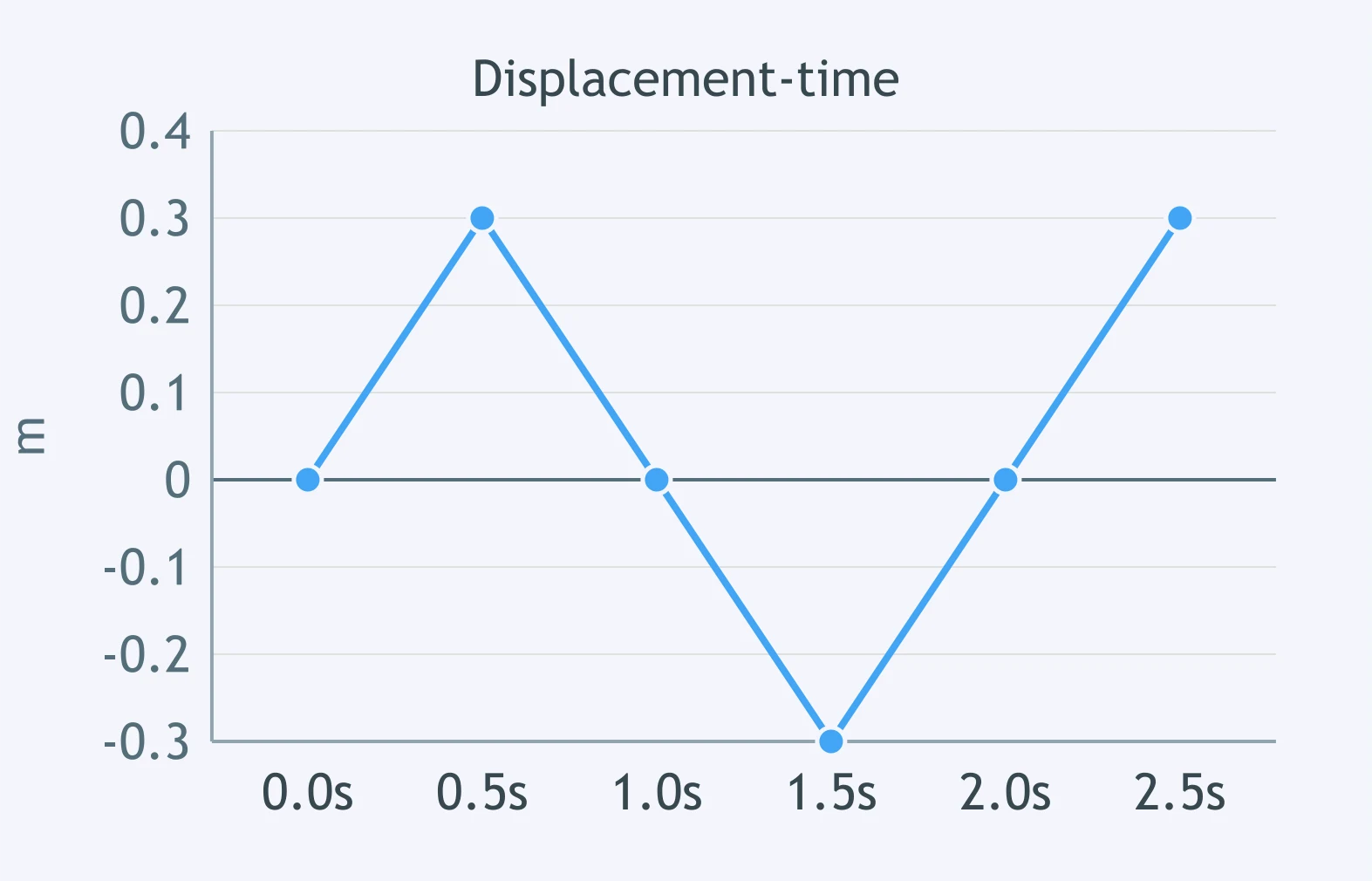
Read the graph. What is the amplitude of this simple harmonic motion?
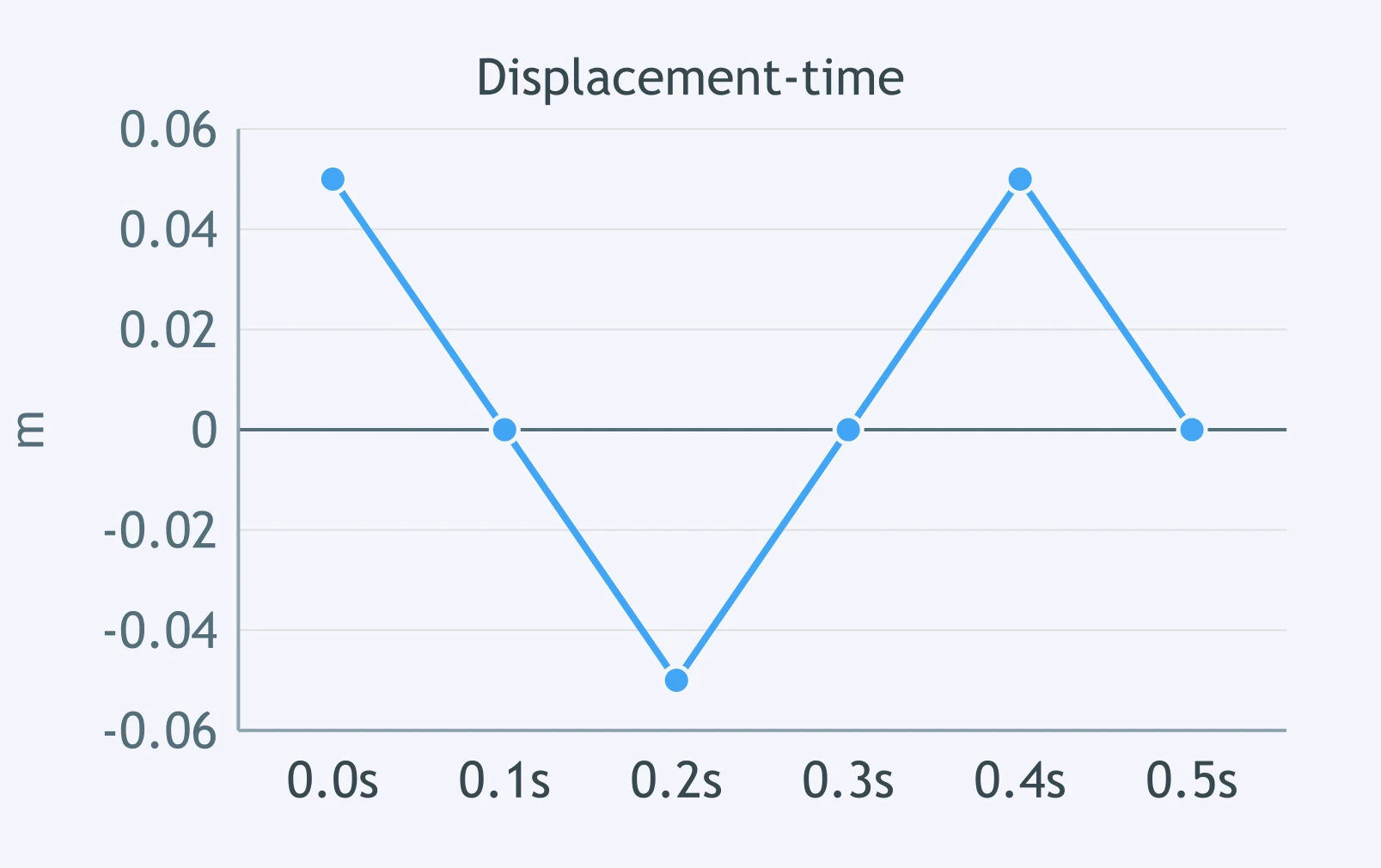
A spring oscillator's displacement-time graph is shown. What is its period?
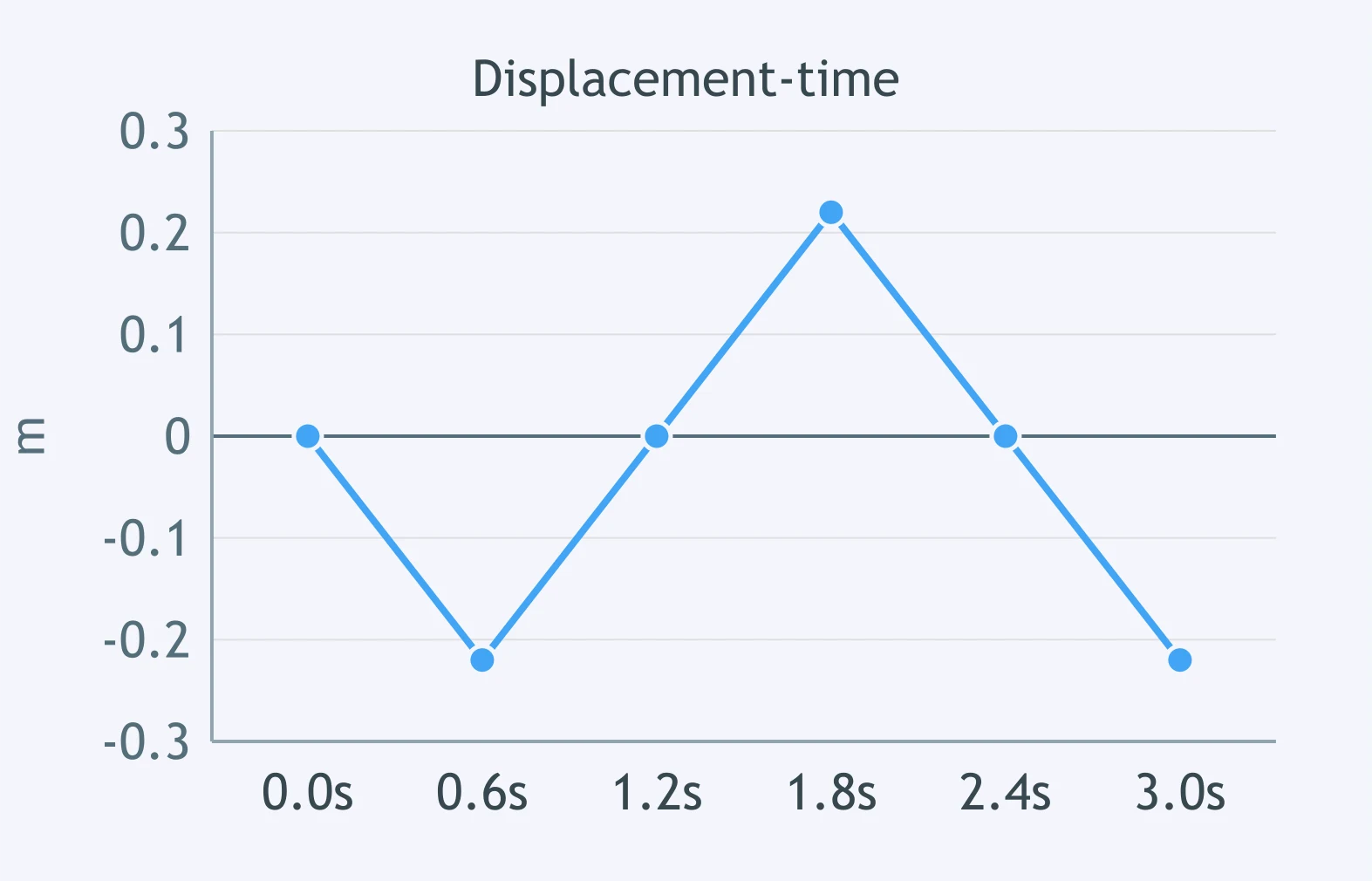
Use the displacement-time graph. What is the amplitude?
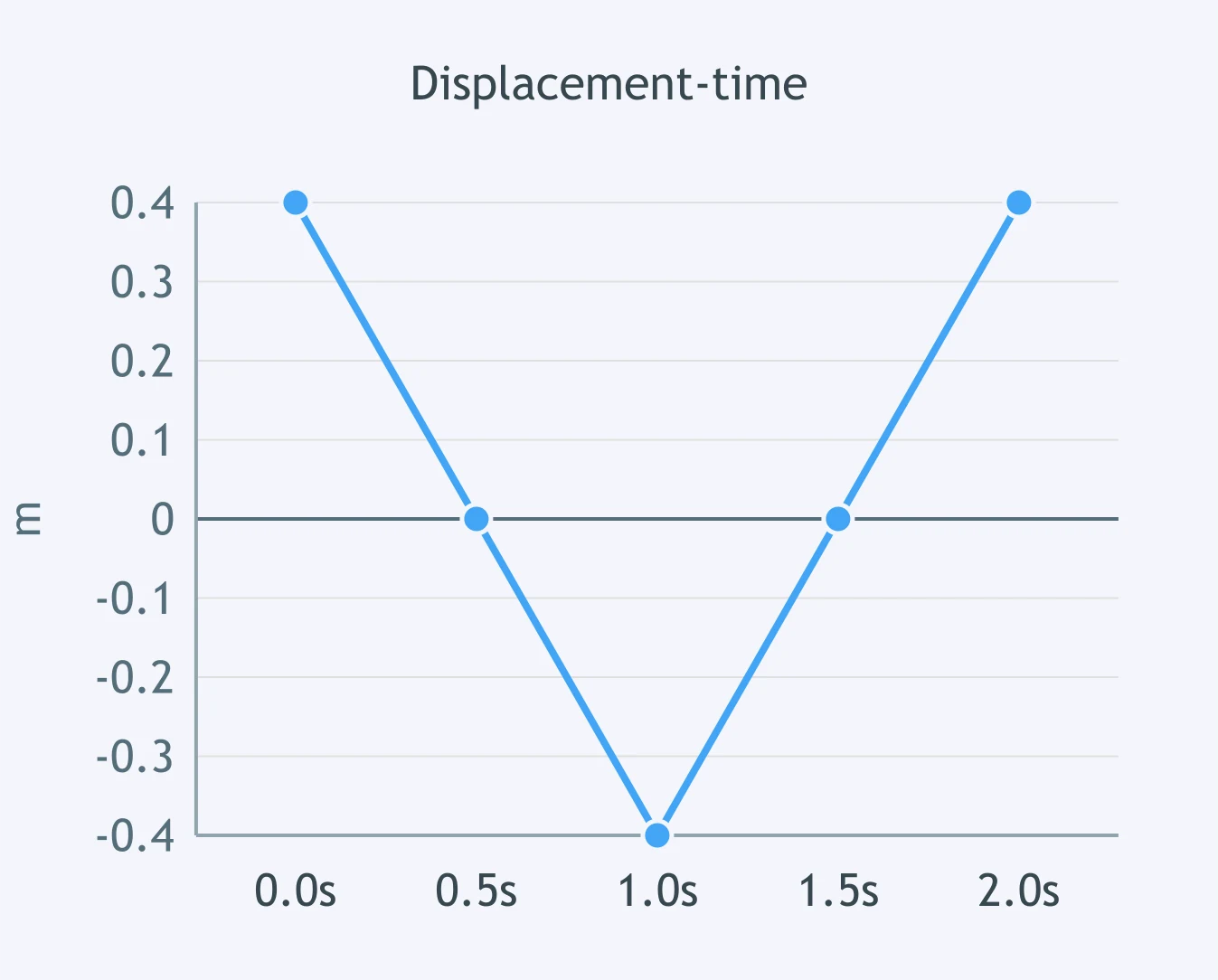
For a small-swing pendulum, which two quantities set its period?
For a mass oscillating on an ideal spring, which two quantities set its period?
A pendulum bob is replaced by a heavier bob, but the string length and small starting angle stay the same. What happens to the period?
A cart oscillates on two springs in separate trials with the same mass and amplitude. The second spring has a larger spring constant k. What changes?
A small-swing pendulum is made longer while it stays in the same room. How does its period change?
A mass on a spring is pulled to a larger starting displacement, but the same mass and spring are used. For ideal SHM, what happens to the period?
A pendulum with the same length is taken to a planet where g is smaller than on Earth. What happens to its small-swing period?
A spring oscillator uses the same spring and starting amplitude, but the attached mass is increased. What happens to the period?
A pendulum has length 0.45 m and a small swing. For a pendulum, . Take g = 9.8 m/s². What is its period?
A 0.50 kg cart oscillates on a spring with k = 200 N/m. For a spring, . What is the period?
A pendulum has length 2.45 m. For small swings, , g = 9.8 m/s², and f = 1/T. What is its frequency?
A 0.20 kg mass oscillates on a spring with k = 80 N/m. For a spring, and f = 1/T. What is its frequency?
A small-swing pendulum is 0.80 m long. Use with g = 9.8 m/s². What is its period?
A 2.0 kg mass oscillates on a spring with k = 50 N/m. Use . What is the period?
A 0.25 kg mass is attached to a spring with k = 25 N/m. Use and f = 1/T. What is its frequency?
A cart on a spring moves between x = -0.30 m and x = +0.30 m, with positive x to the right. At x = +0.30 m, what are its speed and acceleration?
A spring oscillator has equilibrium at x = 0 and positive x to the right. As the mass passes x = 0 moving right, what are its speed and restoring force?
A pendulum swings with positive displacement to the right of center. At the leftmost point of a small swing, what are its speed and acceleration?
A cart on a spring moves between ±0.30 m, with positive x to the right. At x = +0.10 m while moving left, which statement is correct?
A small-swing pendulum passes through the center position moving left, with positive displacement to the right. What are its speed and restoring acceleration then?
Crack the passcode before the zombies get in.
Answer, then swat bugs for bonus points.
Race through questions at your own speed.
Same question on every screen. Fastest wins.

Pick a tile, answer, hit bonuses and steals.
Transverse and Longitudinal Waves
40 questions