Loading
by BlastRoom
Trace major computing breakthroughs and the capabilities they enabled.
#computer_science
30 questions
One question set, multiple game modes. Tap any game to see it in action. Not sure which to pick?
Answer to place stones and capture territory.
Outrun the snow together.
Earn blasts, then hunt the other team.
Answer to earn energy, then climb.

The class blasts through walls together.
Bid on mystery lots. Most money wins.
Sell tours. Nice, standard, or a total scam.

Answer, restock, and serve the rush.
More correct answers pulls the rope your way.
Answer, then shoot down the alien wave.
Answer, then tap to leap the frozen ridge.
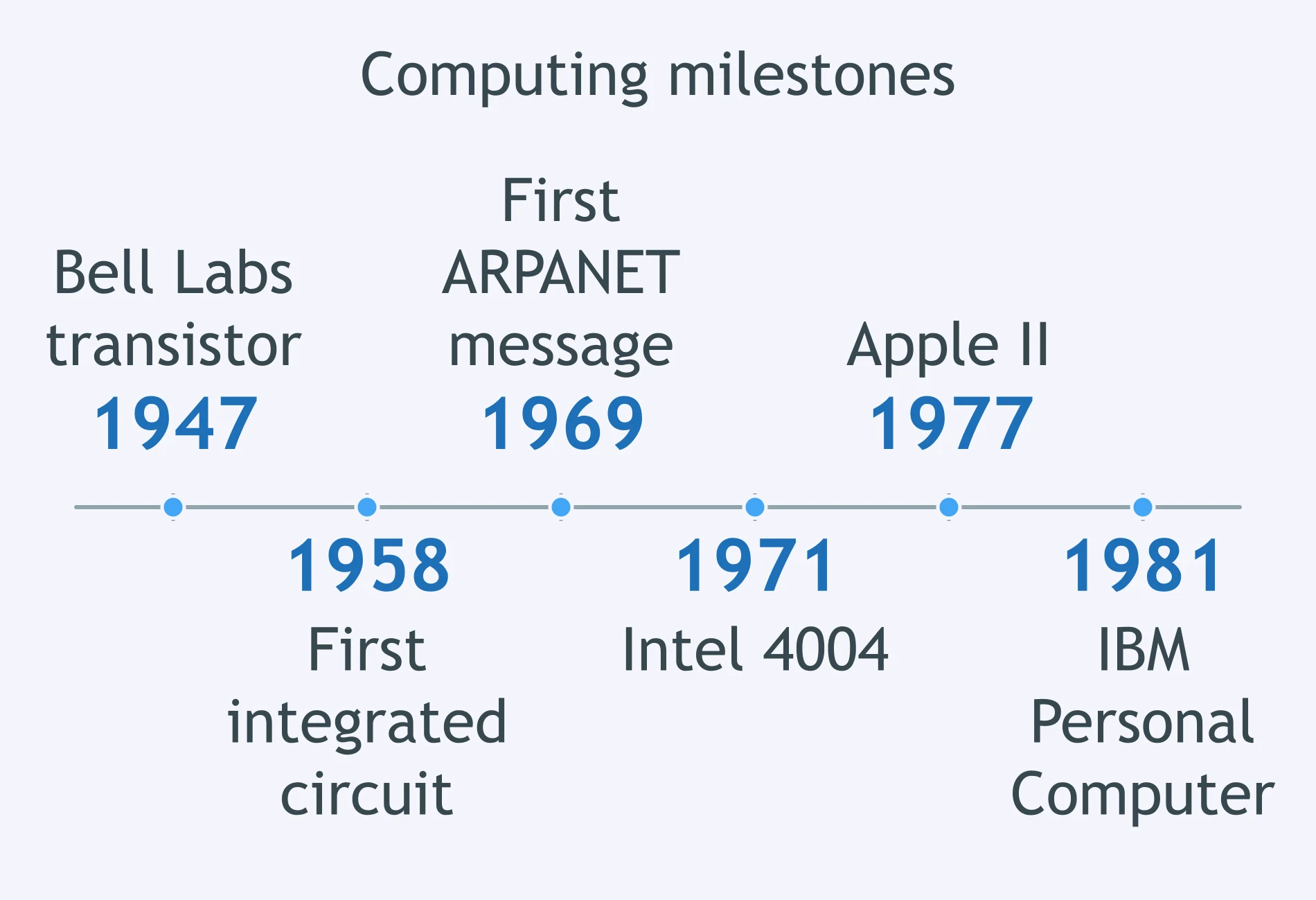
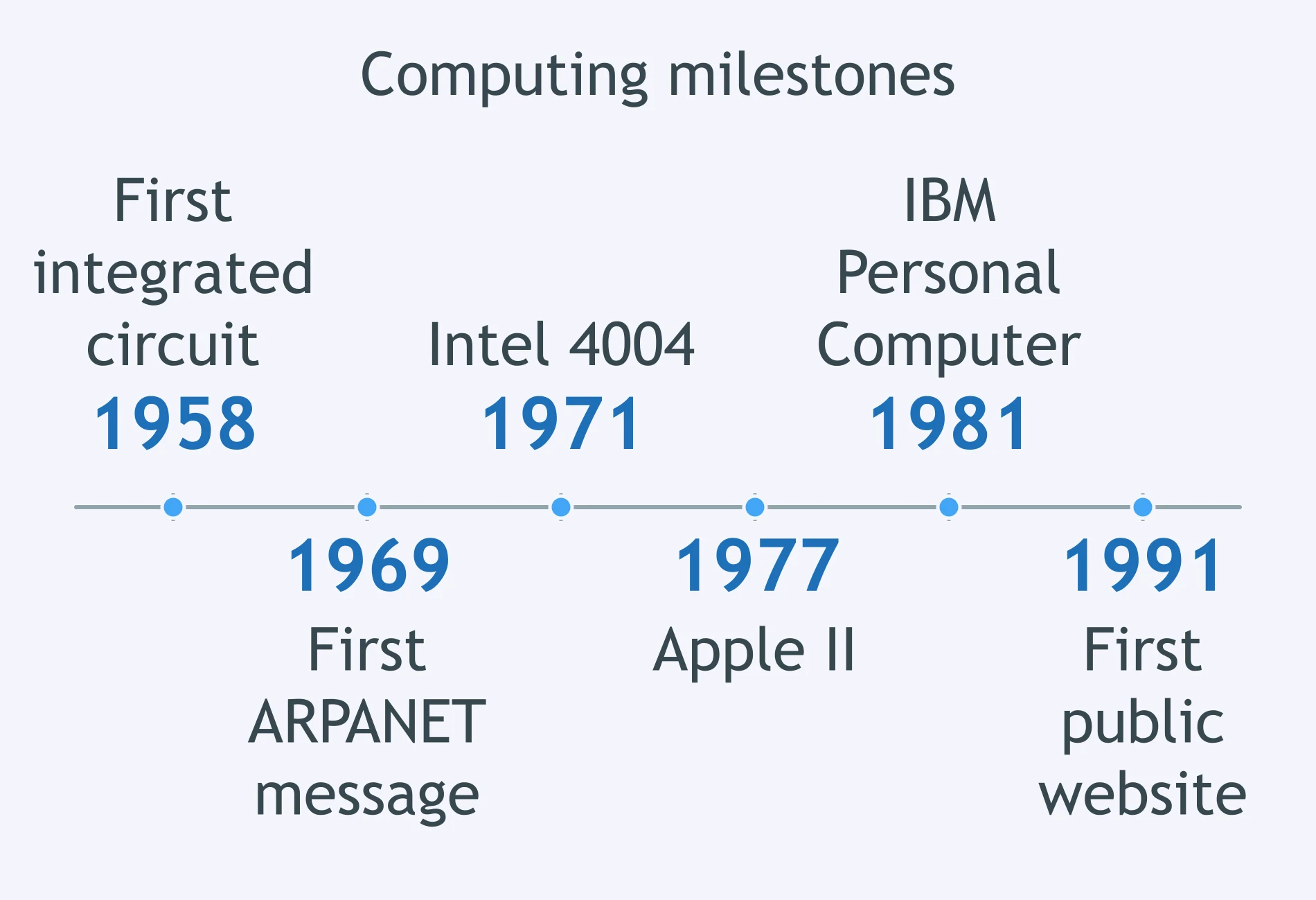
Every marker has the year of its milestone. How many years separate the first working transistor from the Intel 4004 microprocessor?
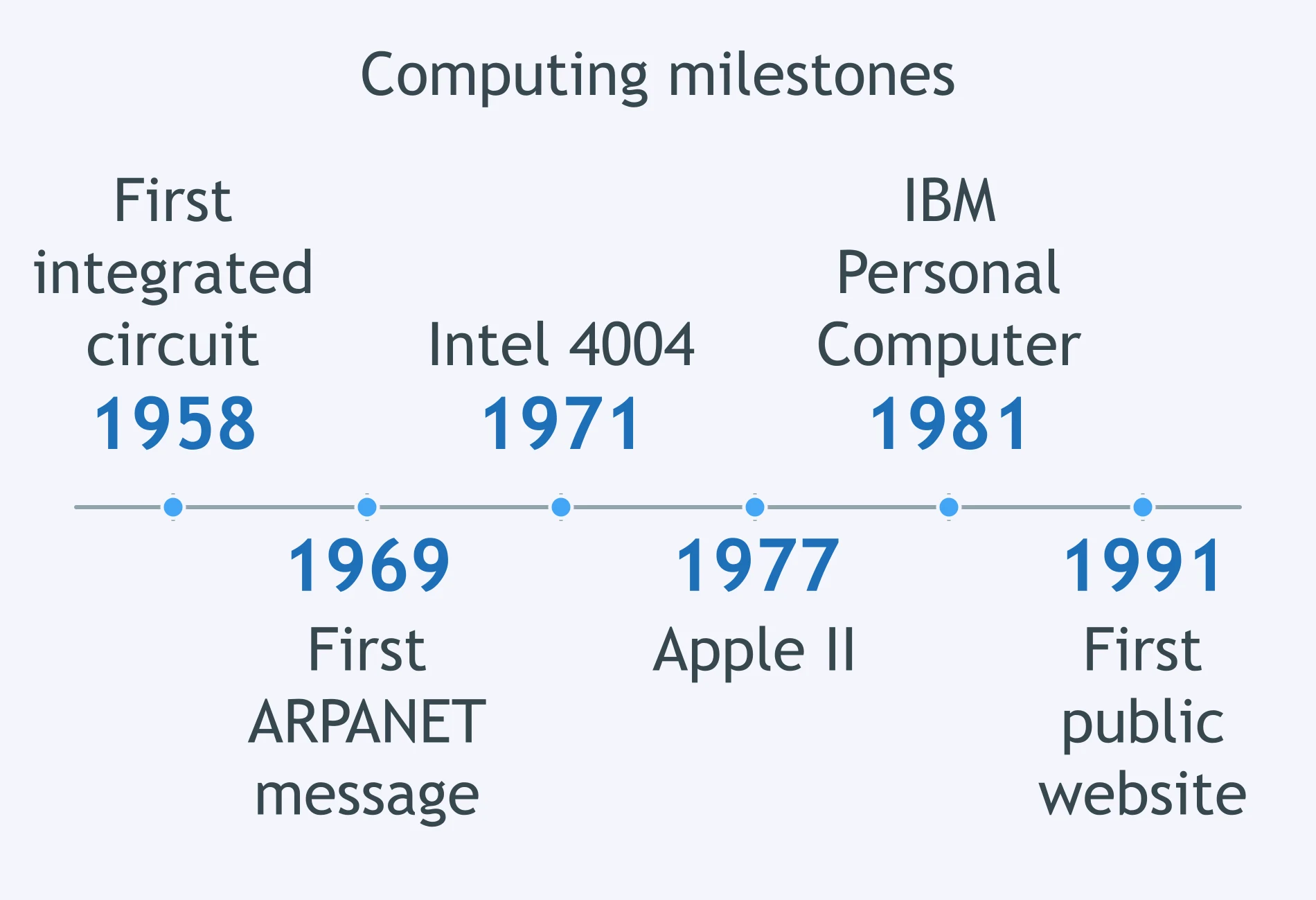
Use the years on the timeline. How many years separate the first integrated circuit from the first public website?
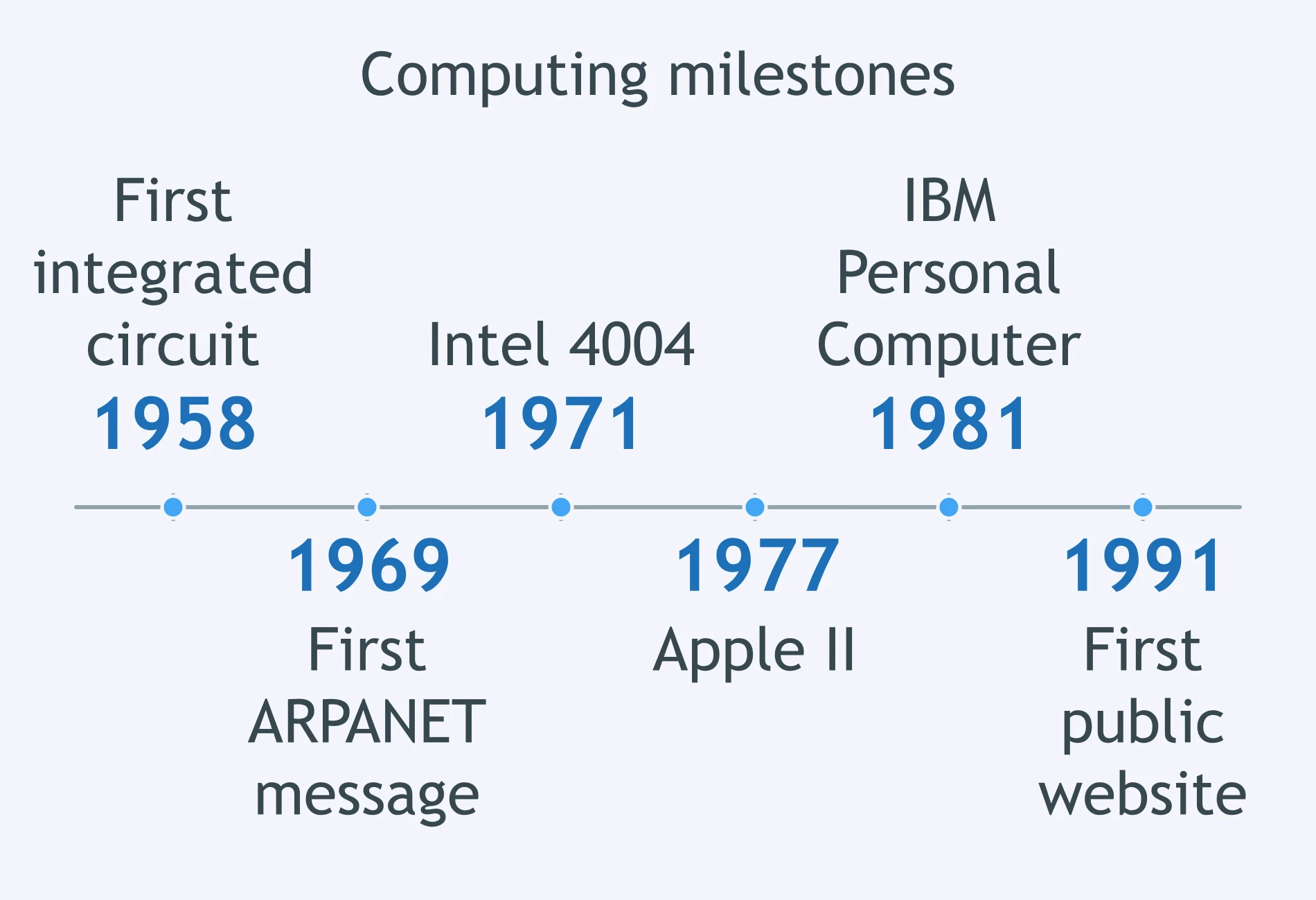
Read the timeline's dates. What interval separates the first ARPANET message and the Apple II?
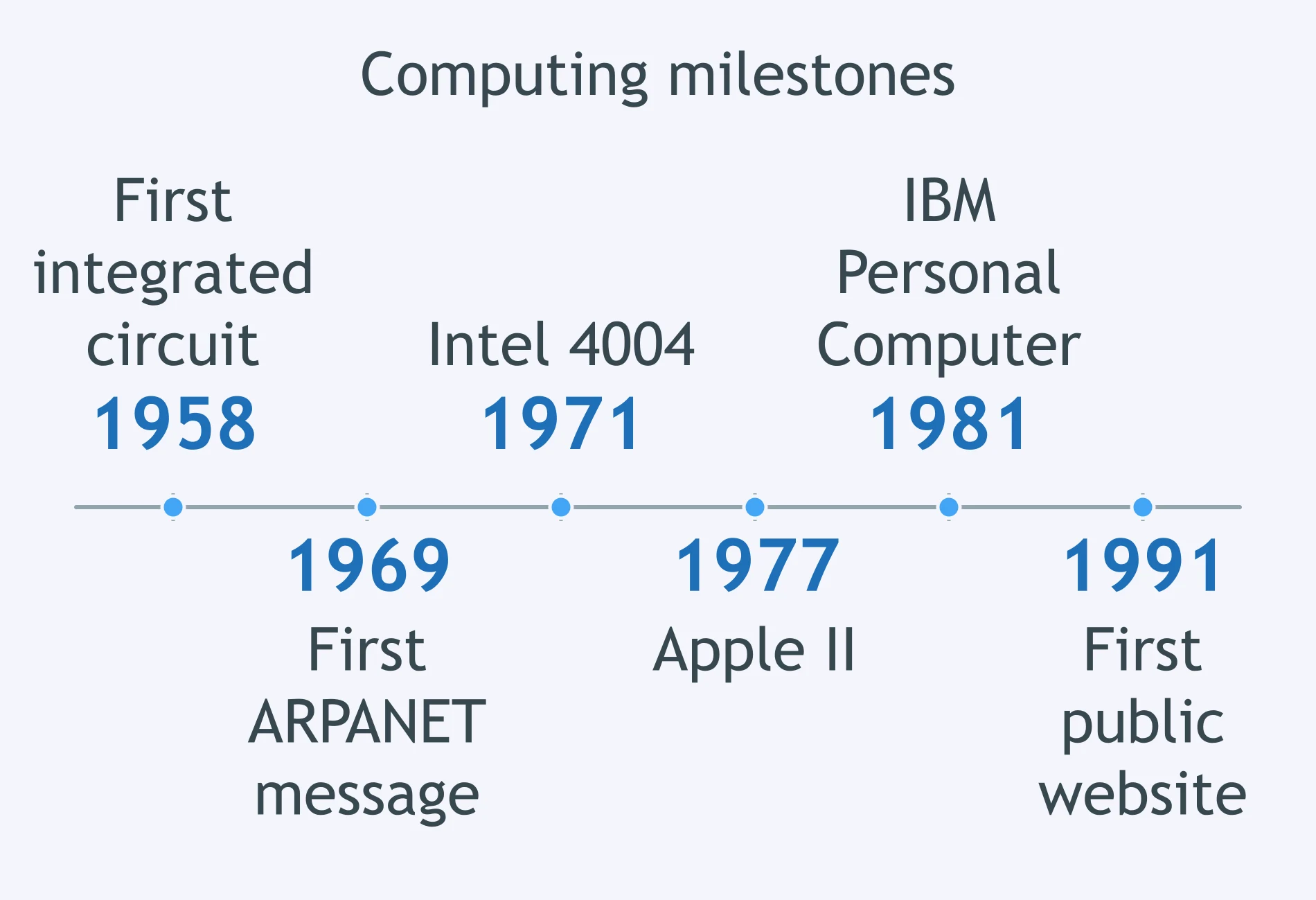
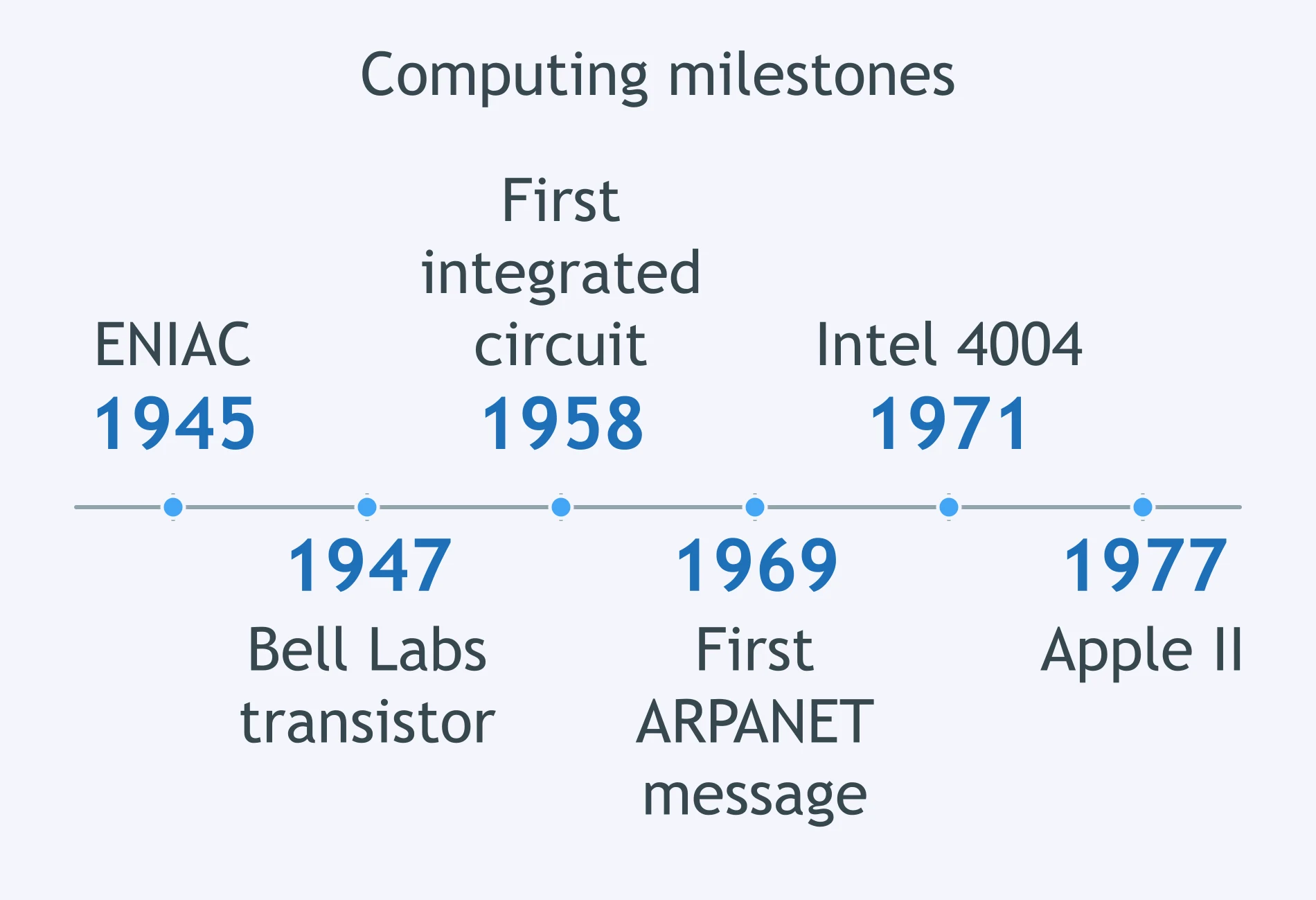
According to the dated markers, how many years came between ENIAC and the first integrated circuit?
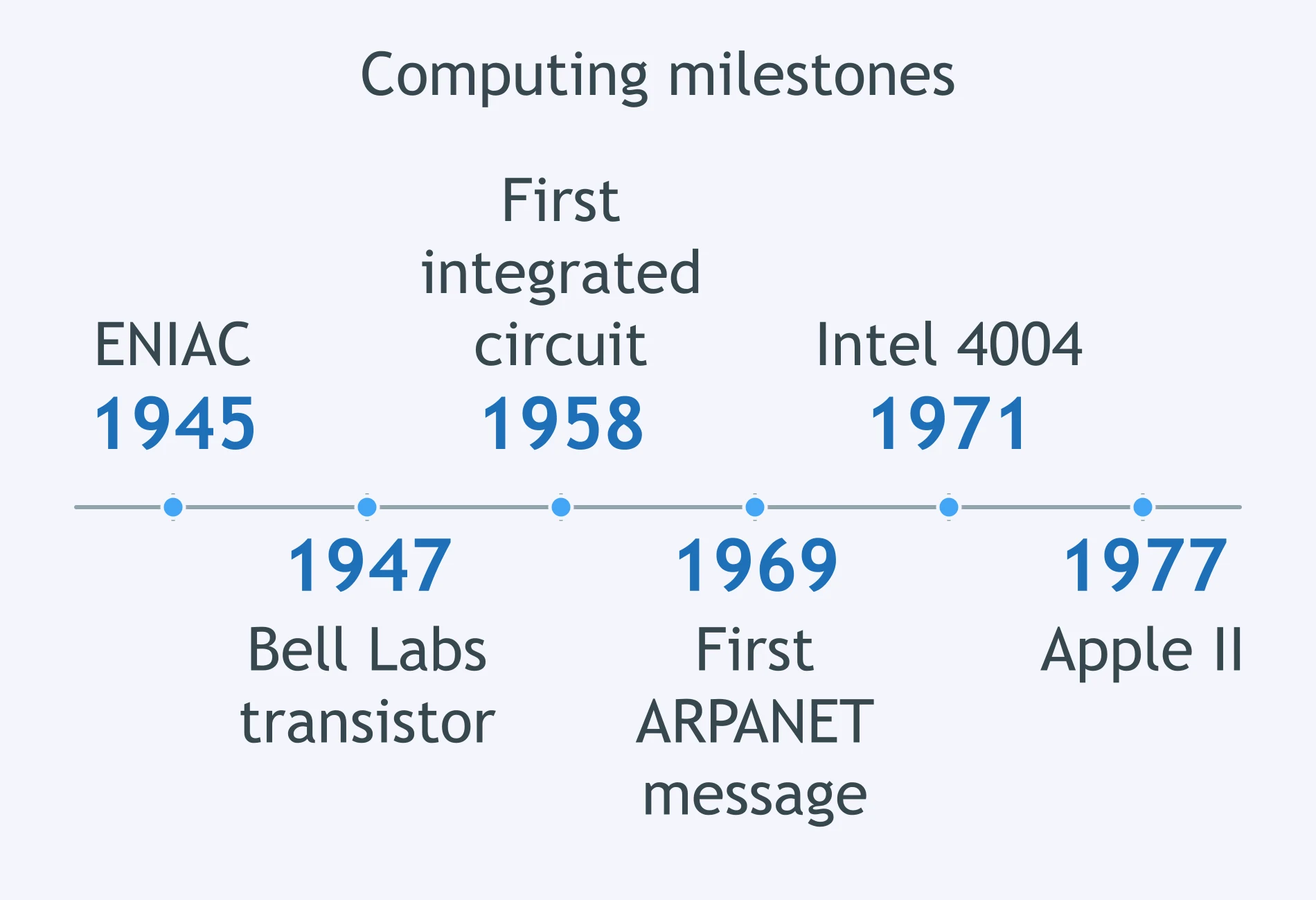
A card says, “The first message is sent between two ARPANET sites.” Between which two timeline markers should it go?
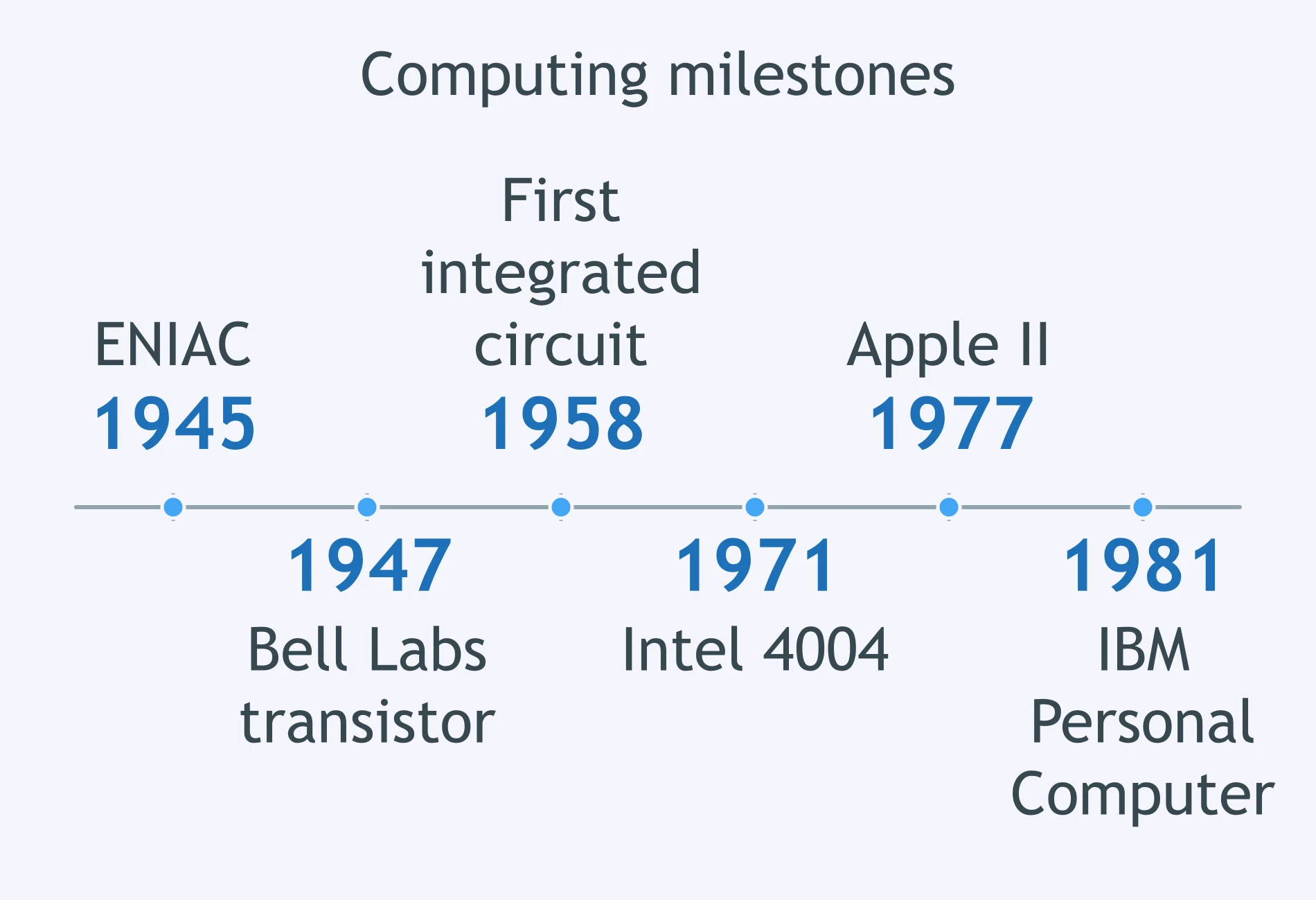
Where does a card for the Apple II belong on this timeline?
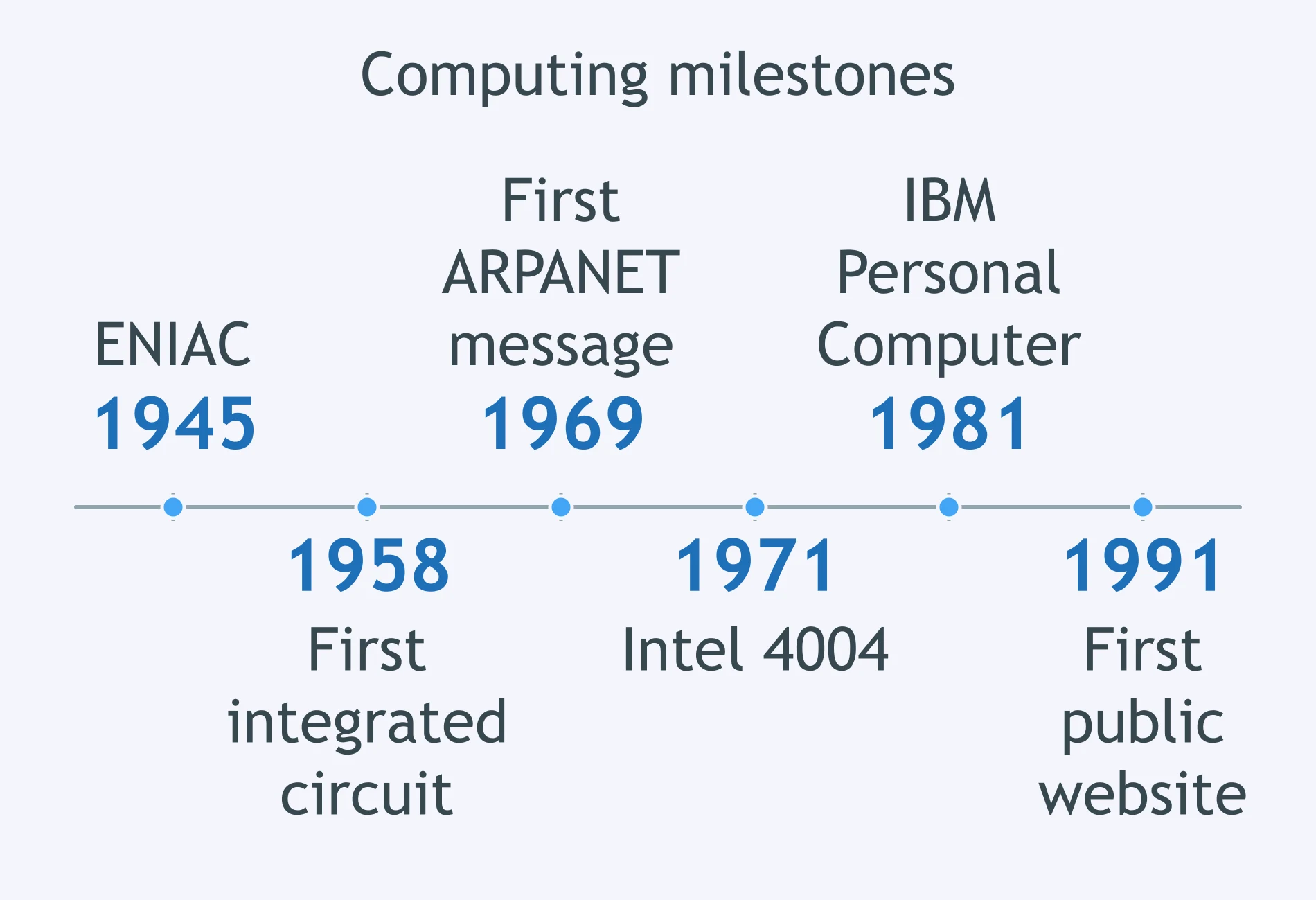
A card says, “The first working transistor is demonstrated.” Which two markers surround its position?
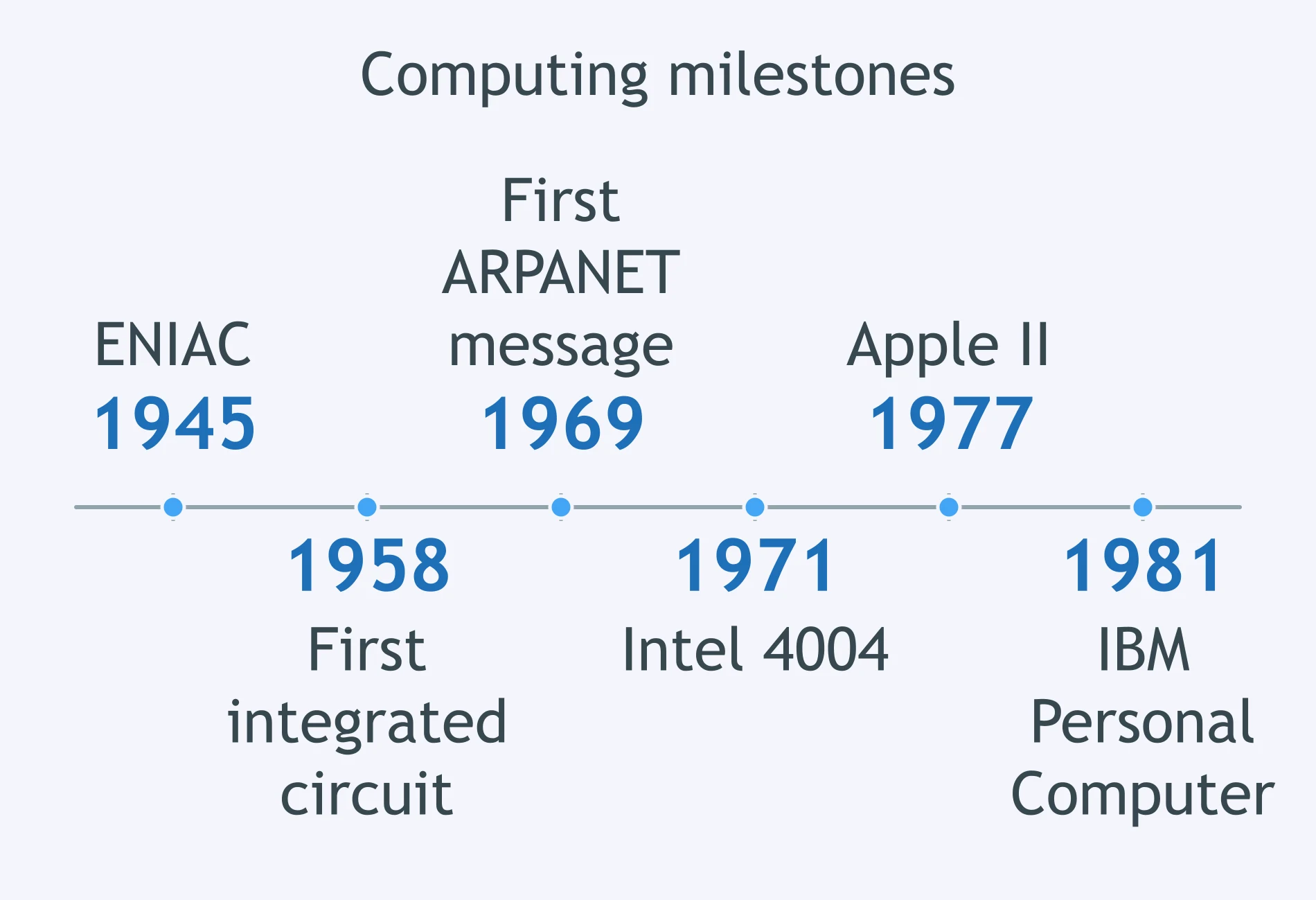
Which milestone is immediately before the Apple II on the timeline?
What milestone comes immediately after ENIAC on the timeline?
Which marker appears immediately after the IBM Personal Computer?
ENIAC was a large electronic computer completed in 1945. Why was it a major milestone?
What important change did the transistor make possible after its development at Bell Labs?
Why did the integrated circuit matter to computer hardware?
What did the first ARPANET message demonstrate?
The Intel 4004 put a complete central processing unit on one chip. What development did this help enable?
What did the first public website make possible for Internet users?
Put these events in order, earliest first: ENIAC, the first working transistor, and the first integrated circuit.
Which sequence is earliest to latest: the first integrated circuit, the Apple II, and the first public website?
Order these milestones from earliest to latest: the transistor, the Intel 4004, and the IBM Personal Computer.
Three networking and hardware milestones are listed: the first ARPANET message, the Intel 4004, and the Apple II. Which order is correct?
Which order is earliest first: ENIAC, the first integrated circuit, and the Intel 4004?
A proposed 1830s machine would use punched cards for instructions, a mill for arithmetic, and a store for numbers. Which machine is described?
Which machine was designed to calculate and print mathematical tables using repeated differences?
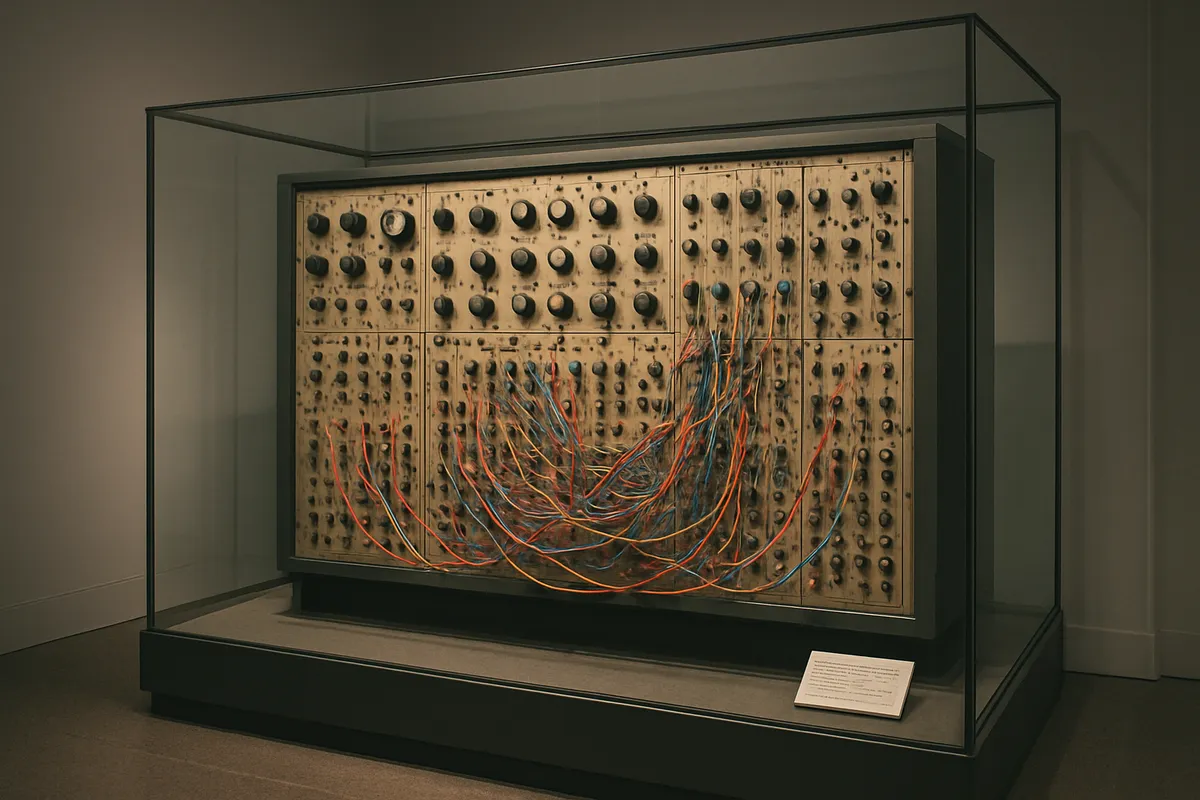
A room-sized electronic machine completed in 1945 used thousands of vacuum tubes for high-speed numerical calculation. What was it?
Which computer, introduced in 1977, helped bring ready-to-use personal computers into homes and schools?
A computer released in 1981 established a widely copied platform for business personal computers. Which machine is this?
A computer built around 1950 fills a room and uses thousands of heated glass switching devices that often fail. Which component generation does it use?
A 1950s computer replaces glass tubes with separate solid-state switches, making it smaller and more dependable. Which component generation is this?
A 1960s computer uses chips that each contain many connected electronic components. Which component generation does it use?
A desktop computer has its central processing unit implemented on one chip, as became common after the early 1970s. Which component generation does it use?
Crack the passcode before the zombies get in.
Answer, then swat bugs for bonus points.
Race through questions at your own speed.
Same question on every screen. Fastest wins.

Pick a tile, answer, hit bonuses and steals.
Moore's Law and How Computing Changed
20 questions