Loading
by BlastRoom
Connect Dickens's novel to the period, events and conditions of the French Revolution that shaped it.
#historical_context#matatag_english_9
20 questions
One question set, multiple game modes. Tap any game to see it in action. Not sure which to pick?
A Tale of Two Cities opens in 1775: "There were a king with a large jaw and a queen with a plain face, on the throne of England; there were a king with a large jaw and a queen with a fair face, on the throne of France." What does this pairing stress?
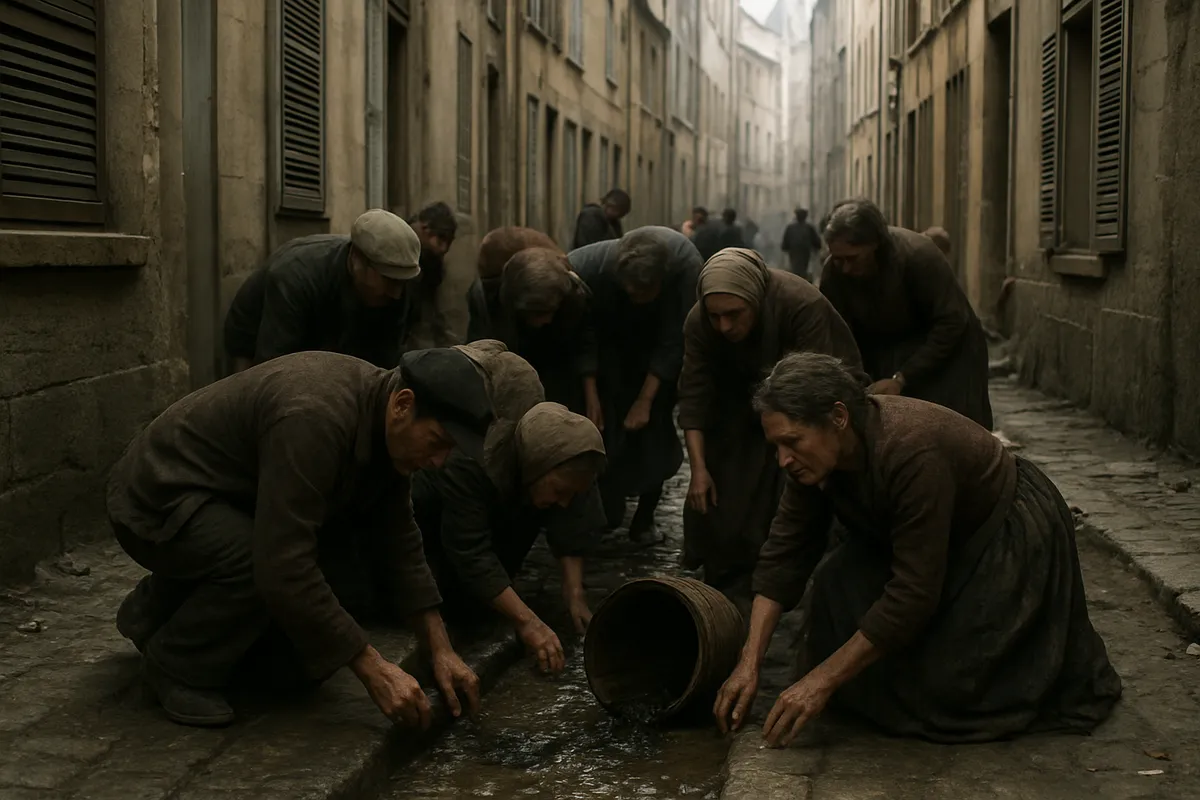
In A Tale of Two Cities, spilled wine stains a poor Paris street. Dickens adds: "The time was to come, when that wine too would be spilled on the street-stones, and when the stain of it would be red upon many there." What does this predict?
Before 1789 French peasants paid the king, the church and their lord. Dickens lists in A Tale of Two Cities: "the tax for the state, the tax for the church, the tax for the lord, tax local and tax general". What does the list explain?
In A Tale of Two Cities the Marquis's carriage kills a child. He complains that the poor "cannot take care of yourselves and your children", then throws a gold coin to the father. What does his response show about his class?
In A Tale of Two Cities the Marquis tells his nephew, "Repression is the only lasting philosophy." He speaks for the French nobles of the years before 1789. What does the line reveal about their rule?
In A Tale of Two Cities, Charles Darnay gives up his French title and estate and earns his living in England as a teacher. Which reason best explains his refusal?
In A Tale of Two Cities, Gabelle writes to Darnay from a Paris prison in 1792. His crime is "treason against the majesty of the people, in that I have acted against them for an emigrant." What does this reveal about the new state?
In A Tale of Two Cities, Darnay rides into France in 1792 and hears of decrees "banishing all emigrants, and condemning all to death who return." Which condition makes his journey deadly?
In A Tale of Two Cities, Dr. Manette's long imprisonment in the Bastille wins him honor in Revolutionary Paris. Which fact about the period does NOT help explain that honor?
In A Tale of Two Cities, Dr. Manette says he must "write this melancholy paper in my doleful cell in the Bastille, during the last month of the year, 1767." What does that date tell a reader?
In A Tale of Two Cities, Defarge shouts to the armed crowd of Saint Antoine, "Patriots and friends, we are ready! The Bastille!" Why does Dickens make that fortress the crowd's first target?
In A Tale of Two Cities, Defarge says of his wife's list of doomed names: "Knitted, in her own stitches and her own symbols, it will always be as plain to her as the sun." Why keep the record in that form?
In A Tale of Two Cities, Madame Defarge tells her husband that "that peasant family so injured by the two Evrémonde brothers, as that Bastille paper describes, is my family." What does this add to her part in the Revolution?
In A Tale of Two Cities, Mr. Lorry watches Paris crowds sharpen weapons at a grindstone: "The eye could not detect one creature in the group free from the smear of blood." What does Dickens show about the Revolution here?
In A Tale of Two Cities, Paris houses carry the words "Republic One and Indivisible. Liberty, Equality, Fraternity, or Death!" What does the last word add to the Revolution's promise?
In A Tale of Two Cities, Darnay is marched through Paris to prison in 1792, and Dickens notes: "The very children scarcely noticed him." Knowing what the city was like that year, what does their calm show?
In A Tale of Two Cities, Defarge and his fellow plotters all call one another "Jacques", and Dickens names their movement the Jacquerie. French peasant risings had long borne that name. What does the shared name signal?
In A Tale of Two Cities, Dr. Manette's plea for his son-in-law fails at the second trial in Paris. Which condition of the Terror best explains that failure?
Near the end of A Tale of Two Cities Dickens writes: "Crush humanity out of shape once more, under similar hammers, and it will twist itself into the same tortured forms." What is his judgment on the Terror?
In A Tale of Two Cities, Carton foresees "the new oppressors who have risen on the destruction of the old" perishing by the guillotine themselves. What does that vision say about the Revolution?
Crack the passcode before the zombies get in.

Pick a tile, answer, hit bonuses and steals.
Poor Richard's Almanack: Maxims and Universal Truths
40 questions