Loading
by BlastRoom
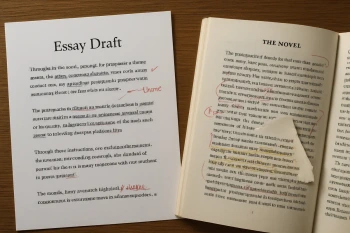
Analyze how word choice and sentence shape work together to create tone.
#english_11_12
25 questions
One question set, multiple game modes. Tap any game to see it in action. Not sure which to pick?
Answer to place stones and capture territory.
Outrun the snow together.
Earn blasts, then hunt the other team.
Answer to earn energy, then climb.

The class blasts through walls together.
Bid on mystery lots. Most money wins.
Sell tours. Nice, standard, or a total scam.

Answer, restock, and serve the rush.
More correct answers pulls the rope your way.
Answer, then shoot down the alien wave.
Answer, then tap to leap the frozen ridge.
Melville's Moby-Dick (1851) opens 'Call me Ishmael.' The next sentence wanders through money, mood, and the sea. What does that combination achieve?
A student rewrites Melville's 'Call me Ishmael' as 'My name is Ishmael.' What is lost?
Swift's A Modest Proposal (1729) calls poverty a 'melancholy object' inside a long, impersonal opening sentence. What tone results?
A student rewrites Swift's opening as 'Many poor children suffer terribly.' What does the original's 'melancholy object' preserve?
After listing 'clouds and storms and quicksands,' Thoreau's Walden (1854) snaps to 'Simplify, simplify.' What does the shift do?
In Walden (1854), Thoreau wants to 'live deep and suck out all the marrow of life.' How do diction and syntax shape the tone?
Douglass's Narrative (1845) says, 'You have seen how a man was made a slave; you shall see how a slave was made a man.' What is achieved?
A student summarizes Douglass's 'glorious resurrection' as 'I felt better after resisting Covey.' What is lost?
Poe's 'The Tell-Tale Heart' (1843) begins 'TRUE!—nervous—very, very dreadfully nervous.' What do the diction and broken syntax achieve?
Poe's 'The Tell-Tale Heart' (1843) shifts from 'TRUE!' to 'why will you say that I am mad?' What does the shift accomplish?
In Gilman's 'The Yellow Wallpaper' (1892), writing is 'dead paper and a great relief' inside a parenthesis. What tone is produced?
A student rewrites Gilman's line as 'Writing in my journal helps me.' What is lost from 'dead paper and a great relief'?
Woolf's Mrs. Dalloway (1925) moves from buying flowers to 'What a lark! What a plunge!' What do the fragments add?
A student revises Woolf's 'What a lark! What a plunge!' as 'Clarissa felt excited.' What is weakened?
Fitzgerald's The Great Gatsby (1925) names 'foul dust' near Gatsby's 'dreams.' What tone comes from that diction in reflective syntax?
Gatsby (1925) shifts from advice 'turning over in my mind' to a habit of 'reserve all judgments.' What does that shift do?
Du Bois's Souls (1903) says people 'flutter round' an 'unasked question' instead of asking it. How do diction and syntax shape tone?
A student rewrites Du Bois's 'unasked question' as 'People wanted to ask something rude.' What is lost?
Austen's Pride and Prejudice (1813) opens with a 'truth universally acknowledged.' How do diction and syntax create satire?
Austen shifts from 'truth universally acknowledged' to a rich man as 'rightful property' of daughters. What does the shift do?
Hemingway's 'Hills Like White Elephants' (1927) says the Ebro hills are 'long and white.' How does sparse syntax shape tone?
A student rewrites Hemingway's repeated 'perfectly simple' as 'He keeps reassuring her.' What is lost?
A student revises Whitman's 'I celebrate myself, and sing myself' as 'I am proud of myself.' What is lost?
A student rewrites Macbeth's 'Tomorrow and tomorrow and tomorrow' as 'Time keeps passing.' What is lost?
Hamlet (c. 1600) moves from 'To be or not to be' to 'slings and arrows' and a 'sea of troubles.' What does the shift achieve?
Crack the passcode before the zombies get in.
Answer, then swat bugs for bonus points.
Race through questions at your own speed.
Same question on every screen. Fastest wins.

Pick a tile, answer, hit bonuses and steals.
Two or More Themes and Their Interaction
25 questions