Loading
by BlastRoom
How the wartime alliance broke down and the United States answered with containment, aid and a peacetime alliance.
#united_states_history

30 questions
One question set, multiple game modes. Tap any game to see it in action. Not sure which to pick?
Answer to place stones and capture territory.
Outrun the snow together.
Earn blasts, then hunt the other team.
Answer to earn energy, then climb.

The class blasts through walls together.
Bid on mystery lots. Most money wins.
Sell tours. Nice, standard, or a total scam.

Answer, restock, and serve the rush.
More correct answers pulls the rope your way.
Answer, then shoot down the alien wave.
Answer, then tap to leap the frozen ridge.
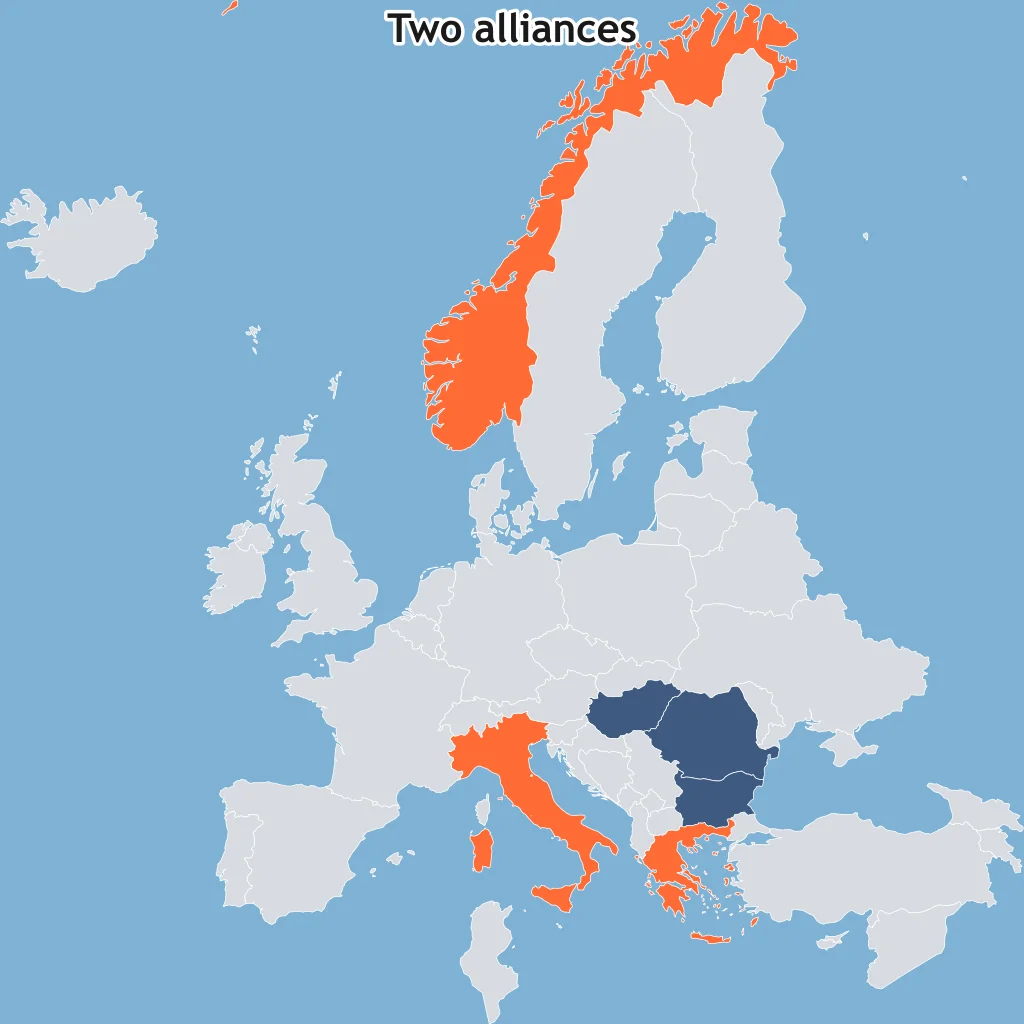
Two groups of countries are shaded on the map. The western group joined NATO in 1949; the eastern group belonged to the alliance the Soviet Union led. Which of these countries is shaded in the eastern group?
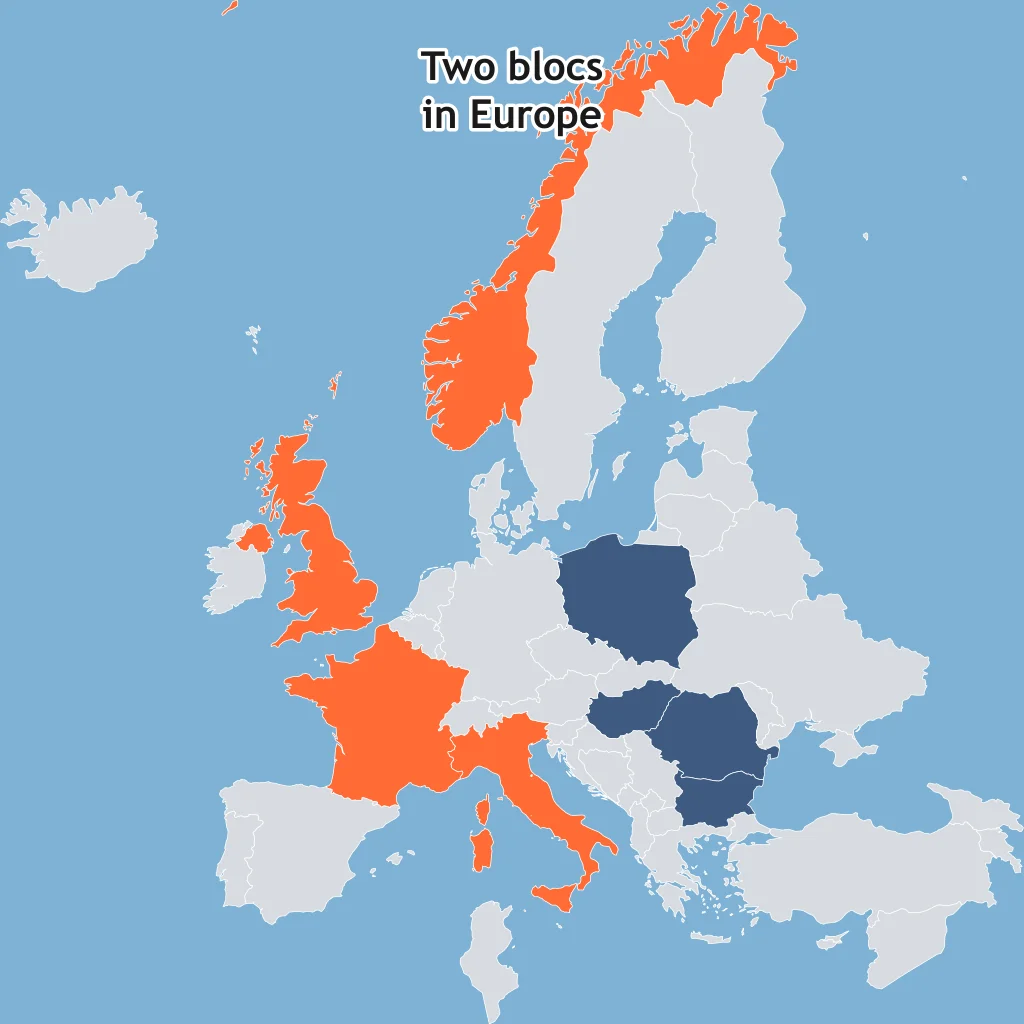
On the map one shaded group of countries belonged to the Western alliance and the other to the Soviet-led alliance. Which of these countries is shaded in neither group?
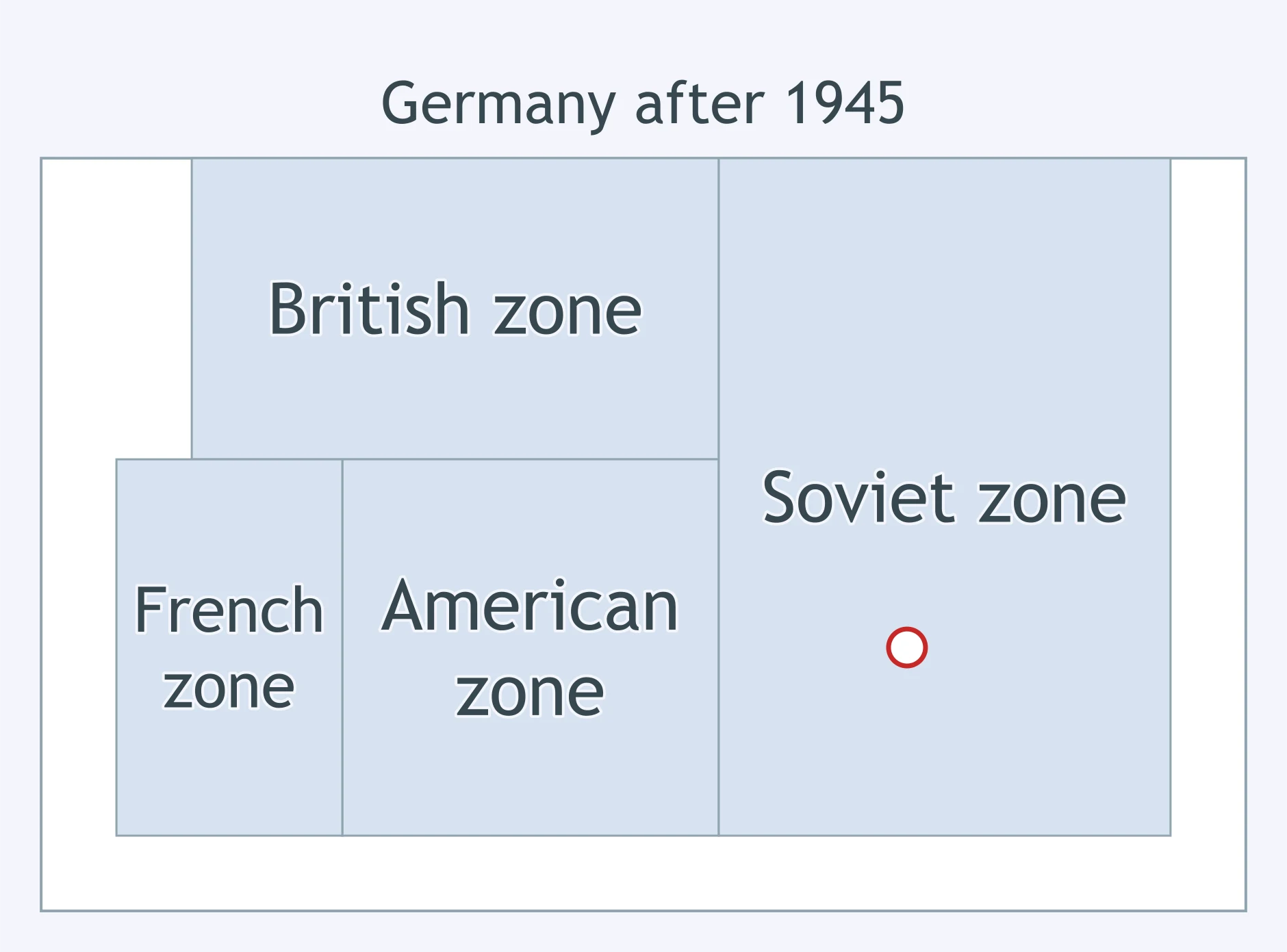
The map shows Germany after 1945 split into four occupation zones. A marker sits on a city that lay well inside the Soviet zone and was itself divided into four sectors. Which city is marked?
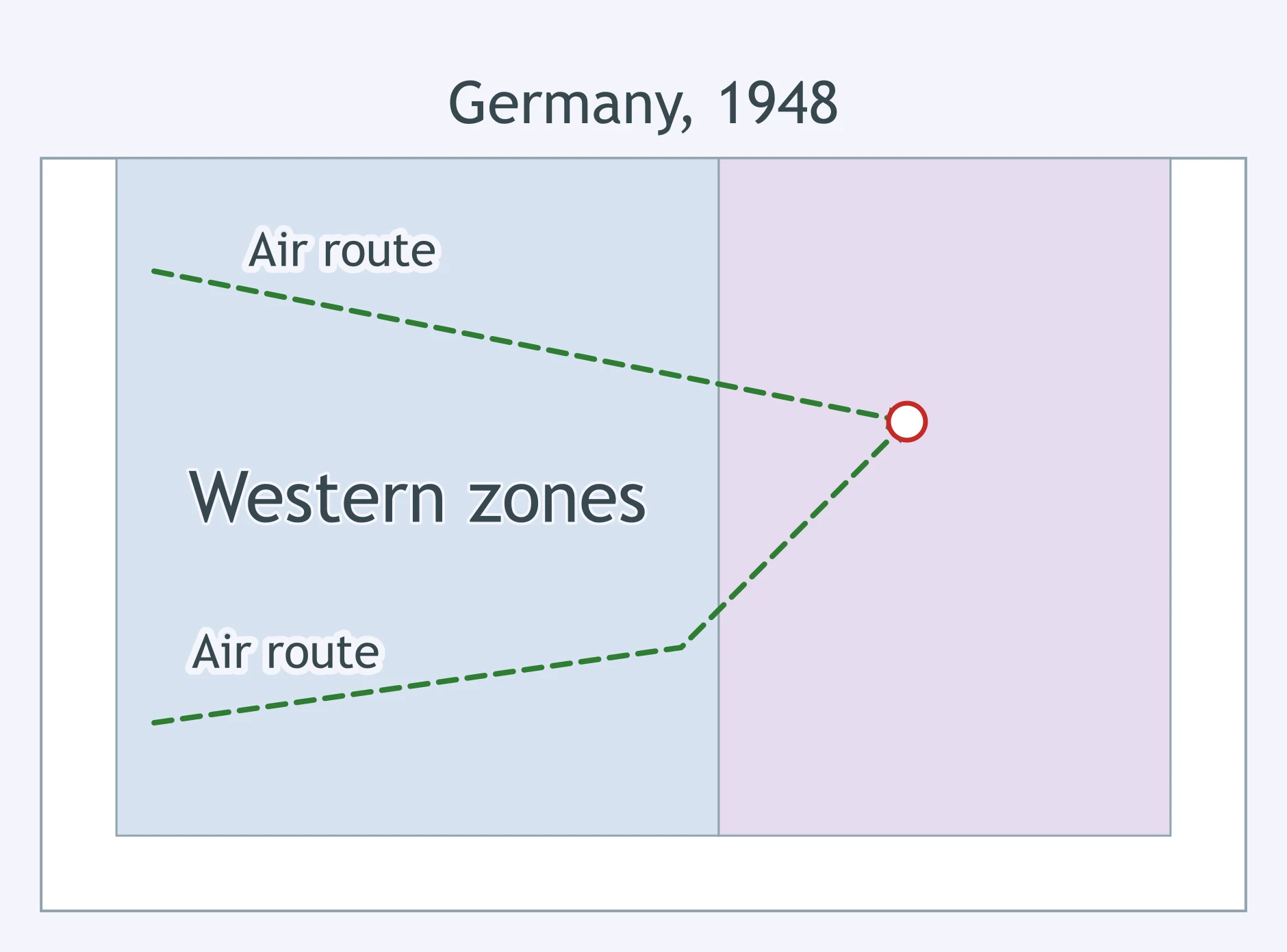
In 1948 the marked city could be reached from the west only along the marked air routes. What territory did aircraft flying those routes have to cross to get there?
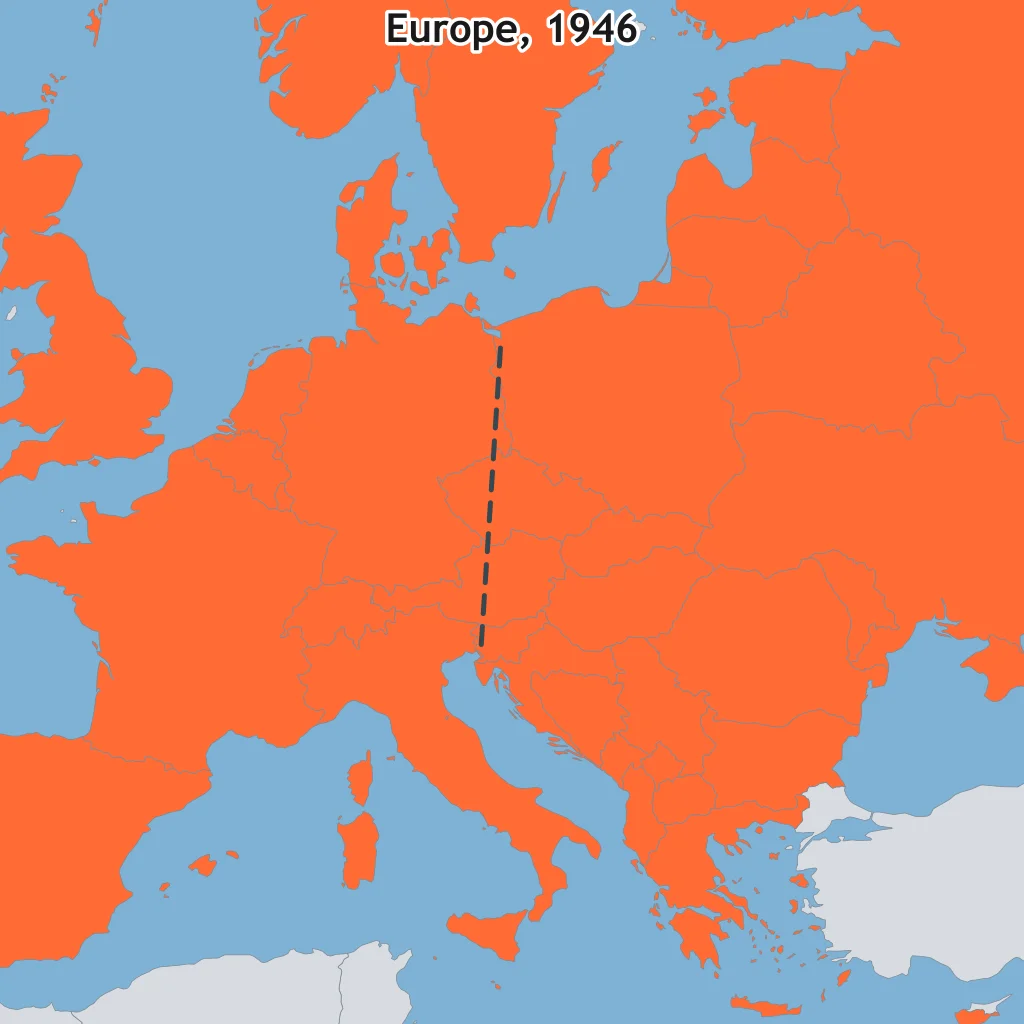
The map draws the line Winston Churchill described in a March 1946 speech as having descended across Europe. Between which two seas does the marked line run?
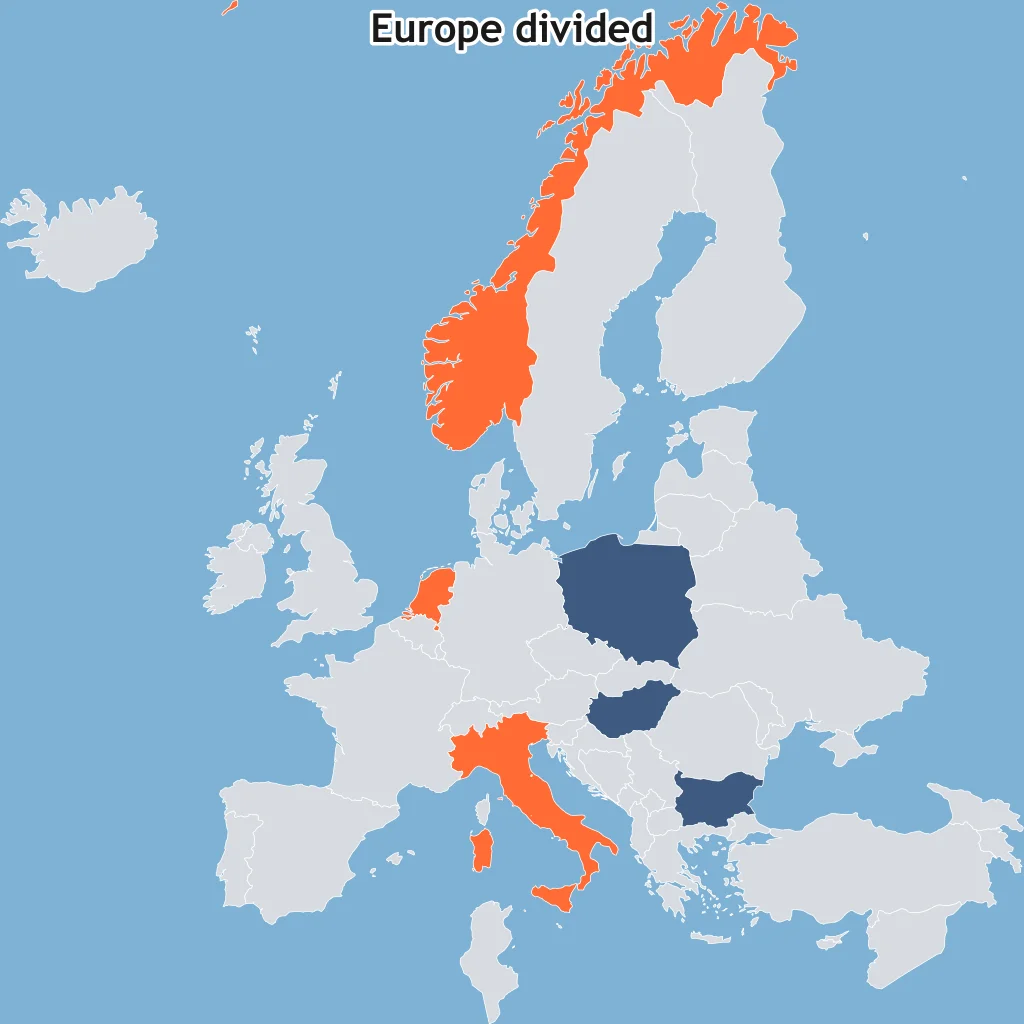
One shaded group on the map are NATO members; the other are members of the Soviet-led alliance. Which of the shaded NATO countries shares a land border with a country shaded in the other group?
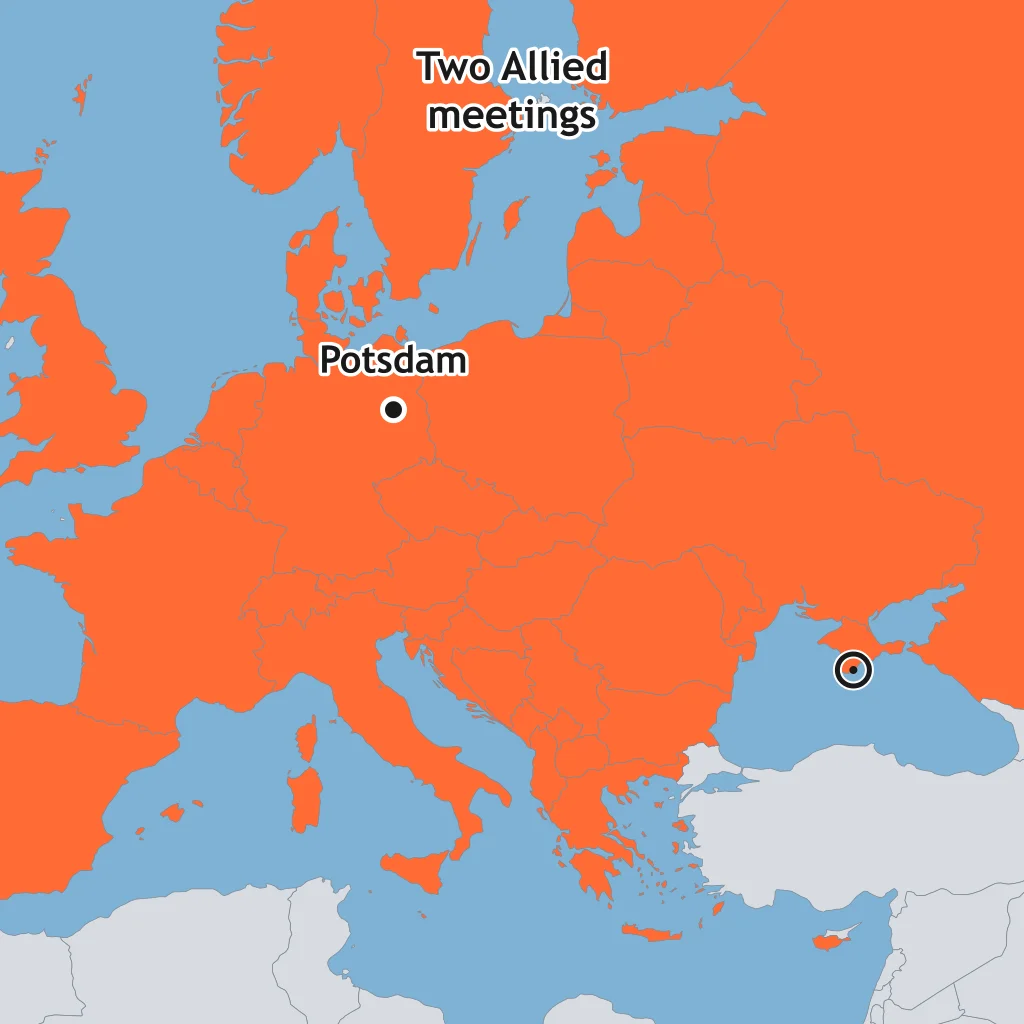
The map labels Potsdam, where Allied leaders met in July 1945, and marks a second town on the Black Sea coast where the Big Three had met in February 1945. Which conference was held at the marked town?
Beginning in 1948 the United States sent about $13 billion over four years to rebuild industry and restore trade in Western Europe, hoping recovery would make communist parties less attractive to voters. What was this program called?
In early 1947 Britain told Washington it could no longer support two governments in the eastern Mediterranean against communist pressure, so the president asked Congress to take the job over. What was the policy in that request called?
An American diplomat at the embassy in Moscow sent a long telegram in 1946 and published an anonymous article in 1947, both arguing that Soviet pressure had to be met with firm, patient resistance. Who was he?
The National Security Act of 1947 reorganized the armed forces, created the National Security Council, and set up a new civilian agency to gather and analyze foreign intelligence. Which agency did it create?
In April 1950 a secret report to the president argued that the United States should sharply expand its conventional and nuclear forces for a long worldwide struggle with Soviet power. What was that report called?
In September 1947 Stalin created a new organization to coordinate the communist parties of Europe and keep them in line with Moscow. What was it called?
In 1948 the American military governor in Germany argued that the western powers must not give up their position in Berlin under Soviet pressure. Which general was he?
In his January 1949 inaugural address Truman proposed sharing American scientific and technical knowledge with poor nations so they could develop and resist communism. What was this new program called?
At Fulton, Missouri on March 5, 1946 Churchill said that 'from Stettin in the Baltic to Trieste in the Adriatic an iron curtain has descended across the Continent.' What was he telling his audience?
Asking Congress on March 12, 1947 for aid, Truman said it 'must be the policy of the United States to support free peoples who are resisting attempted subjugation by armed minorities or by outside pressures.' What was he committing the country to?
An article signed only 'X' in Foreign Affairs in July 1947 called for 'a long-term, patient but firm and vigilant containment of Russian expansive tendencies.' What did it propose the United States do?
A February 1946 telegram from the American embassy in Moscow described the Soviet leadership as 'a political force committed fanatically to the belief that with US there can be no permanent modus vivendi.' What did it conclude?
At Harvard on June 5, 1947 the American secretary of state said policy was 'directed not against any country or doctrine but against hunger, poverty, desperation and chaos.' What was he proposing?
A treaty signed in Washington in April 1949 said that 'an armed attack against one or more of them in Europe or North America shall be considered an attack against them all.' What did signing it commit the United States to?
In June 1948 the Soviet Union closed every road, rail line and canal into the western sectors of Berlin, cutting more than two million people off from supply by land. How did the United States and Britain respond?
When the United States offered recovery aid to all of Europe in 1947, Poland and Czechoslovakia at first showed interest and then refused to take part. Why did they refuse?
At Yalta in February 1945 Stalin agreed that Poland would hold free elections. By 1947 communists controlled the Polish government and opposition leaders had fled the country. What effect did this have on American policy?
In February 1948 communists seized full control of the government of Czechoslovakia, the last coalition government left in Eastern Europe. What did this push Western governments to do?
West Germany was admitted to NATO in May 1955 and allowed to raise armed forces again. What did the Soviet Union and its Eastern European allies do that same month?
In August 1949 the Soviet Union tested an atomic bomb, years earlier than American officials had expected. What did Truman decide a few months later, in January 1950?
In 1949 the three western occupation zones were joined together into a new German state, the Federal Republic of Germany. Which city became its capital?
The three western occupation zones became the Federal Republic of Germany in May 1949. What did the Soviet zone become in October of that year?
Twelve nations signed the North Atlantic Treaty in Washington on April 4, 1949. Which of these countries was one of the original twelve?
Crack the passcode before the zombies get in.
Answer, then swat bugs for bonus points.
Race through questions at your own speed.
Same question on every screen. Fastest wins.

Pick a tile, answer, hit bonuses and steals.
The Red Scare and McCarthyism
25 questions