Loading
by BlastRoom
Place a cell in the cycle from what it is doing, what its DNA is worth, and what its checkpoints allow.
#biology
40 questions
One question set, multiple game modes. Tap any game to see it in action. Not sure which to pick?
Answer to place stones and capture territory.
Outrun the snow together.
Earn blasts, then hunt the other team.
Answer to earn energy, then climb.

The class blasts through walls together.
Bid on mystery lots. Most money wins.
Sell tours. Nice, standard, or a total scam.

Answer, restock, and serve the rush.
More correct answers pulls the rope your way.
Answer, then shoot down the alien wave.
Answer, then tap to leap the frozen ridge.
A cell has just finished dividing. It is growing, building organelles and making protein, and its DNA has not been copied yet. Which stage of the cell cycle is it in?
A liver cell is replicating its DNA, so that every chromosome is being duplicated. Which stage of the cell cycle is the cell in?
A cell has already copied its DNA. It is now making the proteins the spindle will be built from and checking the copied chromosomes for damage. Which stage is it in?
A nerve cell in an adult has left the cell cycle. It will not divide again, but it stays alive and carries out its job for decades. What is this state called?
Under a microscope, a cell's nuclear envelope has broken down and its chromosomes are visible as separate condensed structures being moved by spindle fibers. Which part of the cell cycle is this?
A student says that a cell in interphase is resting. Which description of interphase is accurate?
In a typical human cell that divides about once a day, which stage of the cell cycle usually lasts the longest?
In a typical dividing cell, interphase takes up more of the cell cycle than mitosis and cytokinesis together.
A cell is partway through dividing its nucleus: the copied chromosomes are being pulled toward opposite ends of the cell. Which stage of the cycle comes immediately after this one?
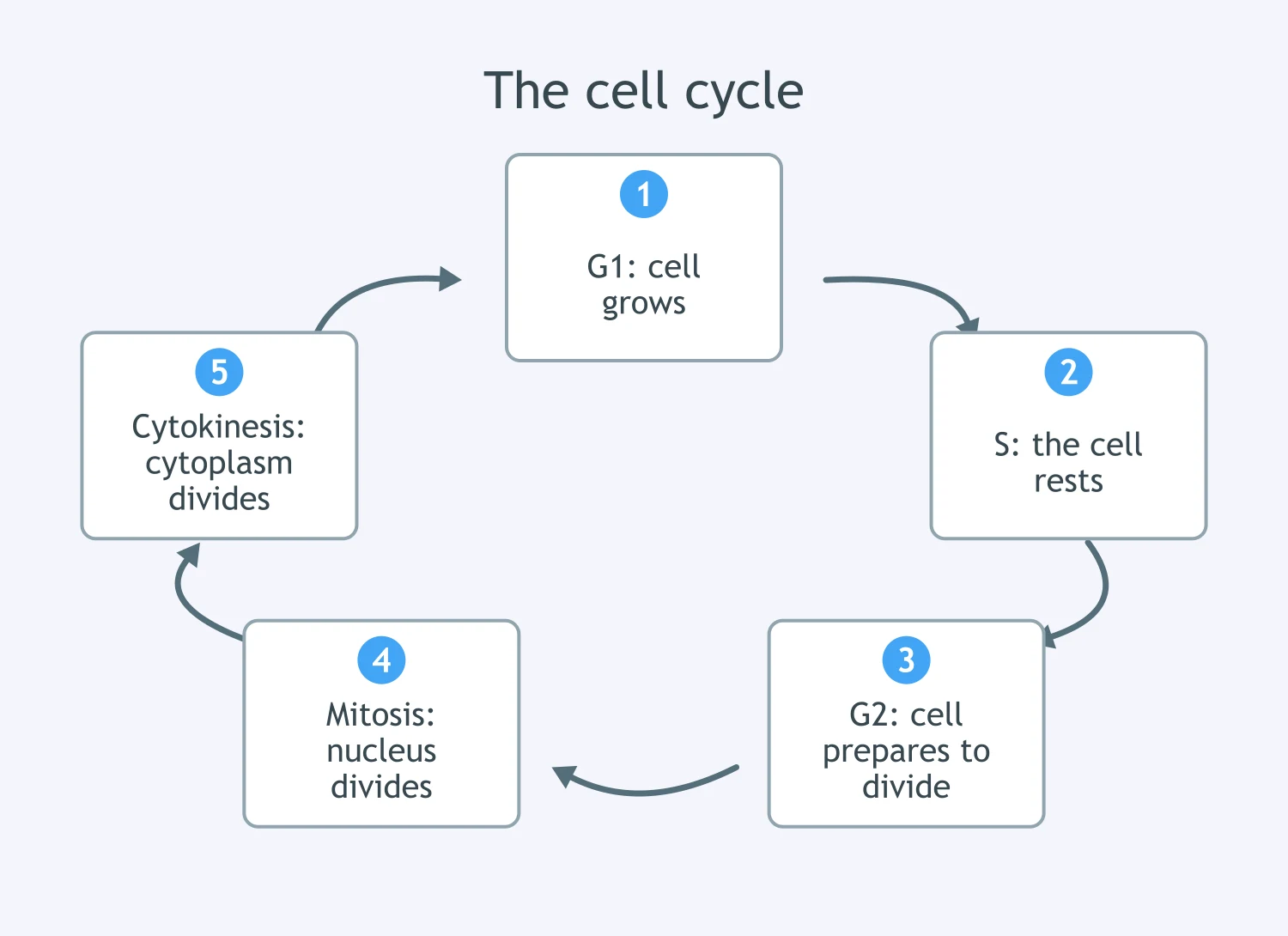
One stage in this cell cycle diagram is labeled wrongly as 'S: the cell rests'. Which label should replace it?
A human cell enters one stage of the cell cycle with 46 chromosomes, each a single chromatid, and leaves it with 46 chromosomes that each have two identical chromatids. Which stage is it?
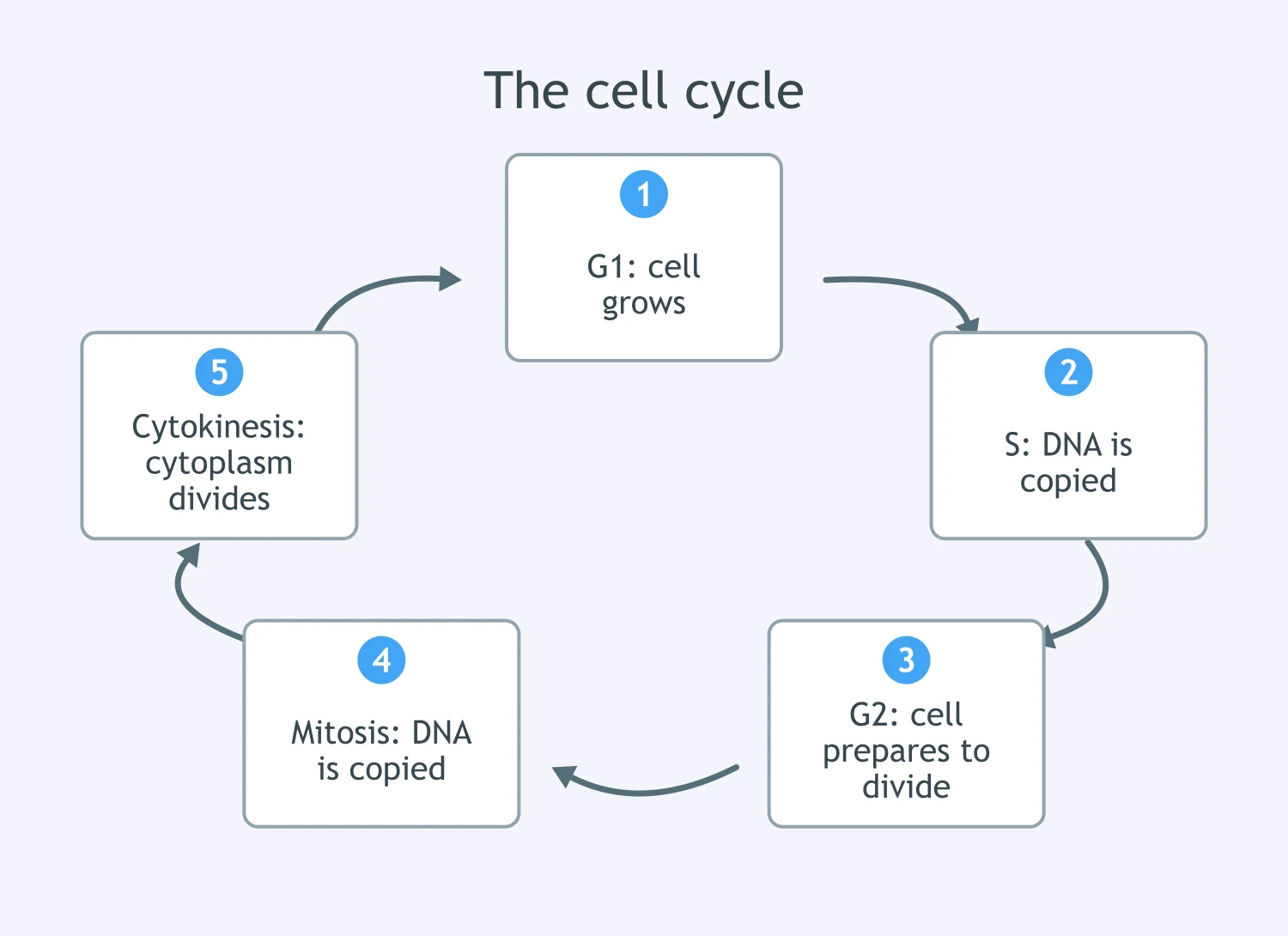
This diagram labels two different stages as the point where DNA is copied. Which label is wrong, and why?
An onion root tip cell contains 16 chromosomes during G1. How many chromosomes does each of its two daughter cells contain after mitosis and cytokinesis are complete?
A cell contains 24 picograms of DNA at the start of G1. How much DNA does it contain at the end of G2, and why?
A cell contains 46 chromosomes, and each chromosome is made of two sister chromatids joined at a centromere. How many chromatids are in the cell altogether?
Each chromosome in a cell that has just completed the S stage consists of two identical sister chromatids joined at a centromere.
Why must a cell's DNA be copied before mitosis begins rather than after it?
A cell entering mitosis carries 12 chromosomes, each made of two sister chromatids. What does each daughter cell contain immediately after cytokinesis?
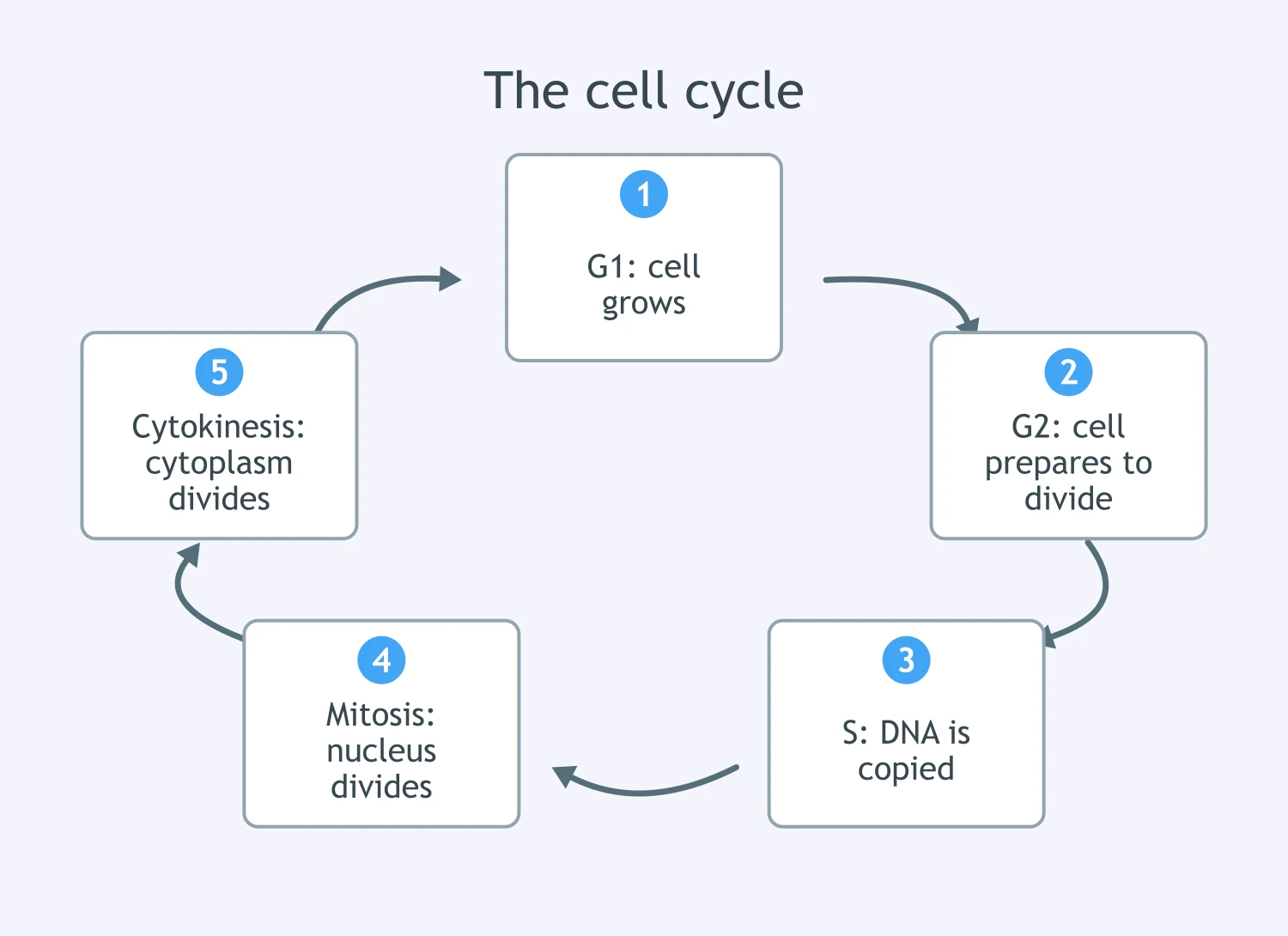
Two stages in this cell cycle diagram have been placed in the wrong positions. Which correction fixes the order?
This diagram places cytokinesis before mitosis. Why can that order not be correct?
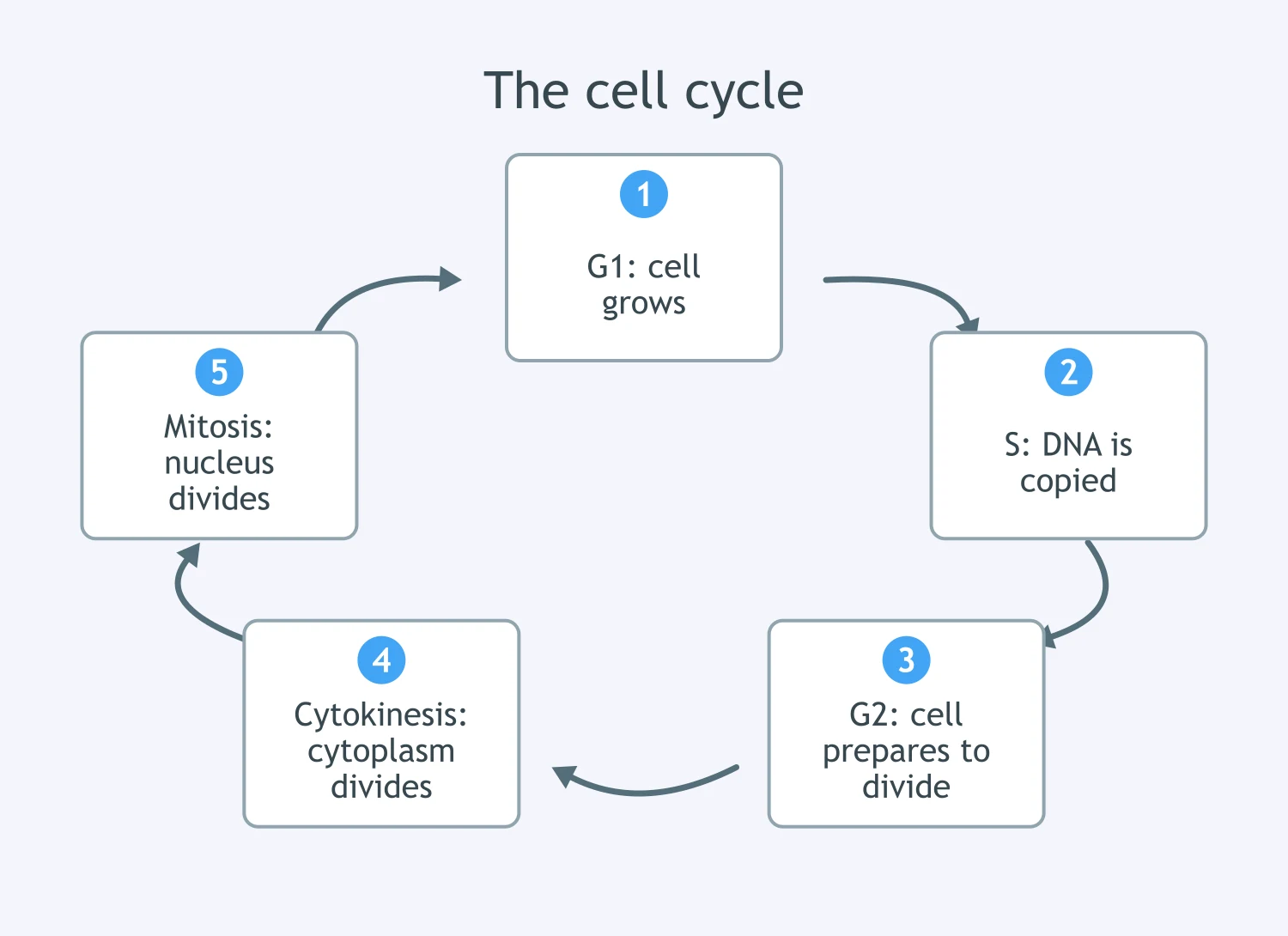
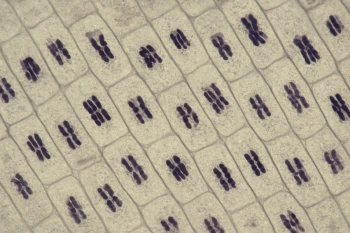
A student examined 150 onion root tip cells and recorded the stage of each: interphase 132, prophase 9, metaphase 4, anaphase 2, telophase 3. What does this record indicate about the cell cycle?
A cell completes one full cycle in 24 hours, and interphase accounts for 23 of those hours. About what percentage of the cycle is spent on mitosis and cytokinesis together?
Which sequence gives the correct order of one full turn of the cell cycle?
In a cell cycle lasting 20 hours, G1 lasts 8 hours, S lasts 8 hours and G2 lasts 3 hours. How long do mitosis and cytokinesis take together?
Skin cells complete a cell cycle in about 20 hours, while mature liver cells divide only after the liver has been injured. What best explains the difference?
At one stage of the cell cycle, the cell checks that all of its DNA has been copied correctly and repairs damage before division starts. Which stage is it?
A checkpoint in one stage of the cell cycle holds the cell until every chromosome is attached to a spindle fiber, and only then are the sister chromatids separated. Which stage is it?
A cell reaches the end of G2 with a section of one chromosome still carrying damaged DNA. In a normally functioning cell, what happens next?
What does the G1 checkpoint check before the cell is allowed to begin copying its DNA?
A mutation stops a cell's checkpoint proteins from working, so damaged DNA is copied and passed on to the daughter cells. What is the most likely result?
How does a tumor cell's behavior at the cell cycle checkpoints differ from a normal cell's?
The G2 checkpoint happens before the cell's DNA has been copied.
During mitosis, one chromosome fails to attach to any spindle fiber. What does the spindle checkpoint do?
In an animal cell, a ring of fibers pulls the membrane inward until the cell is pinched into two separate daughter cells. Which stage of the cell cycle is this?
The last stage in this diagram is labeled 'Cytokinesis: nucleus divides again'. What actually happens during cytokinesis?
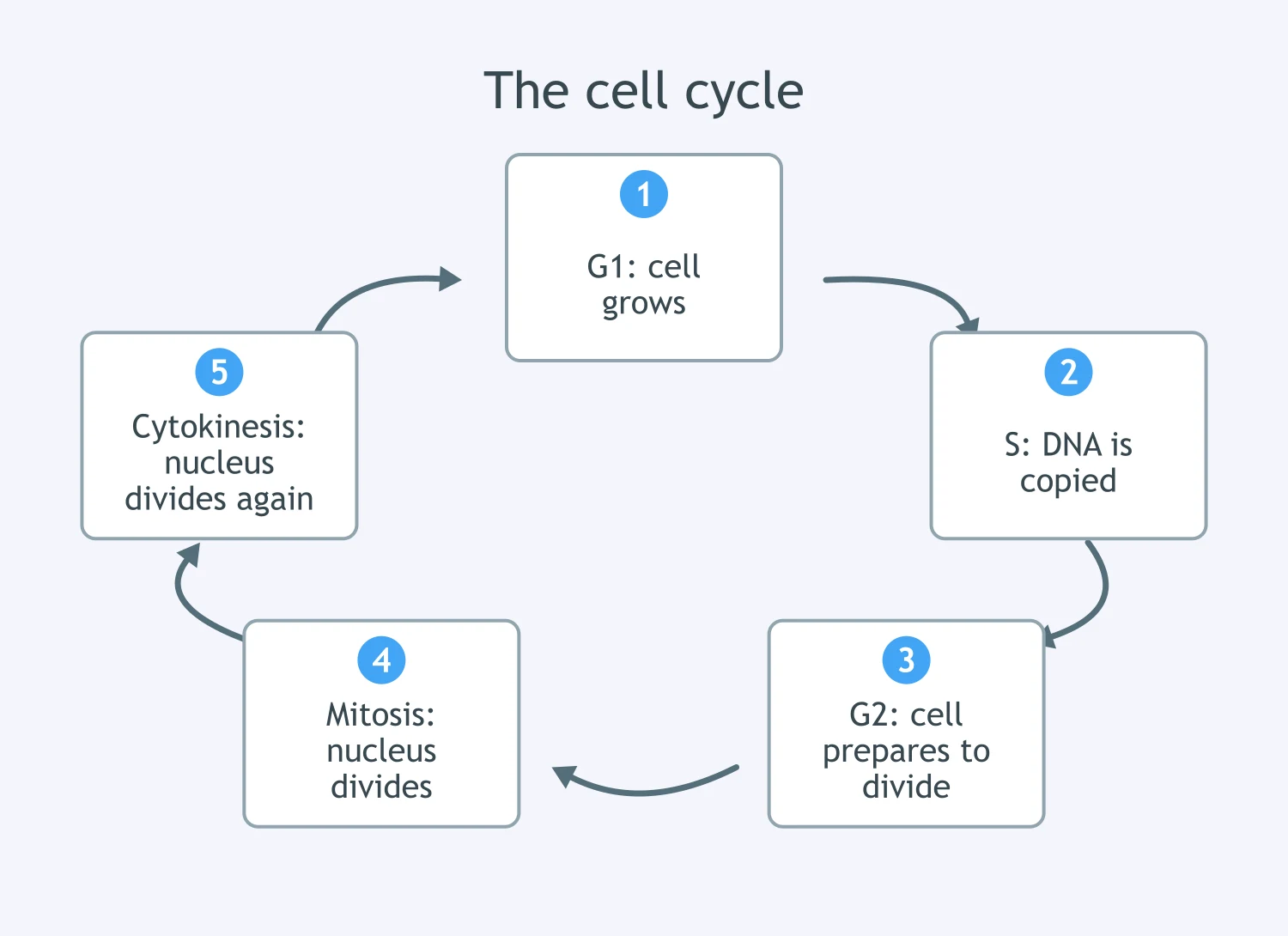
At the end of division in a plant cell, vesicles gather across the middle of the cell and fuse into a structure that separates the two daughter cells. What forms there?
Why does an animal cell form a cleavage furrow while a plant cell forms a cell plate?
A drug prevents the ring of protein fibers beneath an animal cell's membrane from contracting, although mitosis finishes normally. What is the most likely result?
In both plant and animal cells, cytokinesis is completed by a cleavage furrow that pinches the cell membrane inward.
Which structure is present between the two daughter cells at the end of cytokinesis in a plant, but never in an animal?
Crack the passcode before the zombies get in.
Answer, then swat bugs for bonus points.
Race through questions at your own speed.
Same question on every screen. Fastest wins.

Pick a tile, answer, hit bonuses and steals.
Cell Differentiation and Stem Cells
20 questions