Loading
by BlastRoom
End-of-course review of energy flow, matter cycling, populations, communities, biodiversity and human impact.
#biology
40 questions
One question set, multiple game modes. Tap any game to see it in action. Not sure which to pick?
Answer to place stones and capture territory.
Outrun the snow together.
Earn blasts, then hunt the other team.
Answer to earn energy, then climb.

The class blasts through walls together.
Bid on mystery lots. Most money wins.
Sell tours. Nice, standard, or a total scam.

Answer, restock, and serve the rush.
More correct answers pulls the rope your way.
Answer, then shoot down the alien wave.
Answer, then tap to leap the frozen ridge.
Use the food web. Which organism feeds at more than one trophic level?
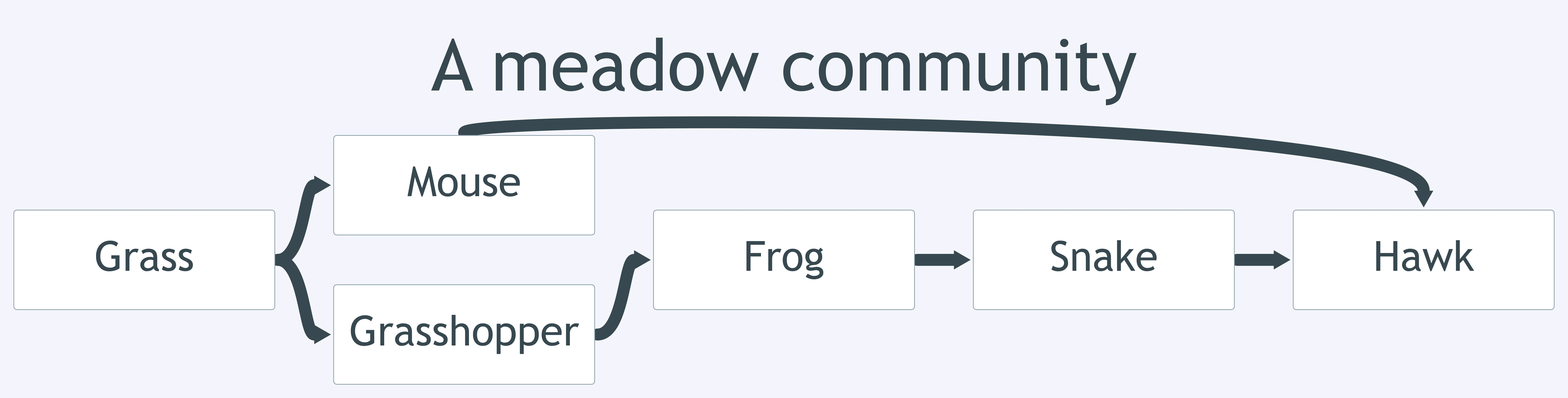
Use the food web. Which organism is a secondary consumer?
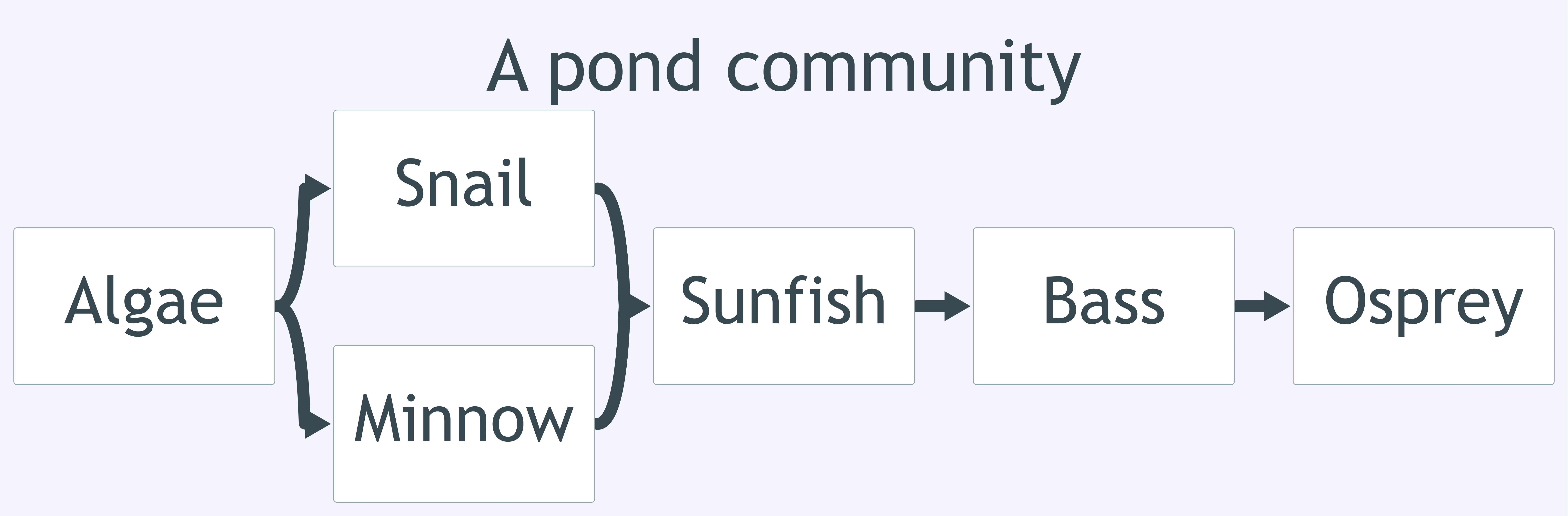
Use the food web. A disease removes almost all of the herring. Which change is most likely in the months that follow?

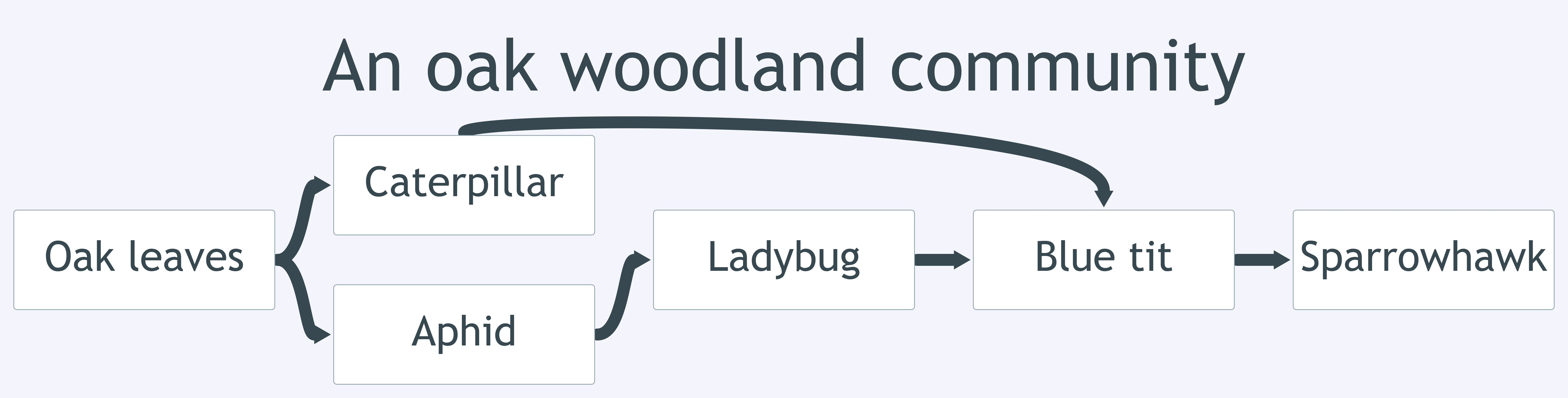
Use the food web. The oak leaves capture 20,000 kilocalories in a season. Using the 10% rule, about how much of that energy reaches the sparrowhawk along the food chain from oak leaves to caterpillar to blue tit to sparrowhawk?
A field of clover captures 45,000 kilocalories during a growing season. Rabbits eat the clover, and foxes eat the rabbits. Using the 10% rule, about how much energy is available to the foxes?
Only about 10% of the energy at one trophic level is passed on to the next. What becomes of the other 90%?
In a salt marsh, dead cordgrass is broken down by bacteria and fungi in the mud. What role do these bacteria and fungi play?
A student says that the energy in an ecosystem is recycled in the same way carbon is recycled. Why is that wrong?
A grasshopper eats grass and is eaten in turn by a shrew. Which trophic level does the grasshopper occupy?
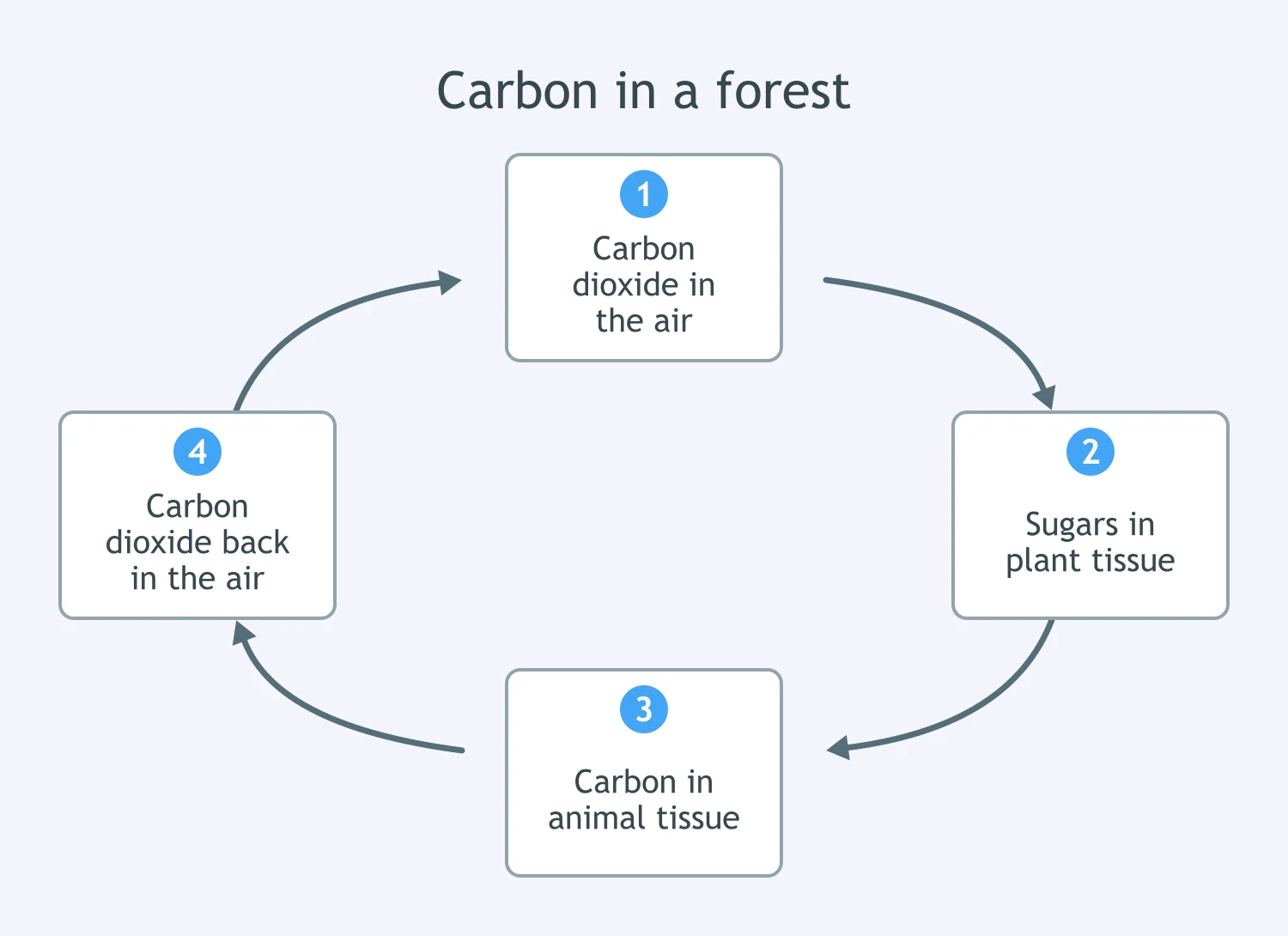
Use the diagram. Which process moves carbon from the first stage into the second?
Use the diagram. Which organisms carry out the step that changes nitrogen gas from the air into ammonium in the soil?
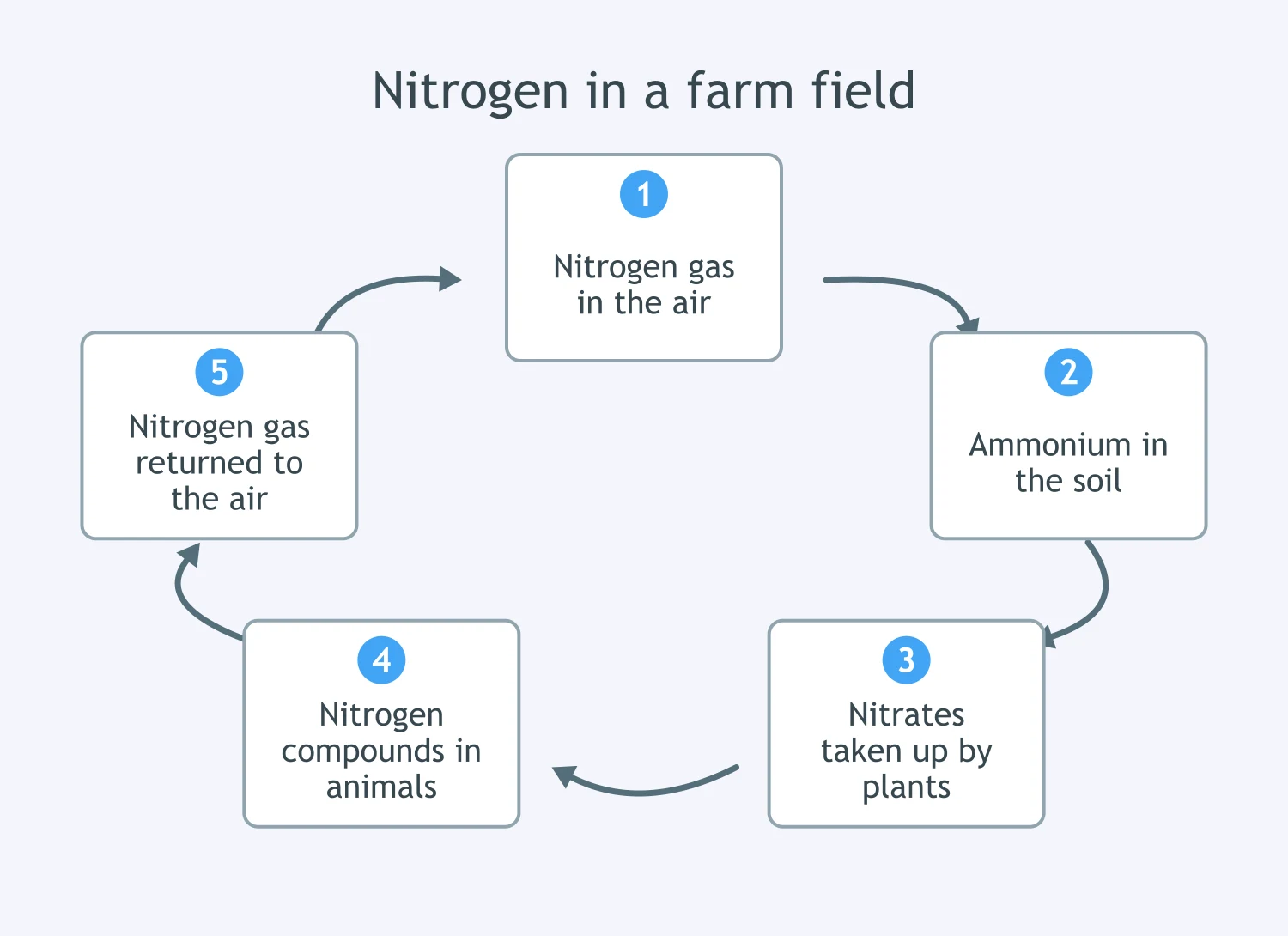
Plants return water to the atmosphere directly, through the stomata of their leaves. What is that process called?
Which process returns carbon dioxide to the atmosphere from the bodies of living organisms?
A farmer plants clover between corn crops. Bacteria in the clover's root nodules carry out nitrogen fixation. Why does this practice improve the soil?
Unlike carbon and nitrogen, phosphorus has no significant gas form in the atmosphere. Where is most of Earth's phosphorus held?
Decomposers return the nutrients locked in dead organisms to the soil and water, where producers can take them up again.
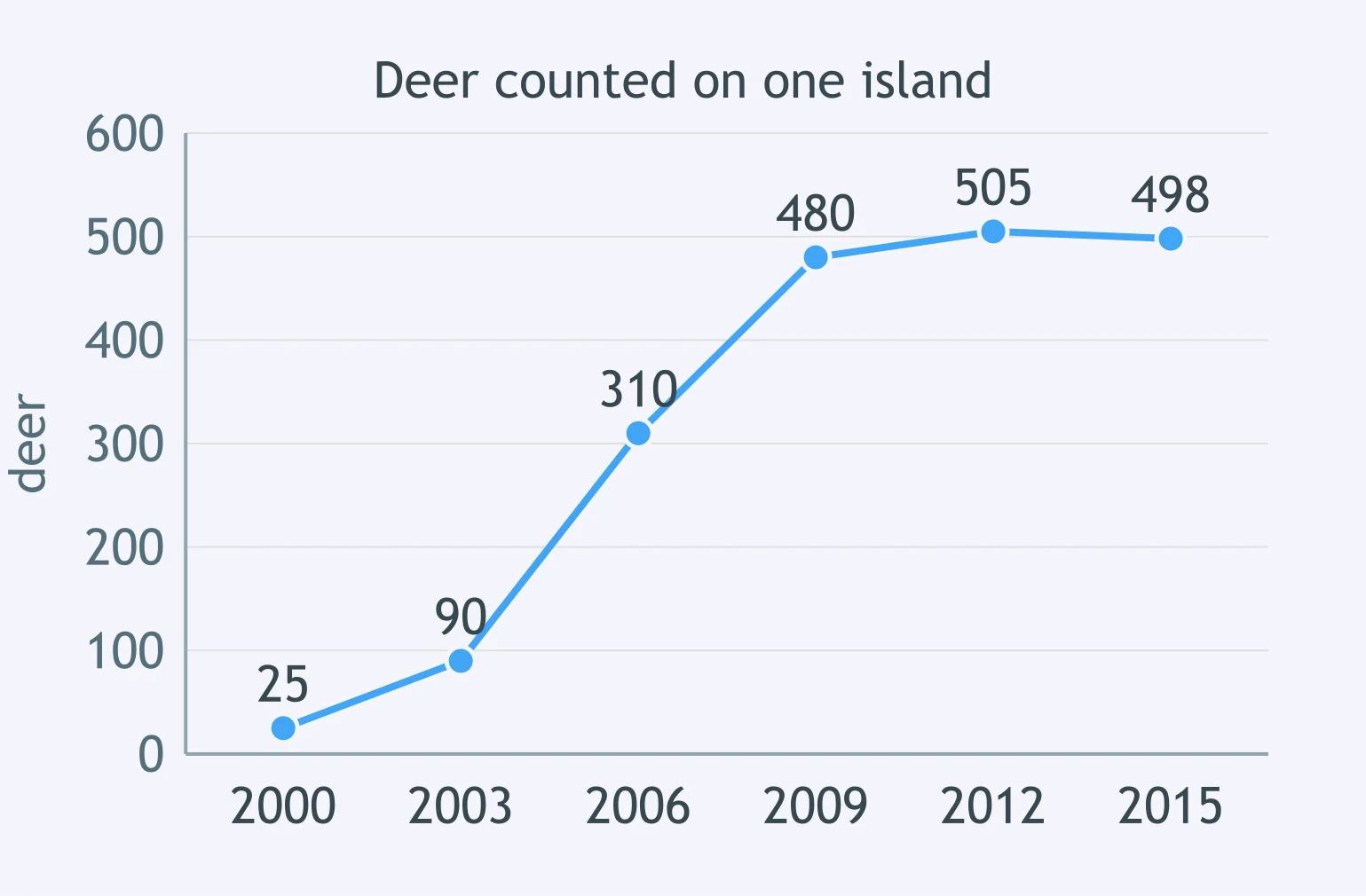
Use the graph. Which statement best describes what happened to this deer population?
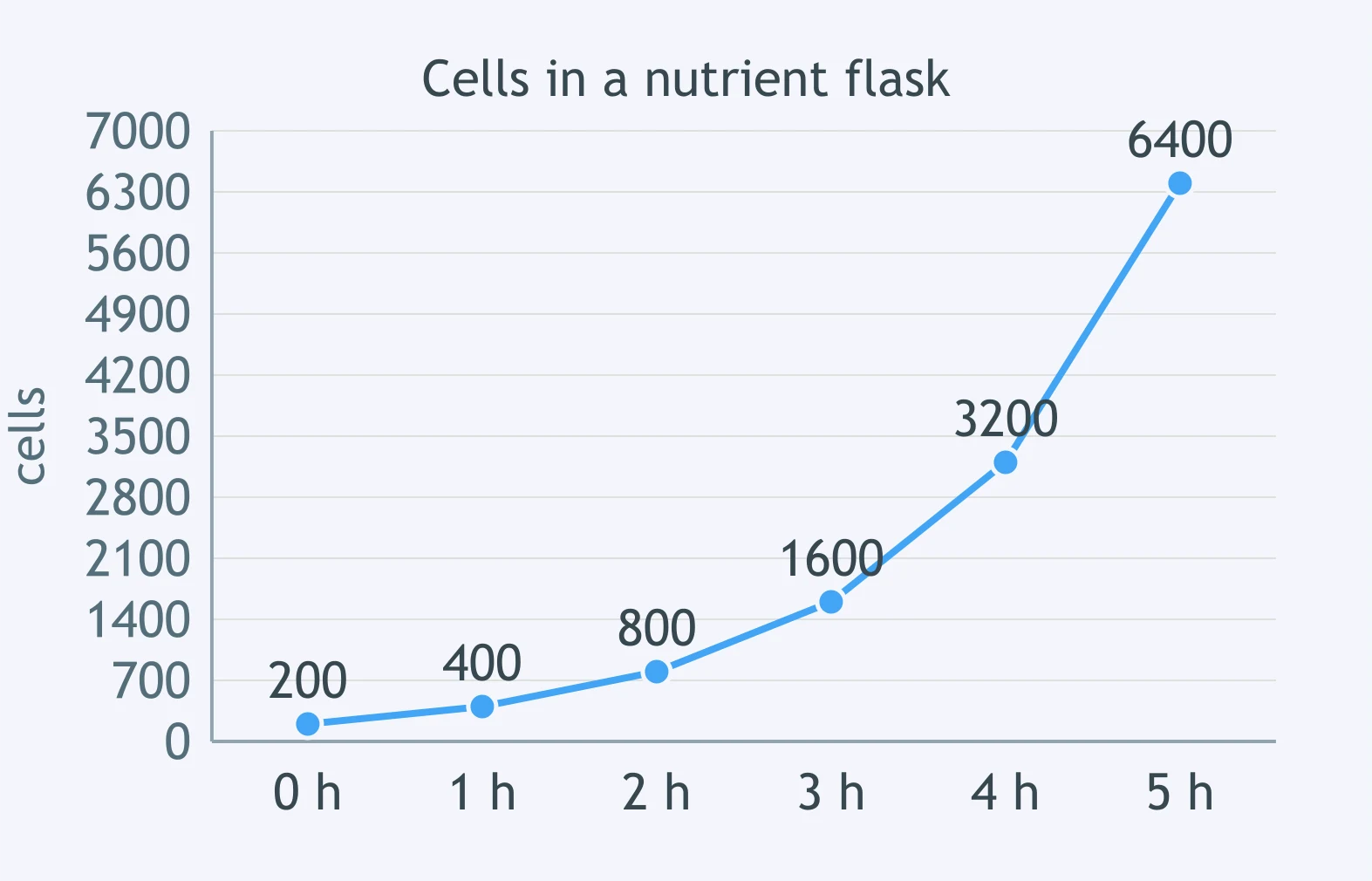
Use the graph. Which kind of growth does this bacterial culture show over the five hours?
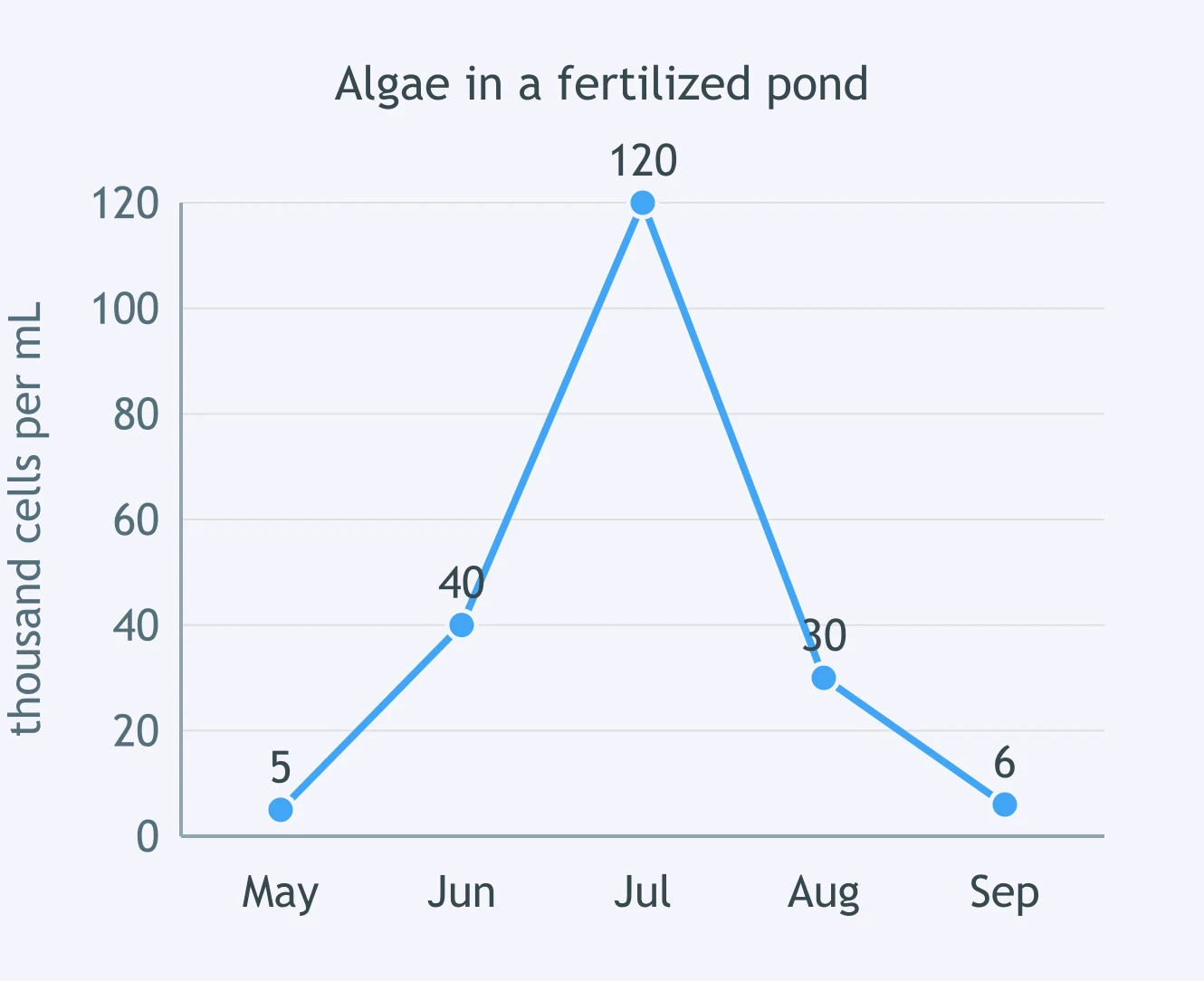
Use the graph. The pond received a heavy load of fertilizer in early spring. What most likely caused the change after July?
A valley holds 500 elk, but its winter plant growth can feed only about 400. What is most likely over the winter?
Which of these is a density-independent limiting factor?
A rabbit population starts the year at 800. Over that year there are 240 births and 100 deaths, and no rabbits move in or out. What is the population at the end of the year?
Which conditions produce the J-shaped curve of exponential growth?
Wolves are removed from an island where deer live. Deer numbers climb steeply for several years, then crash after the shrubs have been stripped bare. What limited the deer at the crash?
Clownfish shelter among the stinging tentacles of a sea anemone and drive off fish that would bite the anemone's tentacles. What kind of relationship is this?
A tapeworm lives in a dog's intestine and absorbs nutrients from the dog's food, leaving the dog thin and weak. What is the tapeworm?
Two species of Paramecium each thrive when grown alone on the same food. Grown together in one flask, one species dwindles to nothing within about two weeks. What does the result show?
A new volcanic island is bare lava with no soil at all. Which organisms are the pioneer species there?
A fire clears a forest but the soil is left in place. Why does this land regrow far faster than bare volcanic rock does?
Trapping records show that lynx numbers peak a year or two after each peak in snowshoe hare numbers, then fall as the hares become scarce. What does this pattern show?
Which description is of an organism's niche rather than its habitat?
In commensalism, one organism benefits while the other is neither helped nor harmed.
Use the graph. This site also receives under 25 cm of precipitation a year and has no trees and permanently frozen subsoil. Which biome is it?
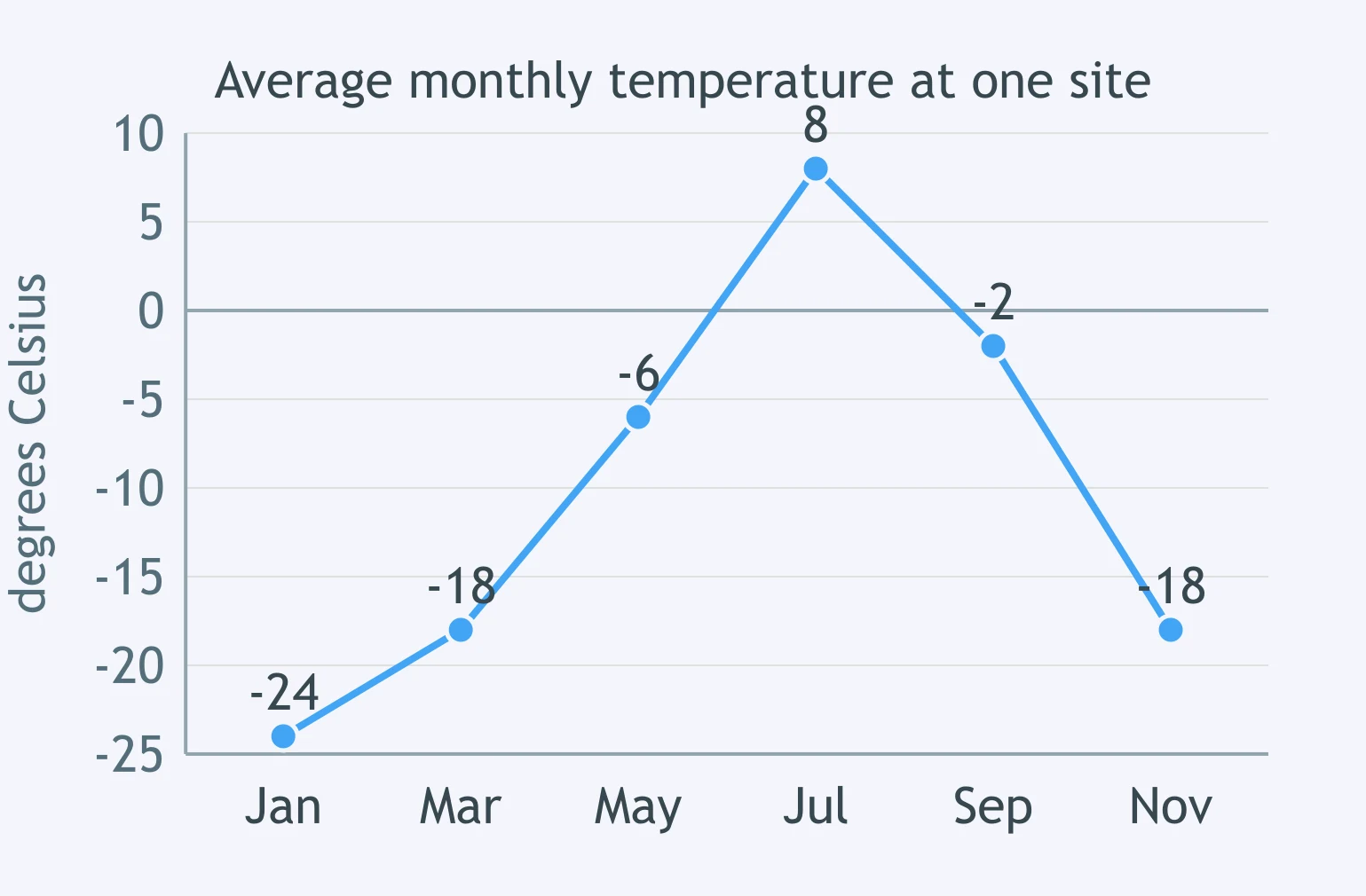
Which biome has warm temperatures and heavy rainfall all year and holds more species than any other land biome?
An estuary is the shallow zone where a river empties into the sea. Which feature makes estuaries among the most productive ecosystems on Earth?
A region is dominated by tall grasses with scattered trees, receives 50 to 90 cm of rain with a long dry season, burns regularly, and supports large grazing herds. Which biome is it?
Use the graph. Which human activity best explains the trend it shows?
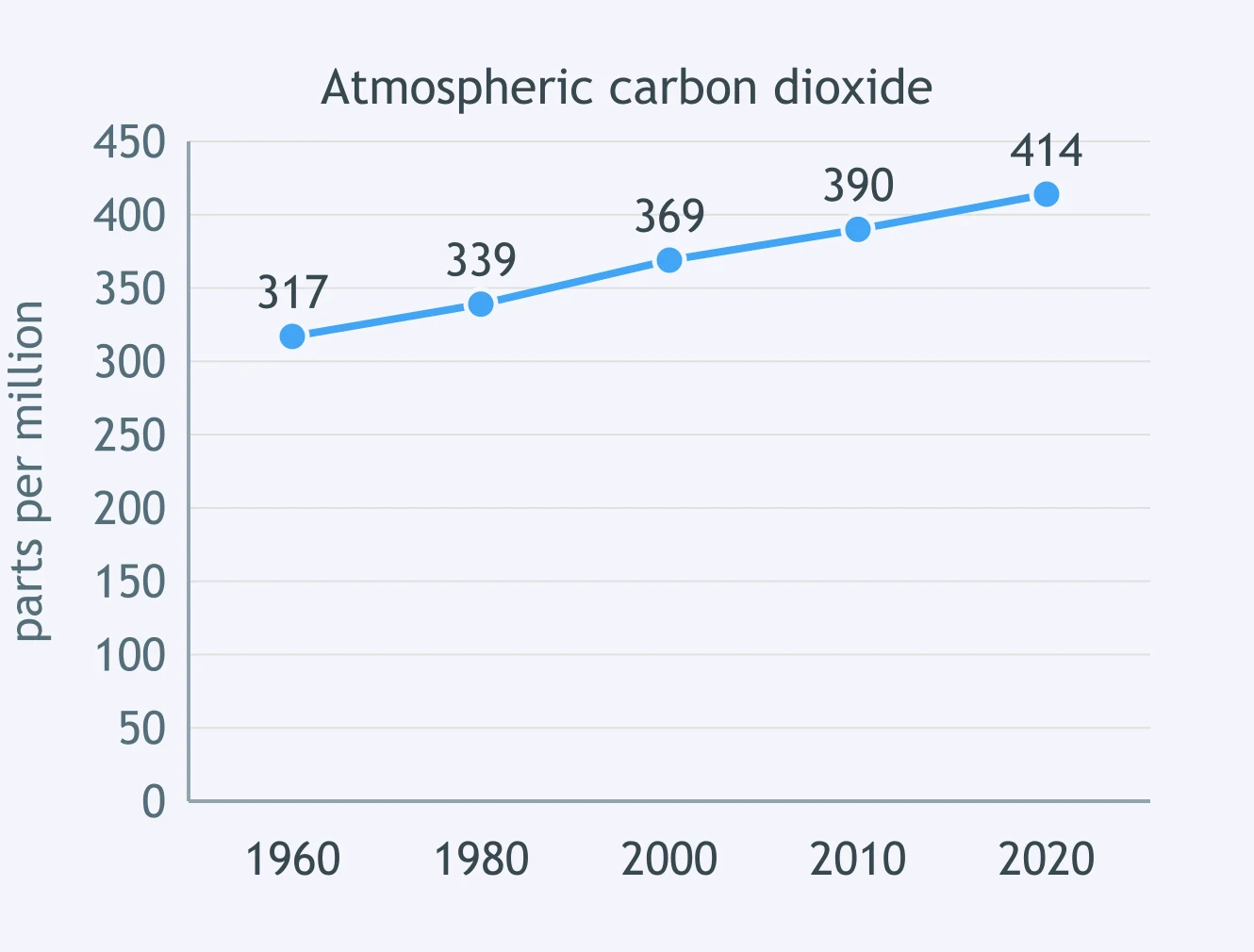
Wolves were returned to Yellowstone in 1995. Elk stopped lingering along the streams, willows recovered, and beaver and songbird numbers rose. What does this tell you about the wolf there?
Zebra mussels reached the Great Lakes in ships' ballast water and spread explosively, filtering out the plankton native mussels feed on. Why do introduced species often spread this fast?
A new highway cuts a large forest into two smaller patches. What is the most likely long-term effect on the forest species living there?
Crack the passcode before the zombies get in.
Answer, then swat bugs for bonus points.
Race through questions at your own speed.
Same question on every screen. Fastest wins.

Pick a tile, answer, hit bonuses and steals.
Living Environment Regents Review
40 questions