Loading
by BlastRoom
Students trace sound from a vibrating source through a medium to the structures of the ear.
#us_grade_8_science

40 questions
One question set, multiple game modes. Tap any game to see it in action. Not sure which to pick?
Answer to place stones and capture territory.
Outrun the snow together.
Earn blasts, then hunt the other team.
Answer to earn energy, then climb.

The class blasts through walls together.
Bid on mystery lots. Most money wins.
Sell tours. Nice, standard, or a total scam.

Answer, restock, and serve the rush.
More correct answers pulls the rope your way.
Answer, then shoot down the alien wave.
Answer, then tap to leap the frozen ridge.
A ringing alarm clock sits inside a sealed glass jar. As a pump removes the air, the ringing fades to silence, but the hammer is still seen striking the bell. What does this show?

A swimmer hangs underwater in a lake while a motorboat crosses far above. She hears the engine before her friend sitting on the shore does. What best explains her earlier hearing?

Two astronauts stand a few meters apart on the Moon's surface. One shouts as loudly as he can, and the other hears nothing until they switch on their radios. Why?

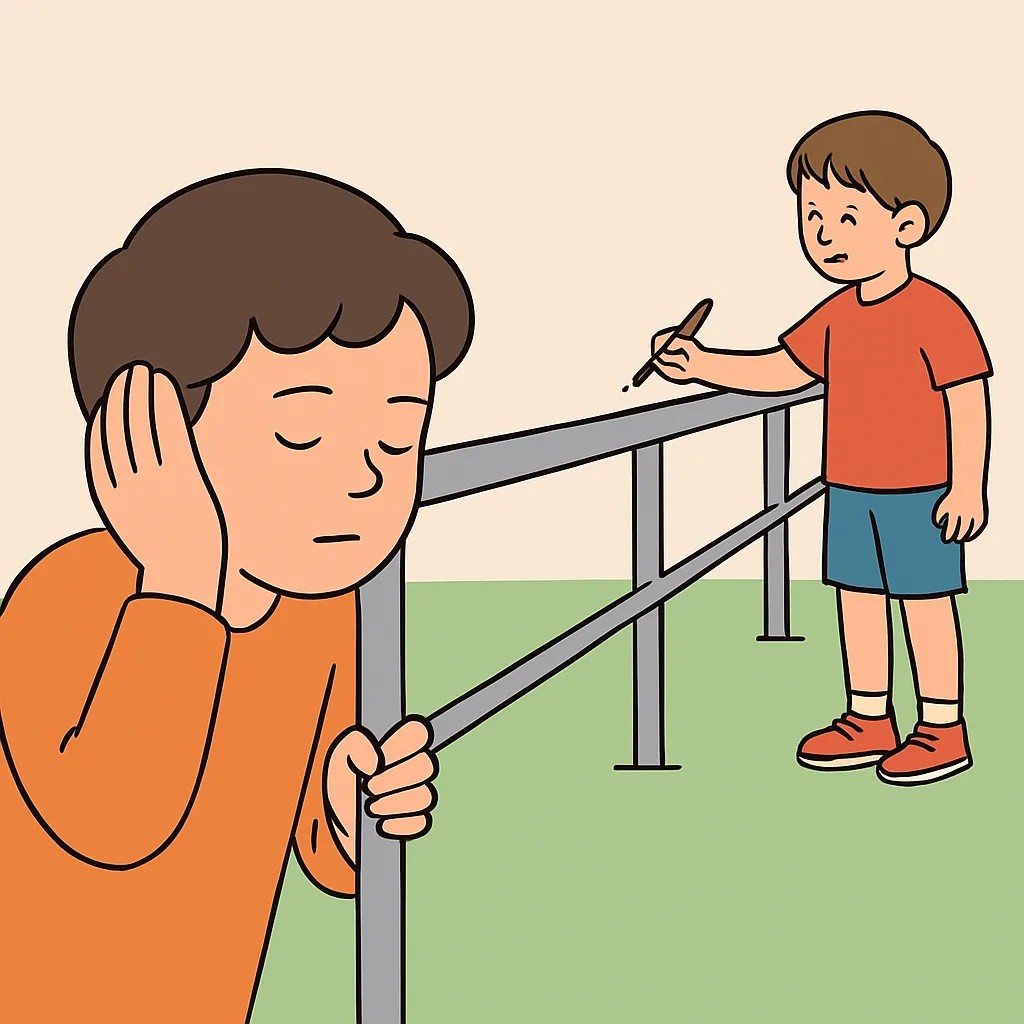
A boy taps one end of a long steel fence rail. His friend at the far end holds one ear on the rail and one in the air, and hears two taps. Which arrives first?
At room temperature, sound is measured at about 343 m/s in air, 1480 m/s in water, and 5000 m/s in steel. What pattern in the particles explains these measurements?
A tuning fork rings at 440 Hz above a swimming pool, and the sound passes down into the water. What happens to its frequency as it crosses from air into water?

Soft materials such as carpets and curtains absorb sound, so a furnished room echoes less than an empty one.
A class measures sound at 331 m/s in air at 0 degrees Celsius and 343 m/s in the same air at 20 degrees Celsius. What does warming the air do to the particles?
A girl in one room knocks on the wall, and her brother in the next room hears the knock. Trace the path the energy of that sound actually takes.
A hiker shouts across a canyon and hears his own shout again about two seconds later from the direction of the far rock wall. Which behavior of the wave produced the second sound?

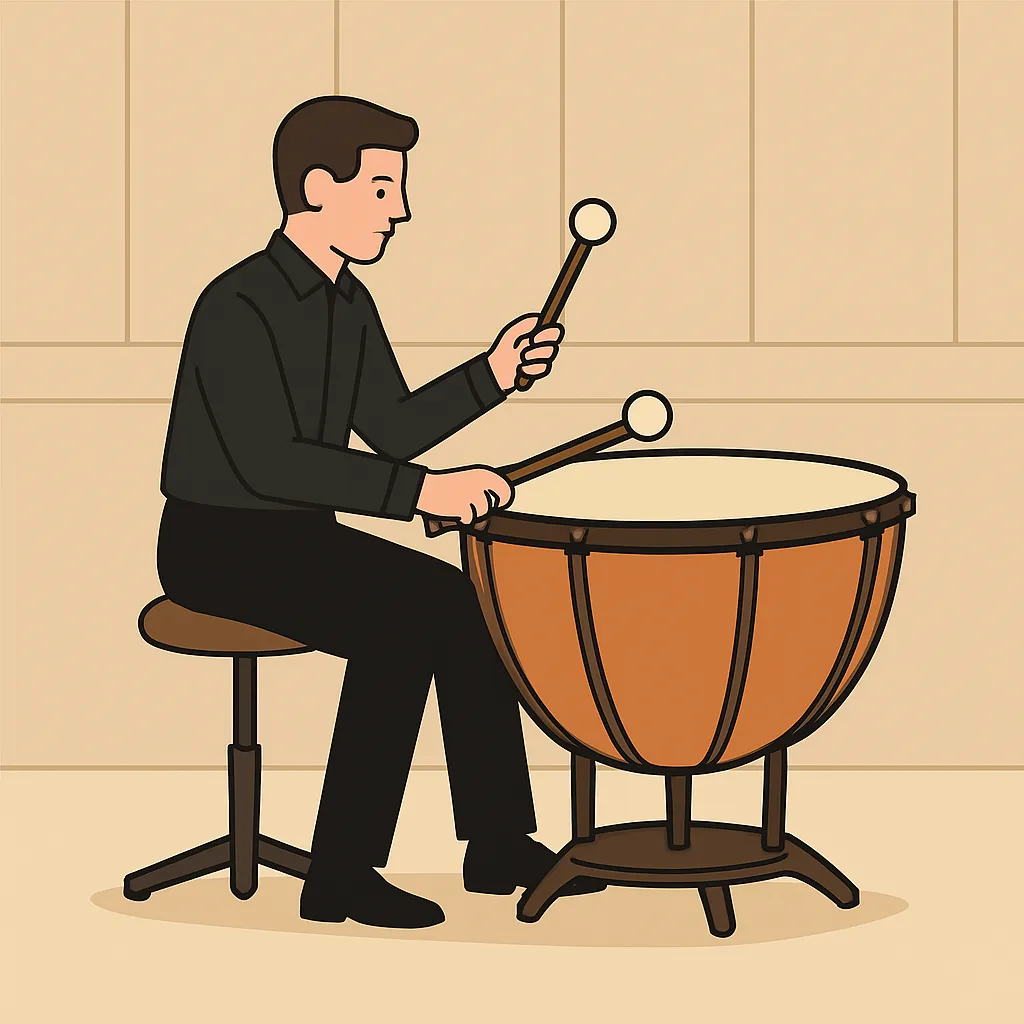
A drummer strikes a drum skin and the sound crosses the hall. What are the air particles between the drum and a listener doing while the sound travels?
A speaker cone pushes outward into still air. Describe the region of air directly in front of the cone at that instant.
A speaker cone pulls back from the air in front of it. What forms in the air at that moment, and why?
Sound is classified as a longitudinal wave rather than a transverse wave. Which observation about the medium supports that classification?
A student models waves with a long stretched spring. She pushes and pulls one end along the spring's length, then shakes another end side to side. Which motion models a sound wave in air, and why?

A firework explodes high above a field and a girl on the ground hears the bang. Does the air that was beside the firework reach her ear?
A diagram of a sound wave in air shows bands of squeezed particles separated by bands of spread-out particles. Which distance equals one wavelength of that wave?
A sensor at a fixed point in the air counts 500 compressions passing it in 2 seconds. What is the frequency of the sound?
Earplugs protect hearing by lowering the amplitude of the sound waves that reach the eardrum.
A bell rings once in an open field. A student close by and one far away both hear it, but the far student hears it faintly. What is different about the air particles near her?
A microphone records two notes. Trace 1 shows 4 waves in 0.01 s, peaks 2 units tall. Trace 2 shows 8 waves in 0.01 s, peaks 2 units tall. Compared with the first, note 2 is
A microphone trace of a note shows 6 waves in 0.02 s with peaks 1 unit tall. A second trace shows 6 waves in 0.02 s with peaks 3 units tall. How does the second note sound?
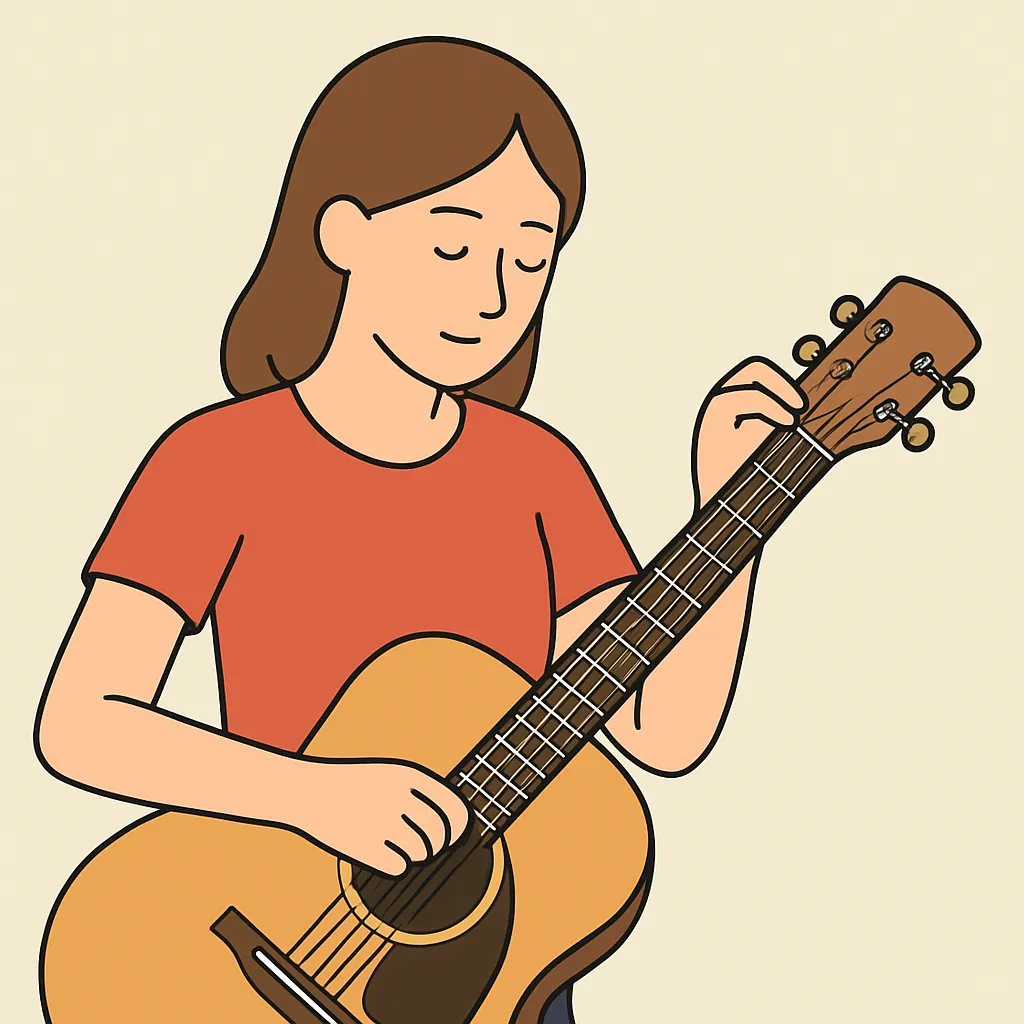
A girl tightens the tuning peg of a guitar string and plucks it again. Her recording now shows more complete waves in the same 0.01 s than before. What has changed about the note?
A recorded note completes 5 full waves in 0.01 s. What is its frequency?
A boy turns down the volume knob while a steady tone plays. The trace still shows 10 waves in 0.01 s, but the peaks are half as tall as before. What has happened to the tone?
Trace A shows 12 waves in 0.01 s with peaks 1 unit tall. Trace B shows 3 waves in 0.01 s with peaks 4 units tall. Compared with A, the note in B is
A singer holds one note, then sings the very same note more softly. Describe how the second recording differs from the first.

A healthy young person hears sounds between about 20 Hz and 20,000 Hz. A speaker produces a steady vibration of 12 Hz that a meter clearly detects, yet the class hears nothing. Why?
A sound wave with a larger amplitude carries more energy than a sound wave with a smaller amplitude.
Increasing the amplitude of a sound wave, with its frequency unchanged, raises the pitch of the sound.
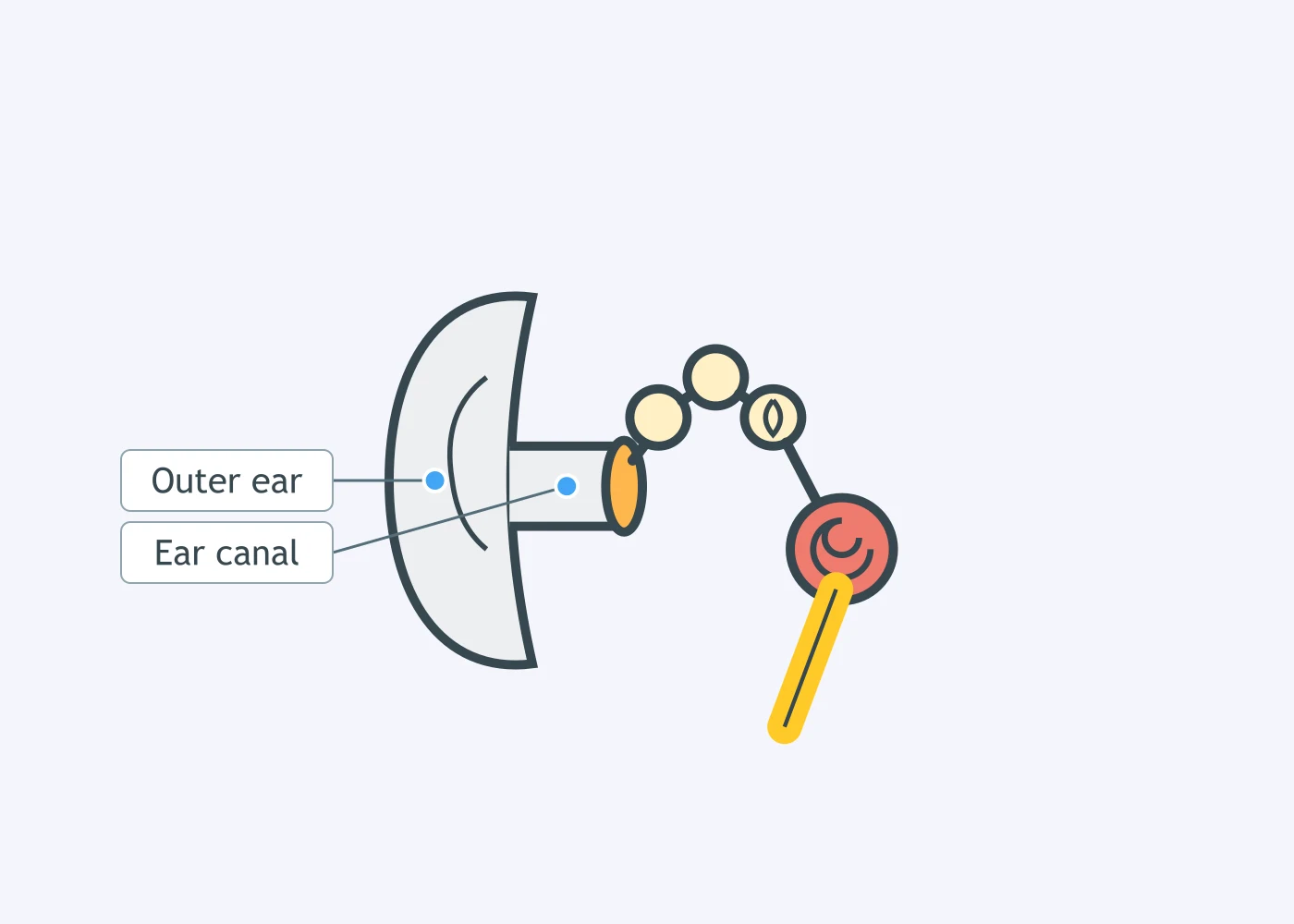
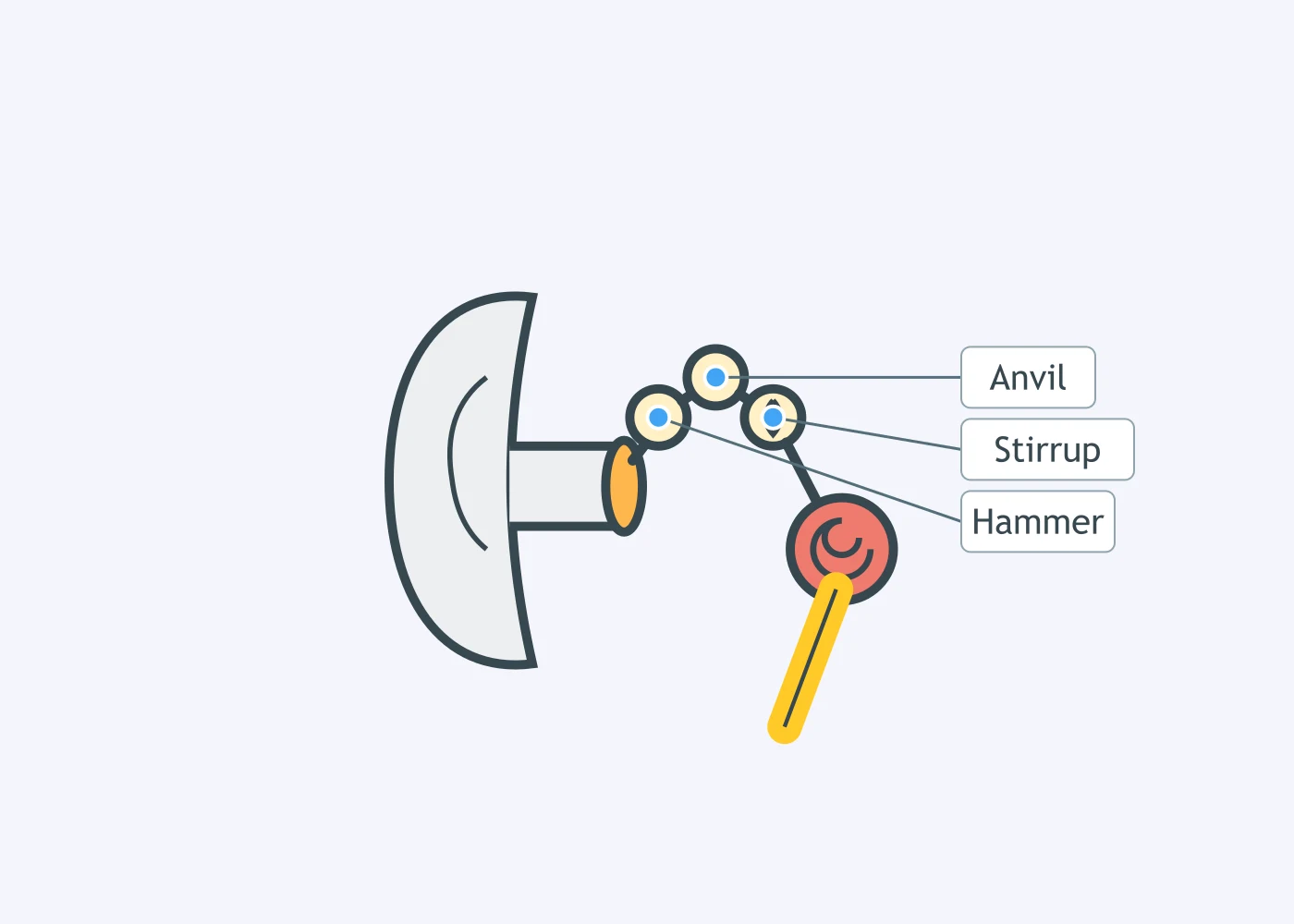
A sound wave travels down the ear canal. In which order do the structures act as the sound becomes a signal the brain can use?
Compressions and rarefactions arrive at the end of the ear canal. Which structure is set vibrating first, and what makes it vibrate?
Doctors describe the hammer, anvil and stirrup of the middle ear as a lever chain. What do these three small bones do for the vibration passed to them?
The stirrup taps against the oval window of the fluid-filled cochlea. What happens inside the cochlea as a result?

Hair cells in a student's cochlea generate a burst of electrical signals when a bell rings. What carries those signals to the brain?
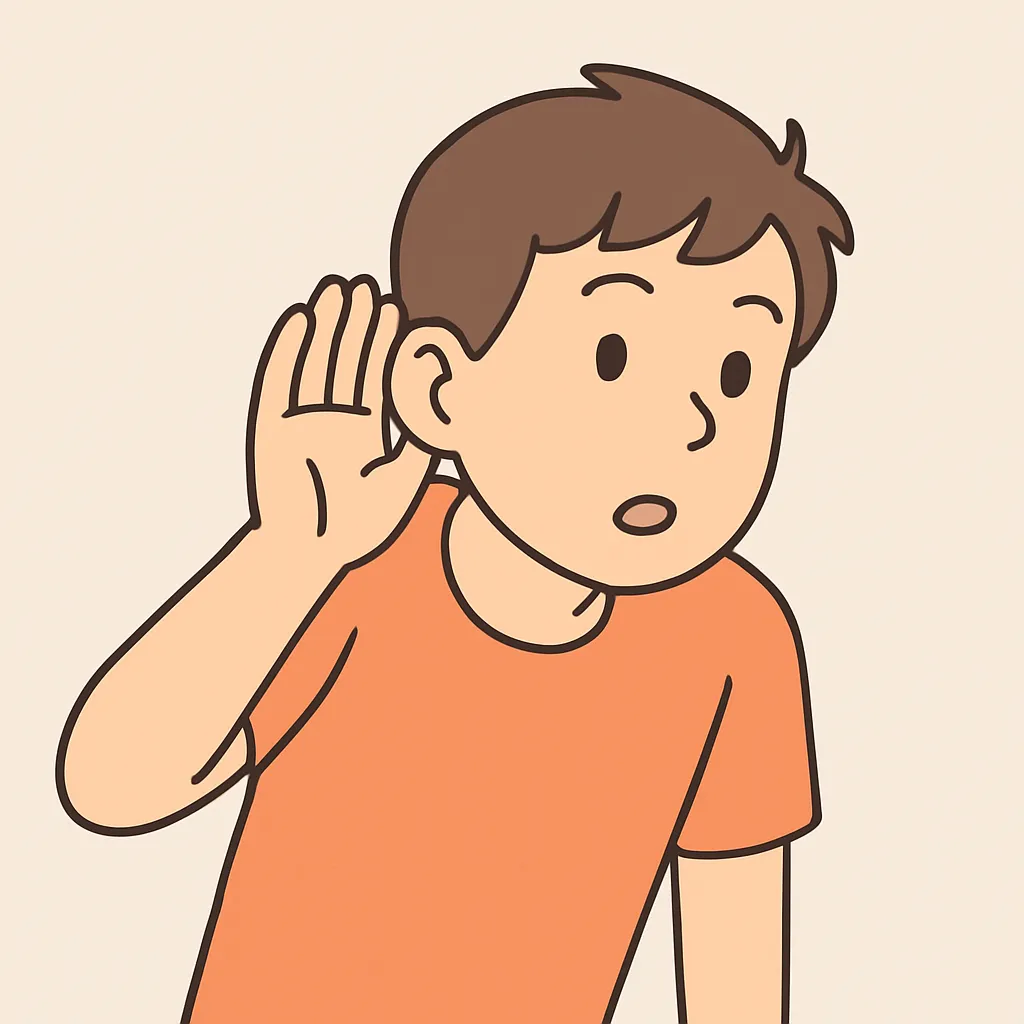
A boy cups his hand behind the outer flap of his ear to hear a distant voice better. What does that flap normally do, and what does the cupped hand add?
A patient's eardrum vibrates normally and her auditory nerve tests healthy, but the joints between her three middle-ear bones have stiffened. Which claim does this evidence support?
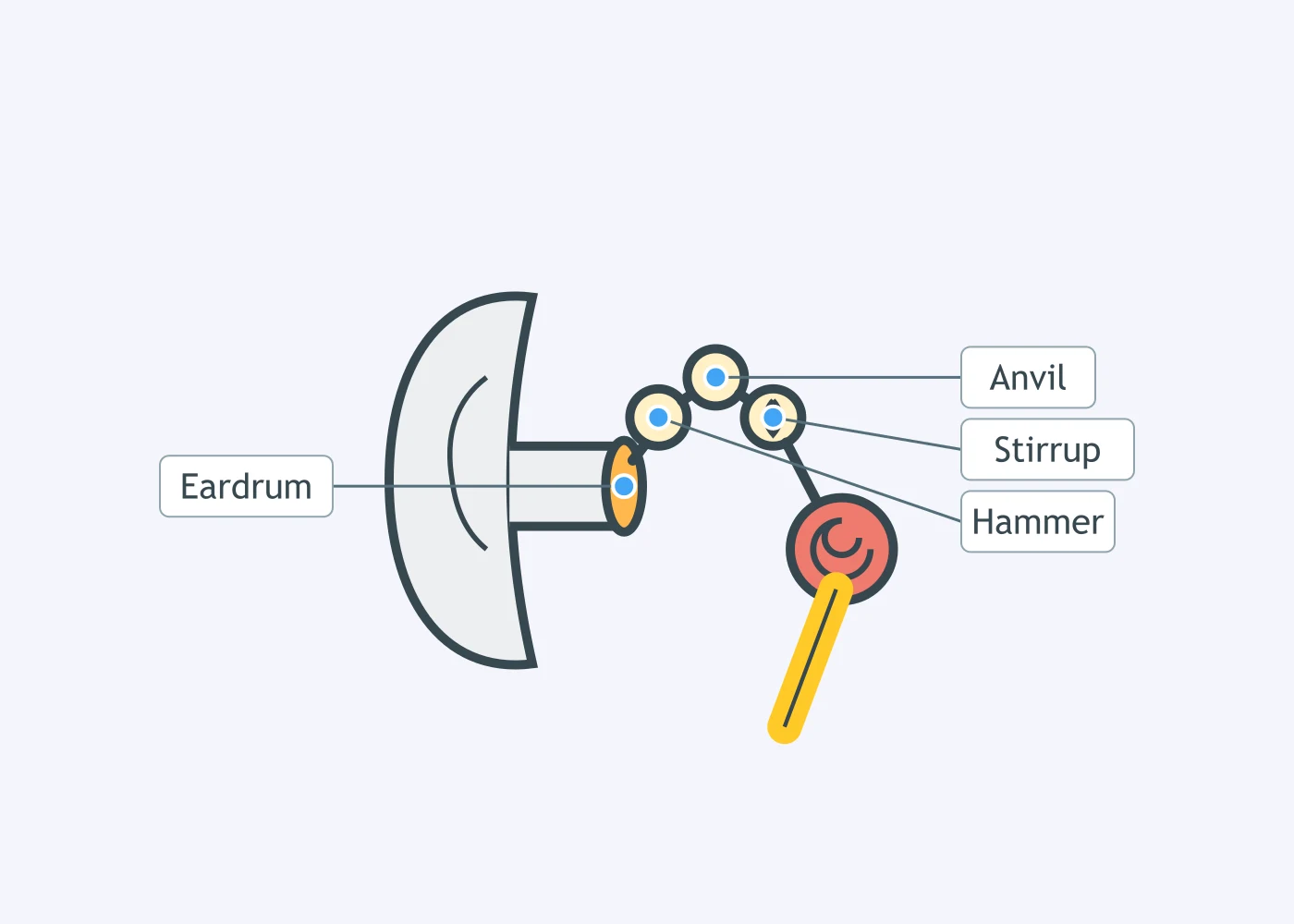
A doctor finds a small tear in a boy's eardrum after an infection. Why does that tear make sound harder for him to hear?
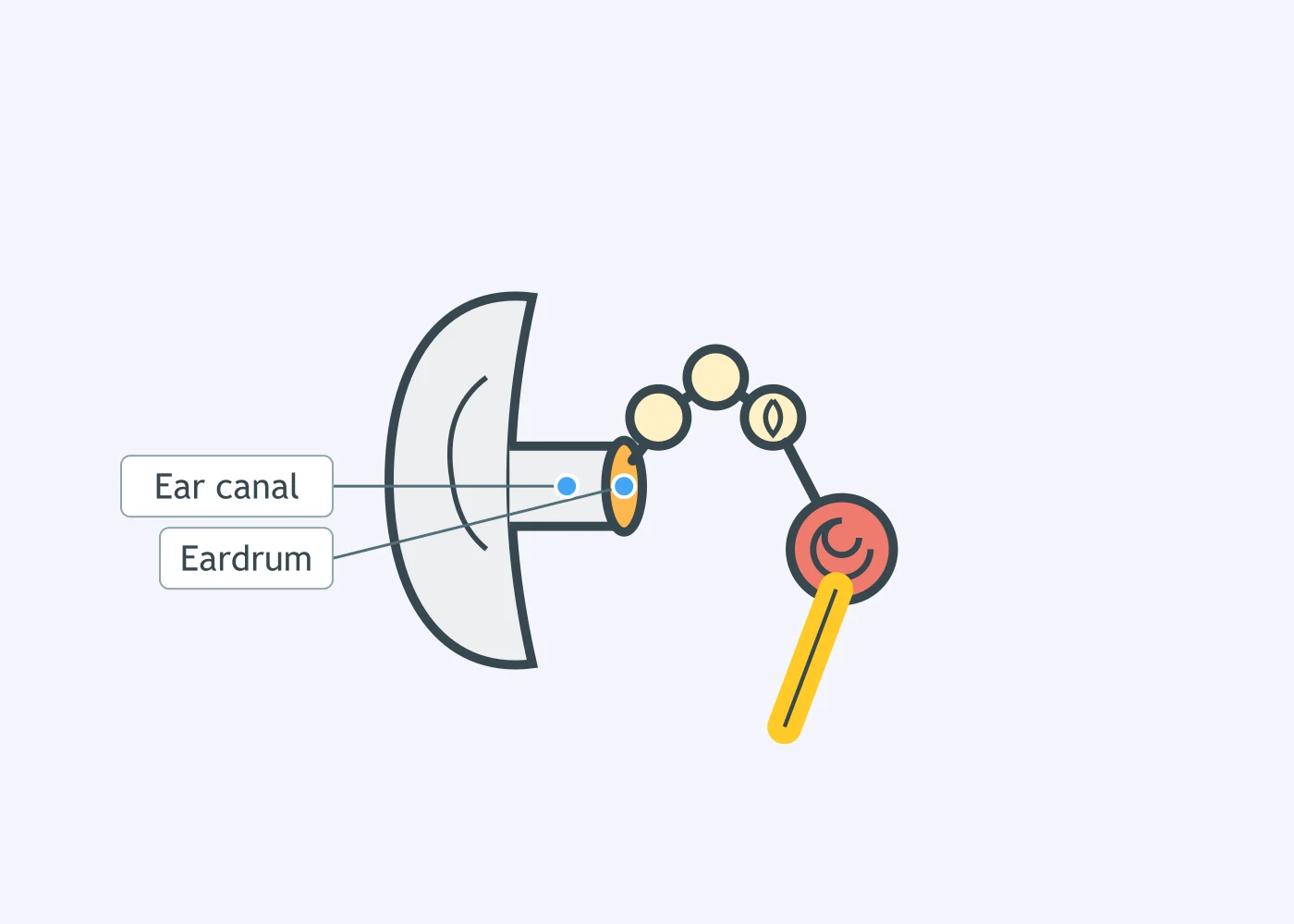
A student writes that the eardrum sends messages about sound straight to the brain. Which correction fits how the ear works?
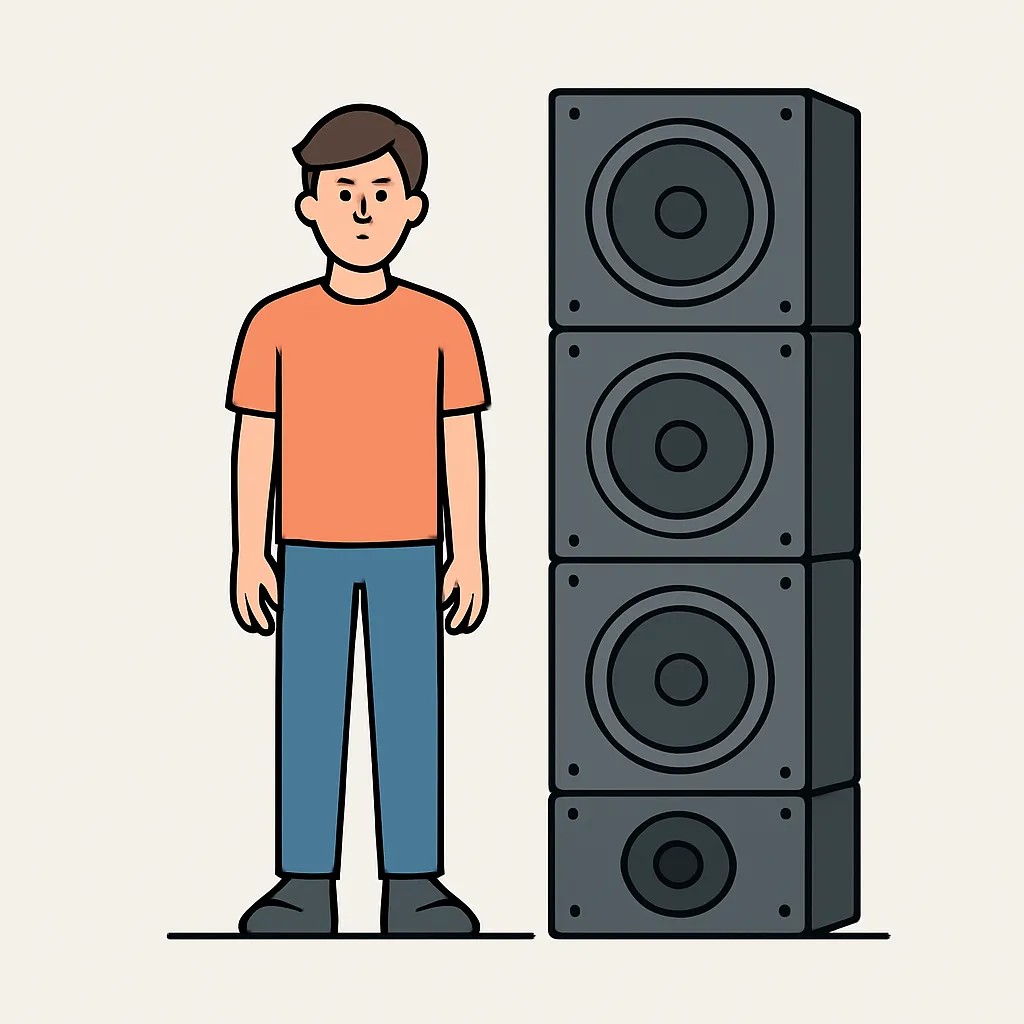
Teenagers who stand beside huge concert speakers for hours can lose hearing that never returns. Which structure is damaged, and why is the loss permanent?
Crack the passcode before the zombies get in.
Answer, then swat bugs for bonus points.
Race through questions at your own speed.
Same question on every screen. Fastest wins.

Pick a tile, answer, hit bonuses and steals.
Uses of Electromagnetic Waves
40 questions