Loading
by BlastRoom
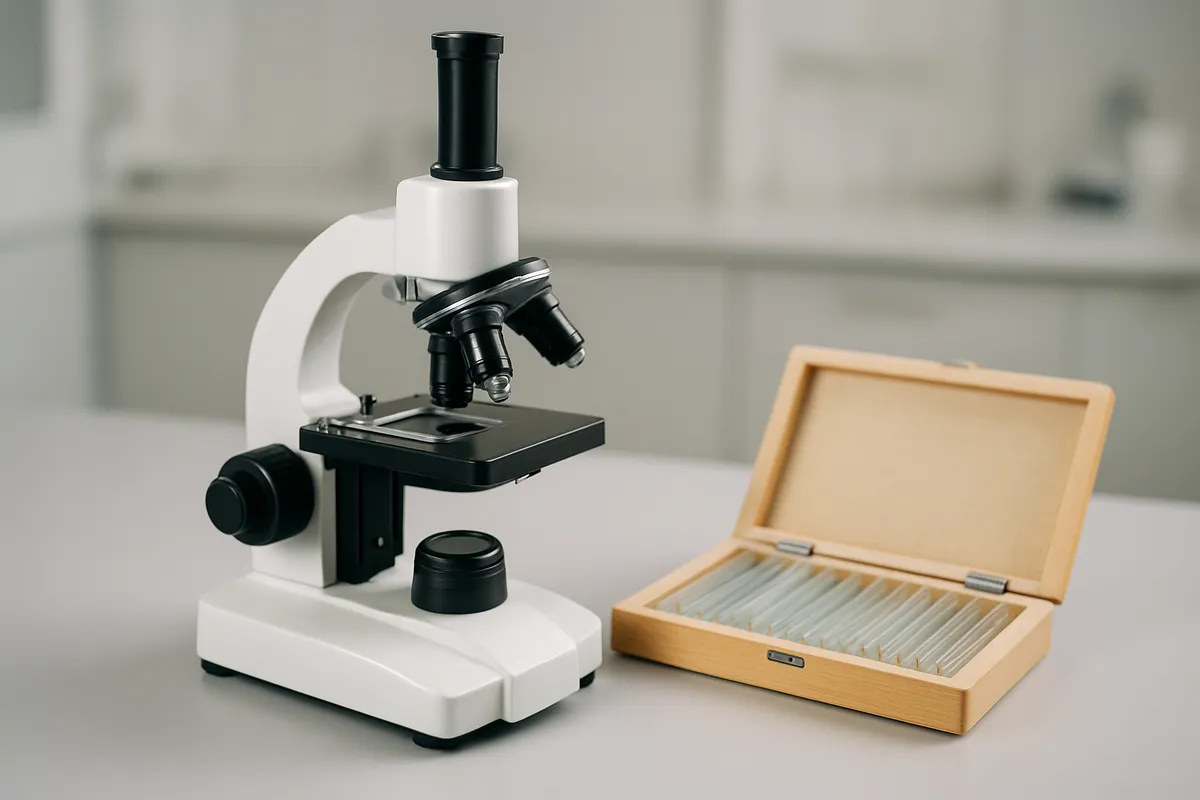
Naming the parts, calculating total magnification and preparing a wet mount.
#us_hs_anatomy_physiology
20 questions
One question set, multiple game modes. Tap any game to see it in action. Not sure which to pick?
Answer to place stones and capture territory.
Outrun the snow together.
Earn blasts, then hunt the other team.
Answer to earn energy, then climb.

The class blasts through walls together.
Bid on mystery lots. Most money wins.
Sell tours. Nice, standard, or a total scam.

Answer, restock, and serve the rush.
More correct answers pulls the rope your way.
Answer, then shoot down the alien wave.
Answer, then tap to leap the frozen ridge.
Which part controls how much light reaches the specimen from below the stage?
A slide rests on a flat platform with an opening that lets light pass through it. Which part is this?
Which lens sits closest to the slide and supplies the main powers used to view the specimen?
A student views the image through the top lens of a compound light microscope. Which part is being used?
Which part moves the stage or body tube quickly to bring a specimen into rough focus at low power?
After the image is roughly focused, which part makes small changes that sharpen the image at higher power?
Which rotating part holds several objective lenses and lets the user switch viewing powers?
A specimen is viewed with a 10× eyepiece and a 4× objective. What total magnification is in use?
The eyepiece is 10× and the objective is 10×. What is the total magnification?
A microscope has a 15× eyepiece and a 40× objective clicked into place. What total magnification is being used?
A student uses a 5× eyepiece with a 40× objective. What total magnification results?
A specimen is viewed through a 10× eyepiece with the 40× objective in place. What total magnification is shown?
A coverslip is held at an angle against a drop of water and then lowered slowly. Why is it lowered this way?
A very thin specimen is used for a wet mount before the coverslip is added. Why must the sample be thin?
A nearly transparent wet mount is hard to see, so a drop of stain is added at the coverslip edge. Why add stain?
A student wipes a slide and coverslip before making a wet mount. What is the reason for this step?
A student changes from the 4× objective to the 40× objective over the same specimen. What happens to brightness and field width?
Before switching to high power, a student centers the specimen while it is in focus at low power. What follows from centering first?
A student turns the large focusing knob while a high-power lens is very close to the coverslip. What is the likely consequence?
A student opens the light-control disk beneath the stage while viewing a dark specimen. What happens next?
Crack the passcode before the zombies get in.
Answer, then swat bugs for bonus points.
Race through questions at your own speed.
Same question on every screen. Fastest wins.

Pick a tile, answer, hit bonuses and steals.
Case Studies: Reading the Symptoms
20 questions