Loading
by BlastRoom
Practice treating projectile motion as independent horizontal and vertical components.
#physics

25 questions
One question set, multiple game modes. Tap any game to see it in action. Not sure which to pick?
Answer to place stones and capture territory.
Outrun the snow together.
Earn blasts, then hunt the other team.
Answer to earn energy, then climb.

The class blasts through walls together.
Bid on mystery lots. Most money wins.
Sell tours. Nice, standard, or a total scam.

Answer, restock, and serve the rush.
More correct answers pulls the rope your way.
Answer, then shoot down the alien wave.
Answer, then tap to leap the frozen ridge.
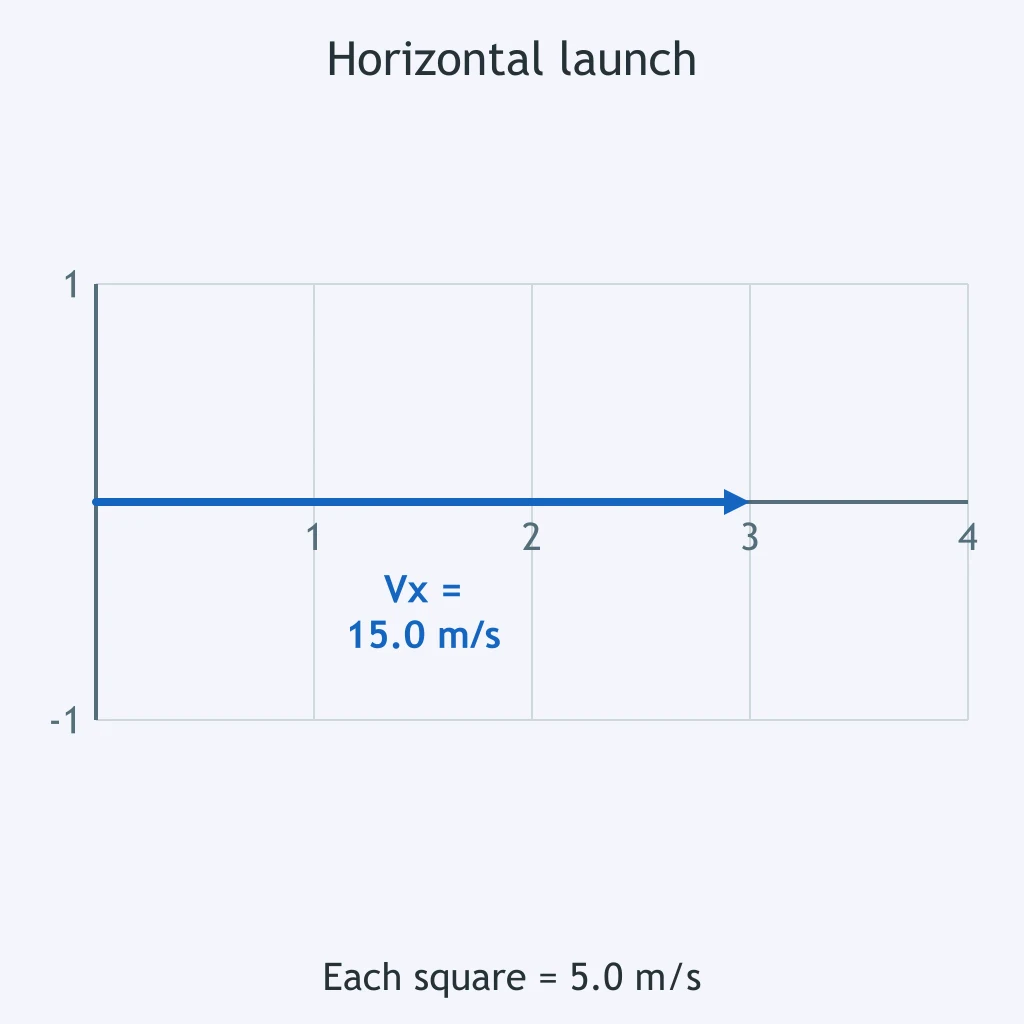
The figure shows a ball launched horizontally from a 19.6 m-high table with vx = 15.0 m/s. Take g = 9.8 m/s² and ignore air resistance. How far from the table base does it land?
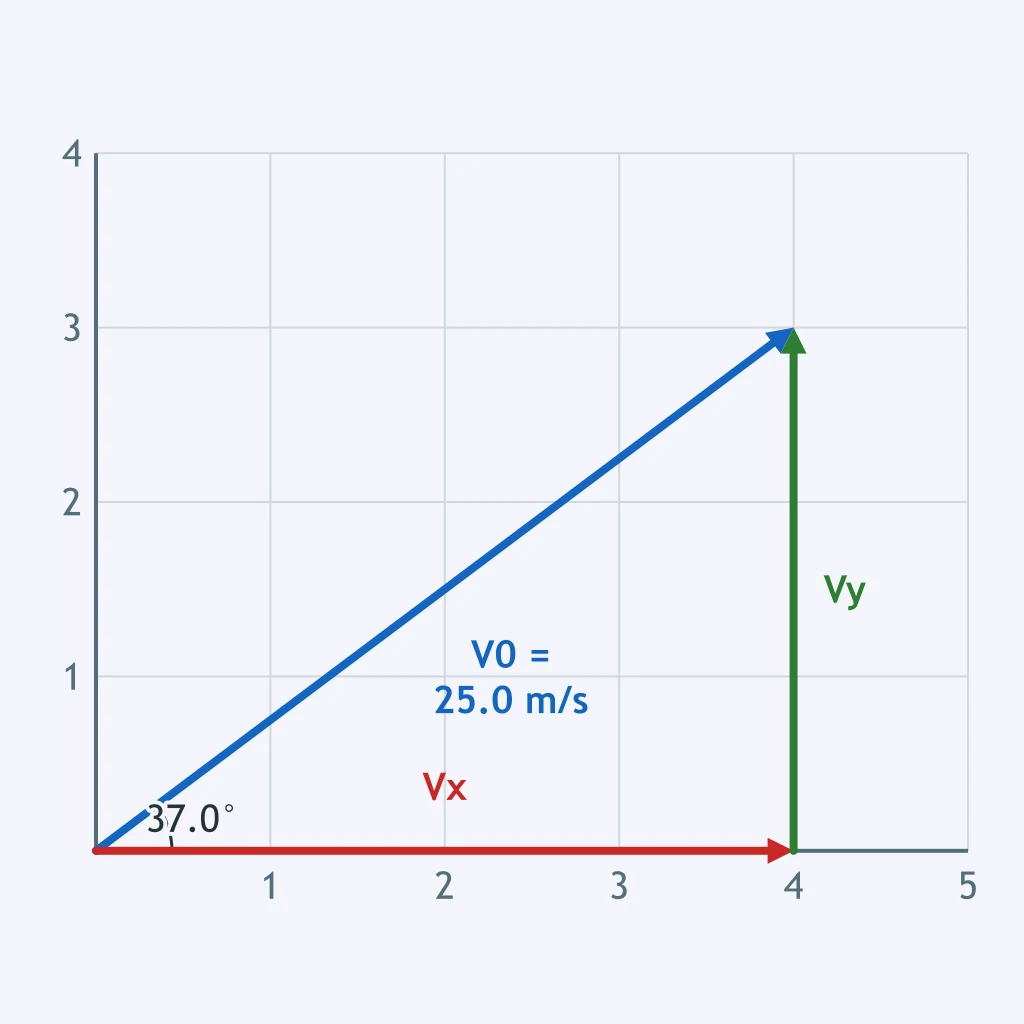
The figure shows a projectile launched from 0 m height at 25.0 m/s and 37.0° above horizontal. With g = 9.8 m/s² and no air resistance, what is v0x?
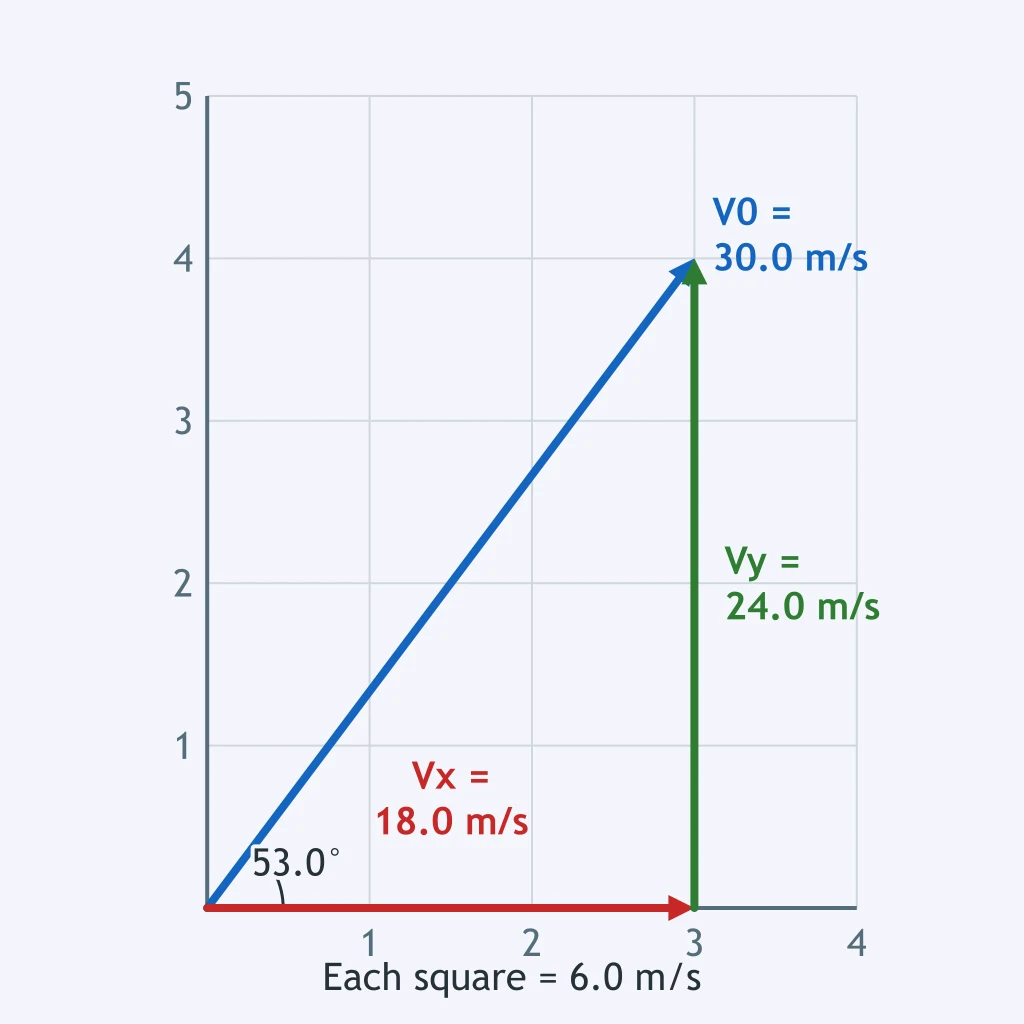
The figure shows a ball launched from 0 m height at 30.0 m/s and 53.0° above horizontal. Take g = 9.8 m/s² and ignore air resistance. How long does it take to reach the top?
The figure shows a projectile launched from level ground at 28.0 m/s and 30.0° above horizontal. Take g = 9.8 m/s² and ignore air resistance. What is its time of flight?
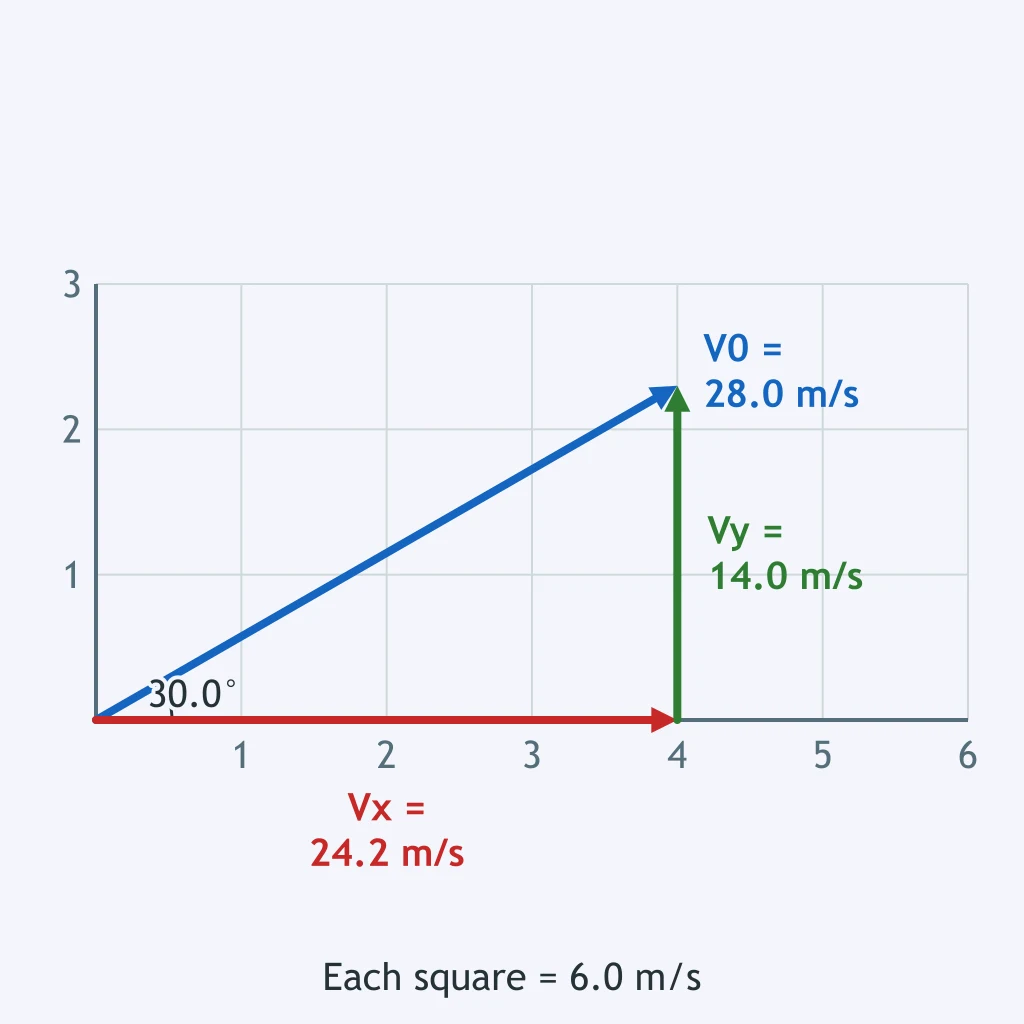
The figure shows a projectile launched from level ground at 20.0 m/s and 45.0° above horizontal. Take g = 9.8 m/s² and ignore air resistance. What is its range?
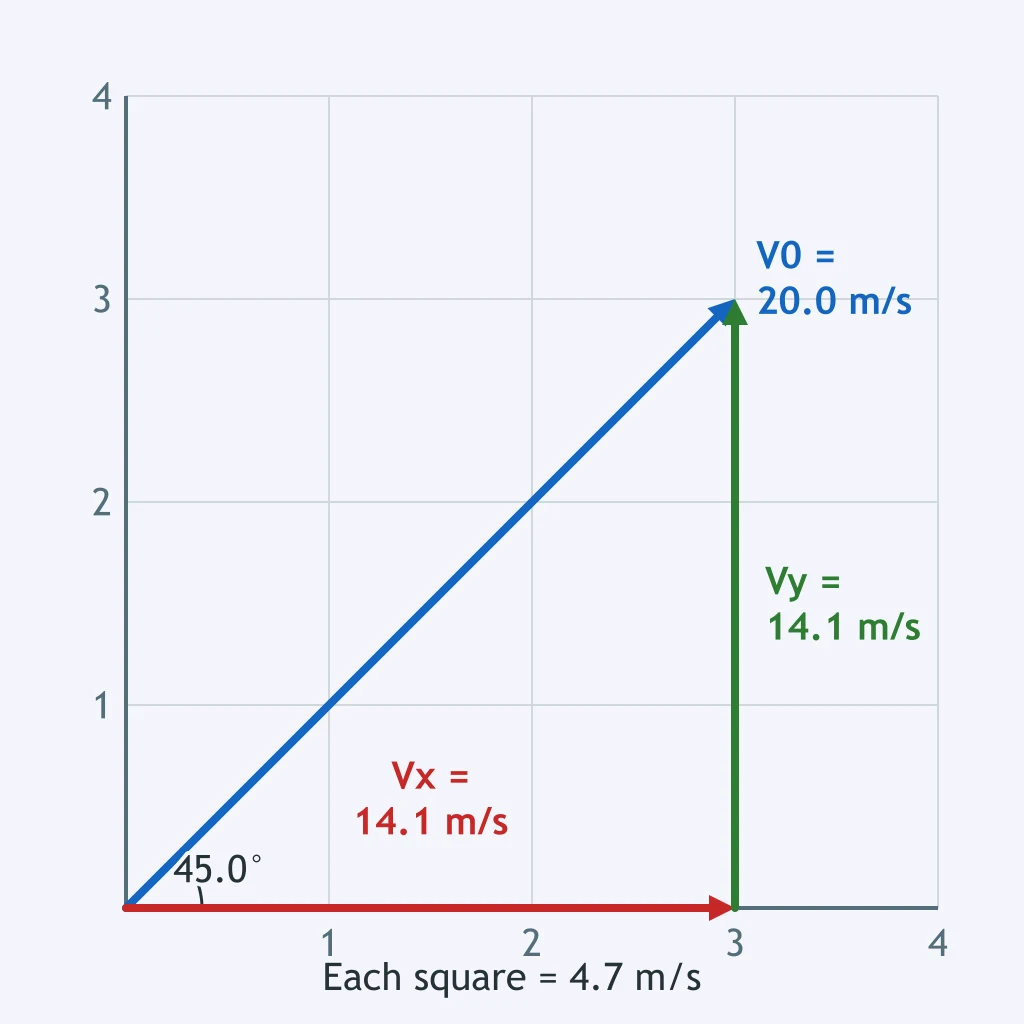
The figure shows a projectile launched from 0 m height at 18.0 m/s and 30.0° above horizontal. With upward positive and g = 9.8 m/s², what is vy after 1.0 s?
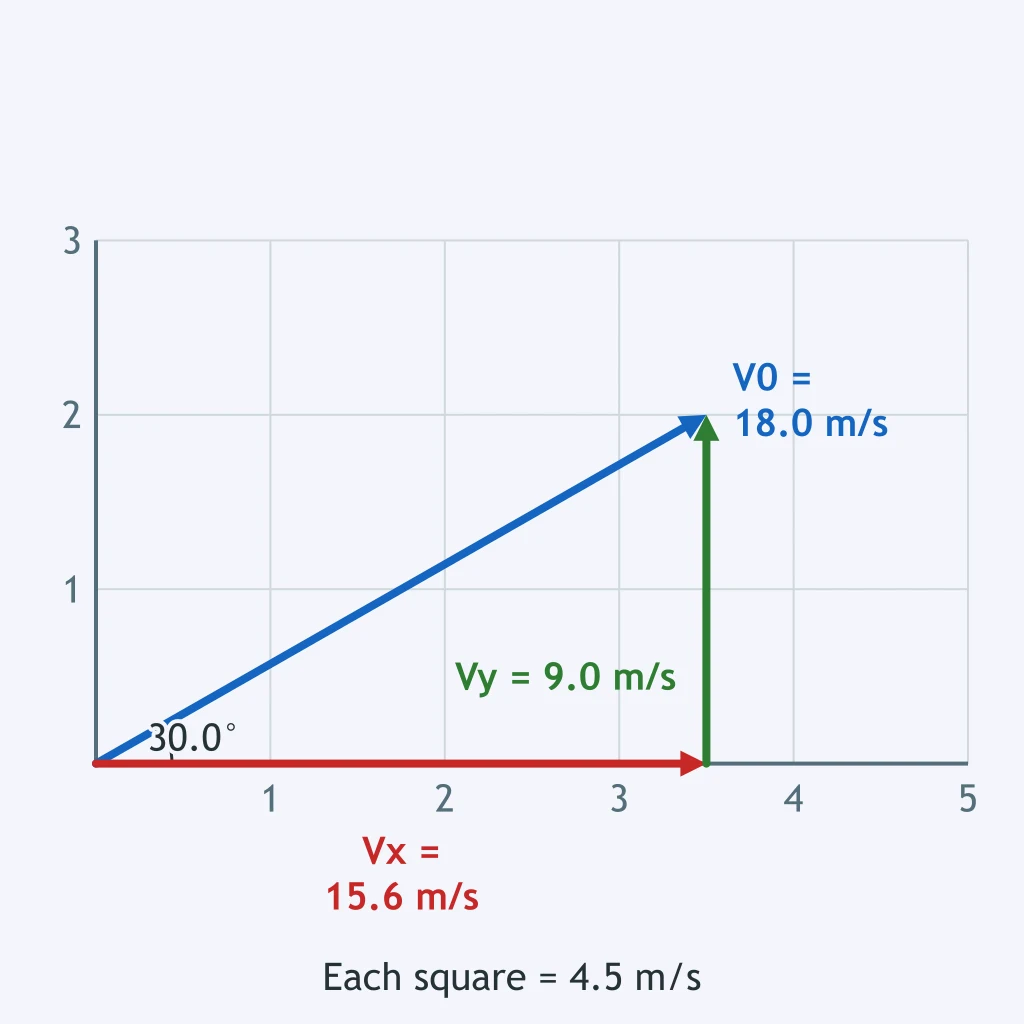
The graph shows horizontal velocity for a projectile launched from 0 m height at 12.0 m/s horizontally. With g = 9.8 m/s² and no air resistance, what does the flat line show?
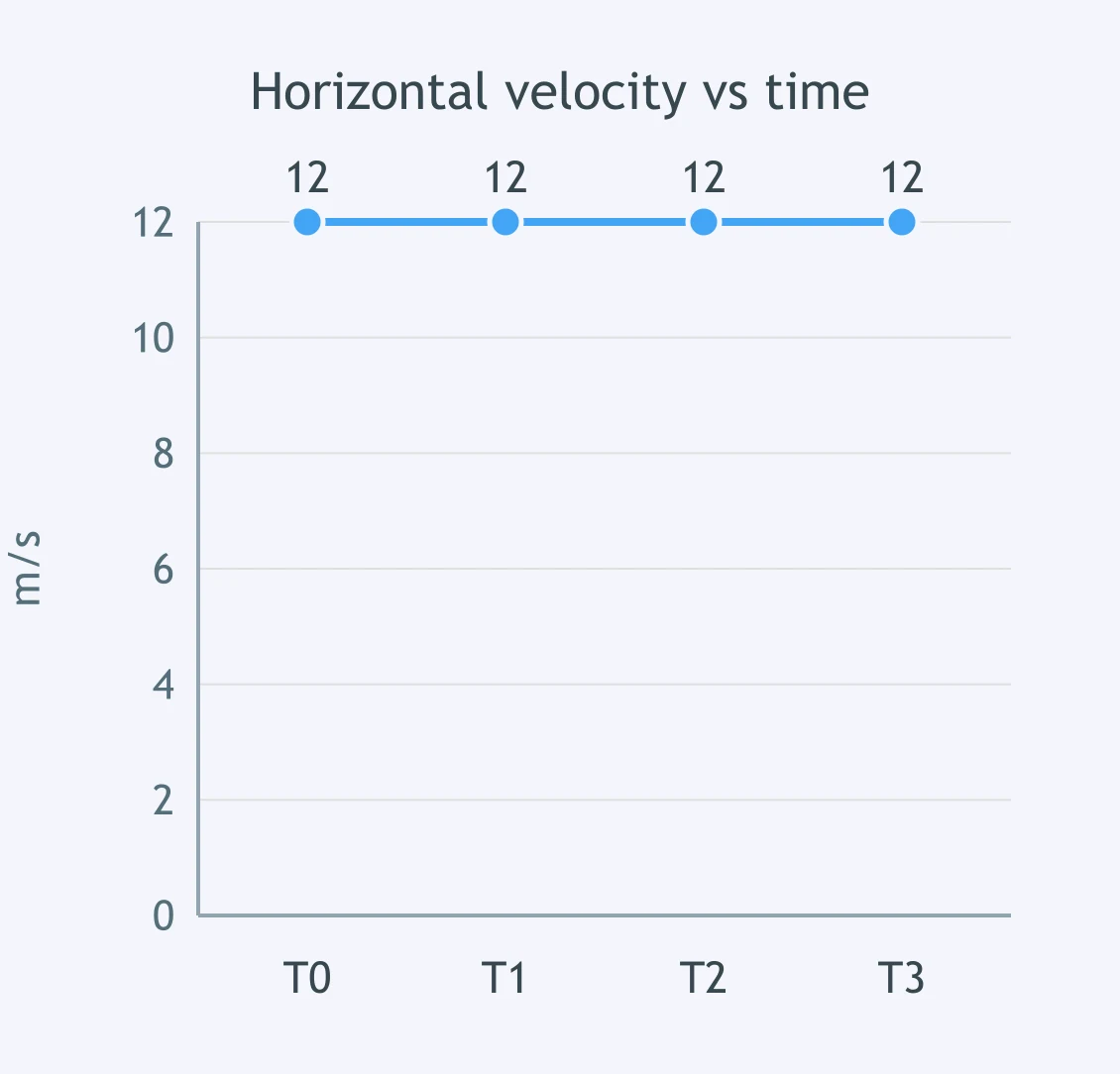
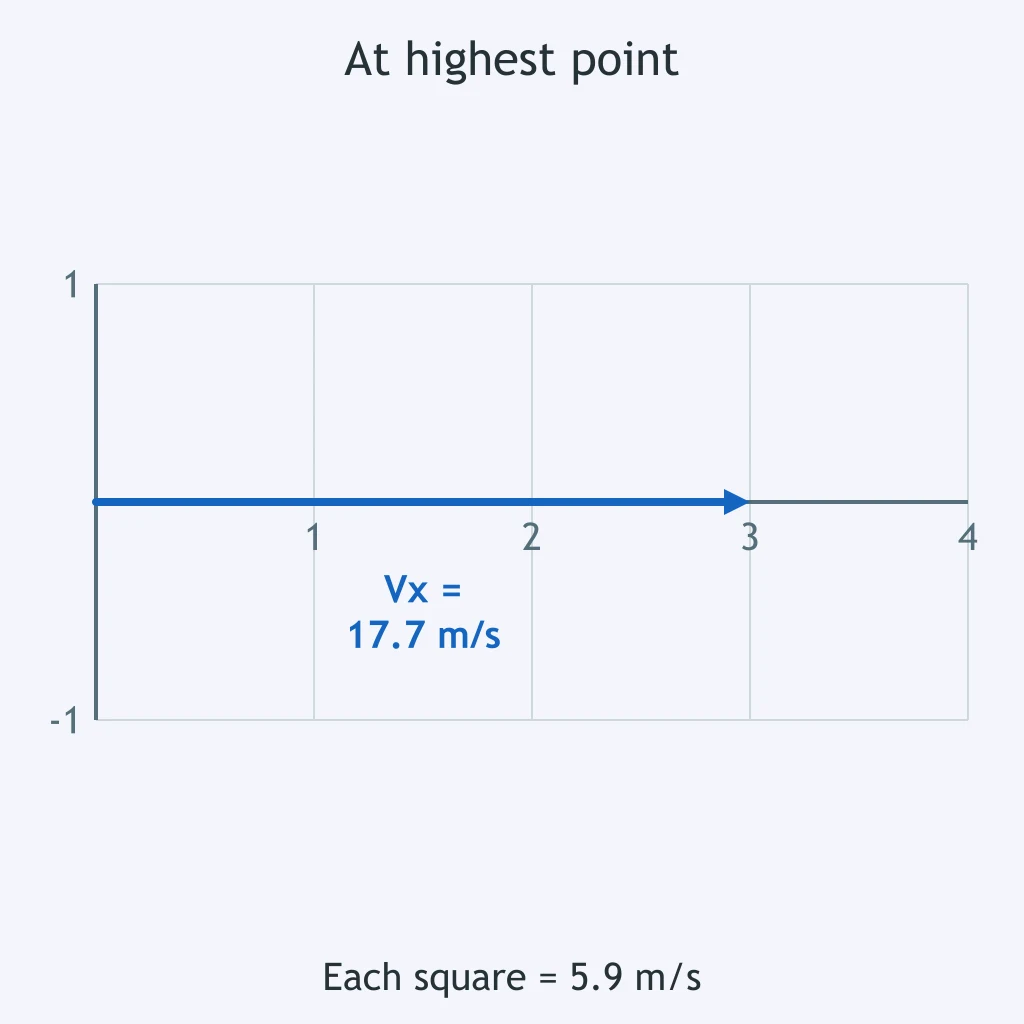
The figure shows a projectile at its highest point after launch from 0 m height at 25.0 m/s and 45.0°. Take g = 9.8 m/s² and ignore air resistance. What is its acceleration then?
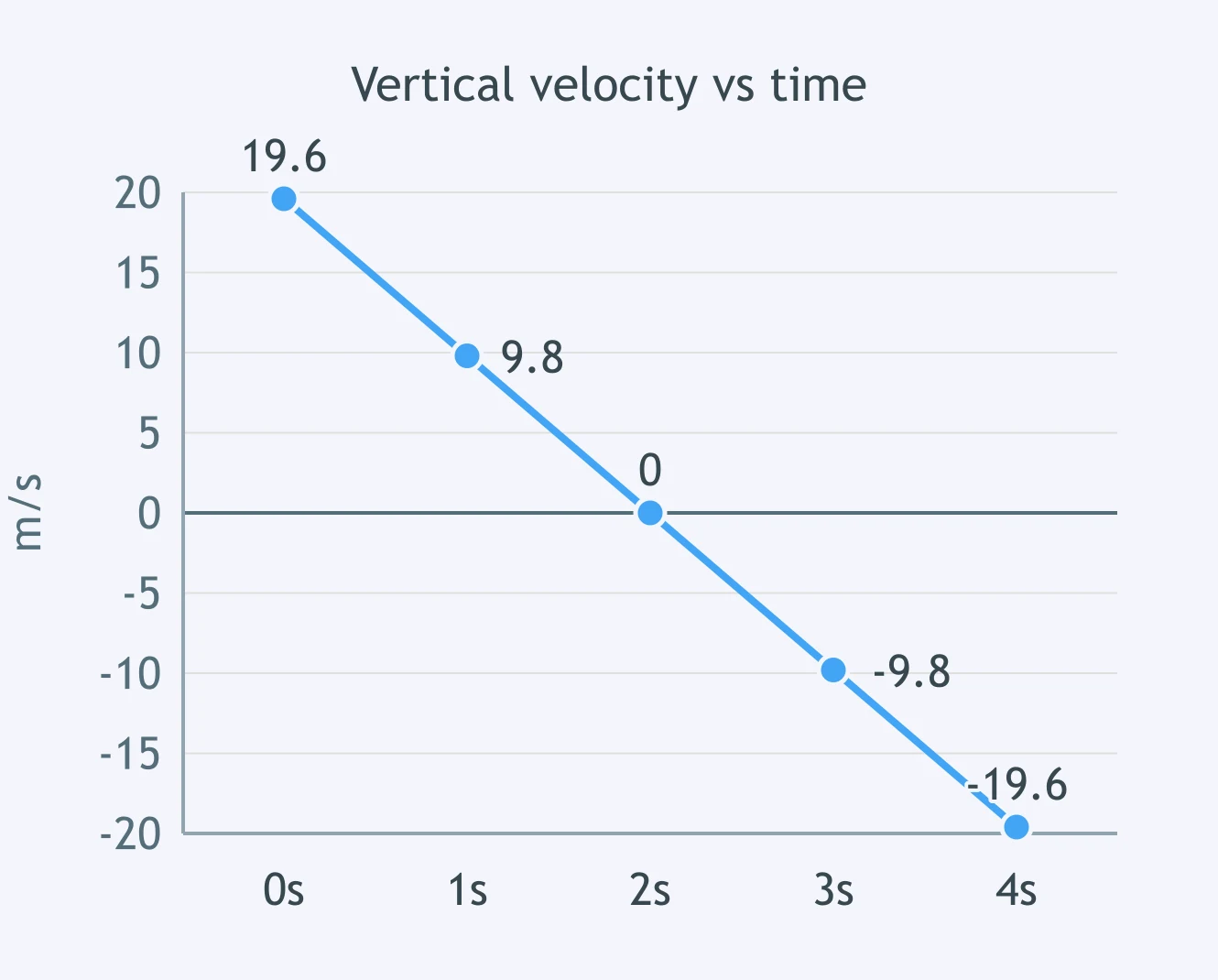
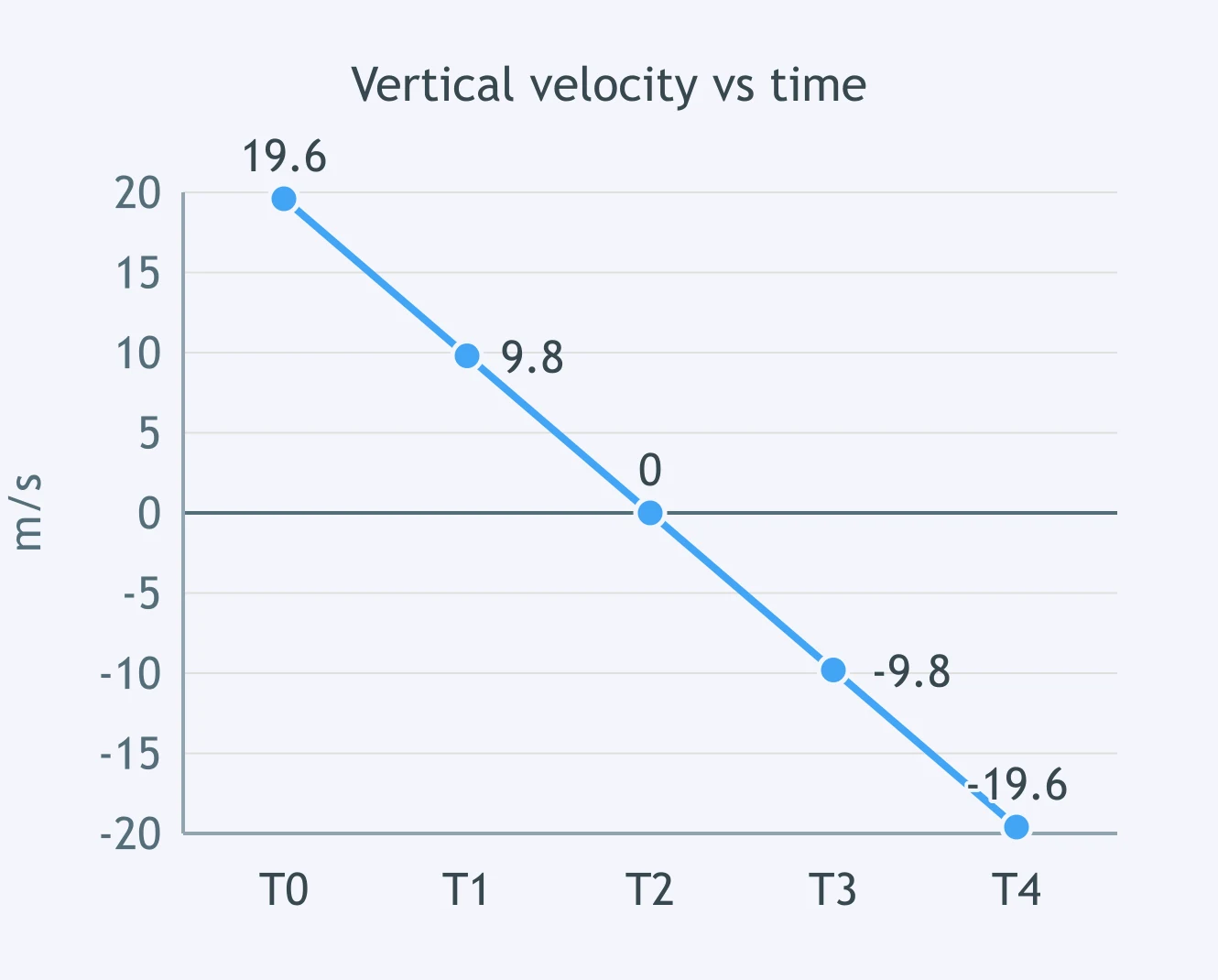
The graph shows vertical velocity for a projectile launched from 0 m height. Take g = 9.8 m/s² and ignore air resistance. What physical quantity is the graph's slope?
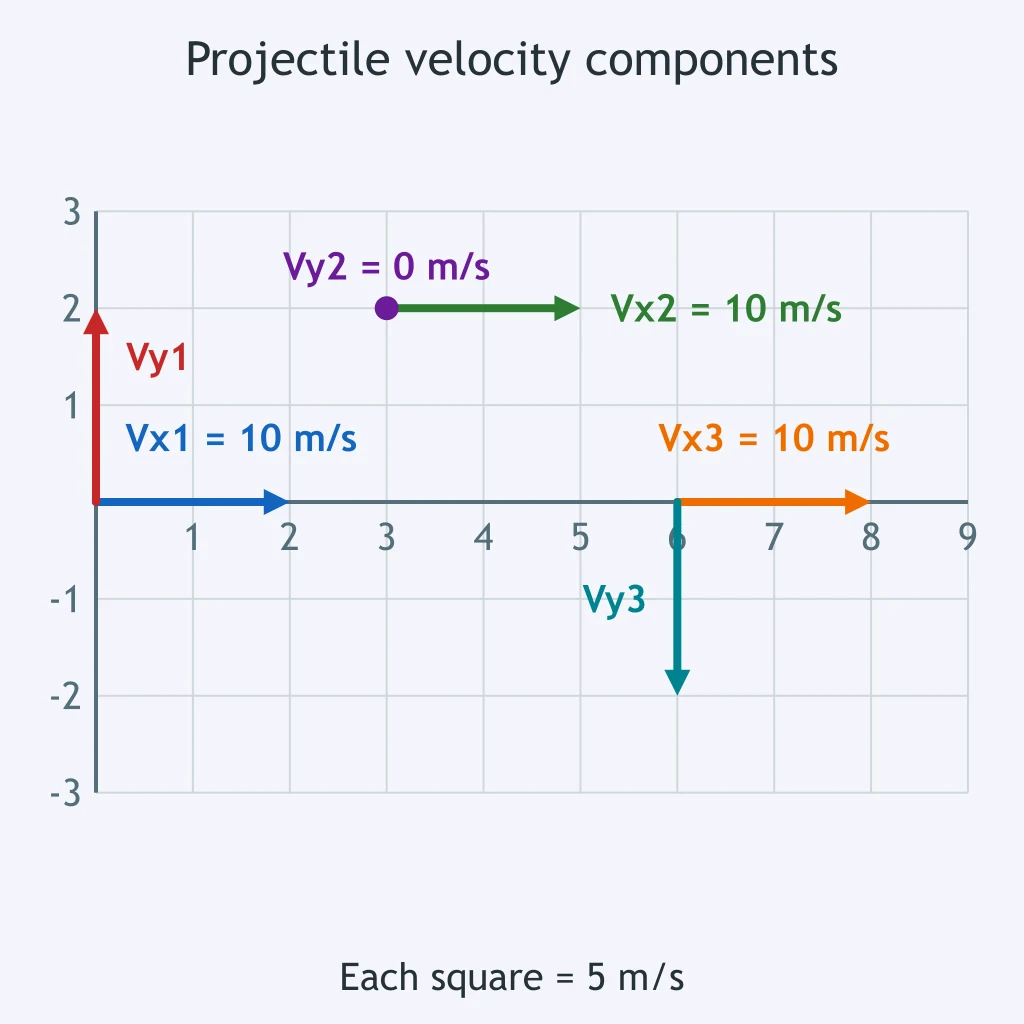
The figure shows velocity components at launch, at the top, and before landing for a projectile from level ground. With g = 9.8 m/s² and no air resistance, which component is zero only at the top?
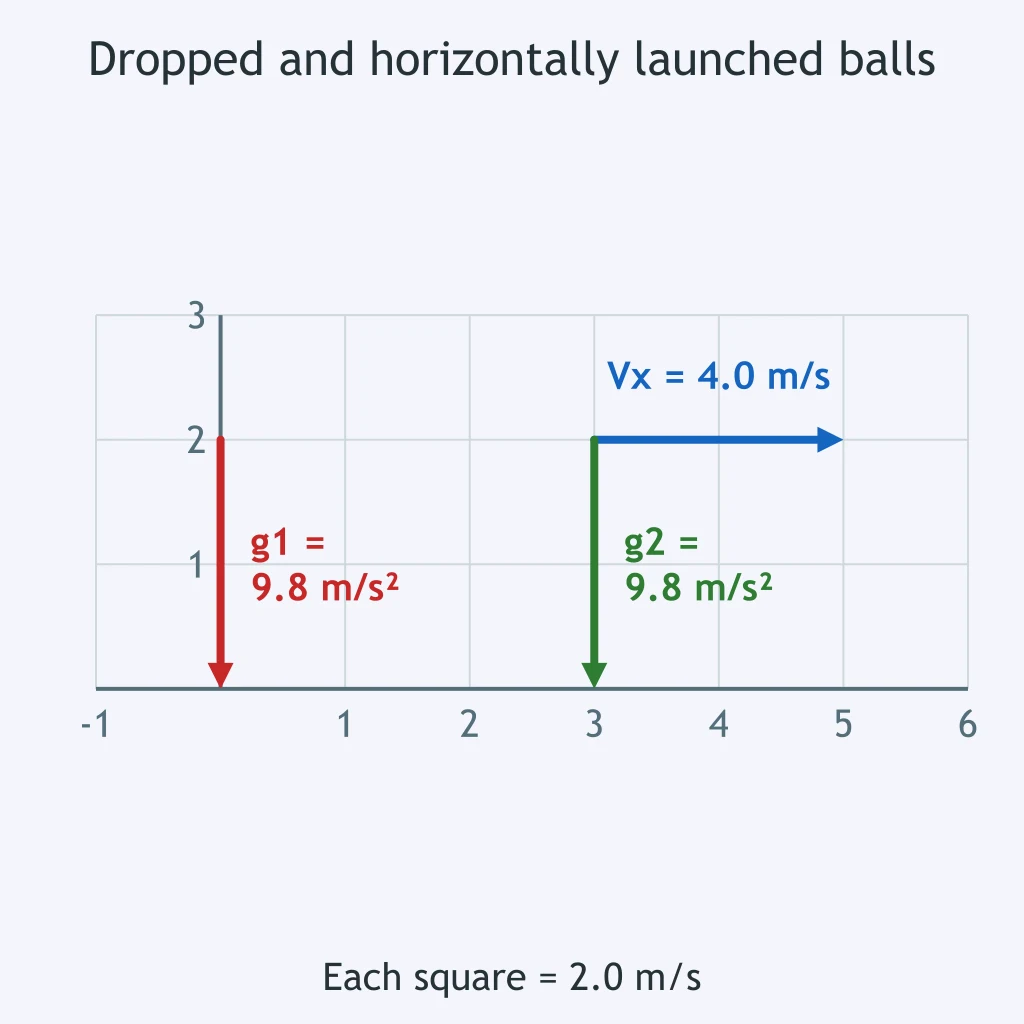
The figure compares a dropped ball and a ball launched horizontally from the same 2.0 m height at 4.0 m/s. Take g = 9.8 m/s² and ignore air resistance. What does the equal g arrow show?
The graph shows vy for a projectile launched from 0 m height with vx = 6.0 m/s. Take g = 9.8 m/s² and ignore air resistance. At the point where vy = 0, which statement is true?
A marble rolls horizontally off a 1.25 m-high bench at 3.0 m/s. Its launch angle is 0.0°. Take g = 9.8 m/s² and ignore air resistance. How long is it in the air?
A stone leaves a 44.1 m-high cliff horizontally at 12.0 m/s, so its launch angle is 0.0°. Take g = 9.8 m/s² and ignore air resistance. What is its horizontal range?
A package is pushed horizontally from a 20.0 m-high platform at 8.0 m/s. Its launch angle is 0.0°. Take g = 9.8 m/s² and ignore air resistance. What is its landing velocity?
A ball rolls horizontally from a 4.90 m-high platform at 5.0 m/s, with launch angle 0.0°. Take g = 9.8 m/s² and ignore air resistance. What is its landing velocity?
A bead slides horizontally off a 2.45 m-high track at 6.0 m/s. Its launch angle is 0.0°. Take g = 9.8 m/s² and ignore air resistance. How far from the track's base does it land?
A ball is kicked from level ground at 20.0 m/s and 30.0° above horizontal. Take g = 9.8 m/s² and ignore air resistance. What is the greatest height above launch?
A projectile is launched from 0 m height at 16.0 m/s and 60.0° above horizontal. Take g = 9.8 m/s² and ignore air resistance. What are its initial velocity components?
A ball is launched from level ground at 25.0 m/s and 53.0° above horizontal. Take g = 9.8 m/s² and ignore air resistance. What is its range?
A projectile is launched from 0 m height at 12.0 m/s and 45.0° above horizontal. Take g = 9.8 m/s² and ignore air resistance. What is its velocity after 1.0 s?
A ball is thrown from a 5.0 m-high ledge at 10.0 m/s and 30.0° above horizontal. Take g = 9.8 m/s² and ignore air resistance. How far from the ledge base does it land?
From the same 1.5 m-high table, one ball is dropped from rest and another is launched horizontally at 4.0 m/s. Take g = 9.8 m/s² and ignore air resistance. Which lands first?
A projectile is launched from 0 m height at 18.0 m/s and 40.0° above horizontal. Take g = 9.8 m/s² and ignore air resistance. What is its acceleration at the highest point?
Two balls are launched horizontally from a 2.0 m height, one at 3.0 m/s and one at 9.0 m/s. Take g = 9.8 m/s² and ignore air resistance. Which statement is correct?
Crack the passcode before the zombies get in.
Answer, then swat bugs for bonus points.
Race through questions at your own speed.
Same question on every screen. Fastest wins.

Pick a tile, answer, hit bonuses and steals.
Newton's First Law and Inertia
40 questions