Loading
by BlastRoom
Practice calculating heat transfer with q = mcΔT and interpreting calorimetry tables.
#chemistry
24 questions
One question set, multiple game modes. Tap any game to see it in action. Not sure which to pick?
Answer to place stones and capture territory.
Outrun the snow together.
Earn blasts, then hunt the other team.
Answer to earn energy, then climb.

The class blasts through walls together.
Bid on mystery lots. Most money wins.
Sell tours. Nice, standard, or a total scam.

Answer, restock, and serve the rush.
More correct answers pulls the rope your way.
Answer, then shoot down the alien wave.
Answer, then tap to leap the frozen ridge.
How much heat is absorbed when 50.0 g of water warms from 20.0°C to 30.0°C? Use c = 4.18 J/g°C.
A 25.0 g aluminum sample warms from 22.0°C to 42.0°C. If c = 0.900 J/g°C, how much heat did it absorb?
A 100.0 g water sample cools from 80.0°C to 25.0°C. With c = 4.18 J/g°C, what is q for the water?
A 15.0 g copper wire warms from 18.0°C to 53.0°C. Use c = 0.385 J/g°C. How much heat was absorbed?
A 75.0 g iron block cools from 95.0°C to 35.0°C. If c = 0.449 J/g°C, what is q for the iron?
A 60.0 g ethanol sample warms from 18.0°C to 28.5°C. Use c = 2.44 J/g°C. What heat is absorbed?
A 32.0 g gold sample warms from 21.0°C to 46.0°C. If c = 0.129 J/g°C, how much heat does it absorb?
Use the table. Which 10.0 g sample requires the most heat to warm by 5.0°C?
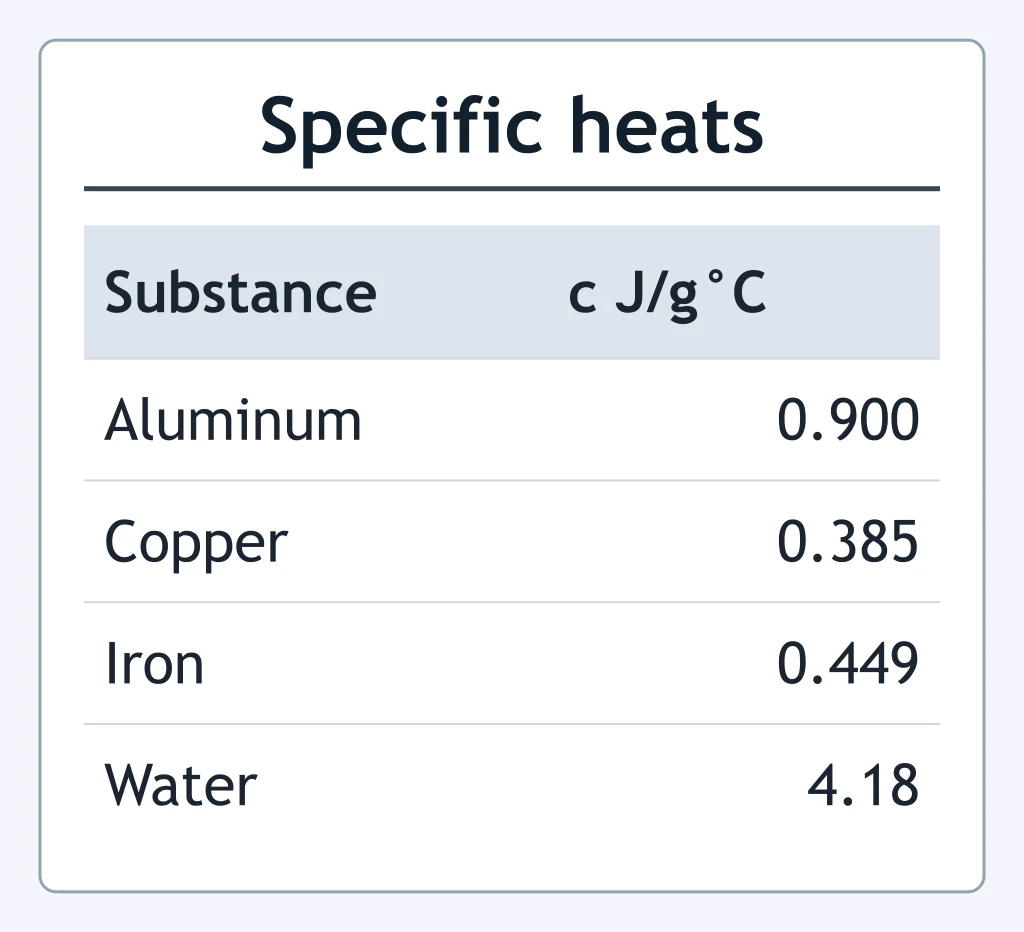
Use the table. A 50.0 g copper sample warms by 10.0°C. How much heat does it absorb?
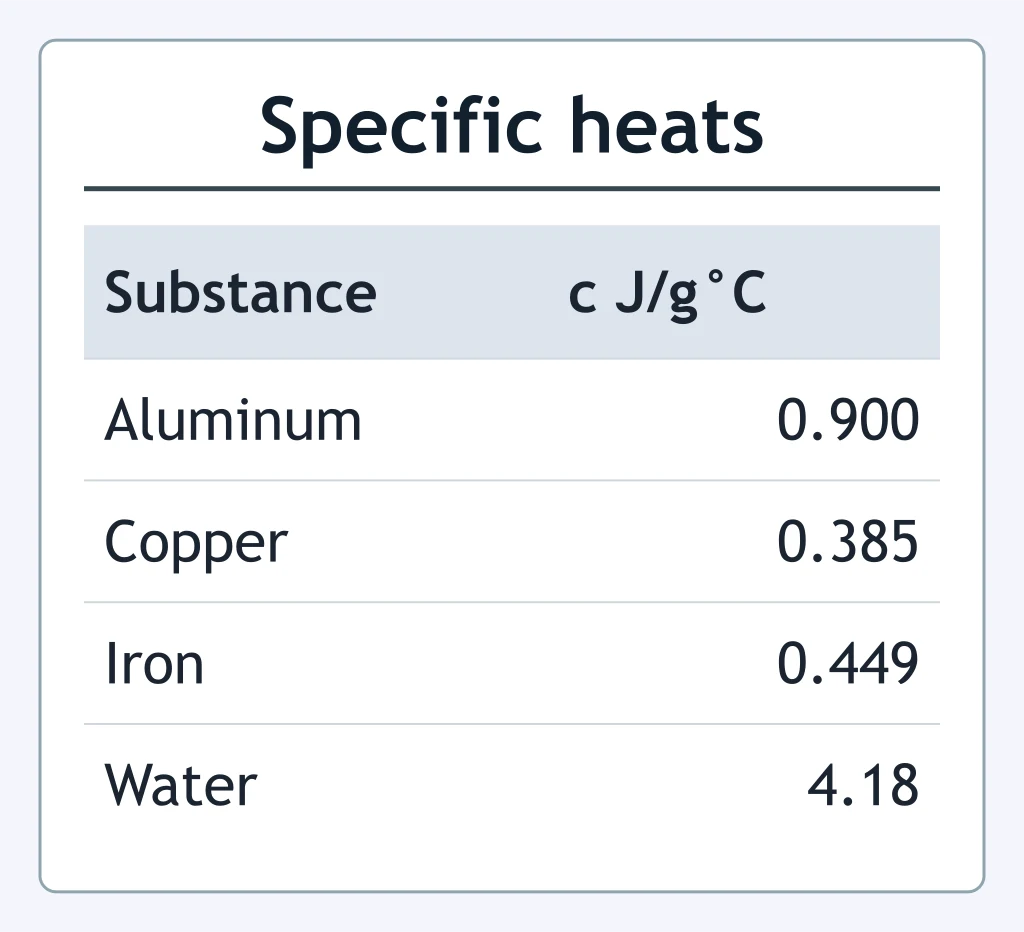
Use the table. Which 20.0 g metal releases the least heat when it cools by 15.0°C?
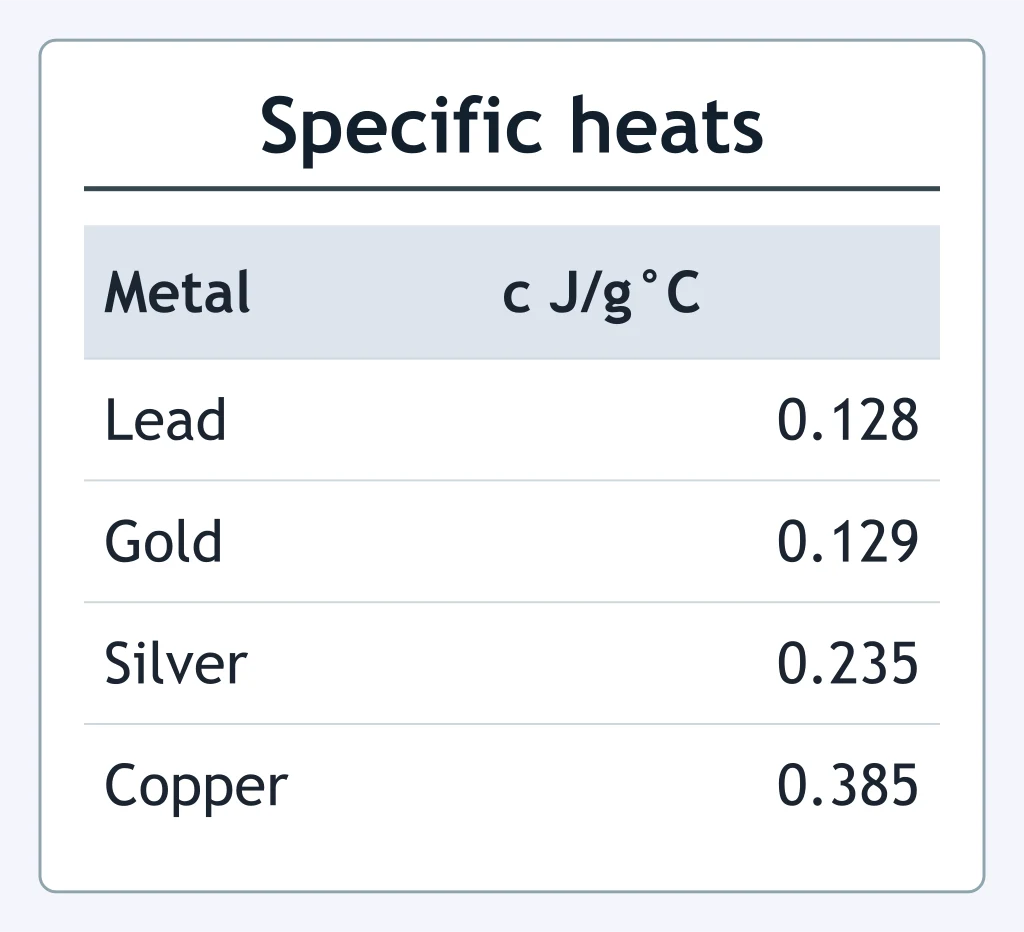
Use the table. A 25.0 g ethanol sample warms by 12.0°C. What is q?
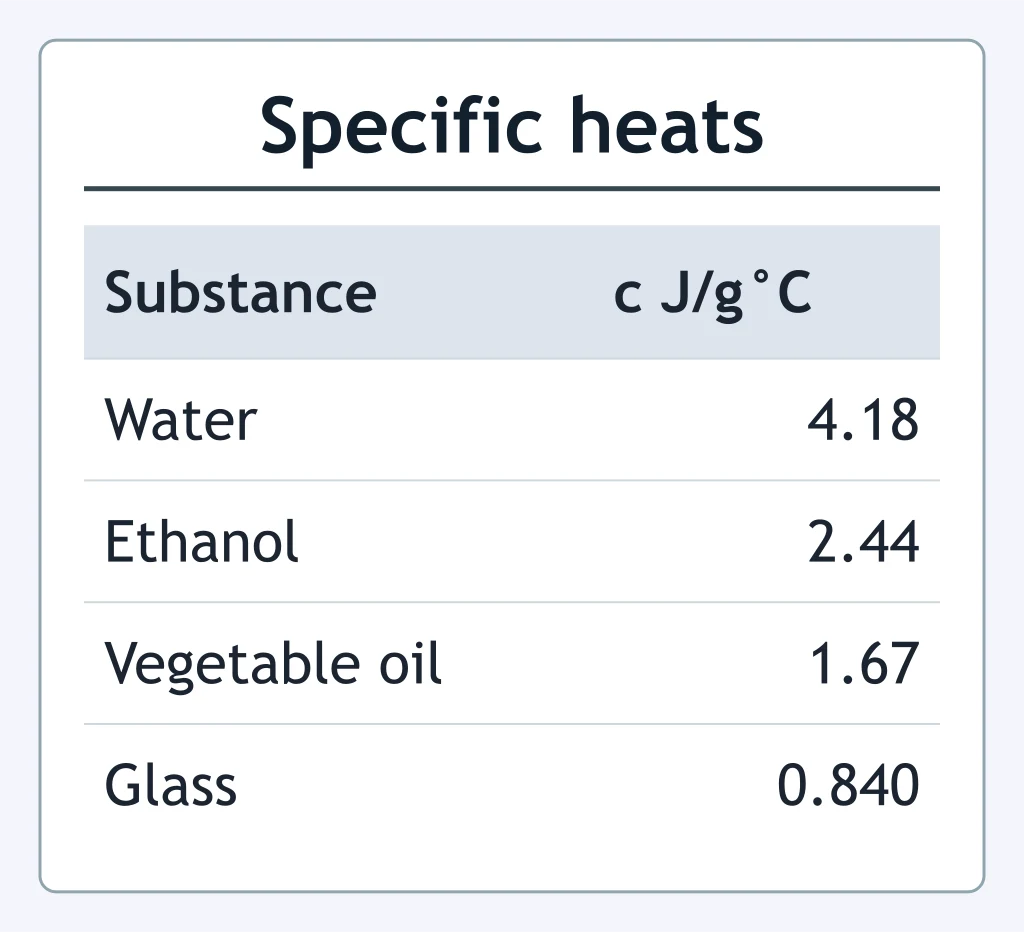
Use the table. A 30.0 g metal absorbs 270 J and warms by 10.0°C. Which metal is it?
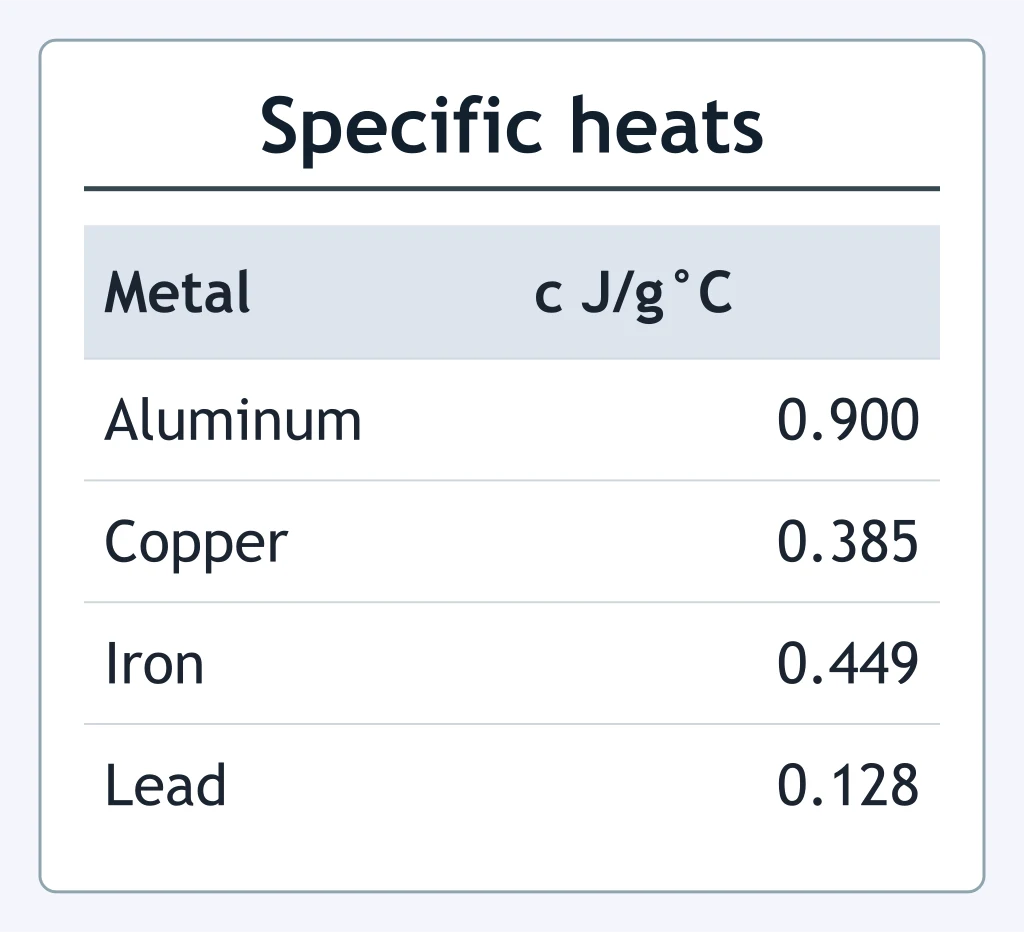
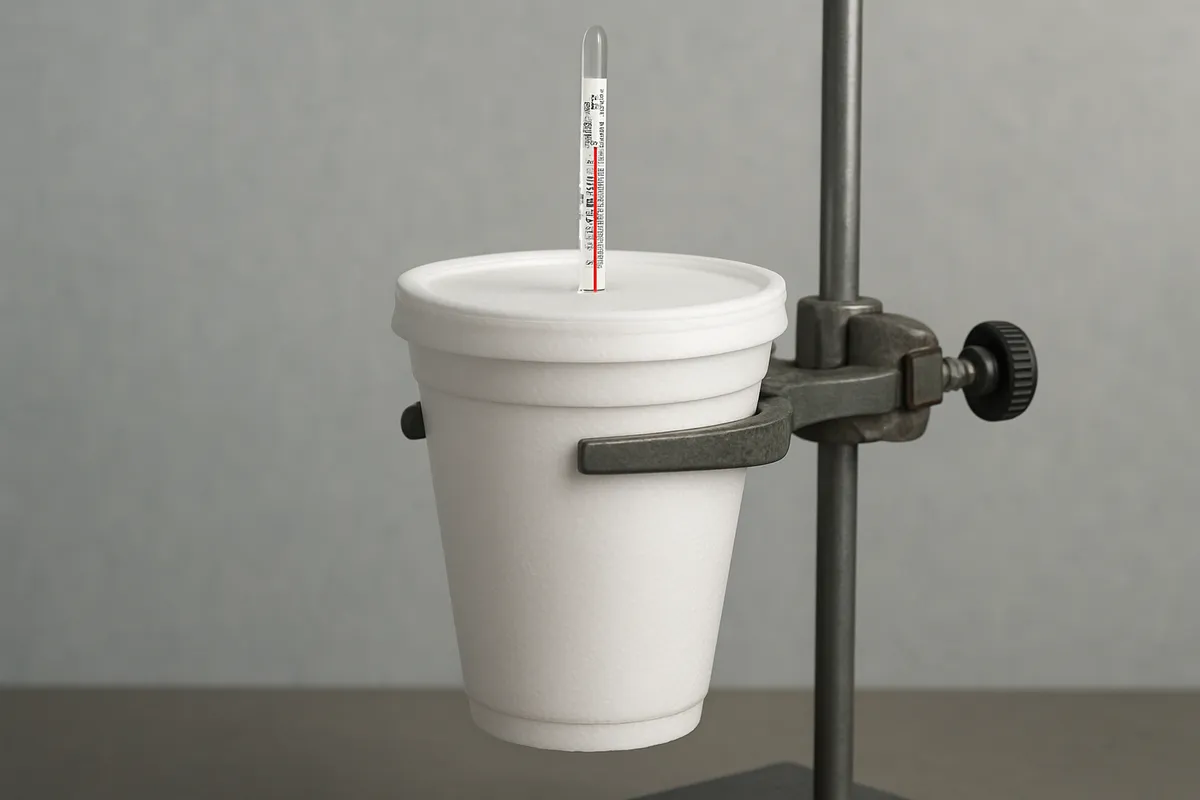
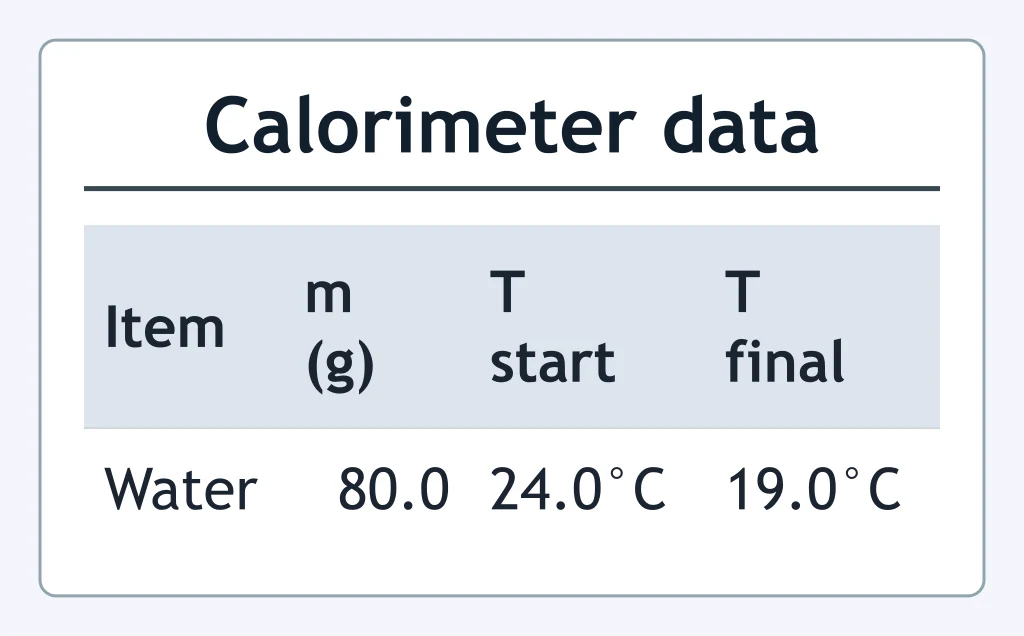
Use the calorimeter table. With cwater = 4.18 J/g°C, how much heat did the water gain?
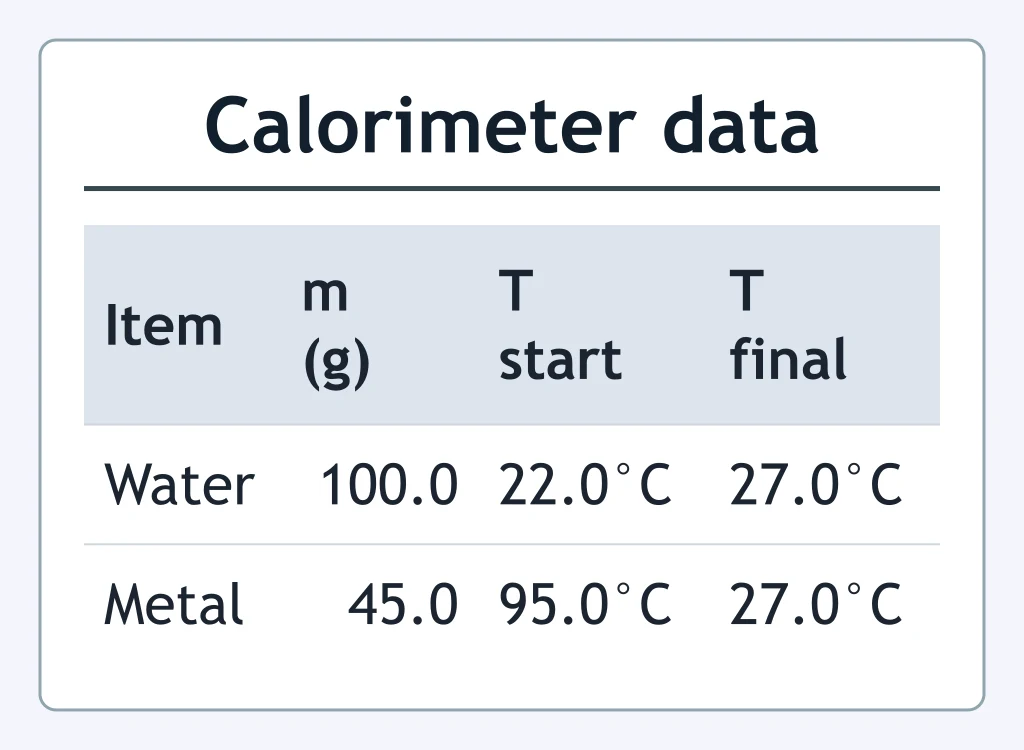
Use the calorimetry data. If the solution has c = 4.18 J/g°C, what heat did the solution gain?
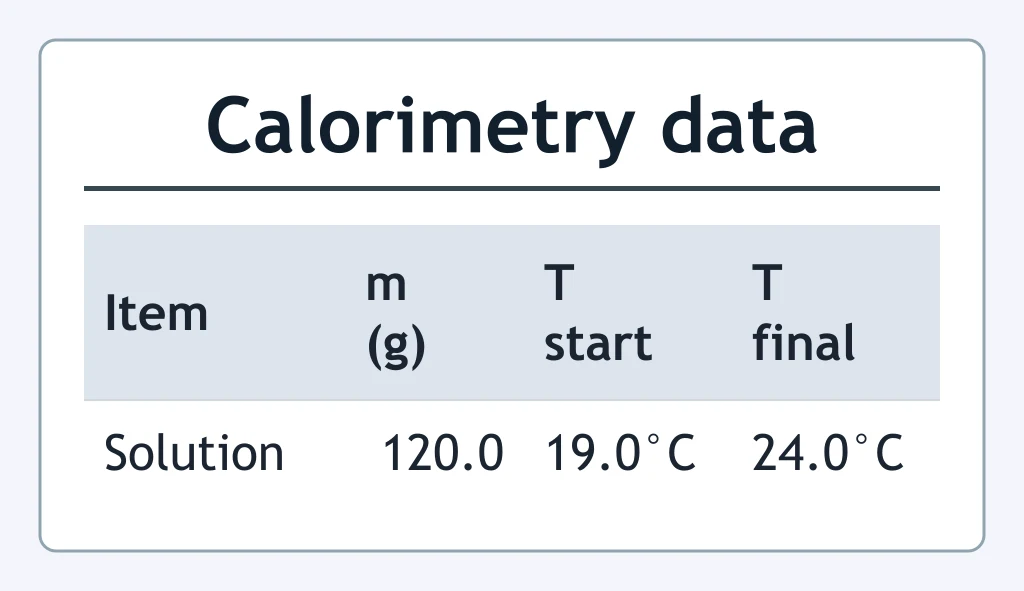
Use the table. With cwater = 4.18 J/g°C, what is q for the water?
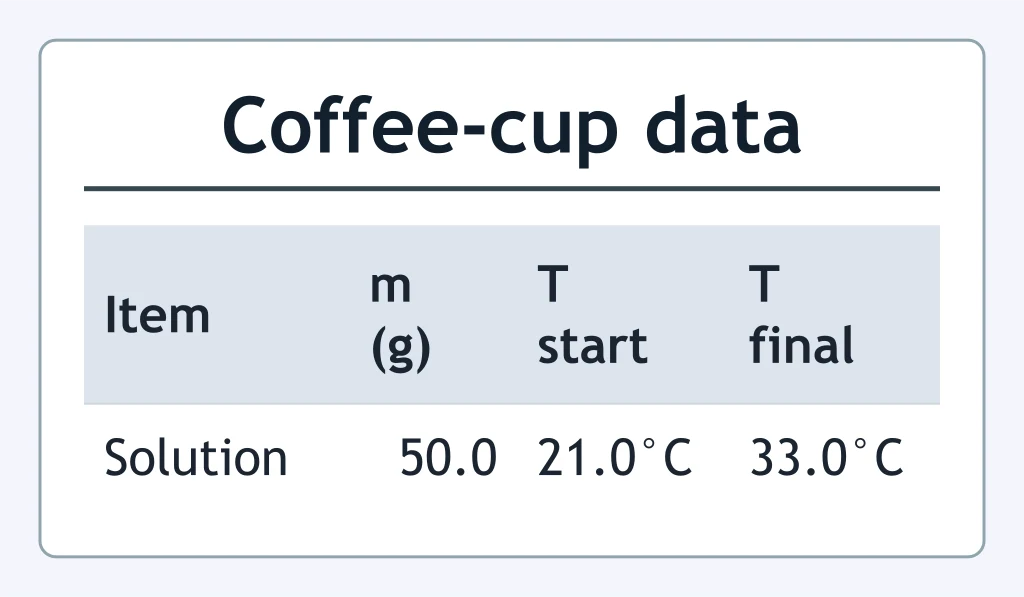
The solution is the surroundings. Use the table and c = 4.18 J/g°C. What is q for the reaction?
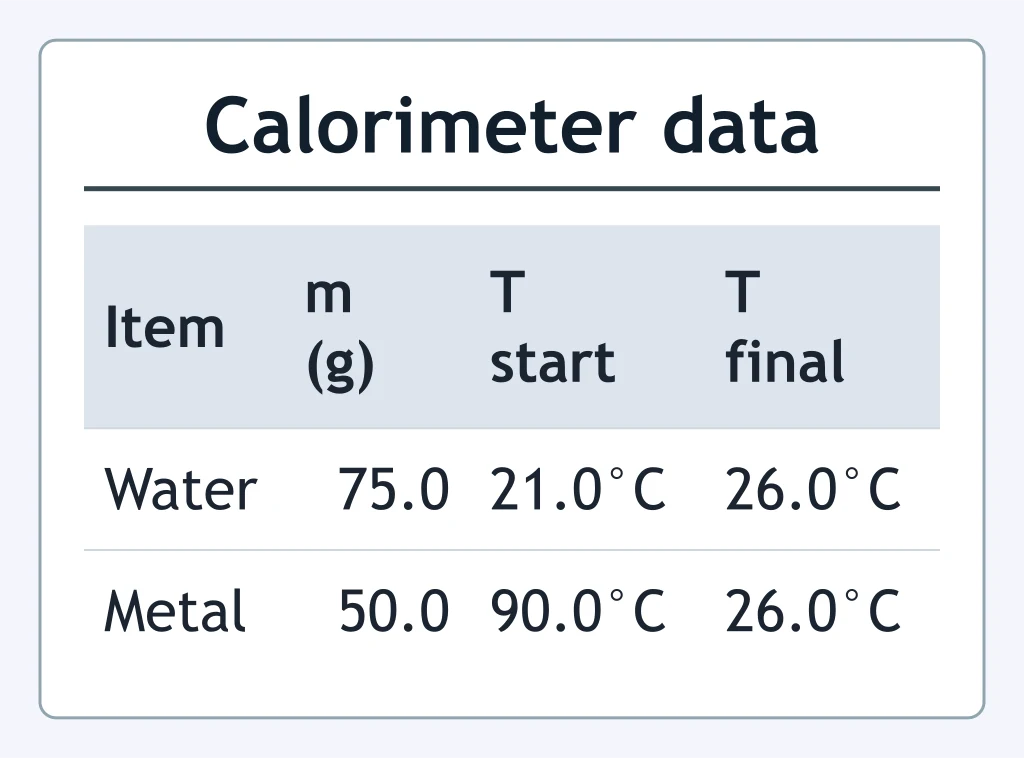
Use the table. If the calorimeter loses no heat, how much heat did the hot metal lose?
A 25.0 g metal sample absorbs 450 J as its temperature rises by 20.0°C. What is its specific heat?
A copper sample with c = 0.385 J/g°C absorbs 462 J and warms from 20.0°C to 50.0°C. What mass was heated?
A 200.0 g water sample absorbs J. If c = 4.18 J/g°C, what is the temperature change?
A 75.0 g water sample at 20.0°C absorbs J. With c = 4.18 J/g°C, what is the final temperature?
A 120.0 g sample loses J as it cools by 15.0°C. What is its specific heat?
A hot metal cylinder is placed in cooler water. The metal cools while the water warms. Which heat-flow statement is correct?
During a reaction in a calorimeter, the solution warms from 21.0°C to 29.0°C. What is the sign of q for the solution?
Crack the passcode before the zombies get in.
Answer, then swat bugs for bonus points.
Race through questions at your own speed.
Same question on every screen. Fastest wins.

Pick a tile, answer, hit bonuses and steals.
Bonds Broken and Bonds Formed
18 questions