Loading
by BlastRoom
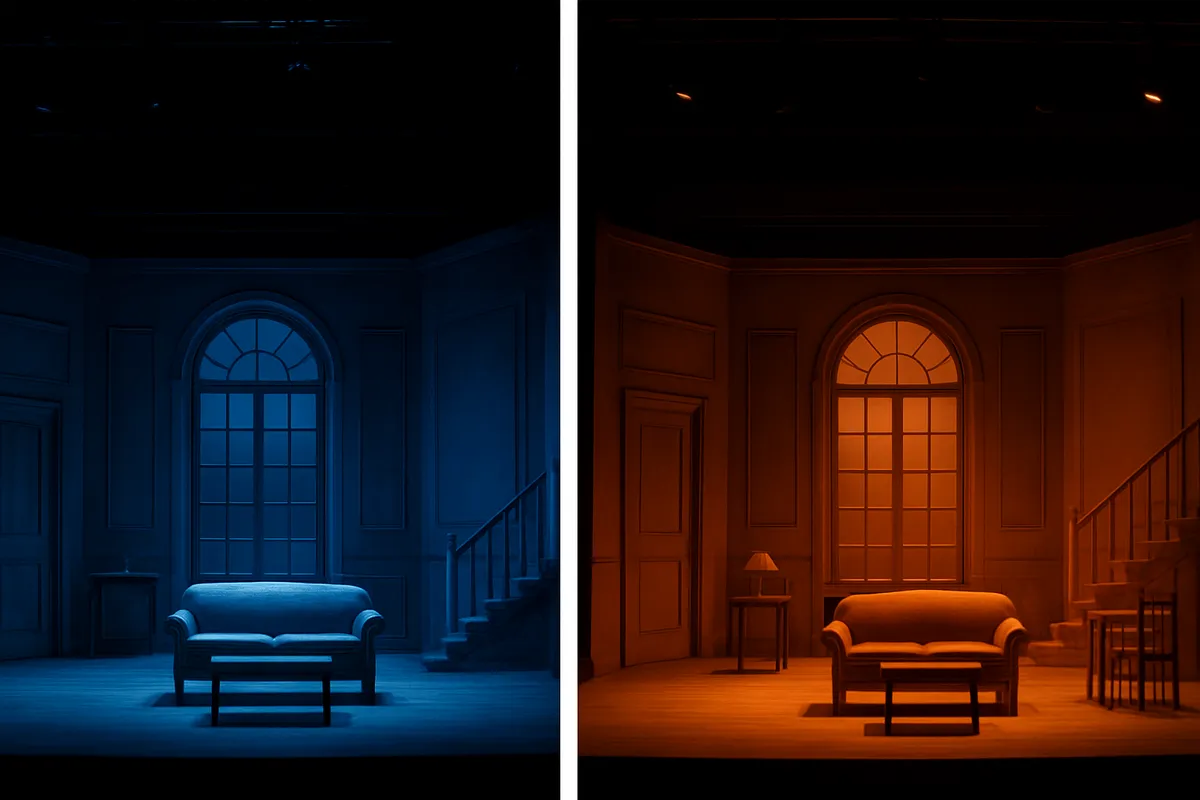
Analyze how staging, film, and audio choices interpret drama and poetry.
#english_11_12
20 questions
One question set, multiple game modes. Tap any game to see it in action. Not sure which to pick?
Answer to place stones and capture territory.
Outrun the snow together.
Earn blasts, then hunt the other team.
Answer to earn energy, then climb.

The class blasts through walls together.
Bid on mystery lots. Most money wins.
Sell tours. Nice, standard, or a total scam.

Answer, restock, and serve the rush.
More correct answers pulls the rope your way.
Answer, then shoot down the alien wave.
Answer, then tap to leap the frozen ridge.
Olivier’s 1948 Hamlet adds that Shakespeare’s Hamlet (c. 1601) is about a man who “could not make up his mind” and cuts Fortinbras. What reading results?
Branagh’s 1996 Hamlet uses full text and mirrored palace rooms; Almereyda’s 2000 Hamlet sets Denmark inside a New York corporation. How do the readings differ?
A film gives “To be, or not to be” from Hamlet (c. 1601) as voice-over while the actor is silent on screen. What does the medium change?
In Macbeth (1606), one production shows a floating dagger; another shows only Macbeth staring at empty air. What textual uncertainty are they interpreting?
Which Macbeth (1606) staging is best grounded in “A dagger of the mind”?
A radio Macbeth uses a faint metallic sound only under Macbeth’s “Is this a dagger” speech. Why is that choice defensible?
In Hamlet (c. 1601), Hamlet says “Look where he goes” in the closet scene. What differs if the audience sees the Ghost or sees only Hamlet react?
Gertrude says “This is the very coinage of your brain,” but Horatio and the guards saw the Ghost in Act 1 of Hamlet. What does that earlier evidence suggest about her line?
Welles’s 1952 Othello opens with Othello’s and Desdemona’s funeral before Shakespeare’s plot begins. How well is that choice grounded?
In Othello (1604), which staging best reads “Put out the light” through Shakespeare’s metaphor?
In Romeo and Juliet (1595–96), Juliet says “wherefore art thou Romeo?” How does same-level staging differ from balcony staging?
Which performance of Juliet’s “wherefore art thou Romeo?” is best grounded in the word’s meaning?
In King Lear (1605–06), one storm scene overwhelms Lear’s voice with thunder; another uses near silence. What changes?
Which King Lear staging best fits “Blow, winds, and crack your cheeks”?
In The Tempest (1611), Prospero says “Our revels now are ended.” Which film choice best grounds the line in its scene?
Prospero’s “such stuff / As dreams” in The Tempest (1611) may be gentle or bitter. What does the bitter reading emphasize?
In Hamlet (c. 1601), Ophelia’s mad scene can be sung sweetly or broken into harsh speech. What interpretation changes?
A live Richard III (1592–93) has Richard speak “Now is the winter” directly to spectators. What does theater add?
A filmed Richard III cuts from “Now is the winter” to cheering public crowds. What does editing add?
In Dickinson’s “I heard a Fly buzz” (ca. 1863), a recording leaves a long pause after “died.” What does audio make interpretable?
Crack the passcode before the zombies get in.
Answer, then swat bugs for bonus points.
Race through questions at your own speed.
Same question on every screen. Fastest wins.

Pick a tile, answer, hit bonuses and steals.
Point of View, Satire and Understatement
30 questions