Loading
by BlastRoom
Review the functions of money, banking, investments, and stock markets.
#us_hs_economics
30 questions
One question set, multiple game modes. Tap any game to see it in action. Not sure which to pick?
Answer to place stones and capture territory.
Outrun the snow together.
Earn blasts, then hunt the other team.
Answer to earn energy, then climb.

The class blasts through walls together.
Bid on mystery lots. Most money wins.
Sell tours. Nice, standard, or a total scam.

Answer, restock, and serve the rush.
More correct answers pulls the rope your way.
Answer, then shoot down the alien wave.
Answer, then tap to leap the frozen ridge.
A collector sells a guitar for $400 in cash instead of trading for another instrument. Which function makes the cash useful in this sale?
A furniture store labels a desk $250 and a chair $80, allowing customers to compare their values. Which function of money is being used?
Maya earns $100 in June and keeps it to buy a jacket in August. Which function of money lets her transfer purchasing power over time?
Two $1 bills are accepted as equal in value even though they have different serial numbers. Which characteristic of money does this show?
Which list contains all six standard characteristics of money?
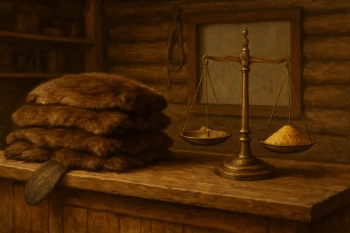
At a farmers market, Jordan trades two bags of rice directly for a basket of apples. What payment system is this?
In a coastal town, fishers commonly use salt to pay for supplies because salt is valued for preserving food. Salt is serving as:
A warehouse issues paper certificates that can be redeemed for a stated amount of gold it holds. The certificates are:
A government declares its notes to be money, but the notes cannot be redeemed for gold or another commodity. What type of money are the notes?
A student pays for lunch with a debit card linked to a checking account. The money in that account is best classified as a:
A bank holds $40,000 in reserves against $200,000 of customer deposits. What reserve ratio is the bank keeping?
A bank receives $300,000 in new deposits and must keep a 10 percent reserve ratio. If it has no excess reserves, what is the maximum it may lend from these deposits?
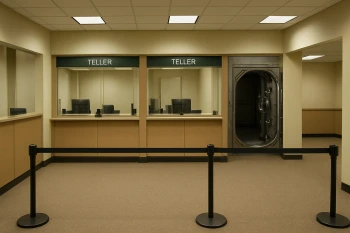
On a bank's balance sheet, how is a customer's checking-account deposit recorded by the bank?
A bank receives $50,000 in new reserves, and the reserve requirement is 20 percent. If all loans are redeposited, what is the maximum possible increase in total checking deposits?
Why does a fractional-reserve bank keep reserves rather than lend every deposited dollar?
An FDIC-insured bank fails while a customer has a covered checking balance. What protection does the FDIC provide?
A bank receives a $10,000 deposit, keeps $1,000 as reserves, and makes a $9,000 loan. How does this loan contribute to money creation?
A buyer purchases one share of a corporation's common stock. What has the buyer acquired?
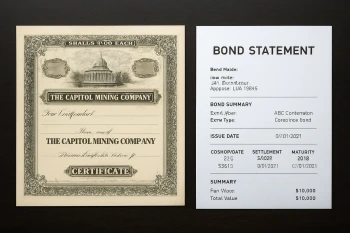
A company sells bonds with a fixed coupon rate. What does a bond buyer provide to the company?
A mutual fund pools money from many investors to buy shares and bonds. Who decides which securities the fund buys and sells?
A bond has a $1,000 par value and a 6 percent annual coupon rate. What annual coupon payment does its holder receive?
A corporation enters bankruptcy. Compared with common stockholders, bondholders generally have what claim on remaining corporate assets?
Riley can invest all savings in one employer's stock or in a broad mutual fund. Why might the fund reduce risk?
A student buys a share for $20 and later sells it for $27, receiving no dividends. What is the student's capital gain?
A firm wants to raise capital from investors without giving them ownership. Which security should it issue?
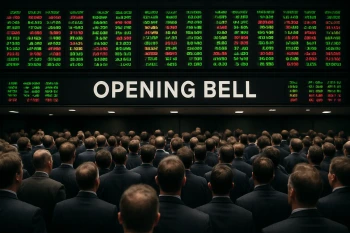
At a stock exchange, when does a trade normally occur between a buyer and a seller?
A news report says a stock index rose 2 percent today. What does that index primarily summarize?
Which index of large U.S. companies covers about 80 percent of the total value of U.S. stocks?
Stock prices decline broadly for many months, and investors expect further declines. What term describes this market?
An investor sells existing shares of a company to another investor on the New York Stock Exchange. What happens to the company from that sale?
Crack the passcode before the zombies get in.
Answer, then swat bugs for bonus points.
Race through questions at your own speed.
Same question on every screen. Fastest wins.

Pick a tile, answer, hit bonuses and steals.
The Tools of Monetary Policy
25 questions