Loading
by BlastRoom
Line up gravitational, electric and magnetic forces by attraction, repulsion, range and strength.
#physics
20 questions
One question set, multiple game modes. Tap any game to see it in action. Not sure which to pick?
Answer to place stones and capture territory.
Outrun the snow together.
Earn blasts, then hunt the other team.
Answer to earn energy, then climb.

The class blasts through walls together.
Bid on mystery lots. Most money wins.
Sell tours. Nice, standard, or a total scam.

Answer, restock, and serve the rush.
More correct answers pulls the rope your way.
Answer, then shoot down the alien wave.
Answer, then tap to leap the frozen ridge.
Two objects are brought near each other. No matter their material or orientation, the field force between them pulls them together and never pushes them apart. Which force is being described?
Two tiny spheres have the same sign of net charge. They push apart even though they do not touch. Which field force is acting between them?
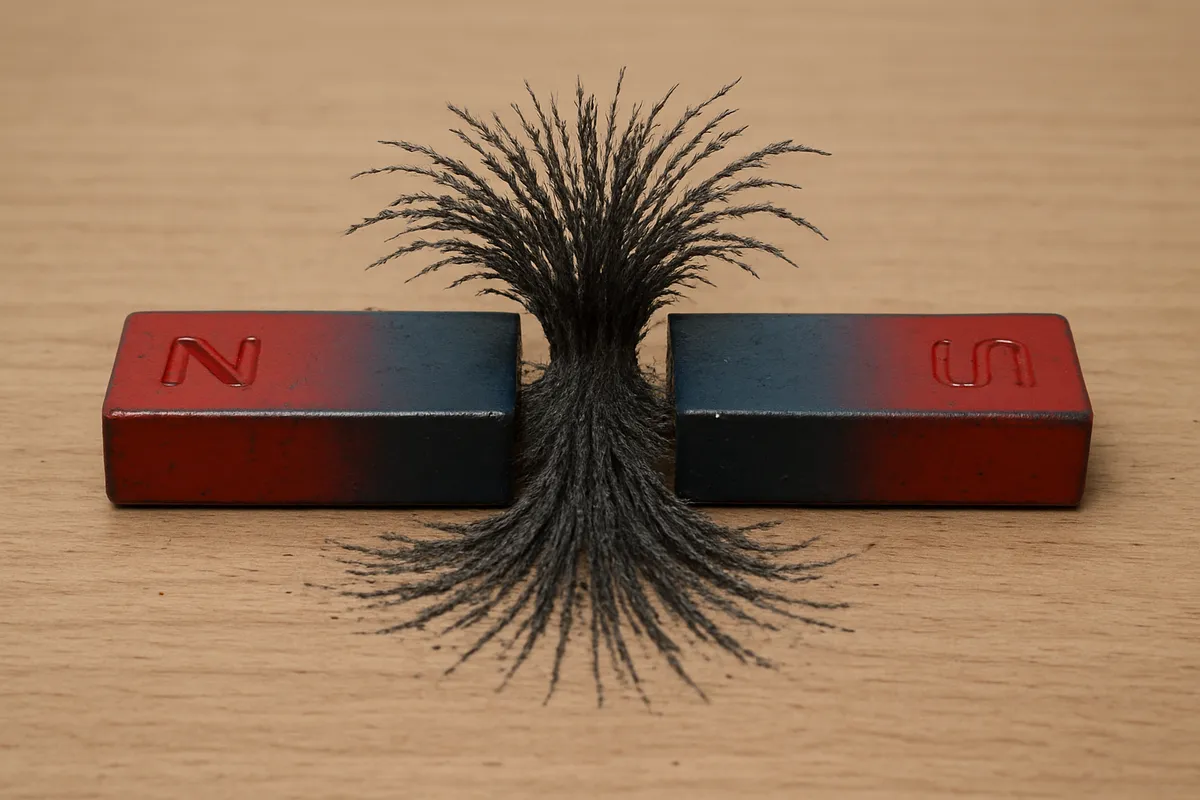
Two bar magnets attract in one orientation, but they repel after one magnet is flipped end-for-end. Which field force has that behavior?
A small bead is held at rest between charged plates. The force on it reverses direction when its charge changes from +2.0 µC to −2.0 µC. Which force is responsible?
Earth and a satellite pull on each other even when the satellite has no net charge and is not a magnet. Which field force explains the pull?
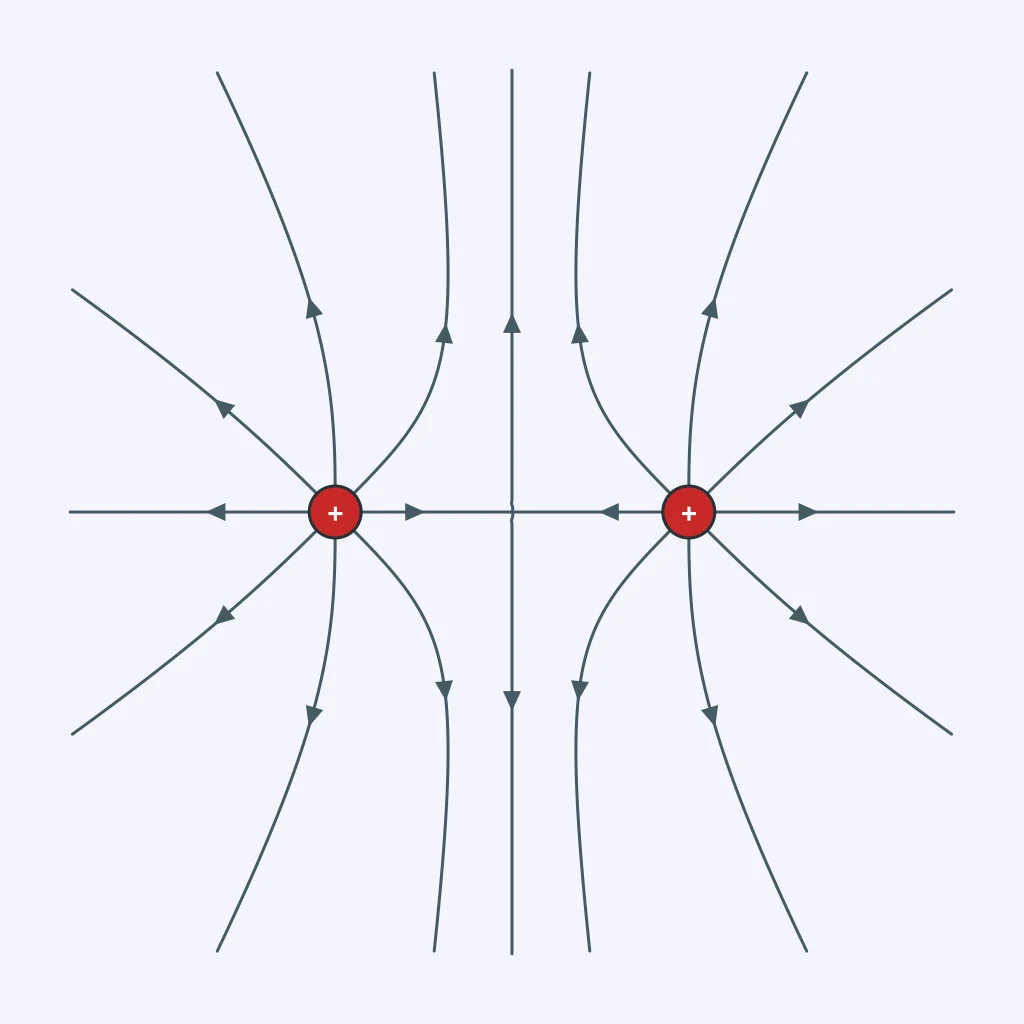
The figure shows the field lines around two like charges. How does this interaction differ from the gravitational interaction between two masses?
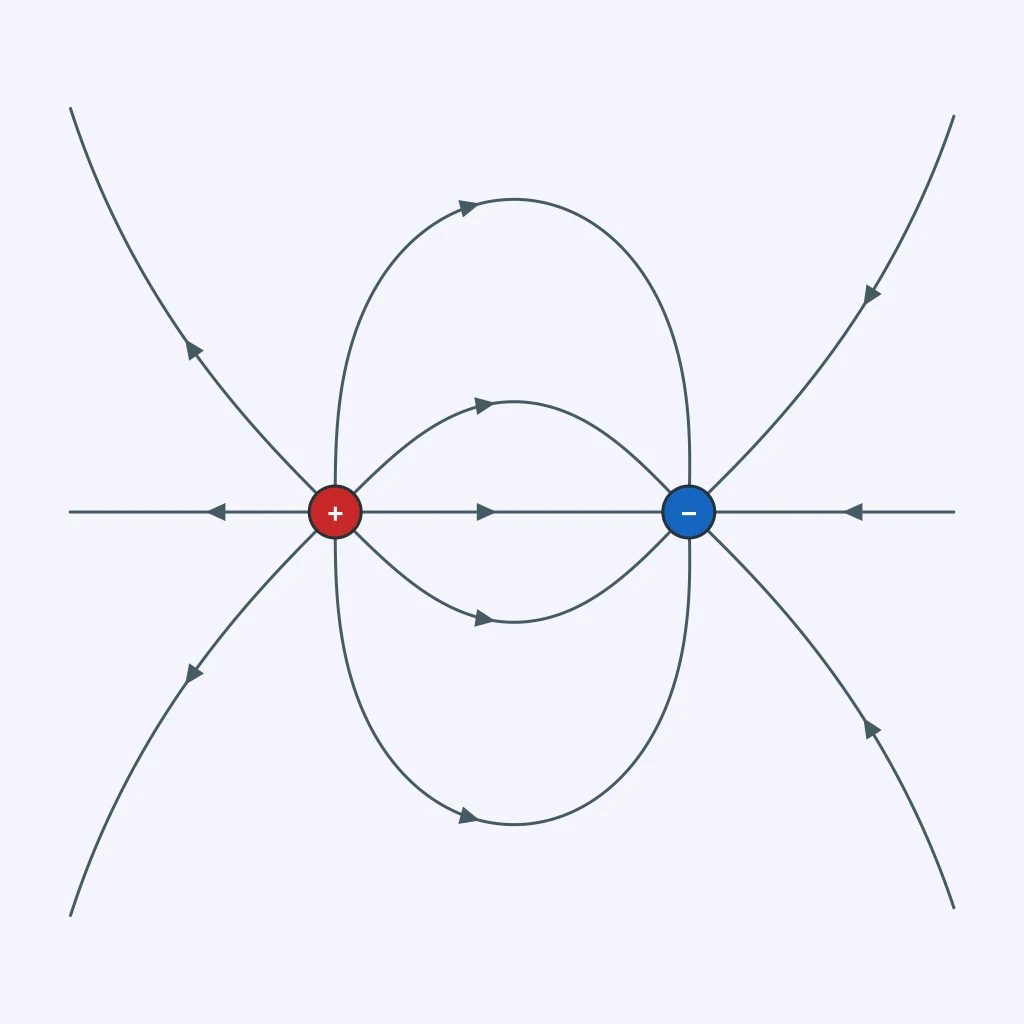
The figure shows the field lines between a positive and a negative charge. How does this interaction compare with the one between unlike magnetic poles?
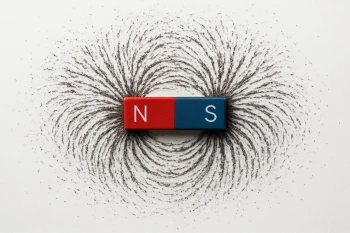
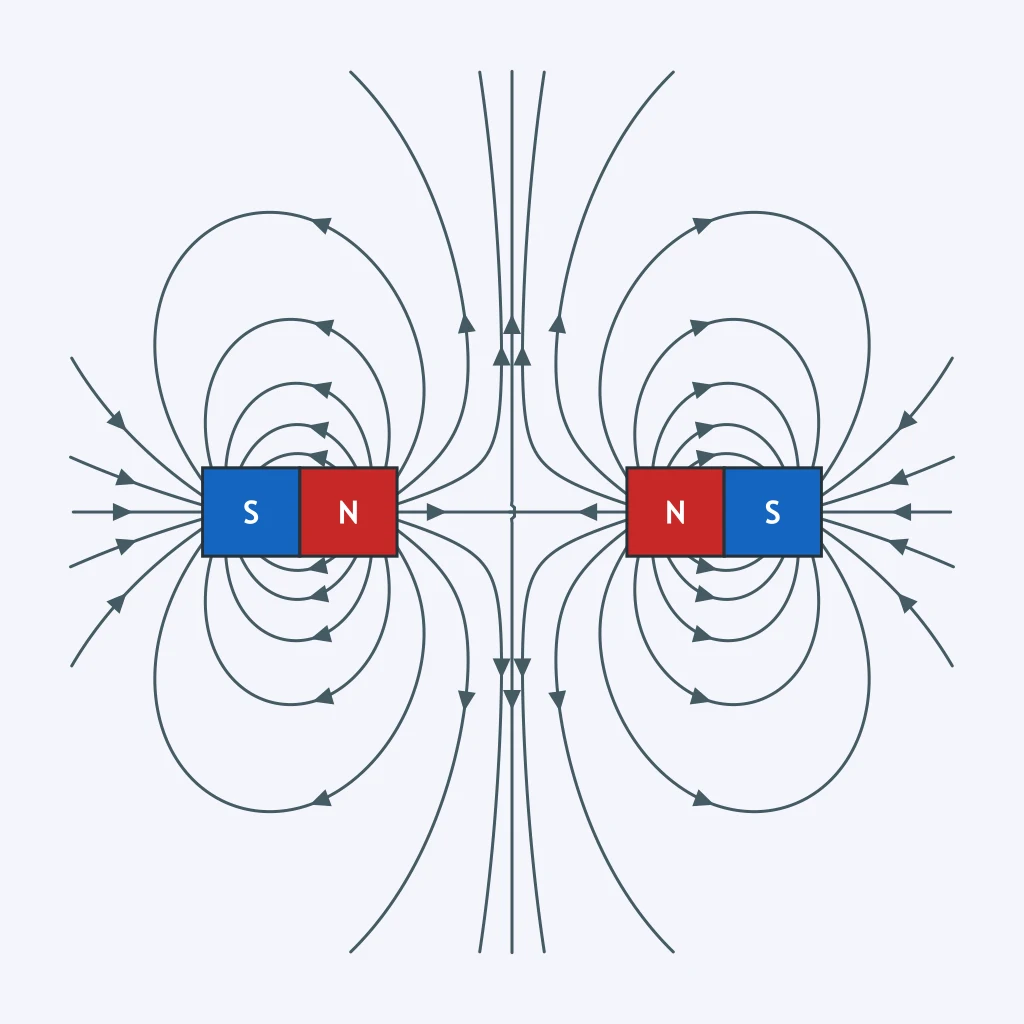
The figure shows the field lines between two bar magnets. How does this interaction compare with the gravitational interaction between two masses?
Compare points A and B in the field-line diagram. What does the spacing of the field lines show about field strength?
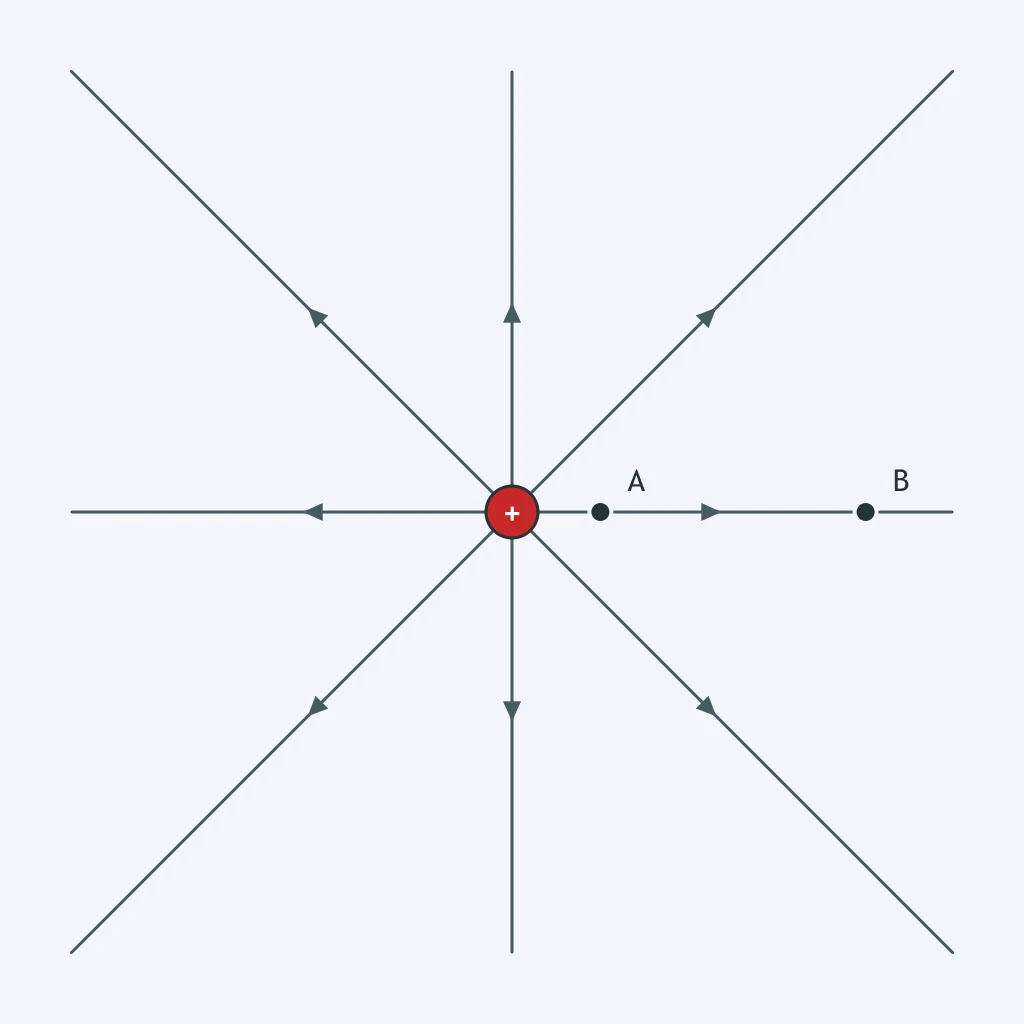
A test mass sits in a planet's gravitational field, and a positive test charge sits in the electric field of a positive charge. What is the difference between the two forces?
The figure shows the gravitational field around a point mass M. How does this source differ from a bar magnet?
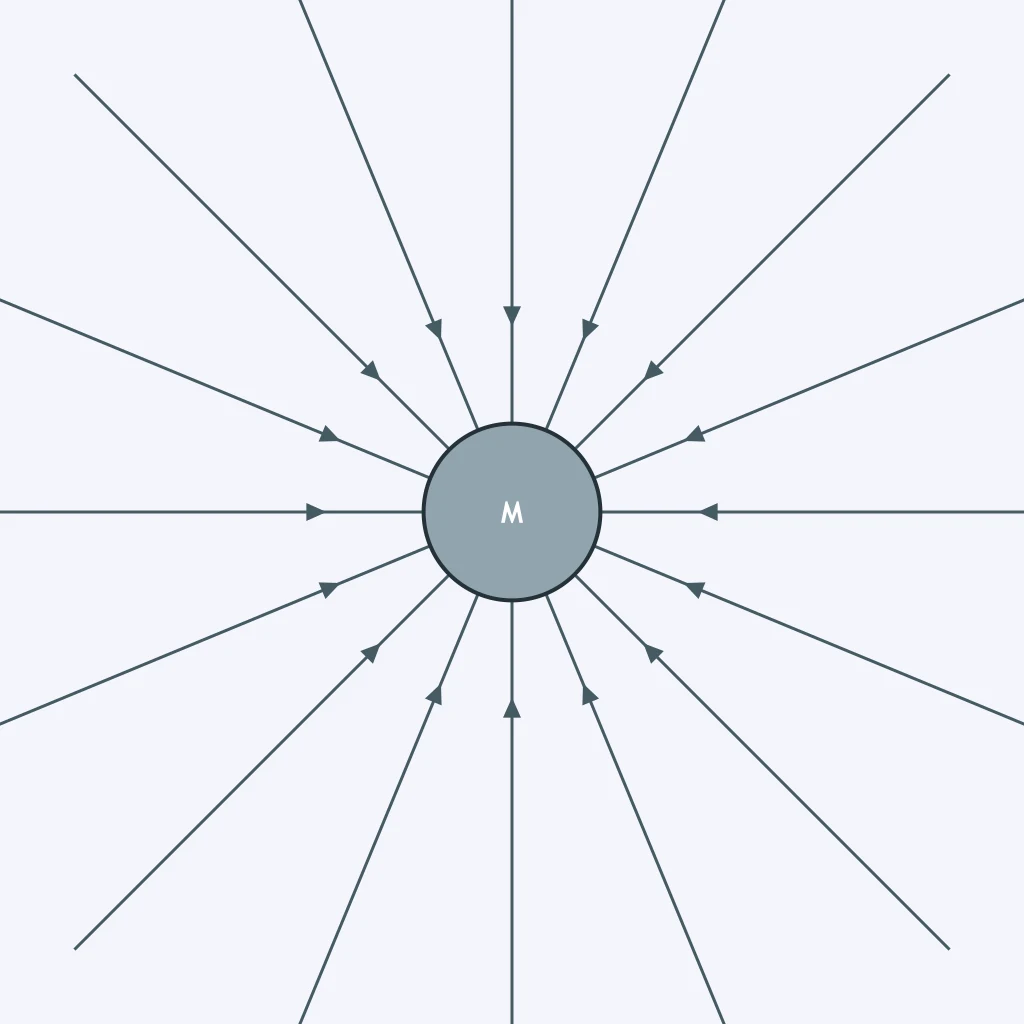
Which property must two objects have for universal gravitation to act between them?
Coulomb's law describes a force between two objects. What property must a test particle have to feel that force?
A neutral iron nail, a charged plastic rod held still and a spinning wooden top are each placed near a strong bar magnet. Only the nail is pulled strongly. Which property explains this?
At ordinary lab distances, why is the gravitational pull between two charged plastic rods usually ignored while electric or magnetic effects may be obvious?
A student says electric and magnetic forces need touching because hands feel contact forces, but gravity reaches through space. Which correction is best?
Two protons are 1.0×10⁻¹⁰ m apart: m=1.67×10⁻²⁷ kg, q=+1.60×10⁻¹⁹ C, G=6.67×10⁻¹¹ N·m²/kg², k=8.99×10⁹ N·m²/C². Fₑ=2.3×10⁻⁸ N; Fg=1.9×10⁻⁴⁴ N. Which comparison is correct?
Two electrons are 5.0×10⁻¹¹ m apart: m=9.11×10⁻³¹ kg, q=−1.60×10⁻¹⁹ C, G=6.67×10⁻¹¹ N·m²/kg², k=8.99×10⁹ N·m²/C². Fₑ=9.2×10⁻⁸ N; Fg=2.2×10⁻⁵⁰ N. What does the ratio show?
A proton and electron are 5.3×10⁻¹¹ m apart: mp=1.67×10⁻²⁷ kg, me=9.11×10⁻³¹ kg, ×10⁻¹⁹ C. Use G=6.67×10⁻¹¹ and k=8.99×10⁹. Fₑ=8.2×10⁻⁸ N; Fg=3.6×10⁻⁴⁷ N. Which is true?
Two 1.0 g spheres, each with charge +1.0 µC, are 0.10 m apart. Use G=6.67×10⁻¹¹ N·m²/kg² and k=8.99×10⁹ N·m²/C². Fₑ=0.90 N; Fg=6.7×10⁻¹⁵ N. Which comparison is correct?
Crack the passcode before the zombies get in.
Answer, then swat bugs for bonus points.
Race through questions at your own speed.
Same question on every screen. Fastest wins.

Pick a tile, answer, hit bonuses and steals.
Gravitation and Fields: Mixed Practice
20 questions