Loading
by BlastRoom
Tell traditional story genres apart by their key features.
#genre#us_grade_4_english
20 questions
One question set, multiple game modes. Tap any game to see it in action. Not sure which to pick?
Answer to place stones and capture territory.
Outrun the snow together.
Earn blasts, then hunt the other team.
Answer to earn energy, then climb.

The class blasts through walls together.
Bid on mystery lots. Most money wins.
Sell tours. Nice, standard, or a total scam.

Answer, restock, and serve the rush.
More correct answers pulls the rope your way.
Answer, then shoot down the alien wave.
Answer, then tap to leap the frozen ridge.
A fox saw a crow holding cheese. 'Your feathers shine, and your voice is sweeter than any bird's,' he said. The crow opened her beak to sing, and the cheese fell. The fox snapped it up. Flattery feeds the flatterer. Which kind of traditional story is this?
Long ago, people wondered why the moon changed shape. Selene drove her chariot across the sky, lending light to sleeping seeds below. When the seeds had drunk enough glow, she gathered it back, round and bright. Which story type is this?
The old trail by the river is where brave Elara carried messages between two towns. Raiders blocked the bridge, so she rode through storm water with the letter held high. People say her horse's hoofprints still shone. Which story type is this?
Paul Bunyan swung his ax once, and a forest bowed down like wheat. When Babe the Blue Ox sneezed, the wind blew snow clear to Texas. Paul scooped up a mountain for a stool and ate pancakes stacked higher than a barn. Which story type is this?
A poor girl shared her last corn cake with an old woman. The woman gave her a clay pot and taught her the words to make it cook. When a neighbor stole it, the pot filled the lane with porridge until the girl returned. Which kind of story is this?
A tortoise challenged a proud hare to a race. The hare raced ahead and slept under a tree, sure he would win. The tortoise kept walking, slow step after slow step, and crossed the finish line first. Which kind of traditional story is this?
Before rivers had bends, the river spirit ran straight to the sea. A clever crow dropped stones in her path so thirsty deer could drink longer. The spirit curved around each stone, which is why rivers wander today. Which kind of traditional story is this?
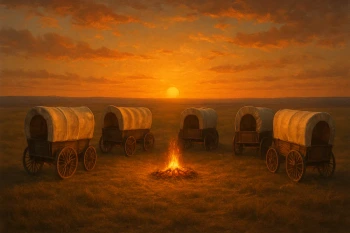
Pecos Bill rode a cyclone across the plains, spurring it like a wild horse. He squeezed rain from clouds to fill dry wells and combed lightning from his hair. By sunset, the storm curled beside his campfire like a dog. Which story type is this?
Read this fable: A mouse begged a lion for mercy, promising help someday. The lion let him go. Later, hunters trapped the lion in a net. The mouse gnawed the ropes until the lion was free. Kindness is never wasted. Which detail marks it as a fable?
Read this myth: Demeter searched the earth for her daughter, and the fields grew cold while she wept. When her daughter returned, grain rose green again. Each year her leaving brings winter, and her return brings spring. Which detail marks it as a myth?
Read this tall tale: Sally Ann Thunder Ann Whirlwind lived in a cabin by the woods. She fed her chickens each morning and wore a red bonnet. One shout from her could shake apples from every tree in the county. Which detail marks it as a tall tale?
Read this legend: In a rocky cove, villagers tell of a sailor named Mara who tied a rope around her waist and swam to a wrecked ship. She saved three children, and people still call the cliff Mara's Leap. Which detail marks it as a legend?
Read this folktale: A farmer owned a drum that made everyone dance when it sounded. His lazy brother borrowed it to avoid work, but the drum beat faster until he finished every chore. After that, people shared work fairly. Which detail marks a folktale?
Read this fable: A thirsty crow found a pitcher with water too low to reach. She dropped pebbles into it one by one. The water rose, and she drank. The tale ends, “Little by little does the work.” Which detail marks it as a fable?
Read this myth: Raven found the world dark and quiet. He stole a glowing ball from a sky chief's box and tossed it upward. The ball became the sun, waking birds, warming seas, and showing people the paths between villages. Which detail marks it as a myth?
Read this excerpt: A grasshopper sang all summer while an ant stored grain. When snow covered the ground, the hungry grasshopper asked for food. The ant shared a little but warned, “Prepare today for tomorrow's needs.” What is a fable often for?
Read this excerpt: The first spider watched people forget the stories of their grandmothers. He spun a web between huts, catching each tale before it disappeared. Families gathered by the fire and retold the stories. What is a folktale often for?
Read this excerpt: In the beginning, the sky lay close to the ground. A child pounding grain struck it with her pestle, and the sky rose higher to escape the blows. Since then, clouds have floated far above people's heads. What is a myth often for?
Read this excerpt: Joe Magarac, the steelworker, could bend iron rails with his hands and stir molten metal with his finger. He worked night and day so mills could roar, then melted himself into steel for stronger beams. What is a tall tale often for?
Read this excerpt: For many winters, villagers told how young Talia kept the mountain pass open after a rockslide, carrying lanterns through snow until traders found the road. The pass still bears her name. What is a legend often for?
Crack the passcode before the zombies get in.
Answer, then swat bugs for bonus points.
Race through questions at your own speed.
Same question on every screen. Fastest wins.

Pick a tile, answer, hit bonuses and steals.
Say It Shorter, Say It Your Way
20 questions