Loading
by BlastRoom
Explore how experiments and balanced equations show that mass is conserved.
#matatag_science_10
20 questions
One question set, multiple game modes. Tap any game to see it in action. Not sure which to pick?
Answer to place stones and capture territory.
Outrun the snow together.
Earn blasts, then hunt the other team.
Answer to earn energy, then climb.

The class blasts through walls together.
Bid on mystery lots. Most money wins.
Sell tours. Nice, standard, or a total scam.

Answer, restock, and serve the rush.
More correct answers pulls the rope your way.
Answer, then shoot down the alien wave.
Answer, then tap to leap the frozen ridge.
Which statement describes the total mass during a chemical reaction in a closed system?
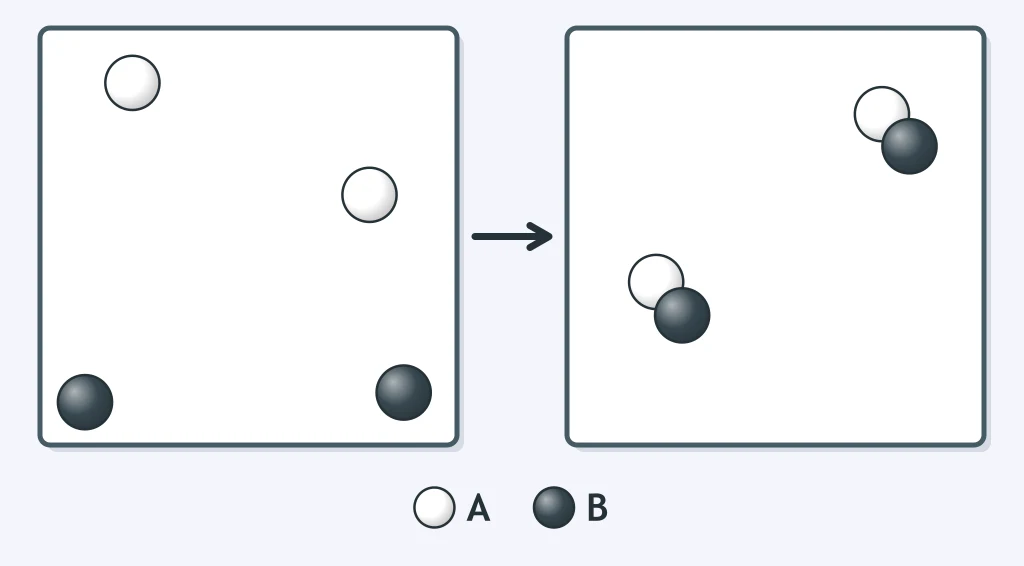
Which statement describes what happens to the atoms in the model?
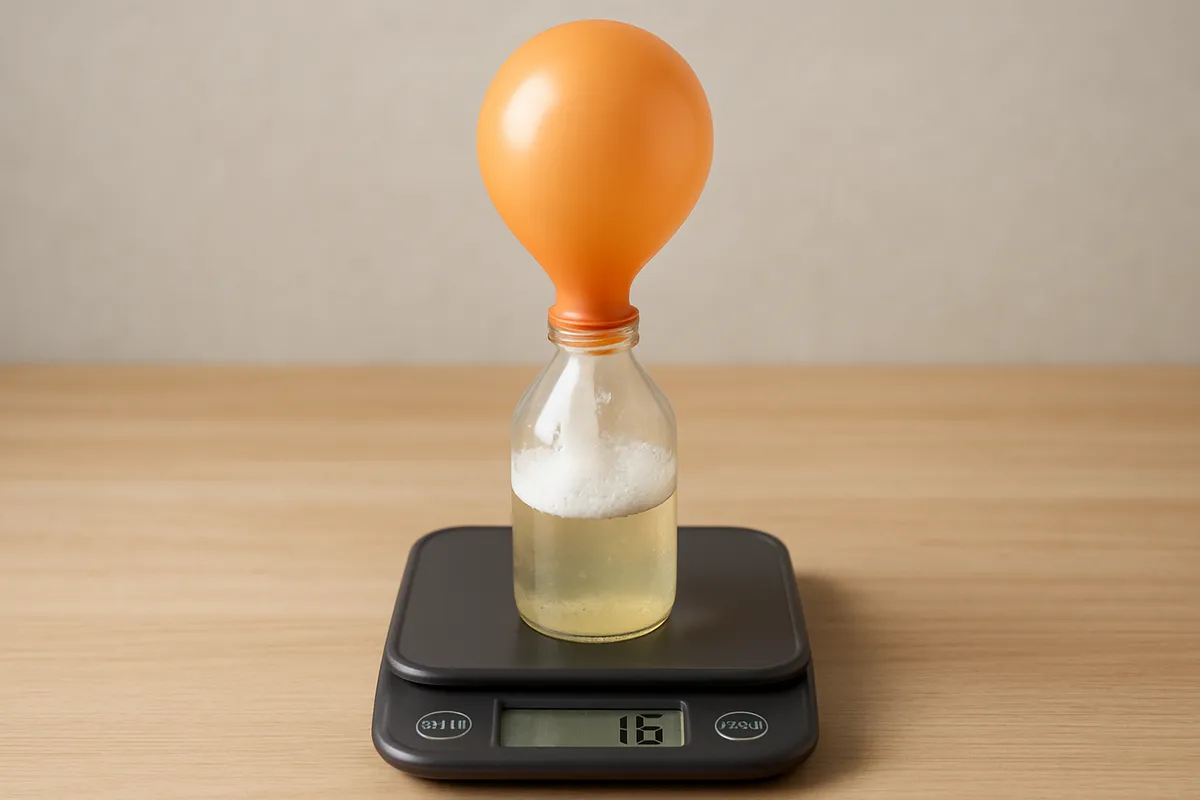
Compare the readings before and after the sealed reaction. What do they show?
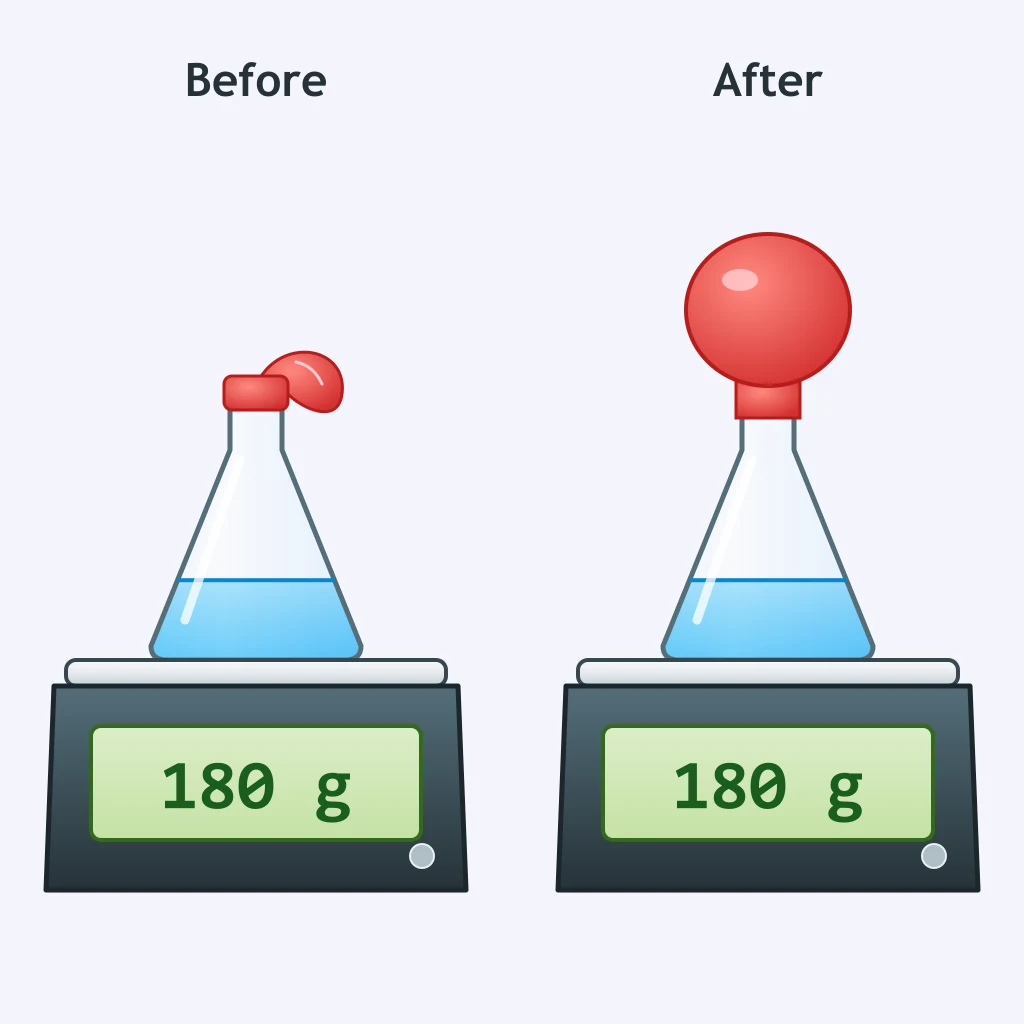
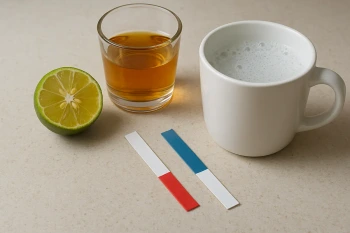
Why does the balloon expand when baking soda mixes with vinegar in the bottle?
A sealed balloon experiment starts with substances containing only carbon, hydrogen, oxygen, and sodium. Which result would contradict conservation of atoms?
Why must the balloon fit tightly over the bottle when testing conservation of mass?
Mika repeats the reaction in an open bottle. No liquid spills, but the final measured mass is lower. Which explanation is consistent with conservation of mass?
What should Paolo place on the scale for both measurements in the balloon experiment?
Liza cooks rice in an uncovered pot. How should she account for water that leaves as steam when tracking all the starting material?
A closed container initially holds 40 g of calcium and 71 g of chlorine. After they react, what is the total mass of its contents?
A trial produces 391 g of barium iodide using 254 g of iodine. Both reactants are fully used, with no other products. How much barium was used?
A reaction consumes 78 g of potassium and an unknown mass of oxygen, forming 94 g of potassium oxide with no other products. What mass of oxygen was consumed?
A sealed reaction starts with 20 g of materials. At the end, 2 g remains unreacted. What is the combined mass of the products?
Which equation correctly represents the formation of water from hydrogen and oxygen?
Before choosing coefficients, which comparison identifies whether an equation conserves atoms?
To balance an equation without changing the identities of the substances, which part should be adjusted?
What is the smallest whole-number coefficient ratio for the equation shown, in the same order?
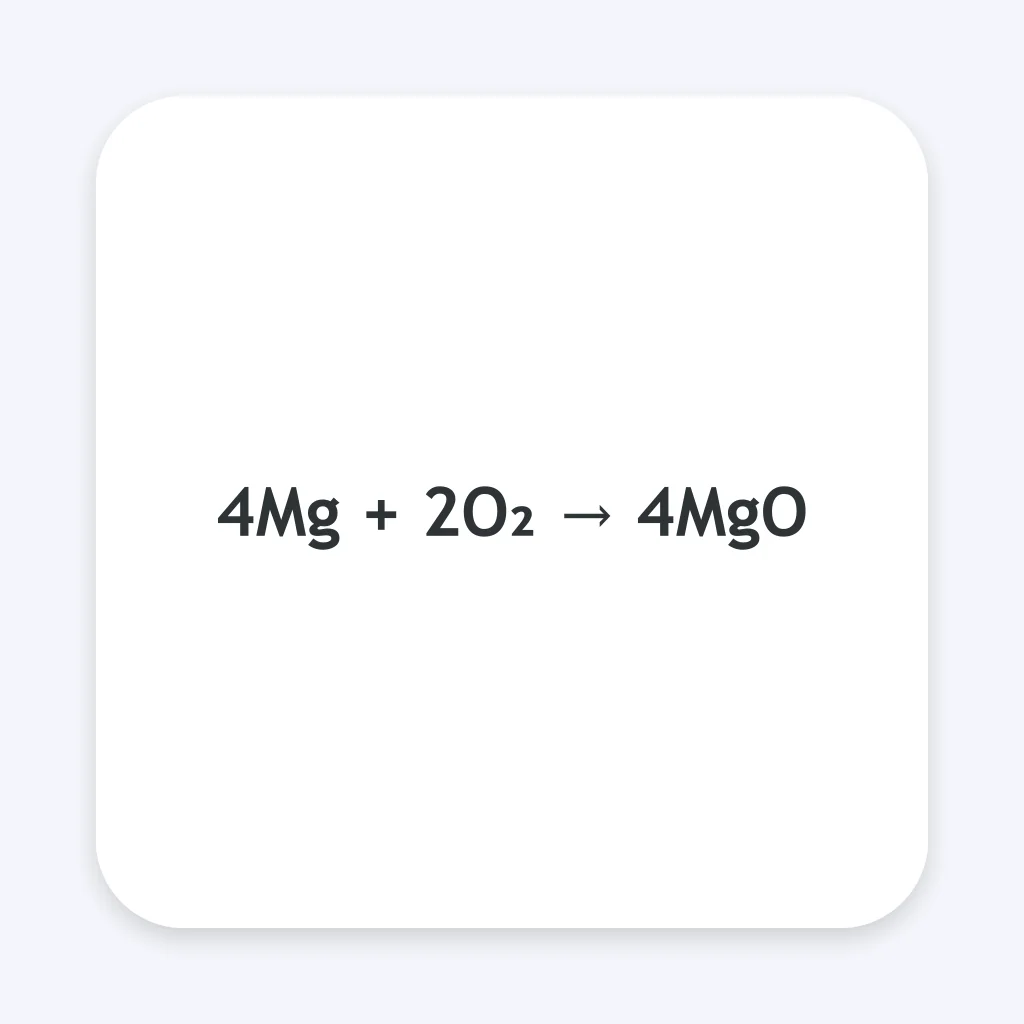
How many oxygen atoms are represented on the product side of this equation?
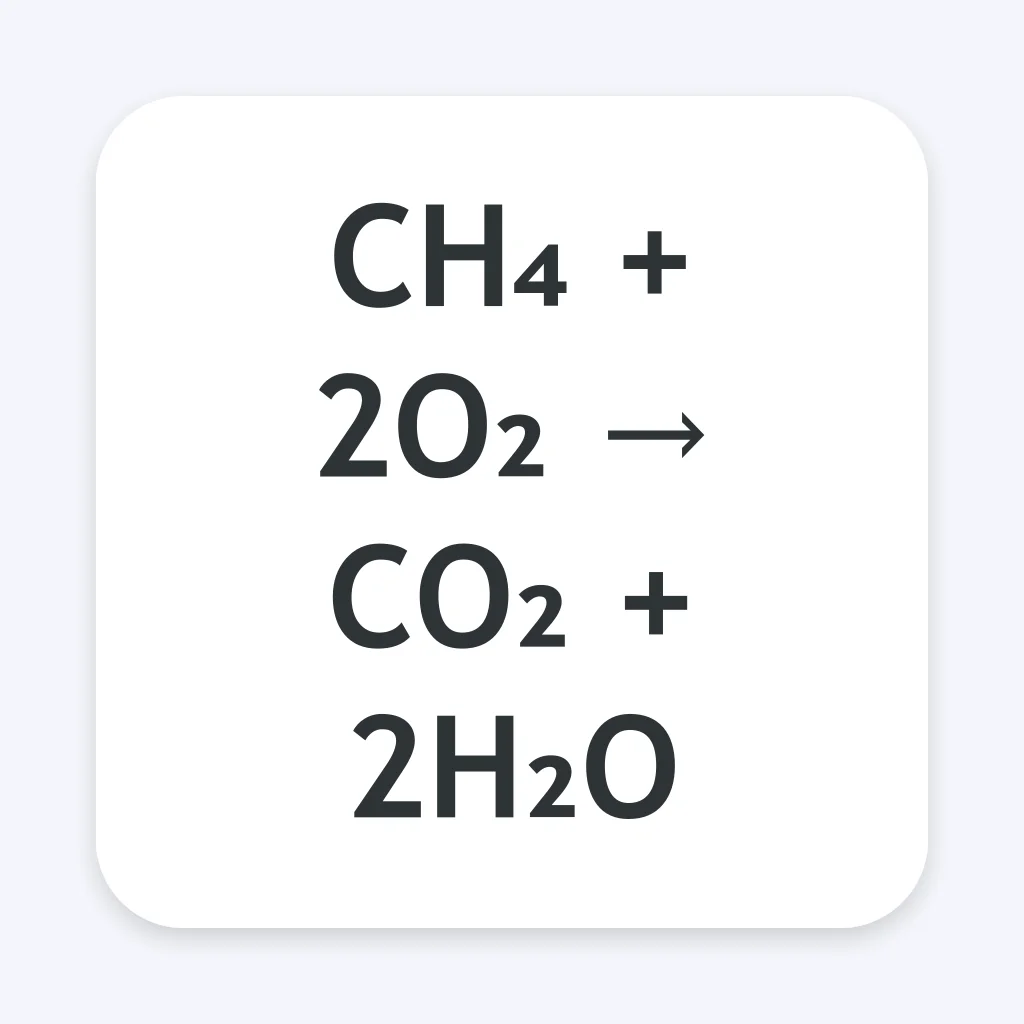
What value of balances ?
A sealed bottle's contents have a mass of 150 g before a reaction. Later, its liquid and solids total 146 g. What is the mass of gas still inside?
Crack the passcode before the zombies get in.
Answer, then swat bugs for bonus points.
Race through questions at your own speed.
Same question on every screen. Fastest wins.

Pick a tile, answer, hit bonuses and steals.
Reaction Rates
20 questions