Loading
by BlastRoom
Practice deciding fairness and building probability models from data.
#us_grade_7_math
20 questions
One question set, multiple game modes. Tap any game to see it in action. Not sure which to pick?
Answer to place stones and capture territory.
Outrun the snow together.
Earn blasts, then hunt the other team.
Answer to earn energy, then climb.

The class blasts through walls together.
Bid on mystery lots. Most money wins.
Sell tours. Nice, standard, or a total scam.

Answer, restock, and serve the rush.
More correct answers pulls the rope your way.
Answer, then shoot down the alien wave.
Answer, then tap to leap the frozen ridge.
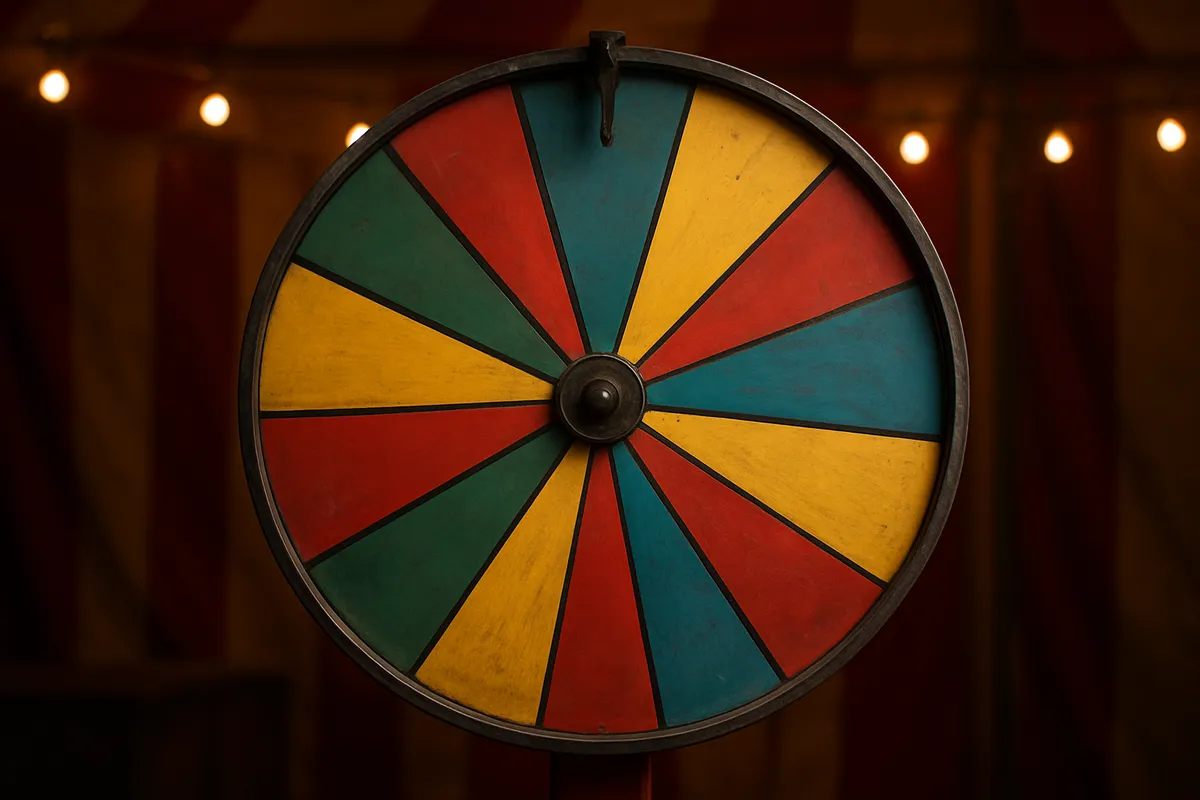
A spinner has 4 equal sections labeled red, blue, green, and yellow. Decide whether the color probability model is uniform.
A spinner has 6 equal sections: 3 red, 2 blue, and 1 green. Decide whether the color probability model is uniform.
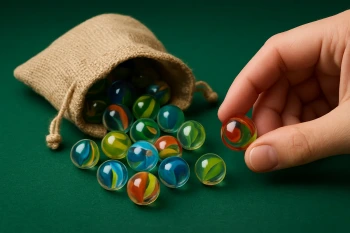
A bag has 5 red cubes, 5 blue cubes, and 5 yellow cubes. Decide whether the color probability model is uniform.
A number cube has faces 1, 2, 3, 4, 5, and 6, each appearing once. Decide whether the outcome model is uniform.
A bag has 2 red counters, 4 blue counters, and 4 yellow counters. Decide whether the color probability model is uniform.
A spinner has 8 equal sections: 2 A, 2 B, 2 C, and 2 D. Decide whether the letter probability model is uniform.
A spinner has unequal regions: red covers 1/2, blue covers 1/4, and green covers 1/4. Decide whether the color model is uniform.
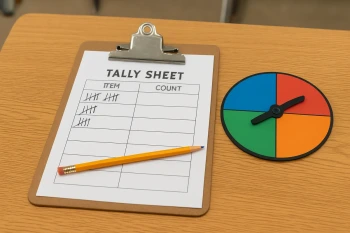
A frequency table records 90 spinner trials: red 18, blue 27, and green 45. Build the experimental probability model.
A game piece landed on star 8 times, circle 12 times, and square 20 times in 40 trials. Build the probability model.
A bag draw was repeated 30 times: black 9, white 6, and gray 15. Build the experimental probability model for color.
A coin was flipped 60 times: heads occurred 27 times and tails 33 times. Build the experimental probability model.
A spinner was tried 40 times: orange 10, purple 10, and teal 20. Build the experimental probability model.
Tickets were drawn 60 times: A occurred 18 times, B occurred 12 times, and C occurred 30 times. Build the probability model.
A random generator produced 1 twenty-five times, 2 thirty-five times, and 3 forty times in 100 trials. Build the model.
A bag has 2 red tiles, 5 blue tiles, and 3 yellow tiles. A tile is chosen randomly. What is P(blue)?
A spinner has 10 equal sections: 4 cat, 1 dog, and 5 bird. It is spun once. What is P(not dog)?
A bag has 6 green marbles, 2 orange marbles, and 2 purple marbles. One marble is chosen. What is P(orange or purple)?
A spinner has 12 equal sections: 3 red, 7 blue, and 2 green. It is spun once. What is P(green)?
A box has 6 circle cards, 3 triangle cards, and 1 star card. One card is chosen. What is P(not circle)?
A prize wheel's model is small prize 1/8, medium prize 3/8, and large prize 4/8. What is P(medium or large)?
Crack the passcode before the zombies get in.
Answer, then swat bugs for bonus points.
Race through questions at your own speed.
Same question on every screen. Fastest wins.

Pick a tile, answer, hit bonuses and steals.
Probability of Compound Events
40 questions