Loading
by BlastRoom
Resolve physical vectors into components and combine them to find resultants.
#precalculus
20 questions
One question set, multiple game modes. Tap any game to see it in action. Not sure which to pick?
Answer to place stones and capture territory.
Outrun the snow together.
Earn blasts, then hunt the other team.
Answer to earn energy, then climb.

The class blasts through walls together.
Bid on mystery lots. Most money wins.
Sell tours. Nice, standard, or a total scam.

Answer, restock, and serve the rush.
More correct answers pulls the rope your way.
Answer, then shoot down the alien wave.
Answer, then tap to leap the frozen ridge.
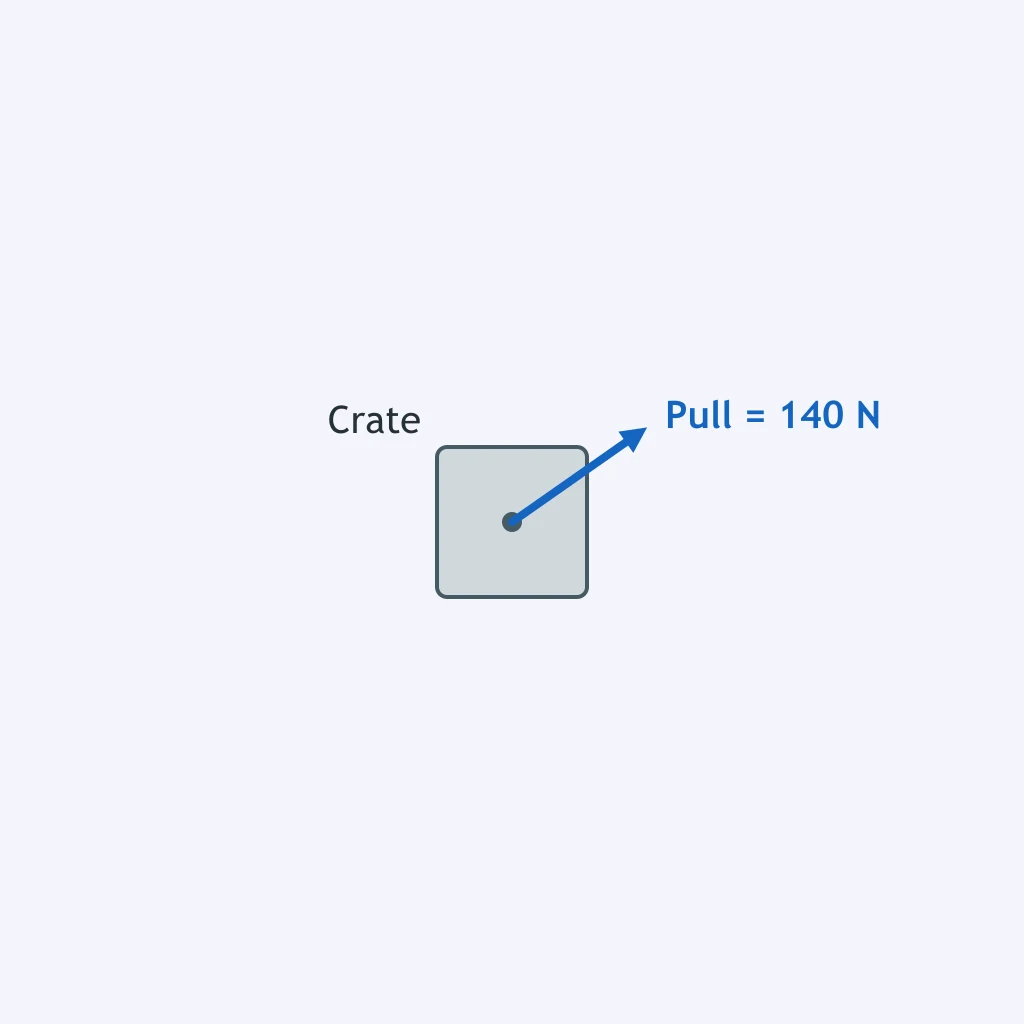
A rope pulls a crate with a force of 140 N at 35 degrees above the horizontal. Find the horizontal component, rounded to the nearest tenth of a newton.
A cable pulls a sensor with a force of 90 N at 50 degrees above the horizontal. Find the vertical component, rounded to the nearest tenth of a newton.
A drone flies at 18 m/s, 30 degrees north of east. Write its velocity in component form, with east first and north second, rounded to the nearest tenth.
A tugboat pulls with a force of 250 N, 40 degrees south of west. Using east as positive horizontal and north as positive vertical, write the force in component form to the nearest tenth.
A 60 N force acts 25 degrees west of north. Write the force in component form, with east first and north second, rounded to the nearest tenth.
Use the graph. Forces F1 and F2 act on a machine. Find the magnitude of the resultant force in simplest radical form.
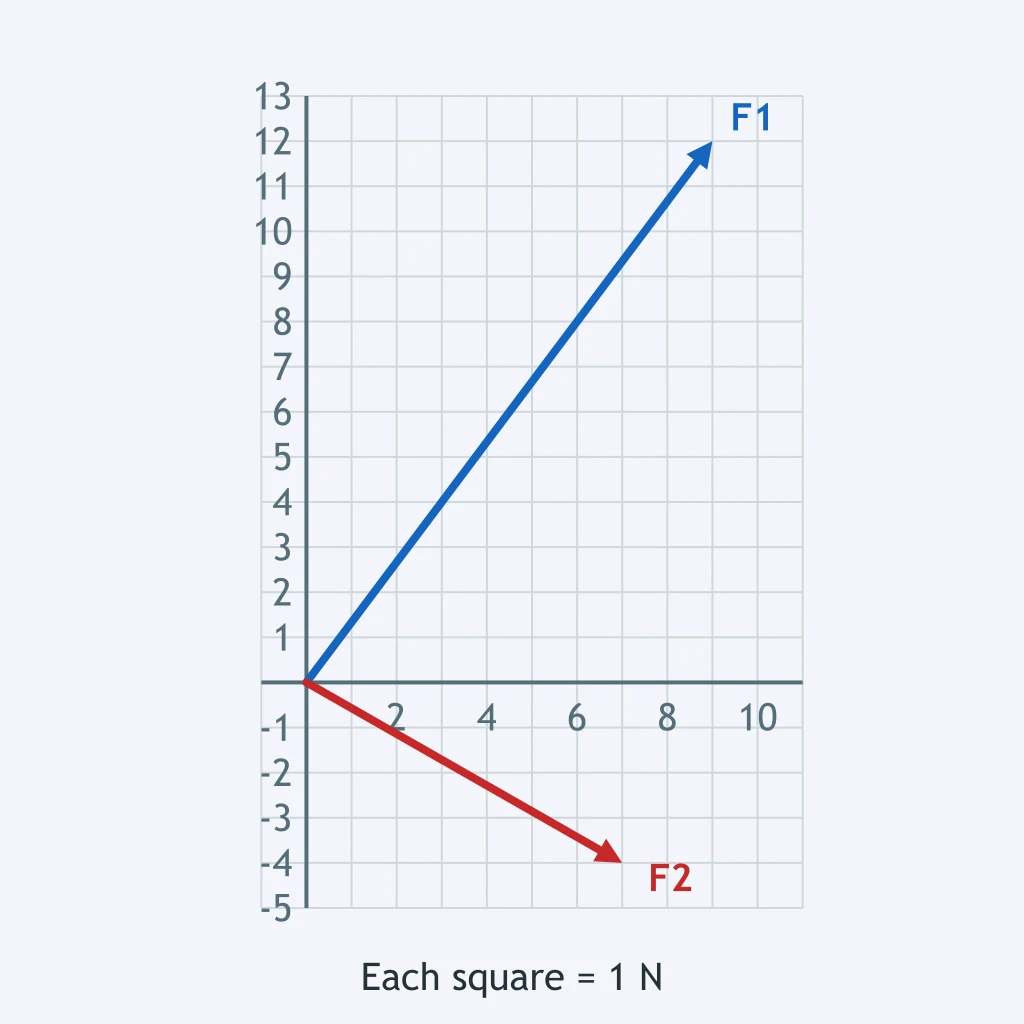
Use the graph. A robot experiences forces F1 and F2. What is the magnitude of the resultant force in simplest radical form?
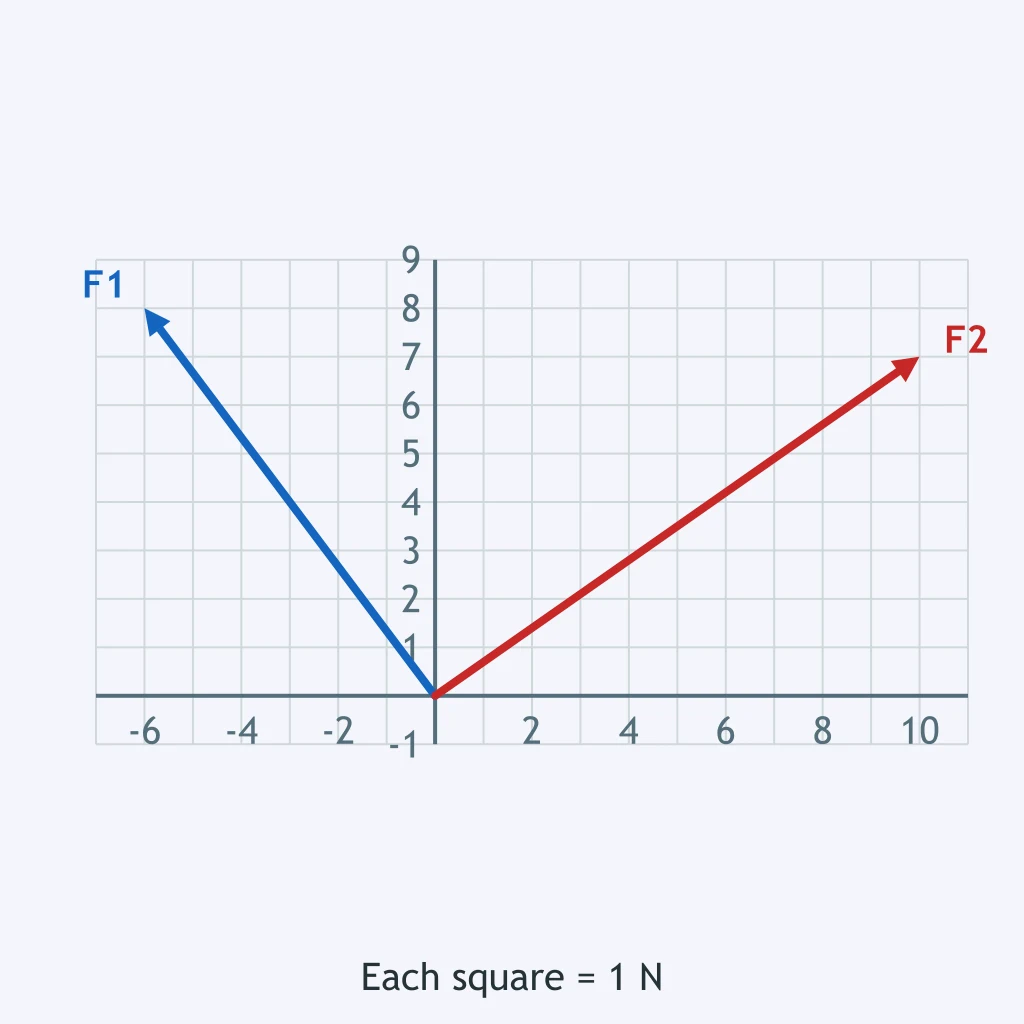
Use the graph. A crate is acted on by forces F1 and F2. Find the resultant force's magnitude in simplest radical form.
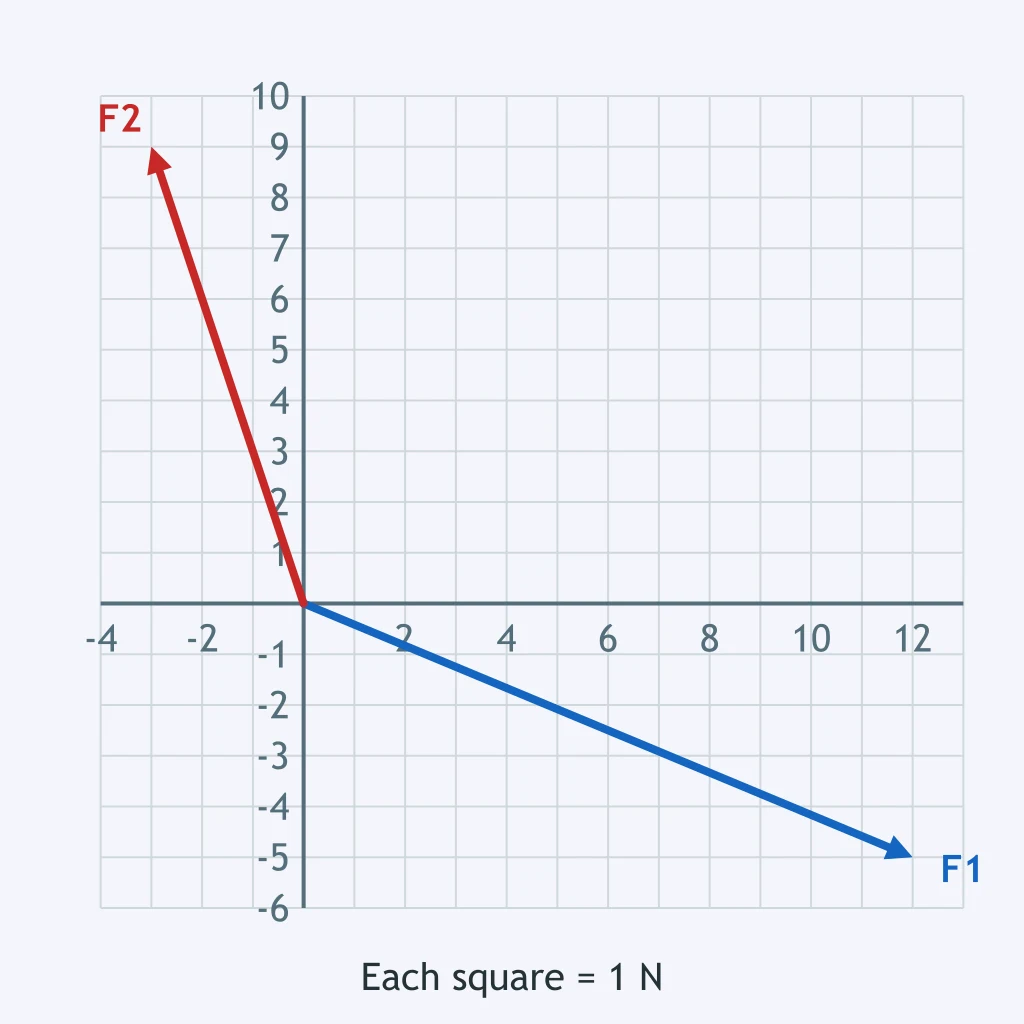
Use the graph. Two forces on a platform are F1 and F2. Find the magnitude of their resultant in simplest radical form.
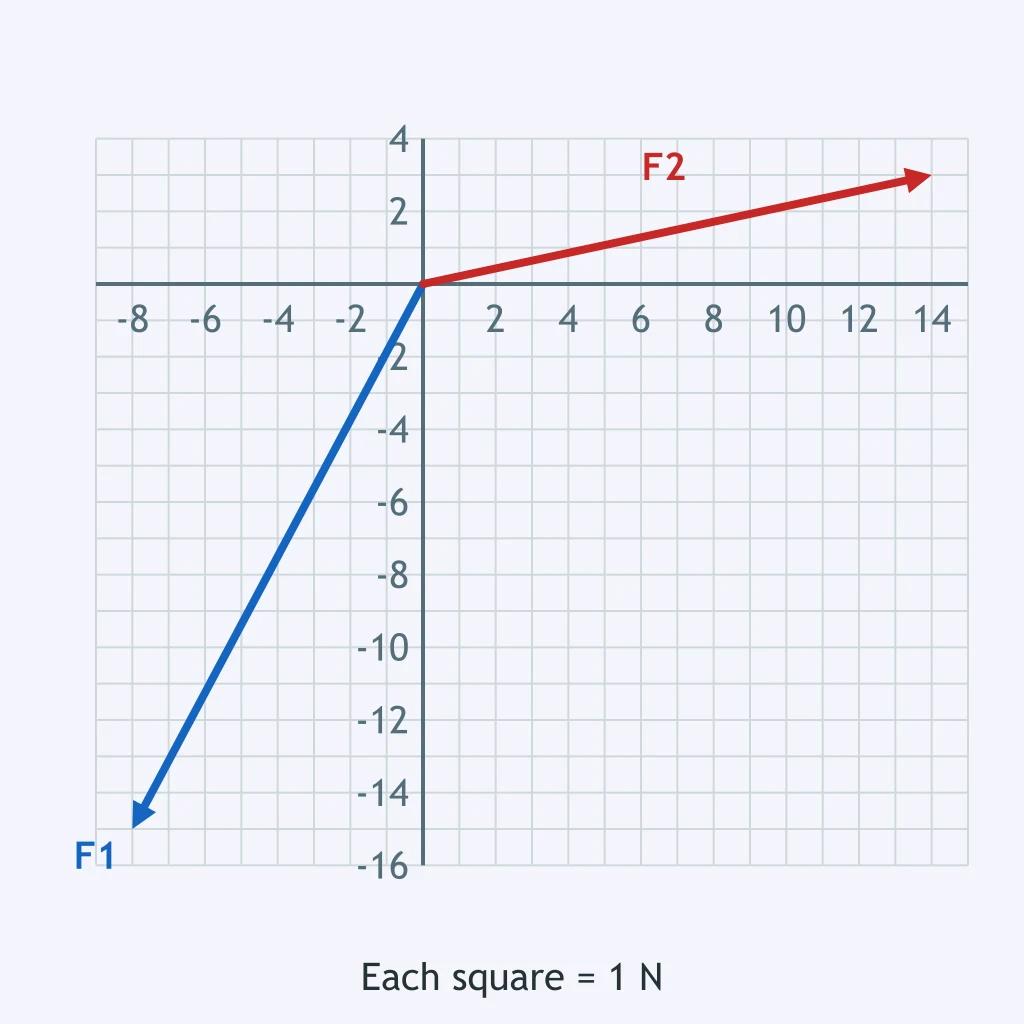
Use the graph. A cart has forces F1 and F2 acting on it. Find the magnitude of the resultant force in simplest radical form.
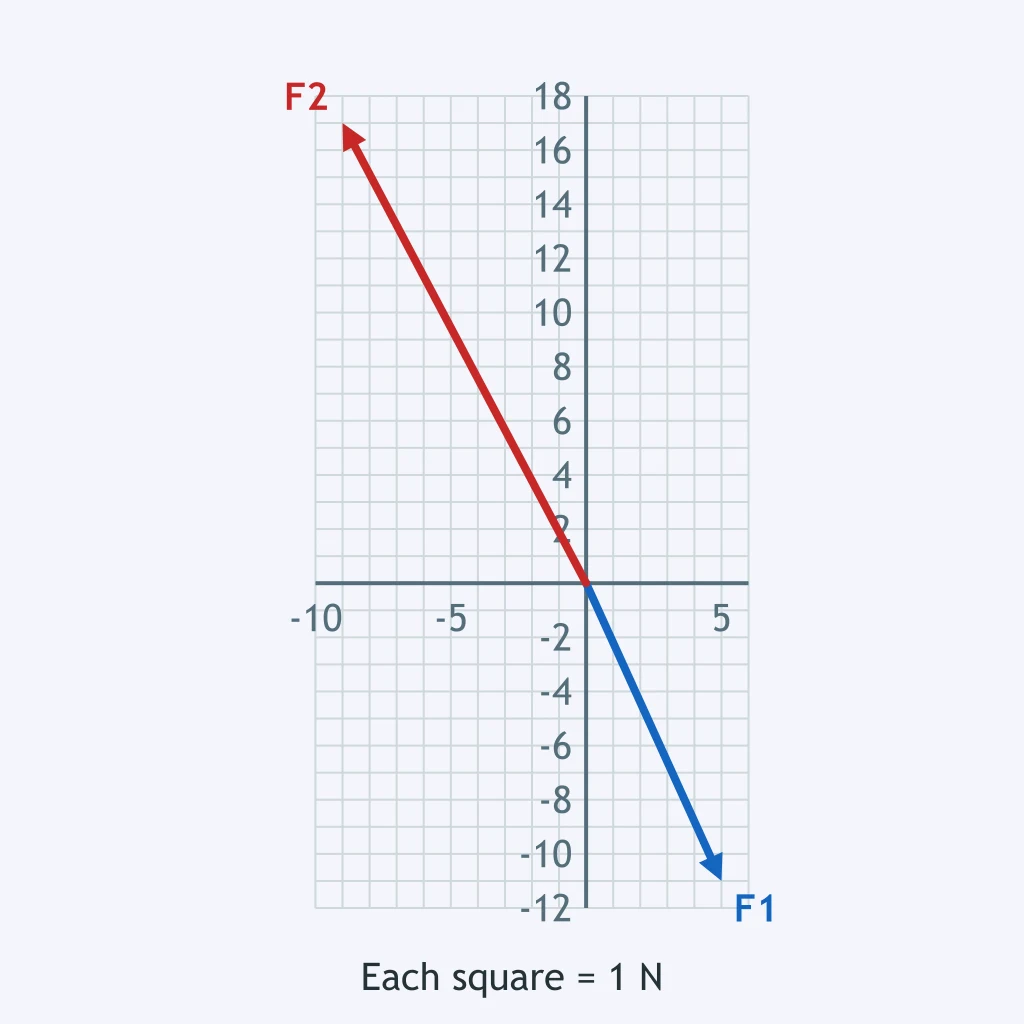
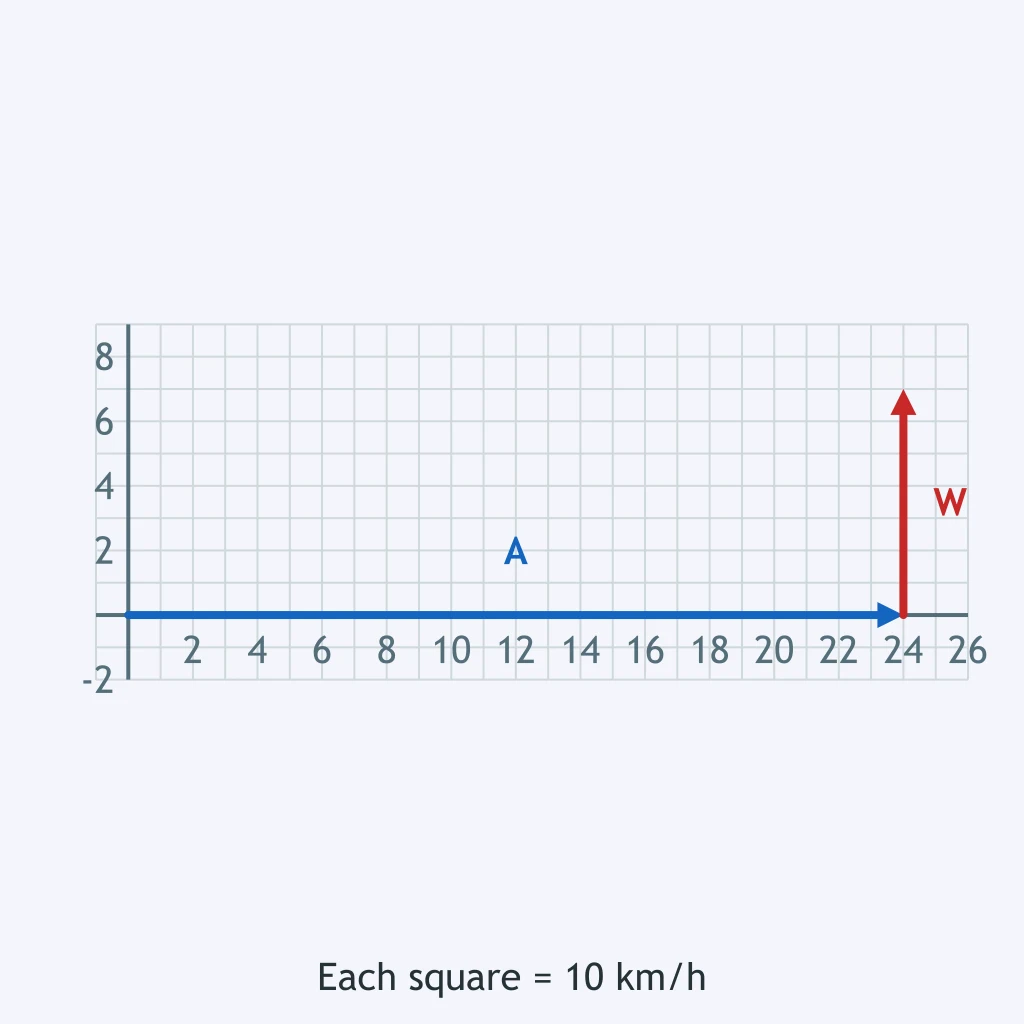
Use the graph. Arrow A is an airplane's velocity through the air, due east, and arrow W is the wind, due north. Find the plane's ground speed, rounded to the nearest tenth of a kilometer per hour.
A kayak moves at 12 km/h straight across a river while the current moves it downstream at 5 km/h. What is the kayak's resulting speed over the ground?
A helicopter flies at 150 km/h due north while wind blows at 80 km/h due west. Find its ground speed, rounded to the nearest tenth of a kilometer per hour.
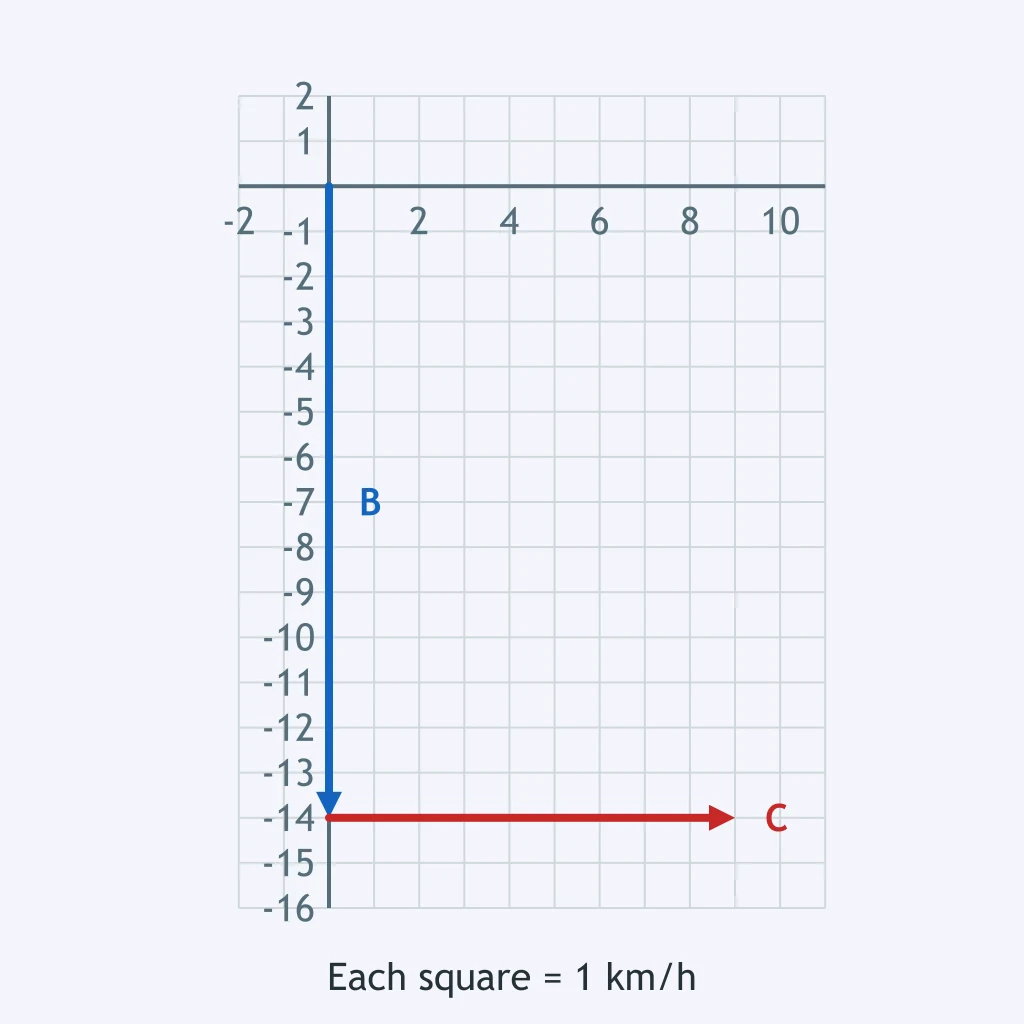
Use the graph. Arrow B is a sailboat's velocity through the water, due south, and arrow C is the current, due east. Find the boat's resulting speed, rounded to the nearest tenth of a kilometer per hour.
A 180 N sensor hangs from two identical cables. Each cable has tension and makes a 35-degree angle with the horizontal. Which equation balances the vertical forces?
A 300 N sign is held by a left cable with tension at 40 degrees above horizontal and a right cable with tension at 55 degrees above horizontal. Which equation balances vertical forces?
A 250 N lamp hangs from two identical cables, each with tension and each making a 60-degree angle with the vertical. Which equation states vertical equilibrium?
A boat's ground-velocity vector is km/h, with the first component across a river and the second downstream. What does its magnitude, 17 km/h, describe?
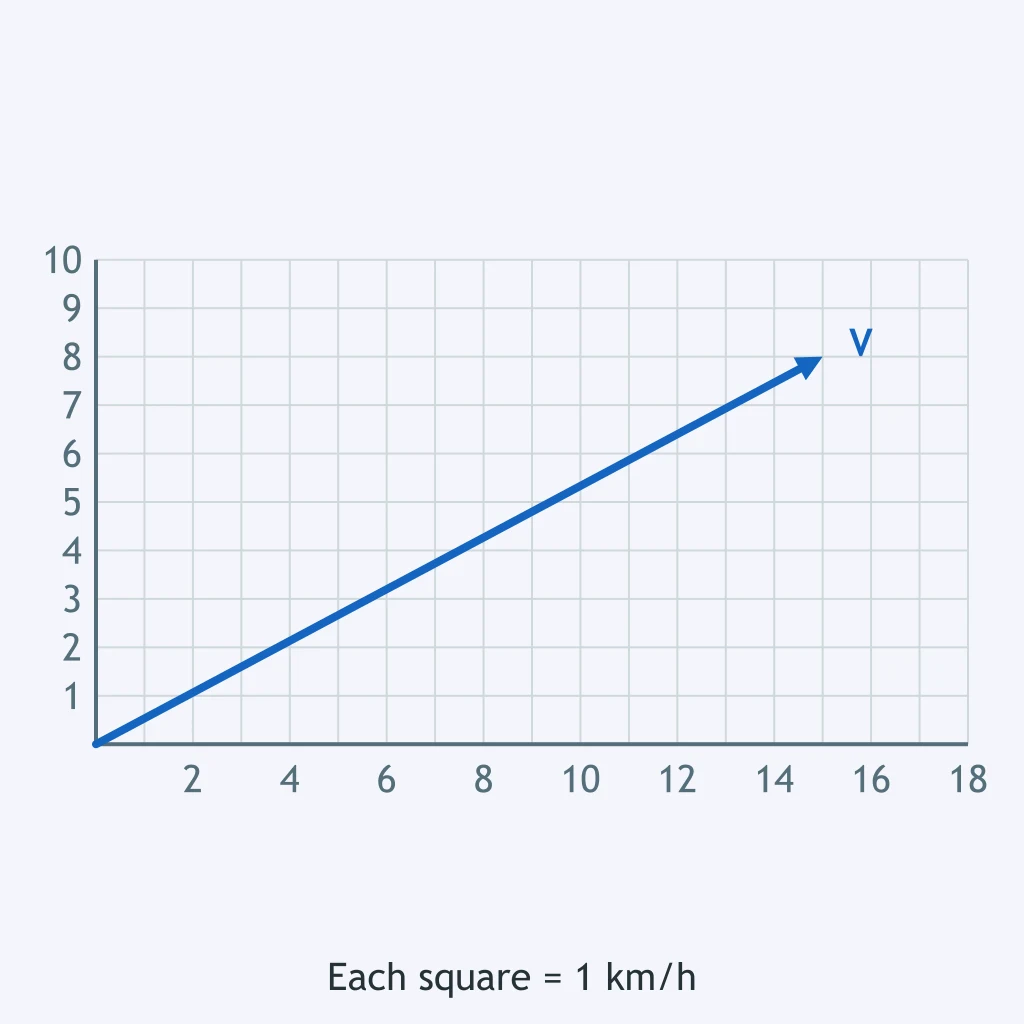
A drone's velocity is m/s, where east is positive horizontal and north is positive vertical. What does the component mean?
Two forces on a crate have resultant N, whose magnitude is 13 N. What does the 13 N magnitude represent?
Crack the passcode before the zombies get in.
Answer, then swat bugs for bonus points.
Race through questions at your own speed.
Same question on every screen. Fastest wins.

Pick a tile, answer, hit bonuses and steals.
Graphing Polar Equations
40 questions