Loading
by BlastRoom
Start from take-home pay, put every dollar somewhere, and make the bottom line come out right.
#us_hs_personal_finance

40 questions
One question set, multiple game modes. Tap any game to see it in action. Not sure which to pick?
Answer to place stones and capture territory.
Outrun the snow together.
Earn blasts, then hunt the other team.
Answer to earn energy, then climb.

The class blasts through walls together.
Bid on mystery lots. Most money wins.
Sell tours. Nice, standard, or a total scam.

Answer, restock, and serve the rush.
More correct answers pulls the rope your way.
Answer, then shoot down the alien wave.
Answer, then tap to leap the frozen ridge.
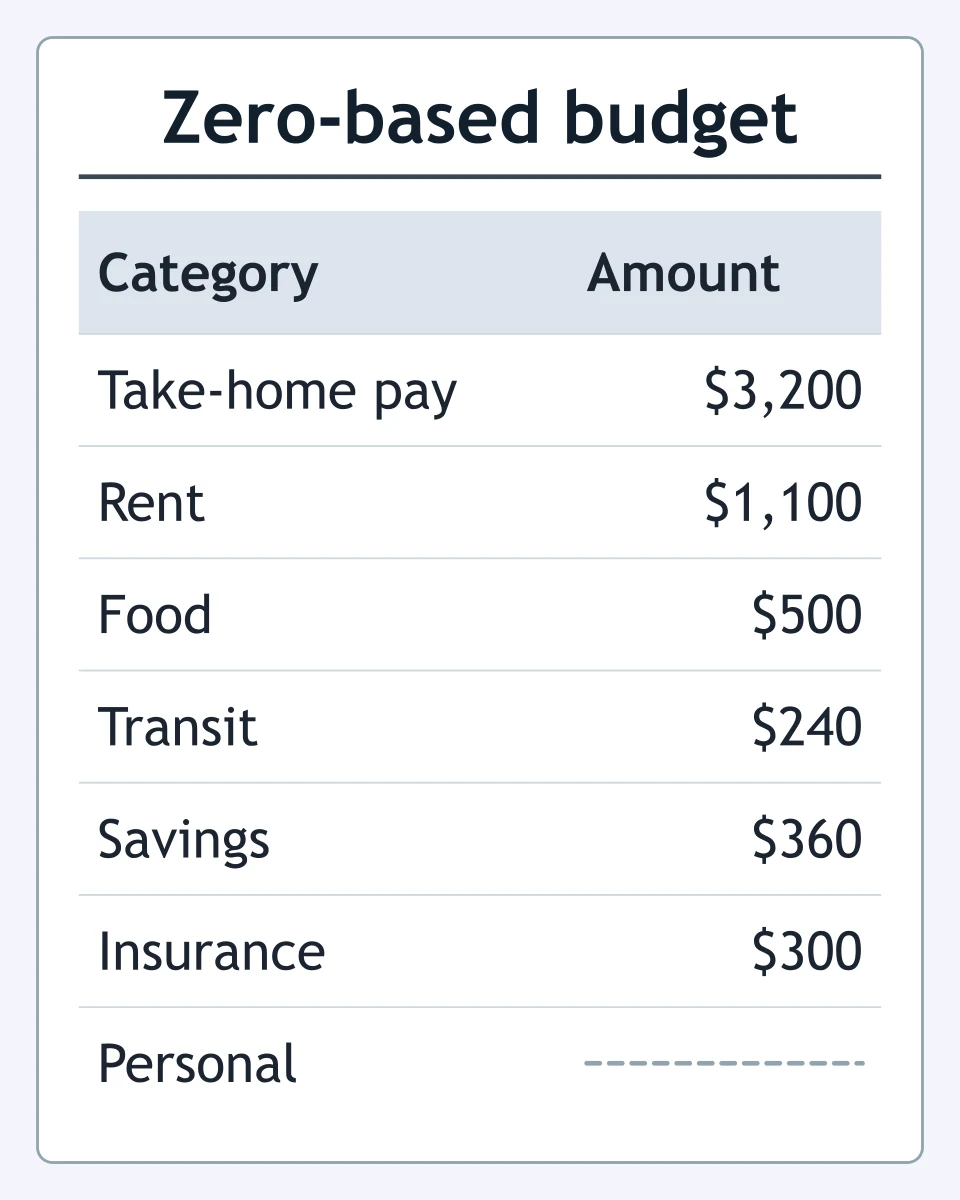
Use the monthly budget shown. After all listed expenses, how much of the paycheck remains?
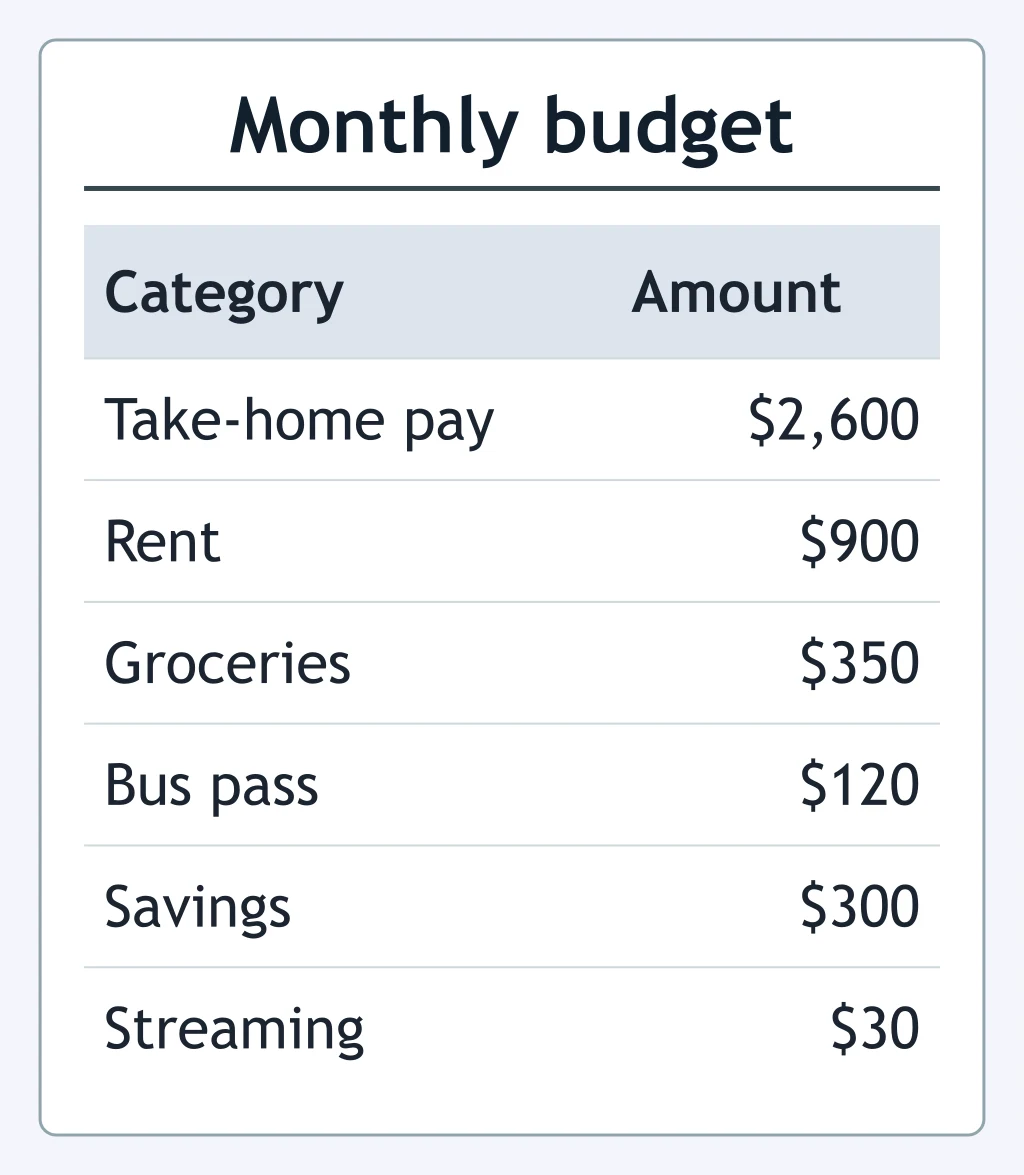
Jordan's take-home pay is $2,000. Rent is $750, food is $280, transit is $140, and savings is $200. How much remains after these assignments?
Read the budget table. What amount remains after every listed category is funded?
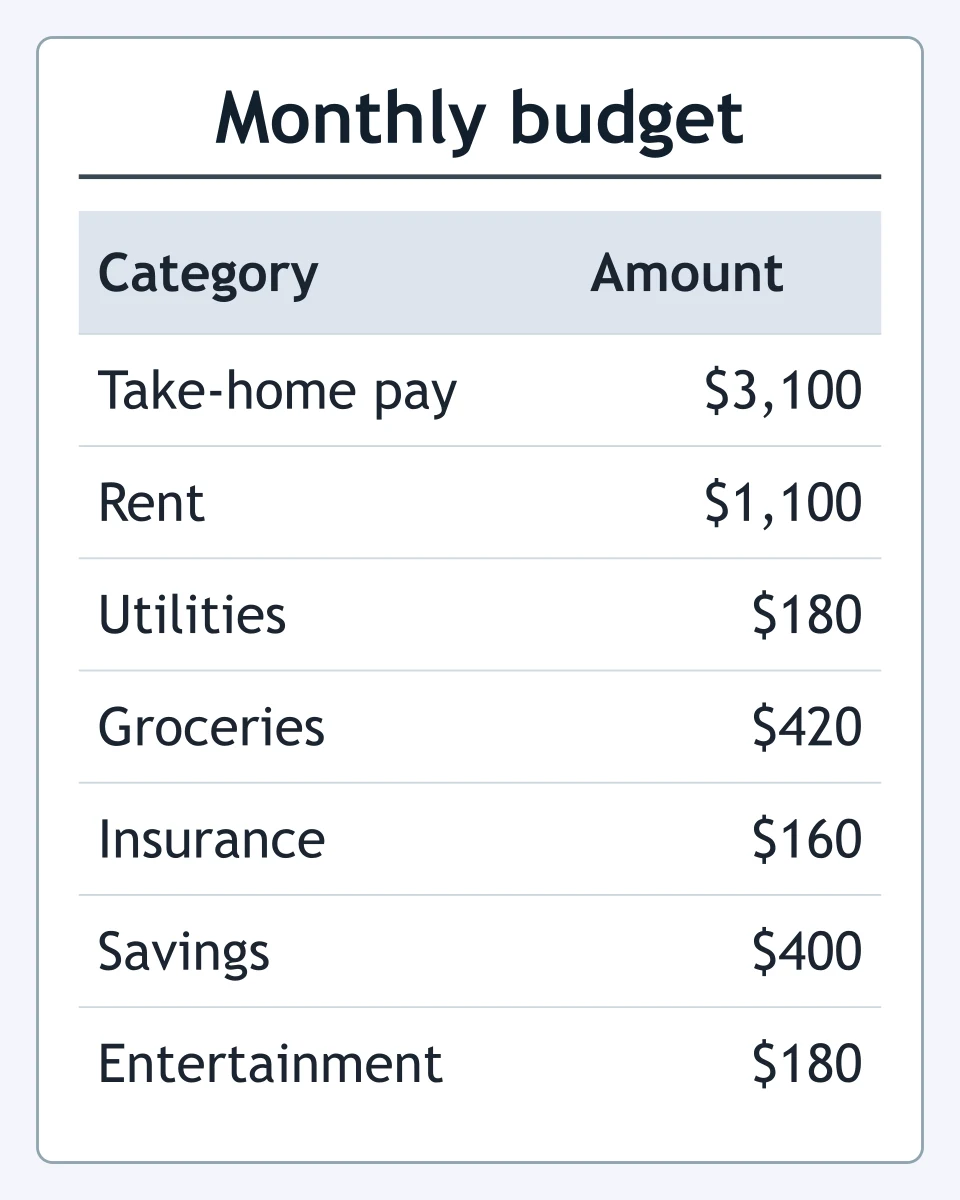
Ari brings home $1,800 each month and assigns $650 to rent, $240 to food, $90 to transit, $150 to savings, and $60 to streaming. What is left?
According to the budget shown, how much is unassigned after all expenses are paid?
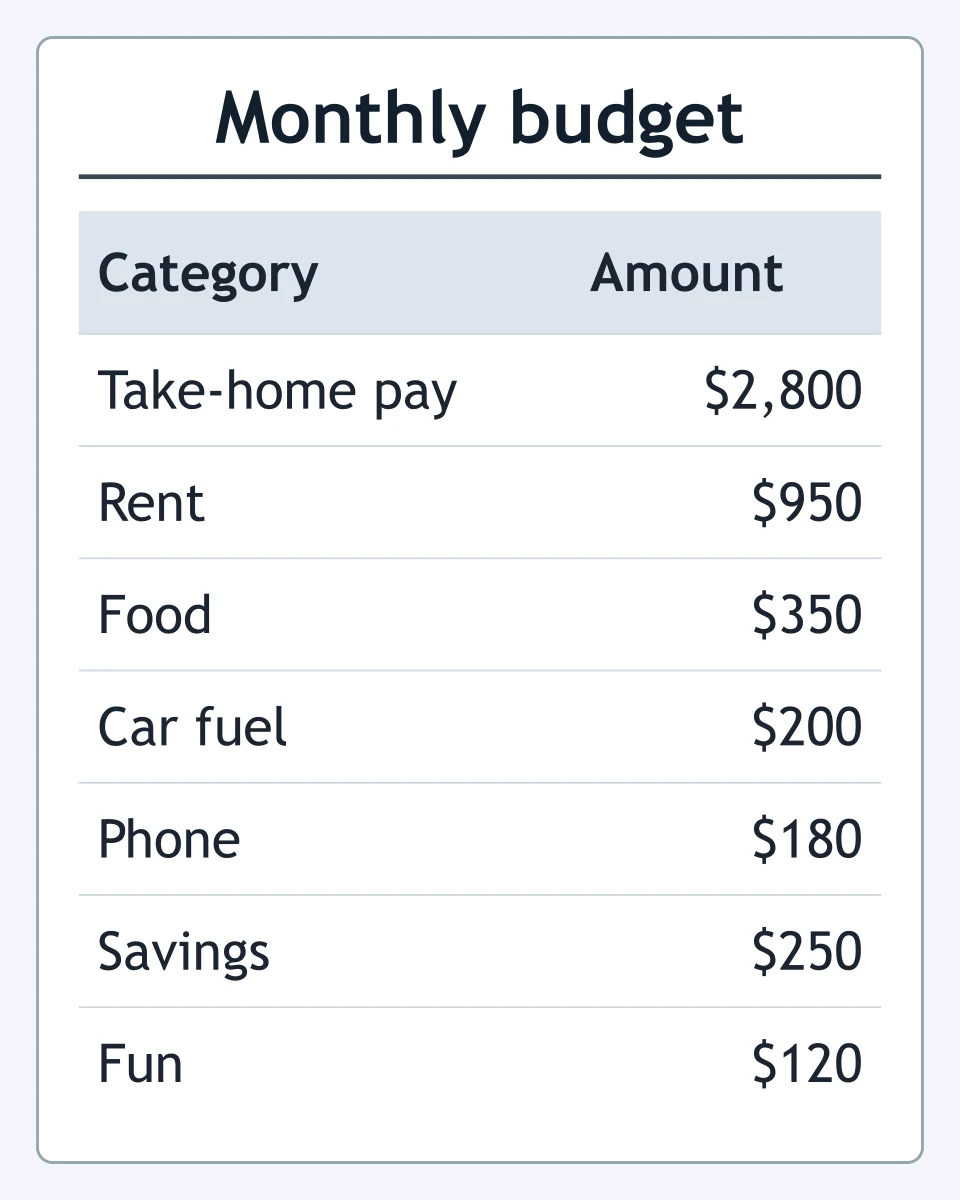
Mina's take-home pay is $2,250. She budgets $800 for rent, $320 for food, $150 for transportation, $220 for savings, and $90 for subscriptions. What remains?
Use the budget table. What is the bottom-line amount left from this paycheck?
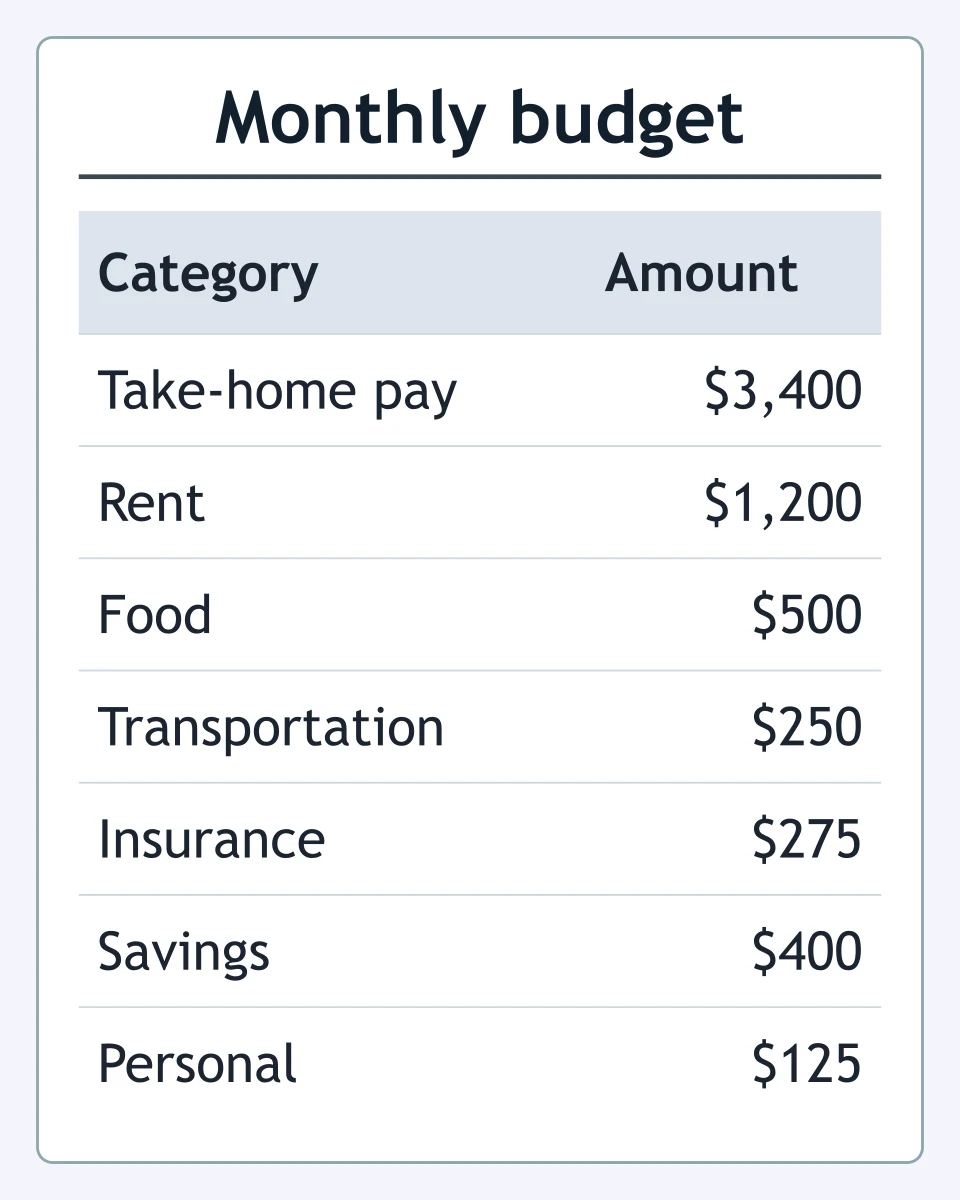
Sam takes home $1,600. Rent is $600, food is $250, transit is $100, savings is $180, and phone service is $70. How much remains?
This is a zero-based budget. What amount belongs in the blank savings cell?
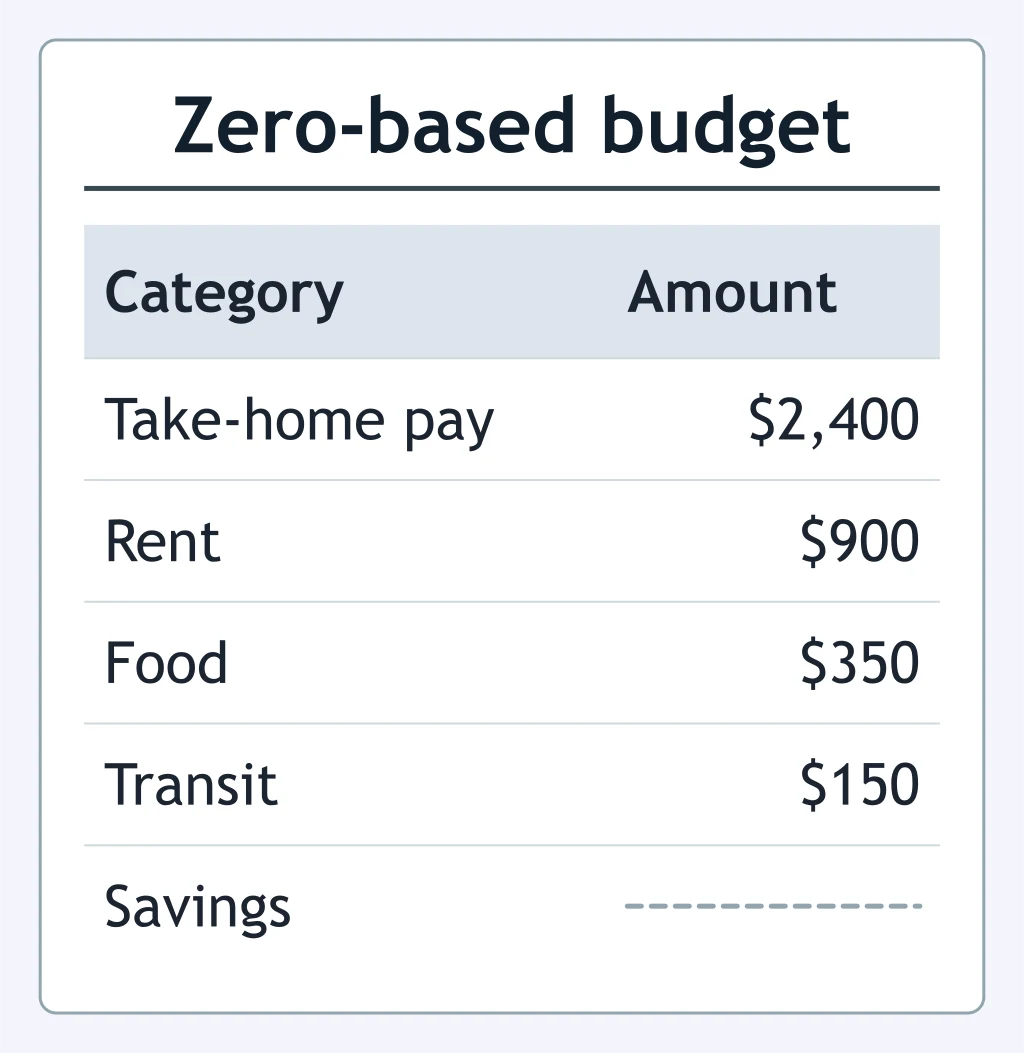
Use the zero-based budget shown. What amount must fill the blank category?
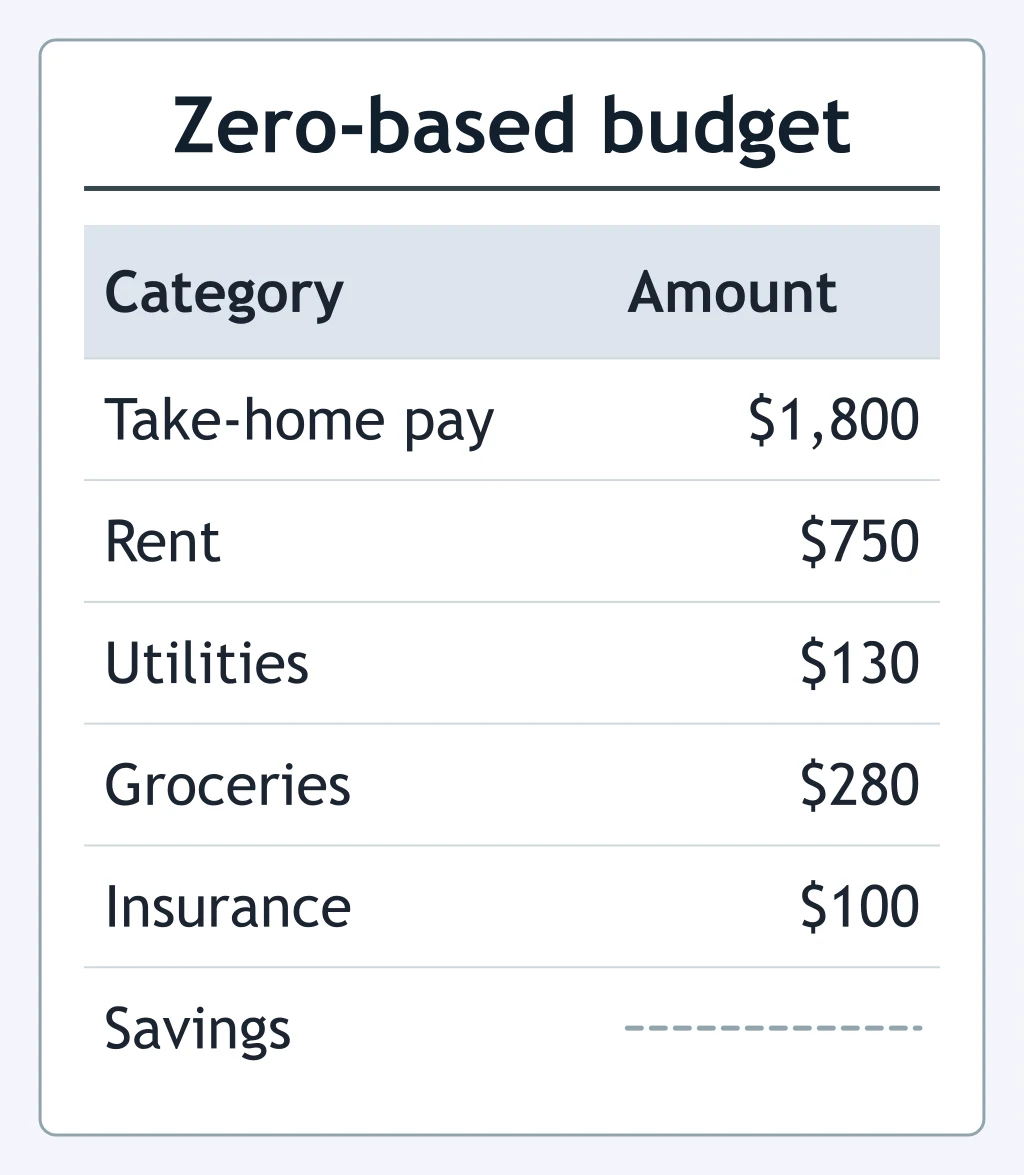
The table is a zero-based plan. What should the blank personal-spending entry be?
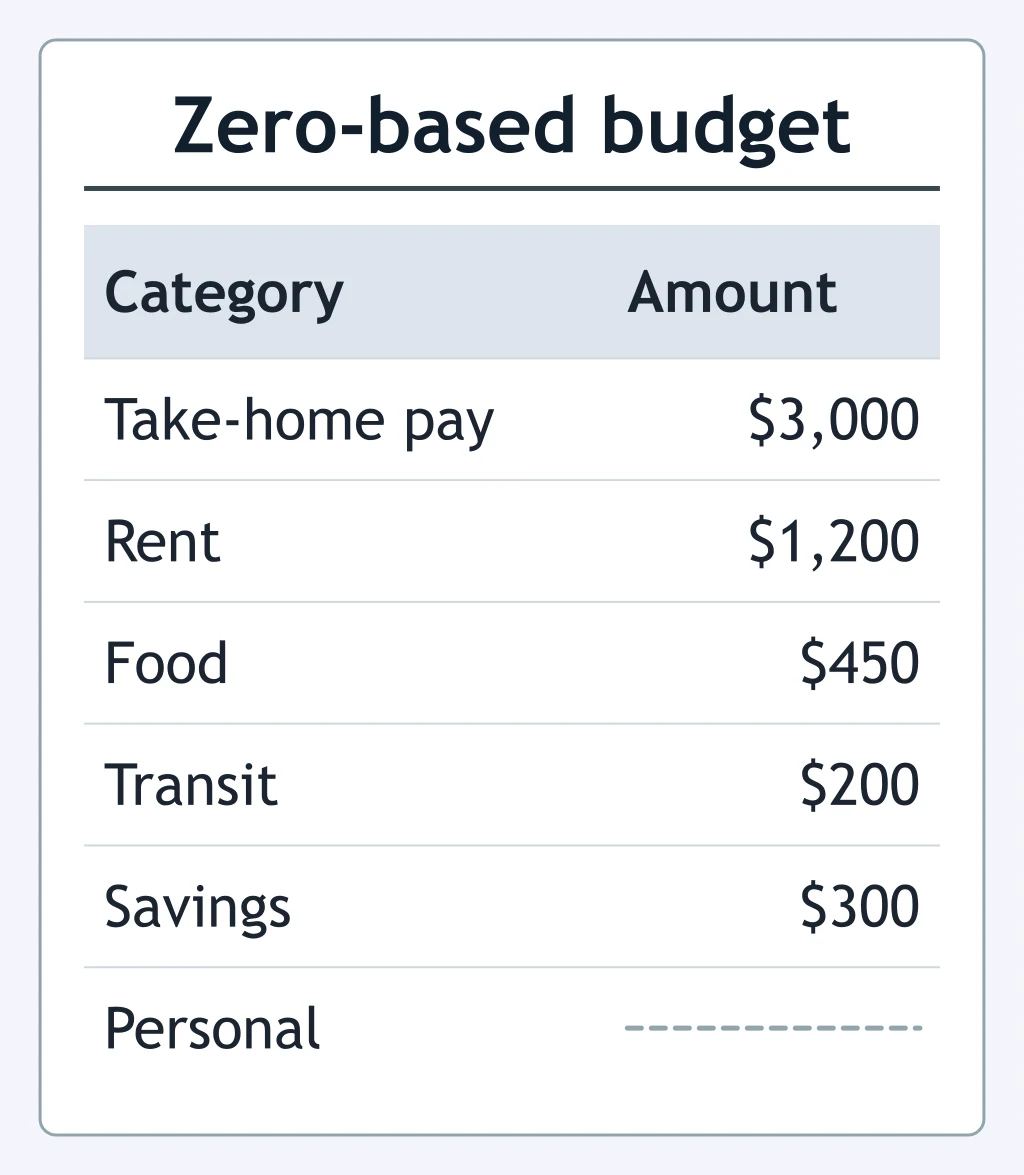
A zero-based budget has $2,200 of take-home pay. It assigns $800 to rent, $350 to food, $120 to transit, and $250 to savings. What must be assigned to the final category?
Find the missing amount that makes this budget zero-based.
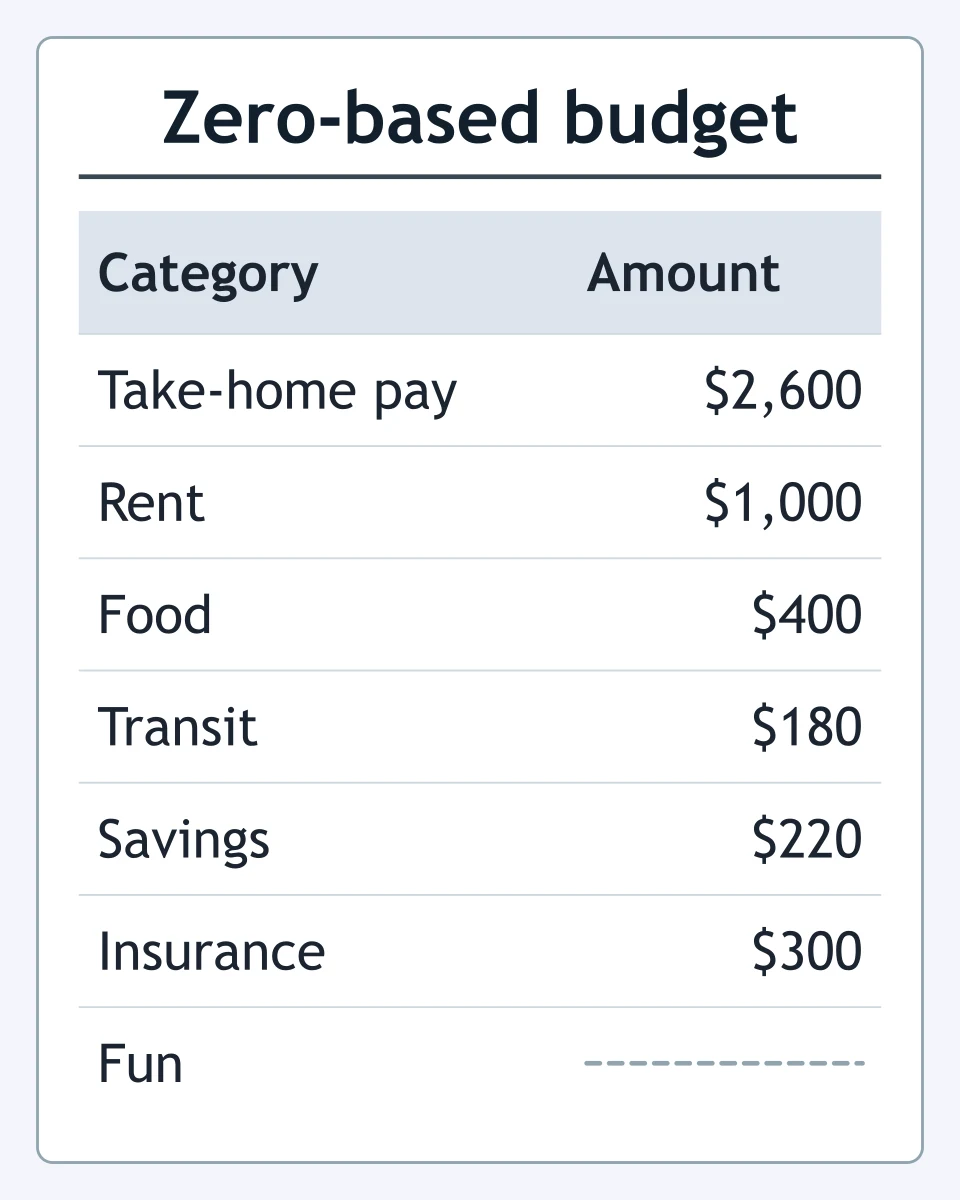
Luis takes home $2,000. His zero-based plan assigns $700 to rent, $250 to food, $90 to transit, and $110 to phone service. What must go to savings?
Read the zero-based budget. What amount belongs in the blank category?
Under a 50/30/20 plan, how much of $2,400 take-home pay is available for needs?
Use the stated budget plan. What is the maximum amount for wants?
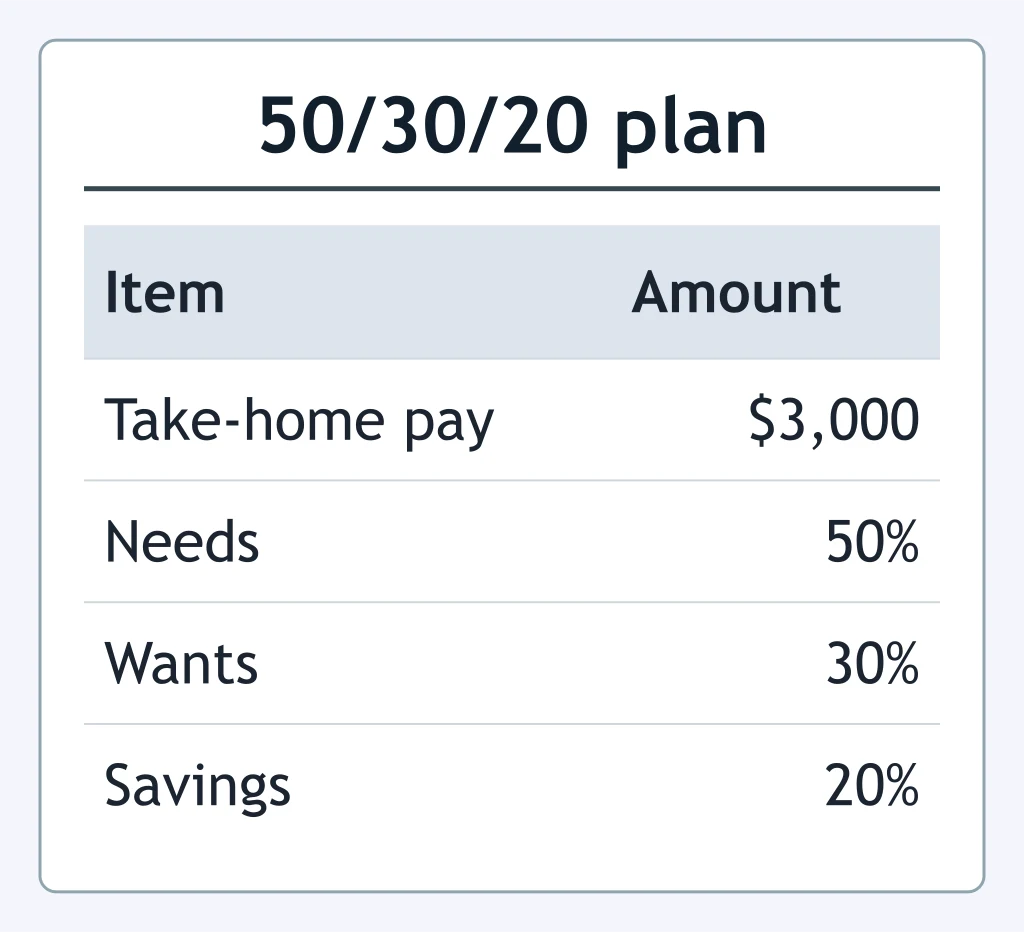
Under a 50/30/20 plan, Priya brings home $2,400. How much should she assign to savings and debt payments?
Read the allocation table. How much may be assigned to wants under the rule shown?
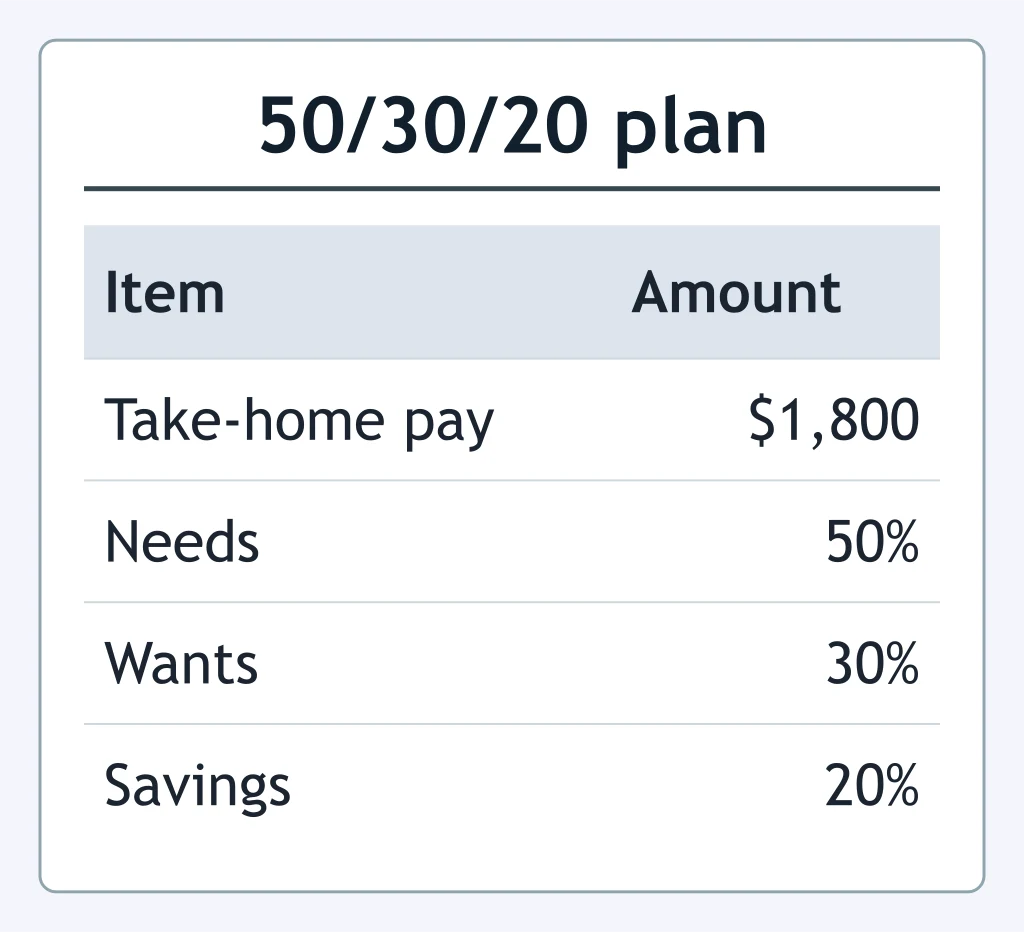
With $3,500 of take-home pay, how much goes to needs in a 50/30/20 plan?
Under a 50/30/20 plan, what amount from $2,100 take-home pay goes to savings and debt payments?
A 50/30/20 budget uses $2,600 of take-home pay: needs $1,200, wants $850, and savings $550. Which part breaks the stated rule?
A 50/30/20 plan is based on $1,500 of take-home pay. What is the needs amount?
With $2,800 take-home pay, what amount should a 50/30/20 plan assign to savings and debt payments?
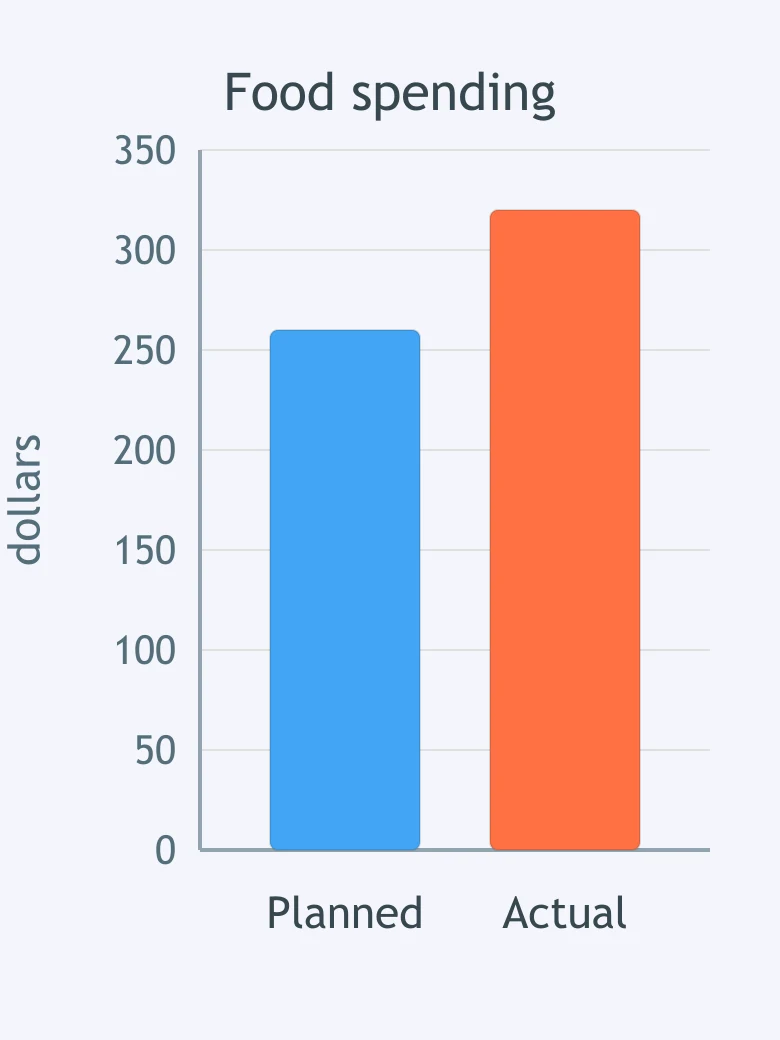
Use the graph to compare planned and actual food spending. By how much did actual spending exceed the plan?
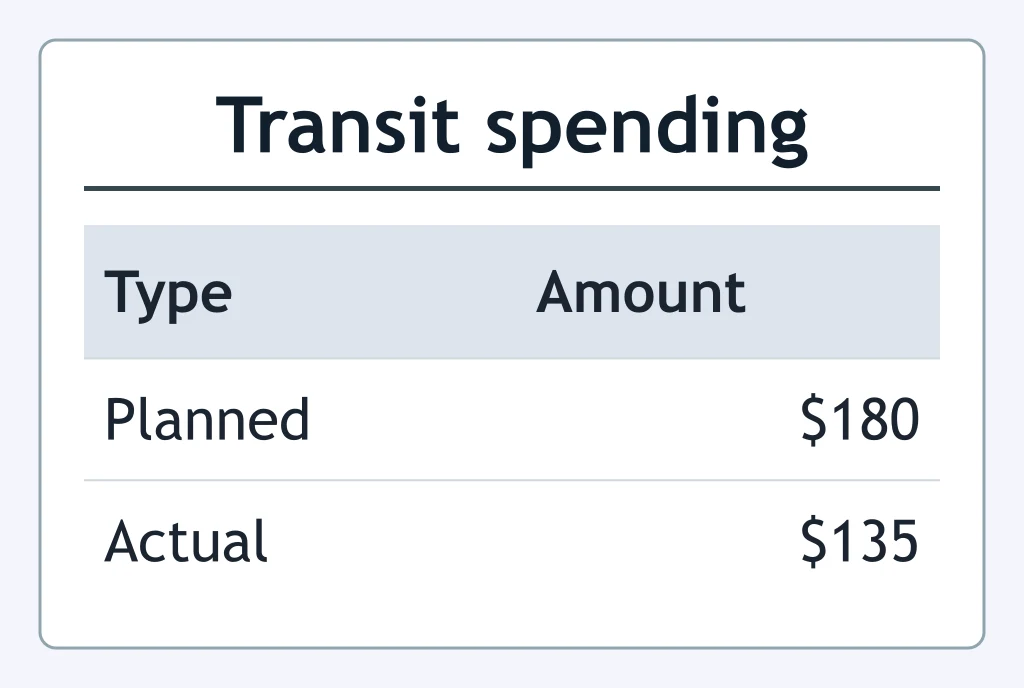
Read the planned-versus-actual table. How far below plan was transit spending?
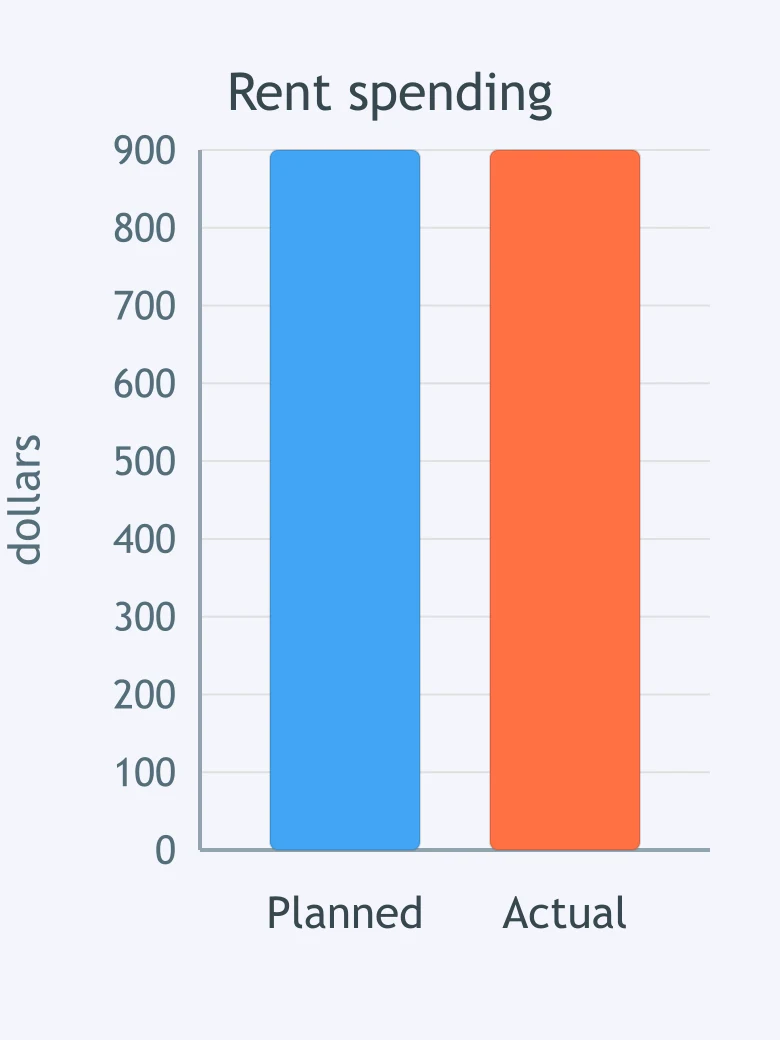
The graph compares planned and actual rent. What is the difference between the two amounts?
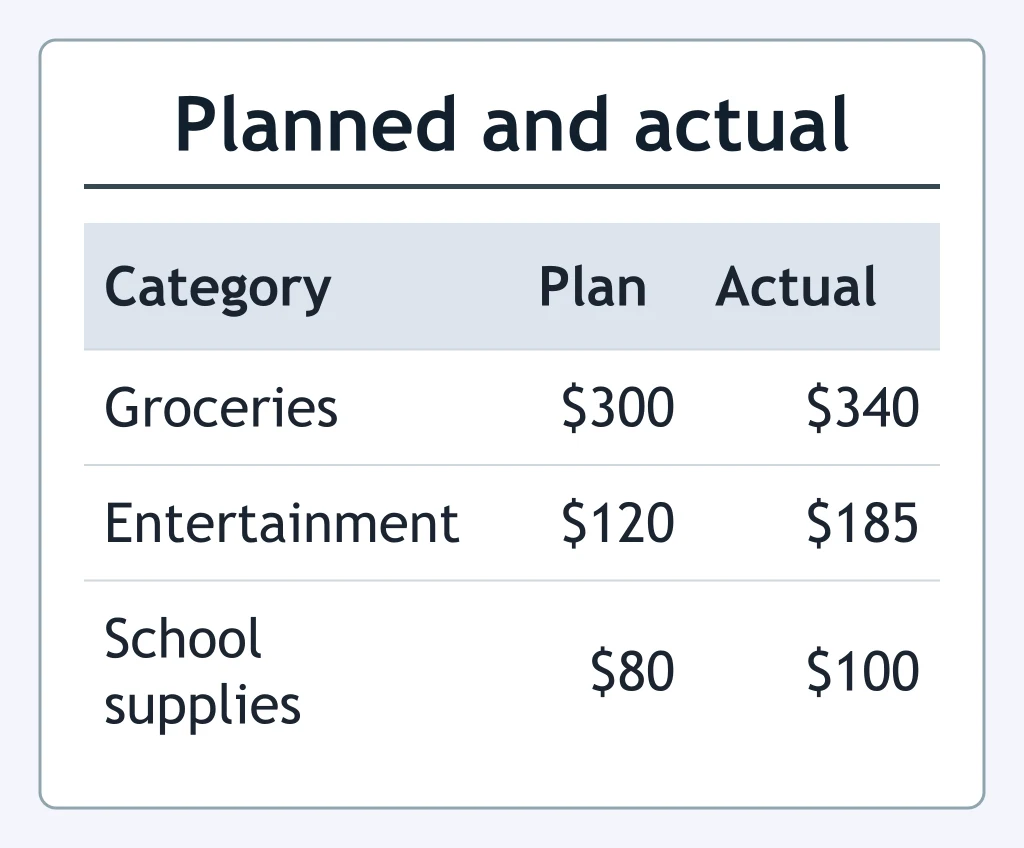
According to the table, which category exceeded its plan by the greatest amount?
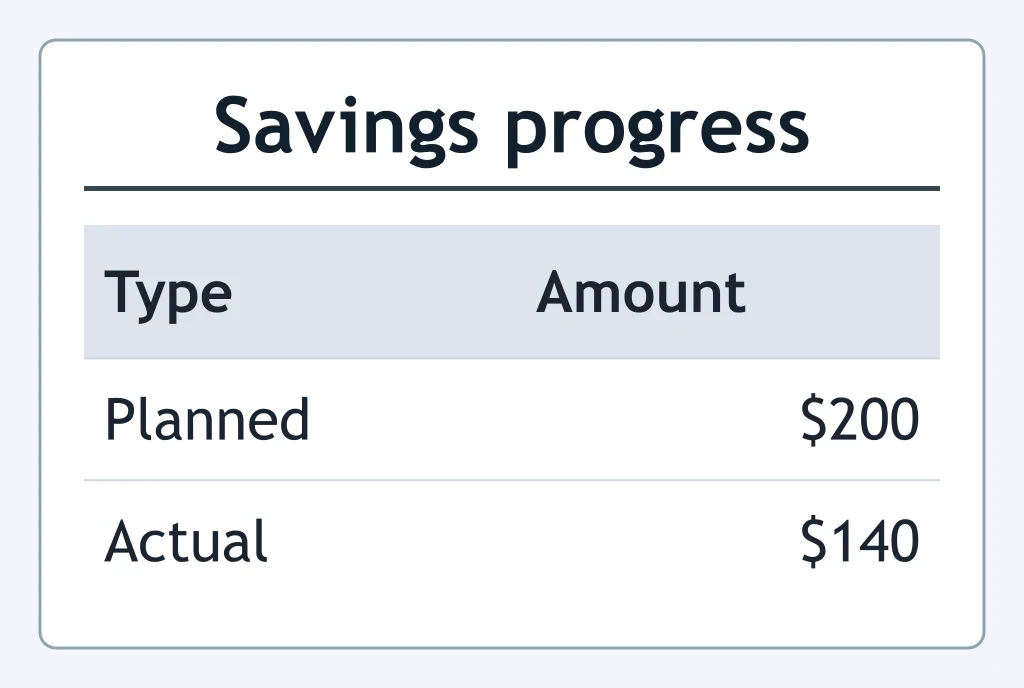
Use the table. By how much did actual savings fall short of the planned amount?
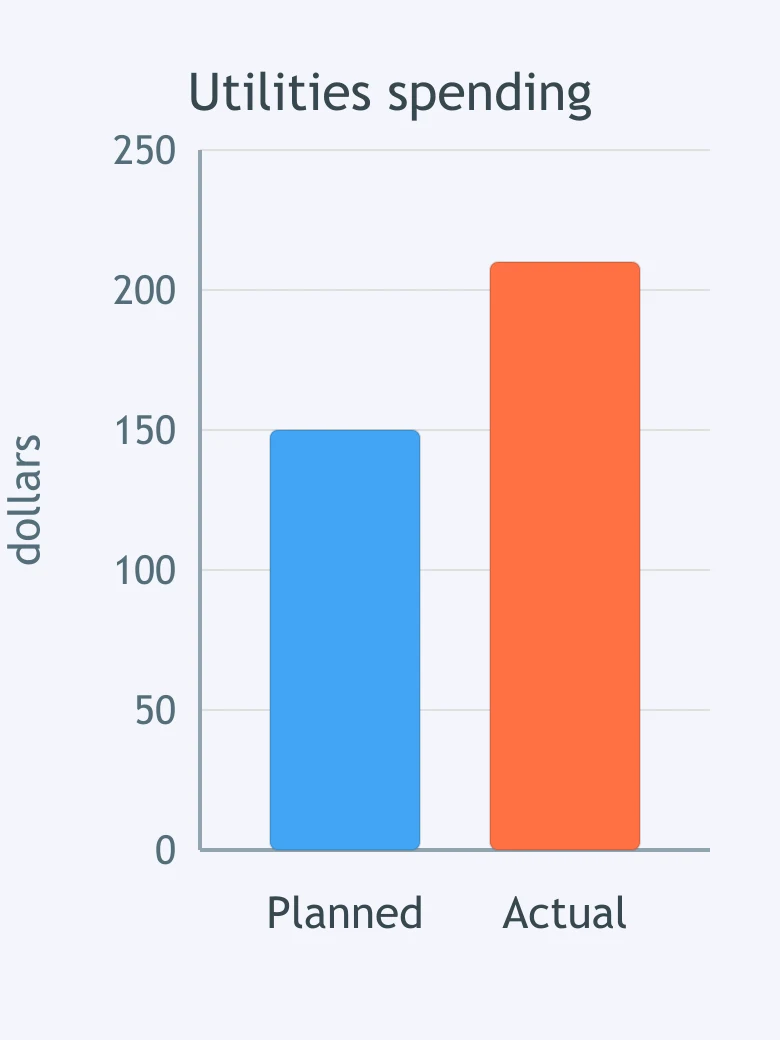
Read the graph. How much did utilities exceed the budgeted amount?
A budget is $40 short because restaurant spending was $40 over plan. Which change balances the budget without changing a fixed expense?
Kai's budget is $65 short this month. Kai pays rent, a car loan payment, car insurance, and clothing costs. Which adjustment can Kai most easily make this month to balance the plan?
Nora planned around $2,000 of take-home pay but received $1,900. Her expenses still total $2,000. What adjustment balances her budget?
Dining costs ran $60 over budget. Which change restores a balanced plan while leaving rent, insurance, and loan payments unchanged?
A spending plan is $45 over because a subscription was not included. Which action balances this month's plan?
A 50/30/20 budget uses $2,000 of take-home pay: needs $1,100, wants $500, and savings $400. Which part breaks the stated rule?
A zero-based budget has $2,600 of income and assigns $950 rent, $350 food, $150 transit, $300 savings, $180 clothing, and $200 fun. What judgment is correct?
Talia's bank moves $250 into savings on the day her $2,000 paycheck arrives. Does this follow the pay-yourself-first strategy?
A $240 car-registration bill is due in 6 months. Devin saves $40 monthly in a separate category. Does this meet the stated sinking-fund goal?
A monthly plan has $2,200 of take-home pay and $2,290 of expenses. Under the rule that income must cover expenses, what is the result?
Crack the passcode before the zombies get in.
Answer, then swat bugs for bonus points.
Race through questions at your own speed.
Same question on every screen. Fastest wins.

Pick a tile, answer, hit bonuses and steals.

50/30/20, Pay Yourself First and Zero-Based Budgets
20 questions