Loading
by BlastRoom
A mixed review of universal gravitation, inverse-square reasoning, gravitational fields, and circular orbits.
#physics
50 questions
One question set, multiple game modes. Tap any game to see it in action. Not sure which to pick?
Answer to place stones and capture territory.
Outrun the snow together.
Earn blasts, then hunt the other team.
Answer to earn energy, then climb.

The class blasts through walls together.
Bid on mystery lots. Most money wins.
Sell tours. Nice, standard, or a total scam.

Answer, restock, and serve the rush.
More correct answers pulls the rope your way.
Answer, then shoot down the alien wave.
Answer, then tap to leap the frozen ridge.
A satellite of mass m moves in a circular orbit of radius r around a planet of mass M. Which expression gives the satellite's orbital speed v?
A planet of mass M creates a gravitational field at a point r from its center. Which expression gives the field strength g at that point?
Two asteroids with masses m₁ and m₂ are separated by a center-to-center distance r. Which equation should be used to find their gravitational force?
A spherical planet has radius R, and the gravitational field strength at its surface is g. Which expression gives the planet's mass M?
A moon moves in a circular orbit of radius r and period T around a planet of mass M. Which setup uses gravity as the centripetal force?
At radius r, a spacecraft is in a gravitational field of strength g. Which setup gives the speed v needed for a circular orbit at that radius?
A probe at radius r has orbital period T in a circular orbit. The planet's mass is M. Which expression gives the orbit radius r?
A lab measures the gravitational force F between two known masses m₁ and m₂ separated by r. Which equation should be rearranged to find G?
A satellite of mass m at radius r moves with speed v around a planet. Which setup correctly relates its net inward force to gravity?
An astronaut floats inside an orbiting station. A student says, “There is no gravity there.” Which correction is best?
A student writes, “A centrifugal force balances gravity to keep a satellite in orbit.” Which correction should replace it?
A student says, “Gravitational field lines show the path a dropped object must follow.” What is the correct idea?
A student claims, “A heavier satellite must move faster than a lighter one in the same circular orbit.” Which correction is right?
A test answer says, “If distance doubles, gravitational force is cut in half.” What correction is needed?
A student says, “In microgravity an astronaut has no mass.” Which correction is accurate?
A student argues, “Farther satellites move faster because they travel a longer circle.” Which correction is right for circular orbits around one planet?
A student says, “Earth pulls on a satellite, but the satellite does not pull on Earth.” Which correction is right?
A student writes, “Gravitational field strength is larger for a larger test mass.” Which correction is best?
A student says, “Doubling both masses only doubles the gravitational force.” What is the correct replacement?
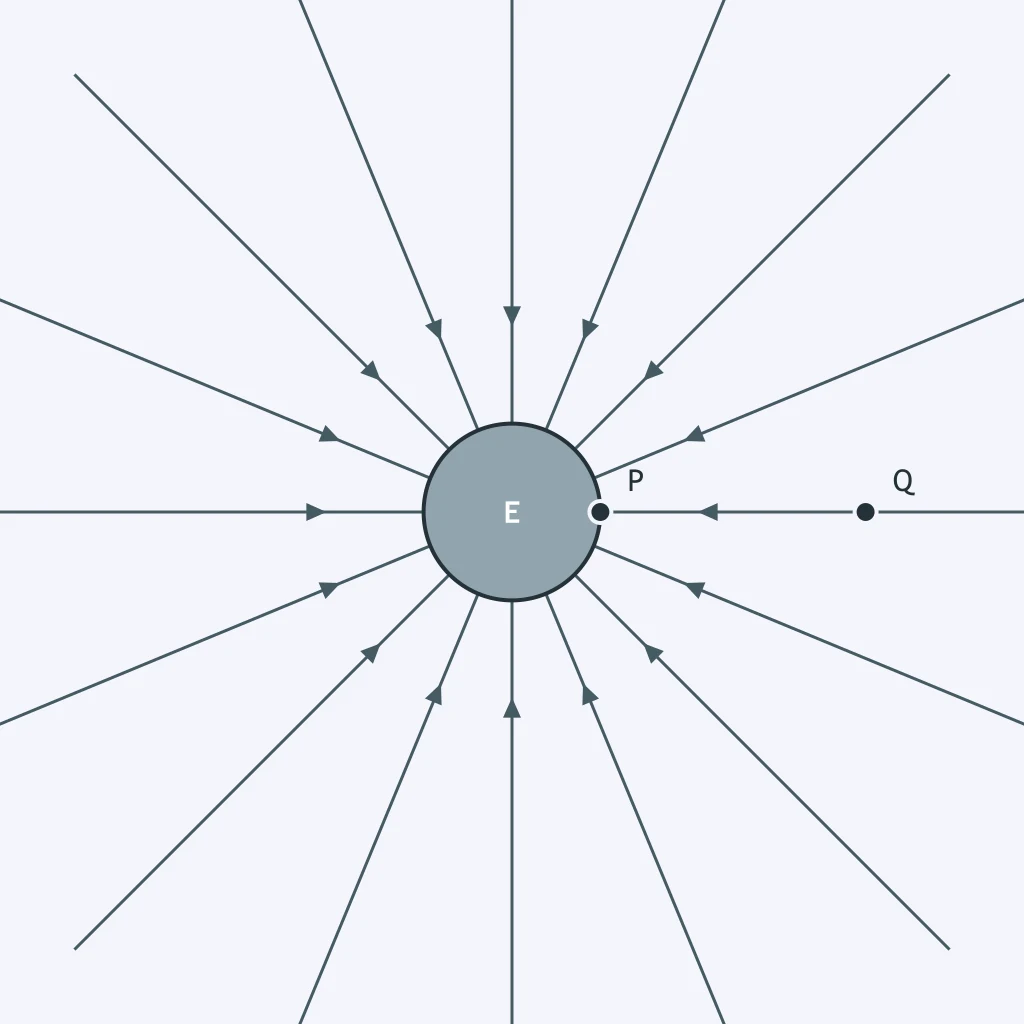
Use the field-line diagram. How does the gravitational field strength at Q compare with the field strength at P?
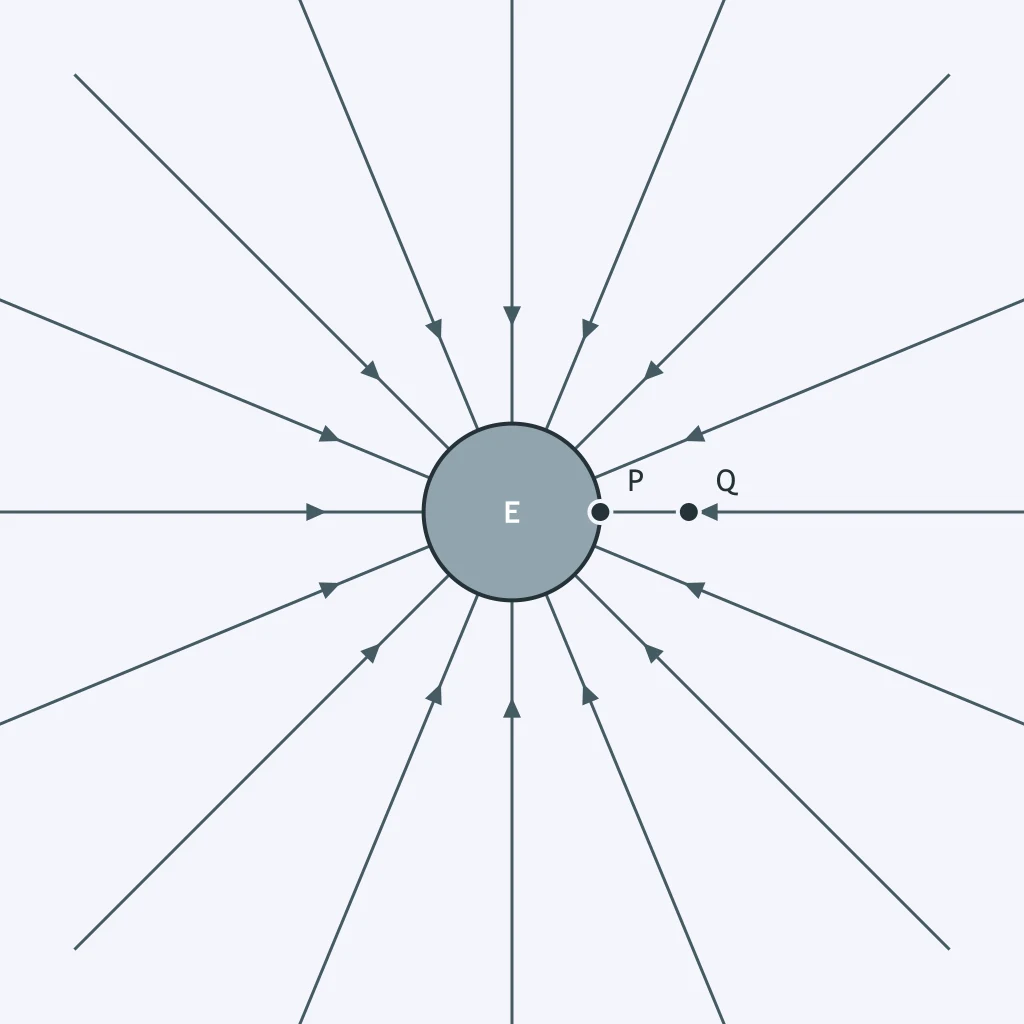
Use the field-line diagram. At point Q, which direction is the gravitational field?
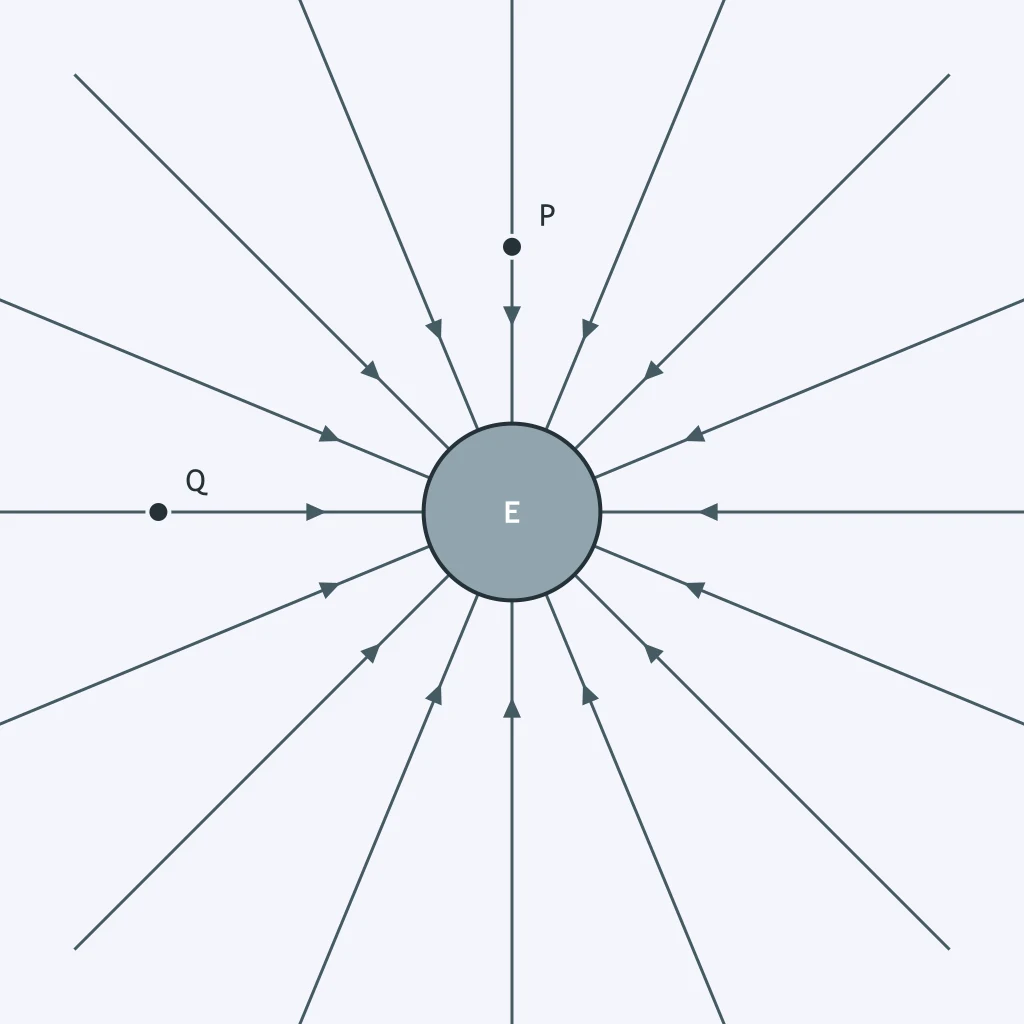
Use the field-line diagram. Point P is on the planet's surface, and point Q is 3 planet radii from the planet's center. How does g at P compare with g at Q?
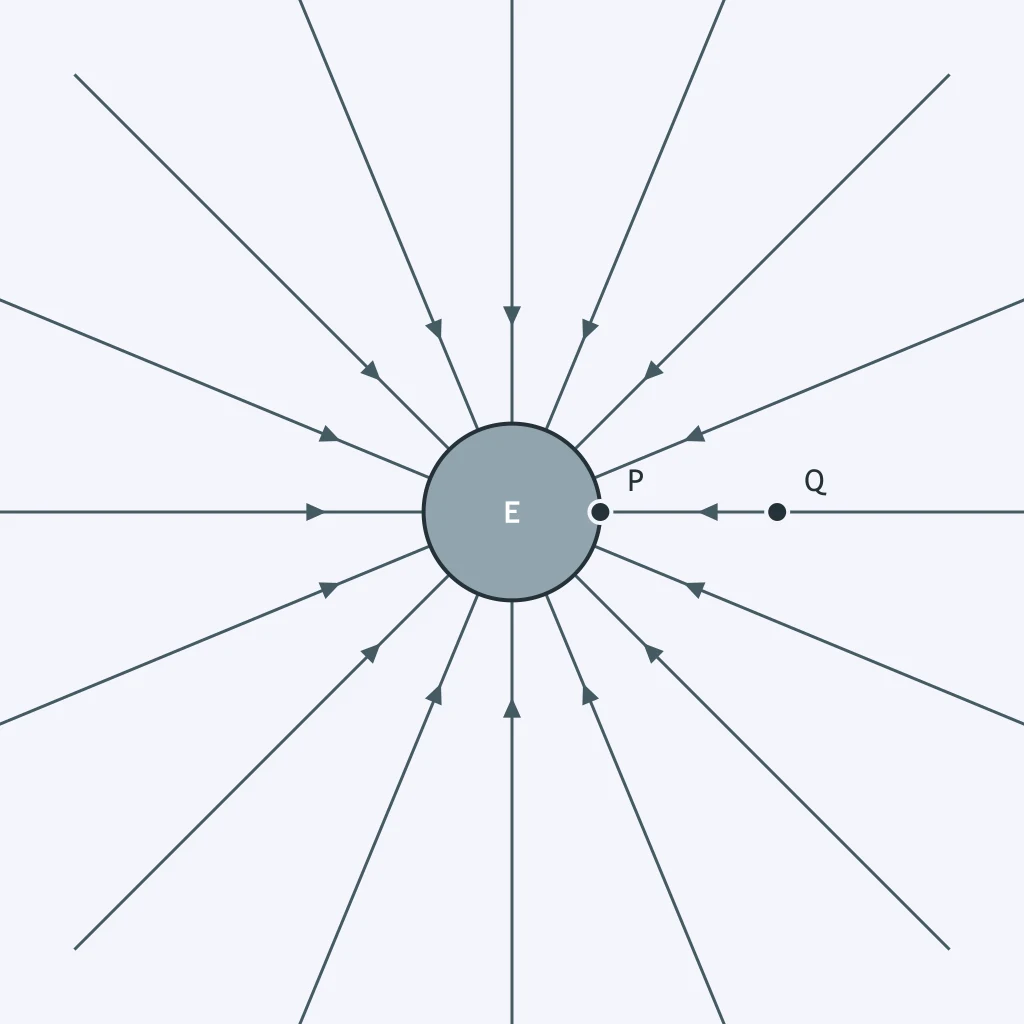
Use the diagram. Points P and Q are the same distance from the planet's center. What is true about the gravitational field at the two points?
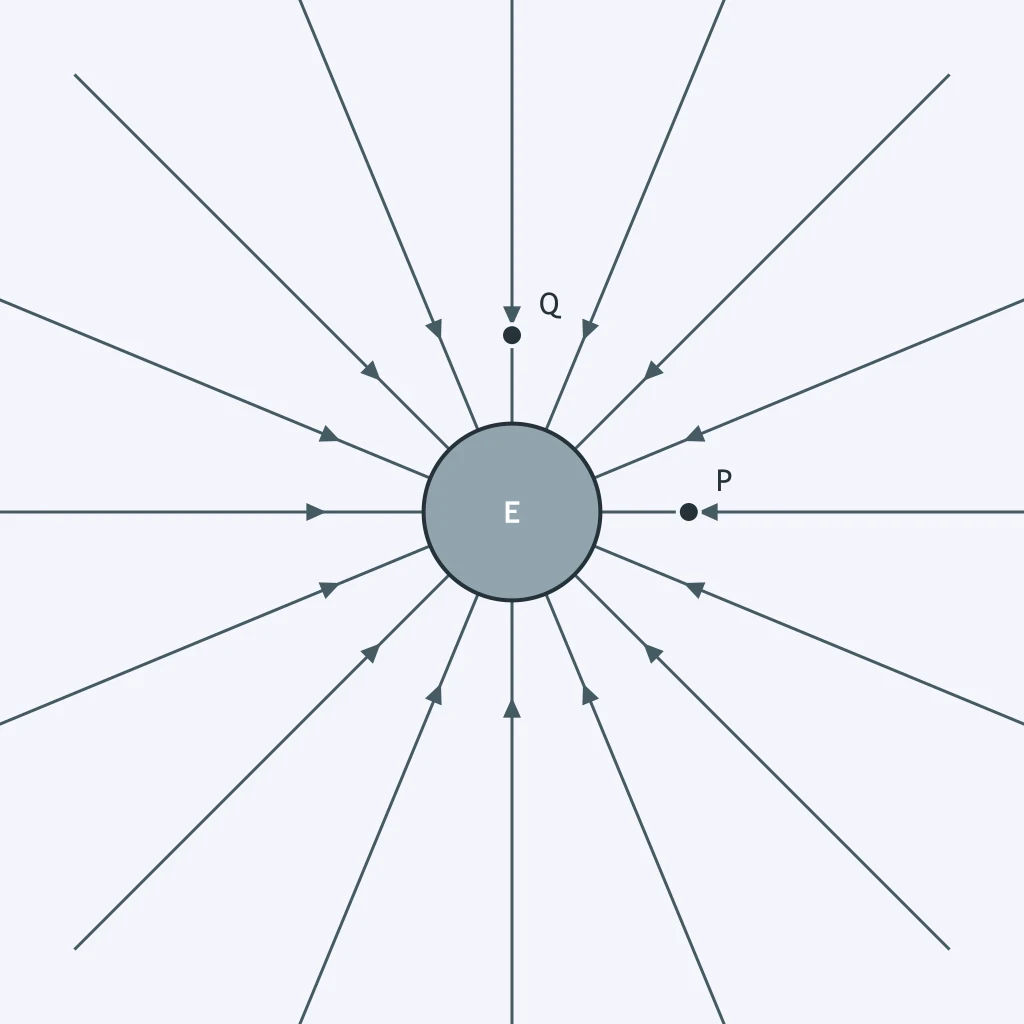
Use the field-line diagram. If the gravitational field strength at P is 8.0 N/kg, what is the field strength at Q?
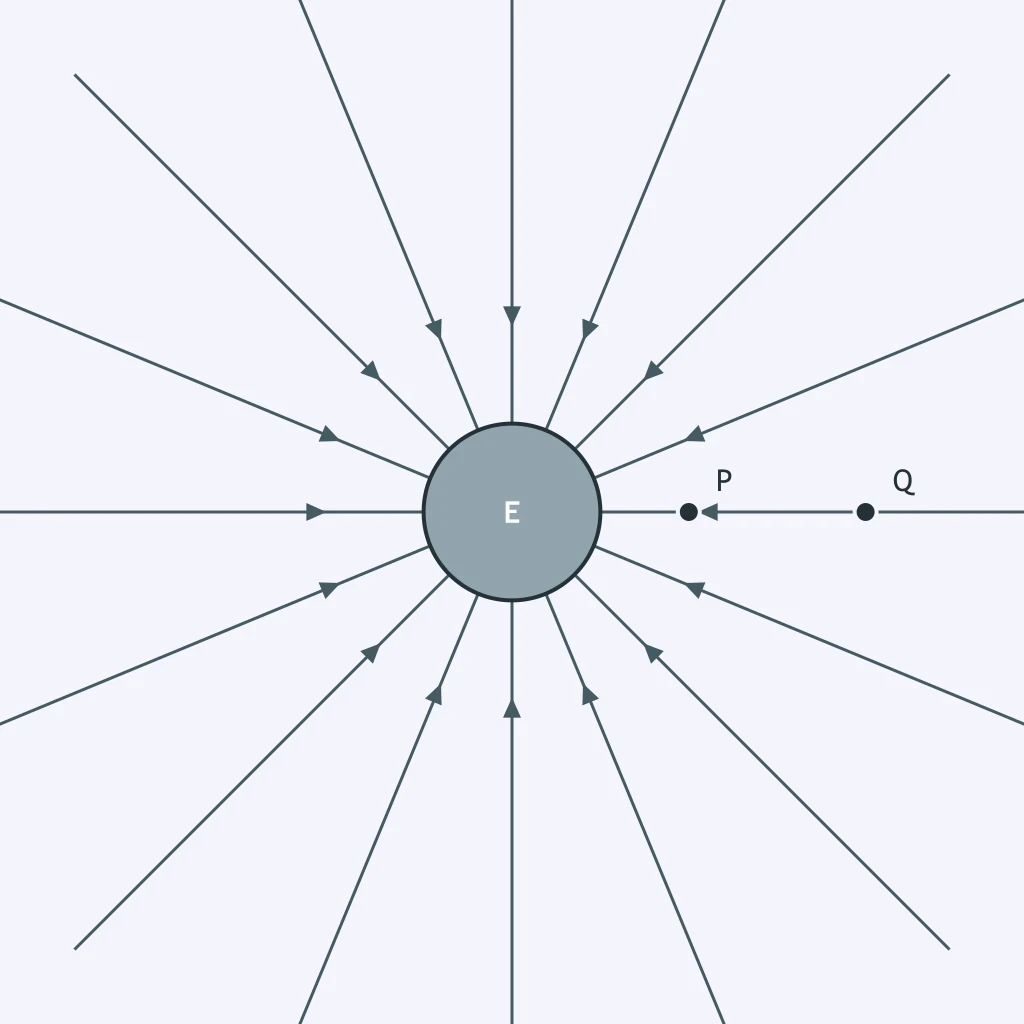
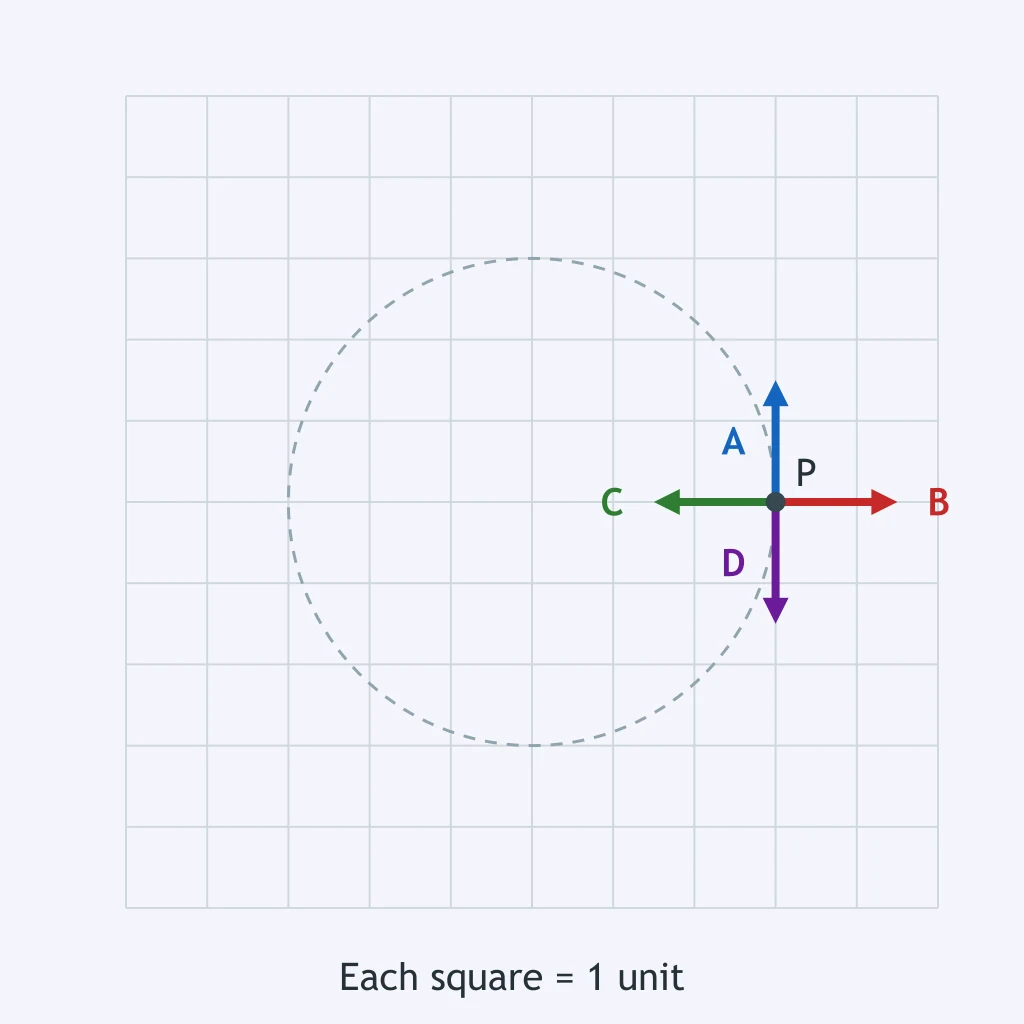
A satellite moves counterclockwise along the circular orbit in the figure. Which arrow at P shows the direction of the gravitational force on the satellite?
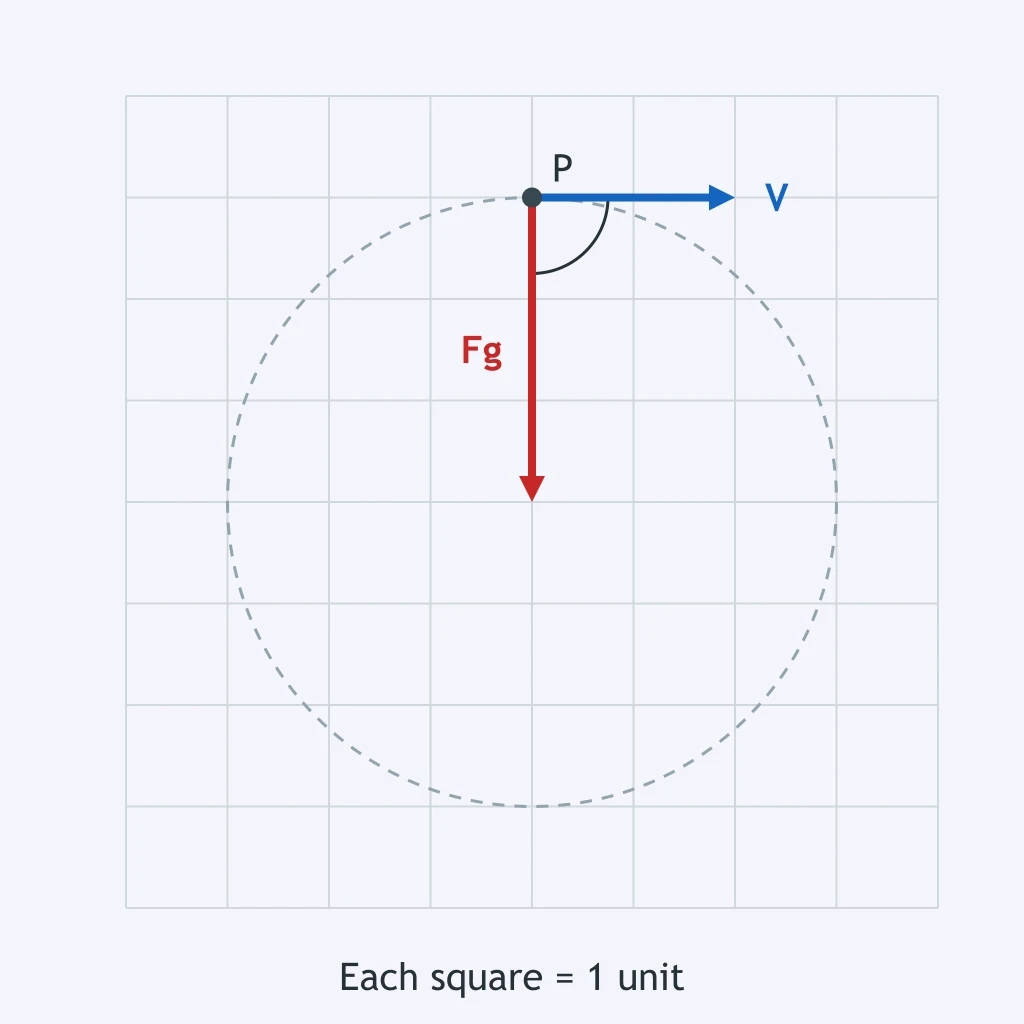
Use the vector diagram. What angle is shown between the satellite's velocity and the gravitational force at P?
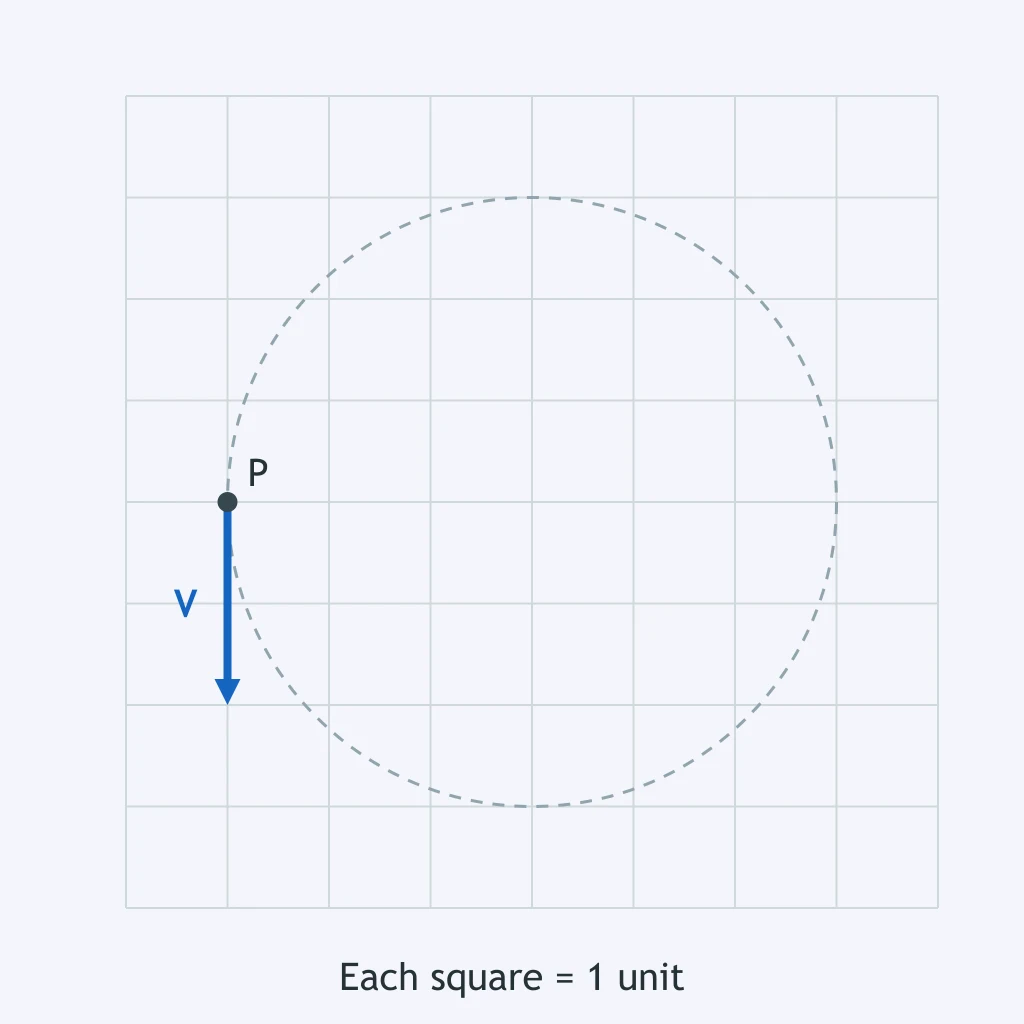
Use the vector diagram of a satellite in a circular orbit, with its velocity V drawn at P. What direction does the gravitational force on the satellite point at P?
Use the field-line diagram. Point P is on the planet's surface, and point Q is 4 planet radii from the planet's center. If a 5.0 kg object feels a 20 N gravitational force at P, what force would it feel at Q?
Two small spheres attract with 3.6 × 10⁻⁸ N. One mass is doubled and the separation is tripled. What is the new gravitational force?
Two objects attract with 1.2 × 10⁻⁶ N. One mass is tripled, the other is doubled, and the separation is doubled. What is the new force?
A pair of masses attracts with 5.0 × 10⁻⁵ N. Both masses are doubled and the separation is doubled. What is the new force?
Two masses attract with 6.4 × 10⁻¹⁰ N. One mass is quadrupled and the separation is doubled. What is the new force?
Two bodies attract with 2.0 × 10⁻⁷ N. One mass is halved, the other is tripled, and the separation is quadrupled. What is the new force?
Two masses attract with 9.0 × 10⁻⁹ N. Both masses are tripled and their separation is tripled. What is the new force?
Two objects attract with 4.8 × 10⁻⁶ N. One mass is multiplied by 5 and the separation is doubled. What is the new force?
A 60 kg object and an 80 kg object are 2.0 m apart. The 80 kg object is replaced by a 160 kg object, and the separation becomes 4.0 m. Use G = 6.67 × 10⁻¹¹ N·m²/kg². What is the new force?
Two objects attract with 7.5 × 10⁻⁴ N. One mass is reduced to one third and the separation is halved. What is the new force?
Two bodies attract with 2.4 × 10⁻⁵ N. Both masses are halved and the separation is doubled. What is the new force?
At one location a planet's field strength is 12 N/kg. Around another planet with 3 times the mass at twice the distance from its center, what is the field strength?
A spacecraft feels a 200 N gravitational force at radius r. If its mass is doubled and it moves to radius 3r around the same planet, what force does it feel?
Two objects attract with 1.6 × 10⁻⁸ N. Each mass is doubled and the separation is tripled. What is the new force?
Satellite B orbits the same planet at radius 4r while satellite A orbits at radius r. Using v = √(GM/r), how does B's speed compare with A's?
A moon's circular orbit radius changes from r to 9r around the same planet. Using T = 2π√(r³/GM), how does the period change?
The same satellite is moved from radius r to radius 3r around the same planet. How does the gravitational force on it change?
Two satellites share the same circular orbit radius around the same planet. Satellite X has twice the mass of satellite Y. How does the gravitational force on X compare with the force on Y?
A satellite orbits at radius r around a planet of mass M. If another planet has mass 4M and the orbit radius is still r, how does the required circular speed change?
A satellite's circular orbit radius decreases from r to r/4 around the same planet. What happens to its orbital speed?
Moon A orbits a planet at radius r. Moon B orbits the same planet at radius 2r. About how does B's period compare with A's?
At a certain radius, the circular-orbit speed is √(GM/r). If a spacecraft there moves slower than that speed, what is true about v²/r compared with GM/r²?
At a higher circular orbit, the gravitational field strength is one fourth of its value at a lower orbit around the same planet. How does the required orbital speed compare?
Crack the passcode before the zombies get in.
Answer, then swat bugs for bonus points.
Race through questions at your own speed.
Same question on every screen. Fastest wins.

Pick a tile, answer, hit bonuses and steals.
Momentum and Impulse Review
40 questions