Loading
by BlastRoom
Identify how size relationships organize works of art.
#us_hs_art_history
25 questions
One question set, multiple game modes. Tap any game to see it in action. Not sure which to pick?
Answer to place stones and capture territory.
Outrun the snow together.
Earn blasts, then hunt the other team.
Answer to earn energy, then climb.

The class blasts through walls together.
Bid on mystery lots. Most money wins.
Sell tours. Nice, standard, or a total scam.

Answer, restock, and serve the rush.
More correct answers pulls the rope your way.
Answer, then shoot down the alien wave.
Answer, then tap to leap the frozen ridge.
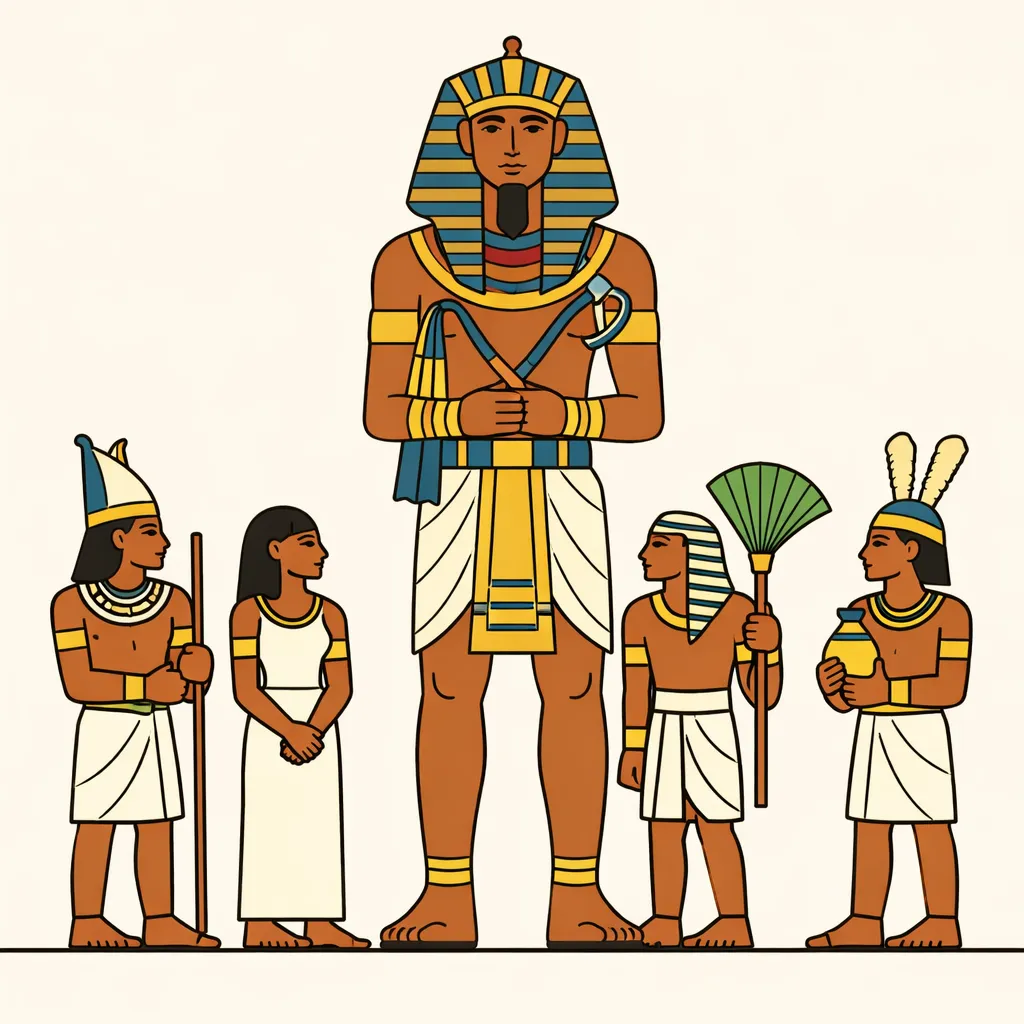
In this painted court scene, a ruler is far taller than the attendants beside him even though all stand on the same floor line. Which convention governs the figure sizes?
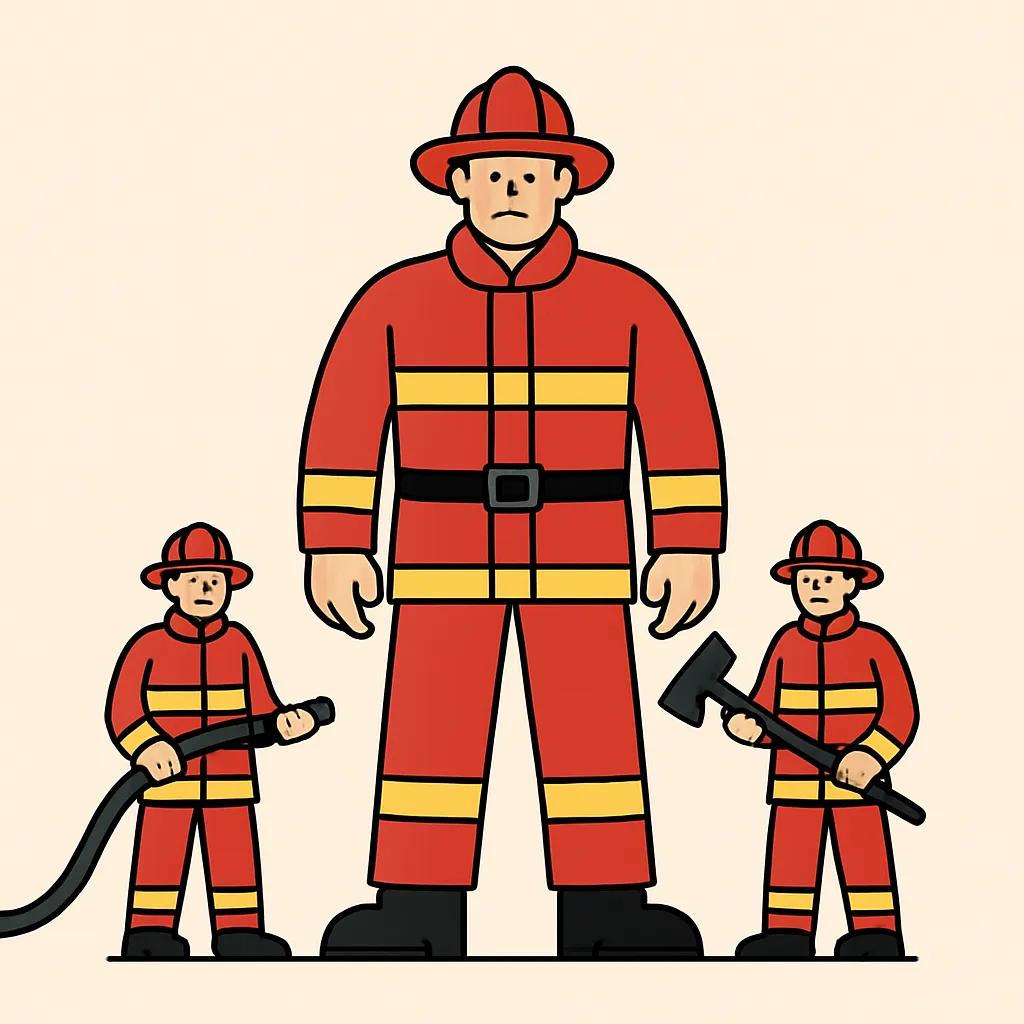
A poster shows an enormous firefighter above much smaller rescue workers, although every figure occupies the same foreground plane. What principle explains this size difference?
In a fantasy mural, the town founder is much larger than houses and townspeople beside her. The artist is using size chiefly to establish what?

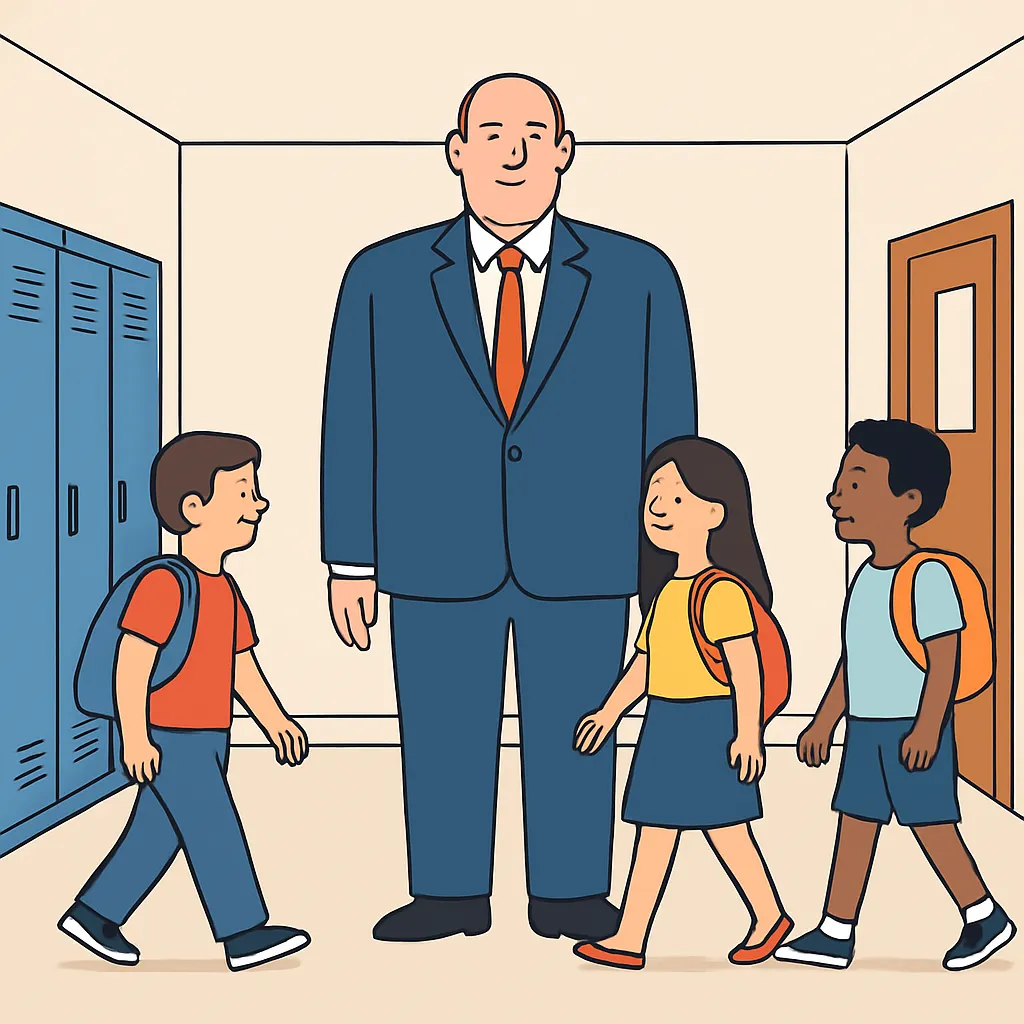
A classroom illustration makes the principal twice as tall as students, even though the figures stand shoulder to shoulder. Which approach best describes the composition?
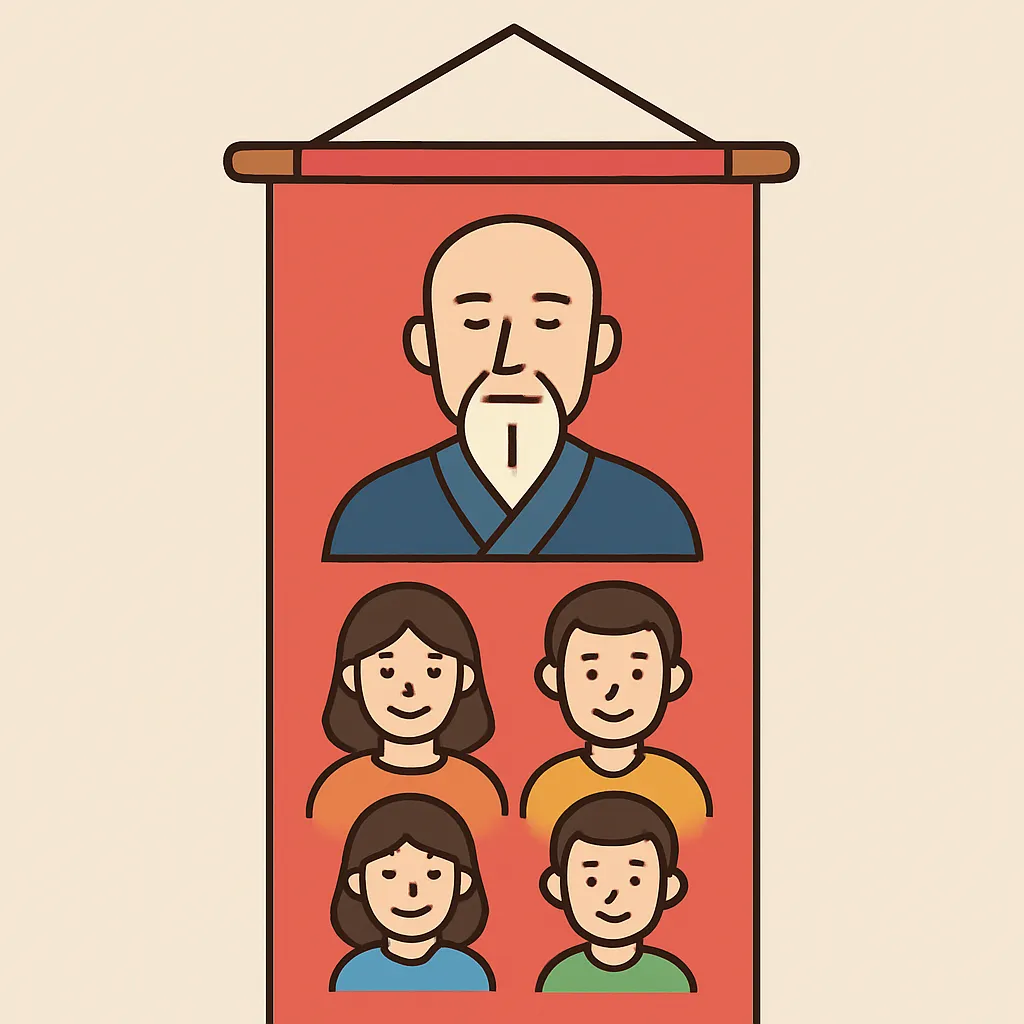
A ceremonial banner enlarges one ancestor while reducing all other family members, with no recession into space. What should a viewer infer from the unequal scale?
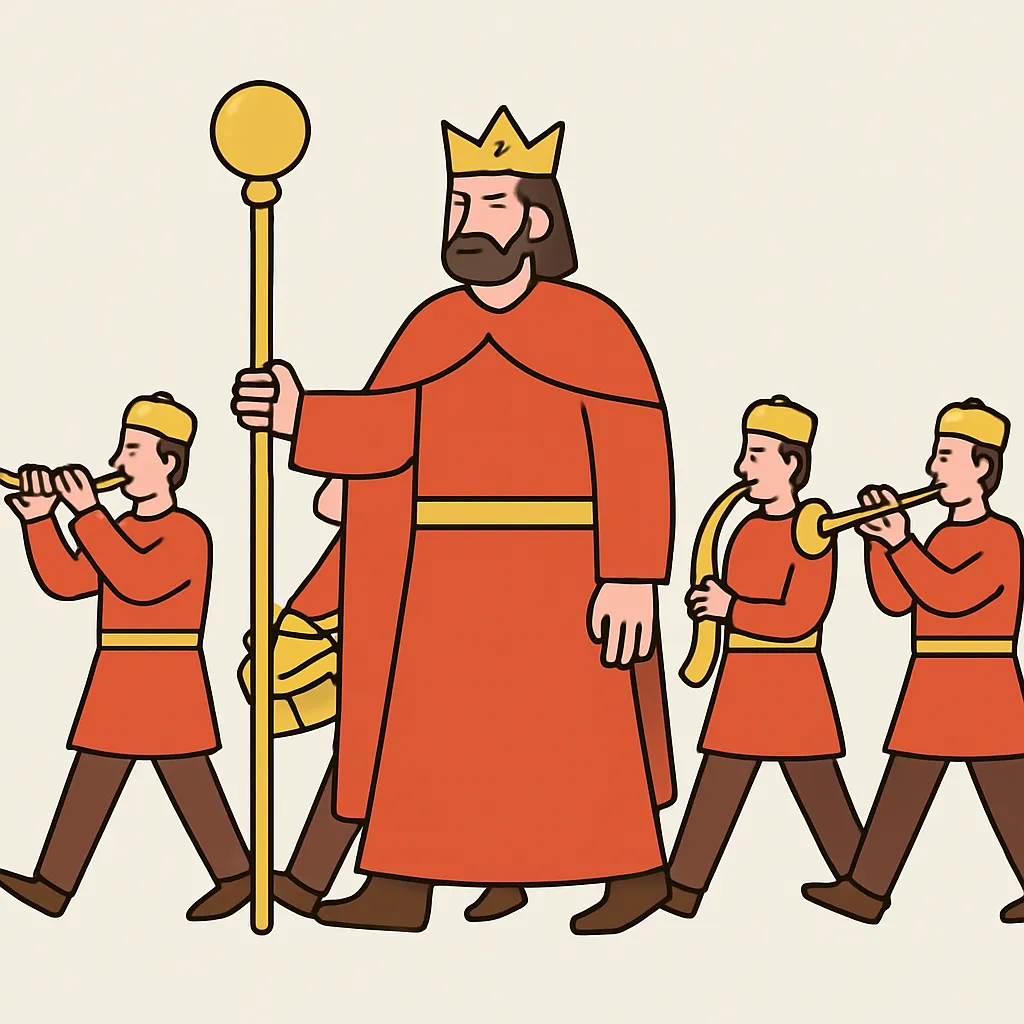
Look at the invented procession scene: the central leader is far larger than the musicians and guards. Which term names this use of size?
Polykleitos's Doryphoros, or Spear Bearer, is associated with the Canon. What did this system seek to establish for the figure?
Ancient Egyptian sculptors sometimes used a proportional grid for figures. What practical result did the grid support?
A sculptor sets every body part as a planned fraction of the entire figure instead of measuring one live model. Which result is most likely?
An artist carefully records one athlete's uneven shoulders, long arms, and distinctive posture from observation. This approach is closest to what?
The Parthenon's repeated numerical relationships among columns and spaces show that its design gives special attention to what?
In this panel, a seated scientist is twice the height of two assistants, and all three appear against the same flat backdrop. What does the difference in size communicate?

A village painting gives its storyteller a much larger body than the listeners clustered at her feet. How is size functioning in the image?

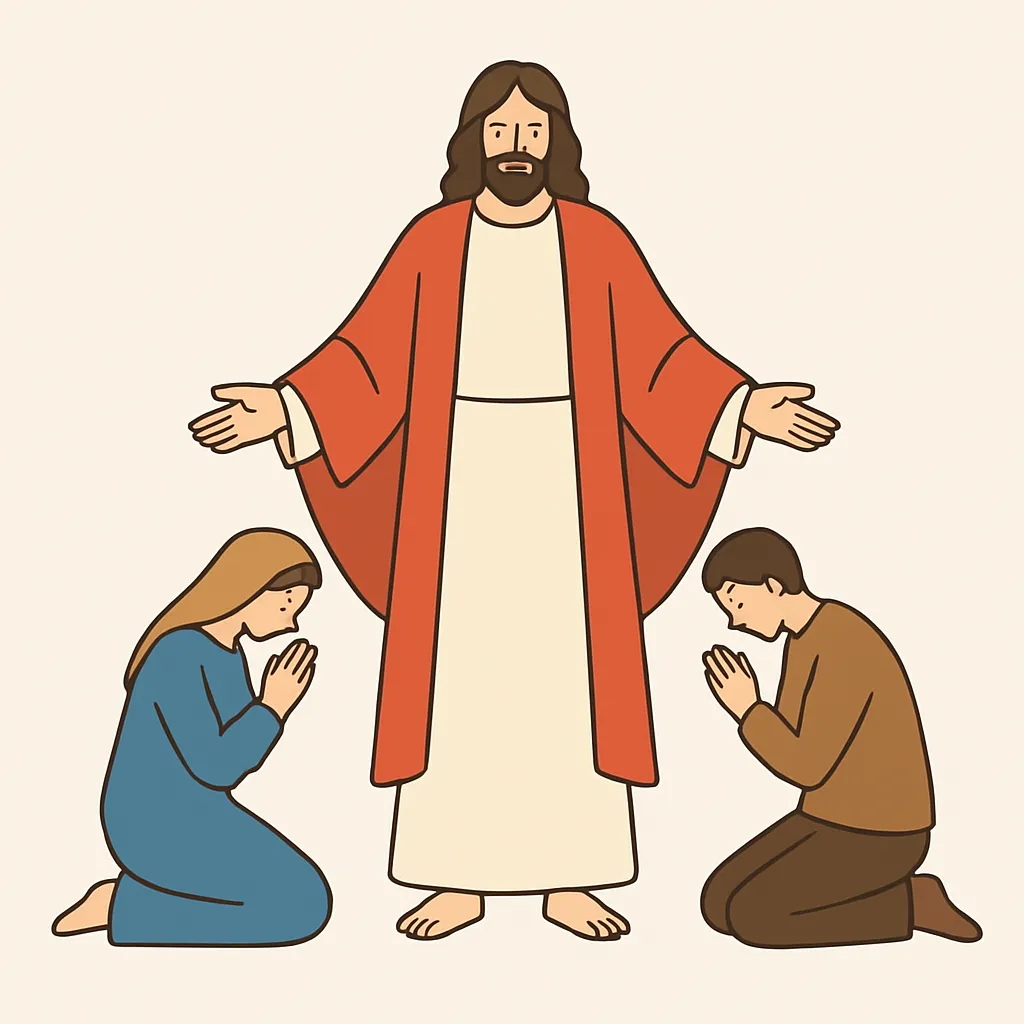
In a flat devotional image, a central figure is much larger than kneeling worshippers. What is the strongest reading of that proportion?
A public-health mural shows an oversized nurse holding a lamp while much smaller families fill the lower edge. Why might the artist choose this contrast?

A carved entrance rises far above a visitor at its base, and the top is cropped by the picture frame. What effect does this scale create?
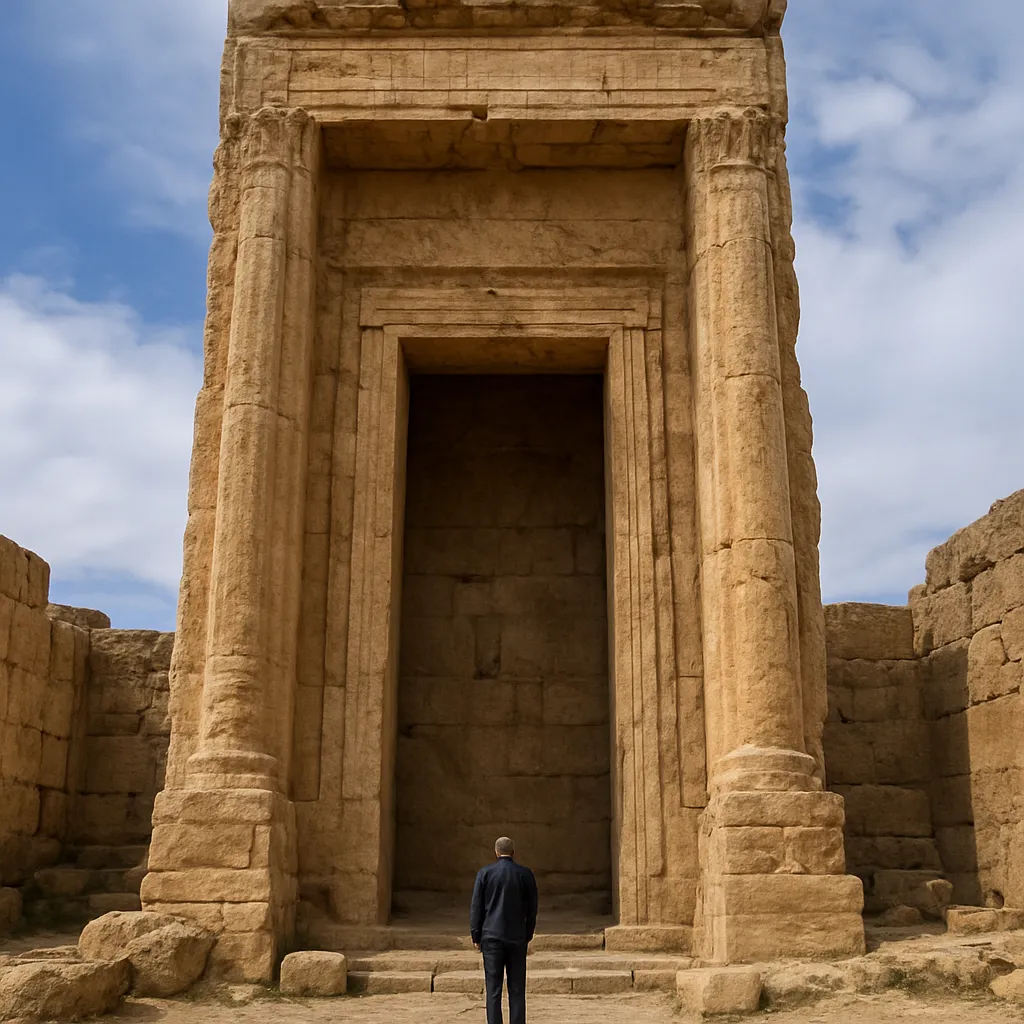
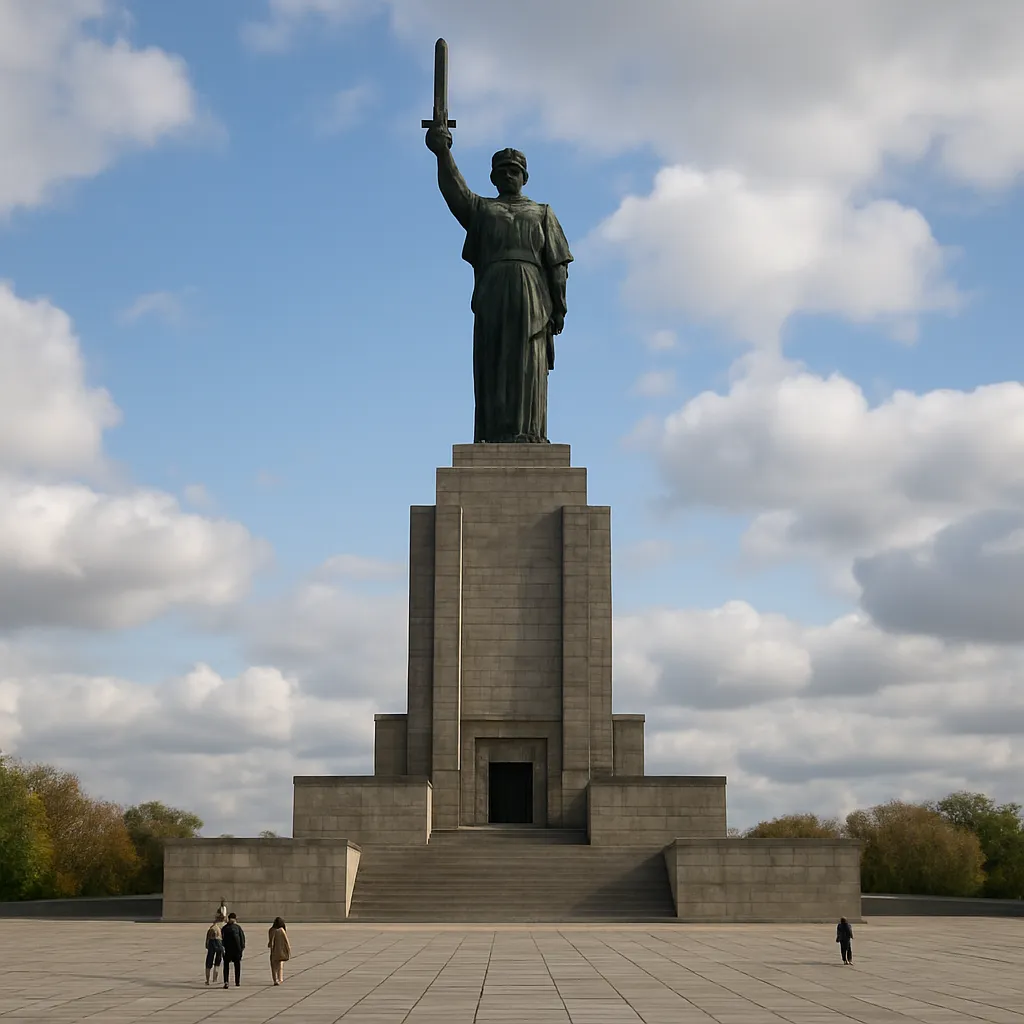
A city monument is depicted as many times taller than pedestrians, who are visible only near its base. What response is the scale designed to encourage?
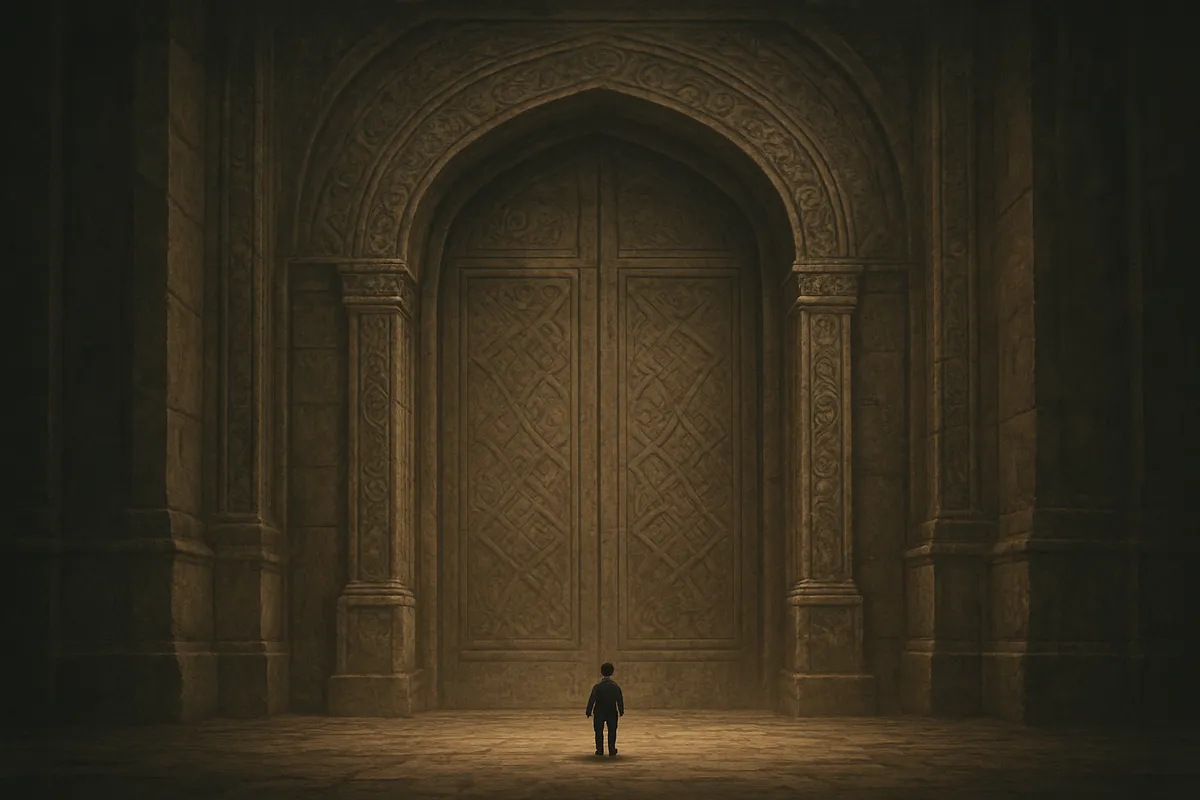
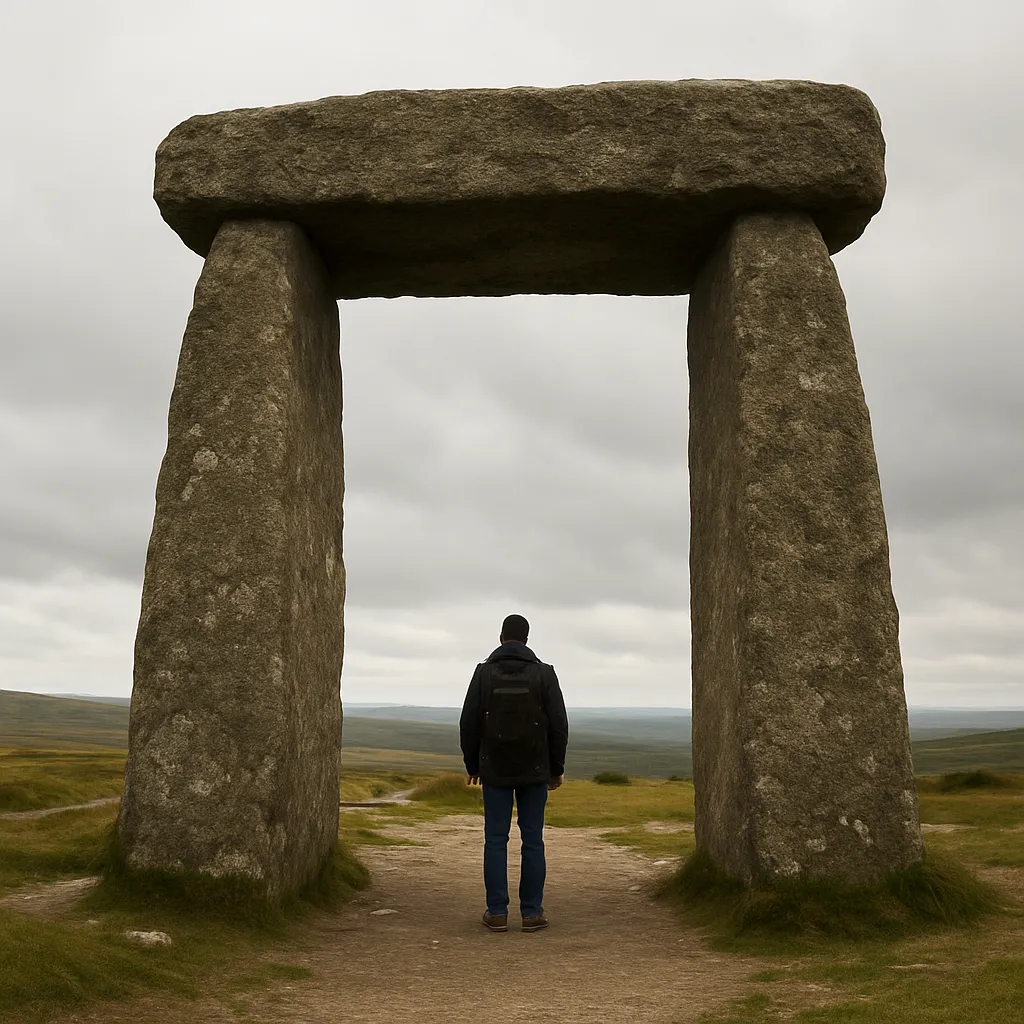
In this image, a visitor stands before a massive stone gateway that fills nearly the entire frame. What does the comparison to the visitor establish?
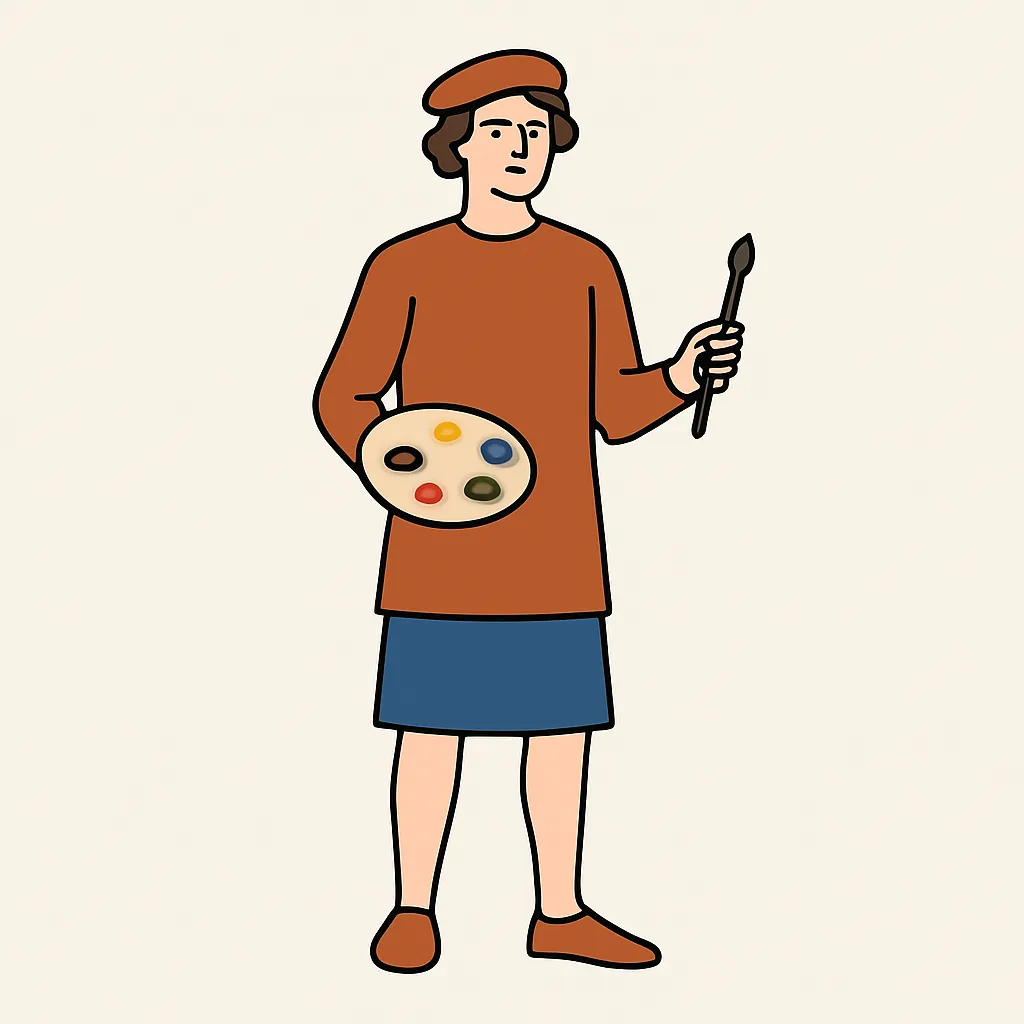
A figure's hands, head, and torso relate convincingly to one another, even though the figure is not especially large or small. Which principle is most evident?
A tiny boat crosses a painting dominated by a huge mountain. Which term best describes the mountain's size in relation to a familiar object?

A painter lengthens a dancer's torso and limbs far beyond observed anatomy to make the movement feel tense and elegant. What is this choice?
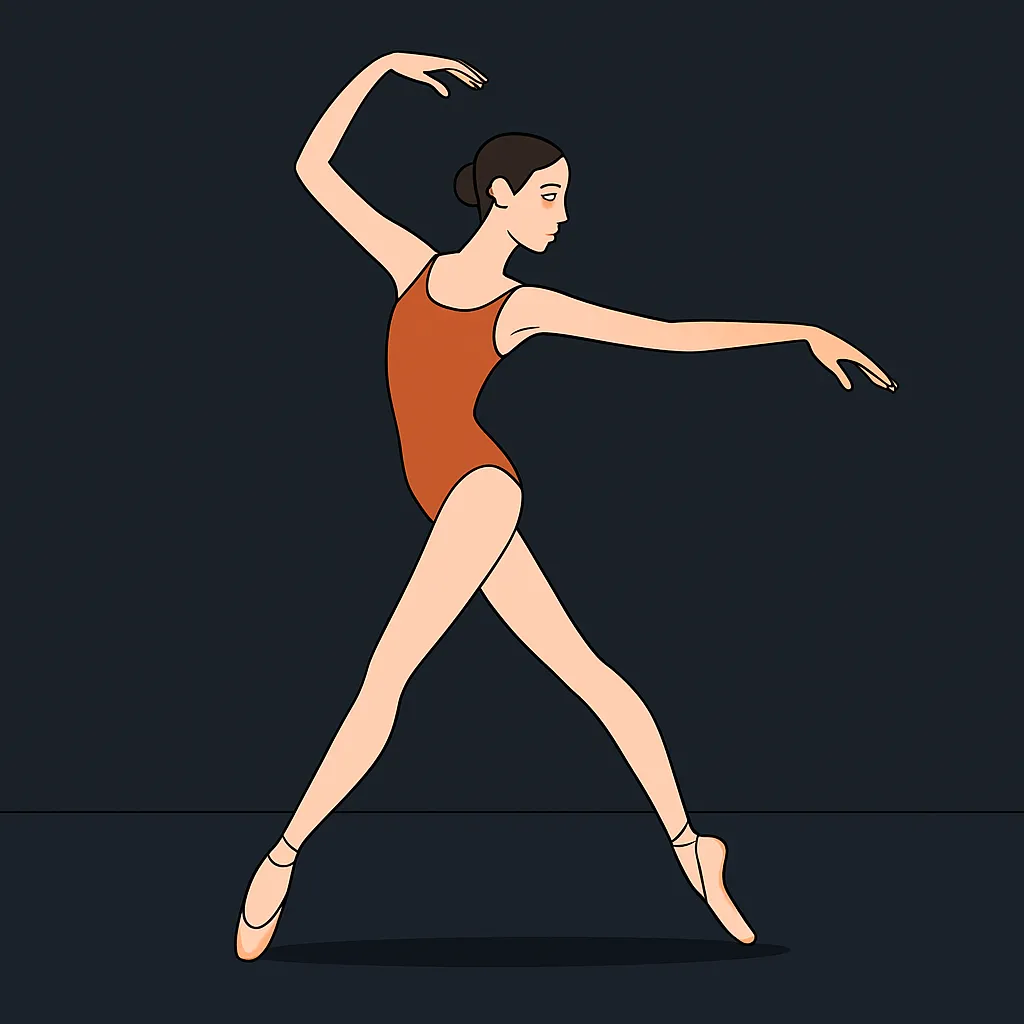
A poster shows a child's head slightly too large for the body so the face immediately attracts attention. How does altered proportion work here?
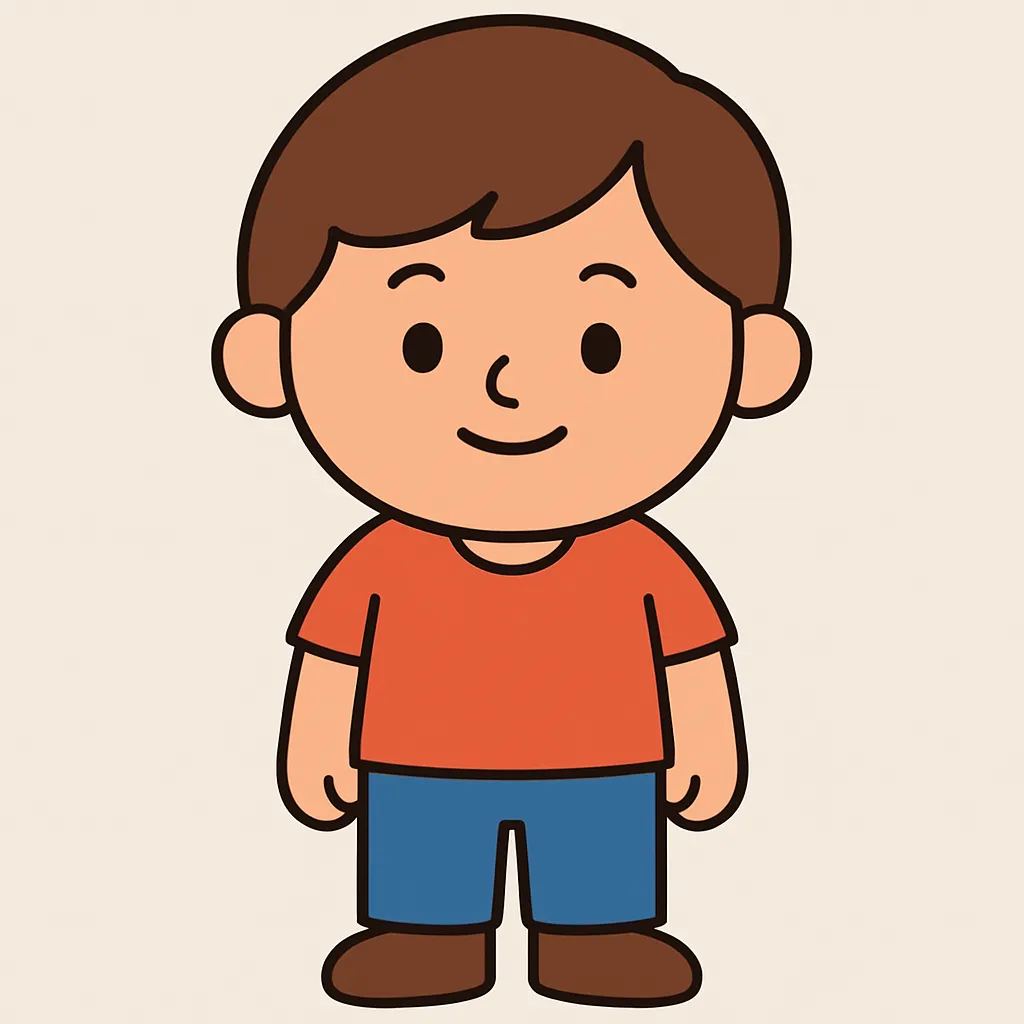
A landscape makes the foreground tree huge and the distant hills small, following the viewer's expected experience of distance. Which approach is being used?

A sculptor makes every figure in a group the same height but adjusts each figure's limbs so they relate believably to its own torso. What is being controlled?
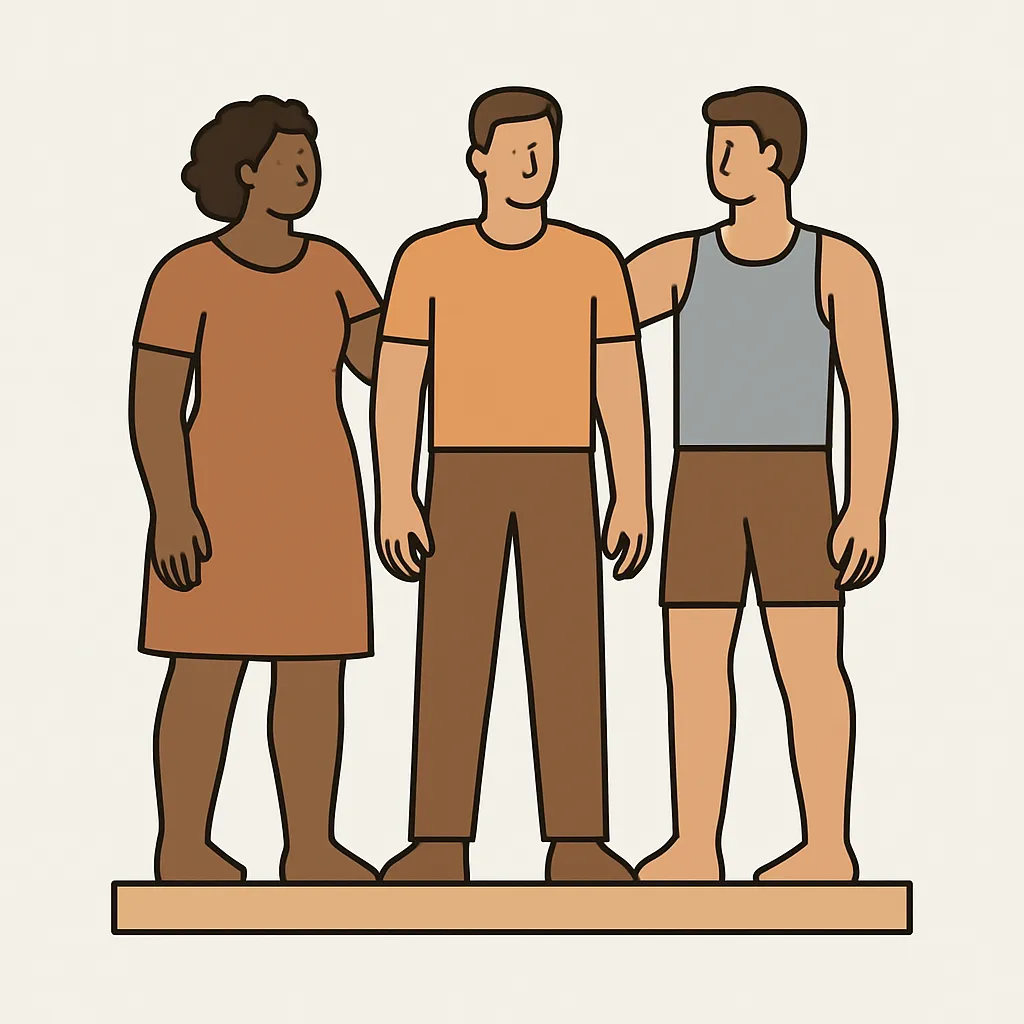
Parmigianino's Madonna of the Long Neck uses an unusually elongated Madonna. This departure from naturalistic anatomy is characteristic of which stylistic tendency?
Crack the passcode before the zombies get in.
Answer, then swat bugs for bonus points.
Race through questions at your own speed.
Same question on every screen. Fastest wins.

Pick a tile, answer, hit bonuses and steals.
Name the Element or Principle
40 questions