Loading
by BlastRoom
Chinese ritual, Buddhist, landscape, ceramic, and imperial traditions.
#us_hs_art_history
30 questions
One question set, multiple game modes. Tap any game to see it in action. Not sure which to pick?
Answer to place stones and capture territory.
Outrun the snow together.
Earn blasts, then hunt the other team.
Answer to earn energy, then climb.

The class blasts through walls together.
Bid on mystery lots. Most money wins.
Sell tours. Nice, standard, or a total scam.

Answer, restock, and serve the rush.
More correct answers pulls the rope your way.
Answer, then shoot down the alien wave.
Answer, then tap to leap the frozen ridge.
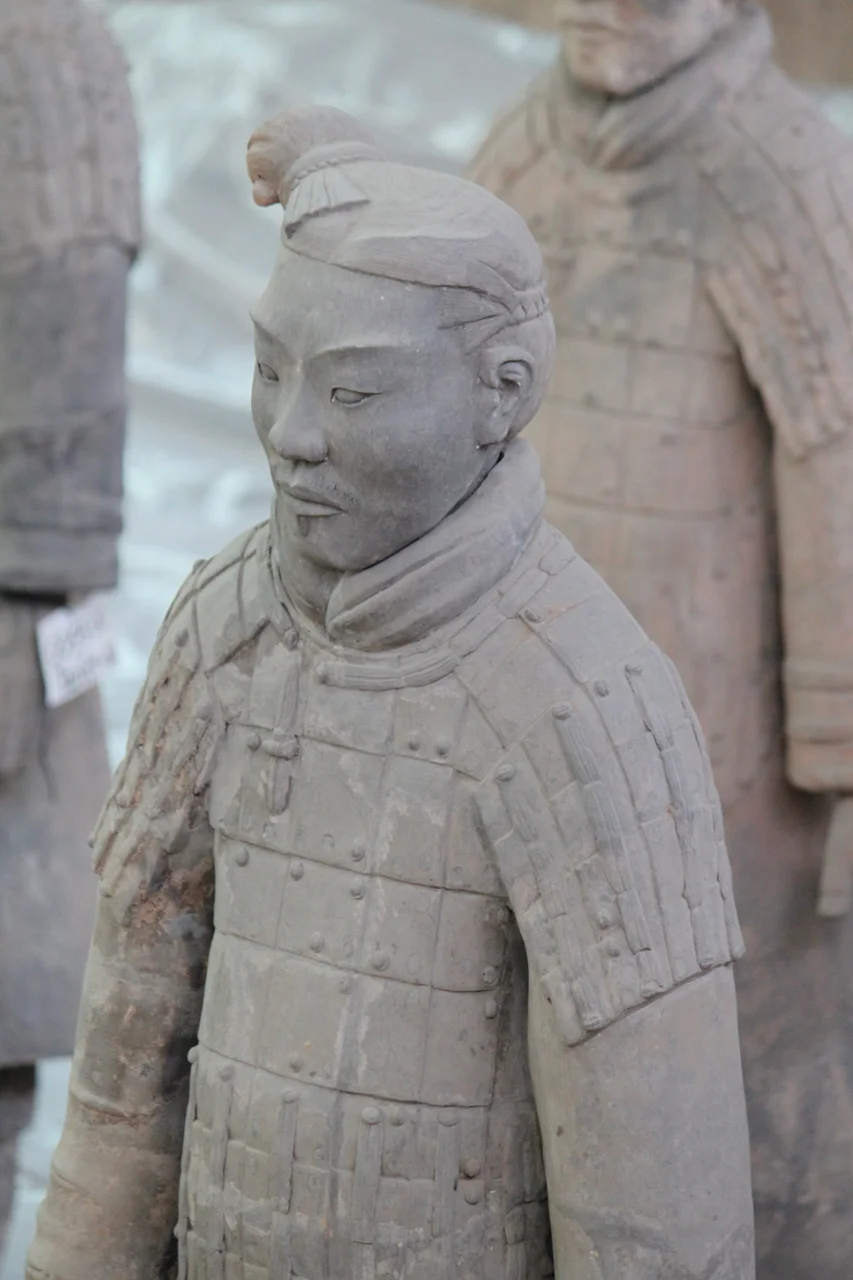
The Qin terracotta soldiers repeat body types but vary in heads, armor, and details. What does this combination suggest about their production?
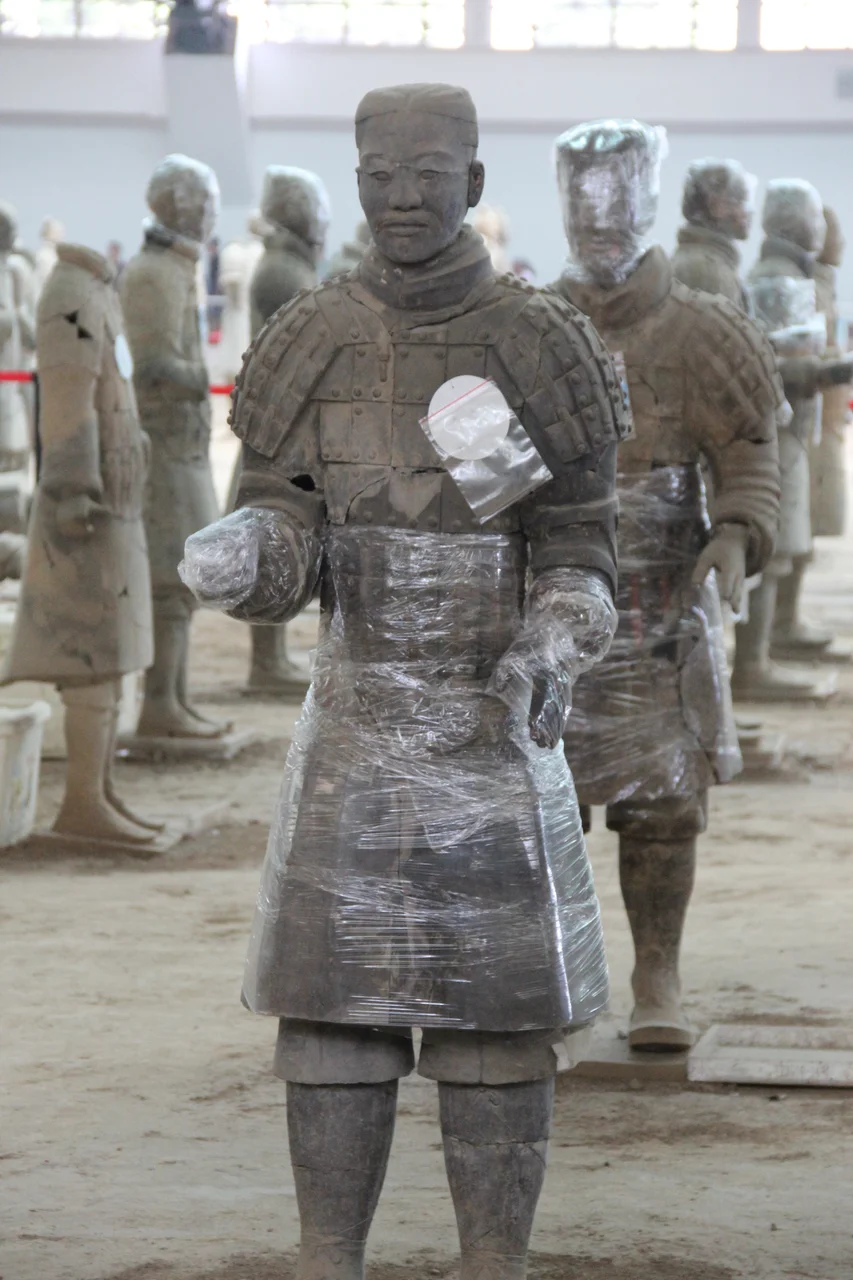
Why were thousands of terracotta warriors placed in pits near the mausoleum of Qin Shihuang?
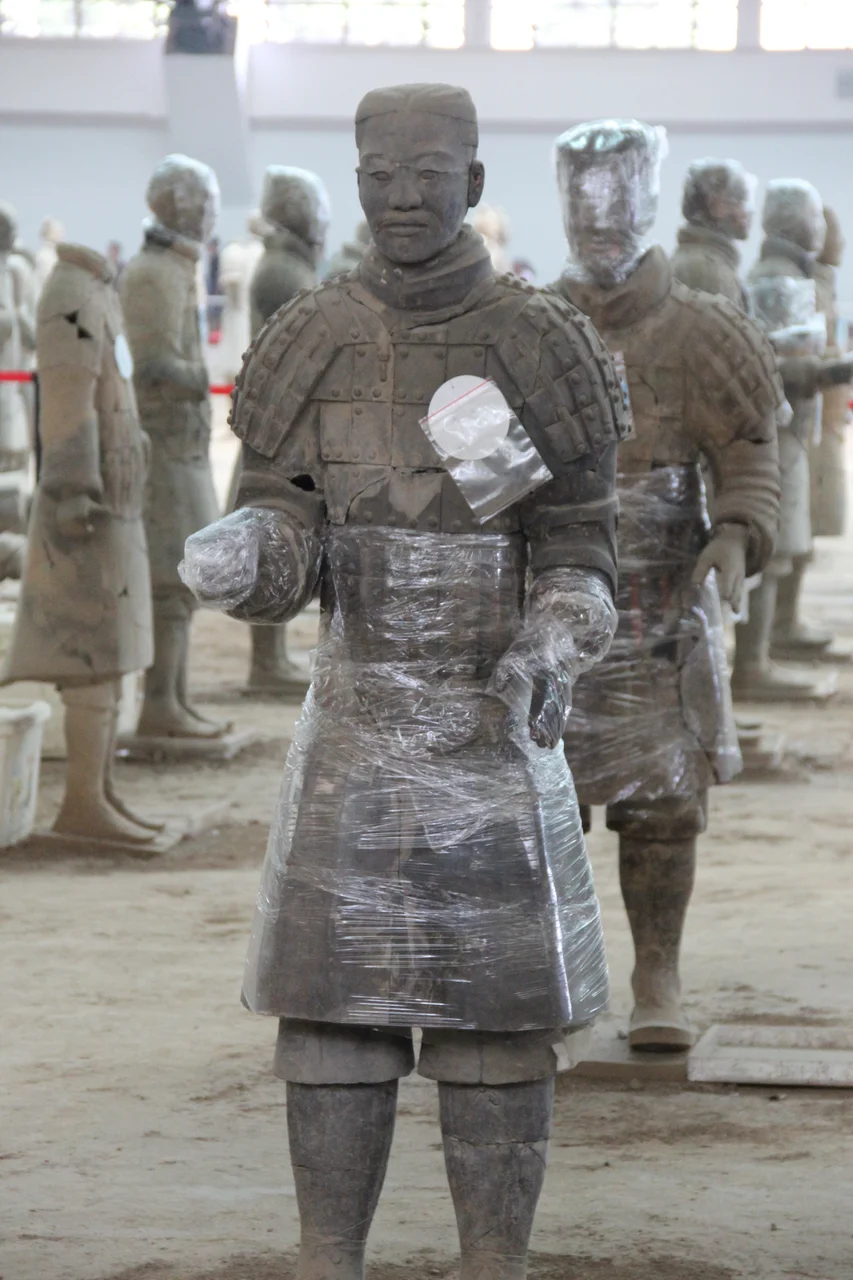
A life-size Qin warrior is hollow, made of clay, and fired in a kiln. Which medium best describes it?
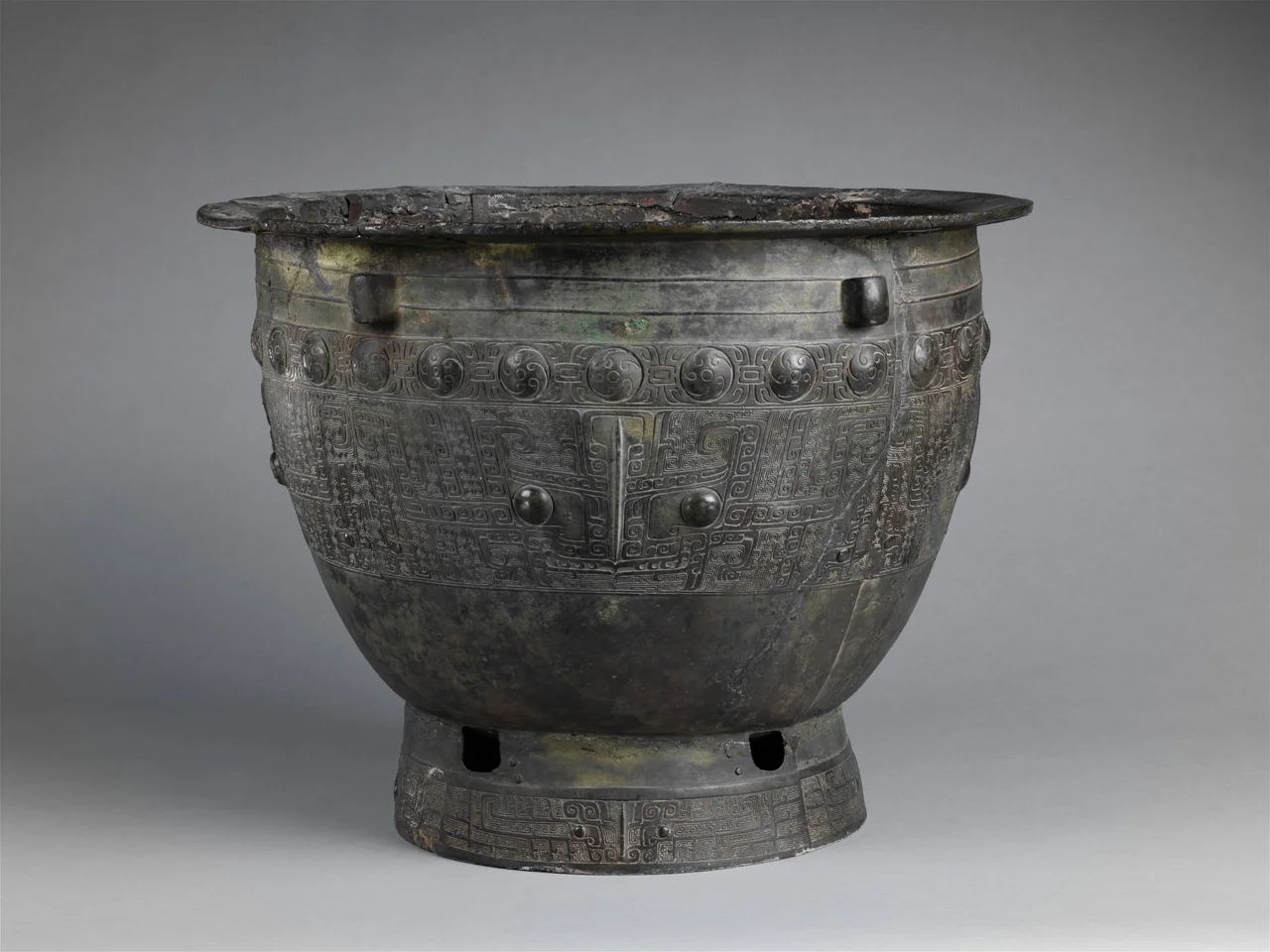
A Shang ritual water container bears four taotie masks with prominent eyes. What response was this decoration meant to encourage in ritual participants?
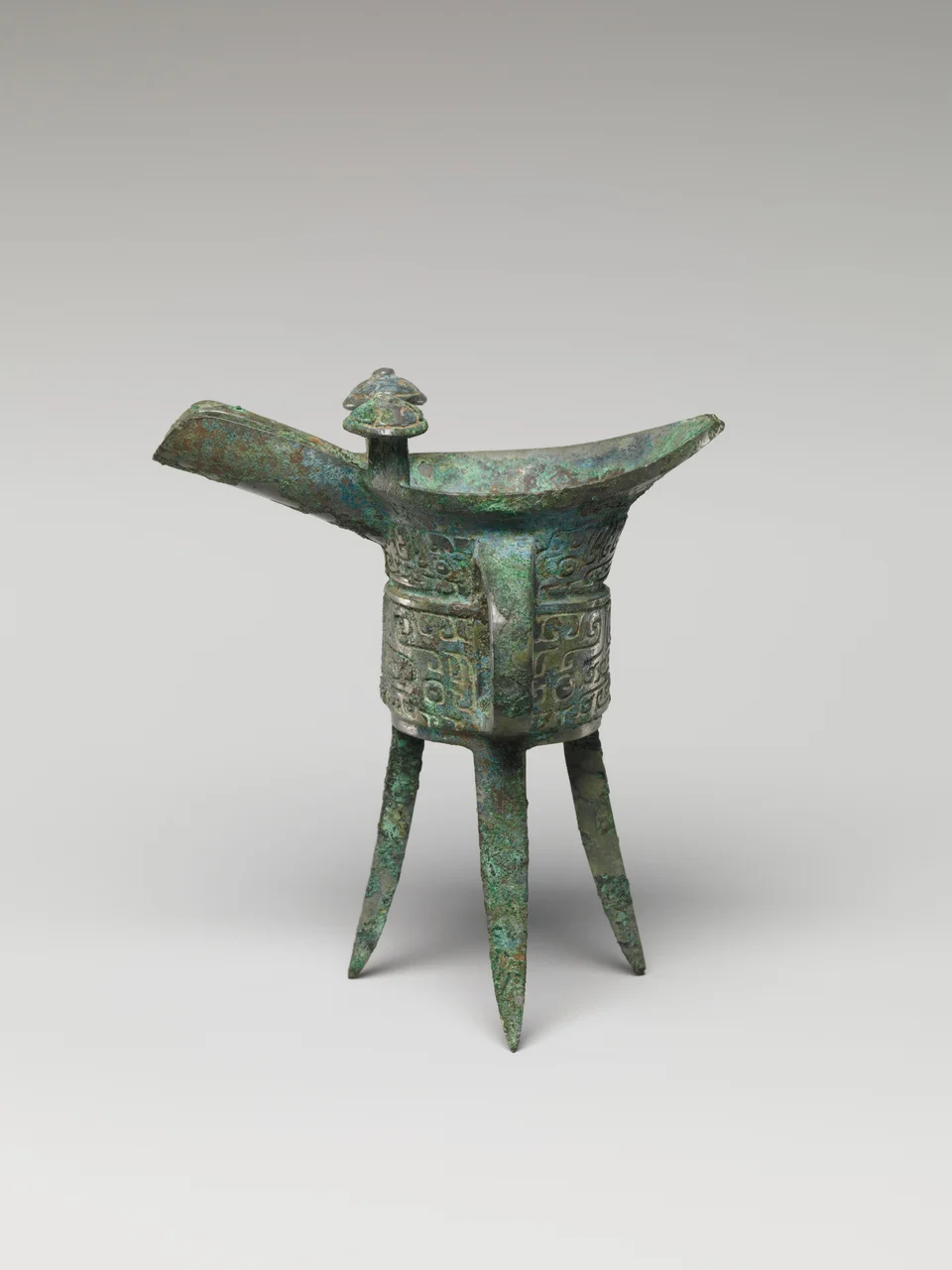
A three-legged Shang bronze with a narrow spout and two posts on its rim is a jue. What was its primary ritual use?
A tomb contains coordinated sets of bronze vessels rather than everyday cookware. What does their placement most strongly indicate?
The colossal Vairocana Buddha at Longmen was completed around 675 with support from Empress Wu Zetian. What did patronage at this scale communicate?
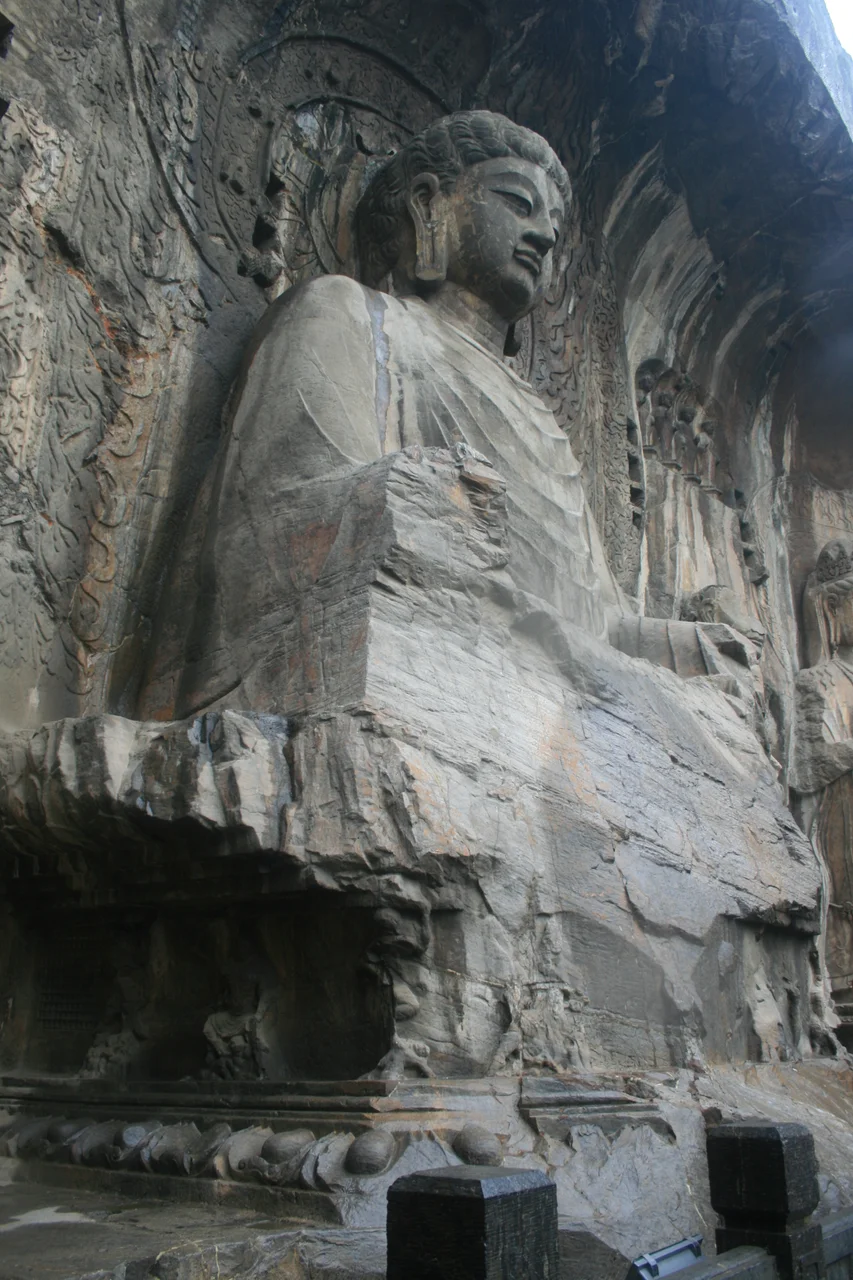
At Longmen, Buddhist figures project from and remain connected to a limestone cliff. Which process made this possible?
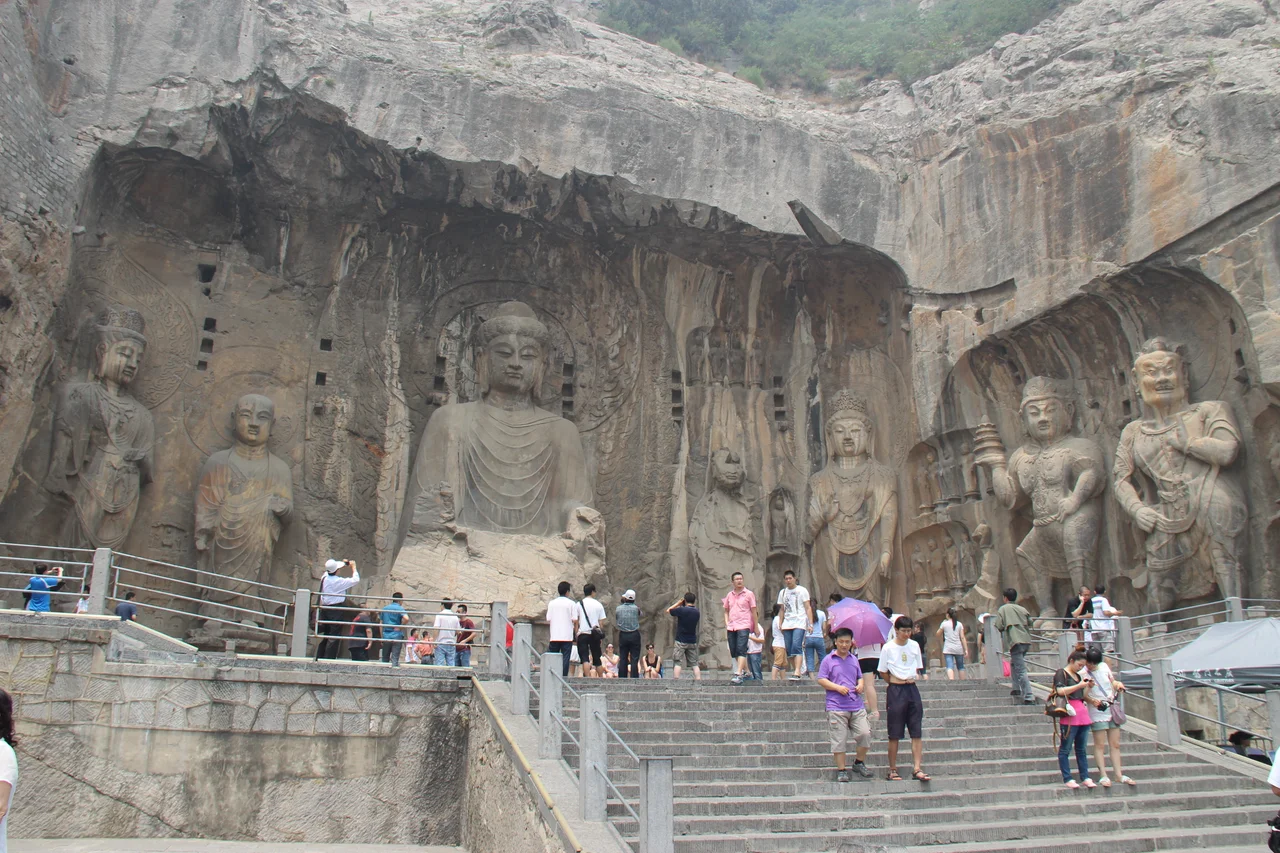
A viewer appears tiny beside Longmen's 17-meter Vairocana Buddha. How does this scale affect the work's religious meaning?
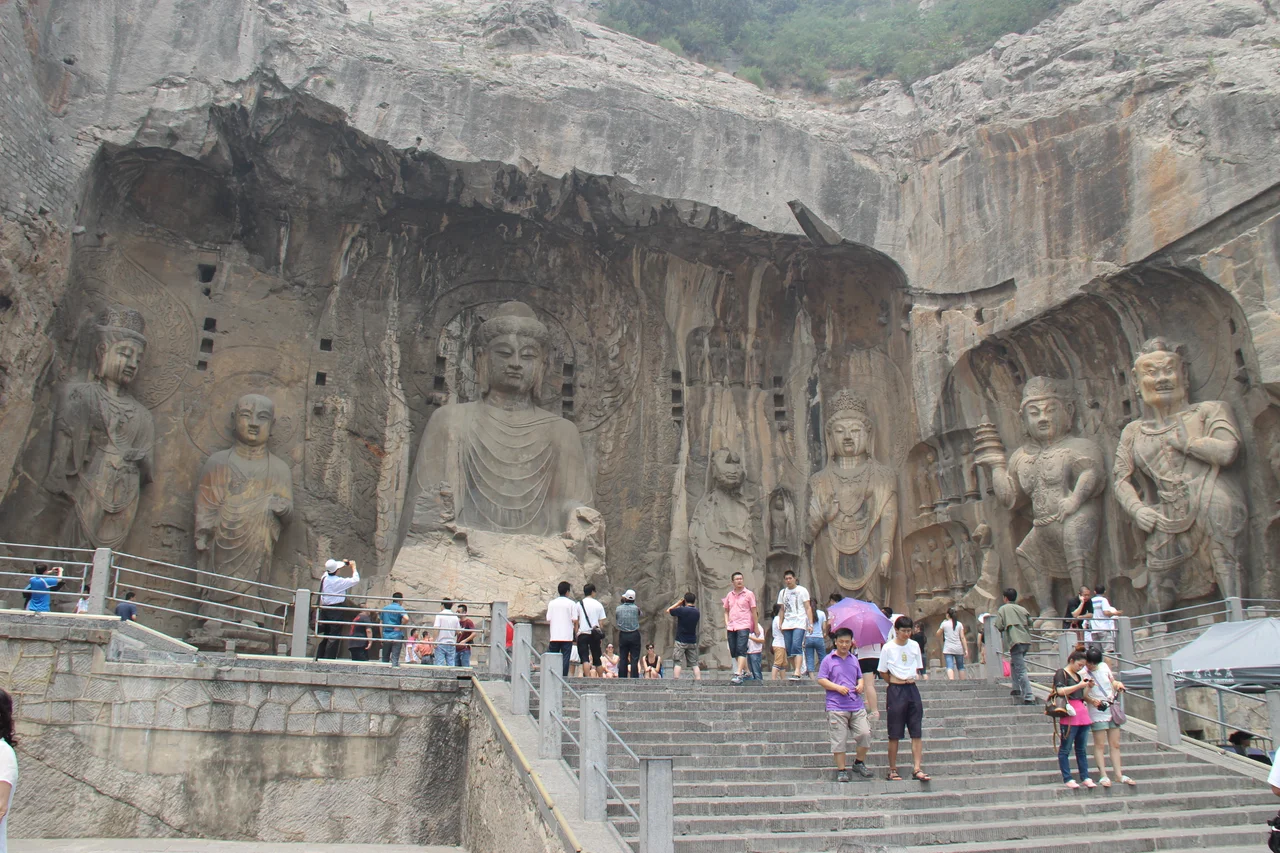
The figures in Longmen's Fengxiansi Cave have full, rounded bodies and calm faces, unlike the slender figures carved earlier at Longmen. Which dynasty's sculptural style do they show?
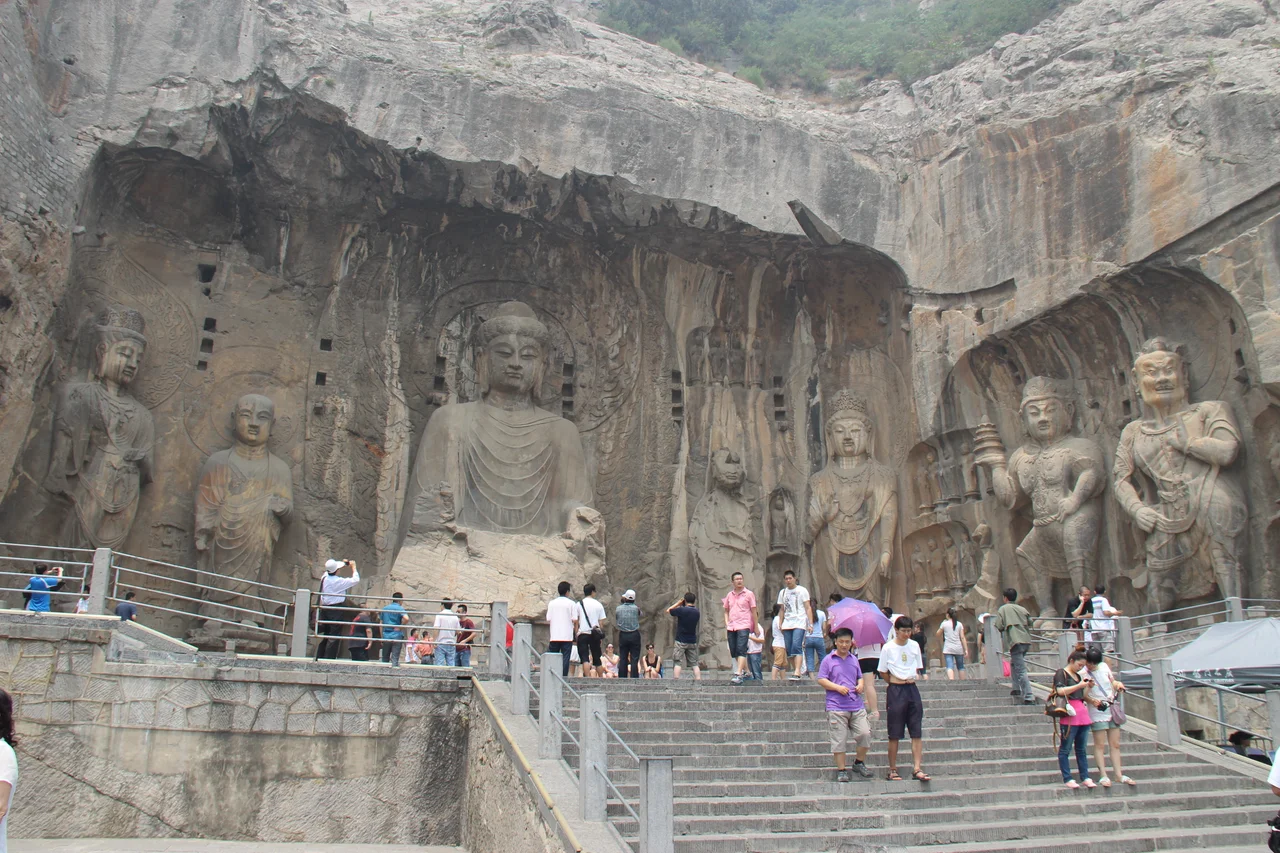
Longmen's caves and niches contain late Northern Wei and Tang art devoted chiefly to which religion?
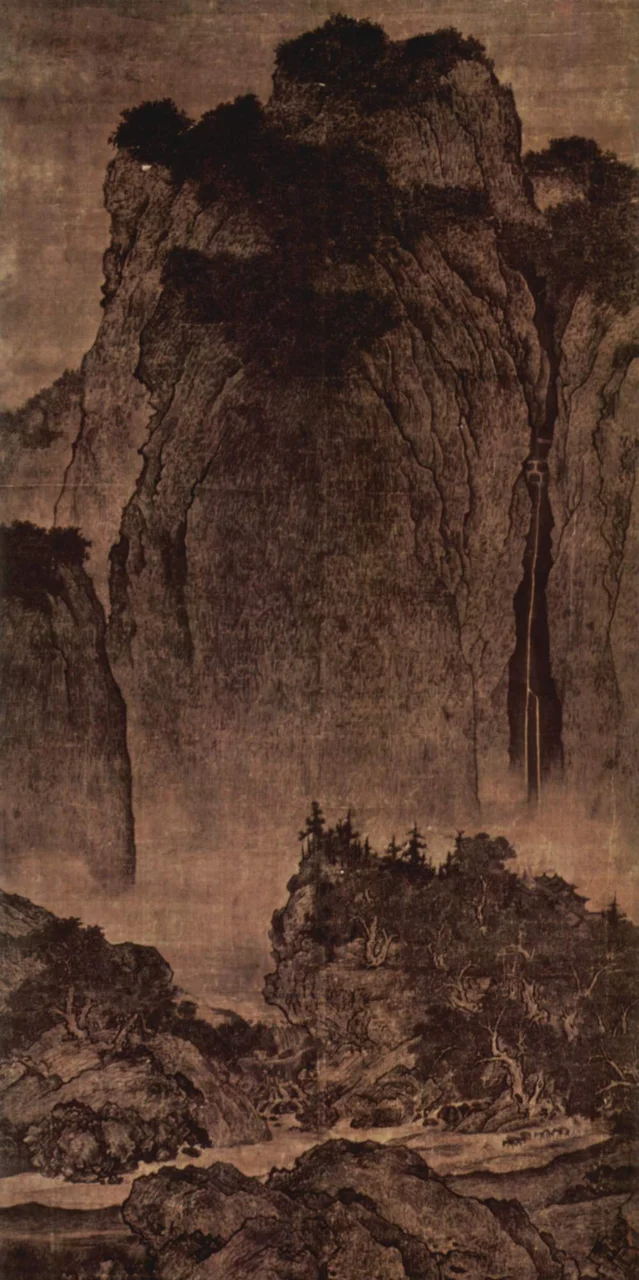
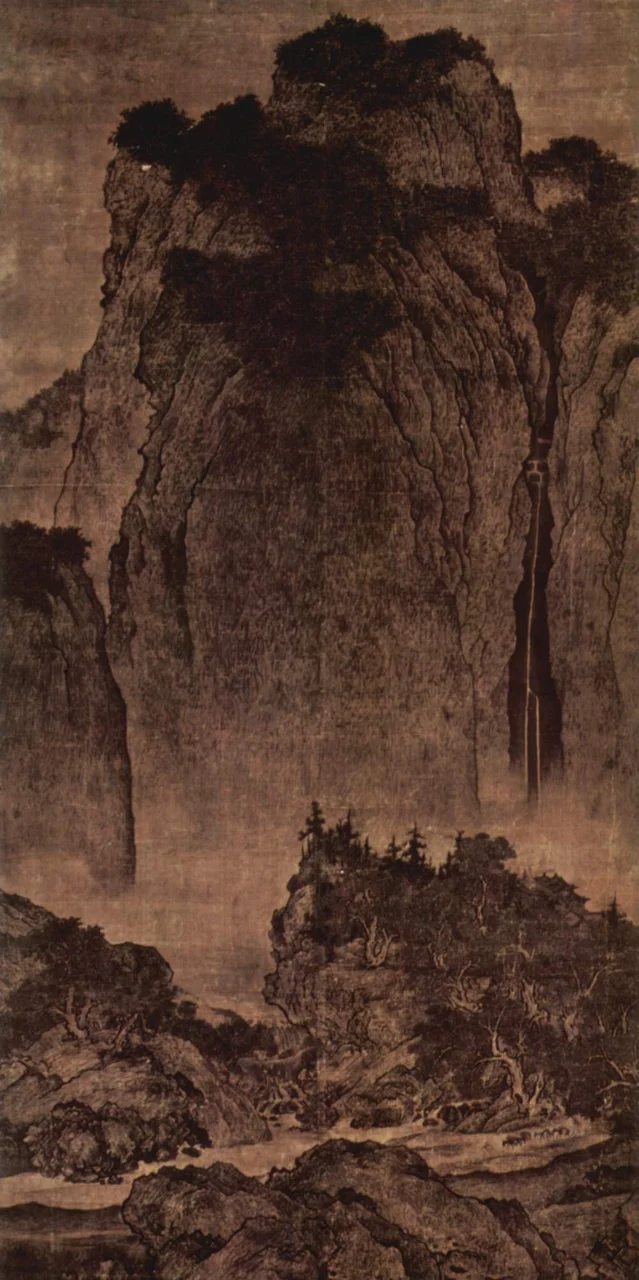
In Fan Kuan's Travelers among Mountains and Streams, a towering mountain overwhelms the tiny mule train below. What idea does that scale relation express?
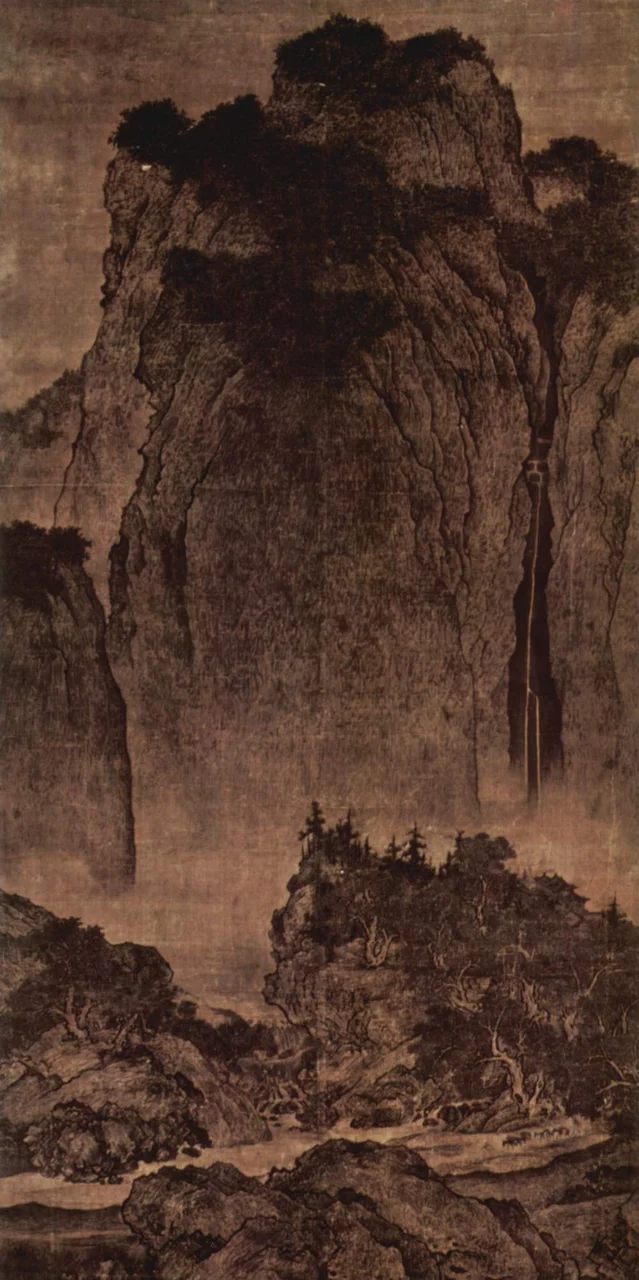
Fan Kuan's Travelers among Mountains and Streams is tall and vertical, designed to be displayed on a wall. Which format is it?
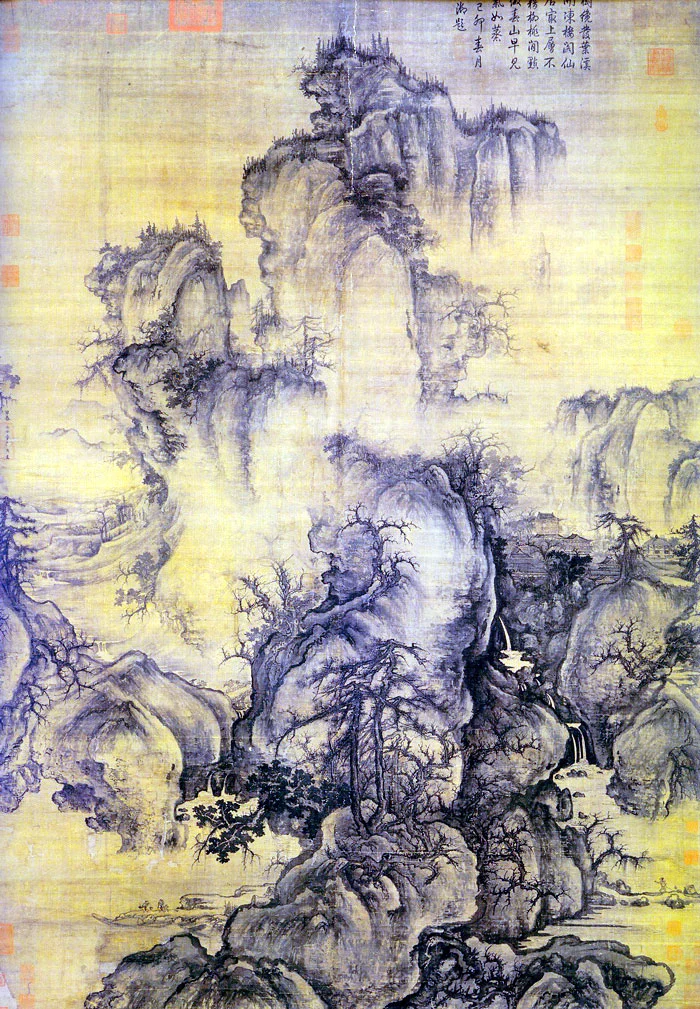
In Guo Xi's Early Spring, distant rocks and mountains seem to dissolve into mist. Which technique creates this atmospheric effect?
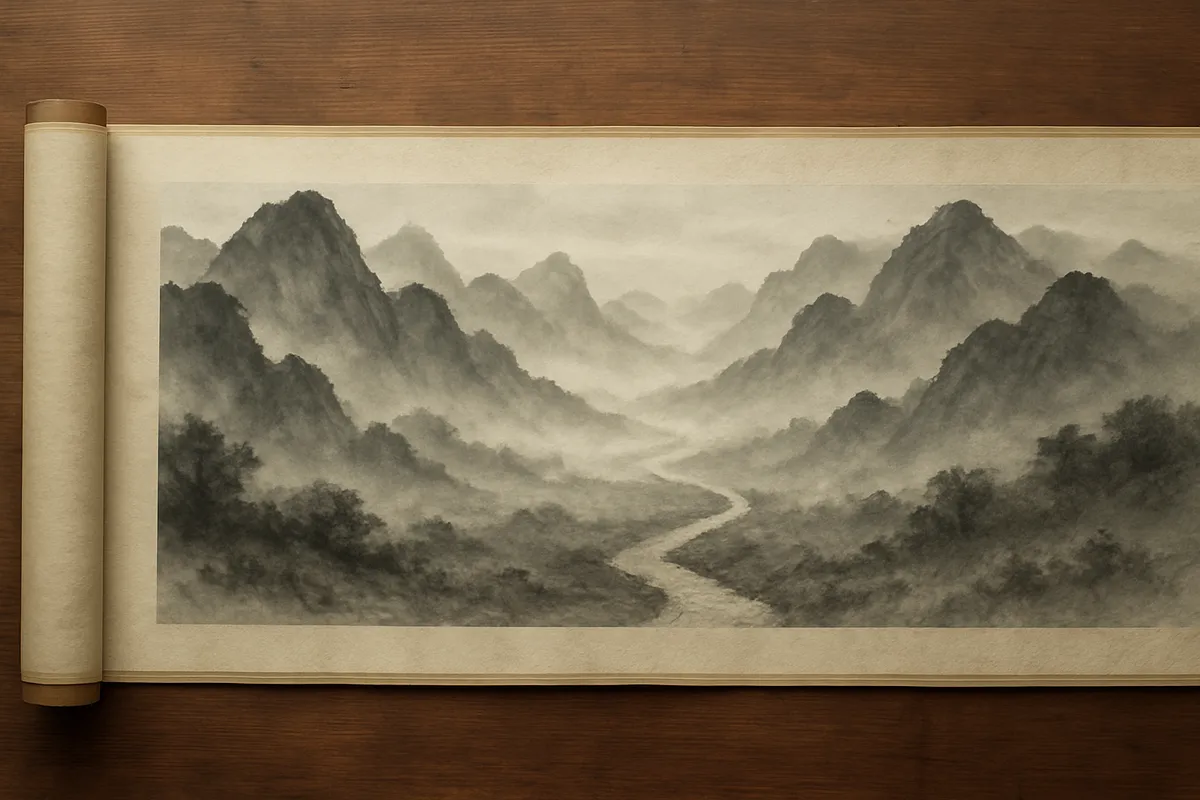
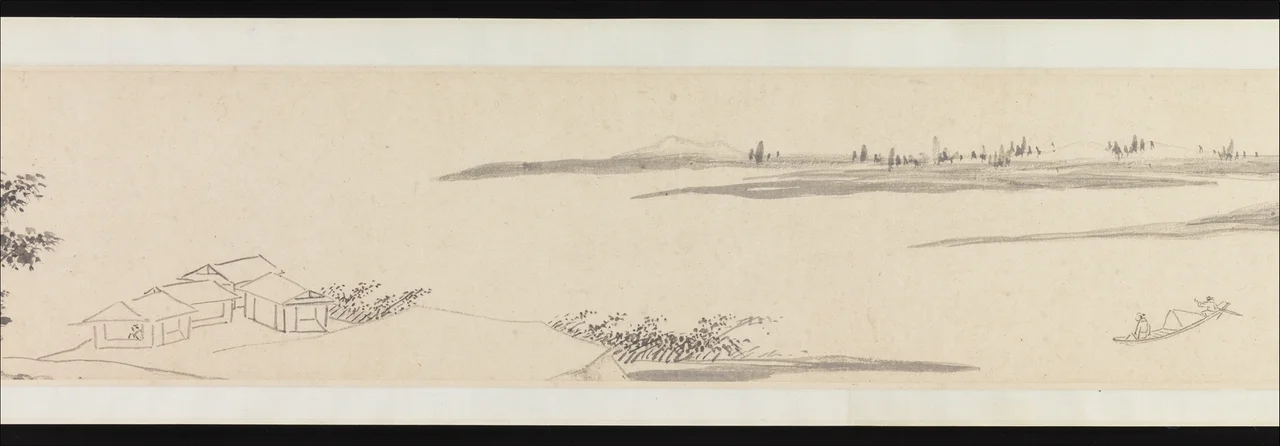
How was a Chinese handscroll traditionally viewed and experienced?
A small Chinese painting on a single page is mounted with others in a bound book. Which format is it?
A scholar-amateur uses abbreviated monochrome ink brushstrokes, calligraphic energy, and an inscription to paint a landscape. Which tradition does this describe?
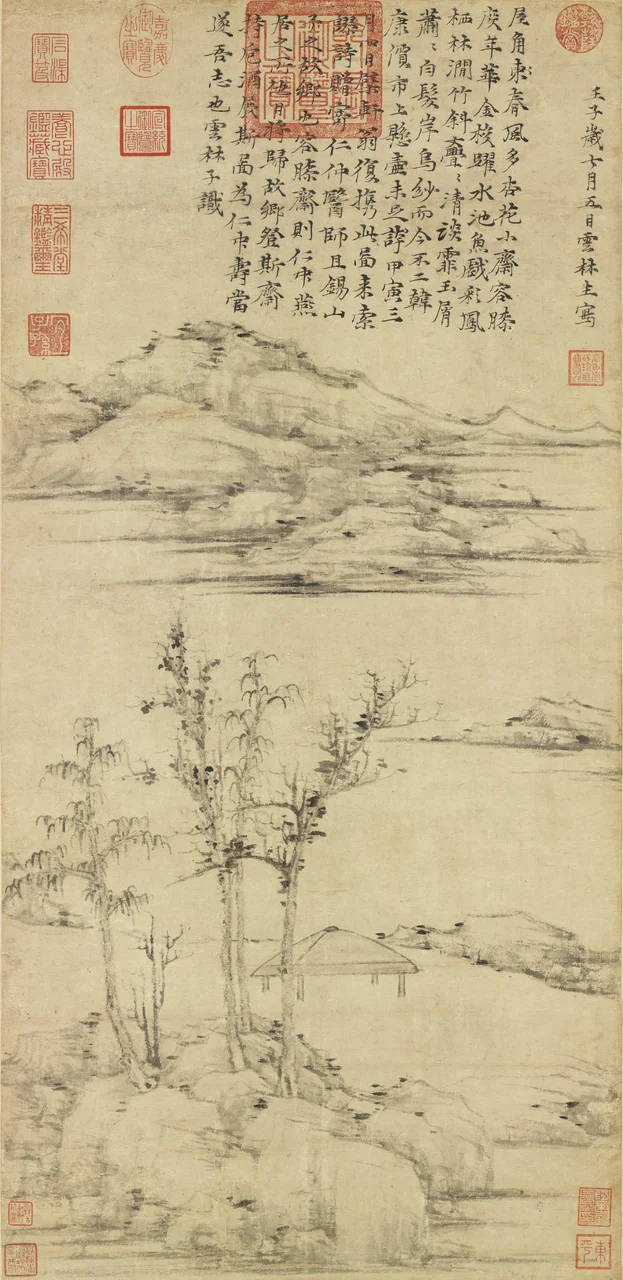
A painting combines poetry, calligraphy, and landscape imagery for personal expression rather than official display. What is its most likely patron context?
In a Chinese landscape, a massive peak rises above small trees and people. Which distance formula best describes this upward-looking composition?
The David Vases combine blue decoration with a clear glaze. Which process produced their blue-and-white surface?
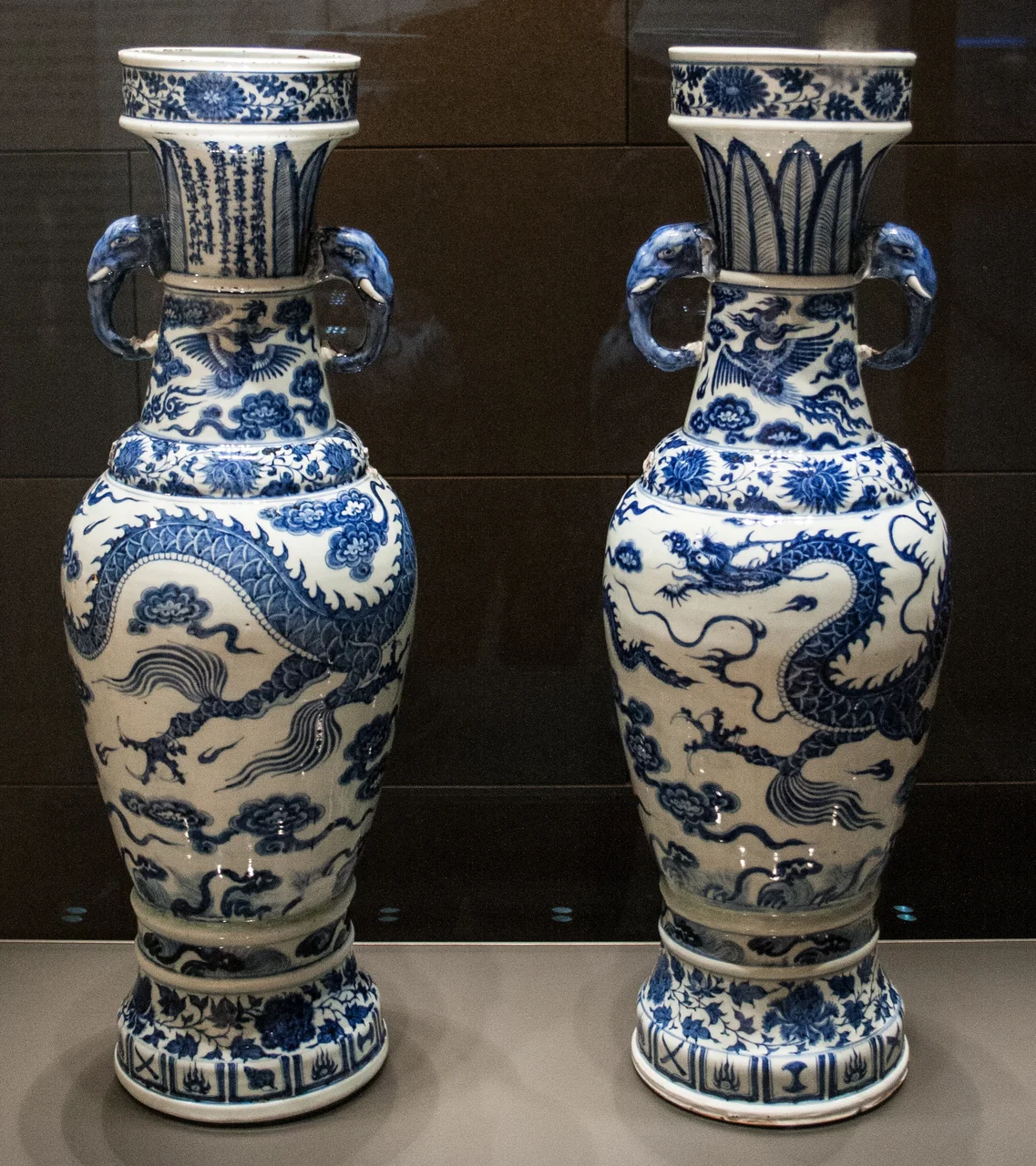
The cobalt used for Yuan blue-and-white porcelain at Jingdezhen came through long-distance trade. From which region did this pigment reach China?
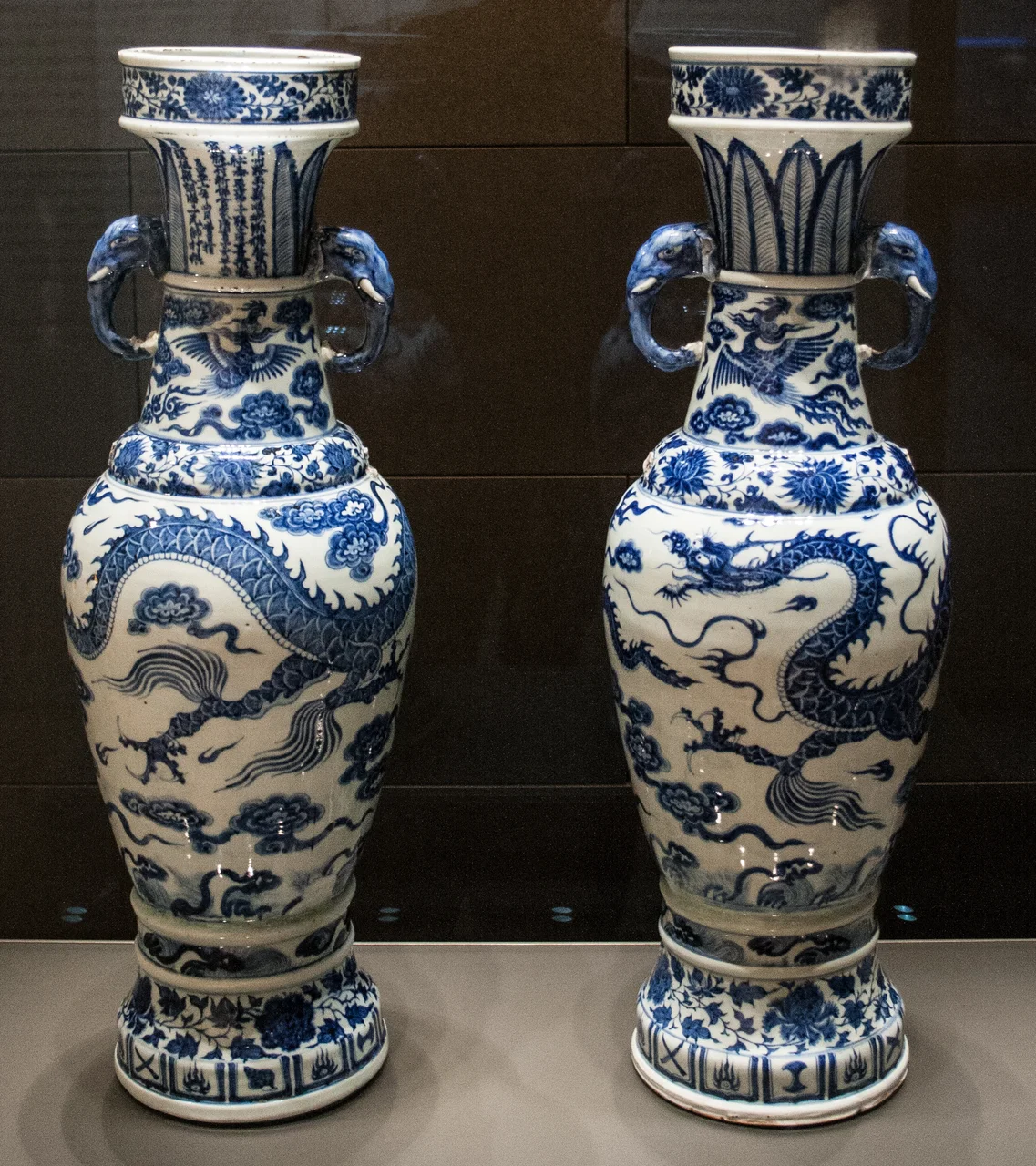
Why did Jingdezhen become so influential in Chinese ceramic history?
A vessel has a smooth bluish-green glaze. Which ceramic term identifies this surface?
An inscription on the David Vases records what they were made for in 1351. What was their original function?
The Forbidden City leads through gates and walled courtyards along a north-south axis. What did this sequence control?
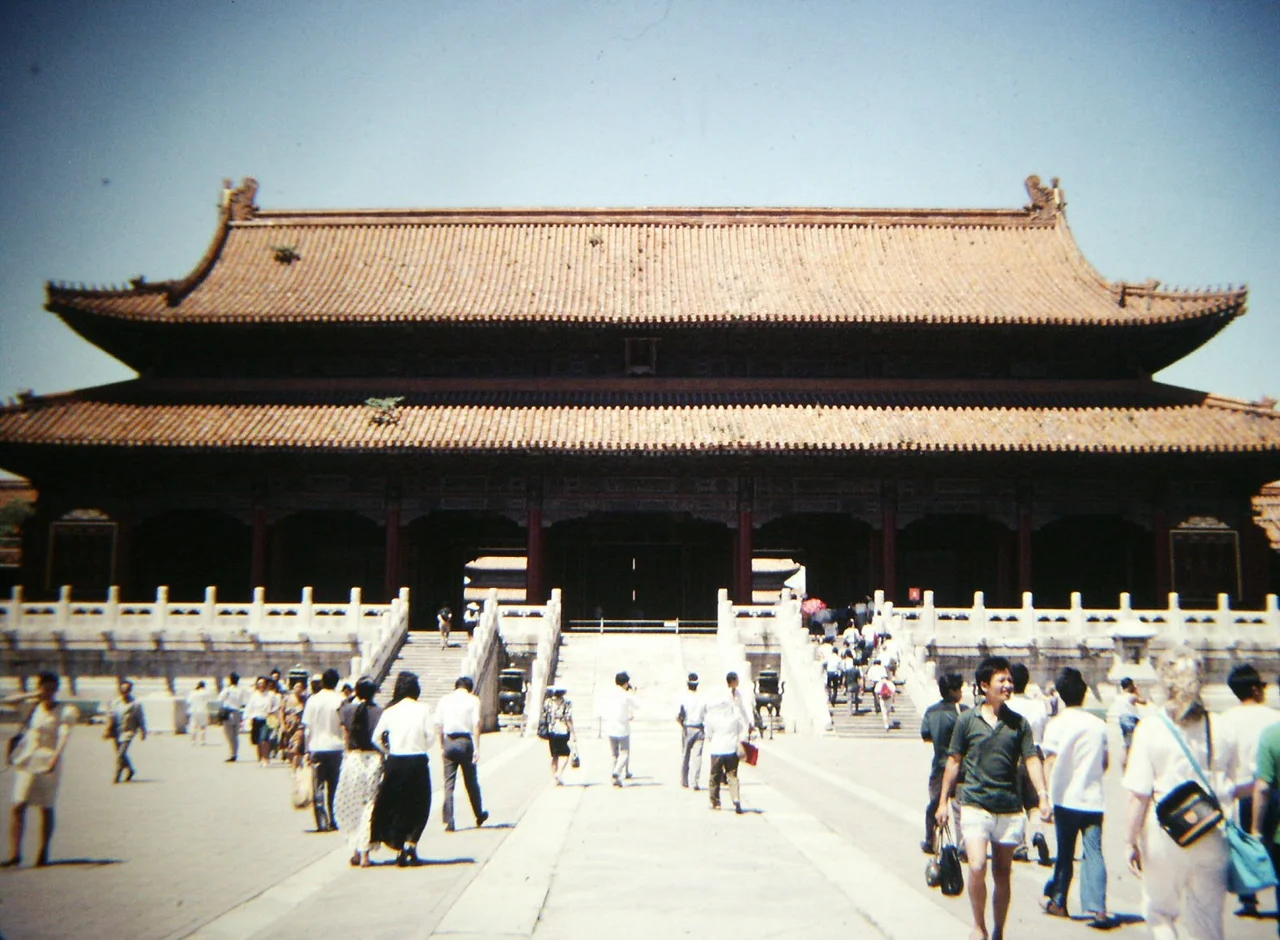
In the Forbidden City, the three principal halls of the outer court were used chiefly for what?
The Forbidden City's principal halls stand on high marble terraces. What does this elevation communicate?
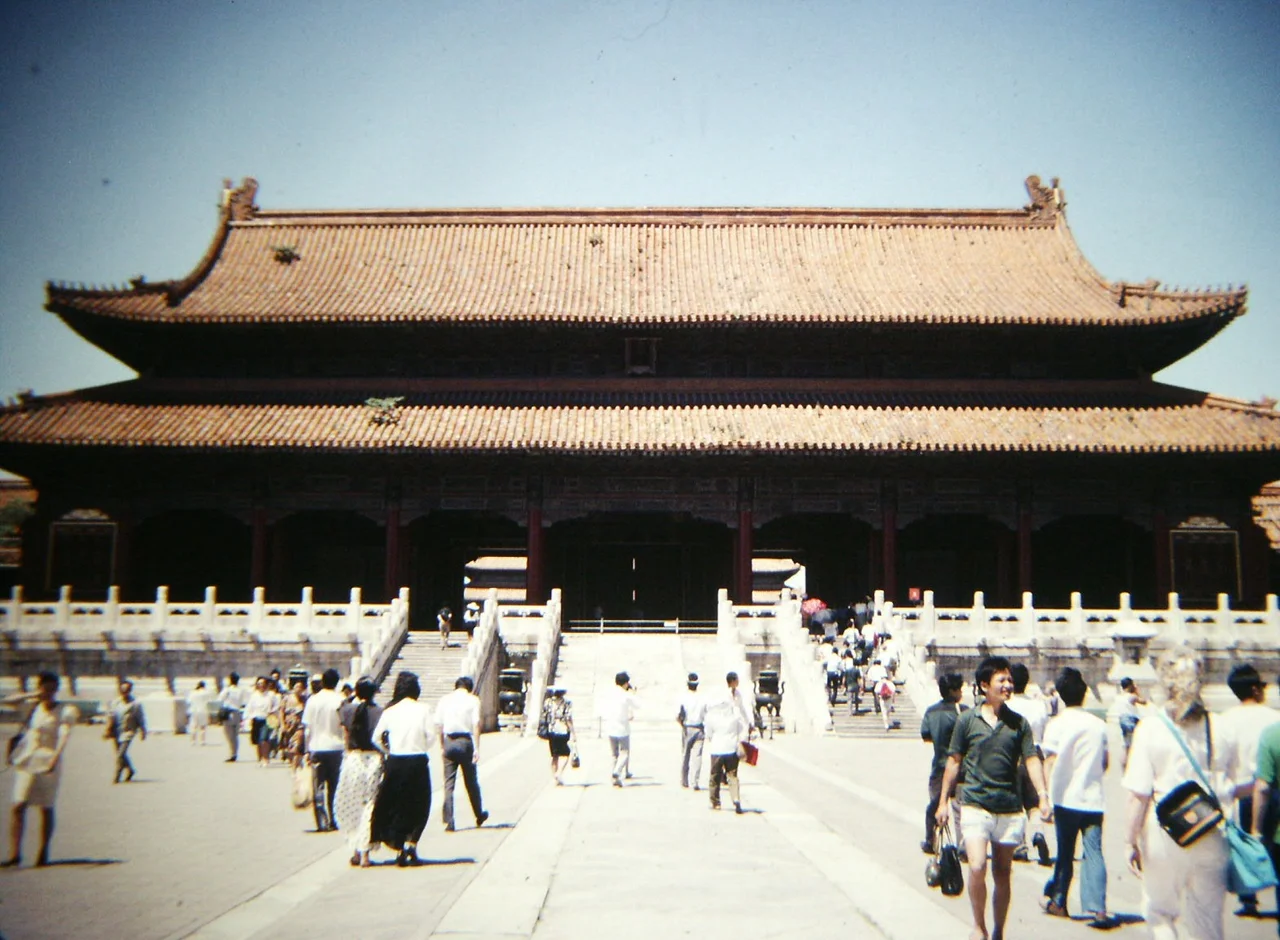
The inner court of the Forbidden City centers on halls associated with the emperor and empress. What was its main role?
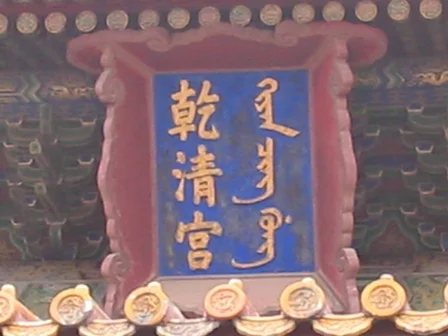
The Forbidden City was established in Beijing under which dynasty?
A palace complex lines up its major gates, courts, and halls one behind another, with matching buildings on the east and west. Which design principle organizes this plan?
Crack the passcode before the zombies get in.
Answer, then swat bugs for bonus points.
Race through questions at your own speed.
Same question on every screen. Fastest wins.

Pick a tile, answer, hit bonuses and steals.
Korean and Southeast Asian Art
25 questions