Loading
by BlastRoom
The cranial and facial bones, the sutures between them and the openings through them.
#us_hs_anatomy_physiology

40 questions
One question set, multiple game modes. Tap any game to see it in action. Not sure which to pick?
Answer to place stones and capture territory.
Outrun the snow together.
Earn blasts, then hunt the other team.
Answer to earn energy, then climb.

The class blasts through walls together.
Bid on mystery lots. Most money wins.
Sell tours. Nice, standard, or a total scam.

Answer, restock, and serve the rush.
More correct answers pulls the rope your way.
Answer, then shoot down the alien wave.
Answer, then tap to leap the frozen ridge.
Which cranial bone forms the forehead, roofs both eye sockets, and contains air sinuses just above the eyebrows?
The broad paired bones that make most of the upper sides and roof of the skull are which bones?
Which cranial bone contains the structures of the middle and inner ear and forms the temple region on each side?
The bone at the back and lower base of the skull surrounds the large opening for the spinal cord. Which bone is it?
Which cranial bone is shaped like a butterfly, helps form the cranial floor, and contributes to the back of the eye sockets?
A delicate cranial bone between the eye sockets helps form the roof of the nasal cavity and the upper nasal septum. Which bone is it?
Which cranial bone contains the sella turcica, the saddle-shaped depression that holds the pituitary gland?
The mastoid process felt just behind the ear is part of which cranial bone?
Which cranial bone forms the posterior skull and has condyles that articulate with the atlas?
Which paired cranial bones meet along the midline seam across the top of the skull?
Which facial bone forms the movable lower jaw and holds the lower teeth?
Which paired facial bones hold the upper teeth and form most of the anterior hard palate?
The cheek prominence and the outer rim of each eye socket are formed mainly by which paired bones?
Which small paired facial bones form the bridge of the nose?
The tiny paired bones in the medial wall of each eye socket contain a groove for the tear duct. Which bones are they?
Which paired facial bones form the posterior quarter of the hard palate?
The thin, plow-shaped bone that forms the lower part of the nasal septum is which facial bone?
Which paired scroll-shaped bones in the nasal cavity are counted as separate facial bones, not as parts of the ethmoid?
Which paired facial bones contain the largest paranasal sinuses, located just below the eye sockets?
Which skull bone is the only one connected to the rest of the skull by a freely movable joint?
Which suture crosses the top of the skull between the single forehead bone and the paired roof bones behind it?
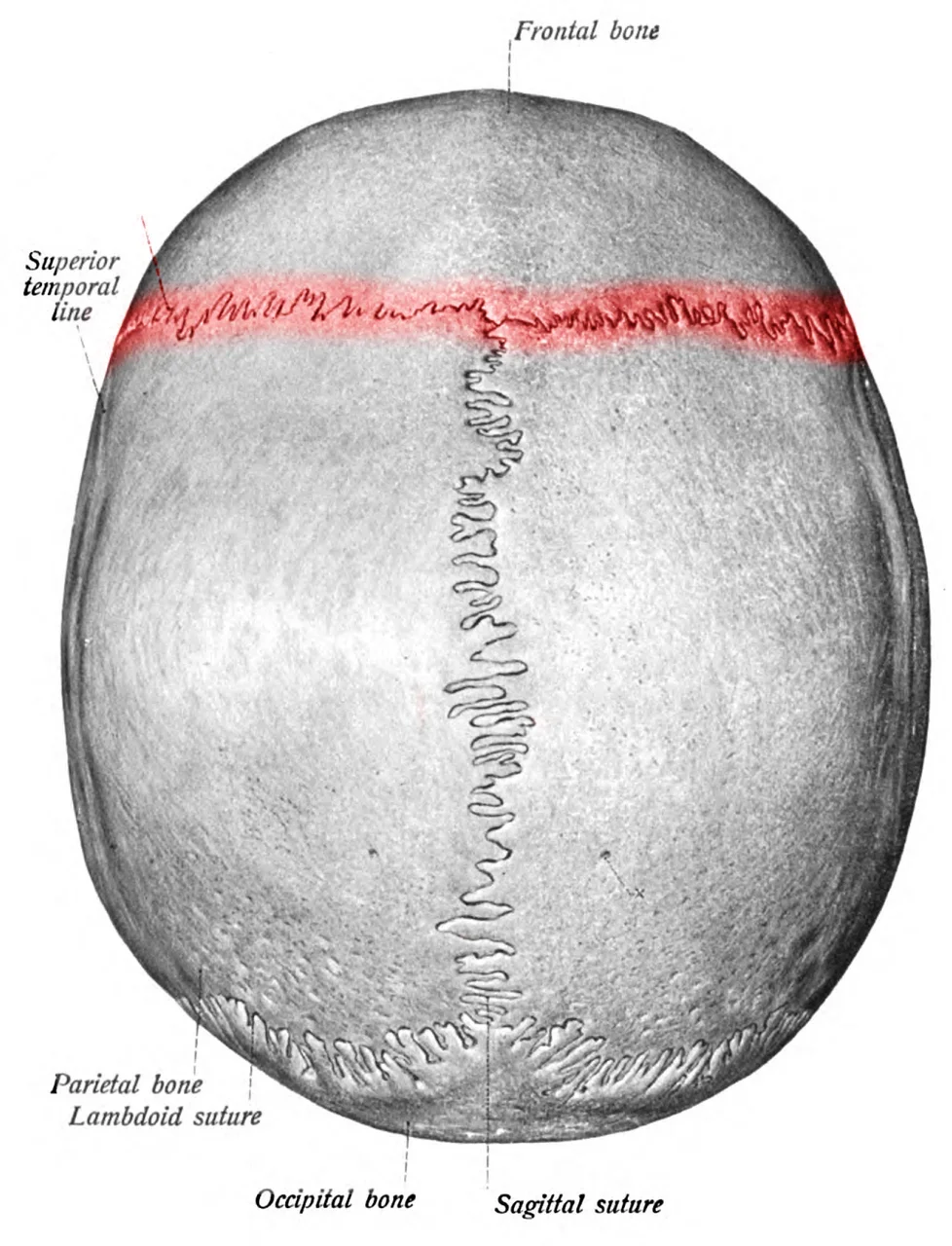
Which suture runs along the midline between the right and left roof bones of the cranium?
Which suture lies between the back-of-head bone and the paired roof bones above it?
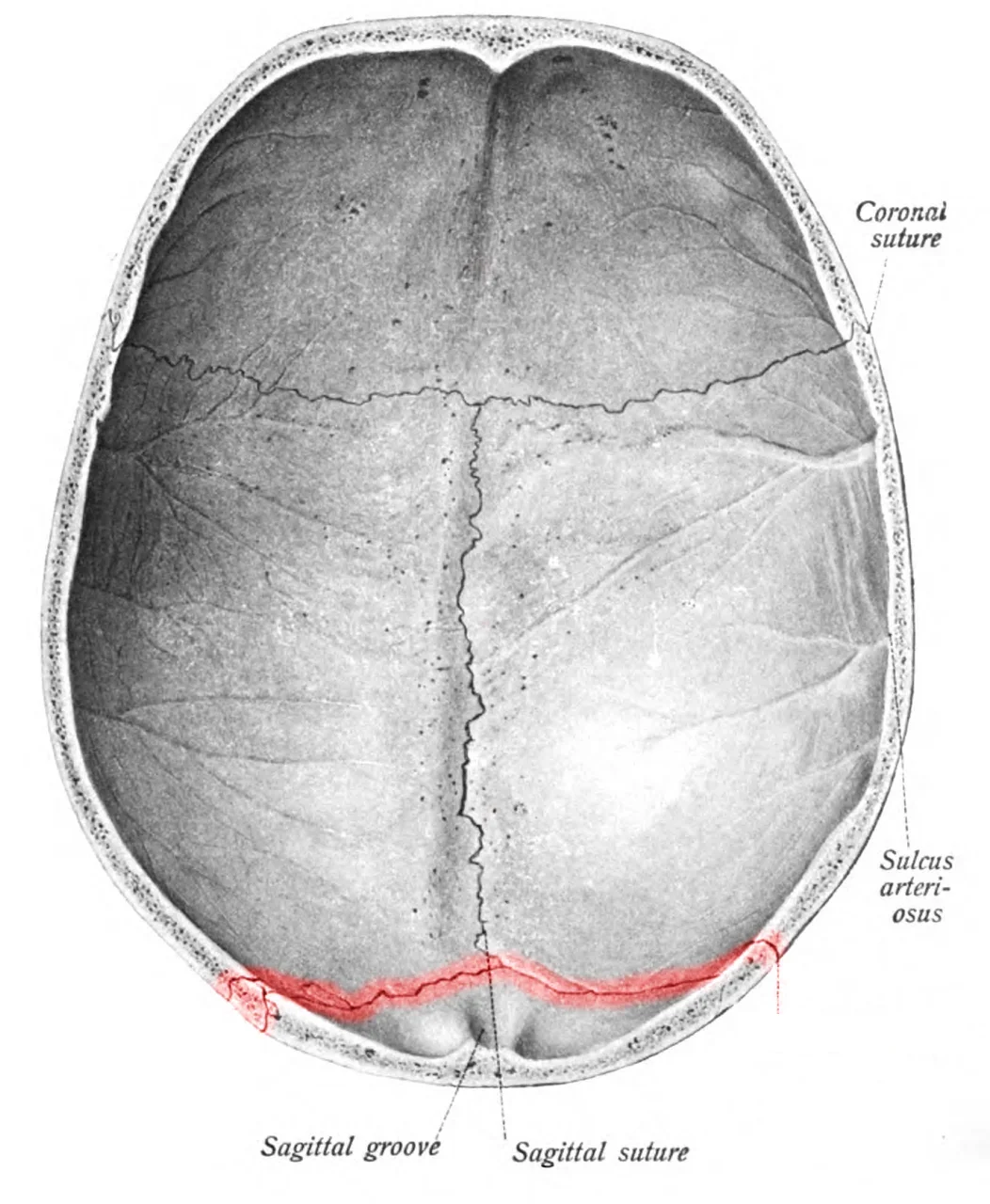
Which suture is found where a large roof bone meets the temple-region bone on the side of the skull?
Which suture joins the brow-forming cranial bone to the paired bridge-of-the-nose bones?
Which suture lies between the two small paired bones that form the bridge of the nose?
Which suture joins a cheek bone to the facial bone that holds the upper teeth?
Which suture is in the anterior hard palate between the paired facial bones that hold the upper teeth?
The spinal cord leaves the floor of the cranial cavity through which skull opening?
Cranial nerve II travels from each eye socket into the cranial cavity through which opening?
Cranial nerves III, IV, VI, and the ophthalmic branch of V pass into the eye socket through which opening?
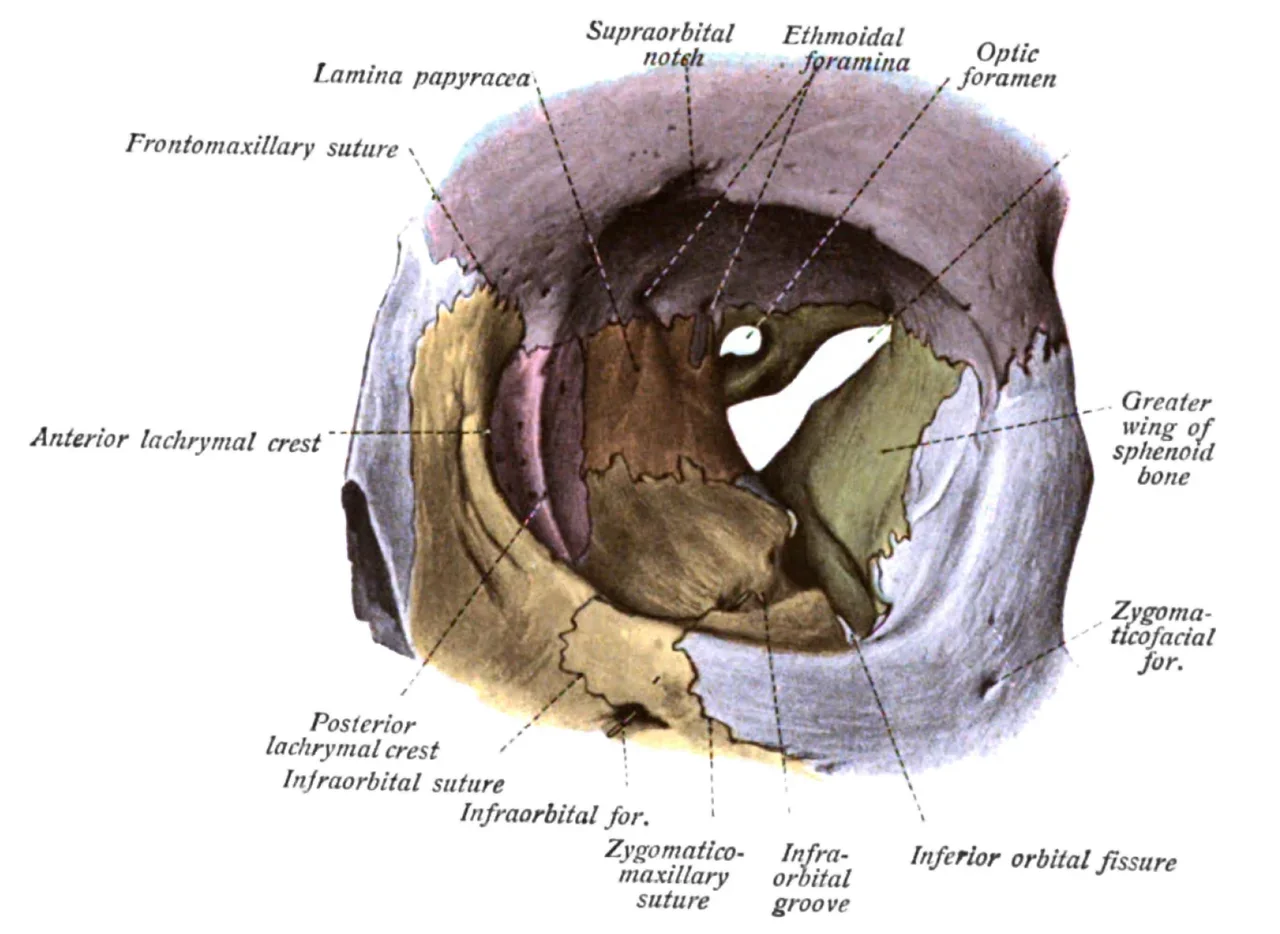
The mandibular branch of the trigeminal nerve leaves the cranial cavity through which opening?
The maxillary branch of the trigeminal nerve leaves the cranial cavity through which opening?
Cranial nerve XII exits near the occipital condyles through which skull opening?
Cranial nerves IX, X, and XI leave the cranial cavity with a major draining vein through which opening?
In the standard skull grouping, the bone that forms the forehead belongs to which group?
The freely movable lower jaw is counted in which group of skull bones?
The butterfly-shaped bone behind the eyes is classified in which skull-bone group?
The cheekbone is counted in which group of skull bones?
The bone between the eye sockets that helps form the roof of the nasal cavity belongs to which group?
Crack the passcode before the zombies get in.
Answer, then swat bugs for bonus points.
Race through questions at your own speed.
Same question on every screen. Fastest wins.

Pick a tile, answer, hit bonuses and steals.
Bone Landmarks You Have to Find on a Practical
40 questions