Loading
by Dedith
Climate change and biological responses
20 questions
One question set, multiple game modes. Tap any game to see it in action. Not sure which to pick?
Answer to place stones and capture territory.
Outrun the snow together.
Earn blasts, then hunt the other teams.
Answer to earn energy, then climb.
Answer to charge your kart, then race.
Stack the tallest tower before it falls

The class blasts through walls together.
Bid on mystery lots. Most money wins.
Sell tours. Nice, standard, or a total scam.

Answer, restock, and serve the rush.
More correct answers pulls the rope your way.
Answer, then shoot down the alien wave.
Answer, then tap to leap the frozen ridge.
Which biological process directly causes the corals to lose their color under these conditions?
What type of organismal response is demonstrated by these highland birds?
Why do these fish gather near the water surface during warm dry spells?
How do healthy mangrove ecosystems help coastal communities under sea-level rise?
How does elevated growing-season temperature primarily affect rice production?
How does earlier sea-ice melt most directly challenge polar bear survival?
What ecological outcome is most likely from this timing difference?
Why do larval oysters struggle to build shells in acidified seawater?
What is a likely consequence of this poleward and depth shift?
When do repeated climate-driven droughts and fires become most damaging to Eucalyptus trees?
Shifting foraging times to cooler parts of the day is a behavioral response to rising temperatures.
Emerging early before food plants grow can lead to energy stress and lower survival in hibernating mammals.
Seagrass loss has no effect on coastal marine organisms because seagrasses do not provide food or shelter.
Because tarsiers are strictly insectivorous, shifts in prey abundance caused by climate change can affect their foraging success.
Day-length cues allow snowshoe hares to automatically match their coat color to snowless winter ground.
Day-length cues allow snowshoe hares to automatically match their coat color to snowless winter ground. Moving toward cooler waters is an example of a distributional (range) response to ocean warming.
Amphibians are generally insensitive to temperature and moisture changes because they can live on both land and water.
Altered salinity and water flow in estuaries can disrupt larval development and survival in coastal crustaceans.
Warmer nesting sand can increase the proportion of female sea turtle hatchlings.
Cushion plants face zero risk from climate change because warmer temperatures always make mountain tops easier to colonize.
Outrun the horde and crack the passcode.
Answer, then swat bugs for bonus points.
Race through questions at your own speed.
Same question on every screen. Fastest wins.
Pick a tile, answer, hit bonuses and steals.
Science
36 questions

SPEED BLAST - ELICIT
10 questions
Biotechnology
40 questions
Grade 8 T2 Week 10 Volcanic Eruptions
26 questions
Science 10 Lesson 1-3
50 questions
Grade 9 T2 Week 10 Philippine Ecosystems and Human Impacts
28 questions
mixtures and solutions
29 questions
Science Grade 8, W12
30 questions
Natural resources
35 questions
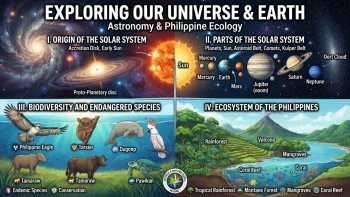
Science 9 Second Term Exit Exam
50 questions
Latihan Soal ASAS 1 - Kelas 7
25 questions

Science Adaptations
50 questions