Loading
by BlastRoom
Exam-shaped items: set-up-only integrals, regions described in words, and reading a volume from a base region.
#calculus
30 questions
One question set, multiple game modes. Tap any game to see it in action. Not sure which to pick?
Answer to place stones and capture territory.
Outrun the snow together.
Earn blasts, then hunt the other team.
Answer to earn energy, then climb.

The class blasts through walls together.
Bid on mystery lots. Most money wins.
Sell tours. Nice, standard, or a total scam.

Answer, restock, and serve the rush.
More correct answers pulls the rope your way.
Answer, then shoot down the alien wave.
Answer, then tap to leap the frozen ridge.
Let be the first-quadrant region bounded by and . Which integral gives the area of ? Do not evaluate.
The region bounded by and the -axis is revolved about the -axis. Which integral gives its volume? Do not evaluate.
The region enclosed by and is measured with respect to . Which integral gives its area? Do not evaluate.
A region under above the -axis for is revolved about the -axis. Which integral gives the volume? Do not evaluate.
The region bounded by , , and the -axis is revolved about the -axis. Which integral gives the volume? Do not evaluate.
The first-quadrant region under and above the -axis is the base of a solid. Cross sections perpendicular to the -axis are squares. Which integral gives the volume? Do not evaluate.
The region enclosed by and is revolved about the -axis. Which integral gives the volume using disks with respect to ? Do not evaluate.
The shaded region in the figure lies between and . What is its area?
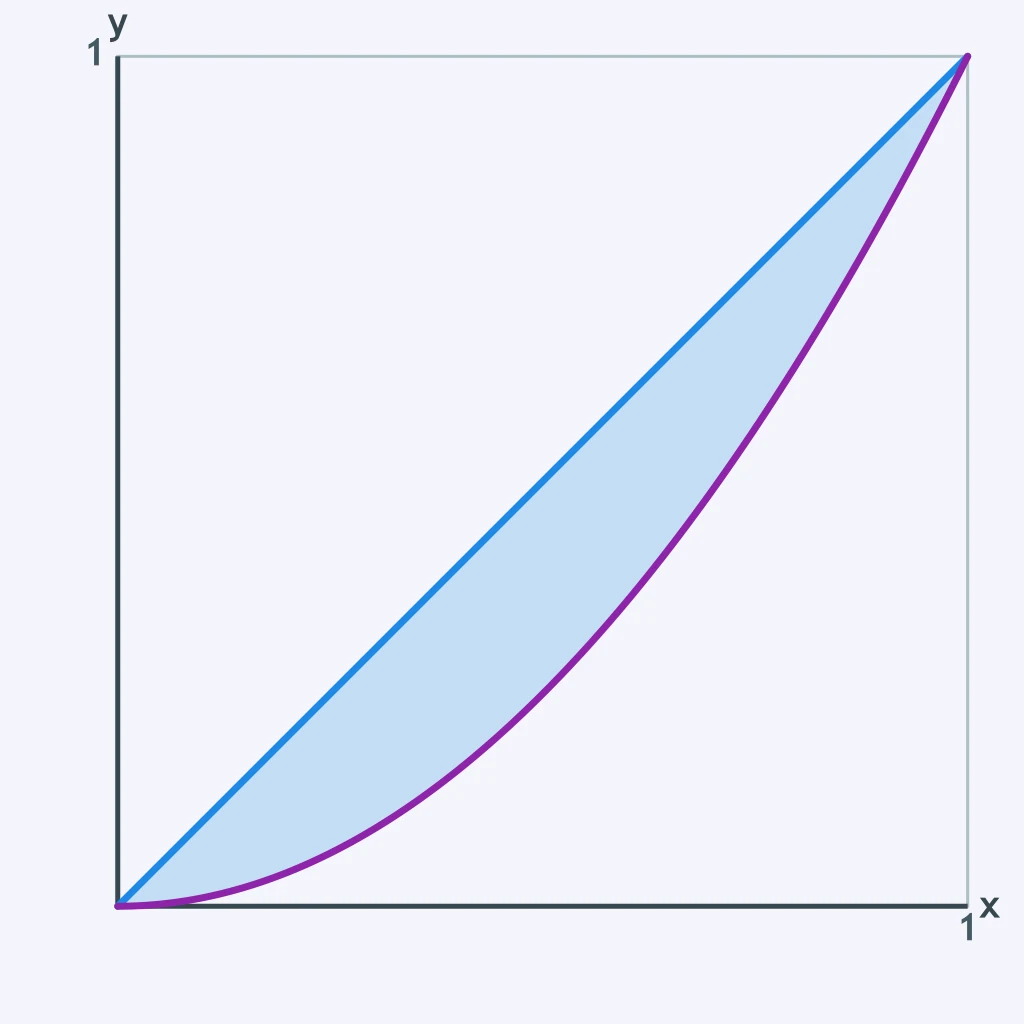
The shaded first-quadrant region in the figure is the base of a solid with square cross sections perpendicular to the -axis. Which integral gives the volume?
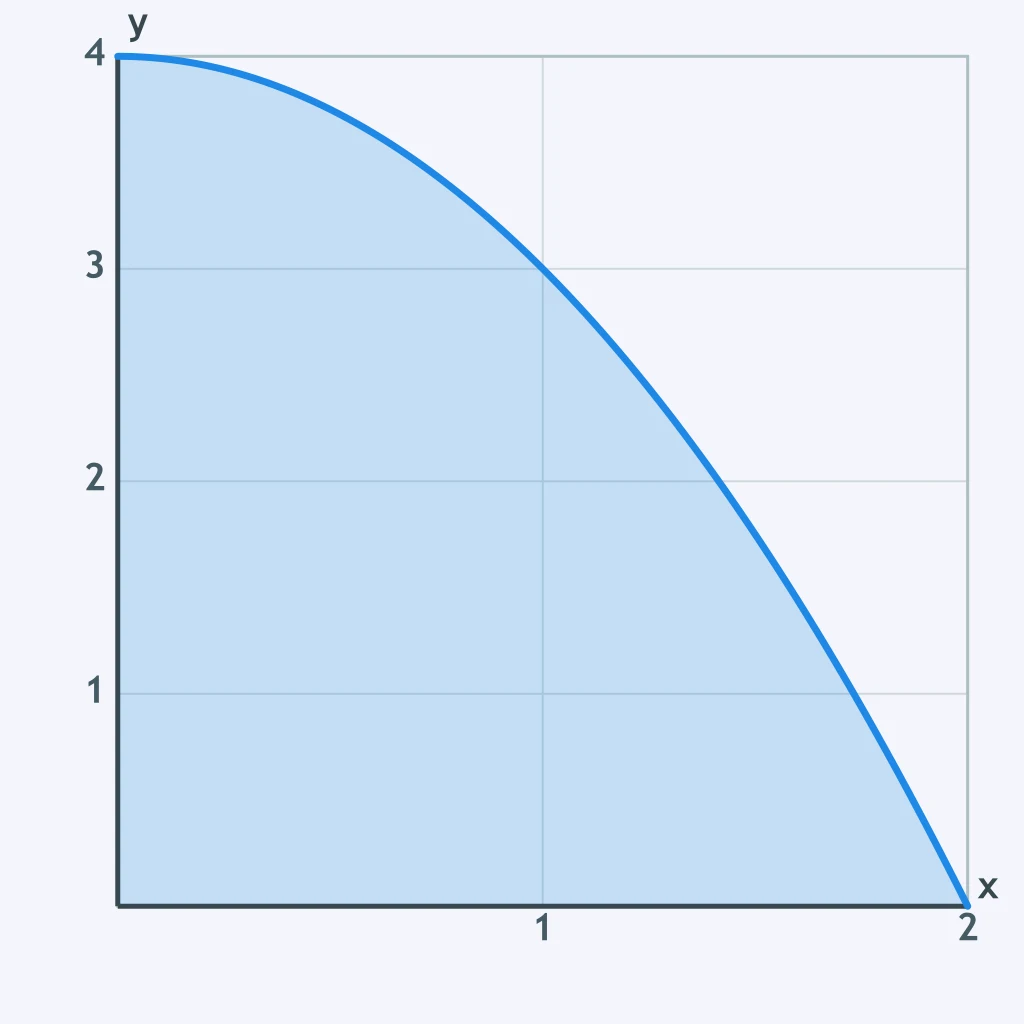
The shaded region in the figure is the base of a solid. Cross sections perpendicular to the -axis are semicircles. Which integral gives the volume?
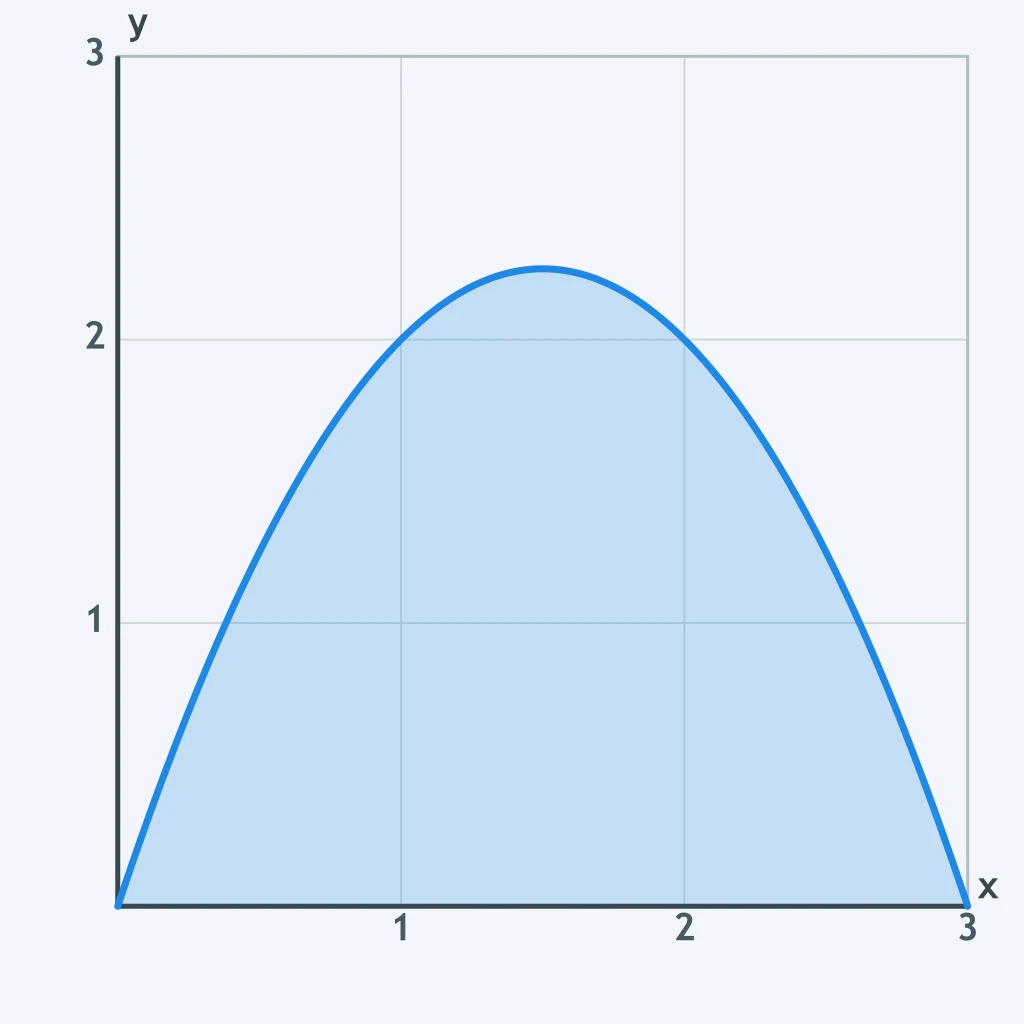
The shaded region in the figure is revolved about the -axis. What is the volume, in cubic units?
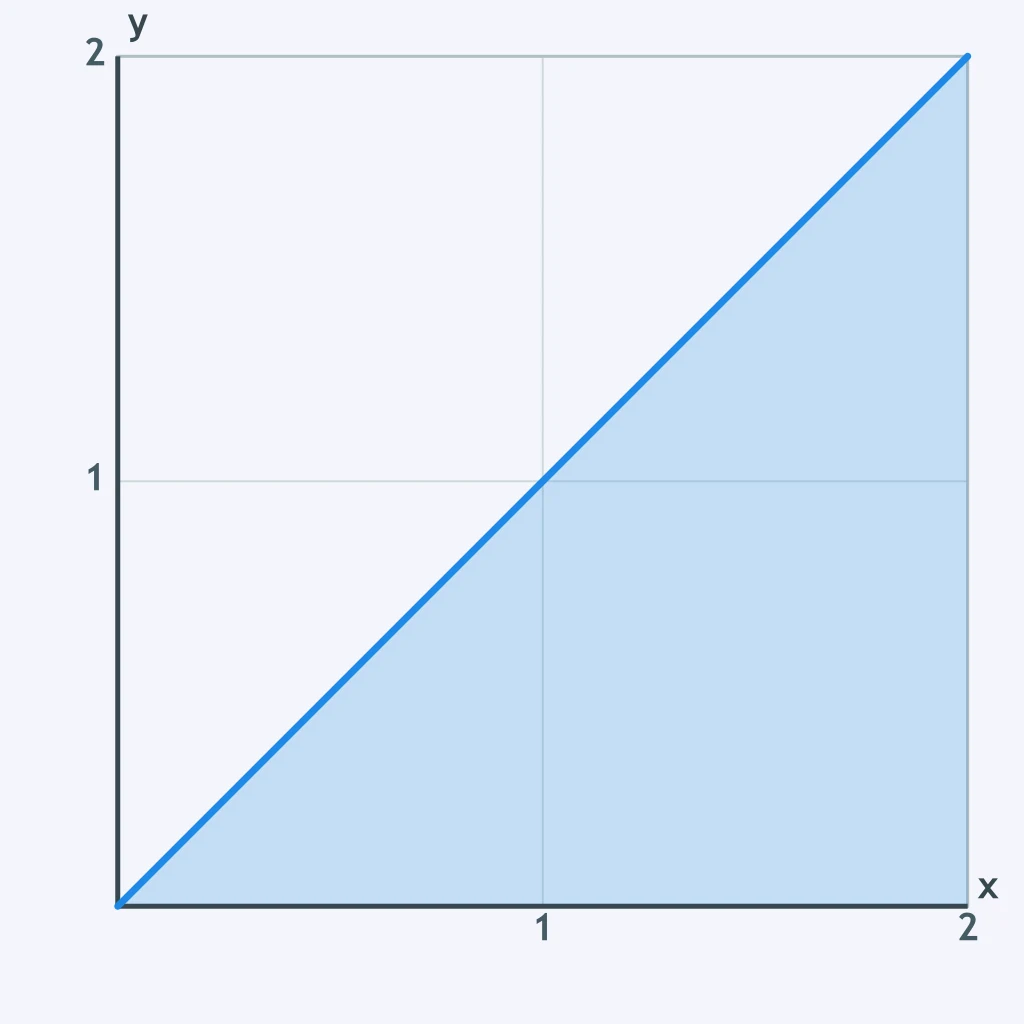
The shaded region in the figure is revolved about the -axis. Which shell-method integral gives the volume?
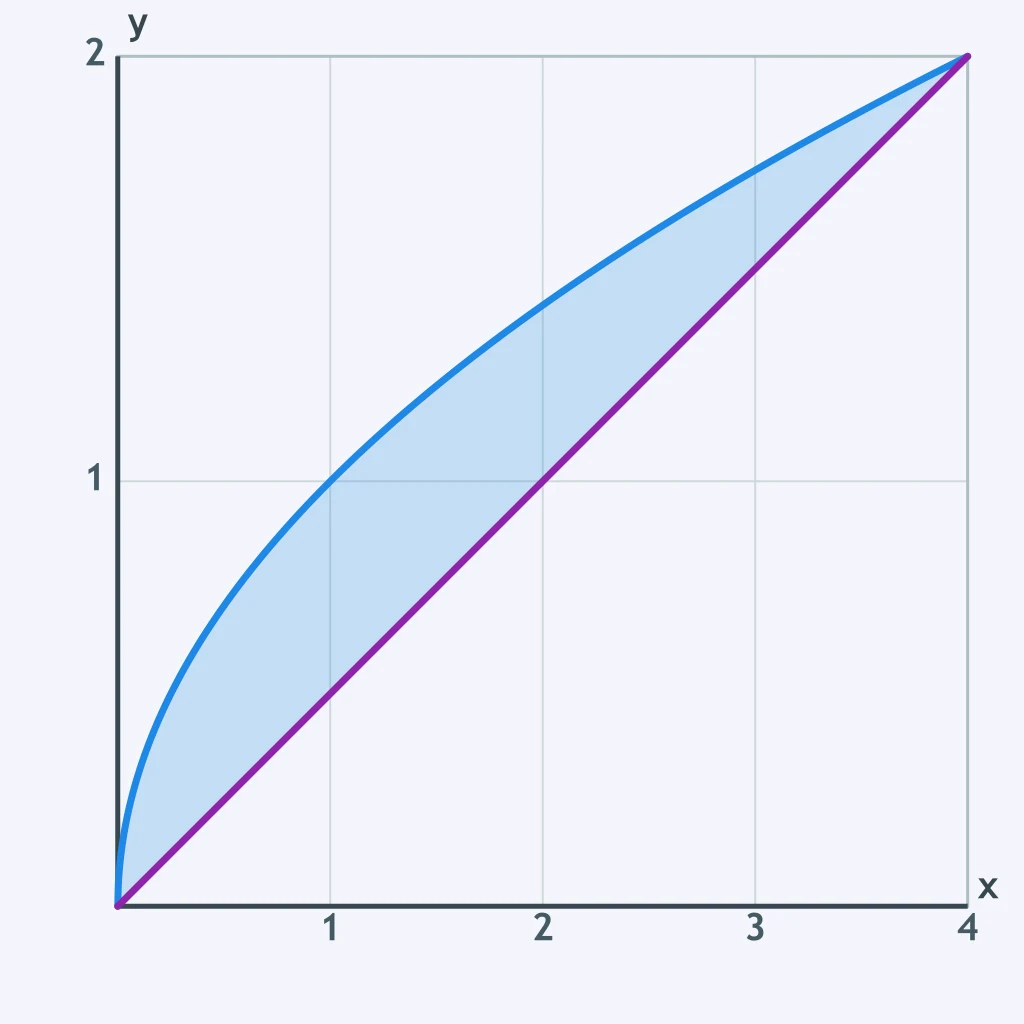
The shaded region in the figure is the base of a solid with equilateral-triangle cross sections perpendicular to the -axis. Which integral gives the volume?
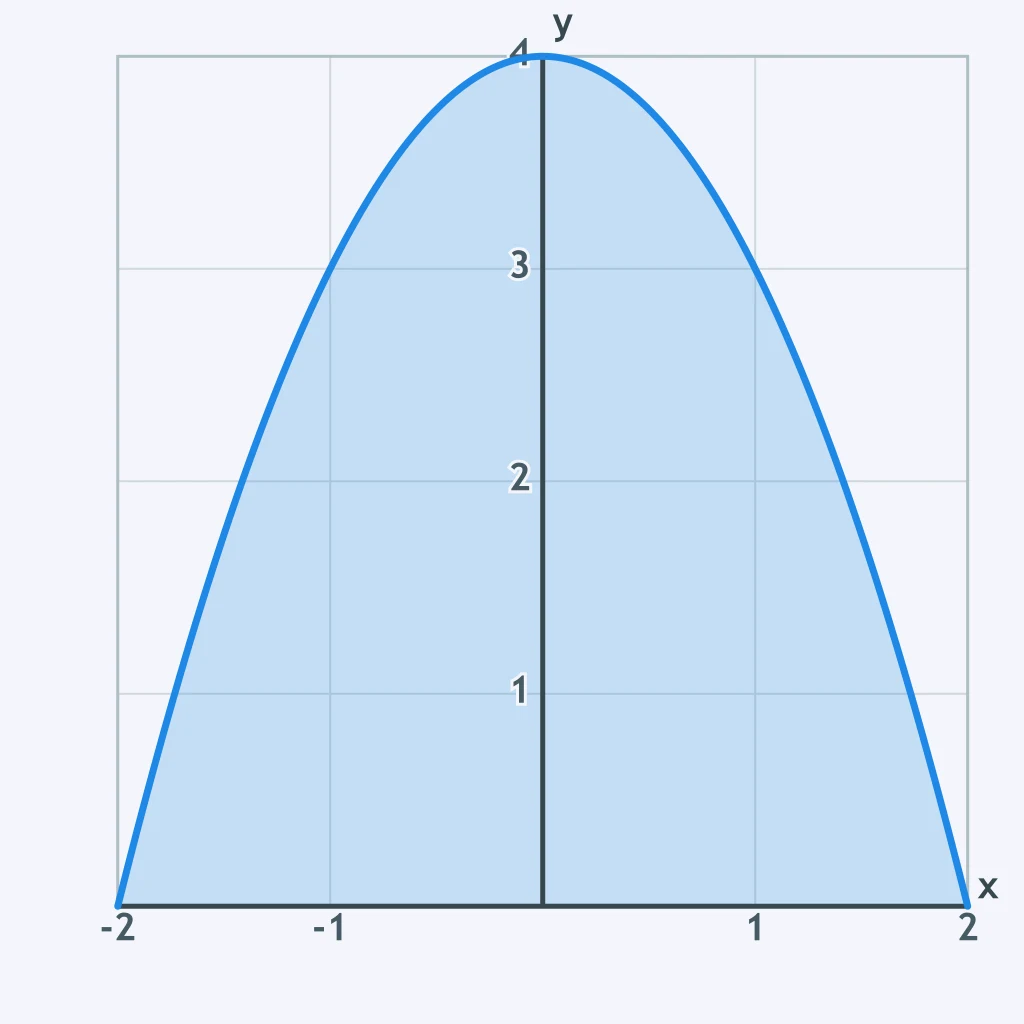
The shaded region in the figure is revolved about the -axis. What is the resulting volume, in cubic units?
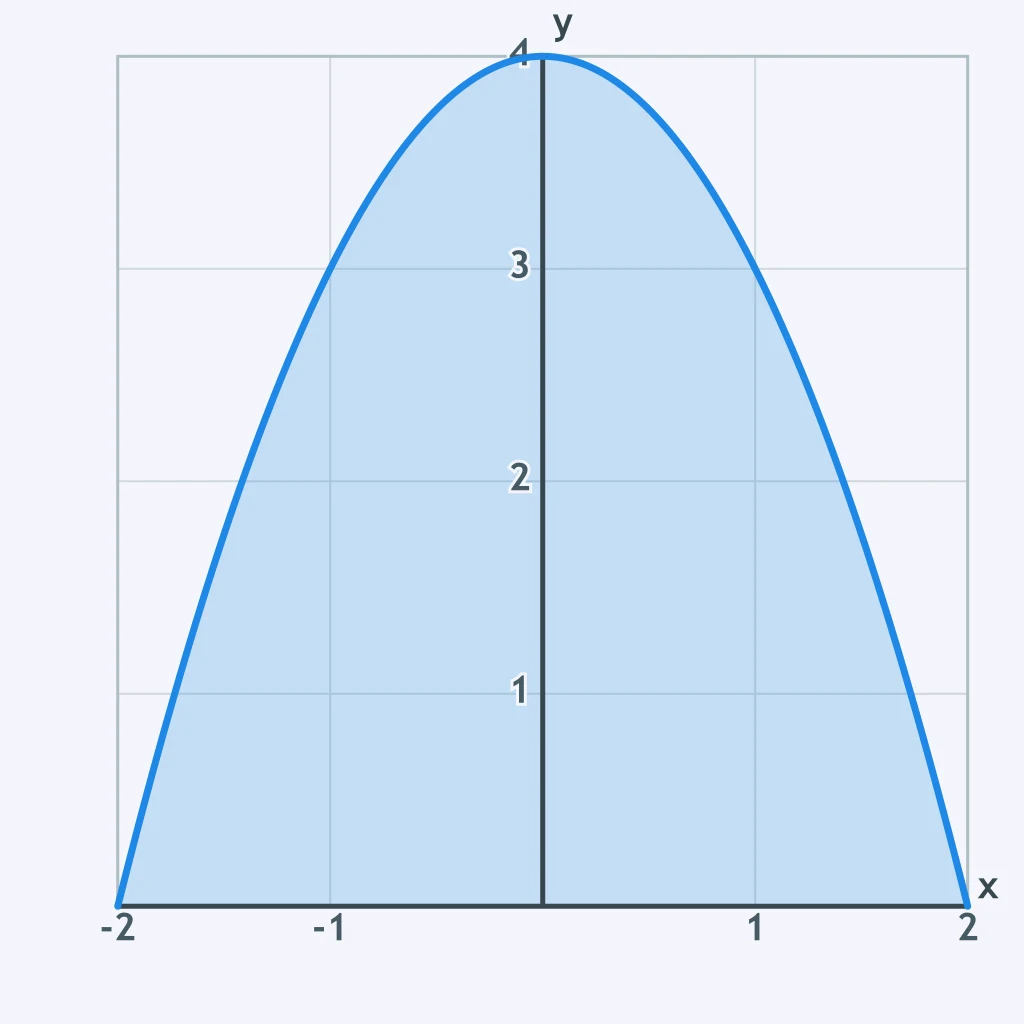
Water enters a tank at liters per minute for minutes. How much water enters during this interval?
A robot's velocity is meters per second for seconds. What is its displacement over the interval?
A pump delivers liquid at liters per minute for minutes. What does represent?
A sculpture has cross-sectional area square meters at position meters, for . What is its volume?
The temperature of a material changes at degrees Celsius per hour for . By how many degrees Celsius does its temperature change?
A vertical mural has horizontal width meters at height meters for . What is the mural's area?
A greenhouse has temperature degrees Celsius for hours. What is its average temperature, to the nearest tenth?
A pump's rate is liters per minute for . What is its average delivery rate?
A cart moves with speed meters per second for seconds. What is its average speed?
Water depth is meters along a channel for meters. What is the average depth?
A trail's width is meters for meters. What is the average width?
A student writes: “The area between and the -axis on is .” Is the work correct?
A student sets up the volume formed by revolving the region under on about the -axis as . Is the set-up correct?
A student says liters per minute is the average rate of a pump. Is the statement correct?
For the region bounded by and , a student writes for its area. Is the set-up correct?
A continuous function is defined on . A student writes, “By the Mean Value Theorem for Integrals, there is a number in such that .” Is the justification valid?
Crack the passcode before the zombies get in.
Answer, then swat bugs for bonus points.
Race through questions at your own speed.
Same question on every screen. Fastest wins.

Pick a tile, answer, hit bonuses and steals.
Partial Fractions (BC)
24 questions