Loading
by BlastRoom
Practice deciding which quadrilateral facts prove a parallelogram.
#geometry
24 questions
One question set, multiple game modes. Tap any game to see it in action. Not sure which to pick?
Answer to place stones and capture territory.
Outrun the snow together.
Earn blasts, then hunt the other team.
Answer to earn energy, then climb.

The class blasts through walls together.
Bid on mystery lots. Most money wins.
Sell tours. Nice, standard, or a total scam.

Answer, restock, and serve the rush.
More correct answers pulls the rope your way.
Answer, then shoot down the alien wave.
Answer, then tap to leap the frozen ridge.
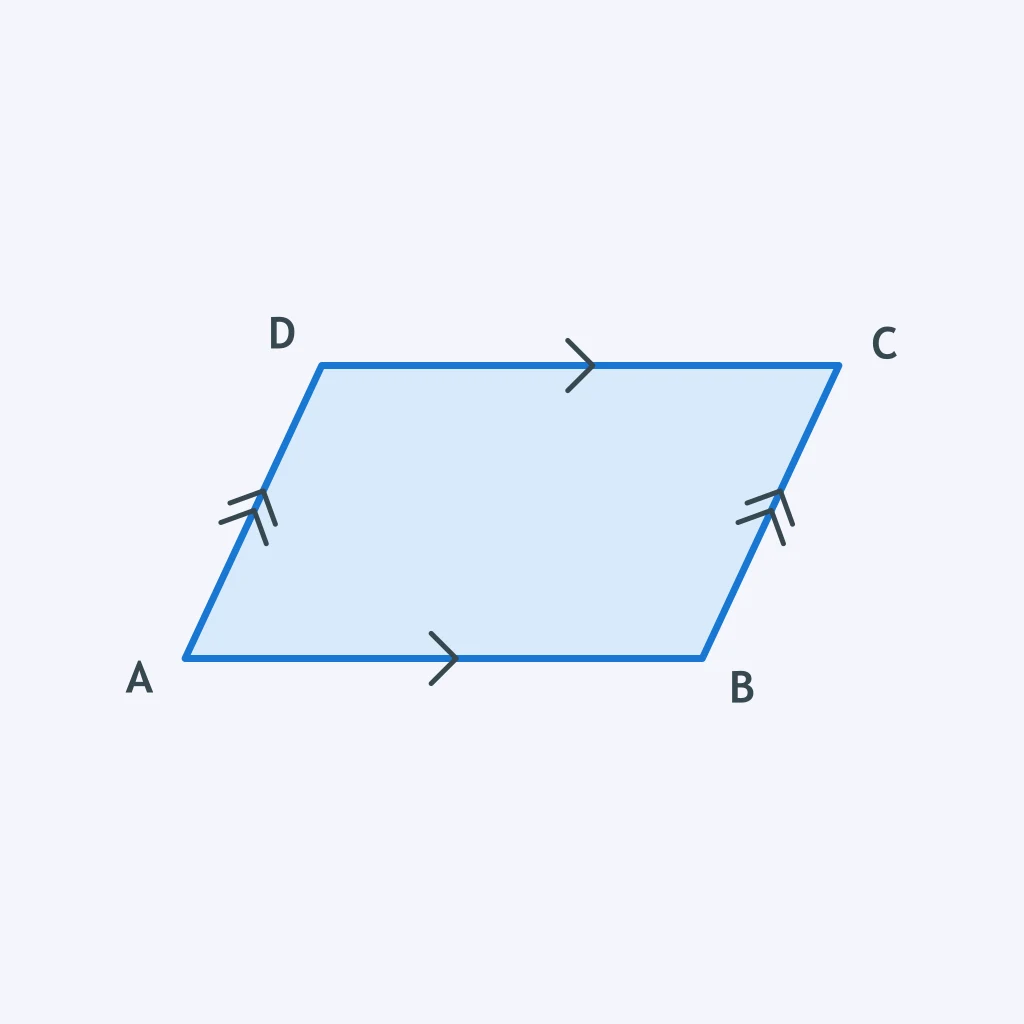
The marks in the figure show what is given about quadrilateral ABCD. What conclusion is forced?
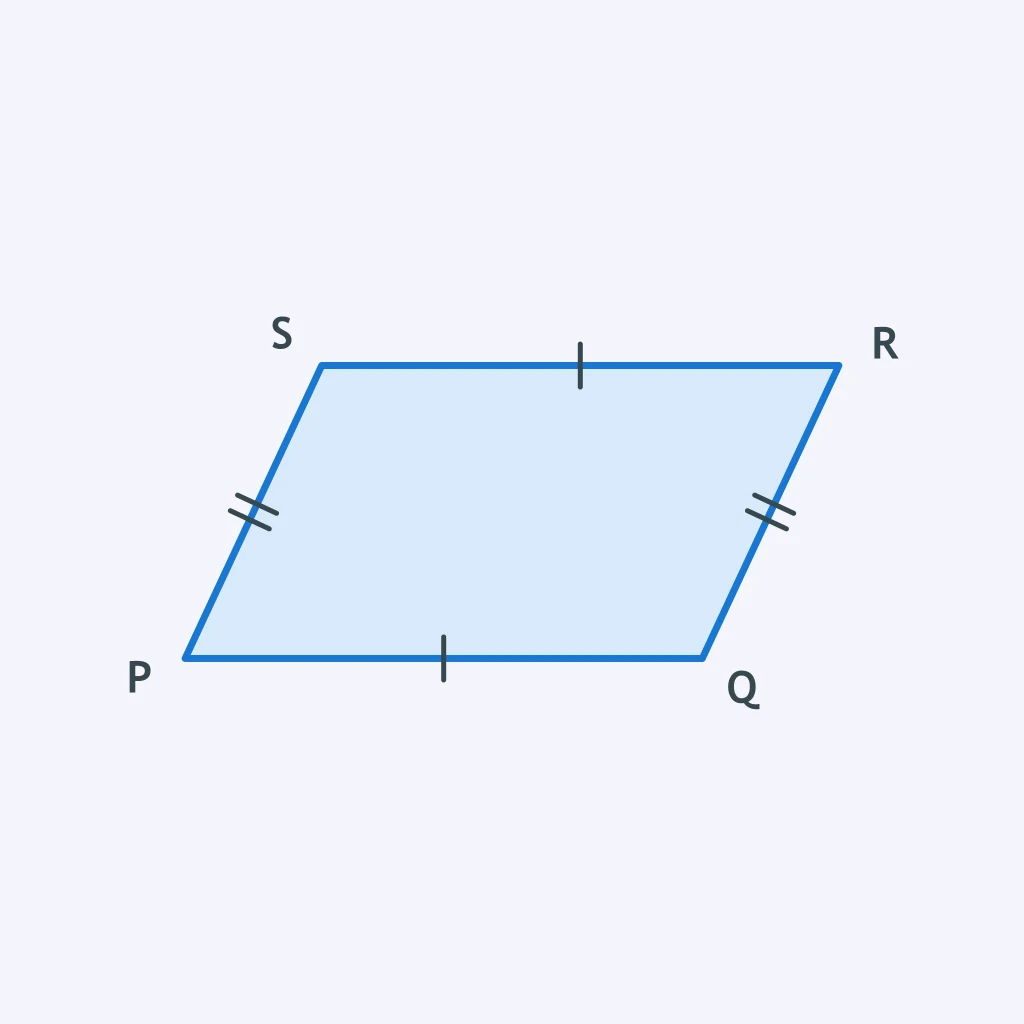
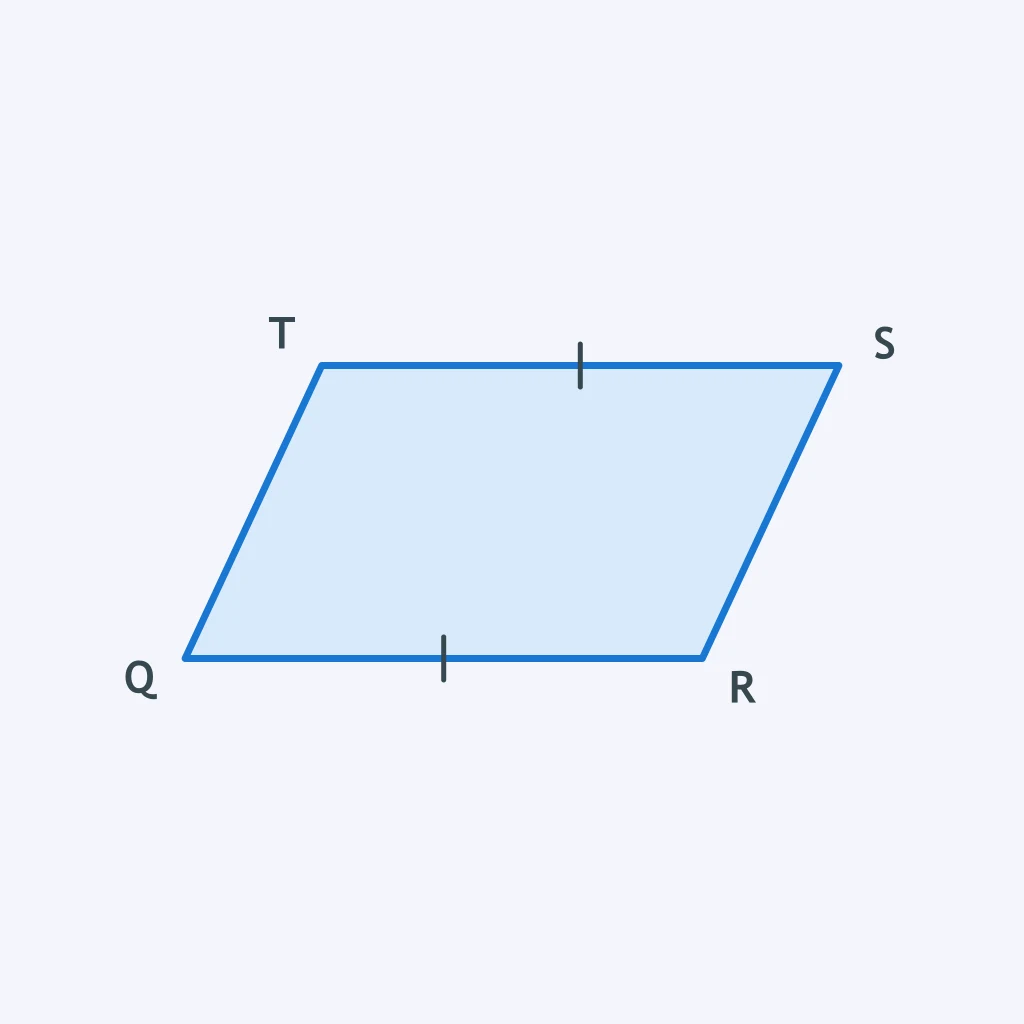
The marks in the figure show what is given about quadrilateral PQRS. Name the parallelogram test that proves PQRS is a parallelogram.
In quadrilateral WXYZ, diagonals WY and XZ intersect at M. M is the midpoint of WY and XZ. What is proved?
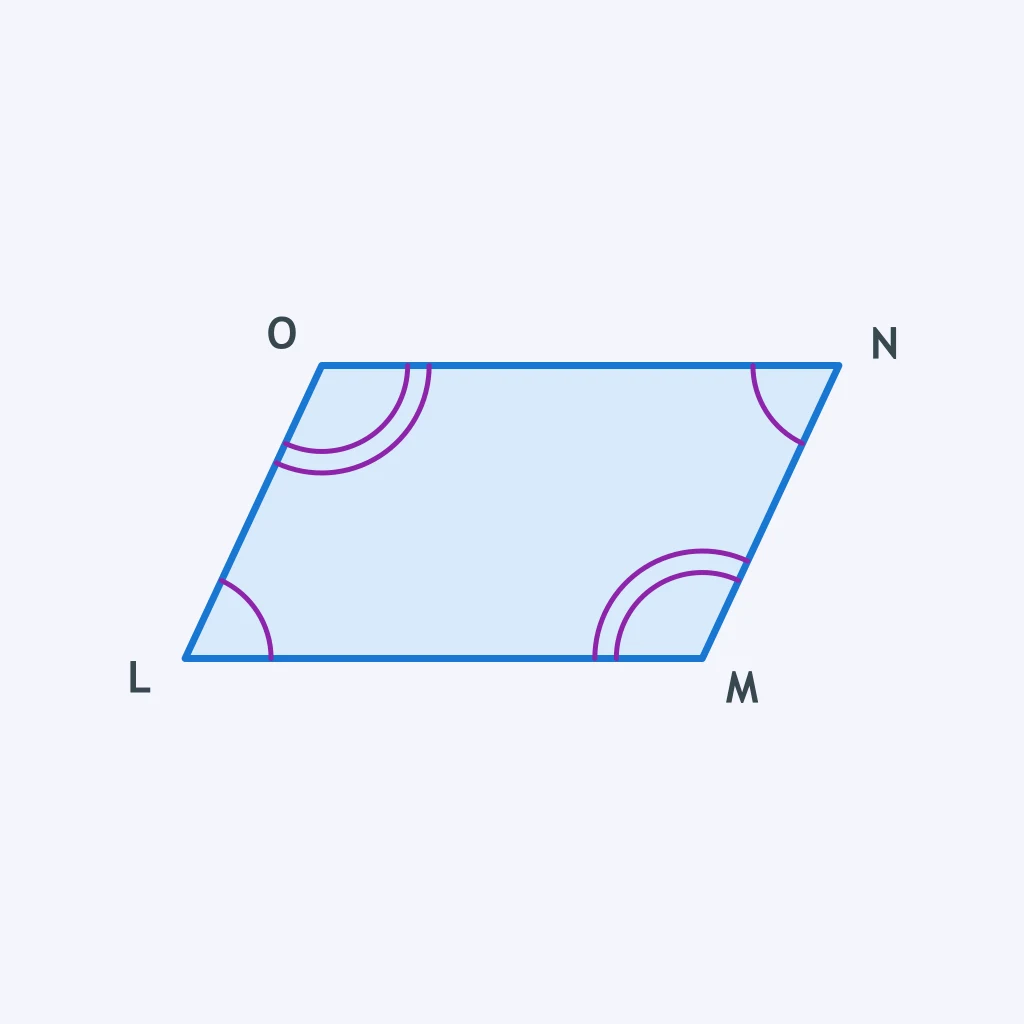
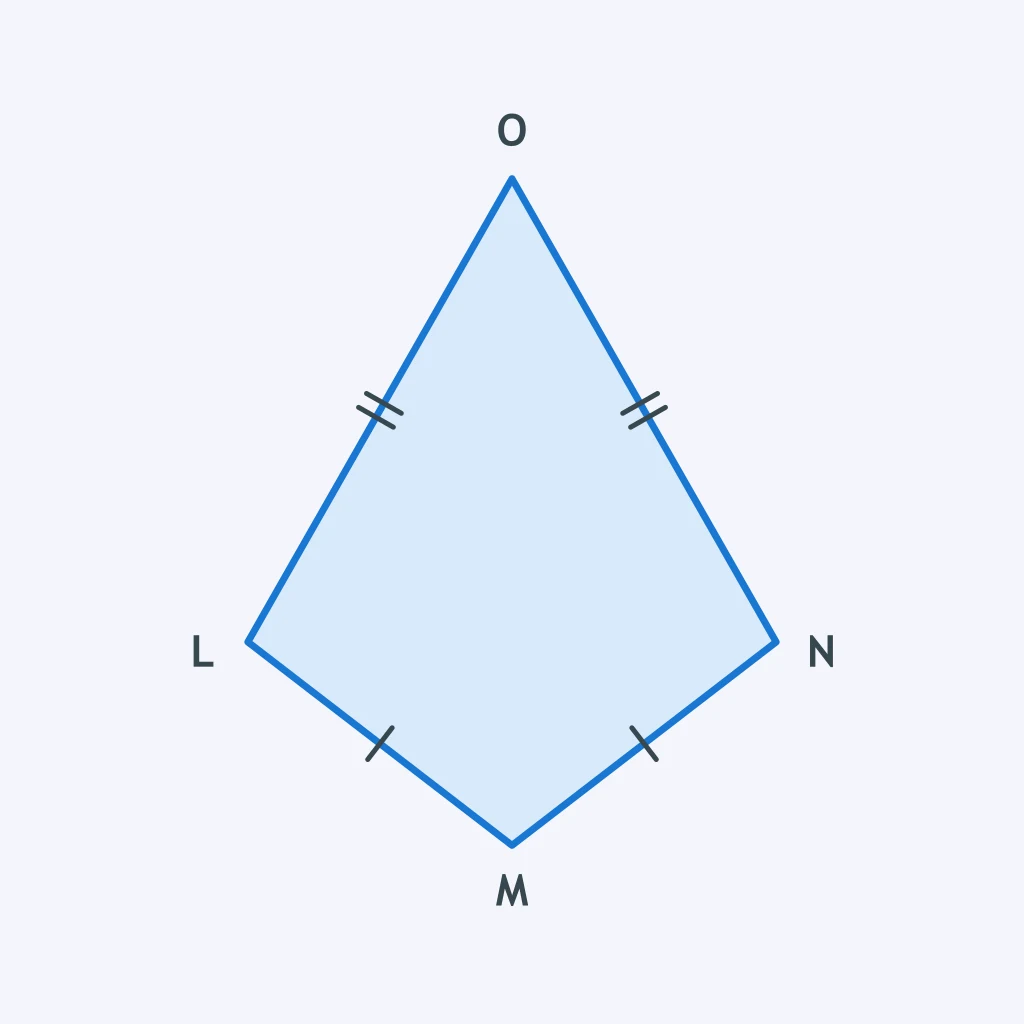
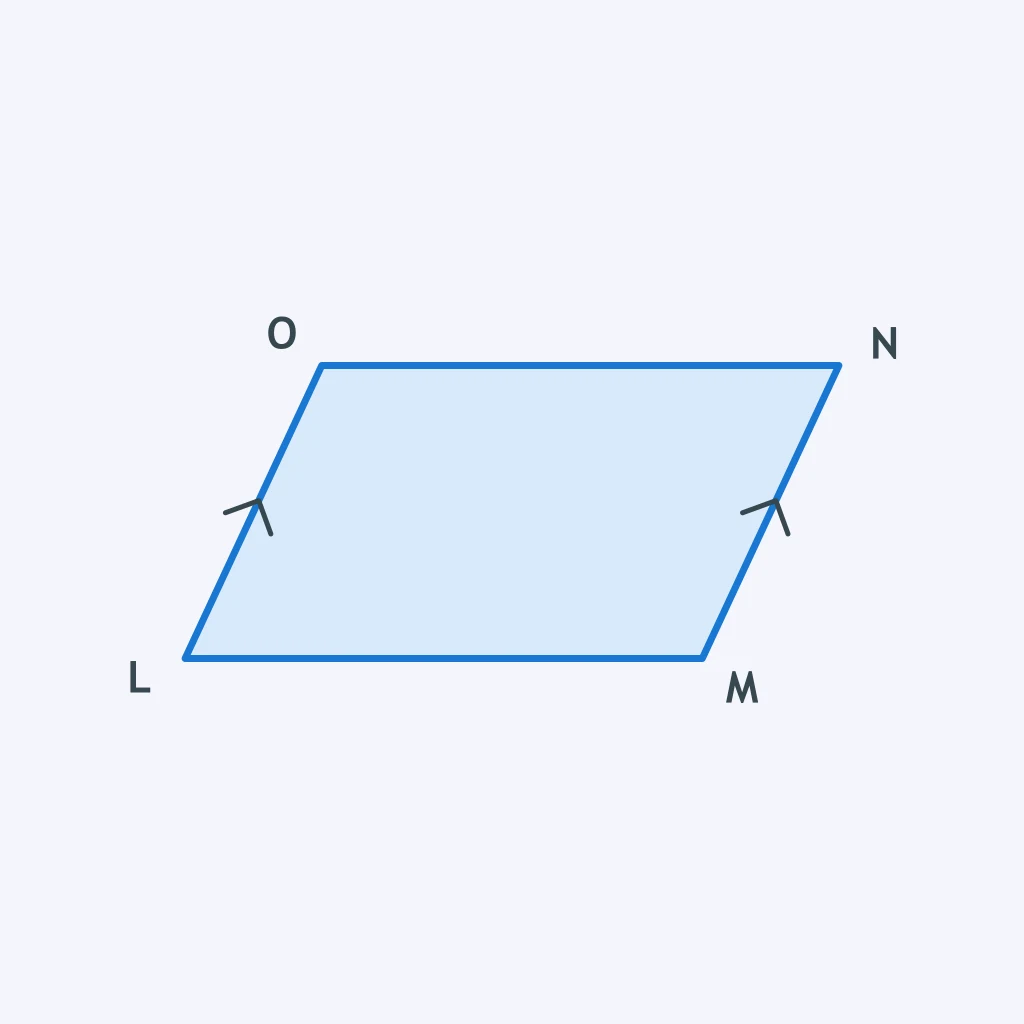
The marks in the figure show what is given about quadrilateral LMNO. Name the parallelogram test that applies.
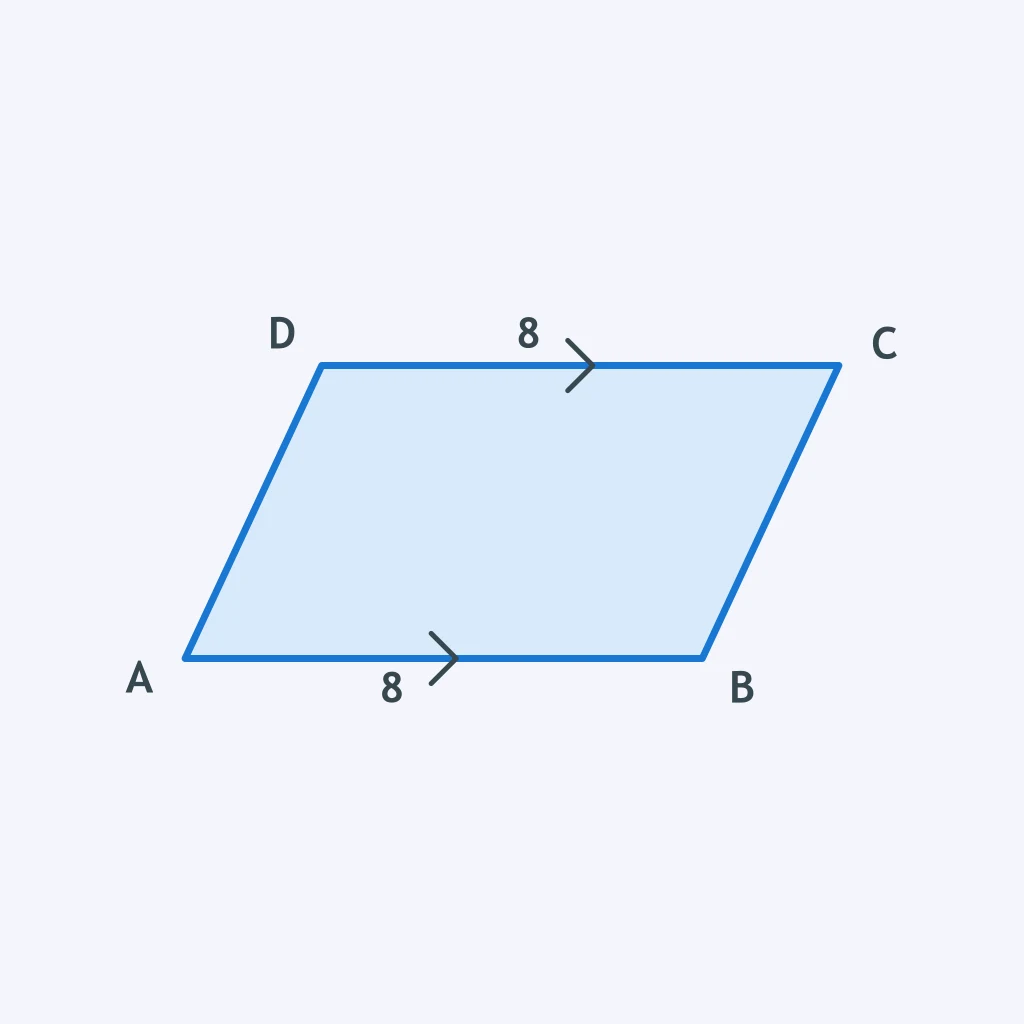
The figure shows what is given about quadrilateral ABCD. What conclusion is forced by the one-pair test?
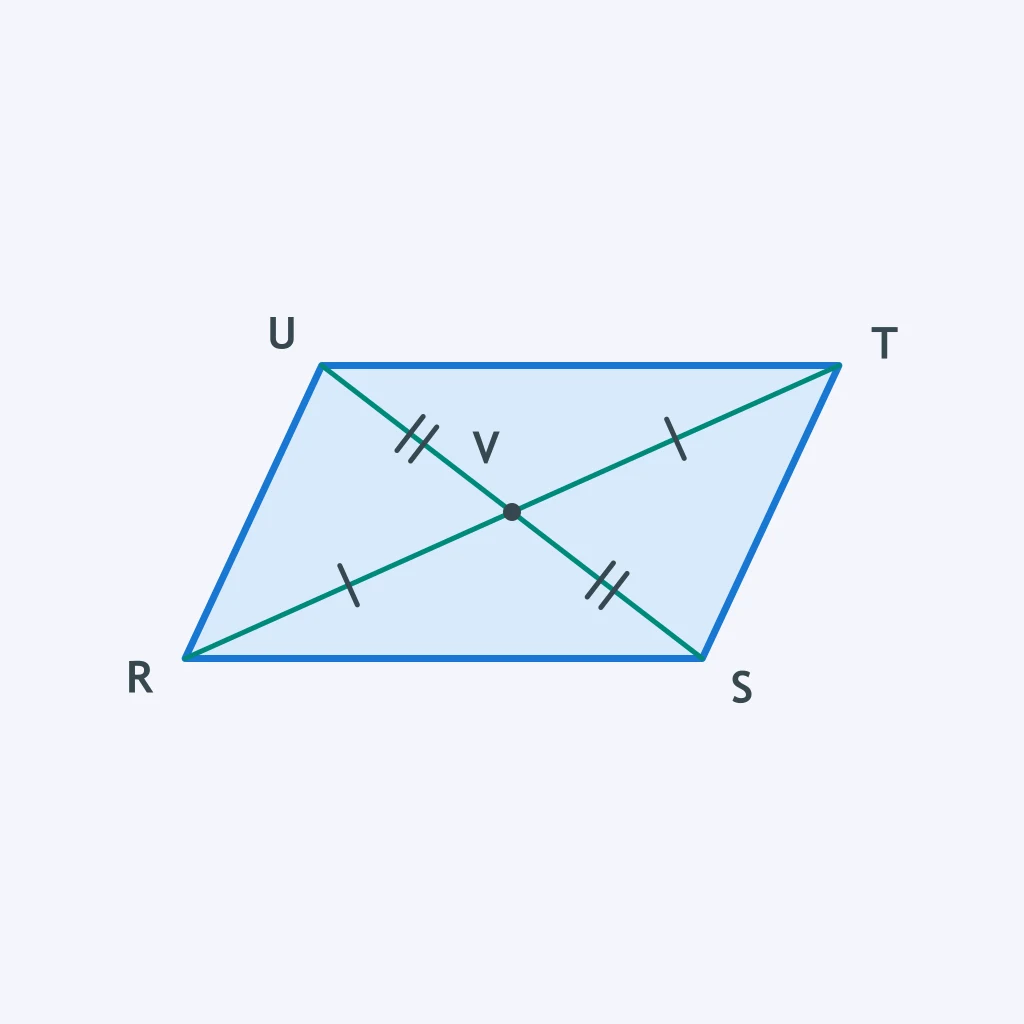
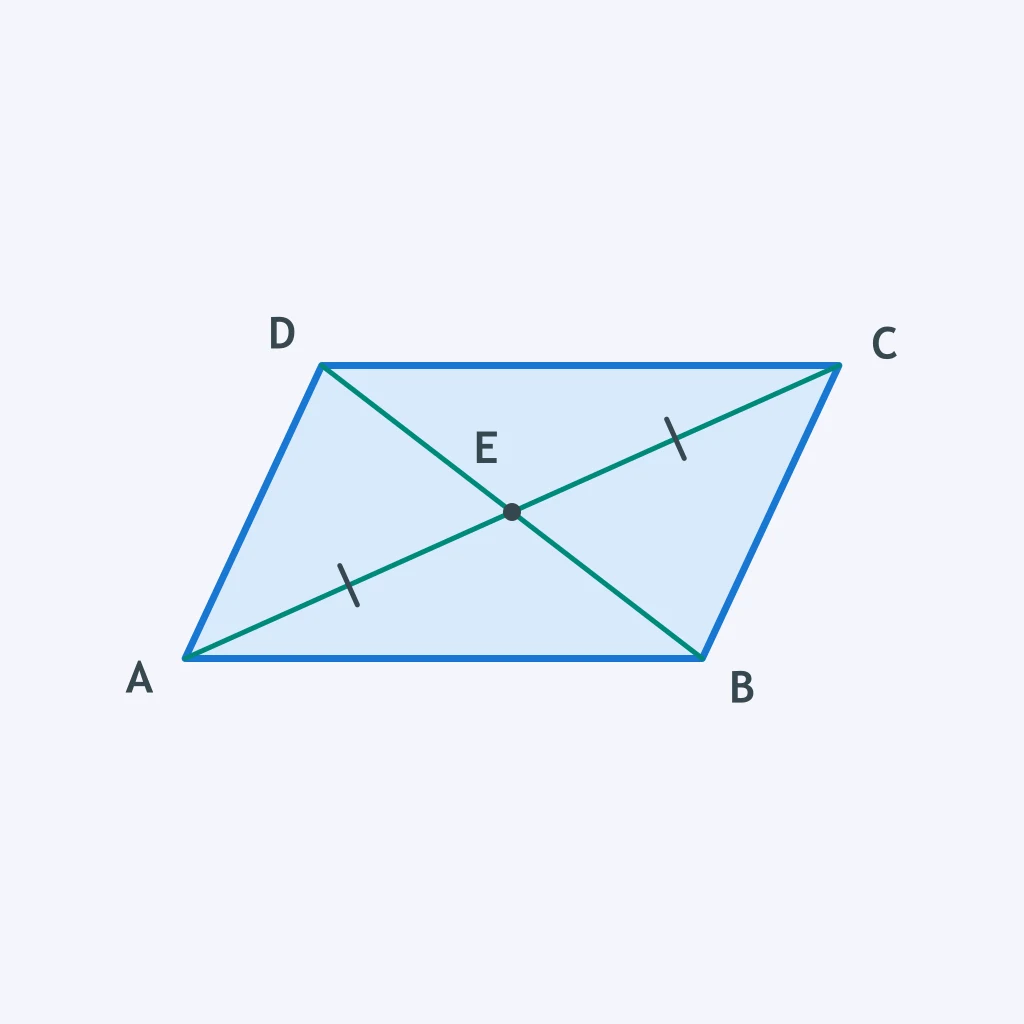
In quadrilateral RSTU, diagonals RT and SU meet at V. The marks in the figure show what is given. Name the parallelogram test used.
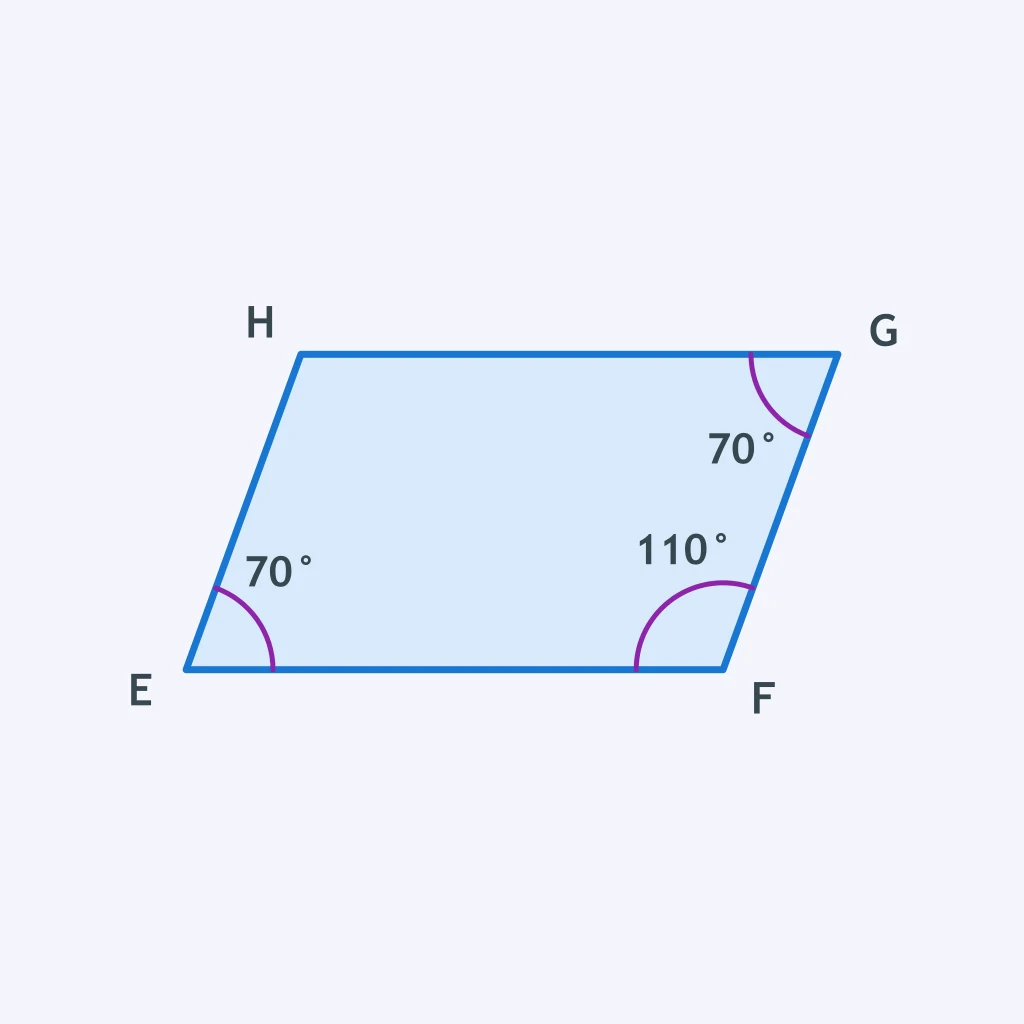
The figure shows three angle measures in quadrilateral EFGH. What must be true about EFGH?
JKLM has JK ≅ LM and KL ≅ MJ. What can be concluded about JKLM?
A quadrilateral has AB parallel to CD. No side lengths, angles, or diagonal facts are known. What conclusion is justified?
In quadrilateral PQRS, diagonals PR and QS are congruent. No bisection or side information is given. What conclusion follows?
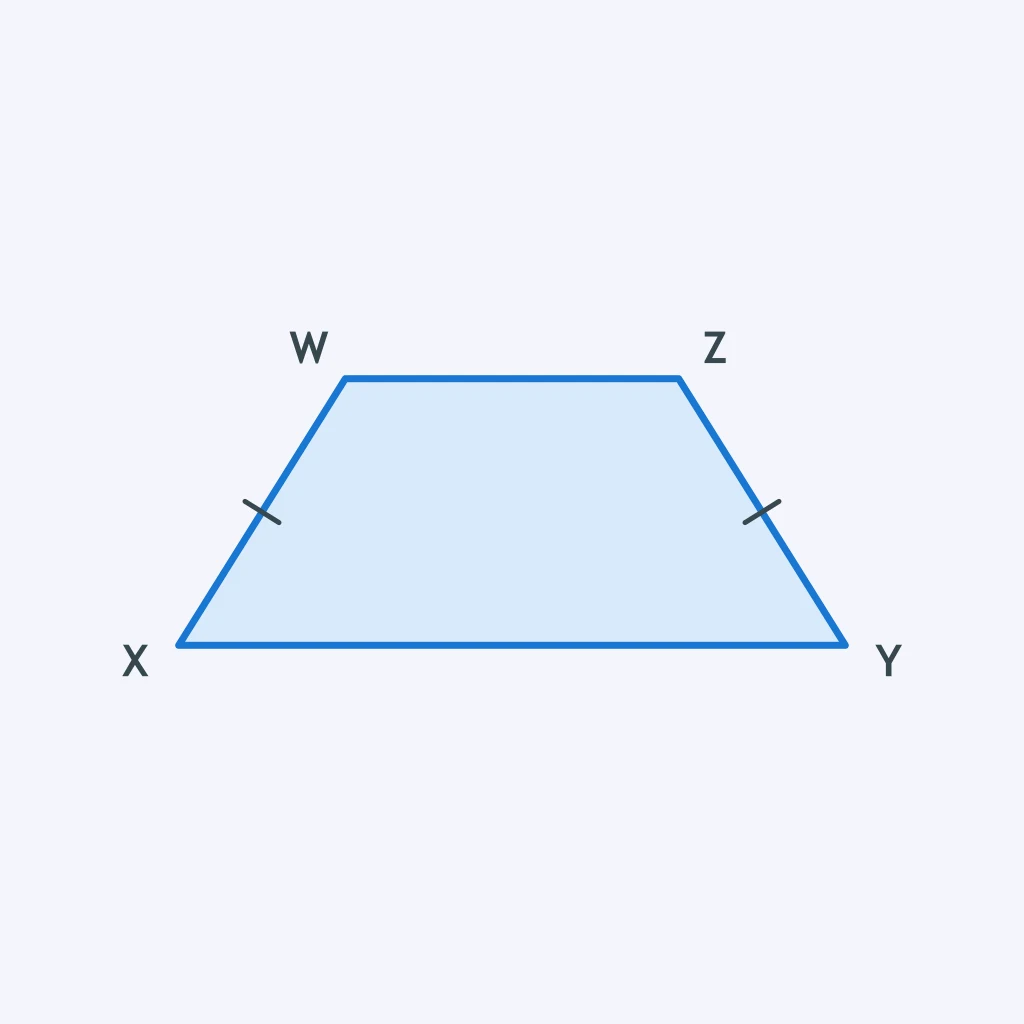
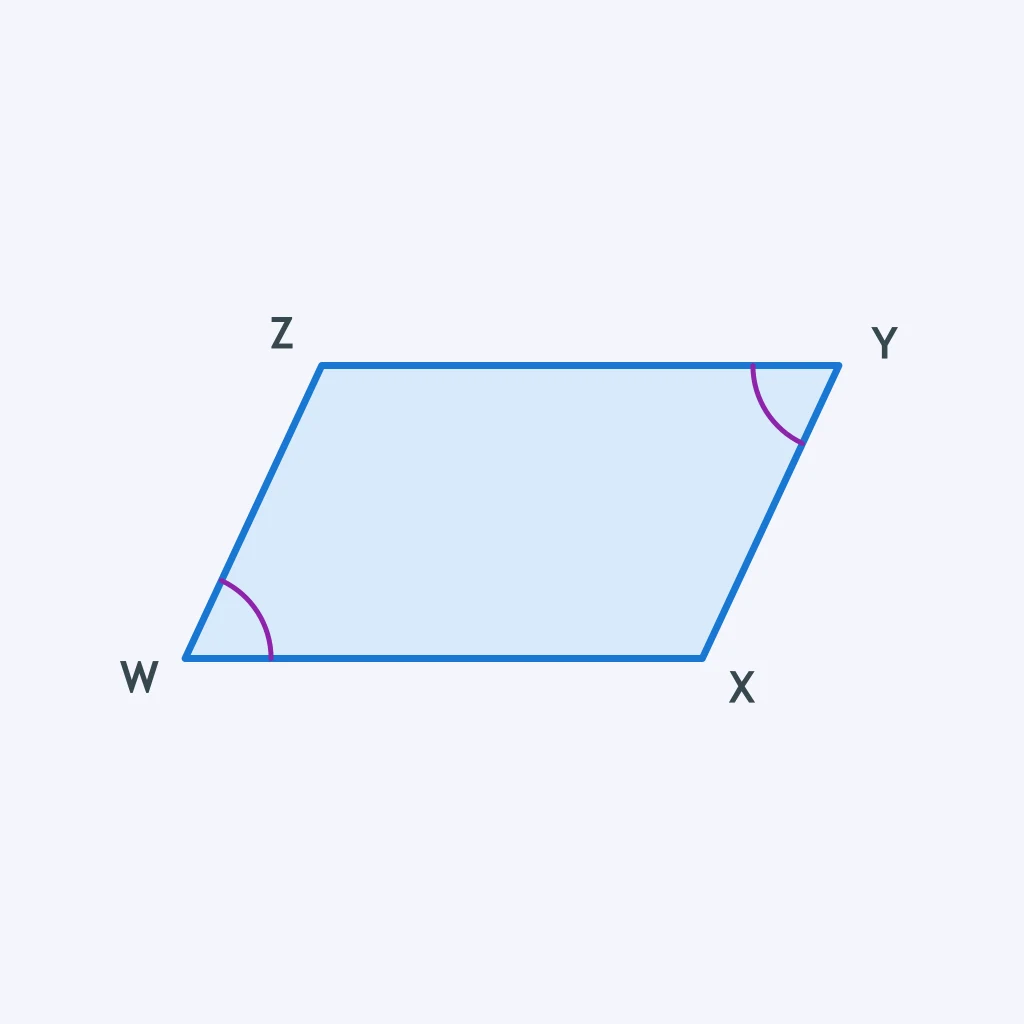
The marks in the figure show all that is known about quadrilateral WXYZ. Is that enough to prove a parallelogram?
The marks in the figure show all that is known about quadrilateral LMNO. What parallelogram conclusion is justified?
The marks in the figure show all that is known about quadrilateral ABCD. What conclusion is valid?
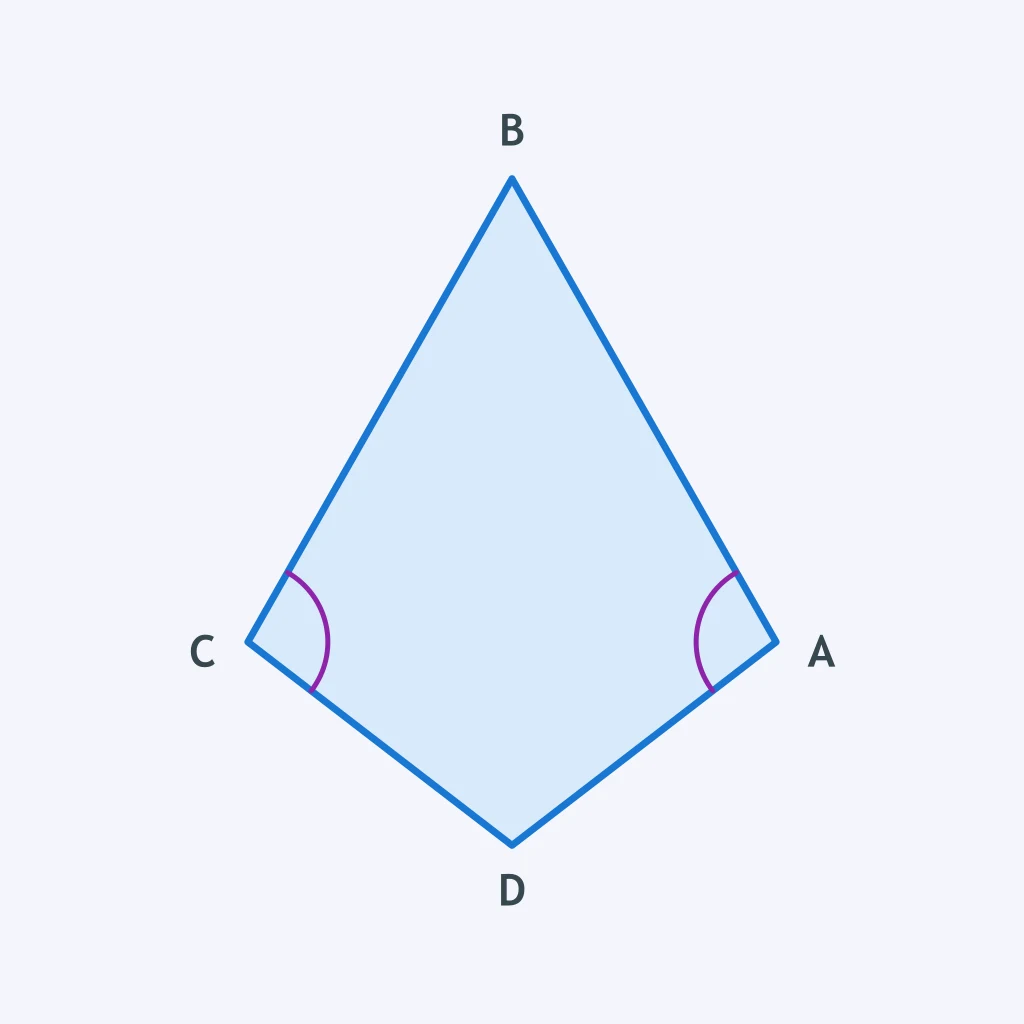
Quadrilateral EFGH has diagonals EG and FH perpendicular. No bisection, side, or angle facts are known. What can be concluded?
Use the graph. What do the slopes of the sides of quadrilateral ABCD prove?
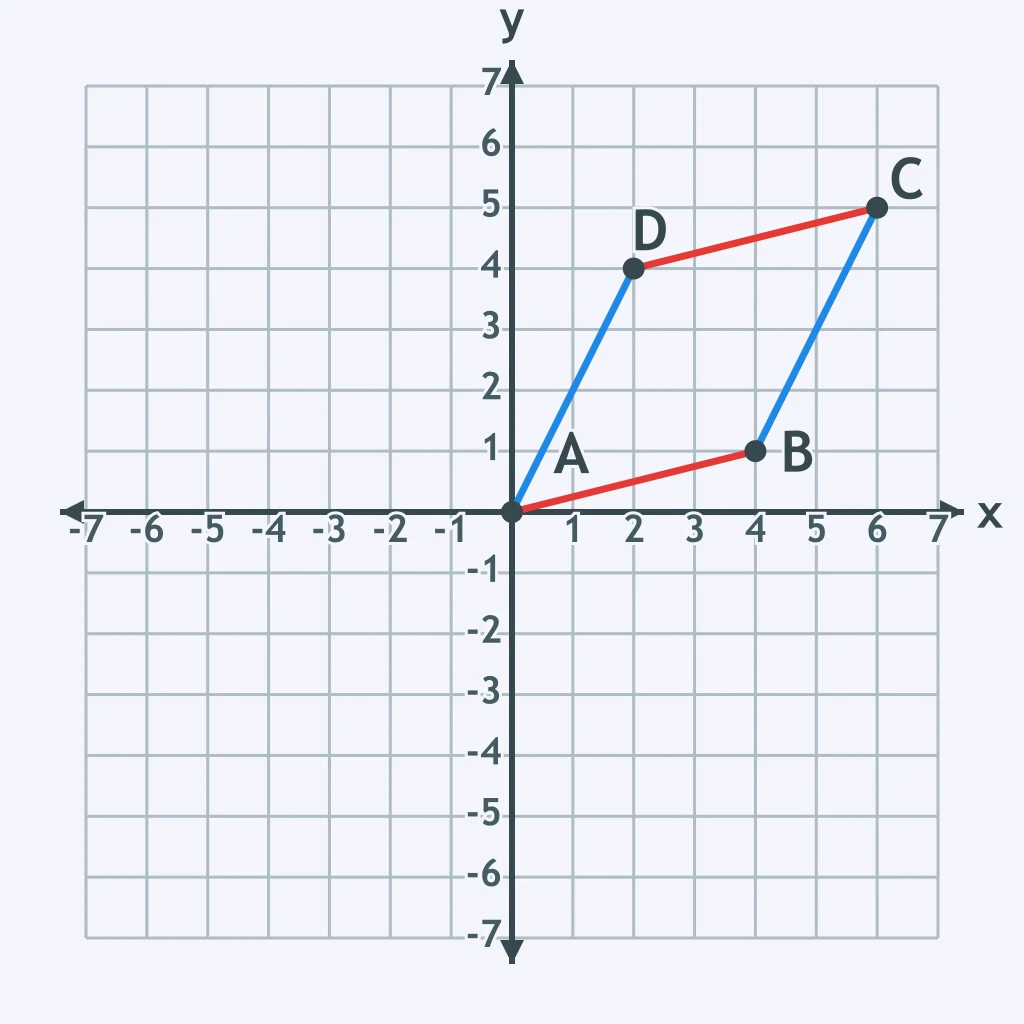
E(-2,1), F(2,3), G(5,-1), and H(1,-3) form EFGH. The slopes of EF and GH are 1/2, and the slopes of FG and HE are -4/3. What follows?
P(-1,0), Q(3,0), R(5,3), and S(1,3) form PQRS. Distance calculations give and . Name the test that proves a parallelogram.
K(0,0), L(6,0), M(8,4), and N(2,4) form KLMN. The midpoint of KM is (4,2), and the midpoint of LN is (4,2). What is proved?
A(-3,2), B(1,5), C(3,1), and D(-1,-2) form ABCD. Coordinates show AB is parallel to CD and AB = CD = 5. What follows by the one-pair test?
R(-4,-1), S(0,2), T(2,-2), and U(-2,-5) form RSTU. Slopes show RS parallel to TU and ST parallel to UR. What must be true?
The marks in the figure show what is given about quadrilateral QRST. What additional fact would prove QRST is a parallelogram by the one-pair test?
Diagonals AC and BD of quadrilateral ABCD meet at E. The marks in the figure show what is given. What additional fact proves ABCD is a parallelogram by the diagonal-bisect test?
The marks in the figure show what is given about quadrilateral LMNO. What additional fact completes the both-pairs-parallel test for proving a parallelogram?
The marks in the figure show what is given about quadrilateral WXYZ. What additional fact proves WXYZ is a parallelogram by the opposite-angles test?
Crack the passcode before the zombies get in.
Answer, then swat bugs for bonus points.
Race through questions at your own speed.
Same question on every screen. Fastest wins.

Pick a tile, answer, hit bonuses and steals.
Trapezoids and Kites
40 questions