Loading
by BlastRoom
Decide whether a set of ordered pairs or a table represents a function.
#us_grade_8_math
40 questions
One question set, multiple game modes. Tap any game to see it in action. Not sure which to pick?
Answer to place stones and capture territory.
Outrun the snow together.
Earn blasts, then hunt the other team.
Answer to earn energy, then climb.

The class blasts through walls together.
Bid on mystery lots. Most money wins.
Sell tours. Nice, standard, or a total scam.

Answer, restock, and serve the rush.
More correct answers pulls the rope your way.
Answer, then shoot down the alien wave.
Answer, then tap to leap the frozen ridge.
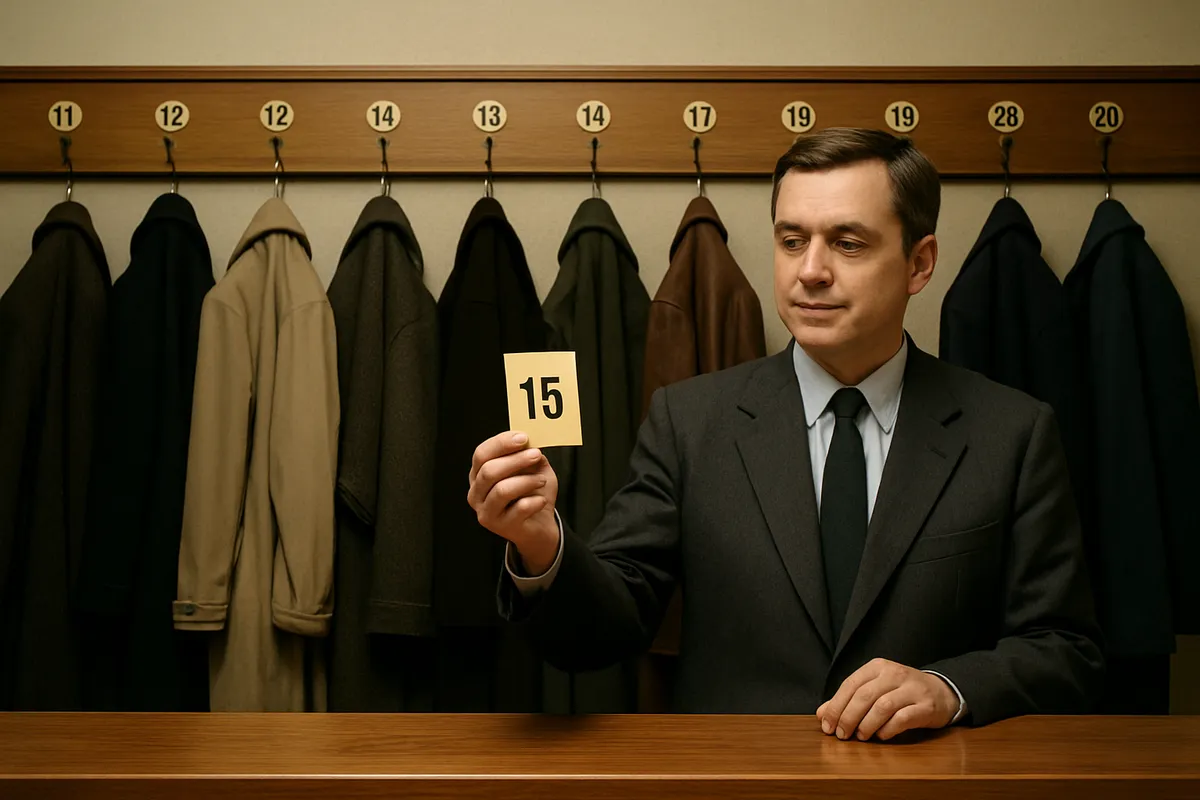
A school prints one report card for each student ID number, showing that student's final grade, and two students can finish with the same grade. Is the final grade a function of the student ID number?
The ordered pairs (2, 6), (4, 6), (7, 9) and (9, 12) make up a relation. Is that relation a function?
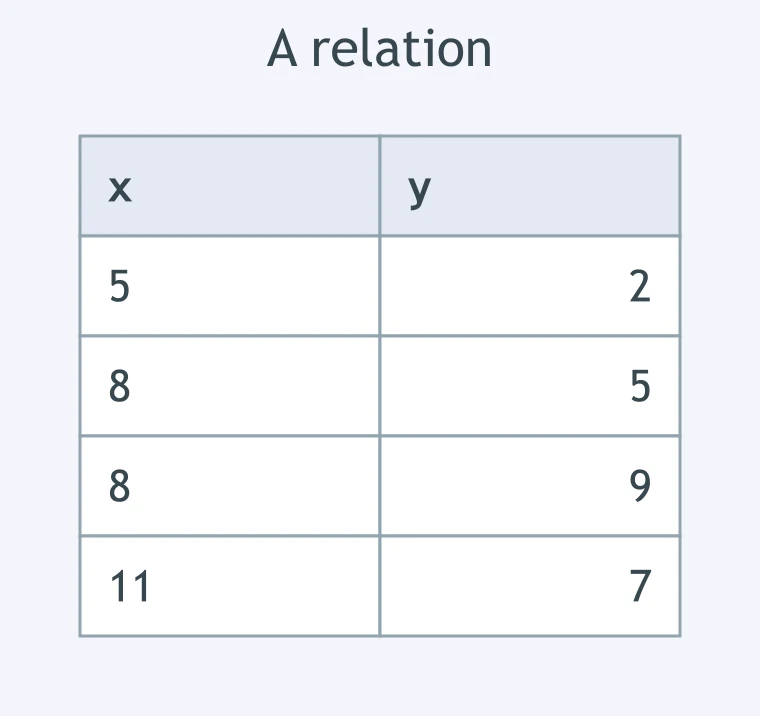
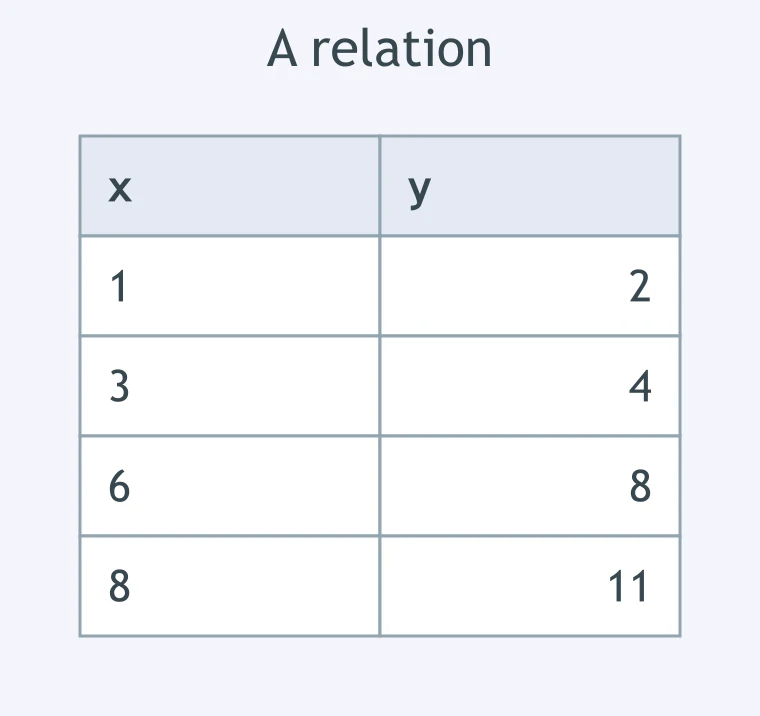
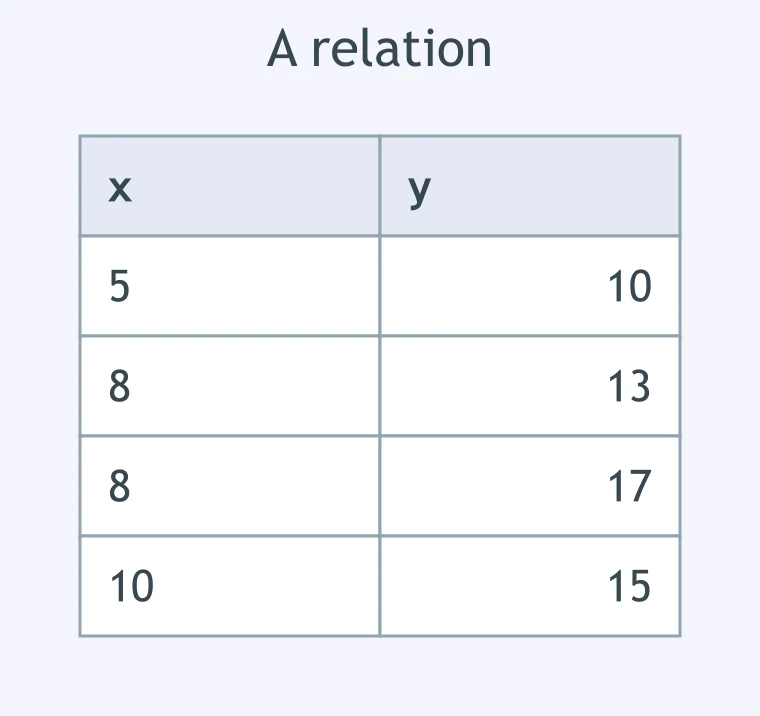
Every input in the table is currently assigned one output. Which extra ordered pair, added to the table, would stop the relation from being a function?
A shop stocks every shirt size in several colors. Is the color a function of the shirt size?
The ordered pairs (-1, 3), (2, 6), (2, 10) and (3, 8) make up a relation. Is that relation a function?
A library gives each book its own barcode and records one shelf for that barcode, and many books sit on the same shelf. Is the shelf a function of the barcode?
Each row of the table gives one input x and the output y it is paired with. Is that relation a function?
A relation is made up of the ordered pairs (0, 11), (1, 11), (4, 14) and (7, 17). Does this relation meet the definition of a function?
Every input in the table is currently assigned one output. Which extra ordered pair, added to the table, would stop the relation from being a function?
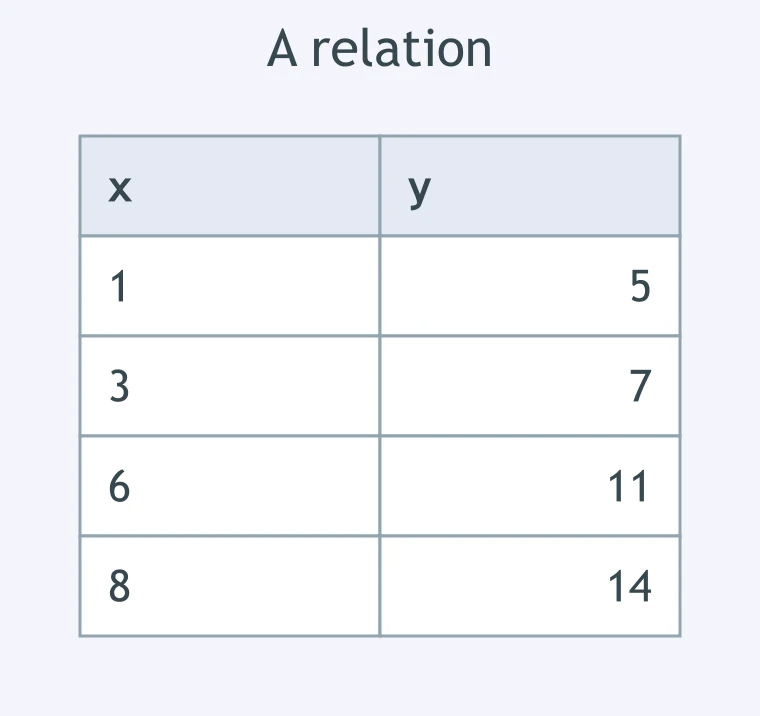
The table pairs an input x with an output y in each row. Is the relation the table shows a function?
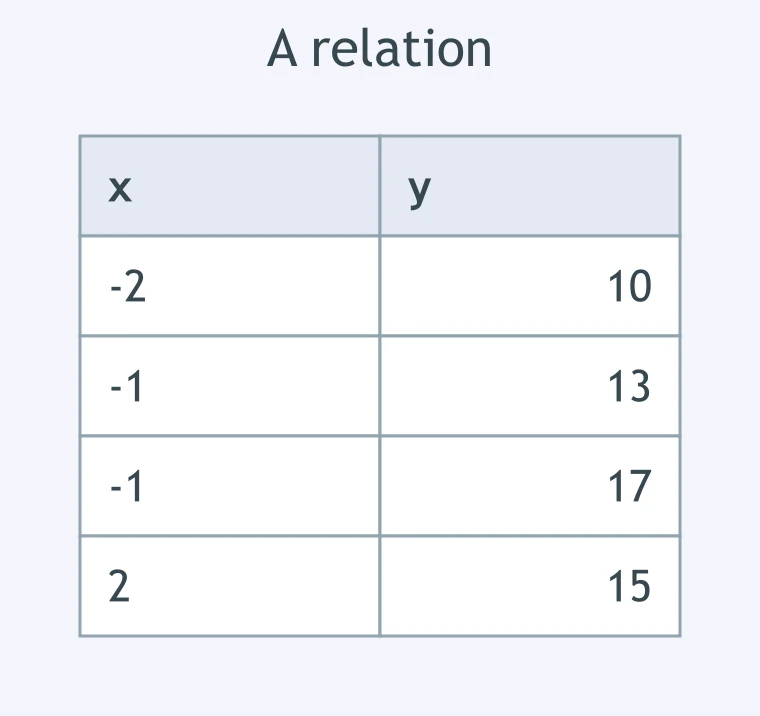
A relation is made up of the ordered pairs (-3, 4), (0, 7), (0, 11) and (1, 9). Does this relation meet the definition of a function?
Each row of the table gives one input x and the output y it is paired with. Is that relation a function?
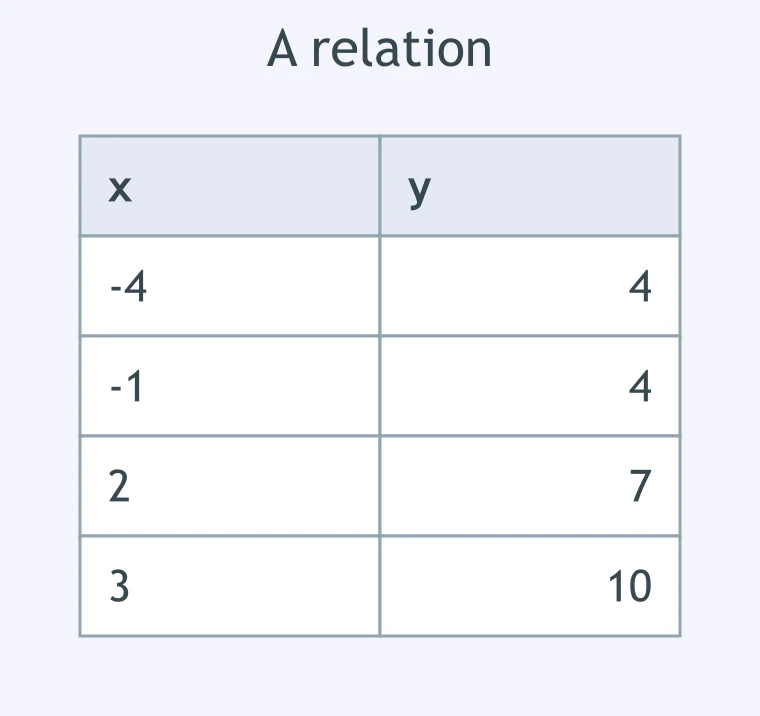
The ordered pairs (-4, 5), (-1, 5), (0, 8) and (3, 11) make up a relation. Is that relation a function?
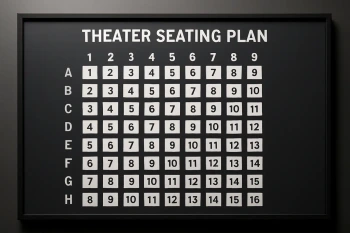
A cinema charges one ticket price for each seat number in the hall, and two seats in different rows can cost the same. Is the ticket price a function of the seat number?
A cinema charges a different ticket price for each age group at the same show time. Is the ticket price a function of the show time?
A relation is made up of the ordered pairs (0, 10), (2, 13), (2, 17) and (3, 15). Does this relation meet the definition of a function?
Each row of the table gives one input x and the output y it is paired with. Is that relation a function?
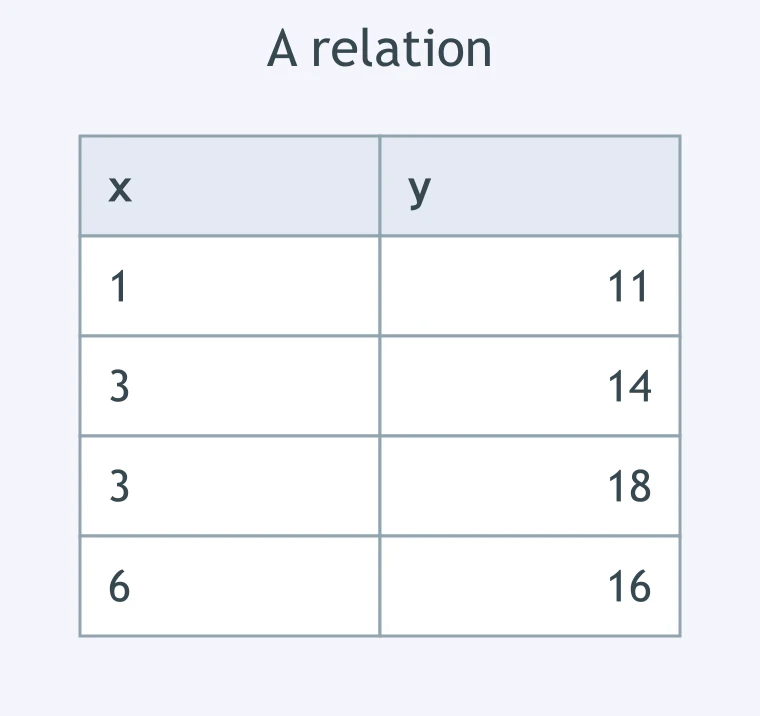
Every input in the table is currently assigned one output. Which extra ordered pair, added to the table, would stop the relation from being a function?
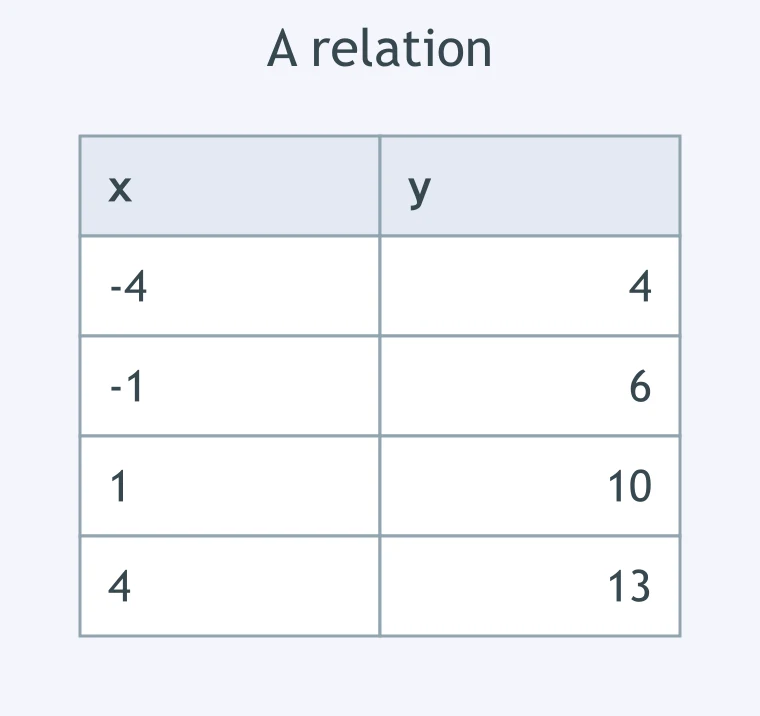
A city gives every bus route number one flat fare, and two routes can charge the same fare. Is the fare a function of the route number?
A horizontal line drawn at y = 4 crosses a graph at two points. Does that alone show the graph is not a function?
A weather station records the temperature in one city many times during a single day. Is the recorded temperature a function of the city?
Every input in the table is currently assigned one output. Which extra ordered pair, added to the table, would stop the relation from being a function?
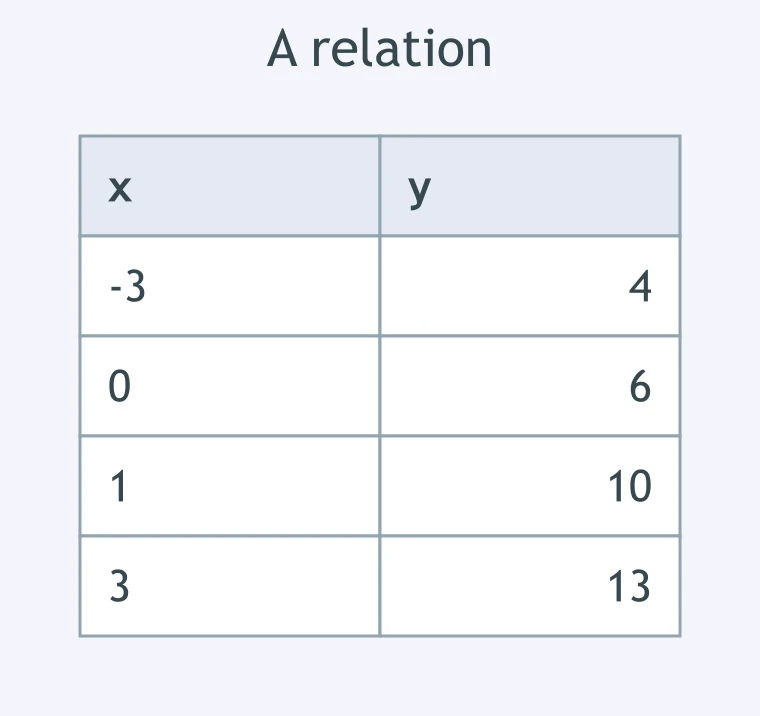
Every input in the table is currently assigned one output. Which extra ordered pair, added to the table, would stop the relation from being a function?
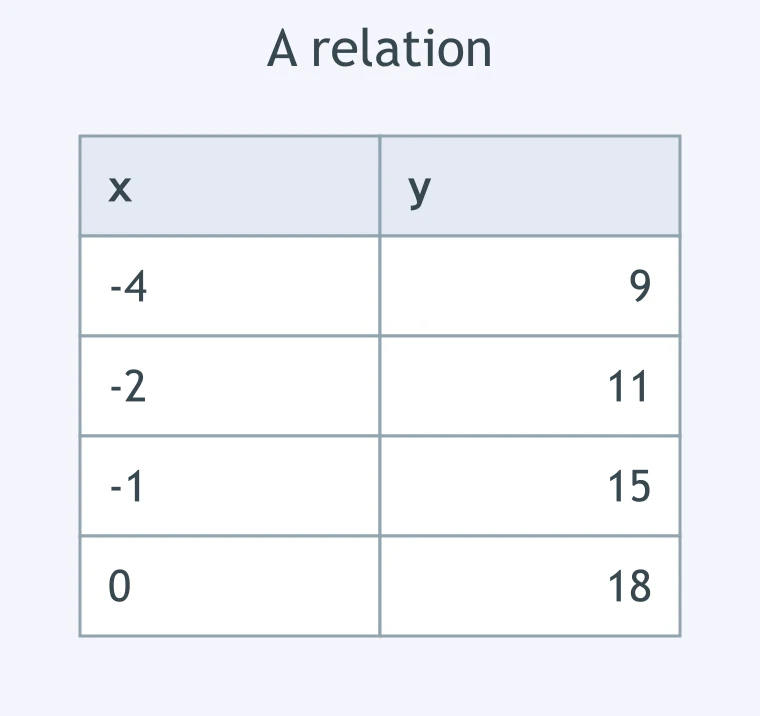
A relation is made up of the ordered pairs (3, 9), (5, 9), (8, 12) and (10, 15). Does this relation meet the definition of a function?
Does the equation x = 5 describe y as a function of x?
The ordered pairs (3, 4), (5, 7), (5, 11) and (7, 9) make up a relation. Is that relation a function?
The table pairs an input x with an output y in each row. Is the relation the table shows a function?
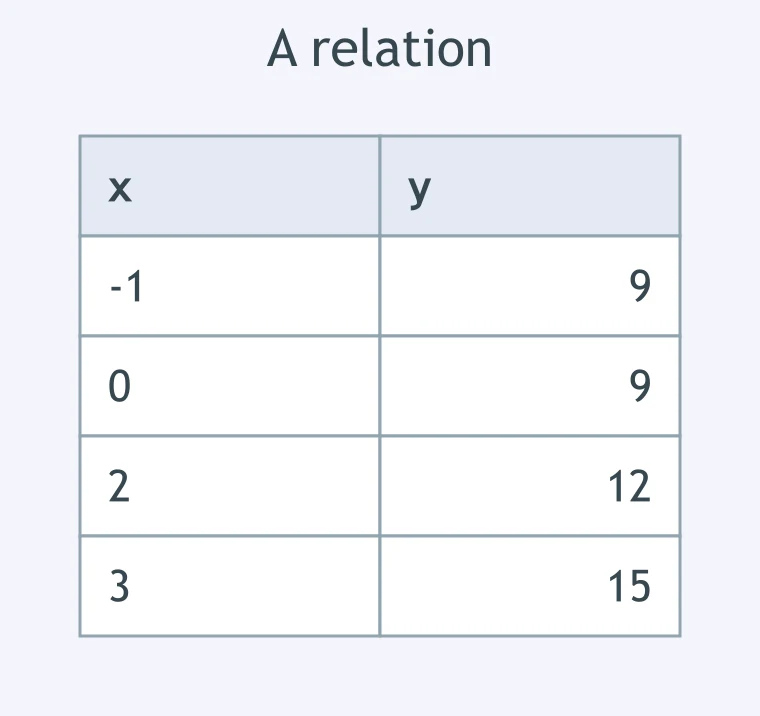
The ordered pairs (-4, 11), (-3, 11), (-1, 14) and (1, 17) make up a relation. Is that relation a function?
The ordered pairs (0, 6), (3, 9), (3, 13) and (4, 11) make up a relation. Is that relation a function?
A bus route runs at several departure times each morning. Is the departure time a function of the route number?
The table pairs an input x with an output y in each row. Is the relation the table shows a function?
A relation is made up of the ordered pairs (2, 8), (5, 8), (6, 11) and (7, 14). Does this relation meet the definition of a function?
Every input in the table is currently assigned one output. Which extra ordered pair, added to the table, would stop the relation from being a function?
Does the equation 2x + 3y = 12 describe y as a function of x?
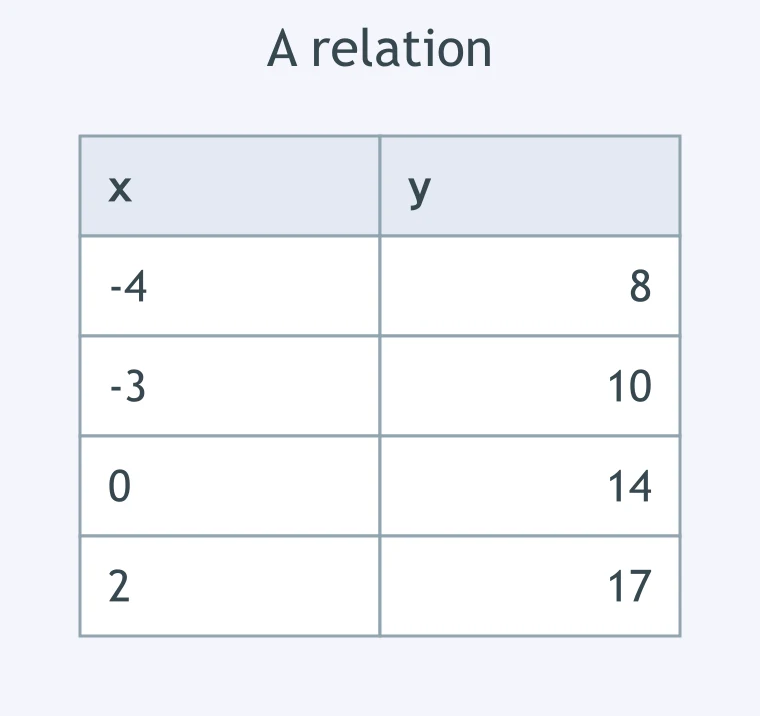
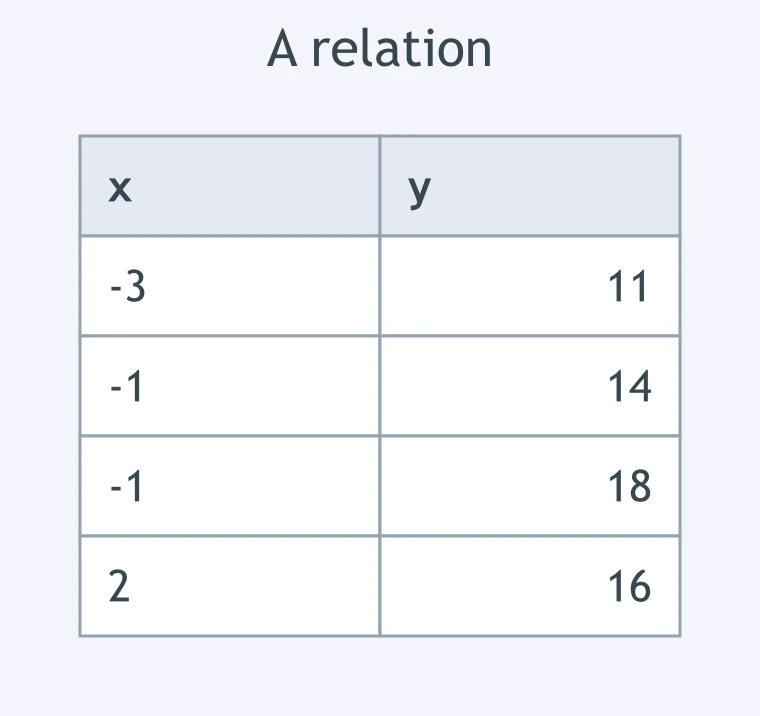
A relation is made up of the ordered pairs (-3, 9), (-1, 12), (-1, 16) and (2, 14). Does this relation meet the definition of a function?
The table pairs an input x with an output y in each row. Is the relation the table shows a function?
Every street in a town has many house numbers along it. Is the house number a function of the street name?
The table pairs an input x with an output y in each row. Is the relation the table shows a function?
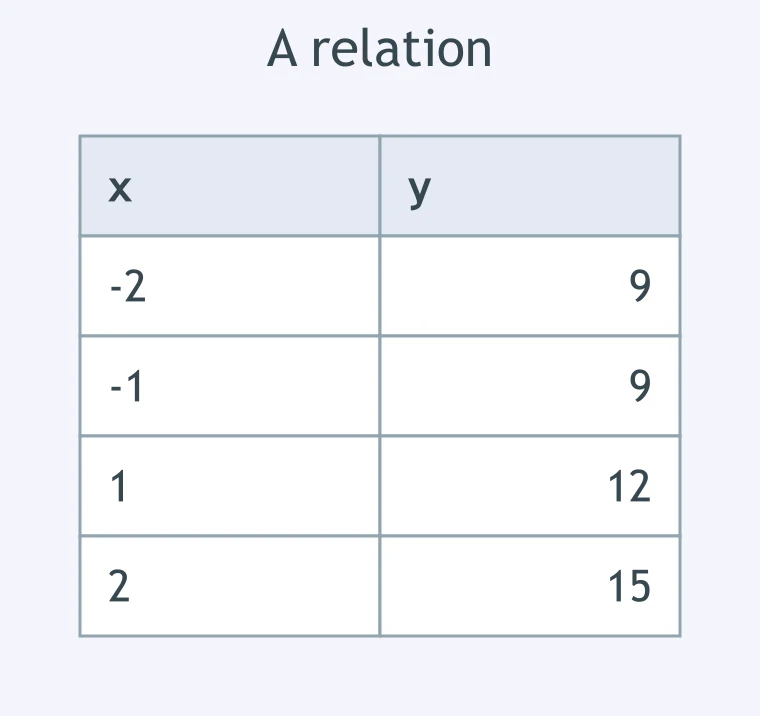
Each row of the table gives one input x and the output y it is paired with. Is that relation a function?
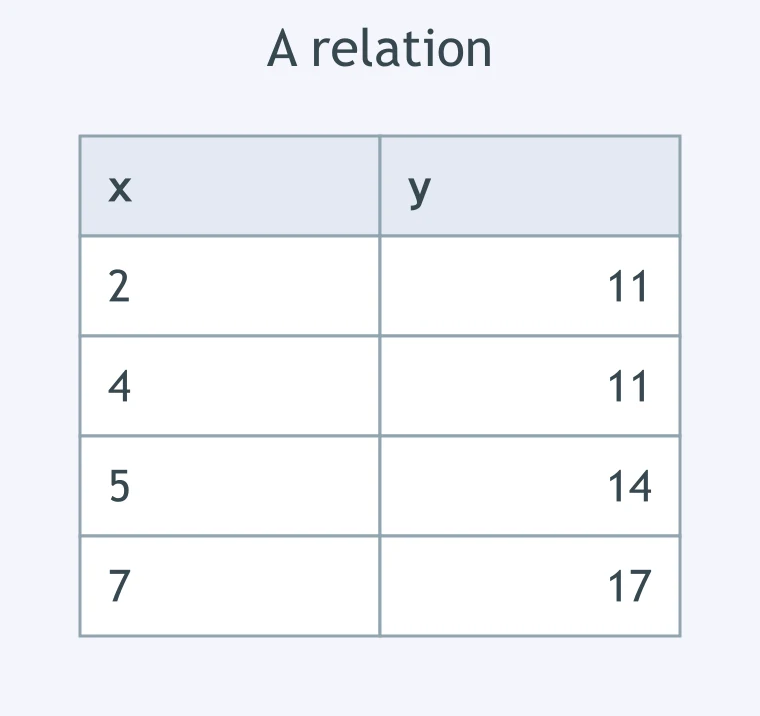
Each row of the table gives one input x and the output y it is paired with. Is that relation a function?
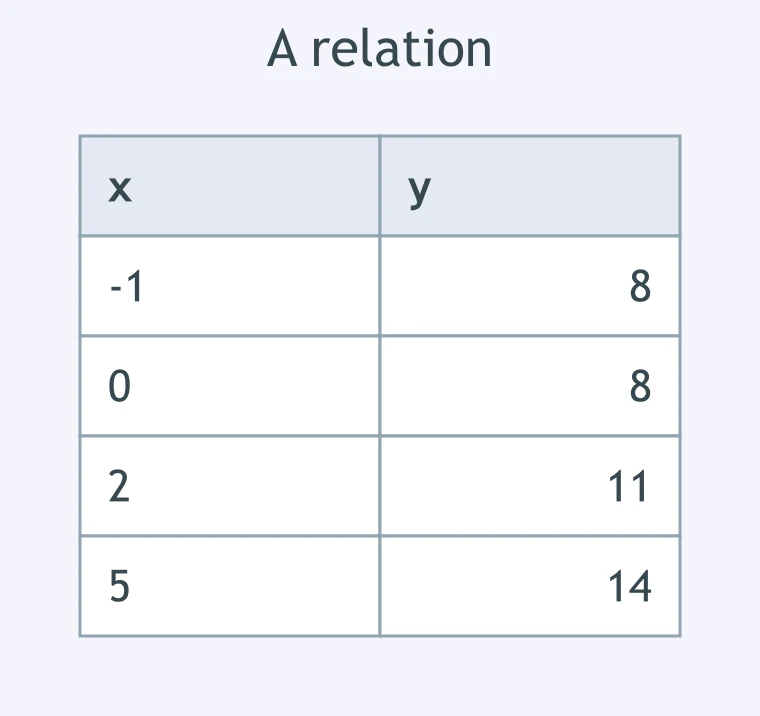
Crack the passcode before the zombies get in.
Answer, then swat bugs for bonus points.
Race through questions at your own speed.
Same question on every screen. Fastest wins.

Pick a tile, answer, hit bonuses and steals.
The Vertical Line Test
40 questions