Loading
by BlastRoom
Review balancing equations, conservation of mass, reaction rates, and energy changes.
#matatag_science_10
40 questions
One question set, multiple game modes. Tap any game to see it in action. Not sure which to pick?
After writing a reaction with correct formulas, which check should you make before choosing balancing coefficients?
Which part of a correctly written chemical equation may be adjusted to balance it without changing the substances?
How many hydrogen atoms are represented by ?
Which equation balances the reaction shown using the lowest whole-number ratio?
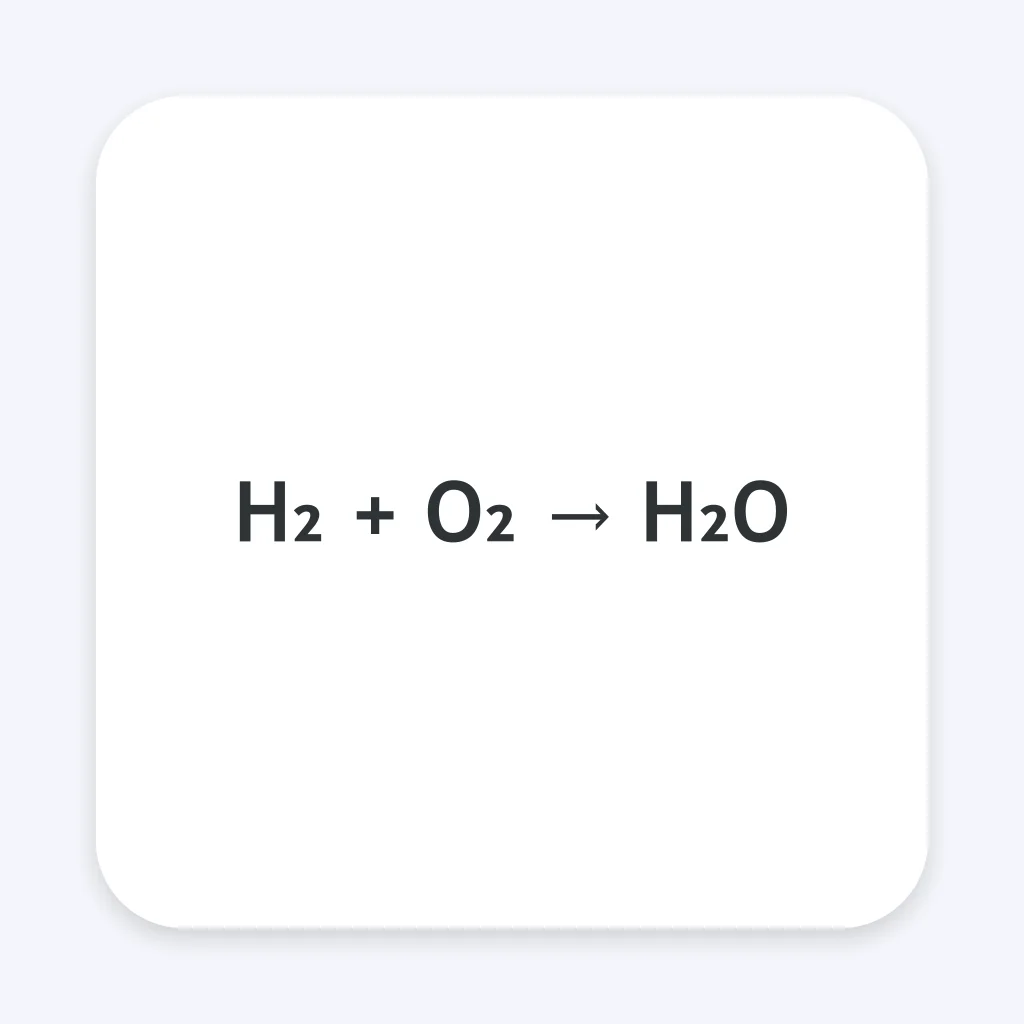
What number belongs in the gap to balance ?
Choose the lowest whole-number ratio for the substances shown, in left-to-right order.
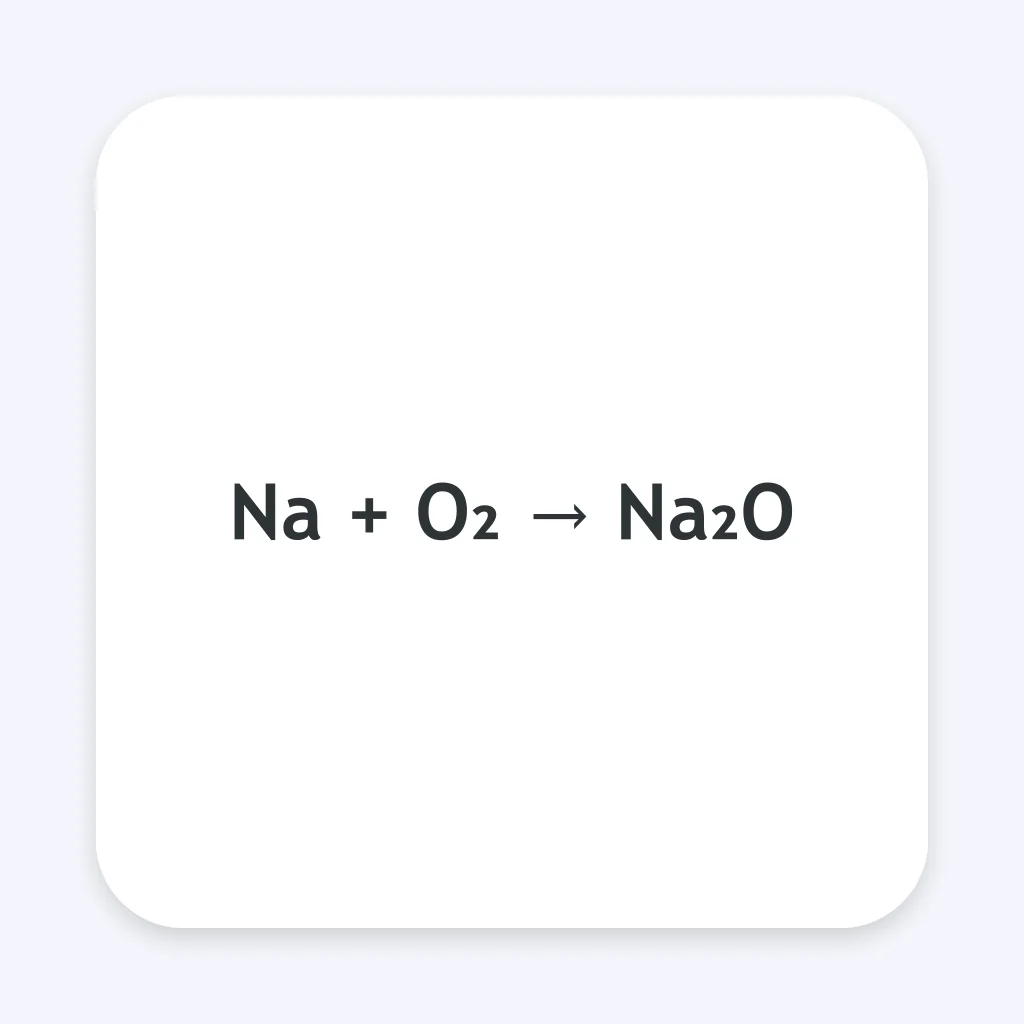
Balance in the simplest ratio; what number goes before oxygen gas?
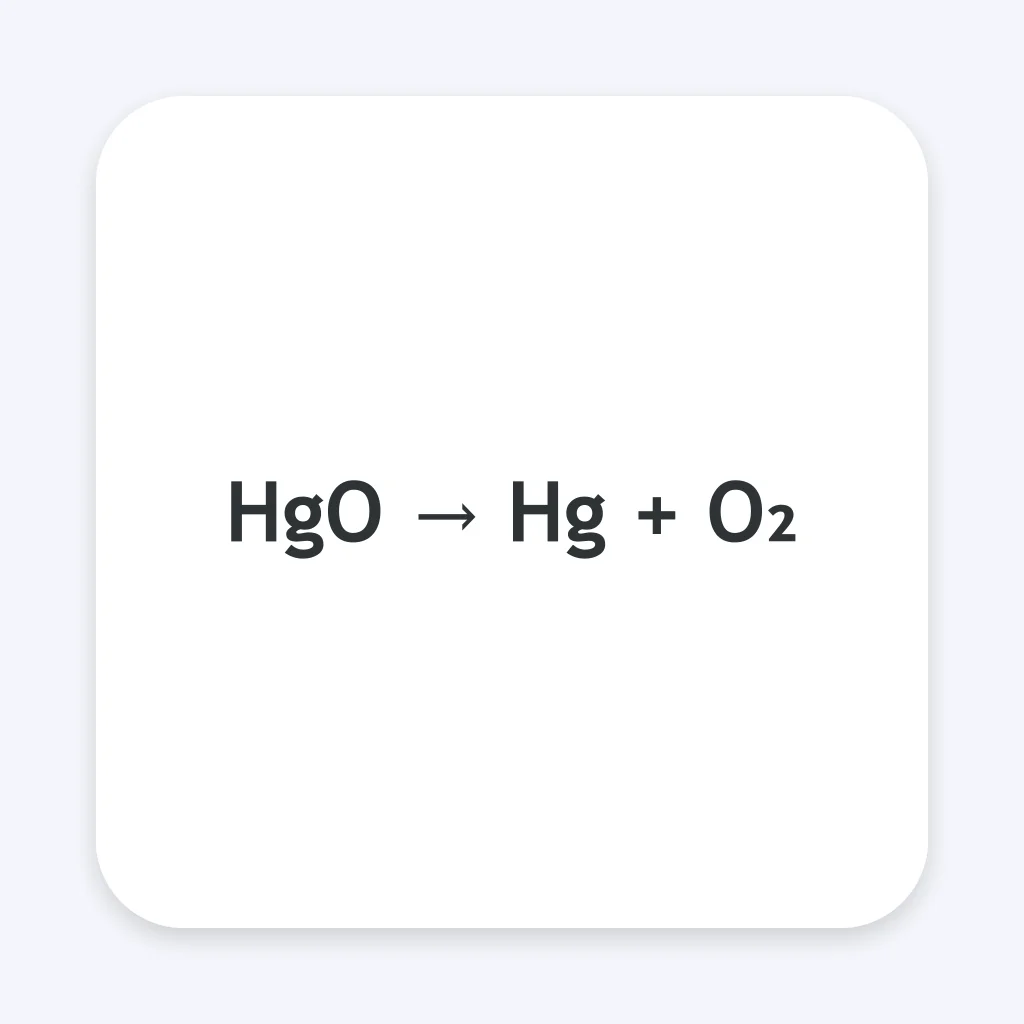
Mercury(II) oxide breaks down as shown; which left-to-right ratio balances the equation in its simplest form?
In , what fills the gap?
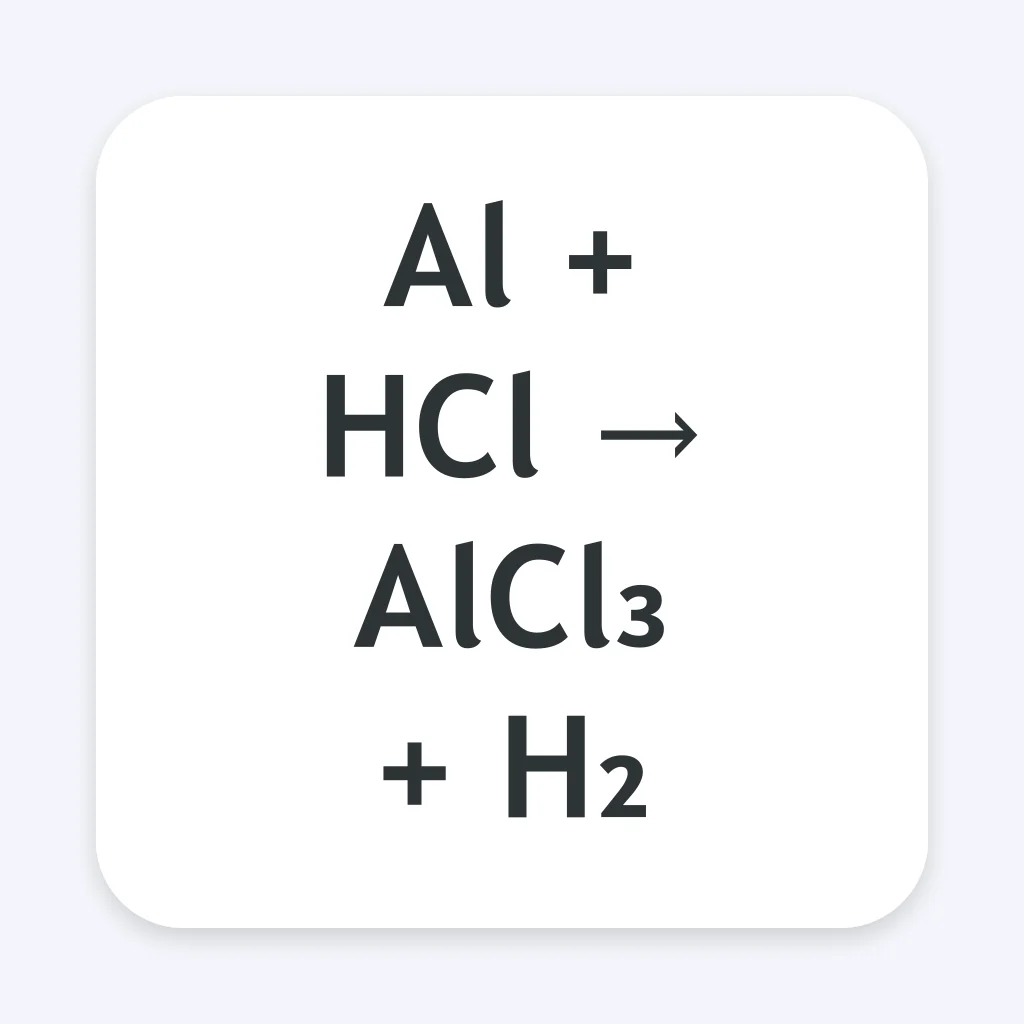
Which coefficient ratio, in the order Al, HCl, AlCl₃, H₂, balances the displayed reaction using the smallest whole numbers?
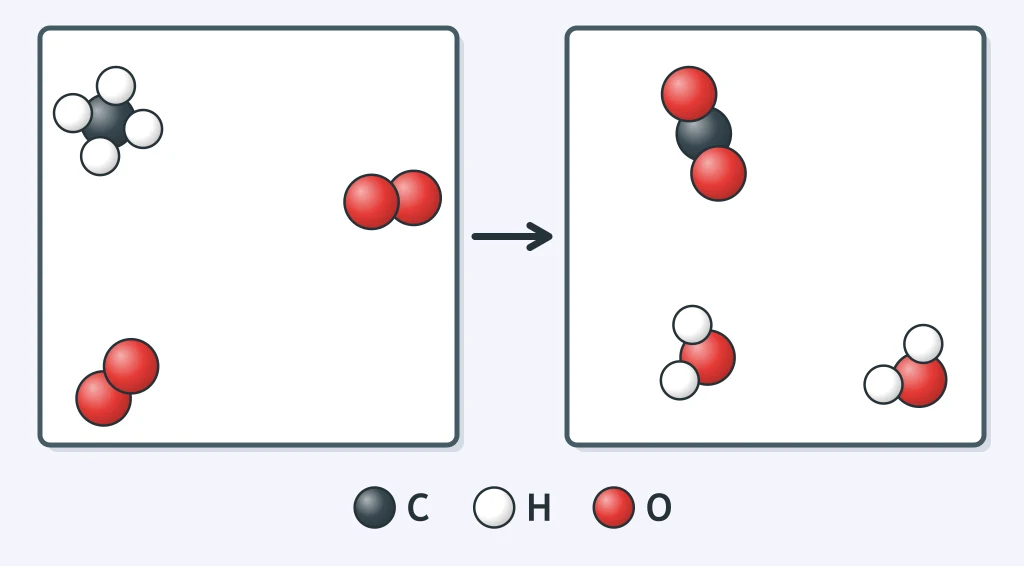
What does the before-and-after particle model show about this reaction?
Why can the balloon expand while the sealed setup's measured mass stays at 250 g?
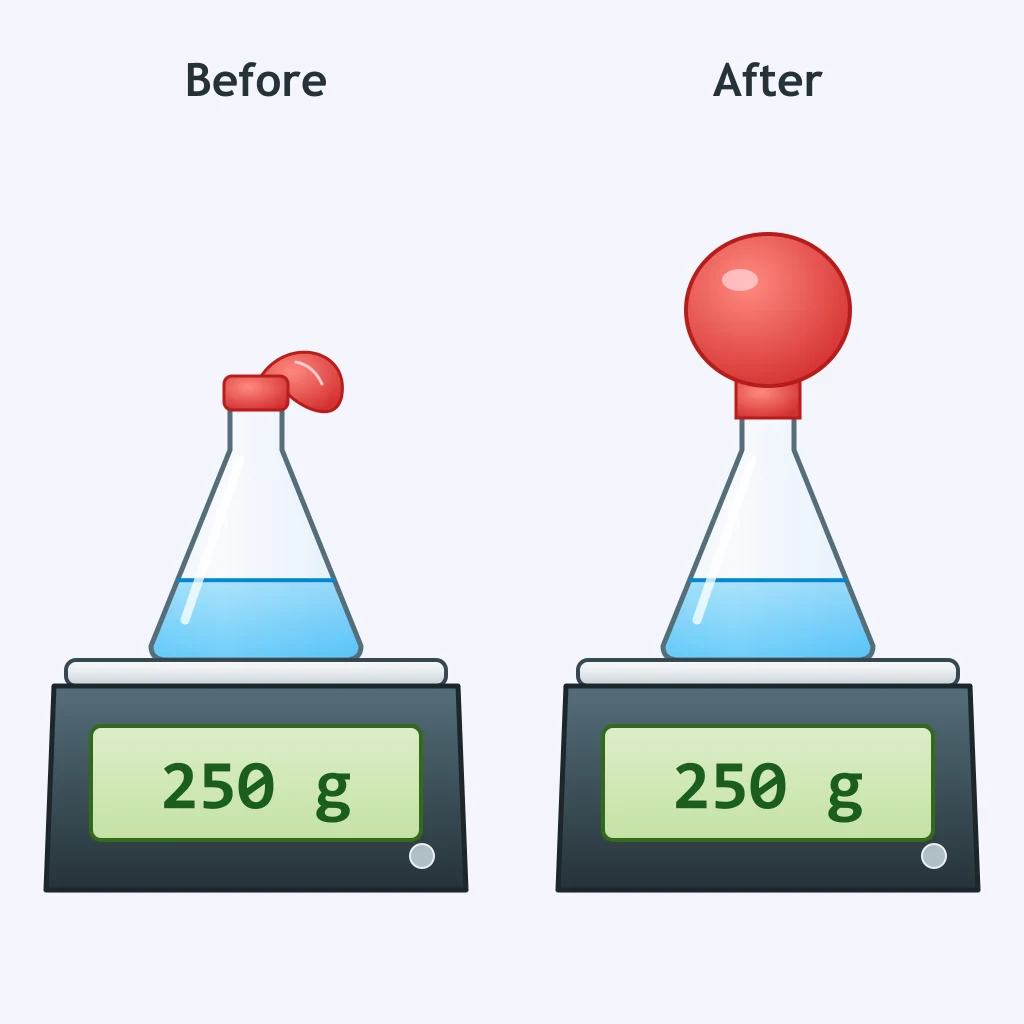
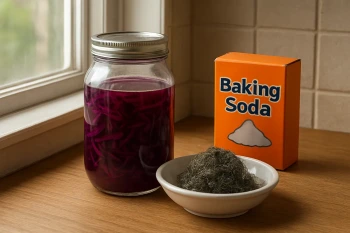
Liza repeats the vinegar-and-baking-soda experiment without a balloon; the scale reading falls although nothing spills. What explains the change?
A reaction completely consumes 40 g of calcium and 71 g of chlorine gas without losing matter; what is the total mass of the products?
A 63.5 g copper sample reacts with oxygen to form 79.5 g of copper(II) oxide. Assuming no material is lost, how much oxygen was incorporated?
A sample of barium reacts completely with 254 g of iodine to produce 391 g of barium iodide; what was the barium's mass?
In a sealed vinegar-and-baking-soda experiment, what happens to the total number of atoms when carbon dioxide forms?
Carlo cooks 120 g of rice with 120 g of water in a sealed container that retains all steam; what is the total mass of its contents afterward?
According to collision theory, what makes an encounter between reacting particles successful?
The boxes have equal volumes and temperatures; which prediction about encounters between the two reactants is supported by the model?
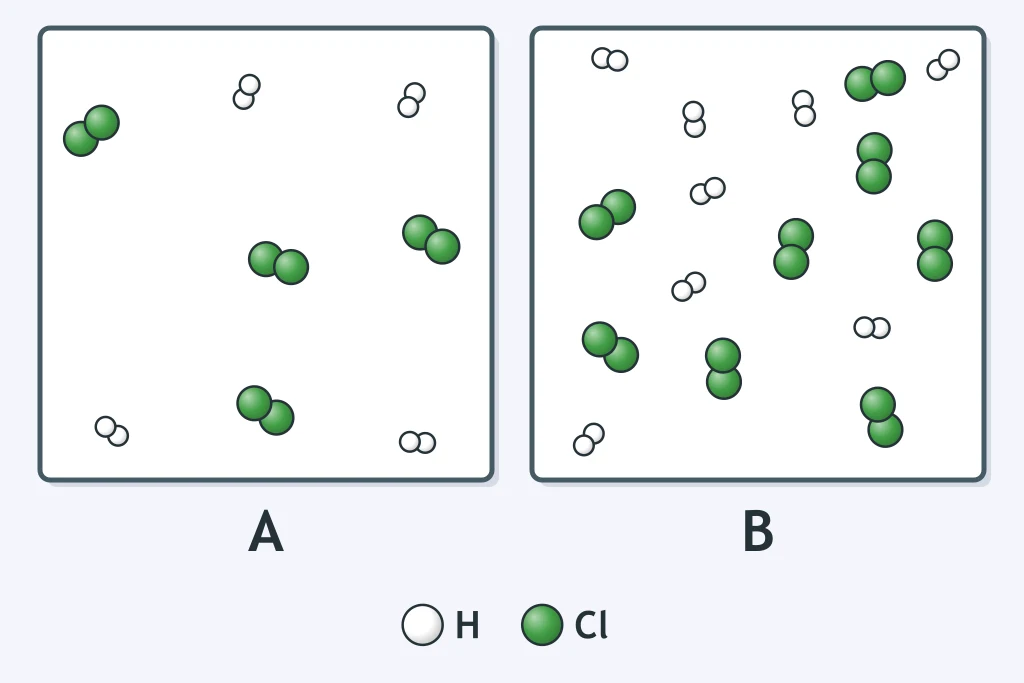
For a typical reaction, why does heating the reactants increase the proportion of successful collisions?
Equal masses of marble chips and powdered marble react with identical acid solutions; why does the powder usually finish reacting sooner?
The dashed curve represents a reaction with an added substance; what effect does that substance have?
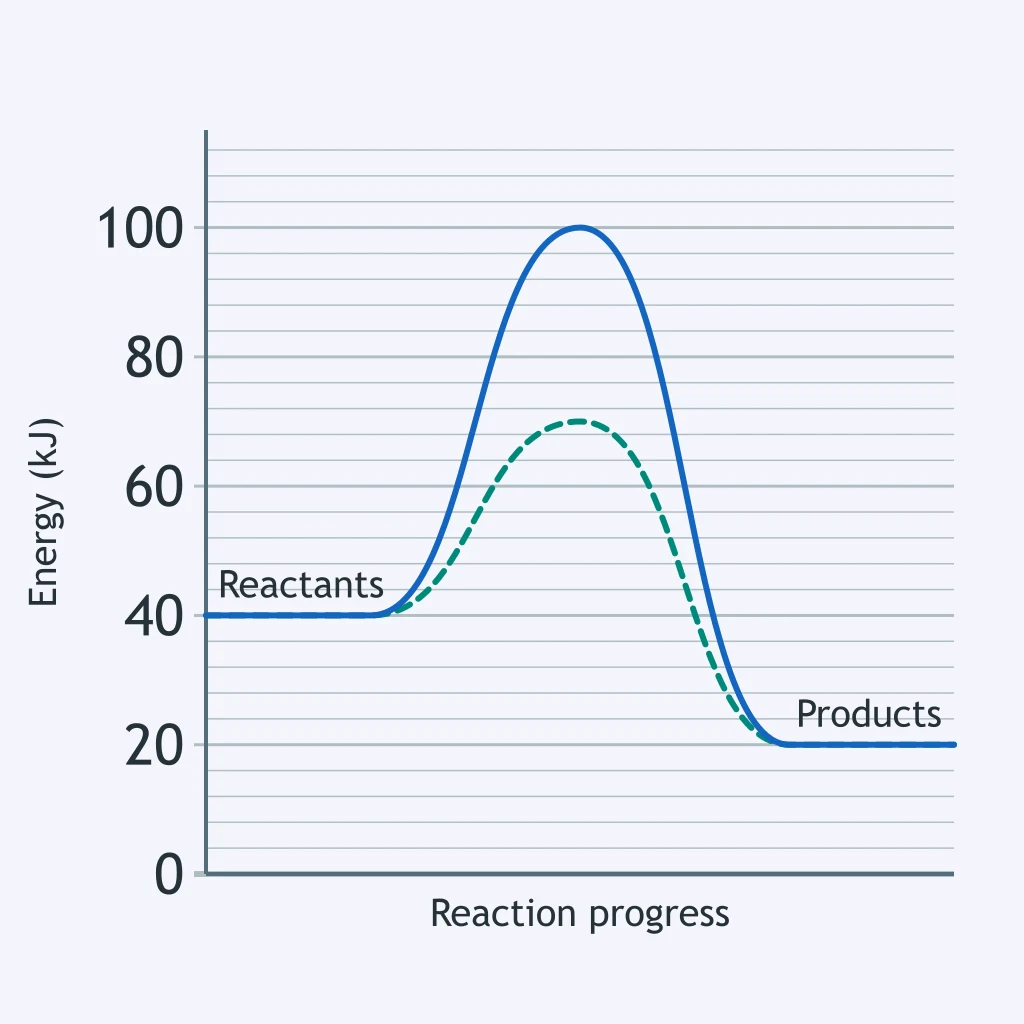
Hydrogen peroxide decomposes faster when manganese dioxide is added. What should happen to the manganese dioxide after the reaction?
An additive interferes with reacting particles and slows a chemical process; what is it called?
Why can storing food in a refrigerator slow chemical processes involved in spoilage?
Why can water help extinguish a small wood fire?
Identical magnesium ribbons are placed in equal volumes of HCl at the same temperature; which solution should produce the fastest initial reaction?
To compare how different HCl solutions affect magnesium, which property of the metal samples should Ana keep the same?
Which change in vehicle exhaust is promoted by a catalytic converter to reduce harmful emissions?
A process takes in heat from its surroundings; how is it classified?
Use the energy profile to classify the reaction.
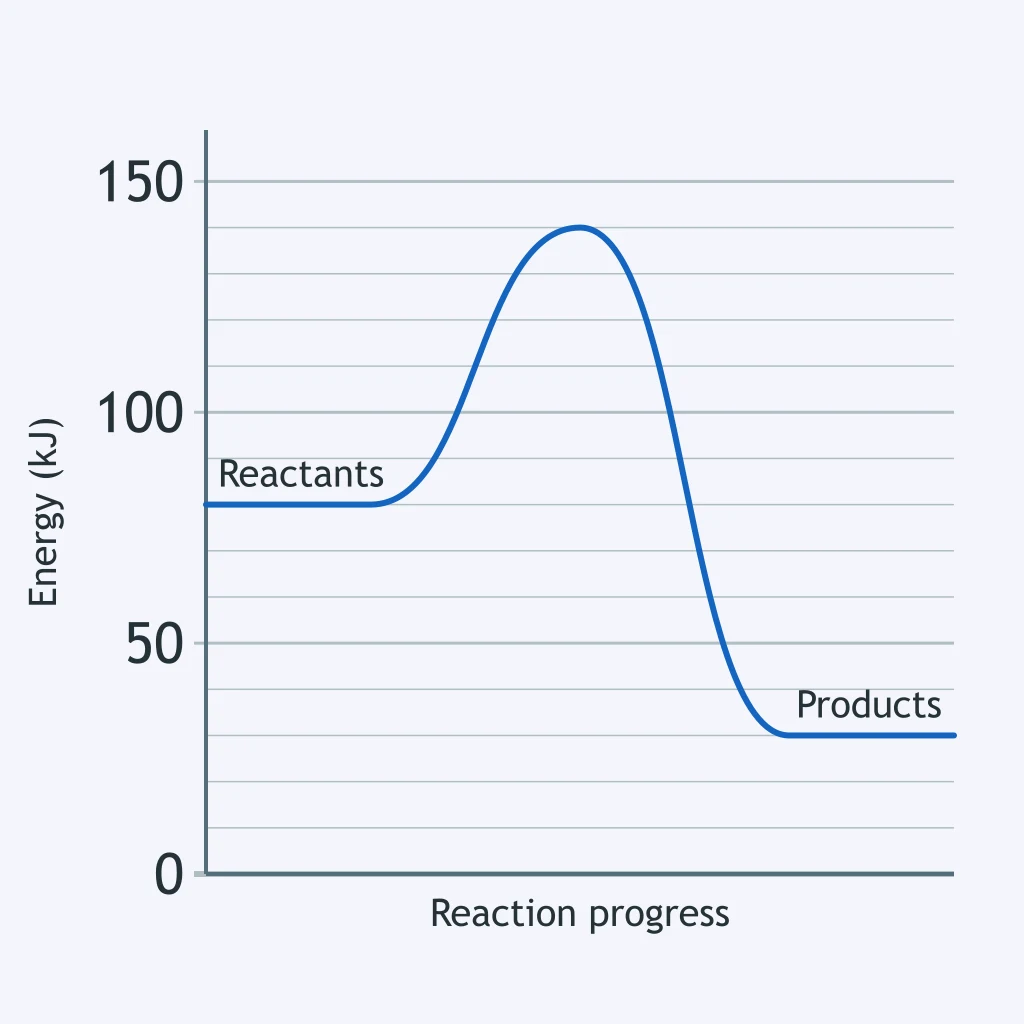
What happens to energy when a chemical bond is broken?
What happens to energy when a chemical bond forms?
A steel-wool experiment starts at 25 °C; the thermometer shows the later reading. How much has the temperature risen?
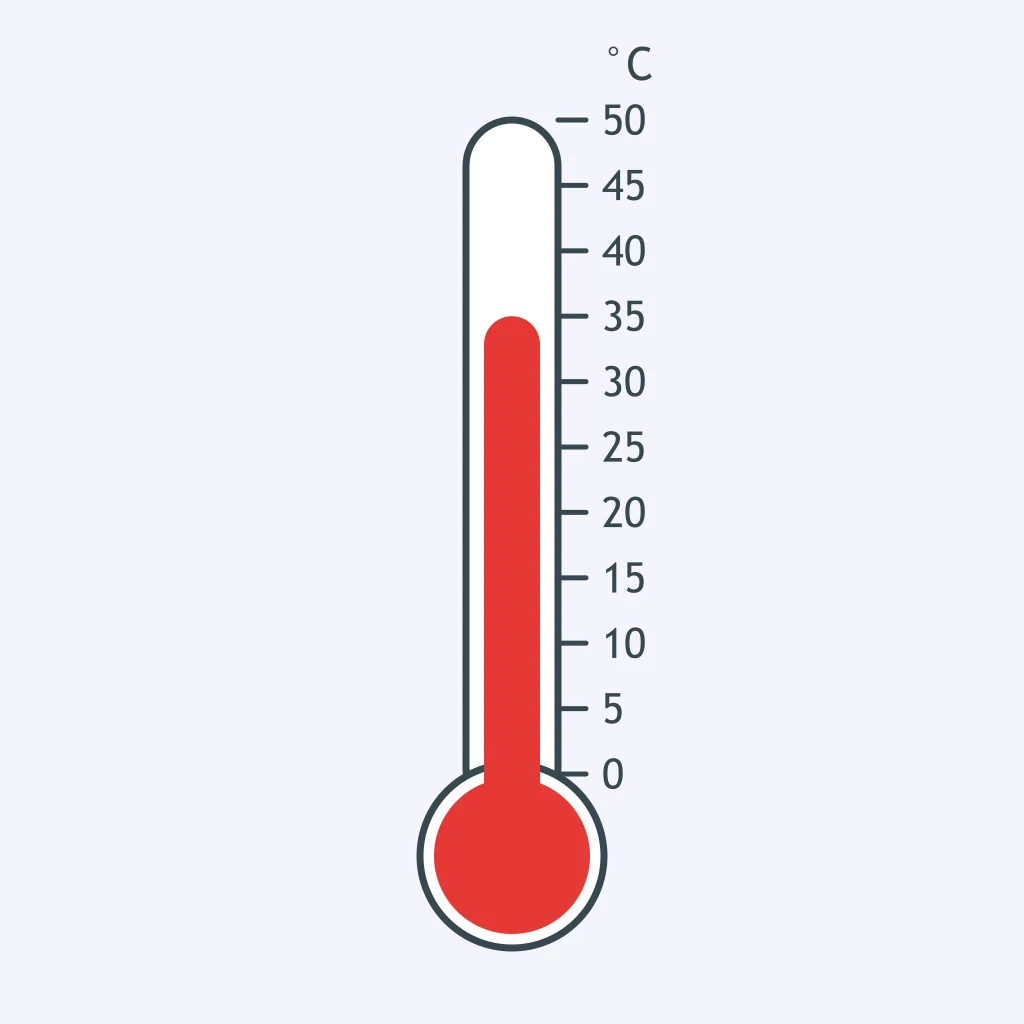
During an experiment, dissolving a salt makes the mixture colder without external cooling; what heat transfer explains the observation?
Which energy transformation occurs overall during photosynthesis?
An activated iron-based hand warmer is at 45 °C and a person's hands are at 30 °C. Which explanation describes the initial heat transfer?
In ammonia formation (N₂ + 3H₂ → 2NH₃), breaking the reactant bonds takes in about 2,253 kJ and forming the product bonds gives out about 2,346 kJ. What is the overall heat change?
Why can covering a pot with a loose lid save energy while heating water for pasta?
Crack the passcode before the zombies get in.

Pick a tile, answer, hit bonuses and steals.
Population Growth
20 questions