Loading
by BlastRoom
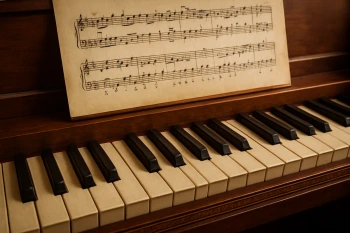
Practice spelling chromatic scales and recognizing whole-tone collections.
#us_hs_music_fundamentals
20 questions
One question set, multiple game modes. Tap any game to see it in action. Not sure which to pick?
Answer to place stones and capture territory.
Outrun the snow together.
Earn blasts, then hunt the other team.
Answer to earn energy, then climb.

The class blasts through walls together.
Bid on mystery lots. Most money wins.
Sell tours. Nice, standard, or a total scam.

Answer, restock, and serve the rush.
More correct answers pulls the rope your way.
Answer, then shoot down the alien wave.
Answer, then tap to leap the frozen ridge.
A chromatic scale rises from C. How is the pitch between C and D normally spelled?
As an ascending chromatic scale moves from D toward E, what is the intervening pitch called?
Your part rises chromatically from F to G. Which spelling belongs between those notes?
What pitch should follow G in an ascending chromatic scale before A arrives?
When a chromatic scale ascends from A toward B, which note is written between them?
A chromatic scale rises from B. What is the next pitch?
A chromatic scale falls from C. How is the pitch between B and A normally spelled?
As a chromatic scale descends from A toward G, which pitch comes between them?
Which note is written between G and F in a falling chromatic scale?
While descending chromatically from E to D, what pitch is used between them?
A line descends chromatically from D toward C. Which note belongs between those pitches?
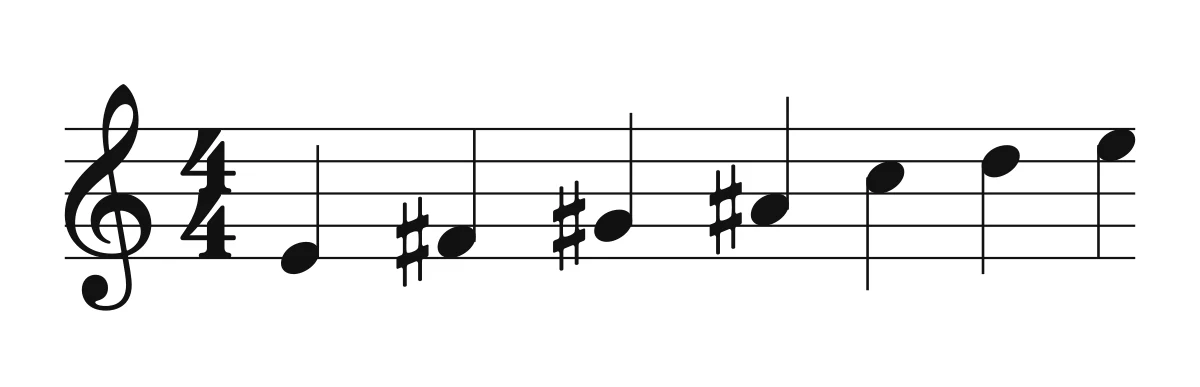
Read the written pitch collection on the staff. What type of scale has been constructed?
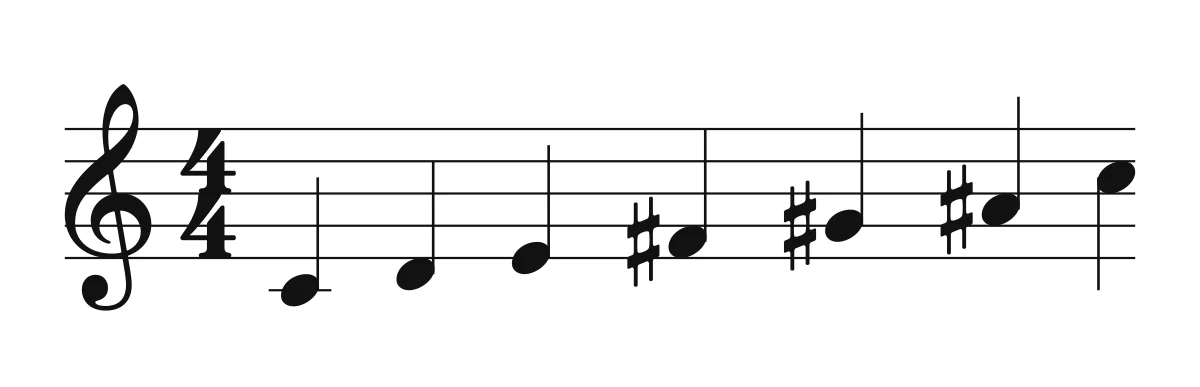
The staff shows a scale beginning on D. Which scale family does its step pattern show?
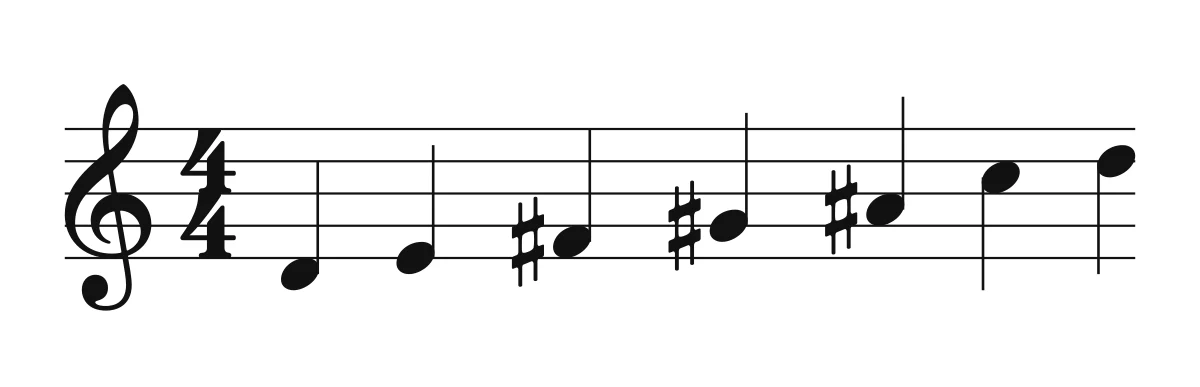
A director writes this ascending collection for analysis. How should students classify it?
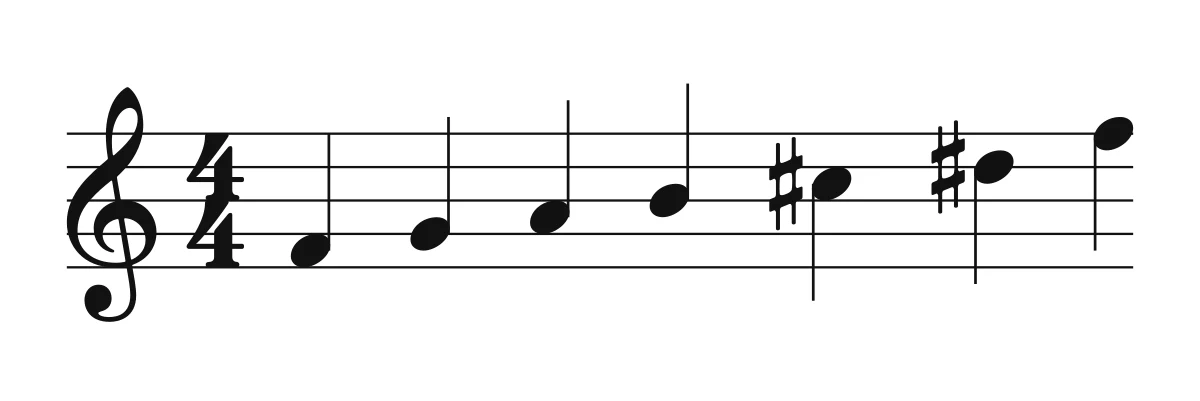
Examine the staff example beginning on E. Which scale family produces this succession of pitches?
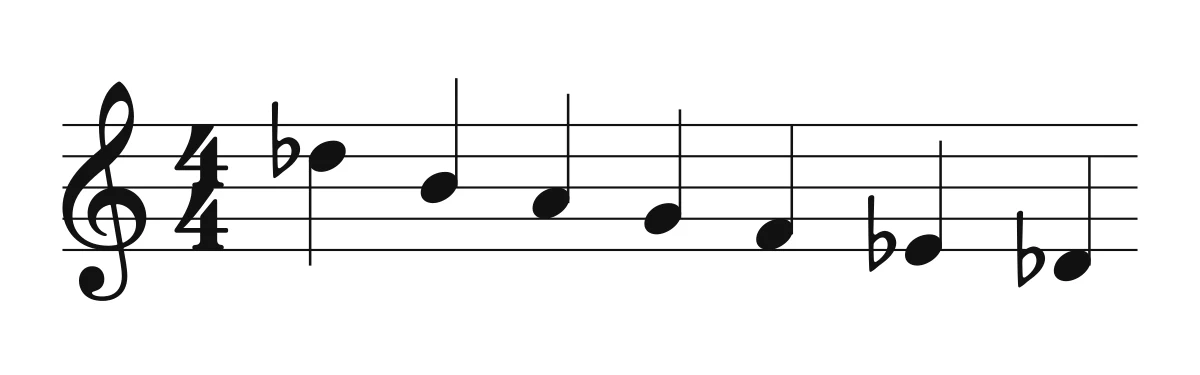
What kind of scale is written descending on the staff, beginning on D flat?
Why do whole-tone scales produce only two different pitch collections?
How do the two whole-tone collections relate to the twelve pitch classes?
What happens after six whole steps in a whole-tone scale?
Why is a whole-tone scale beginning on D not a third collection beyond scales beginning on C and C sharp?
Crack the passcode before the zombies get in.
Answer, then swat bugs for bonus points.
Race through questions at your own speed.
Same question on every screen. Fastest wins.

Pick a tile, answer, hit bonuses and steals.
Sharp Key Signatures
40 questions