Loading
by BlastRoom
Classifying a burn by depth, estimating extent, and the stages of wound healing.
#us_hs_anatomy_physiology

20 questions
One question set, multiple game modes. Tap any game to see it in action. Not sure which to pick?
Answer to place stones and capture territory.
Outrun the snow together.
Earn blasts, then hunt the other team.
Answer to earn energy, then climb.

The class blasts through walls together.
Bid on mystery lots. Most money wins.
Sell tours. Nice, standard, or a total scam.

Answer, restock, and serve the rush.
More correct answers pulls the rope your way.
Answer, then shoot down the alien wave.
Answer, then tap to leap the frozen ridge.
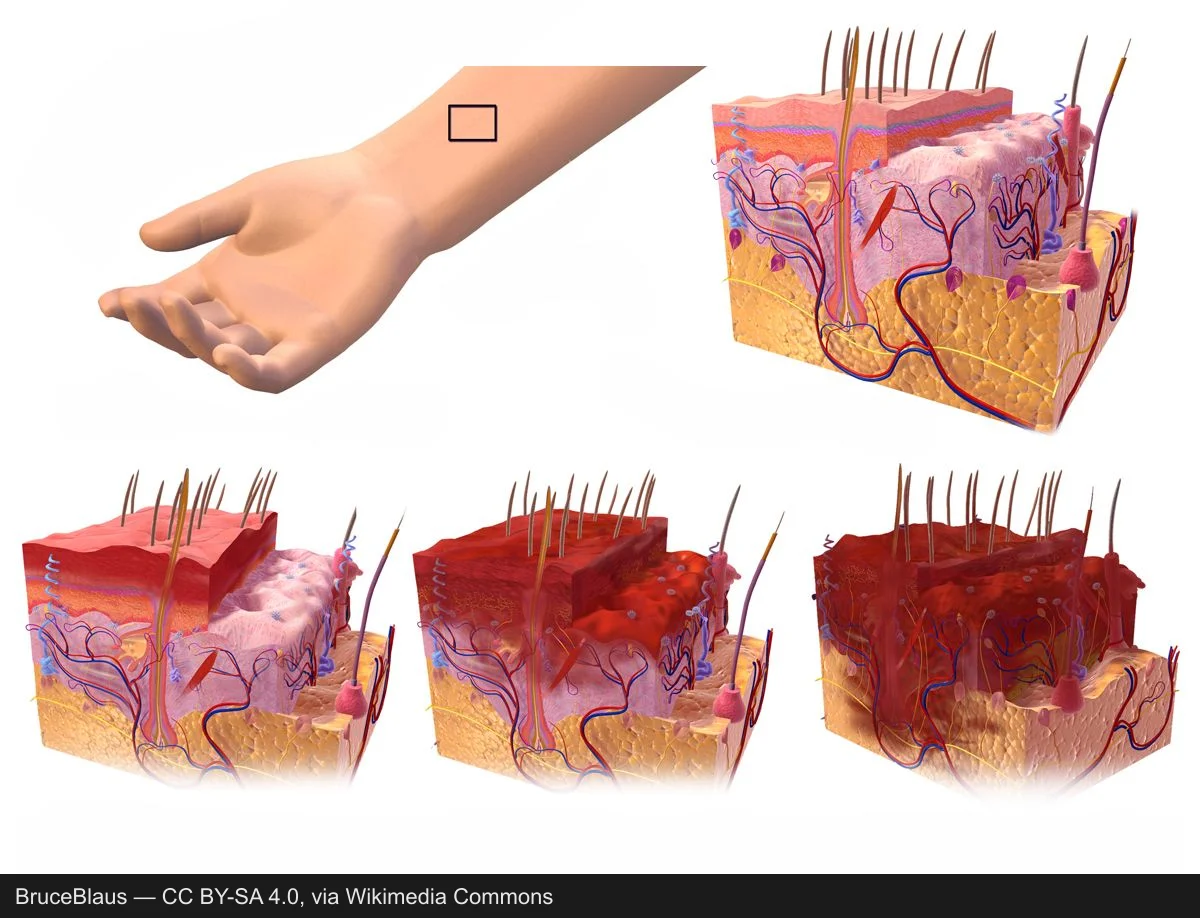
A mild kitchen burn is red, dry, tender, and has no blisters. Sensation is normal, and only the epidermis is injured. How is the burn classified?
Hot coffee splashes the forearm. The area is red, wet, blistered, very painful, and sensation is intact. How is the burn classified?
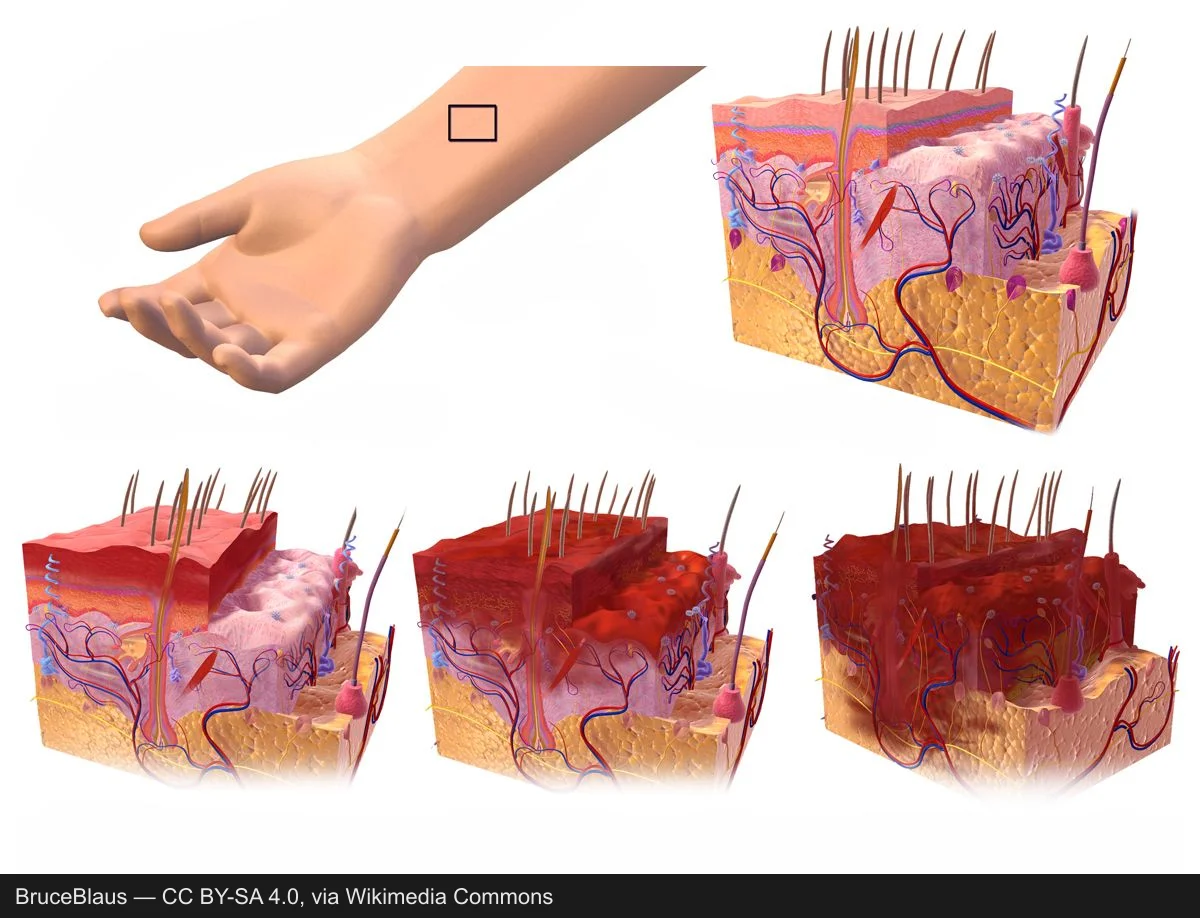
A flame injury leaves skin white and leathery with a numb center. The damage extends through the dermis into deeper tissue. How is the burn classified?
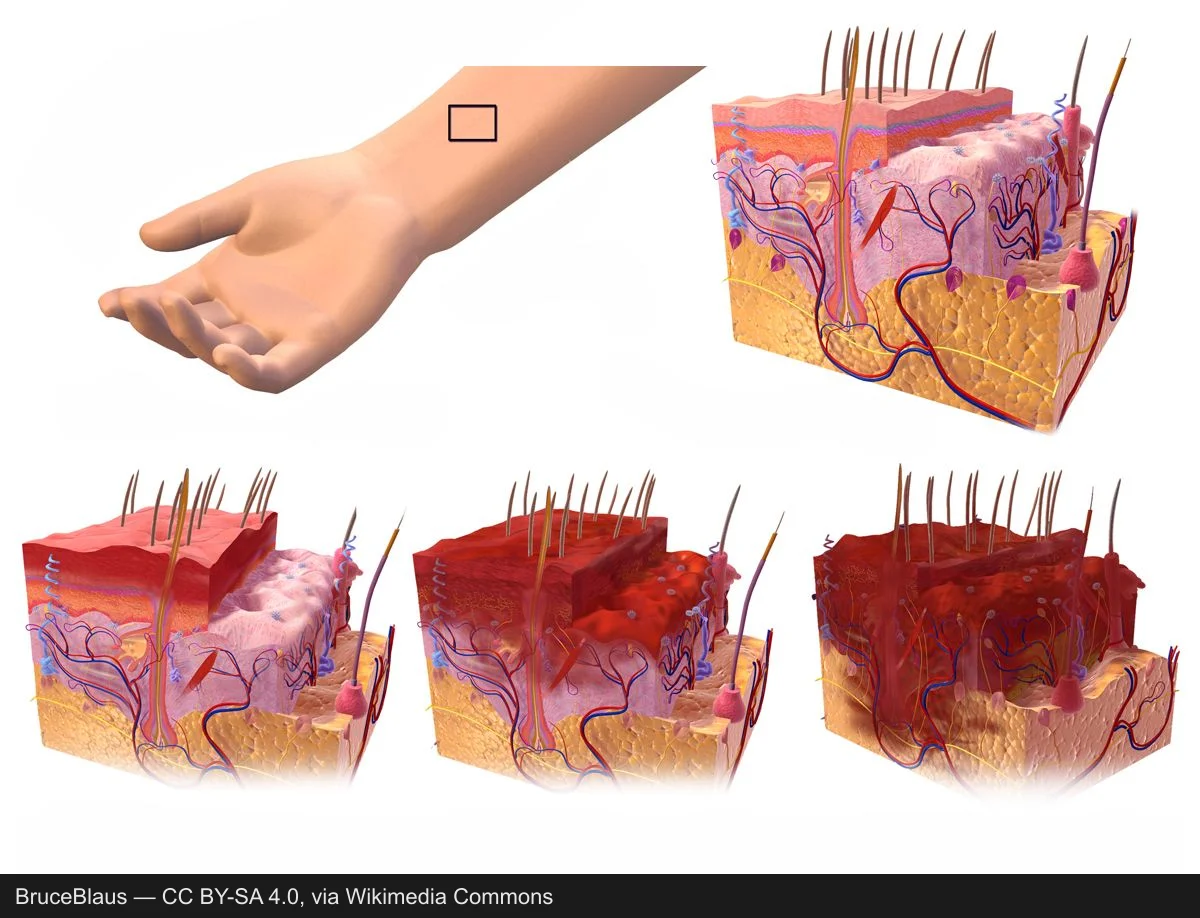
A lifeguard's shoulders are bright red and sore after sun exposure, but the skin is dry and unbroken with no blisters. What depth is this injury?
An adult has burns over the front and back of one whole arm and the entire front of the trunk. By the rule of nines, what percent of body surface is burned?
Four hours after a cut, a platelet plug and fibrin clot seal the opening and reduce blood loss. Which wound-healing stage is occurring?
Two days after a scrape, the area is red, warm, swollen, and tender as white blood cells remove bacteria and dead tissue. Which stage is this?
Five days after a deep cut, pink bumpy tissue rich in new capillaries fills the wound while the edges pull inward. Which stage is this?
An adult has burns over the entire head and neck, the front of one leg, and the perineum. By the rule of nines, what percent is burned?
Months after a surgical incision, the scar is flatter and paler as collagen fibers reorganize and tensile strength increases. Which stage is this?
A scalded hand has swollen red skin, clear fluid-filled blisters, and sharp pain when lightly touched. Sensation is present. What depth is this burn?
A burn destroys the full thickness of skin across part of the back, including hair follicles and sweat glands. What follows in that area?
A wound bed is covered by a clot that later dries into a scab while epithelial cells begin moving beneath it. Which healing stage best fits this active tissue rebuilding?
An adult has burns over the entire posterior trunk and the back of both legs. By the rule of nines, what percent of body surface is burned?
An electrical injury leaves a waxy white patch with no pinprick sensation, and tissue destruction reaches through the dermis. How is it classified?
A shallow burn injures only the epidermis. The skin is red and painful but intact. What outcome is most likely as it heals?
A wound remains red, swollen, draining, and full of debris for many days instead of forming granulation tissue. What consequence follows from this stalled repair?
A burn is moist, mottled red and pale, blistered, and painful around the edges. The dermis is injured but touch sensation remains. What depth is it?
After bleeding stops, neutrophils and macrophages dominate a cut as they digest microbes and damaged tissue. Which stage is being described?
An adult has burns over one entire leg, the front of the trunk, and the back of the trunk. By the rule of nines, what percent of body surface is burned?
Crack the passcode before the zombies get in.
Answer, then swat bugs for bonus points.
Race through questions at your own speed.
Same question on every screen. Fastest wins.

Pick a tile, answer, hit bonuses and steals.
Bone Tissue, Bone Cells and Bone Markings
30 questions