Loading
by BlastRoom
Exam-shaped items: rates in context with units, motion from a table or graph, and choosing a valid justification.
#calculus

30 questions
One question set, multiple game modes. Tap any game to see it in action. Not sure which to pick?
Answer to place stones and capture territory.
Outrun the snow together.
Earn blasts, then hunt the other team.
Answer to earn energy, then climb.

The class blasts through walls together.
Bid on mystery lots. Most money wins.
Sell tours. Nice, standard, or a total scam.

Answer, restock, and serve the rush.
More correct answers pulls the rope your way.
Answer, then shoot down the alien wave.
Answer, then tap to leap the frozen ridge.
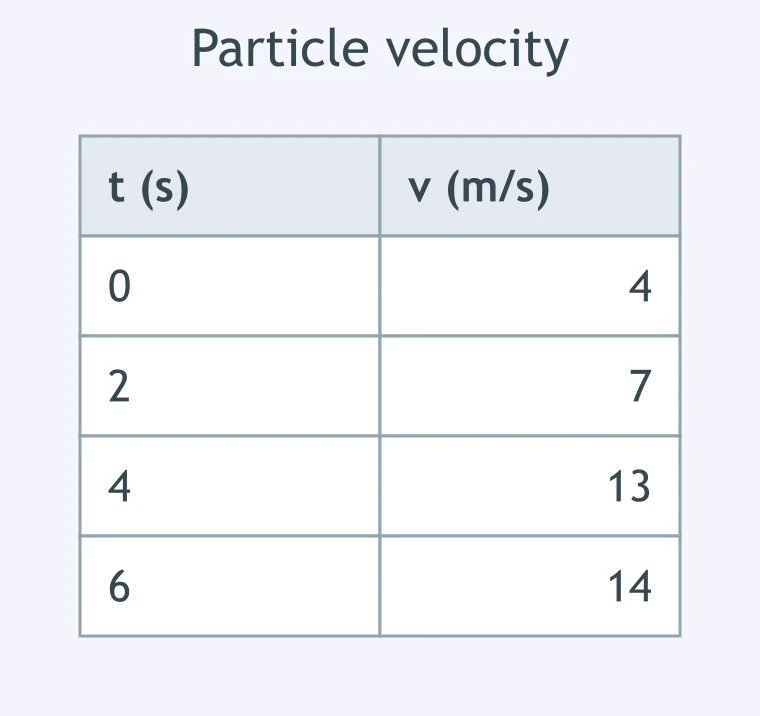
The table gives a particle's velocity in meters per second. Use the table to approximate its acceleration at seconds.
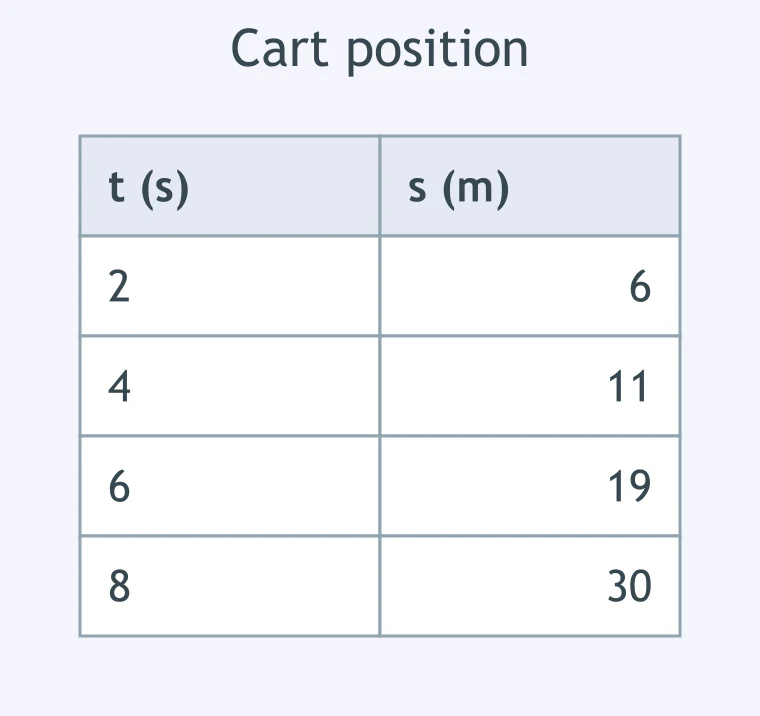
The table gives a cart's position in meters. Approximate the cart's velocity at seconds using the closest values on both sides of 5.
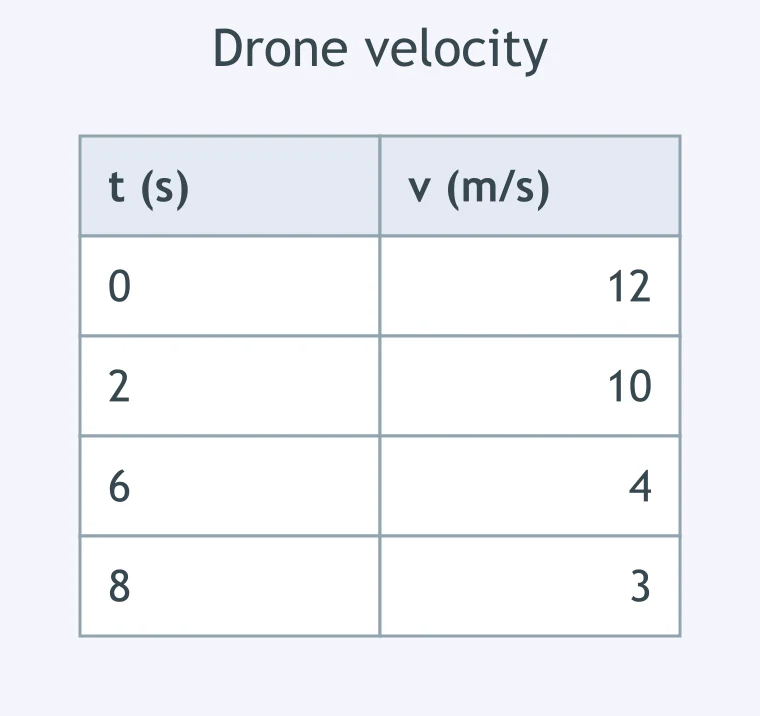
The table gives the velocity of a drone in meters per second. Approximate its acceleration at seconds.
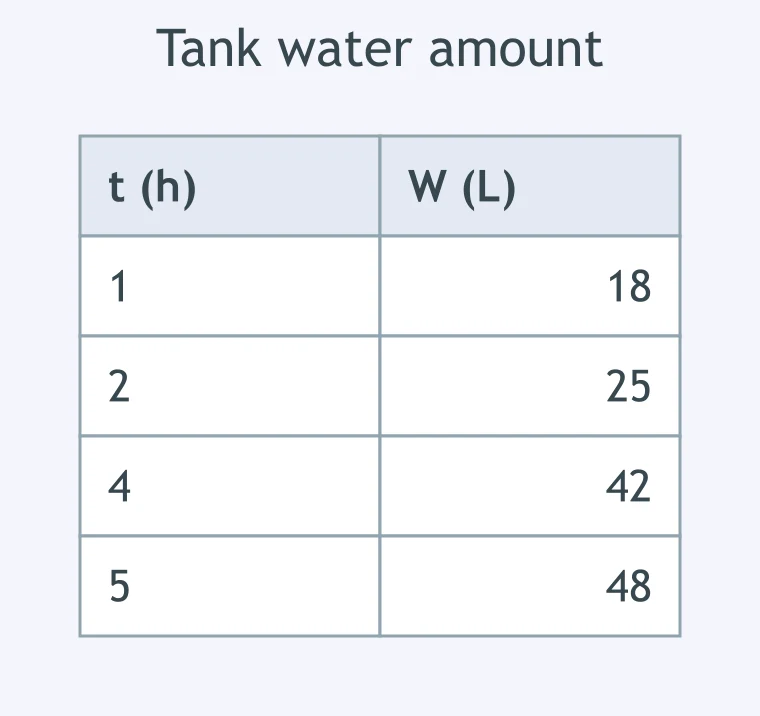
The table gives the amount of water in a tank, in liters. Estimate the average rate of change of from to hours.
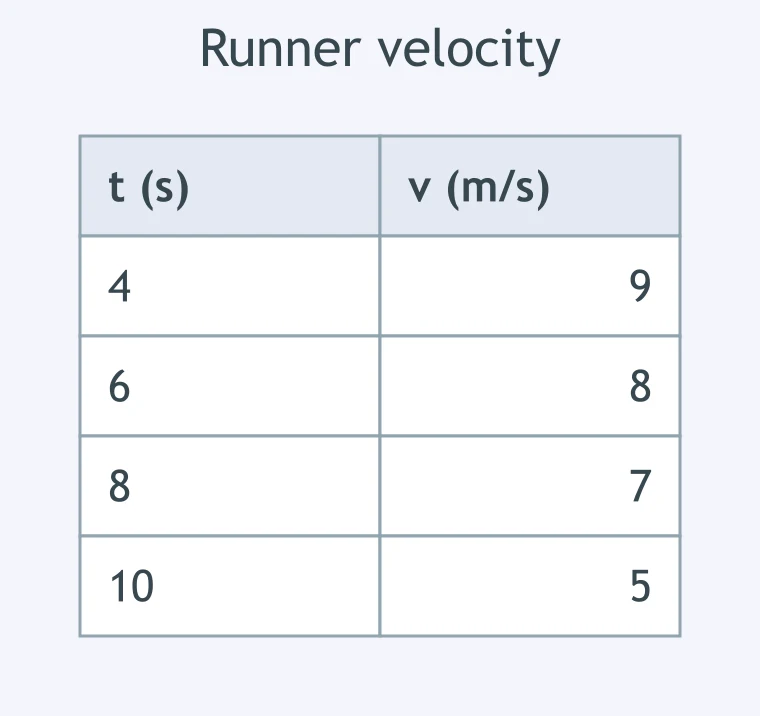
The table gives a runner's velocity in meters per second. Which value best approximates the runner's acceleration at seconds?
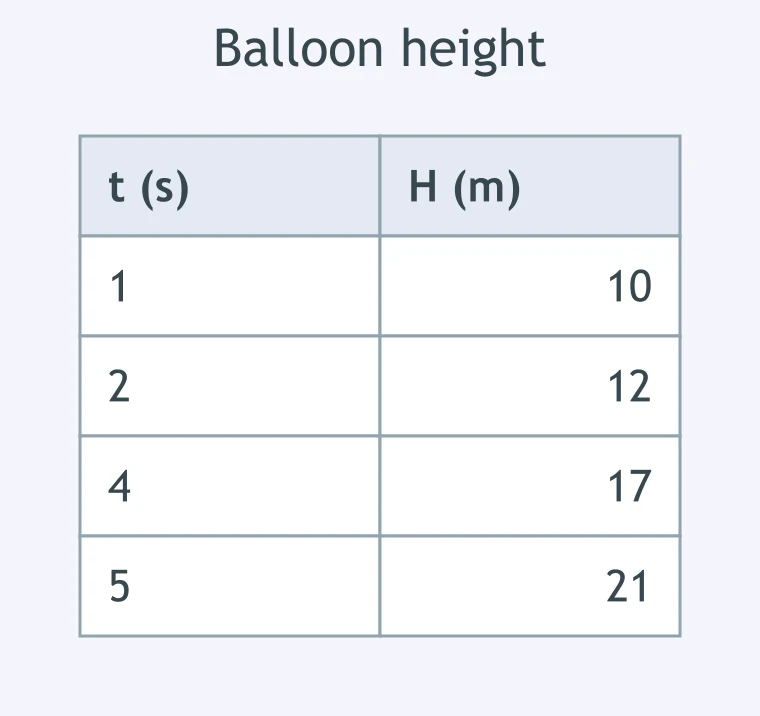
The table gives the height of a balloon, in meters. Estimate the balloon's instantaneous velocity at seconds.
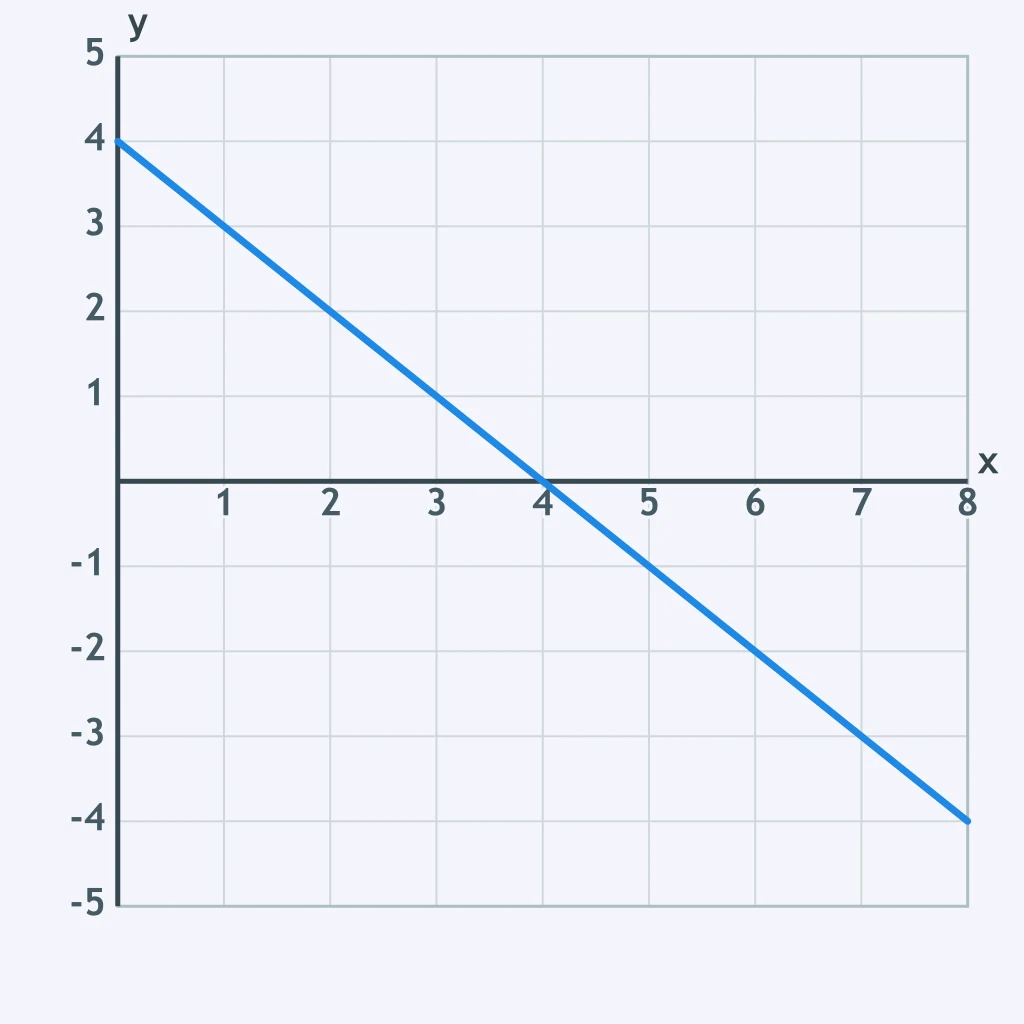
The graph shows velocity in meters per second. At which listed time is the particle moving in the negative direction and increasing its speed?
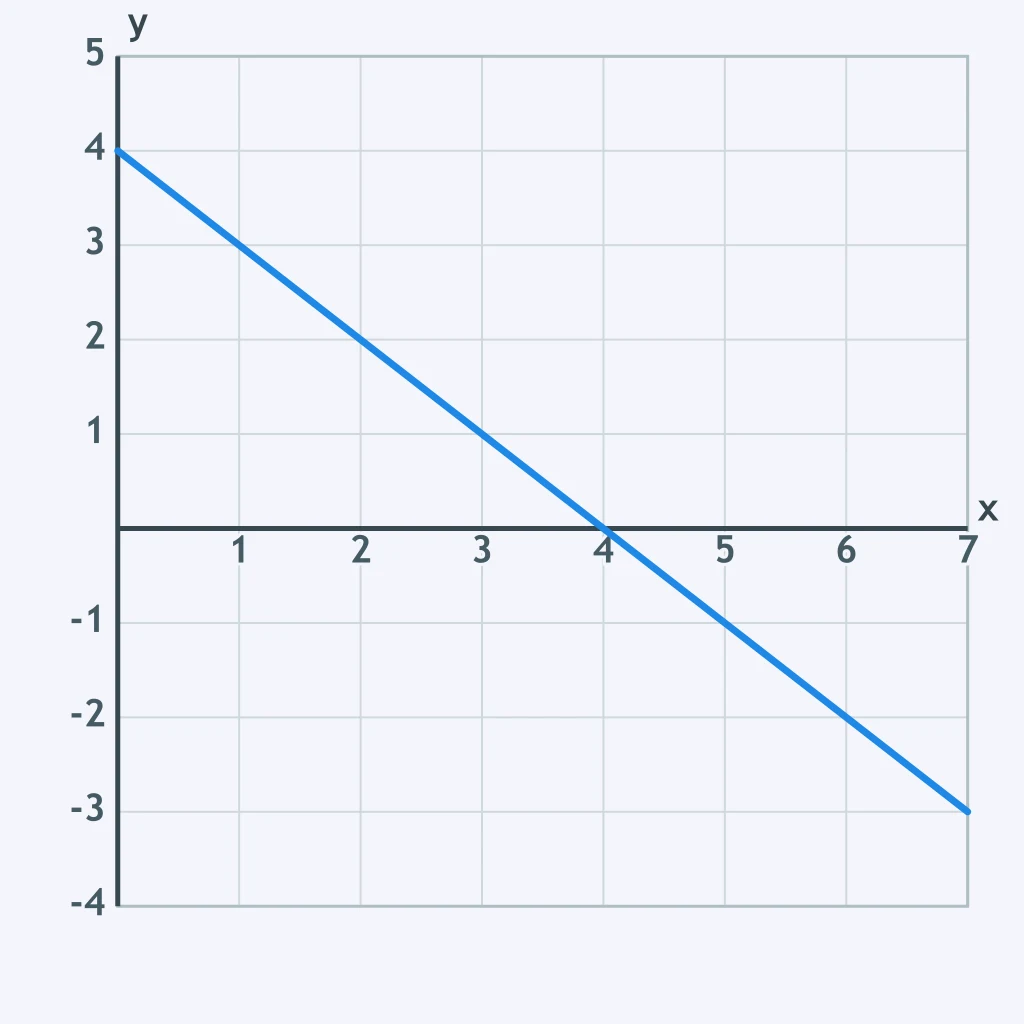
The graph shows velocity in meters per second. At which listed time is the particle moving in the positive direction but slowing down?
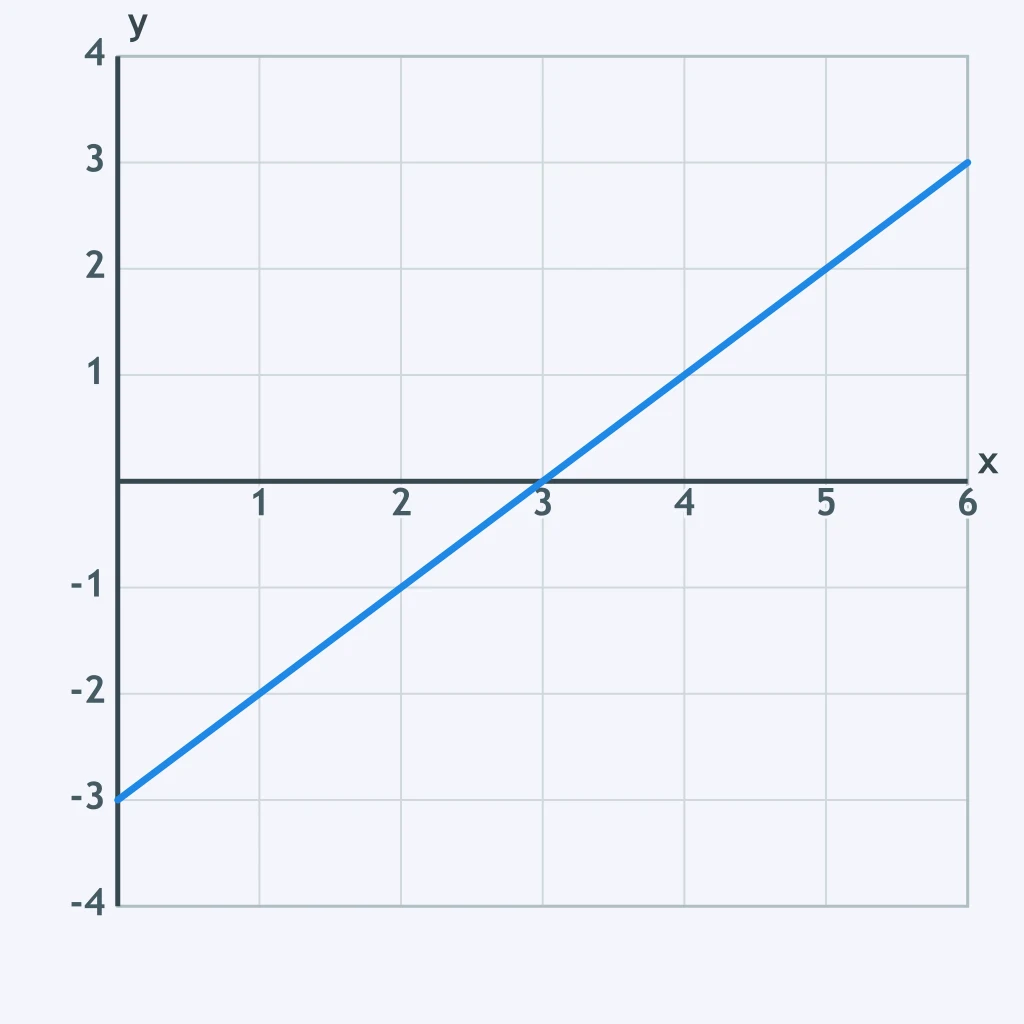
The graph shows velocity in meters per second. At which listed time is the particle moving in the negative direction and slowing down?
The graph shows velocity in meters per second. At which listed time is the particle at rest?
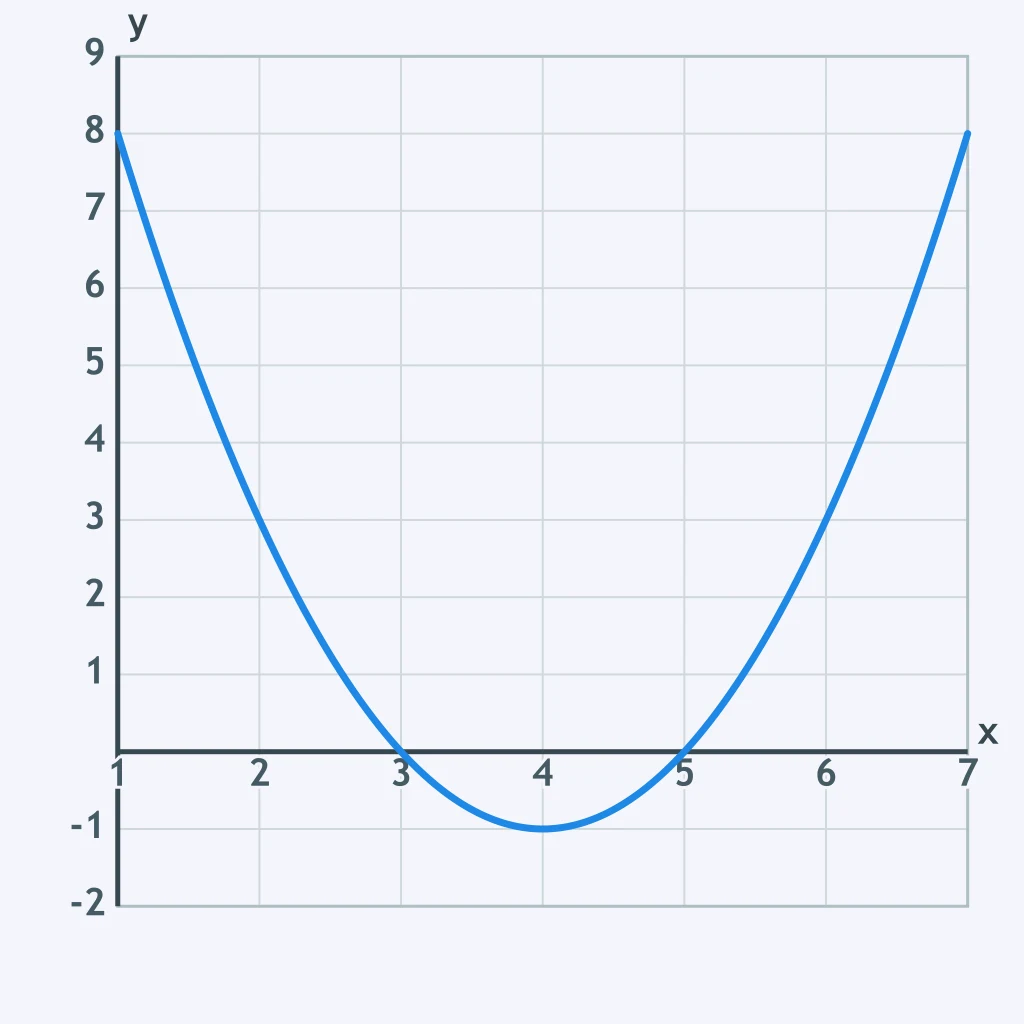
The graph shows velocity in meters per second. At which listed time is the particle moving in the positive direction with increasing speed?
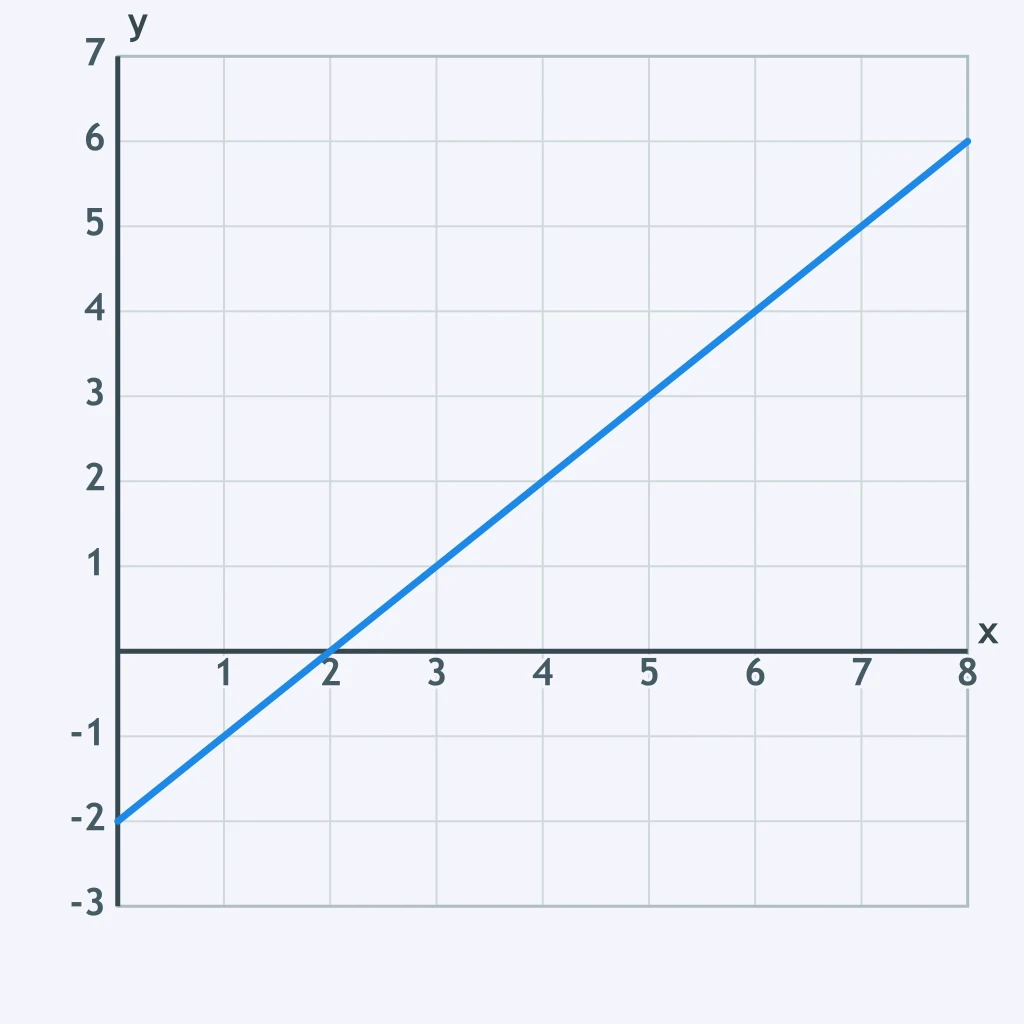
The graph shows velocity in meters per second. At which listed time does the particle change direction?
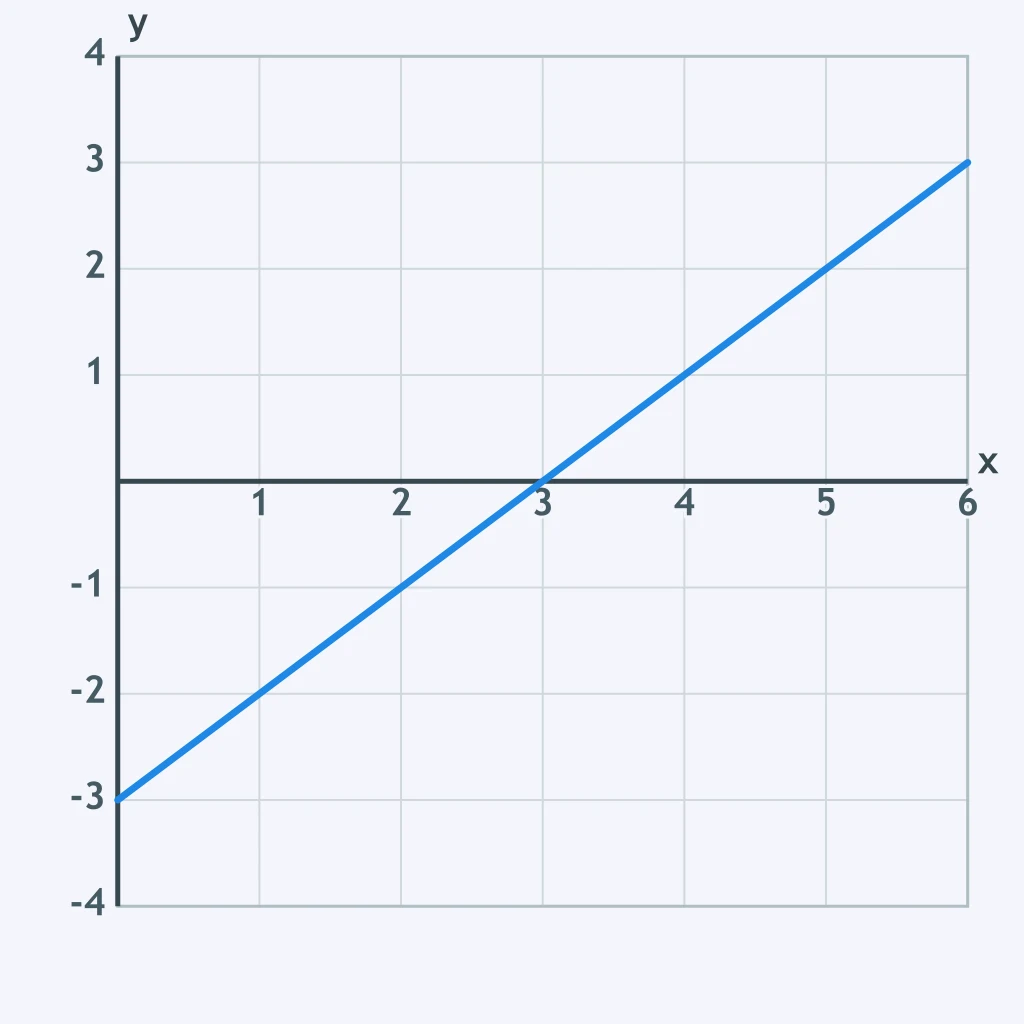
A reservoir's inflow rate is liters per hour, where is hours after midnight. What does mean?
The mass of algae in a tank is grams after days. If , what is the correct interpretation?
The temperature of a chemical bath is in degrees Celsius and is in minutes. If , what are the units of ?
The position of a cart is measured in meters, and is in seconds. What does tell you?
A bacteria culture has population cells, where is hours. If , which conclusion follows?
The volume of gas in a chamber is measured in liters. If , what must be true at 15 minutes?
A spherical balloon's volume increases at cm³/s. At the instant its radius is cm, how fast is the radius increasing?
A circular oil spill has radius meters. Its area is increasing at m²/min when m. How fast is the radius increasing?
Water fills a cylindrical tank of radius m at m³/min. How fast is the water depth increasing?
A 10-meter ladder rests against a vertical wall. Its base moves away from the wall at m/s. When the base is m from the wall, at what rate is the height of the top changing?
A student writes: “Because , a particle changes direction at .” The velocity is positive on both and . Does the justification establish the claim?
A student claims that a differentiable function has a local maximum at because . Does this evidence prove the claim?
A student writes: “Since , the amount of water in the reservoir is increasing at .” Here is the rate water enters, in L/h. Is the reasoning valid?
A student claims a particle is speeding up at because . The acceleration satisfies . Does the justification establish the claim?
A tank's water depth is centimeters. Given , cm/min, and , use the tangent line at to approximate and classify the estimate.
The mass of a sample is in grams. Given , g/h, and , approximate with the tangent line and classify the estimate.
The position of a probe is meters. Given , m/s, and , use linearization at to estimate and classify the estimate.
A culture's mass is grams. Given , g/day, and , use the tangent line at to approximate and classify the estimate.
Crack the passcode before the zombies get in.
Answer, then swat bugs for bonus points.
Race through questions at your own speed.
Same question on every screen. Fastest wins.

Pick a tile, answer, hit bonuses and steals.
Increasing and Decreasing Intervals
30 questions